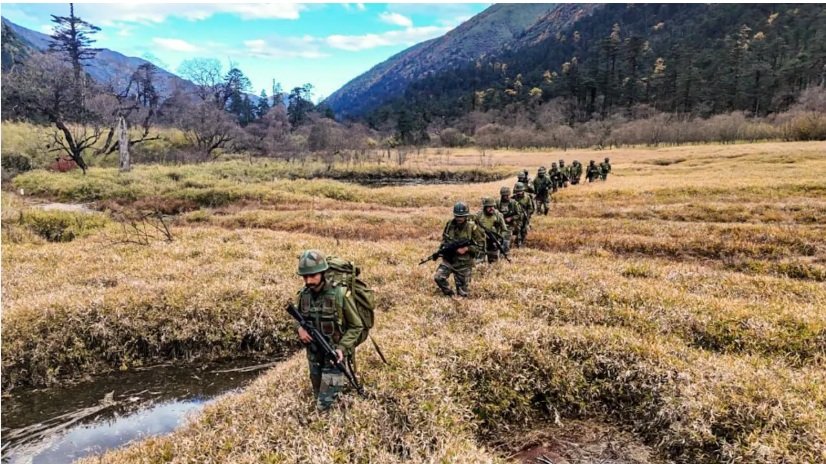
Renewed reports of Chinese military activity around Taksing in Arunachal Pradesh have exposed a deeper problem in India-China relations: despite diplomatic efforts to normalise ties after the 2020 crisis, the eastern sector of the Line of Actual Control remains unsettled, contested and vulnerable to repeated confrontations.
India and China are simultaneously trying to rebuild their bilateral relationship while maintaining heavily militarised and disputed positions along the frontier.
That contradiction has become increasingly visible in recent weeks.
Reports from Arunachal Pradesh have alleged that Chinese People’s Liberation Army (PLA) personnel have interfered with Indian access to traditional patrolling areas around Taksing in Upper Subansiri district, while Indian authorities have rejected claims of a major Chinese incursion and warned against misinformation.
The result is a confusing picture—but one that should not be dismissed simply because the most dramatic allegations remain unverified.
The central issue is much more serious:
The India-China boundary in Arunachal Pradesh remains insufficiently delineated, the two sides maintain different perceptions of the LAC, and local reports suggest that access and patrolling patterns in some areas have become contested.
That is the real story.
What Has Happened in Taksing?
The recent controversy centres on the remote Taksing sector of Upper Subansiri district, an extremely difficult Himalayan frontier area.
Reports emerged in July and August alleging increased PLA activity in the area, including claims that Chinese troops had confronted Indian personnel and restricted access to traditional patrolling locations.
The allegations have produced conflicting responses.
The Arunachal Pradesh government initially dismissed reports of Chinese encroachment as rumours. Chief Minister Pema Khandu said the Indian Army was deployed and safeguarding the territory.
But a fact-finding committee of the People’s Party of Arunachal (PPA) subsequently reported that Chinese activity around Taksing was more serious than suggested by the initial official response.
The committee, which visited the area on July 10, said a key patrolling location known as Shera 5 Point had reportedly remained abandoned since 2023 after confrontations between PLA personnel and Arunachal Scouts.
The PPA described the reported Chinese activity as gradual and persistent.
That claim remains disputed, but it cannot simply be erased from the story.
India Rejects the “60-Kilometre Incursion” Claim
This is where the reporting needs to be separated carefully from sensational social-media claims.
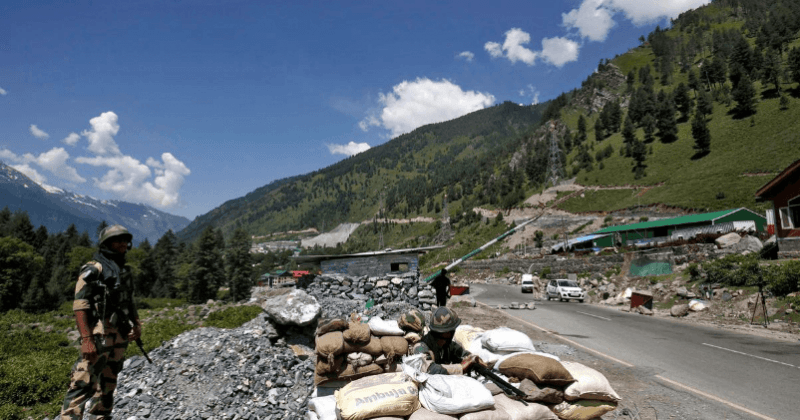
Union Minister Kiren Rijiju has explicitly rejected the allegation that China has entered 60 kilometres into Arunachal Pradesh.
He said photographs and videos from Bangladesh had allegedly been circulated as evidence of Chinese activity in Arunachal Pradesh and warned that such misinformation could demoralise Indian soldiers and create unnecessary confusion.
That is an important clarification.
There is no credible basis to present a 60-kilometre Chinese military penetration as an established fact.
But Rijiju also acknowledged something much more important for understanding the real situation:
there are genuine problems along the border because the boundary has not been clearly delineated.
That distinction is critical.
Rejecting a false or exaggerated incursion claim does not mean that the underlying border problem has disappeared.
The Real Problem Is the Undemarcated LAC
The India-China frontier is not a mutually agreed international boundary throughout its length.
The two sides have different perceptions of where the Line of Actual Control lies.
This is particularly sensitive in Arunachal Pradesh because Beijing does not recognise India’s sovereignty over the state and refers to it as “Zangnan” or southern Tibet.
China reiterated that position again in August 2026 while objecting to India’s official naming of locations in Arunachal Pradesh.
Therefore, the situation in Taksing cannot be understood simply as:
“China invaded India”
or
“Nothing happened.”
The reality is considerably more complicated.
The absence of mutually accepted demarcation creates the possibility that:
- China patrols according to its own perception of the boundary;
- India patrols according to its own perception;
- the two patrols encounter each other;
- one side accuses the other of crossing the LAC;
- temporary positions or patrol routes become contested;
- repeated encounters gradually alter the practical situation on the ground.
That is precisely why border management mechanisms are so important.

Why Shera 5 Point Matters
The reports concerning Shera 5 Point deserve particular attention.
If the PPA account is accurate, the issue is not necessarily that China suddenly captured a large piece of territory.
The potentially more important issue is access.
If Indian forces have been unable to routinely access a traditional patrolling point since 2023, while Chinese personnel are able to operate in or near the area, then the question becomes whether a temporary operational restriction is gradually becoming a new ground reality.
This is the essence of salami-slicing or incrementalism arguments frequently made in discussions of China’s border strategy.
However, it would be premature to conclude that China has permanently changed the LAC at Shera 5 solely on the basis of the PPA report.
That requires independent military or satellite confirmation.
Why Arunachal Pradesh Is Strategically Different From Ladakh
Much of the international attention after 2020 focused on Eastern Ladakh, particularly Galwan, Depsang and Pangong Tso.
But Arunachal Pradesh is arguably the more fundamental territorial dispute.
China claims the entire state.
India regards Arunachal Pradesh as an integral part of the country.
The McMahon Line, established during the 1914 Simla Convention, remains rejected by China.
The eastern sector therefore involves a dispute over the underlying territorial boundary itself—not simply disagreement over patrol routes.
That makes Arunachal particularly sensitive.
China Is Combining Military, Administrative and Diplomatic Pressure
The current situation also needs to be viewed beyond military patrols.
China’s approach to Arunachal Pradesh has multiple dimensions.
Military
PLA deployments, patrols and infrastructure along the frontier.
Infrastructure
Roads, communications and settlements designed to improve access to remote border areas.
Administrative
Efforts to reinforce Chinese jurisdictional claims.
Cartographic
Renaming and mapping locations in Arunachal Pradesh.
Diplomatic
Repeated statements rejecting India’s sovereignty over the state.
The latest dispute over India’s naming of 27 locations in Arunachal Pradesh illustrates this wider contest. India has rejected China’s objection and reiterated that Arunachal Pradesh is an integral part of India.
Thus, the border competition is not simply about soldiers.
It is also about who can establish an enduring administrative and physical presence in disputed areas.
China Says the Border Is “Generally Stable”
Beijing’s official position is significantly different from the Indian and local political narrative.
Chinese Foreign Ministry spokesman Guo Jiakun said on August 12 that the India-China border situation was “generally stable at the moment.”
China also declined to directly engage with reports of increased Chinese military activity near Arunachal Pradesh.
This is unsurprising diplomatically.
Beijing has little incentive to publicly validate reports that could suggest an escalation.
But China’s description of the situation as stable does not resolve the underlying territorial dispute.
It simply demonstrates that New Delhi and Beijing are interpreting the current frontier environment differently.
India Has Also Sent a Stronger Diplomatic Message
New Delhi’s response is significant.
The Indian Ministry of External Affairs said that the state of affairs along the border will have ramifications for the broader India-China relationship.
The ministry stressed that maintaining peace and tranquillity along the frontier is of “utmost importance.”
This is more than routine diplomatic language.
India is effectively telling Beijing:
Improved economic and political relations cannot be separated from border stability.
That position is consistent with India’s broader policy since the 2020 crisis.
The Timing Is Particularly Important
The latest Arunachal controversy has emerged at a sensitive moment.
India and China have simultaneously been rebuilding bilateral contacts.
India’s Foreign Secretary Vikram Misri visited Beijing in July.
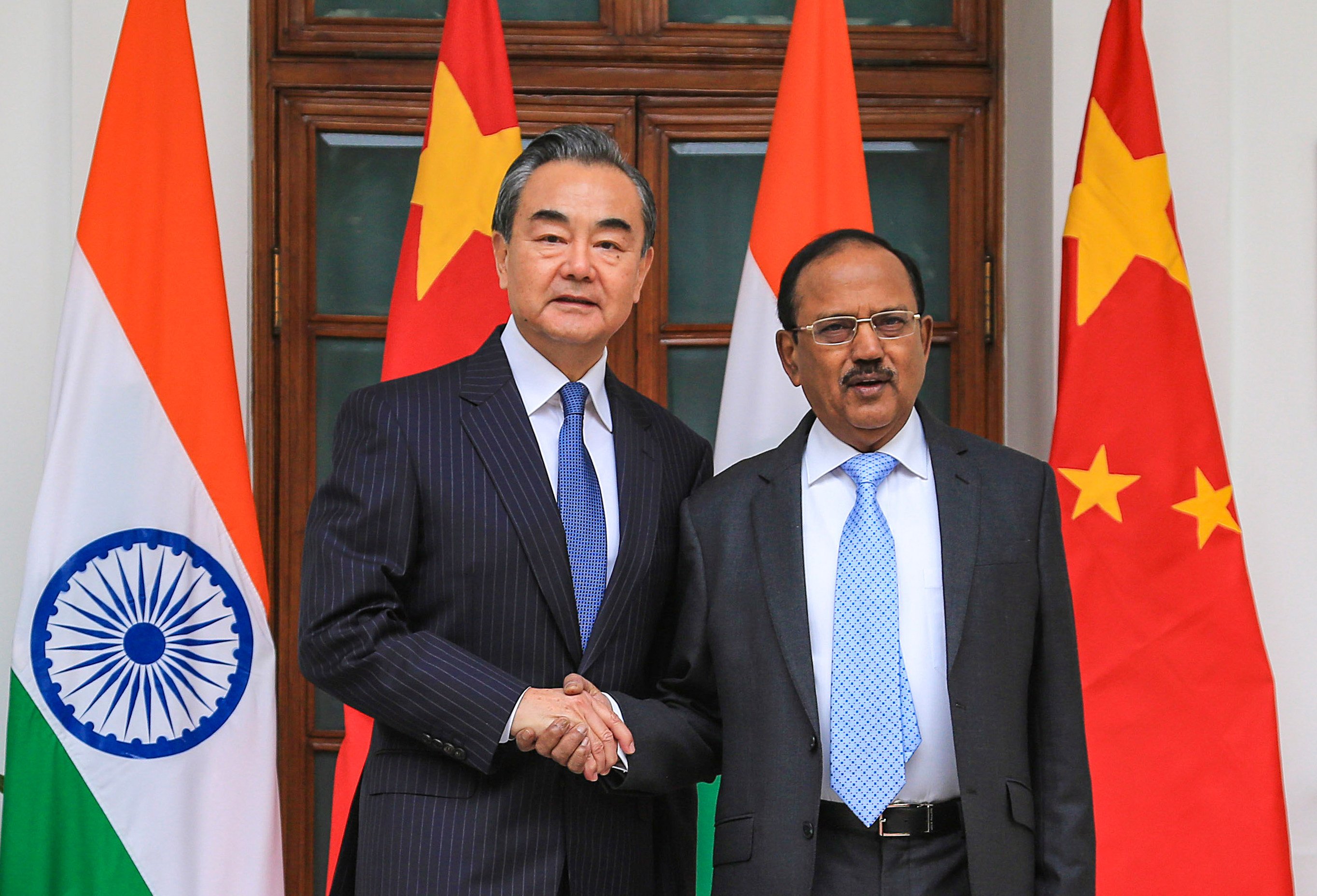
External Affairs Minister S. Jaishankar met Chinese Foreign Minister Wang Yi in Manila.
India and China then held the 36th Working Mechanism for Consultation and Coordination on India-China Border Affairs (WMCC) in New Delhi on August 6.
The meeting discussed:
- boundary delimitation;
- border management;
- mechanisms for coordination;
- trans-border cooperation;
- preventing misunderstanding and miscalculation.
Both sides agreed to continue diplomatic and military communication.
And yet, almost immediately afterward, reports of military tensions in Arunachal Pradesh resurfaced.
That juxtaposition is perhaps the most important part of the story.
The Border Talks Have Not Solved the Problem
The WMCC remains useful because it provides a mechanism for communication.
But it should not be mistaken for a settlement.
India and China have held dozens of rounds of diplomatic and military negotiations since the 2020 crisis.
These mechanisms have helped prevent incidents from automatically escalating into armed conflict.
But they have not resolved the basic territorial disagreement.
The latest meeting itself discussed boundary delimitation and border management, demonstrating that these fundamental questions remain unresolved.
The 2024 Disengagement Agreement Was Important—but Limited
India and China reached an October 2024 agreement on patrolling and disengagement in Depsang and Demchok in eastern Ladakh.
That was an important step after years of confrontation.
It helped reopen the path toward broader diplomatic normalisation.
But it did not settle the India-China boundary.
Nor did it resolve the Arunachal Pradesh dispute.
That distinction is essential.
Disengagement is not demarcation.
And:
border management is not a boundary settlement.
India Is Also Changing the Physical Balance
One of the biggest developments since 2020 has been India’s acceleration of infrastructure construction in Arunachal Pradesh.
New roads, tunnels, bridges and forward infrastructure are reducing the logistical disadvantages India historically faced in the eastern Himalayas.
The Frontier Highway, for example, is planned to run roughly 1,800 kilometres through Arunachal Pradesh along areas close to the northern frontier.
India has also invested heavily in all-weather connectivity, including tunnels and bridges.
This matters because border security is ultimately dependent on logistics.
A patrol cannot be reinforced quickly if the road behind it does not exist.
China Has a Major Infrastructure Advantage
China has also spent years improving its infrastructure on the Tibetan side of the frontier.
The PLA benefits from:
- extensive road networks;
- high-altitude airfields;
- logistics hubs;
- communications infrastructure;
- border settlements;
- surveillance systems.
This gives China the ability to sustain a much stronger presence in remote areas.
India has been closing the gap, but the infrastructure competition remains ongoing.
That is why an isolated patrol confrontation should not be viewed separately from the much larger infrastructure race along the Himalayas.
The Real Concern: Incremental Change
The most serious scenario for India is not necessarily a dramatic invasion.
It is gradual change.
Imagine a situation in which:
- patrols become less frequent on one side;
- the other side patrols more frequently;
- temporary facilities appear;
- roads improve;
- local access changes;
- administrative activity increases;
- the new situation becomes normalised.
No single step necessarily triggers war.
But the cumulative effect can change the practical balance.
That is why India is particularly sensitive to reports concerning access to traditional patrol points.
But India Also Has to Avoid Overreaction
There is an equally important danger on the Indian side.
Unverified claims of massive Chinese incursions can create:
- public panic;
- unnecessary military pressure;
- diplomatic escalation;
- political misinformation;
- loss of credibility.
Rijiju’s rejection of the 60-kilometre claim is therefore important.
The responsible approach is not to minimise legitimate border concerns.
It is to separate verified developments from exaggerated social-media narratives.
The Taksing issue deserves investigation precisely because the underlying situation is serious enough that facts should be established rather than replaced by viral claims.
The Hindustan Times Reporting Fits Into This Larger Picture
This is where the Hindustan Times material becomes relevant—but only as one part of the wider story.
The HT reporting correctly highlights the fundamental strategic issue: India cannot regard its relationship with China as fully normal while the frontier remains unsettled.
But the more important question is what is actually happening along the frontier.
And the current evidence points to a mixed picture:
| Issue | Current situation |
|---|---|
| Major 60-km Chinese incursion | Rejected by Indian government |
| Reports of PLA activity near Taksing | Reported, disputed |
| PPA fact-finding report | Claims persistent Chinese activity |
| Indian Army position | Government says territory is being safeguarded |
| LAC demarcation | Unresolved |
| China’s claim over Arunachal | Continues |
| India-China border talks | Continuing |
| 2024 Ladakh disengagement | Implemented in Depsang/Demchok |
| Final boundary settlement | No |
| India-China normalisation | Underway but conditional on border stability |
This is much closer to the actual situation than either extreme narrative.
What Happens Next?
Three developments deserve close monitoring.
1. Taksing verification
The most important question is whether the allegations concerning Shera 5 and other locations can be independently verified through military statements, satellite imagery or credible local reporting.
2. Patrol arrangements
India and China need to establish mechanisms that prevent competing perceptions of the LAC from producing repeated confrontations.
3. Boundary delimitation
Ultimately, the only durable solution is greater clarity about where the boundary actually lies.
Until that happens, both countries will remain vulnerable to recurring disputes.
India-China Relations Are Not Back to Normal
The broader lesson is that the post-2020 relationship remains fragile.
Trade can resume.
Flights can restart.
Visas can be restored.
Diplomatic meetings can increase.
But if the military situation along the LAC deteriorates again, the entire relationship can rapidly become unstable.
That is why India’s current formulation—that peace and tranquillity on the border are essential for the broader relationship—is strategically important.
The August 6 WMCC meeting explicitly reiterated this principle.
Final Analysis
The current India-China border story is not simply about an alleged Chinese incursion in Arunachal Pradesh.
Nor is it simply about whether a Hindustan Times editorial accurately described the situation.
The real issue is much larger.
India and China are trying to normalise relations while the eastern Himalayan frontier remains disputed, insufficiently demarcated and militarily sensitive.
The Taksing controversy demonstrates the problem.
India has rejected the most dramatic allegations, including claims of a 60-kilometre Chinese penetration. That rejection should be taken seriously.
At the same time, local political representatives and fact-finding teams have raised specific concerns about PLA activity and access to traditional Indian patrolling locations. Those allegations require verification rather than dismissal.
China continues to claim Arunachal Pradesh and is using diplomatic, cartographic and administrative measures to reinforce that claim.
India is responding with military preparedness, infrastructure development, diplomatic engagement and a stronger insistence that border stability must precede full normalisation.
The most important fact is therefore this:
The border has not been resolved. It is being managed.
And those are two very different things.
The 2024 disengagement in eastern Ladakh reduced one dangerous chapter of the confrontation, but it did not settle the boundary. The August 2026 WMCC meeting shows that India and China are still discussing boundary delimitation, border management and mechanisms to prevent miscalculation.
Meanwhile, the latest developments around Taksing demonstrate why the eastern sector cannot be treated as a secondary issue.
The real strategic contest is occurring through patrolling, infrastructure, access, surveillance, mapping, naming, administration and military presence.