

The U.S. Navy is turning Ukraine-proven Rusty Dagger into a low-cost maritime strike weapon as Washington moves to build thousands of affordable long-range missiles for the U.S. military and its allies.
The U.S. Navy has awarded Zone 5 Technologies a $65 million contract to develop a maritime-strike version of the AGM-188A Rusty Dagger under the Navy’s new Coalition Heterogeneous Affordable Offensive Strike (CHAOS) programme.
The contract is significant for more than the value of the award.
It represents a broader shift in U.S. missile strategy: instead of relying predominantly on small numbers of highly sophisticated and expensive stand-off weapons, the Pentagon is building a new class of lower-cost precision missiles that can be produced in much larger quantities.
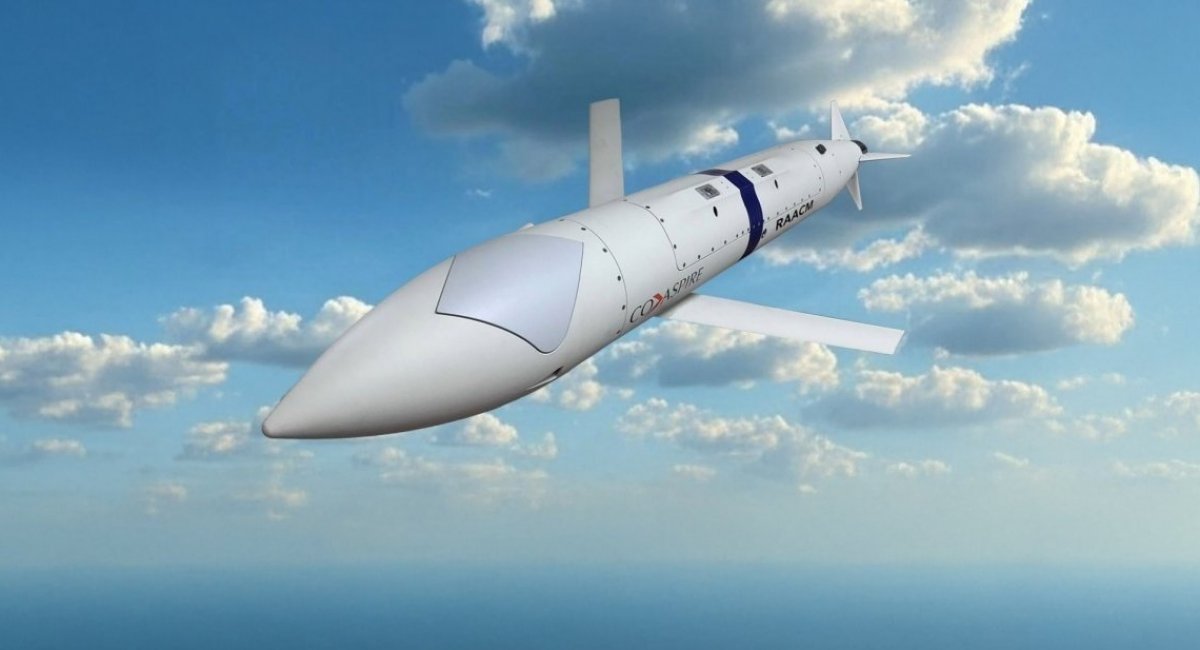
The Navy’s Precision Strike Weapons programme office, PMX-201, awarded two CHAOS development contracts this month, with Zone 5 developing the Rusty Dagger variant and CoAspire developing a separate maritime-strike weapon based on its Rapidly Adaptable Affordable Cruise Missile-Extended Range (RAACM-ER).
The two contracts are worth approximately $135 million combined—$65 million for Zone 5 and $70 million for CoAspire.
The Navy says CHAOS is intended to provide allies and partners with low-cost, scalable and exportable precision-strike weapons capable of engaging both land targets and maneuvering maritime targets.

Why the Rusty Dagger Contract Matters
The new contract takes an inexpensive air-launched cruise missile concept and pushes it into a much broader operational role.
Rusty Dagger was originally developed under the U.S. Air Force’s Extended Range Attack Munition (ERAM) effort as part of a push for affordable long-range strike weapons.
It has since become part of the Air Force’s Family of Affordable Mass Munitions (FAMM) effort and has also been selected for other U.S. programmes.
The Navy’s decision to adapt the missile for maritime strike demonstrates the Pentagon’s growing interest in common missile architectures that can be modified for different launch platforms and missions.
Rather than designing a completely new naval missile from scratch, the U.S. approach is increasingly to take a flight-tested or mature low-cost weapon and adapt it to additional roles.
That can reduce development time, lower production costs and simplify logistics.
CHAOS Is Designed Around Speed
The contracting mechanism is itself part of the story.
The Navy used an Other Transaction Authority (OTA) arrangement to move the CHAOS effort more rapidly than a conventional acquisition programme.
The Pentagon says OTA allows PMX-201 to align prototype development with military requirements while reducing acquisition overhead.
That fits a much broader Pentagon effort to accelerate weapons development and bring nontraditional defence companies into the industrial base.
The Navy says CHAOS was designed from the beginning with a “partner-first” approach.
That means foreign allies are not being treated simply as potential customers after the U.S. weapon has been developed.
Instead, the programme is being designed with international requirements and exportability in mind from the outset.
That could become one of the programme’s most important features.
A Missile Designed for the Mass-Production Era
The United States has traditionally invested heavily in sophisticated precision weapons.
Systems such as the Tomahawk and Joint Air-to-Surface Standoff Missile (JASSM) provide long-range precision strike, but their cost makes large-scale expenditure during a major conflict difficult.
The Pentagon is now pursuing a different calculation.
The objective is not necessarily to replace premium weapons.
It is to create a high-low mix in which expensive, highly capable weapons are combined with much larger numbers of cheaper missiles.
The Air Force’s FAMM programme illustrates the scale of that ambition.
Defense News reported that the Pentagon’s plans call for tens of thousands of affordable missiles over several years, with a target price dramatically below that of weapons such as JASSM. The Air Force has projected approximately 28,000 FAMM missiles over five years across the competing vendors, subject to testing, congressional approval and programme decisions.
That is the industrial logic behind Rusty Dagger.
The question is no longer simply:
How capable is one missile?
It is increasingly:
How many missiles can be built, deployed and replaced?
Rusty Dagger Has Already Been Tested From the F-16
The weapon is not purely a paper design.
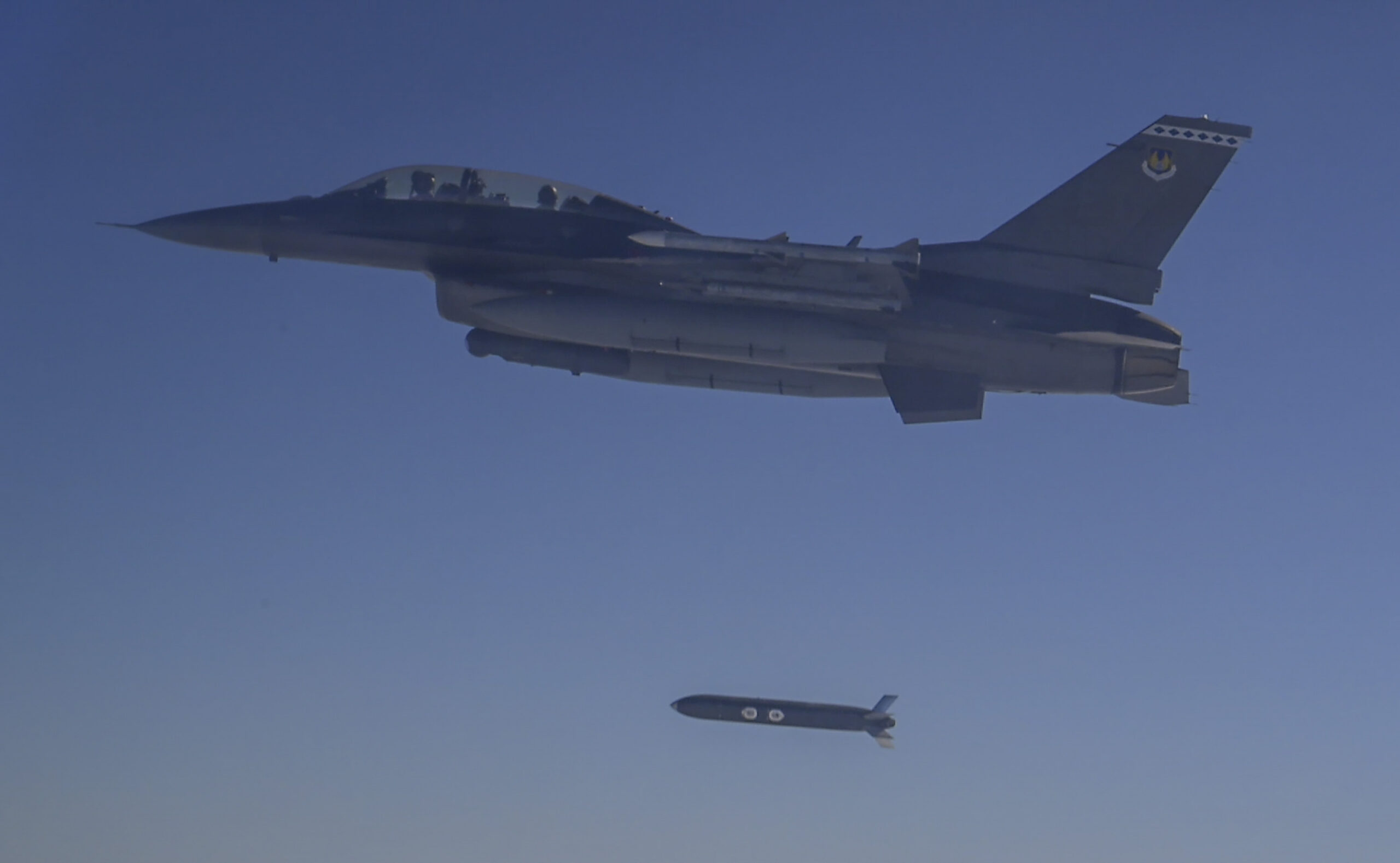
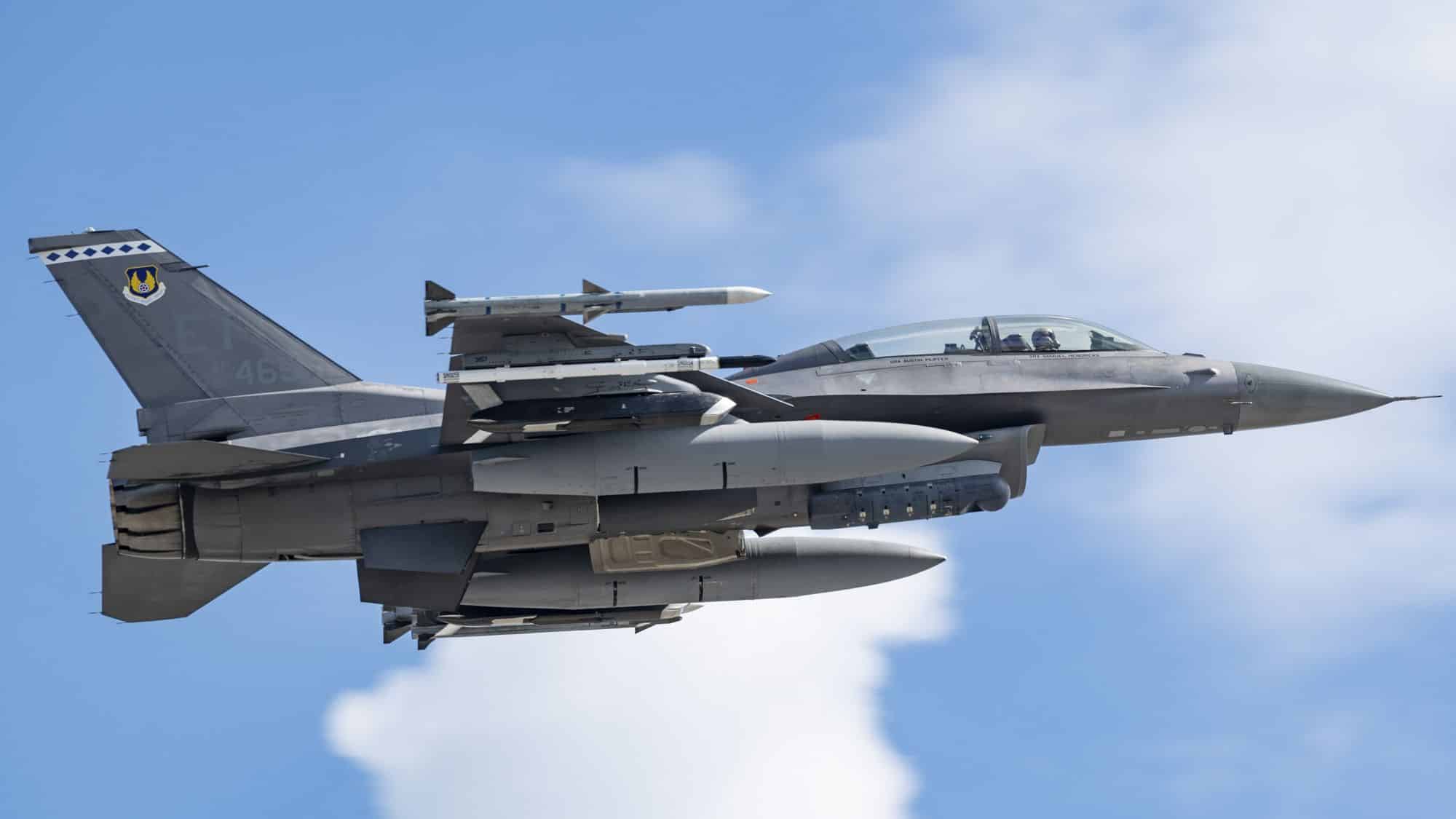
In 2026, the U.S. Air Force conducted integration and release testing of the Family of Affordable Mass Munitions-Lugged weapon from an F-16 Fighting Falcon.
Images from the test identified the weapon as Rusty Dagger.
The testing included fit and functionality checks, loading procedures and flight compatibility before the missile was released from the aircraft.
That experience is important because the Navy can build on a missile architecture that has already progressed through flight testing rather than starting with a completely unproven design.
Ukraine Has Provided a Real-World Test
Rusty Dagger has also gained unusual significance because of its reported use by Ukraine.
Naval News reported in July that recovered missile debris inside Russia was linked to Zone 5 Technologies through a component identification code.
The reporting associated the debris with Rusty Dagger strikes deep inside Russian territory and highlighted the missile’s guidance and anti-jamming features.
This matters because the Ukraine war has become an enormous real-world laboratory for long-range precision strike.
The conflict has demonstrated the importance of:
- long-range weapons;
- electronic warfare resistance;
- distributed launch platforms;
- affordable precision effects;
- large missile inventories; and
- rapid replenishment.
The U.S. military is closely watching these lessons.
The Rusty Dagger programme fits directly into that emerging operational philosophy.
From Ukraine to the Maritime Battlefield
The Navy’s challenge is different from the Air Force’s.
A land-attack missile can be optimised to strike a fixed or relatively predictable target.
A maritime-strike missile must deal with a moving target.
That requires an appropriate terminal sensing and targeting architecture capable of identifying and engaging maneuvering vessels.
The Navy has therefore specified that CHAOS must address both land targets and moving maritime targets.
The maritime version of Rusty Dagger will therefore require modifications beyond simply changing the launch platform.
Its sensors, targeting logic and terminal engagement architecture must be adapted to the maritime environment.
The exact configuration of the Navy’s Rusty Dagger variant has not yet been publicly disclosed in full.
The Navy Is Building a Competition, Not Betting on One Missile
One of the most significant aspects of CHAOS is that the Navy is developing two competing approaches simultaneously.
Zone 5 has received the $65 million Rusty Dagger contract.
CoAspire has received a $70 million contract for the RAACM-ER.
CoAspire’s weapon is a different design and is being developed under CHAOS as a ground-launched maritime-strike system. Aviation Week reported that the RAACM-ER has a claimed range of about 1,800 kilometres, although its final CHAOS configuration and performance should not be treated as established operational specifications.
The competitive approach gives the Navy options.
It also creates pressure on industry to deliver weapons that are:
affordable, producible, adaptable and exportable.
That is exactly what Washington wants from the programme.
CHAOS Could Change the Economics of Anti-Ship Warfare
For decades, maritime strike has been dominated by relatively sophisticated anti-ship missiles.
But the economics of naval warfare are changing.
A surface combatant, aircraft or missile battery can be extremely expensive.
A defending force therefore faces a difficult calculation when it must protect high-value platforms against potentially large numbers of relatively inexpensive incoming weapons.
The same problem exists in reverse.
A navy cannot assume that expensive missiles will always be available in sufficient quantities for a prolonged conflict.
CHAOS is an attempt to address that problem through affordable mass.
If the Navy can produce large numbers of maritime-strike missiles at substantially lower cost, it can create a larger threat envelope without consuming its most expensive weapons first.
This Is Also About China
Although the Navy’s announcement does not identify a particular adversary, the strategic logic of affordable maritime strike is highly relevant to the Indo-Pacific.
The U.S. Navy would face a fundamentally different problem in a major Pacific conflict than in a short regional operation.
Distances are enormous.
Targets can be dispersed.
Ships and aircraft may operate under persistent surveillance.
Chinese anti-access/area-denial capabilities could complicate the movement of U.S. and allied forces.
In that environment, the ability to launch large numbers of affordable long-range weapons could become critical.
The Pentagon’s broader affordable-munitions strategy is explicitly linked by defence analysts to preparations for a potential high-end conflict in the Pacific. Defense News reported that the push is intended to build larger inventories of stand-off weapons while reducing the cost of individual rounds.
CHAOS therefore fits into a much larger U.S. strategy.
The Real Revolution Is the Quantity
The most important characteristic of Rusty Dagger may ultimately not be its maximum range.
It is producibility.
A missile that is slightly less capable but available in large numbers can sometimes have greater strategic utility than a superb weapon that exists only in limited quantities.
That lesson has become increasingly visible in Ukraine.
High-end weapons can be extraordinarily effective, but wartime consumption can rapidly deplete inventories.
The United States is therefore trying to build an industrial base capable of replacing precision weapons at a rate consistent with a major conflict.
This is the underlying logic behind:
Affordable Mass Munitions.
The Air Force and Navy Are Converging on the Same Concept
The Rusty Dagger story also illustrates an increasing convergence between U.S. air and naval strike concepts.
The Air Force is pursuing affordable mass-produced stand-off weapons.
The Navy is adapting similar concepts for maritime strike.
The Army is pursuing low-cost containerised missiles.
The result is potentially a family of related weapons that can be deployed from different platforms.
That creates a more complicated problem for an adversary.
Instead of tracking one missile type launched from one platform, an opponent may have to defend against a network of:
- aircraft;
- surface launchers;
- mobile ground units;
- naval vessels;
- allied forces; and
- potentially palletised launch platforms.
The “Heterogeneous” in CHAOS Is Important
The word “Heterogeneous” in CHAOS is not accidental.
The Navy wants a family of weapons that can come from different suppliers and potentially operate from different platforms.
This reduces dependence on a single missile design or contractor.
It also supports coalition warfare.
If multiple allied nations can operate compatible systems, the combined missile inventory can become significantly larger.
The Pentagon says CHAOS is built around Modular Open Systems Approach (MOSA) and Weapon Open System Architecture (WOSA) principles.
That architecture is intended to allow faster hardware and software upgrades and potentially enable co-assembly or local integration by partner nations.
That is a major departure from traditional weapons procurement.
Exportability Is Being Built In From the Beginning
The Navy has openly described CHAOS as a partner-first programme.
According to the Pentagon, the programme was structured from the outset to address international release requirements and facilitate technology transfer to trusted allies and partners.
This could make CHAOS particularly important for U.S. allies that cannot afford large inventories of premium American missiles.
Instead of purchasing small numbers of expensive systems, partners could potentially acquire larger quantities of lower-cost weapons.
That would increase the overall missile capacity of U.S.-aligned coalitions.
Local Production Could Become Part of the Model
Another notable feature is the possibility of co-assembly and local industrial participation.
The Pentagon says the open architecture of CHAOS leaves room for local integration and national industrial participation by partner countries.
That could have major implications for countries seeking to build their own defence industries.
A partner might eventually contribute manufacturing capacity, components or assembly while remaining inside a common U.S.-led weapons ecosystem.
This could expand production without requiring every missile to be manufactured entirely inside the United States.
First Ground-Launch Capability Is Expected by 2028
The Navy says CHAOS is expected to begin with an expeditionary ground-launch capability, with production anticipated in 2028.
The programme could subsequently expand to surface-launch platforms and potentially air-launched configurations depending on operational requirements.
That timeline is important.
It suggests CHAOS is not being conceived simply as a future ship-launched missile.
The Navy wants a family that can evolve across domains.
That gives the programme considerable flexibility.
Why Other Transaction Authority Matters
Traditional U.S. weapons acquisition can take years.
The Pentagon’s use of an OTA reflects a desire to shorten the path between prototype development and operational capability.
OTA agreements are particularly attractive for working with nontraditional defence companies that may not have decades of experience navigating conventional procurement systems.
Zone 5 and CoAspire fit that model.
The Pentagon says CHAOS is intended to expand the defence industrial base by bringing new entrants into the Navy’s precision-strike portfolio.
That means the programme is simultaneously a weapons project and an industrial-base strategy.
Kongsberg’s Role Adds Another Dimension
Zone 5 is now part of Kongsberg, the Norwegian defence company.
Kongsberg acquired Zone 5 in 2026, bringing Rusty Dagger and other Zone 5 technologies into its portfolio.
That gives Kongsberg a growing role in the U.S. affordable-munitions ecosystem.
The company already has a major position in advanced missile systems through products such as the Joint Strike Missile (JSM).
Rusty Dagger gives the company exposure to a very different segment:
high-volume, lower-cost precision weapons.
That could allow Kongsberg to offer a broader “high-low” strike portfolio.
The company has previously highlighted the possibility of combining premium weapons such as JSM with larger numbers of cheaper Rusty Dagger missiles.
What Makes Rusty Dagger Different From Premium Cruise Missiles?
The strategic objective is not necessarily to make Rusty Dagger better than every existing cruise missile.
It is to make it good enough, affordable enough and producible enough to be used in large numbers.
Defense News reported that the U.S. Air Force is seeking a price point around $218,000 per FAMM round, compared with more than $1.3 million for JASSM.
Actual prices can vary by configuration, procurement quantity and programme stage, so these figures should be treated as programme targets rather than universal unit costs.
But the difference illustrates the basic concept.
If one premium missile costs several times more than an affordable alternative, a military can potentially purchase several lower-cost weapons for the price of one high-end round.
That changes procurement mathematics.
What the Navy Has Not Revealed
Despite the growing attention around CHAOS, several important details remain classified or undisclosed.
The Navy has not publicly released the full technical specifications of the CHAOS Rusty Dagger variant.
That means the following should not yet be treated as confirmed operational specifications:
- final range;
- exact warhead;
- terminal seeker;
- launch configuration;
- maximum speed;
- precise anti-ship performance;
- electronic-warfare resistance of the naval variant; and
- final unit cost.
The existing Rusty Dagger air-launched configuration provides a useful baseline, but the maritime variant may differ substantially.
A New Problem for Maritime Defences
The arrival of affordable maritime-strike missiles creates a difficult challenge for naval air defence.
A ship defending against incoming missiles must balance the cost and availability of its interceptors against the number and sophistication of threats.
If attackers can launch large numbers of comparatively inexpensive missiles, defenders may be forced to expend much more expensive defensive weapons.
That creates an economic exchange-rate problem.
The attacker wants to force the defender to spend premium interceptors against affordable offensive weapons.
The defender, meanwhile, needs layered air and missile defence capable of handling saturation attacks.
This is one reason the Pentagon is interested in affordable mass strike.
CHAOS Could Strengthen Allied Naval Power
The international dimension could ultimately be more important than the U.S. Navy’s own procurement.
The programme is explicitly designed around allies and partners.
The Pentagon says foreign military sales cases are being developed and partner nations are being invited to participate in defining future CHAOS requirements.
If multiple countries eventually acquire compatible CHAOS weapons, the result could be a distributed coalition strike network.
That could matter in the Indo-Pacific, North Atlantic, Mediterranean, Gulf and other maritime theatres.
Instead of one navy maintaining a limited inventory, several allied forces could contribute to a common pool of affordable precision-strike capacity.
The Strategic Lesson From Ukraine
The Rusty Dagger story cannot be separated from Ukraine.
The war has demonstrated that precision strike is no longer exclusively the domain of expensive major-power weapons.
Ukraine has combined Western missiles, domestically produced systems and relatively inexpensive long-range strike weapons.
The ability to produce weapons rapidly and sustain stocks has become almost as important as the sophistication of individual systems.
The United States appears to be absorbing that lesson.
CHAOS and FAMM are essentially an industrial answer to a battlefield problem:
How do you maintain a large precision-strike inventory when a major war can consume weapons at a far faster rate than peacetime production?
The answer being pursued by Washington is:
build cheaper weapons, use open architectures, expand the industrial base and manufacture at scale.
What This Means for the Future of Naval Warfare
The Navy’s Rusty Dagger decision points toward a broader transformation.
Future maritime strike may increasingly involve a mix of:
premium missiles + affordable missiles + drones + decoys + electronic warfare + distributed launch platforms.
The objective is not simply to find one perfect missile.
It is to create a layered offensive system capable of overwhelming or complicating an adversary’s defences.
Rusty Dagger’s maritime variant could become one component of that architecture.
Its ultimate value will depend on whether the Navy can deliver the promised combination of affordability, reliability, range and maritime targeting.
The Bottom Line
The U.S. Navy’s $65 million Rusty Dagger contract is an important step in Washington’s move toward affordable mass precision strike.
Under CHAOS, Zone 5 will adapt the AGM-188 Rusty Dagger into a weapon capable of addressing both land and maneuvering maritime targets, while CoAspire develops a separate RAACM-ER-based solution under a parallel $70 million contract.
The programme is significant because it combines several trends reshaping modern warfare:
low-cost missiles, mass production, open architecture, rapid acquisition, coalition interoperability and exportability.
The U.S. Navy is not simply looking for another cruise missile.
It is trying to build a new economic model for precision warfare.
The Ukraine war has demonstrated the importance of missile inventories and industrial replenishment. The Pentagon’s FAMM programme is now translating that lesson into a broader U.S. procurement strategy, with plans for tens of thousands of affordable missiles across competing designs.
CHAOS takes the concept into the maritime domain.
If successful, the result could be a new generation of affordable anti-ship and land-attack weapons that can be produced in large numbers and distributed among U.S. allies.
That could prove especially important in a future high-end maritime conflict where the ability to fire the first missile matters—but the ability to keep firing missiles may matter even more.