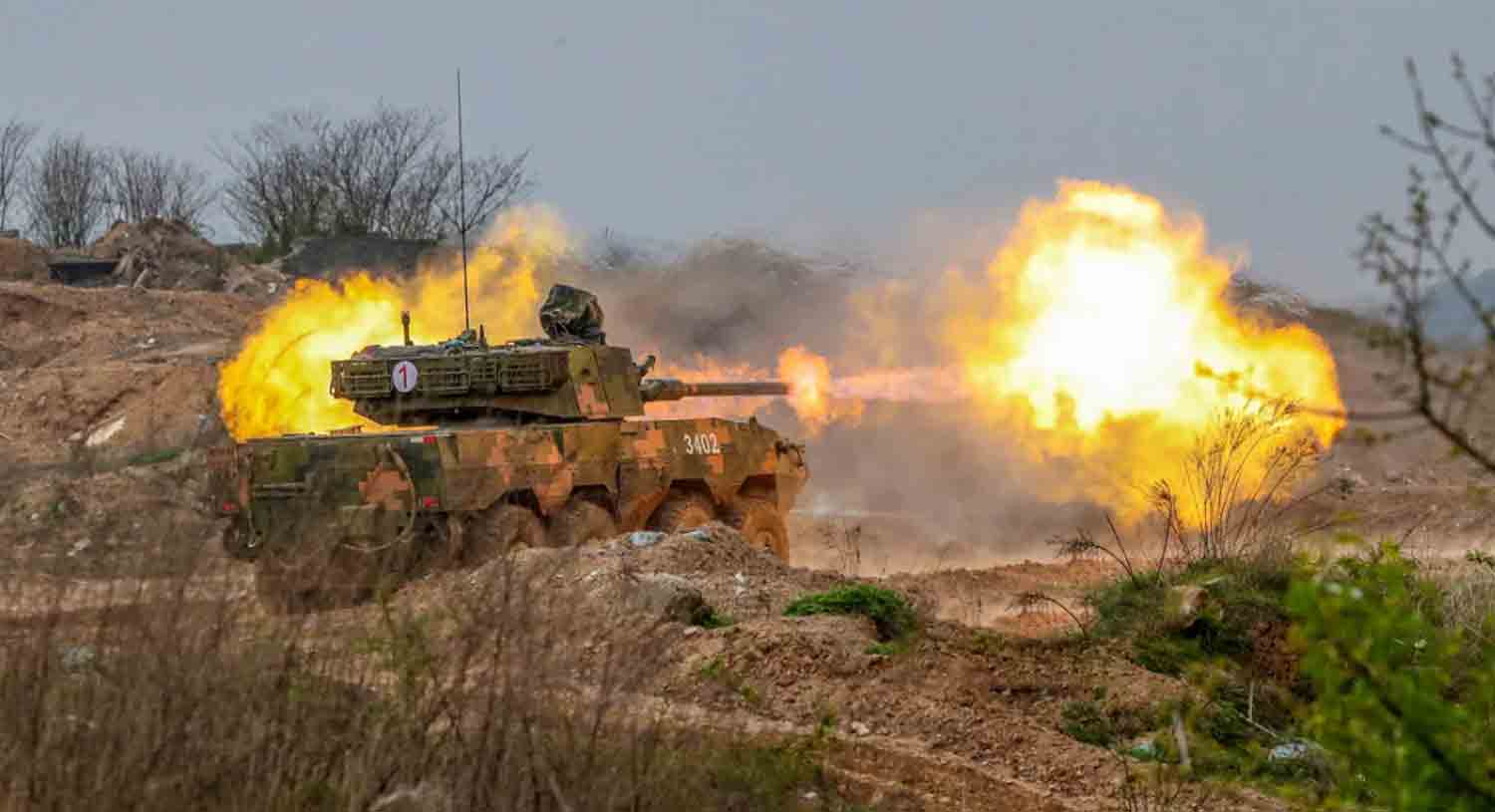

A claim circulating in Indian media about an unusual 60-hour surge in Chinese and Turkish military transport activity into Pakistan has triggered questions in India about a possible new defence equipment transfer. The reported flights, if independently confirmed, would be significant—but the exact cargo, number of aircraft and operational purpose remain unverified in publicly available official sources.
A claim by Indian journalist Rahul Shivshankar, with reporting by Manoj Gupta, says that Indian security agencies have been tracking what is described as an unusually intense period of Chinese and Turkish military airlift activity involving Pakistan.
According to the claim, Chinese military transport aircraft reportedly landed at Nur Khan Air Base in Rawalpindi and Masroor Air Base in Karachi, while Turkish military aircraft allegedly brought drones and other defence equipment into Pakistan.
INDIA IS WATCHING & TRACKING
CHINA-TÜRKIYE’S PAK AIRLIFT EXPOSED.
60-HOUR MILITARY SURGE
Chinese warplanes at Pak Bases. Turkiye flies in drones and war gear.Timing is awkward and consequential as this arms boost to Pak comes ahead of SCO & BRICS meets.
MANOJ GUPTA reports… pic.twitter.com/kMg2f6MUDd
— Rahul Shivshankar (@RShivshankar) August 20, 2026
The claim describes the activity as a “60-hour military surge” and suggests that the timing—amid a rapidly changing regional security environment and shortly before major multilateral diplomatic engagements—has attracted particular attention in India.
However, there is an important distinction between what has been reported and what has been independently established.
Indian outlets including News18, Moneycontrol, India.com and Navbharat Times have reported the alleged surge, citing security sources, but there is no official Pakistani, Chinese or Turkish confirmation identifying the flights or their cargo.
That means the story should be treated as a reported intelligence assessment rather than a confirmed inventory of weapons delivered to Pakistan.
What Is Being Claimed?
The reported allegation contains several separate elements:
- Chinese military transport aircraft allegedly made repeated flights to Pakistan.
- Nur Khan and Masroor are identified as destinations.
- Turkish military aircraft reportedly participated in the activity.
- Turkish aircraft allegedly transported drones and other military equipment.
- The activity reportedly continued for approximately 60 hours.
- Indian security agencies are said to have monitored the movements.
- The timing has been linked by Indian commentators to the wider regional diplomatic environment.
Some Indian reporting has identified the Chinese aircraft as Y-20 transports and Turkish aircraft as A400M transports, but these identifications should also be treated cautiously unless supported by independently verified imagery, flight tracking or official documentation.
What We Can Confirm About the China-Pakistan Defence Relationship
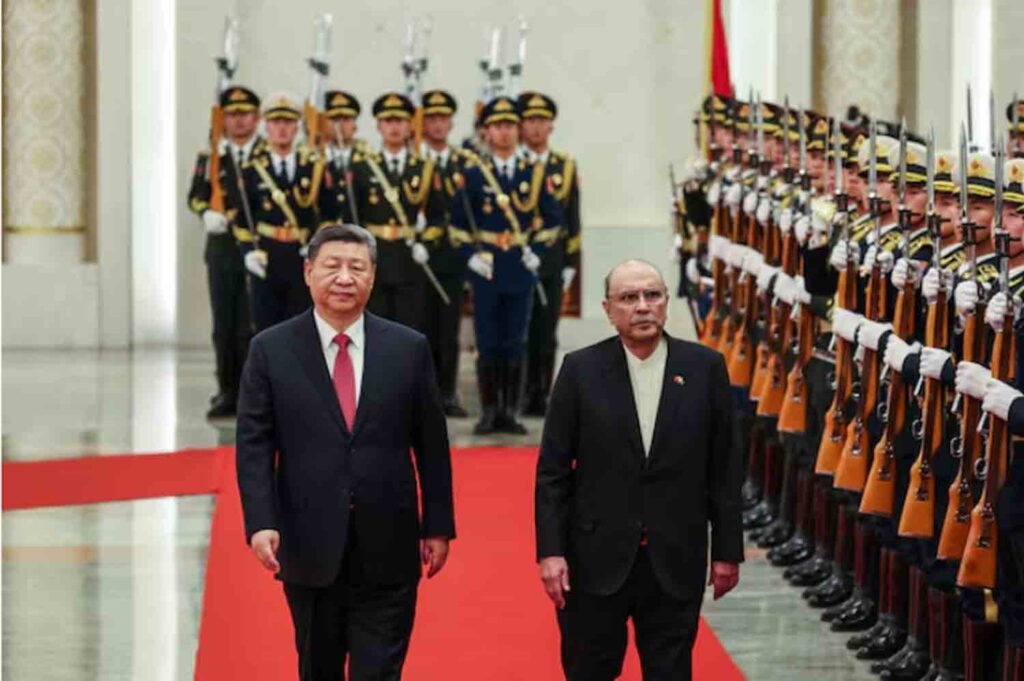
The most important context is that Chinese military cooperation with Pakistan is neither new nor unusual.
Pakistan and China describe their relationship as an “all-weather strategic cooperative partnership,” and their defence relationship has expanded considerably.
During Prime Minister Shehbaz Sharif’s May 2026 visit to China, both governments explicitly committed to deepening defence and security cooperation, military-to-military cooperation and the China-Pakistan security partnership.
Pakistan has also publicly highlighted cooperation involving:
- J-10C fighter aircraft;
- JF-17 Thunder;
- unmanned aerial systems;
- integrated command-and-control systems;
- defence production;
- aerospace technology.
President Asif Ali Zardari’s 2025 visit to AVIC’s aircraft complex in China also highlighted cooperation involving the J-10C, JF-17 and unmanned systems.
Therefore, Chinese military airlift to Pakistan would not, by itself, establish that something extraordinary is occurring.
The significance would depend on:
what was transported, in what quantity, for what purpose and whether the movement represents an acceleration of an existing programme.
Why the Y-20 Matters
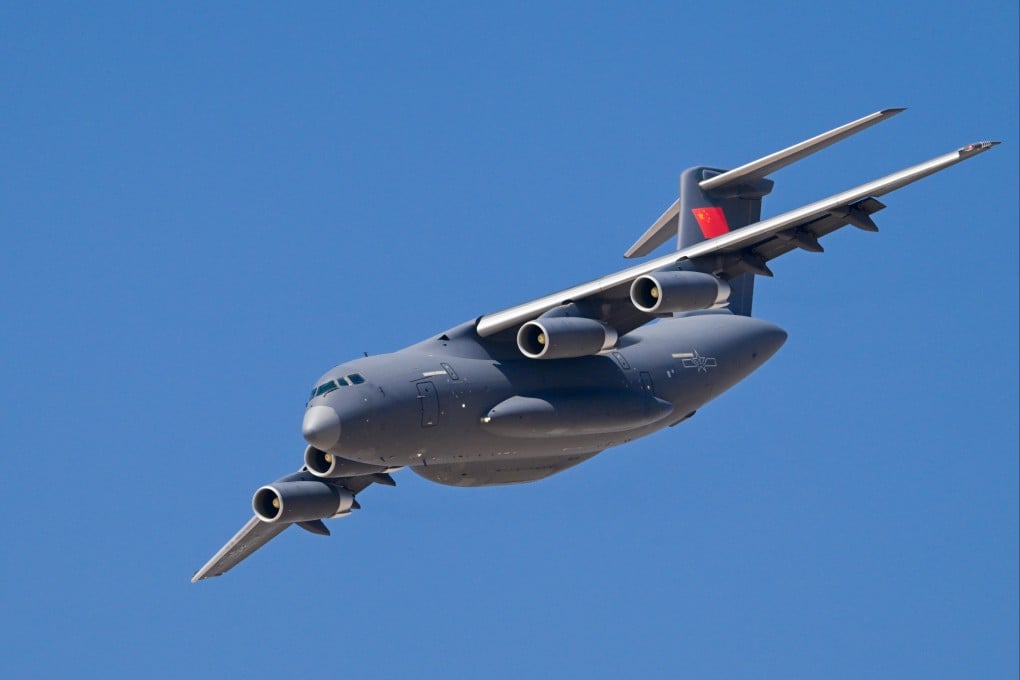
China’s Y-20 is a large strategic military transport aircraft designed for long-distance movement of personnel and heavy cargo.
China’s Ministry of National Defense describes the Y-20 as its first domestically developed new-generation large military transport aircraft, capable of long-range airlift and carrying heavy payloads.
Consequently, repeated Y-20 activity at Pakistani military airfields—if verified—would be noteworthy.
But even then, the aircraft could potentially transport a wide range of material:
- personnel;
- spare parts;
- vehicles;
- maintenance equipment;
- humanitarian cargo;
- aviation equipment;
- military systems.
The aircraft type alone cannot establish what was inside.
This is particularly important because some Indian reports have moved quickly from the alleged aircraft movements to conclusions about specific weapons.
That leap requires evidence.
What About Türkiye?

The Turkish side of the reported activity is more strategically interesting because Pakistan-Türkiye defence cooperation has been accelerating independently of China.
In April 2026, the 20th round of the Pakistan-Türkiye High-Level Military Dialogue Group was held in Rawalpindi.
The two sides discussed:
- defence cooperation;
- military cooperation;
- defence-industry collaboration;
- training;
- capacity building;
- strategic partnership.
Both sides agreed to continue regular high-level engagement.
In May, Pakistan’s Air Chief Marshal Zaheer Ahmed Baber Sidhu visited Türkiye and held discussions with the Turkish Defence Minister, Turkish Air Force commander and Baykar leadership.
The discussions specifically included unmanned aerial systems and emerging aerospace technologies.
That provides an important factual backdrop to the current claim.
Pakistan and Türkiye Already Have a Drone Relationship

Therefore, the allegation that Turkish aircraft could be transporting drone-related equipment to Pakistan is not occurring in a vacuum.
Pakistan and Türkiye have already developed cooperation in unmanned systems.
Pakistan has previously worked with Turkish industry on platforms including the Anka family, while Turkish systems such as Bayraktar drones have also become part of Pakistan’s broader unmanned warfare ecosystem.
More importantly, Pakistani and Turkish defence officials have publicly discussed expanding cooperation in:
UAVs + aerospace + training + defence production + emerging technologies.
So the broader direction of travel is established.
What remains unverified is whether the reported 60-hour airlift represents a new delivery, a routine logistical movement, or an acceleration of an existing programme.
The Makkah Defence Agreement Adds Another Layer
The timing of the allegation is particularly interesting because Saudi Arabia, Türkiye and Pakistan signed the Makkah Joint Defence Agreement on August 7, 2026.
The agreement says an armed attack against one of the three countries will be regarded as an attack against all three and calls for expanded defence cooperation.
Türkiye has also said the agreement will involve:
- joint military exercises;
- political and military coordination;
- defence-industrial cooperation;
- technology transfer;
- cooperation in unmanned systems;
- electronic warfare;
- artificial intelligence.
This makes the reported Chinese-Turkish activity potentially more interesting from a regional security architecture perspective.
It does not prove that the flights were connected to the Makkah pact.
But it does show why India is watching developments involving Pakistan, Türkiye and China more closely.
The New Strategic Triangle Is Bigger Than Pakistan-China
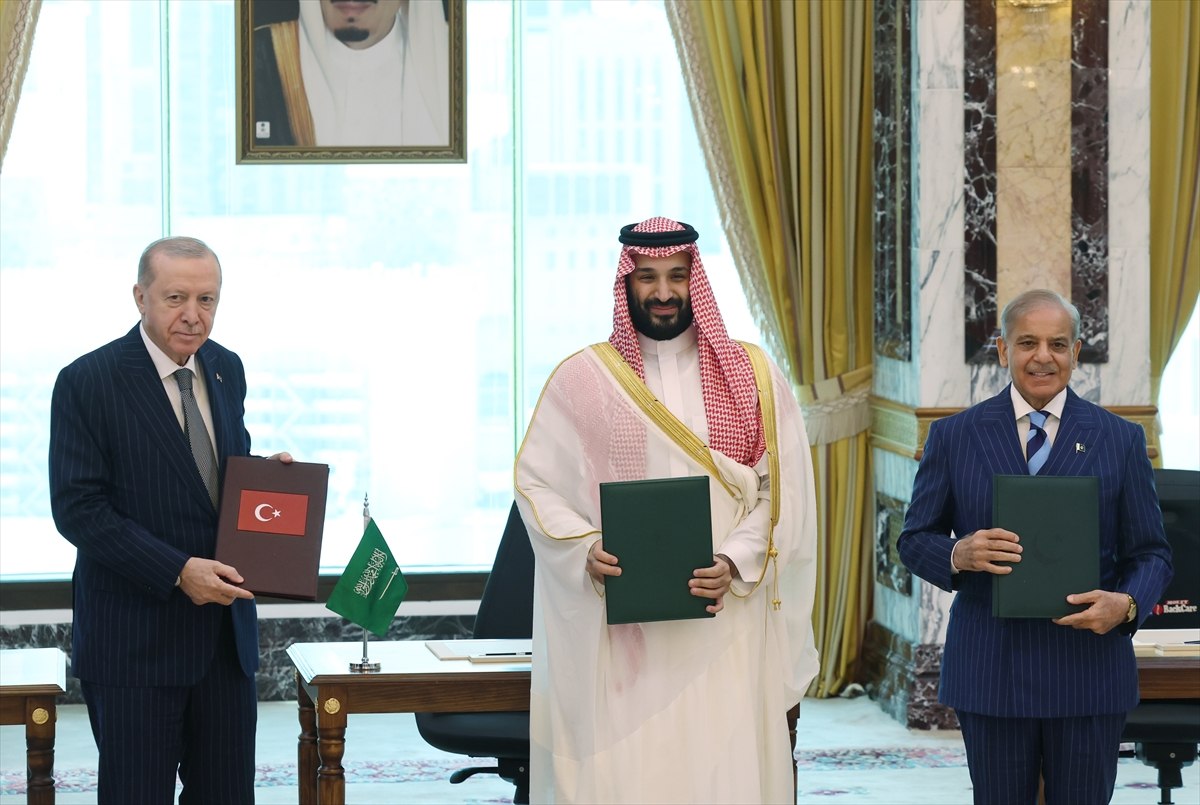
For years, Pakistan’s defence relationship with China was the principal external pillar of its military modernization.
That picture is now becoming more complicated.
Pakistan is developing increasingly close defence relationships with:
China + Türkiye + Saudi Arabia
Each relationship serves a different purpose.
China
Technology, aircraft, missiles, air defence, naval systems, industrial cooperation and strategic partnership.
Türkiye
Drones, naval cooperation, aerospace, defence industry, training and emerging technologies.
Saudi Arabia
Strategic depth, economic links, military cooperation and now a formal mutual-defence framework.
This combination is much more consequential than any individual aircraft movement.
Why India Is Watching Closely
India’s concern is understandable from a military-planning perspective.
The Indian security establishment has to monitor changes in Pakistan’s:
- air power;
- drone capability;
- electronic warfare;
- precision strike;
- air defence;
- surveillance;
- logistics;
- defence-industrial capacity.
The reported airlift therefore matters primarily because it could potentially indicate rapid replenishment or introduction of new capabilities.
But it would be premature to conclude that Pakistan has received a major new weapons system simply because military transports reportedly arrived.
The May 2025 Conflict Changed the Context
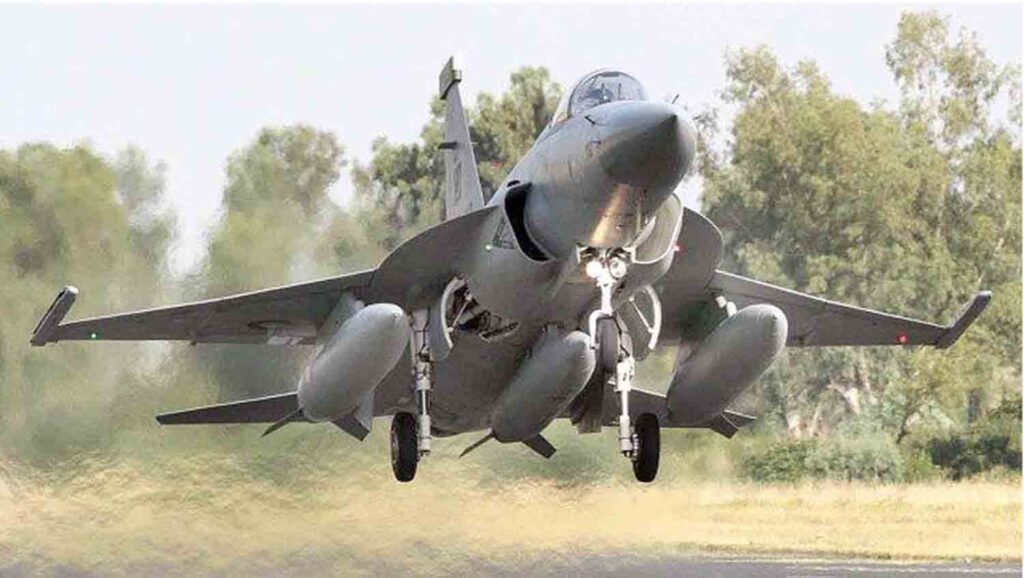
Any assessment of Pakistani military acquisitions also has to consider the lessons of the May 2025 India-Pakistan conflict.
That conflict demonstrated the importance of:
- beyond-visual-range air combat;
- airborne early warning;
- long-range precision weapons;
- drones;
- electronic warfare;
- integrated air defence;
- command-and-control;
- real-time intelligence.
Pakistan subsequently continued strengthening its military relationships with China and Türkiye.
Reuters’ July 2026 assessment described Pakistan as possessing a substantial combat-aircraft fleet including J-10Cs and JF-17s, alongside F-16s and a broad missile and naval inventory.
Therefore, any new Chinese or Turkish equipment entering Pakistan would be viewed through the lens of the evolving post-2025 military balance.
Could the Airlift Involve Drones?
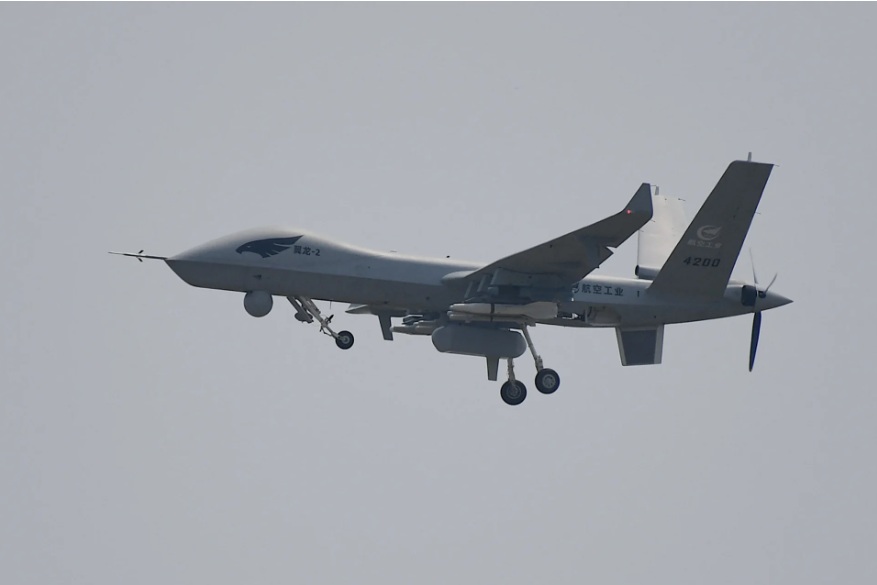
Possibly—but this remains an unverified claim.
Türkiye has become one of the world’s most prominent exporters of armed unmanned systems, while Pakistan has increasingly invested in UAVs.
The two countries are also discussing next-generation aerospace cooperation.
Therefore, a Turkish military transport aircraft carrying drone-related equipment would be technically plausible.
But there are several possibilities:
- complete UAV systems;
- spare parts;
- ground-control equipment;
- maintenance equipment;
- training systems;
- sensors;
- components for local production;
- unrelated military cargo.
Without imagery or documentation showing the cargo, it would be irresponsible to identify one of these as fact.
Could China Also Be Supplying Drone Technology?
Again, this is plausible within the broader defence relationship.
China has supplied Pakistan with various unmanned platforms and associated technology.
But the current reports do not provide sufficient public evidence to establish exactly which Chinese systems, if any, were delivered during the alleged 60-hour period.
This distinction is essential for a fact-based defence report.
The stronger story is not:
“China and Türkiye have delivered X weapons to Pakistan.”
It is:
“Indian media reports an unusually intense Chinese and Turkish military airlift to Pakistan, but the exact cargo and purpose remain unconfirmed.”
That is both more accurate and more defensible journalistically.
Is This Connected to the SCO?
Indian reports have highlighted the timing of the activity ahead of major multilateral meetings.
But here too, some clarification is necessary.
The SCO Council of Heads of State summit is scheduled for September 1, 2026, in Bishkek, Kyrgyzstan. SCO officials have confirmed preparations for that summit.
Pakistan is preparing to assume the SCO Council of Heads of State chairmanship in September 2026 and will host the summit in Islamabad in 2027.
So there is indeed a major diplomatic calendar ahead.
But there is no public evidence establishing that the alleged airlift was timed specifically for the SCO summit.
That is an interpretation, not a verified fact.
The BRICS Reference Needs Even More Caution

The claim also links the alleged airlift to the upcoming BRICS meetings.
This should be treated carefully.
A defence shipment can coincide with a diplomatic calendar without being caused by it.
Military logistics are frequently scheduled around:
- procurement timelines;
- maintenance cycles;
- training;
- exercises;
- operational requirements;
- production schedules.
Therefore, the proximity of a shipment to an international summit does not automatically establish a geopolitical signal.
What Would Make the Claim Much Stronger?
There are several pieces of evidence that would transform this from an intelligence-source claim into a much stronger independently verifiable story.
1. Satellite imagery
Images showing aircraft at Nur Khan or Masroor during the relevant period.
2. Aircraft identification
Confirmed tail numbers or serial numbers.
3. Flight-tracking data
Independent evidence showing aircraft movements and routes.
4. Cargo imagery
Photographs or video showing military equipment being unloaded.
5. Official confirmation
Statements from Pakistan, China or Türkiye identifying the purpose of the flights.
6. Procurement evidence
Contract or delivery documentation identifying a system being transferred.
Until such evidence emerges, the cargo should be described as alleged or reported, not confirmed.
The More Important Story: Pakistan’s Defence Network Is Expanding
Even if the 60-hour airlift claim ultimately turns out to involve routine military logistics, the broader strategic trend is unmistakable.
Pakistan’s defence relationships are becoming more interconnected.
China remains the principal long-term strategic defence partner.
Türkiye is rapidly expanding its role in:
- drones;
- naval systems;
- aerospace;
- defence technology;
- training.
Saudi Arabia has now entered a formal mutual-defence arrangement with Pakistan and Türkiye.
That creates a broader security network around Pakistan.
It is not necessarily an anti-India bloc.
But it gives Islamabad more strategic options and greater defence-industrial connectivity.
The Makkah Pact Could Accelerate Defence Cooperation
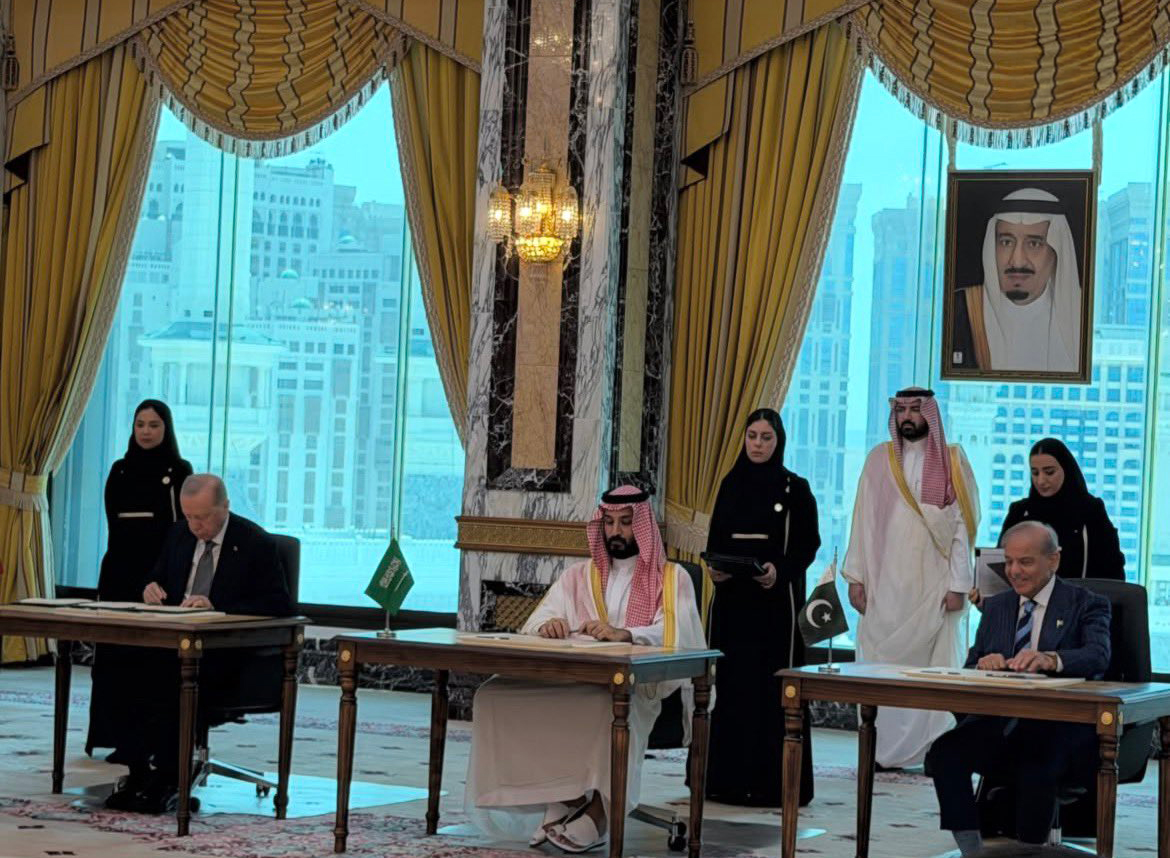
The Makkah agreement explicitly envisages deeper defence cooperation among Saudi Arabia, Türkiye and Pakistan.
That could eventually produce:
- more joint exercises;
- shared training;
- defence-industrial projects;
- technology transfer;
- UAV cooperation;
- electronic warfare cooperation;
- intelligence coordination.
Türkiye’s defence ministry has described the agreement as a mechanism for strengthening collective deterrence and expanding defence cooperation.
Therefore, India’s strategic concern should arguably focus less on one 60-hour airlift and more on the possibility that Pakistan is becoming part of a wider and increasingly institutionalised defence ecosystem.
What Does China Gain?
China already has a deeply established defence relationship with Pakistan.
The question is whether China’s role could become increasingly complementary to Turkish and Saudi defence cooperation.
China can provide:
- scale;
- manufacturing;
- missiles;
- combat aircraft;
- air defence;
- sensors;
- electronics;
- naval systems.
Türkiye brings strengths in:
- UAVs;
- precision weapons;
- aerospace;
- electronic warfare;
- autonomous systems.
Pakistan provides:
- operational experience;
- an established military-industrial base;
- geographic access to the Arabian Sea;
- an experienced air force;
- an existing defence relationship with both countries.
The combination could become more significant over time.
Does This Mean China and Türkiye Are Coordinating Military Deliveries?
There is not enough evidence to say so.
This is another point where Indian reporting should be separated from established facts.
The fact that Chinese and Turkish aircraft reportedly appeared in Pakistan during the same period does not automatically prove a coordinated China-Türkiye operation.
There may be separate bilateral deliveries occurring simultaneously.
There could also be coordination.
But that would require evidence.
The stronger analytical conclusion is that Pakistan’s defence relationships with Beijing and Ankara are independently deepening, and the overlap is becoming strategically important.
Why Pakistan’s Air Bases Matter
Nur Khan and Masroor are not ordinary civilian airports.
Their military roles make them logical locations for receiving military transport aircraft.
Nur Khan, adjacent to Rawalpindi, is an important Pakistan Air Force transport and logistics hub.
Masroor in Karachi is another major military aviation facility.
Therefore, reports of military transport aircraft using these locations are not inherently suspicious.
The unusual element would be the frequency, timing, aircraft types and nature of cargo, if those details are independently confirmed.
The Indian Narrative Should Be Examined Carefully
The language used in some Indian coverage—such as “exposed,” “arms boost” and “India is watching”—reflects an intelligence and threat-assessment framing.
That does not mean the underlying observation is false.
But it does mean readers should distinguish between:
observation → interpretation → conclusion.
For example:
Observation: military transport aircraft reportedly arrived.
Interpretation: they may have transported defence equipment.
Conclusion: Pakistan’s military capability may be receiving a rapid boost.
The first requires evidence.
The second requires stronger evidence.
The third requires still more evidence.
A responsible defence analysis should not collapse all three into a single fact.
What This Means for India’s Military Planning
If the reported activity is confirmed as weapons transfers, India would likely focus on the type and operational relevance of the equipment rather than simply the number of flights.
Particular attention would likely be given to:
- armed UAVs;
- long-range surveillance drones;
- electronic warfare systems;
- air-defence components;
- precision weapons;
- aviation spares;
- command-and-control equipment.
These systems can influence military effectiveness without dramatically changing the visible size of an air force.
Pakistan’s Defence Modernization Is Already Underway
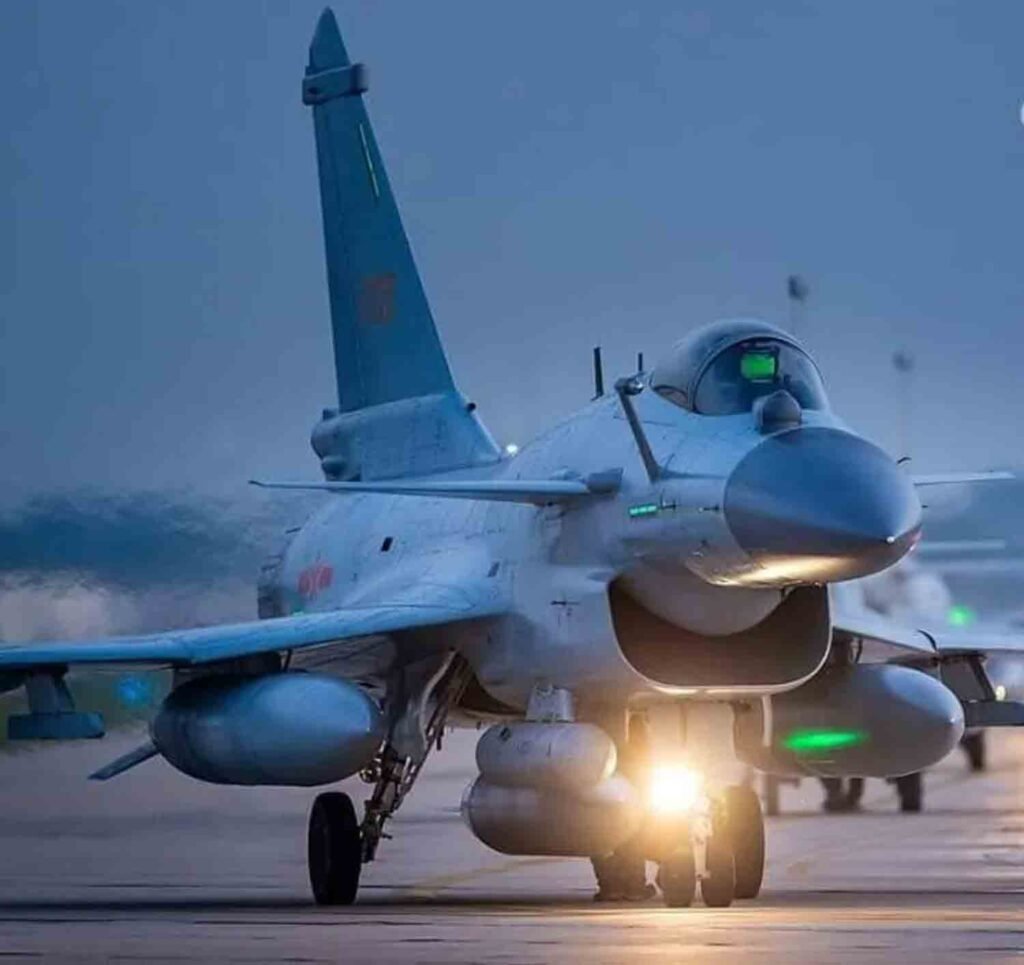
It is also important not to exaggerate the effect of any single shipment.
Pakistan already possesses a sizeable military capability.
Reuters estimates that Pakistan has more than 420 combat-ready aircraft, including J-10Cs, JF-17s and F-16s, while its navy operates submarines and frigates and its strategic forces provide a nuclear deterrent.
Consequently, the strategic significance of new Chinese or Turkish deliveries would depend on whether they introduce qualitatively new capabilities, improve readiness or increase stockpiles.
Bottom Line
The reported 60-hour Chinese-Turkish military airlift to Pakistan is worth monitoring, but it should not yet be presented as a confirmed major weapons delivery.
Indian media reports, citing security sources, claim that Chinese military transport aircraft repeatedly arrived at Nur Khan and Masroor and that Turkish military aircraft transported drones and other equipment.
However, publicly available evidence reviewed for this report does not independently establish:
- the exact number of flights;
- the aircraft serial numbers;
- the precise cargo;
- whether the Chinese and Turkish movements were coordinated;
- whether new weapons systems were delivered;
- or whether the activity was directly connected to the SCO or BRICS calendar.
What is firmly established is more important in the long term.
Pakistan’s defence relationship with China continues to deepen, with both governments explicitly committing in May to stronger defence and security cooperation.
Pakistan-Türkiye defence cooperation is also expanding across aerospace, UAVs, training and defence industry.
And the August 7 Makkah Joint Defence Agreement has placed Pakistan, Türkiye and Saudi Arabia inside a new formal framework for collective security cooperation.
That is the real strategic development.
The story is not simply about aircraft landing at Pakistani airbases. It is about the emergence of a more interconnected defence ecosystem involving Pakistan, China and Türkiye, with Saudi Arabia now adding another strategic layer.
If the reported 60-hour airlift is subsequently confirmed through satellite imagery, flight data or official documentation—and if the cargo is shown to include advanced drones, sensors, precision weapons or other high-value systems—it would provide tangible evidence that this broader defence relationship is translating into accelerated military deliveries.
Until then, the most defensible conclusion is:
Indian security agencies may indeed be watching unusual military air activity around Pakistan, but the claim of a major Chinese-Turkish weapons surge remains a developing story rather than a fully verified fact.