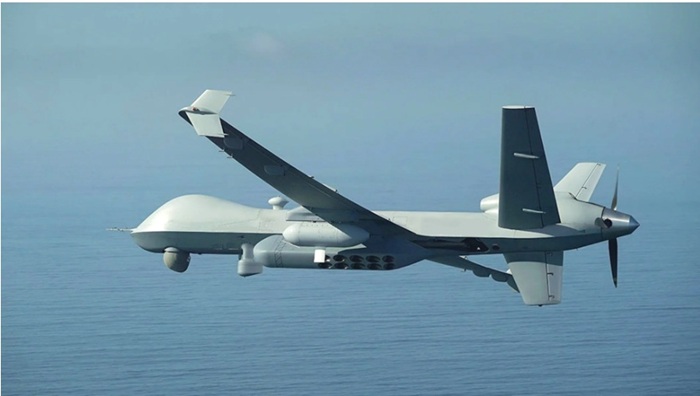
India has signed a ₹1,943 crore (approximately US$220 million) agreement with General Atomics Aeronautical Systems Inc. (GA-ASI) to lease two MQ-9B SeaGuardian High-Altitude Long-Endurance (HALE) remotely piloted aircraft for the Indian Navy over a period of 30 months.
According to the Ministry of Defence, the drones will significantly improve India’s Maritime Domain Awareness (MDA) by providing persistent Intelligence, Surveillance and Reconnaissance (ISR) across the Indian Ocean Region.
India’s MoD inks contract with General Atomics Aeronautical Systems, Inc for leasing of two MQ-9B Sea Guardian High-Altitude Long-Endurance Remotely Piloted Aircraft Systems for Indian Navy for 30 months.
Ministry of Defence has signed a contract with General Atomics… pic.twitter.com/018wtc5mGX
— Aditya Raj Kaul (@AdityaRajKaul) August 17, 2026
The announcement has attracted considerable attention because the MQ-9B is widely regarded as one of the world’s most capable maritime surveillance drones.
However, from a regional military perspective, the more important question is how India’s new capability compares with the unmanned aerial arsenals of China, Pakistan and Türkiye.
The answer is nuanced.
While the MQ-9B significantly strengthens India’s maritime surveillance network, two leased aircraft alone are unlikely to alter the regional UAV balance of power.
What Makes the MQ-9B SeaGuardian Special?
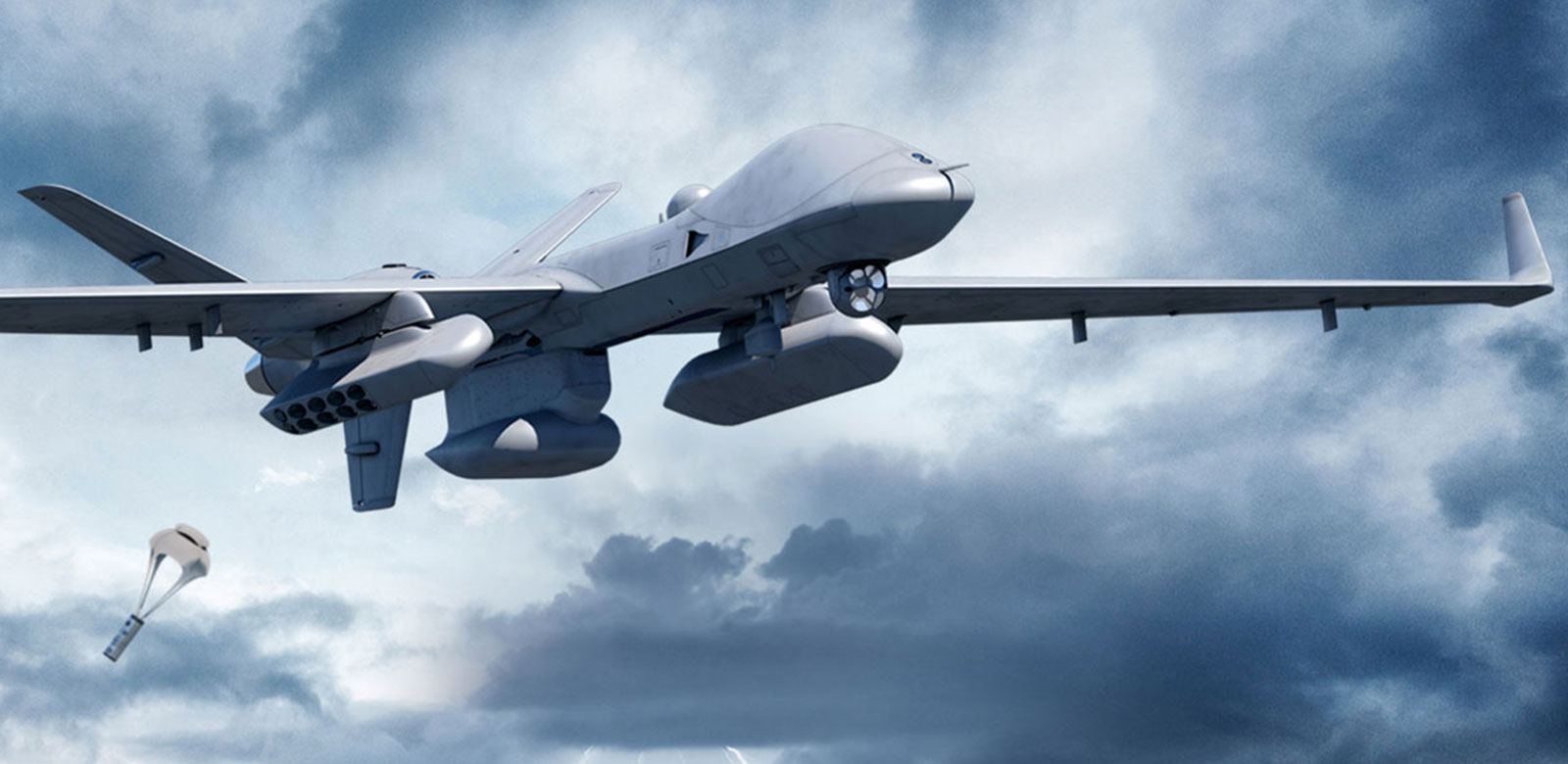
The MQ-9B SeaGuardian is the maritime variant of the MQ-9B SkyGuardian developed by General Atomics.
The platform is designed primarily for long-endurance maritime surveillance and offers:
- More than 30 hours of endurance
- Satellite-controlled beyond-line-of-sight operations
- Maritime Intelligence, Surveillance and Reconnaissance (ISR)
- Surface vessel tracking
- Search and Rescue (SAR)
- Exclusive Economic Zone (EEZ) monitoring
- Network-centric operations with naval forces
Unlike armed battlefield drones, the SeaGuardian’s primary mission is to provide commanders with a persistent picture of activities across vast ocean spaces.
For India, this is particularly valuable as competition in the Indian Ocean continues to intensify.
Regional Comparison: How India’s MQ-9B Stacks Up
The acquisition looks impressive in isolation, but regional powers have adopted very different UAV strategies.
| Capability | India | China | Pakistan | Türkiye |
|---|---|---|---|---|
| Primary HALE/MALE UAVs | MQ-9B SeaGuardian, Heron Mk-II | WZ-7 Soaring Dragon, Wing Loong II, CH-5, TB-001, WZ-10 | Bayraktar Akinci, Bayraktar TB2, Shahpar-II, Burraq, Chinese CH-series | Bayraktar TB2, Akinci, Aksungur, ANKA, Kizilelma (testing) |
| Primary Mission | Maritime ISR & Indian Ocean surveillance | Strategic ISR, maritime surveillance, strike, electronic warfare | Strike, tactical ISR, border surveillance | Strike, ISR, naval surveillance, expeditionary operations |
| Endurance | 30+ hours | 20–40+ hours (platform dependent) | 24–30+ hours | 24–40+ hours |
| Weapons Capability | Lease announced for ISR; weapon fit not disclosed | Precision-guided bombs, air-to-ground weapons, anti-radiation missiles | Precision-guided bombs, stand-off weapons, guided missiles | Wide range of indigenous smart munitions and cruise missiles |
| Domestic Production | Limited; relies on imports for HALE UAVs | Complete indigenous UAV ecosystem | Mixed indigenous, Turkish and Chinese technology | Fully indigenous UAV industry |
| Operational Experience | Maritime ISR missions | Extensive patrols and operational deployment | Counterterrorism and border operations | Syria, Libya, Iraq, Nagorno-Karabakh and Ukraine |
| Regional Strength | Maritime Domain Awareness | Largest UAV fleet in Asia | Armed tactical UAV capability | Combat-proven drone technology and exports |
| Overall Assessment | Excellent ISR capability but limited numbers | Regional UAV leader | Rapidly expanding combat UAV force | Mature indigenous drone ecosystem |
India Is Prioritizing Maritime Surveillance
India’s unmanned strategy differs from most regional powers.
Rather than building a large combat UAV fleet, New Delhi has invested heavily in Maritime Domain Awareness.
The SeaGuardian will complement an expanding surveillance network that already includes:
- P-8I Poseidon maritime patrol aircraft
- Coastal radar chains
- Military satellites
- Information Fusion Centre–Indian Ocean Region (IFC-IOR)
- Naval surface combatants
- Maritime helicopters
The objective is to maintain continuous awareness across critical sea lanes rather than conduct offensive drone operations.
China Still Leads the Regional UAV Race
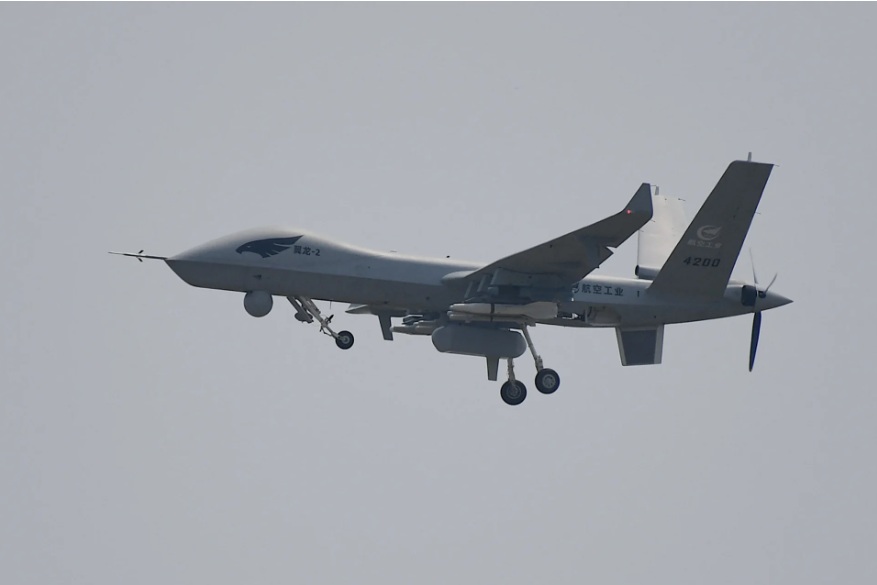
Despite India’s acquisition, China remains the dominant unmanned aviation power in Asia.
The People’s Liberation Army fields one of the world’s largest and most diverse drone inventories, including:
- WZ-7 Soaring Dragon
- Wing Loong II
- CH-4
- CH-5
- TB-001 Twin-Tailed Scorpion
- Multiple electronic warfare and reconnaissance UAVs
China enjoys several structural advantages:
- Complete indigenous production
- Large-scale manufacturing
- Extensive export network
- Integration with satellite systems
- Rapid technological innovation
Unlike India, Beijing designs, manufactures and exports virtually every category of military drone.
Pakistan Focuses on Armed UAVs
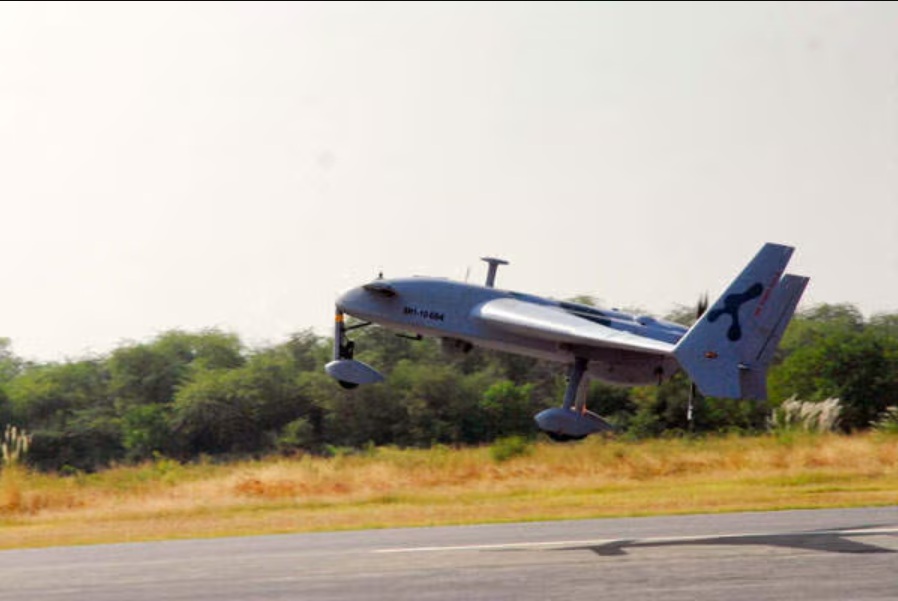
Pakistan has chosen a different modernization path.
Rather than investing primarily in maritime surveillance drones, Islamabad has emphasized combat-capable unmanned aircraft.
Its current inventory includes:
- Bayraktar Akinci
- Bayraktar TB2
- Shahpar-II
- Burraq
- Chinese surveillance UAVs
These systems are designed mainly for:
- precision strike;
- battlefield reconnaissance;
- border surveillance;
- counterterrorism operations.
Pakistan’s growing UAV capability complements broader naval modernization efforts, including Hangor-class submarines, Type 054A/P frigates and expanded maritime aviation.
Türkiye Has Become a Global Drone Powerhouse
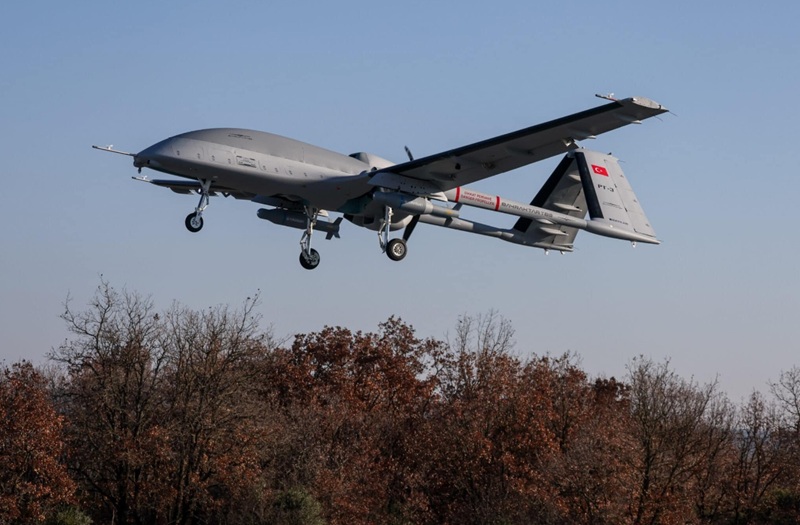
Over the past decade, Türkiye has emerged as one of the world’s leading UAV manufacturers.
Its indigenous portfolio includes:
- Bayraktar TB2
- Bayraktar Akinci
- ANKA
- Aksungur
- Kizilelma unmanned combat aircraft
Unlike many competitors, Turkish drones have accumulated extensive combat experience in:
- Syria
- Libya
- Iraq
- Nagorno-Karabakh
- Ukraine
That operational experience has helped Türkiye become one of the world’s fastest-growing drone exporters.
Why the Indian Ocean Matters
The lease comes as strategic competition in the Indian Ocean Region (IOR) continues to intensify.
The region carries a substantial share of global energy shipments and international trade.
India increasingly monitors:
- Chinese People’s Liberation Army Navy (PLAN) deployments
- Research and survey vessels
- Submarine patrols
- Strategic shipping lanes
- Maritime security threats
The MQ-9B’s long endurance allows persistent surveillance over vast ocean areas while reducing reliance on costly manned patrol aircraft.
Maritime ISR vs Combat Drones
One important distinction often overlooked is that not all military drones perform the same mission.
The MQ-9B SeaGuardian is primarily an ISR platform.
Its principal tasks include:
- intelligence gathering;
- vessel tracking;
- maritime surveillance;
- target detection;
- command support.
Combat drones such as Türkiye’s Akinci or Pakistan’s armed UAVs are optimized for:
- precision strikes;
- battlefield support;
- offensive operations.
These represent complementary capabilities rather than direct competitors.
India’s Biggest Challenge Remains Indigenous Production
Although the MQ-9B is among the world’s most capable surveillance drones, India’s broader challenge lies elsewhere.
China has built a complete domestic UAV industry.
Türkiye designs and exports its own combat drones worldwide.
Pakistan increasingly combines Turkish and Chinese technologies while expanding indigenous production.
India, by contrast, continues to depend on imported high-end HALE platforms for its most advanced unmanned surveillance capability.
Long-term strategic competitiveness will depend not only on acquiring advanced drones but also on accelerating indigenous UAV development programmes.
Strategic Assessment
The regional UAV balance can be summarized as follows:
| Category | Regional Leader |
|---|---|
| Maritime Surveillance | India (MQ-9B + P-8I + satellite network) |
| Total Military UAV Inventory | China |
| Indigenous UAV Manufacturing | China & Türkiye |
| Combat-Proven Drone Technology | Türkiye |
| Armed MALE UAV Capability | Türkiye / China |
| Network-Centric Maritime ISR | India |
| Fastest Expanding Armed UAV Fleet | Pakistan |
This comparison illustrates that India’s new SeaGuardian lease is a qualitative enhancement, not a quantitative transformation.
Final Assessment
The lease of two MQ-9B SeaGuardian drones significantly strengthens the Indian Navy’s ability to monitor one of the world’s busiest and most strategically contested maritime regions.
However, two aircraft alone will not fundamentally change the regional military balance.
China continues to dominate in overall UAV capability through its vast indigenous ecosystem.
Türkiye has become the benchmark for combat-proven drone technology and exports.
Pakistan is steadily expanding its armed UAV inventory through Turkish and Chinese cooperation.
India’s comparative advantage lies in building an increasingly sophisticated network-centric maritime surveillance architecture, integrating MQ-9B SeaGuardians with P-8I Poseidon aircraft, satellites, coastal radar systems and naval forces.
Ultimately, the future UAV competition in Asia will be determined less by individual platforms than by industrial capacity, artificial intelligence, electronic warfare, weapons integration, data fusion and the ability to sustain indigenous innovation at scale.