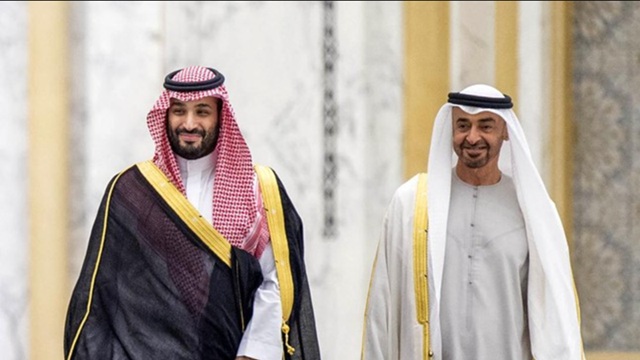
Saudi Arabia and the United Arab Emirates have long presented themselves as close Gulf partners, but their rivalry appears to be entering a more sensitive phase.
According to Reuters, Saudi authorities have tightened scrutiny of financial transfers heading to the UAE, with several businesses reporting delayed or returned payments from Saudi banks. The additional checks are reportedly similar to measures normally associated with jurisdictions considered higher risk for illicit financial activity.
Saudi Arabia’s central bank has denied imposing direct restrictions on specific countries, while a UAE official said the Emirati economy ministry had received no reports from private-sector companies about unusual problems with bilateral transfers.
The competing official positions are important: the reported banking measures should not yet be described as a formal Saudi financial blockade of the UAE.
But even if they remain regulatory rather than openly political, the development is significant because it places financial and commercial ties at the centre of a rivalry that has already spread across Yemen, oil policy, Iran, Israel and regional influence.
From Strategic Partners to Regional Competitors

Saudi Arabia and the UAE remain deeply interconnected.
Saudi Arabia is the Arab world’s largest economy and is pursuing its Vision 2030 transformation, while the UAE has established itself as one of the region’s major financial, aviation, logistics and trading centres.
But their interests increasingly overlap—and sometimes collide.
Both countries want to:
- attract international investment;
- become regional business hubs;
- expand logistics networks;
- increase influence in the Middle East and Africa;
- shape regional security arrangements;
- protect their energy interests;
- maintain strong relations with Washington and other major powers.
The result is a relationship in which cooperation and competition exist simultaneously.
Reuters reported earlier this year that bilateral non-oil trade reached $41.3 billion in 2024, while UAE and Saudi investments remain substantial on both sides. That interdependence makes a full economic rupture extremely costly for both governments.
This is why the reported financial-transfer restrictions are potentially more significant than they might initially appear.
The Banking Issue Could Be a Message Without Being a Blockade
The most important distinction is between a formal economic sanction and enhanced compliance scrutiny.
Reuters’ sources described the additional Saudi controls as measures normally associated with higher-risk jurisdictions. Businesses reportedly experienced transfers being delayed or returned, sometimes without clear explanations.
If confirmed as a systematic policy, this would create additional costs for companies operating across the Saudi-UAE border.
Businesses could face:
- longer settlement times;
- additional documentation;
- greater compliance costs;
- disrupted supplier payments;
- cash-flow problems;
- increased reliance on intermediary banks.
But the Saudi central bank’s denial means it would be premature to characterize the measures as an official restriction targeting the UAE.
The political significance may therefore lie precisely in the ambiguity.
A government can increase regulatory pressure without announcing a diplomatic confrontation.
Yemen Is One of the Biggest Fault Lines
The Saudi-UAE relationship began diverging more visibly over Yemen.
Both countries participated in the Saudi-led intervention against the Iran-aligned Houthis after 2015, but their preferred political outcomes inside Yemen increasingly differed.
Saudi Arabia has generally prioritized a unified Yemeni state and security along its southern border.
The UAE developed particularly close relations with southern Yemeni actors, including the Southern Transitional Council (STC), which has advocated greater autonomy or independence for southern Yemen.
That produced competing networks of influence inside the same conflict.
A UK House of Commons research briefing published in May 2026 noted that Saudi Arabia and the UAE had backed opposing elements in Yemen and that UAE-backed forces had made substantial territorial gains in southern Yemen before a Saudi-backed offensive recovered territory in January 2026.
That is a major strategic divergence.
For Riyadh, Yemen is fundamentally a national-security problem on its southern frontier.
For Abu Dhabi, the country has also been connected to wider maritime, commercial and strategic interests around the Red Sea, Gulf of Aden and Horn of Africa.
Why the Reported Saudi Air Strike Matters
The material provided in the report points to a December Saudi air strike against a shipment of UAE military equipment destined for the Southern Transitional Council.
If accurately reported, such an incident would represent an extraordinary escalation because it would mean that Saudi and Emirati-backed networks were no longer merely competing politically inside Yemen—they were potentially becoming involved in direct military confrontation over their respective partners.
That should be treated as a major indicator of strategic divergence, rather than simply another disagreement between Gulf allies.
The Iran War Has Exposed Another Major Difference
The U.S.-Israeli war with Iran has further widened differences between Riyadh and Abu Dhabi.
The two countries have faced Iranian threats for years, but their preferred responses have not always been identical.
The UAE has maintained extensive economic connections with Iran while also deepening its security relationship with Israel after the 2020 Abraham Accords.
Saudi Arabia has also opposed Iranian regional influence, but in recent years Riyadh has simultaneously pursued diplomatic engagement with Tehran.
The latest regional war has made these different approaches more visible.
The UAE has taken a more confrontational posture toward Iran, while Saudi Arabia has sought to avoid being drawn deeper into the conflict and has emphasized diplomatic channels.
The divergence reflects different strategic calculations.
Saudi Arabia’s calculation
Riyadh has enormous economic transformation projects underway and has strong incentives to prevent another prolonged regional war from destroying its investment environment.
UAE’s calculation
Abu Dhabi has developed a more extensive security relationship with Israel and has cultivated its own regional military and intelligence networks.
Neither approach is necessarily permanent, but the difference is increasingly difficult to overlook.
The Emergence of the Mecca Defence Pact Adds Another Layer
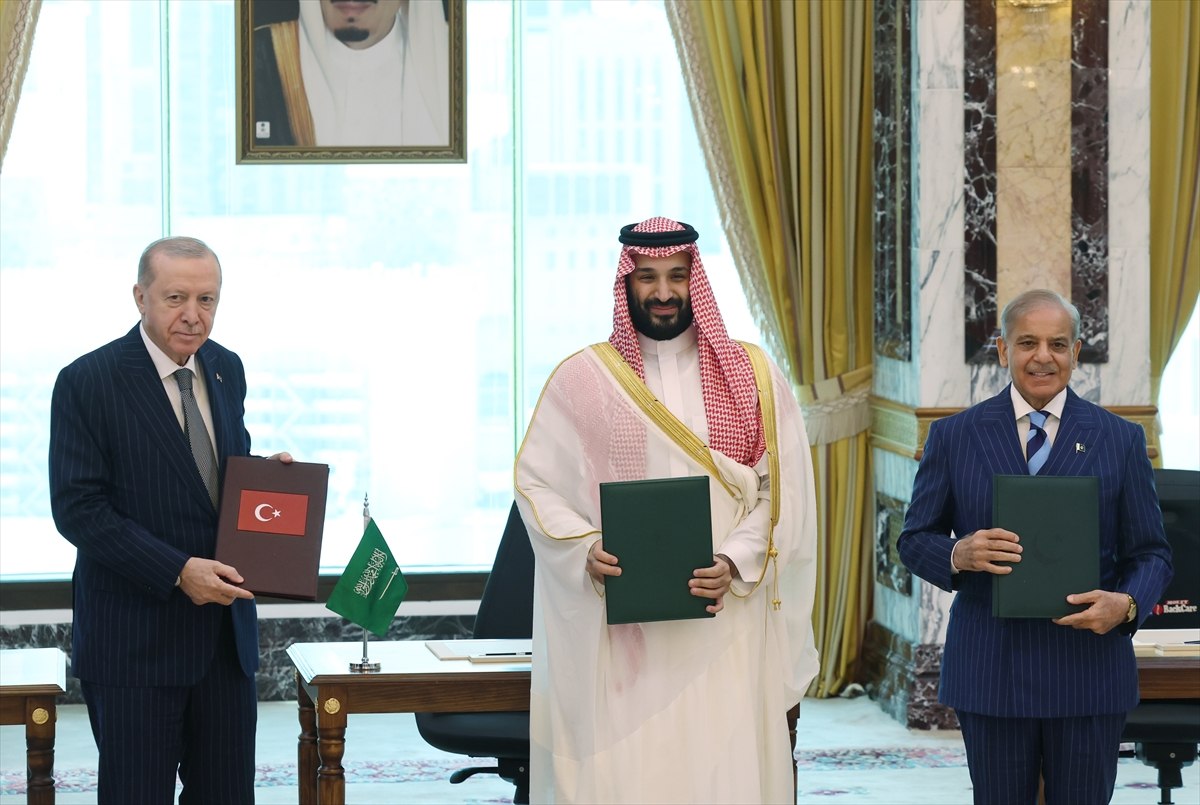
The creation of the Mecca Joint Defence Agreement between Saudi Arabia, Pakistan and Türkiye has added another strategic dimension to the Gulf’s changing security architecture.
The agreement, signed on August 7, provides for a mutual-defence commitment under which an attack against one member is treated as an attack against all. It also envisages deeper military coordination, joint exercises and defence-industrial cooperation.
This does not mean Saudi Arabia has abandoned the UAE.
Nor does it automatically establish two rigid military blocs in the Gulf.
But it does demonstrate that Riyadh is diversifying its security relationships.
For Saudi Arabia, the partnership with Pakistan and Türkiye offers access to:
- Pakistan’s military experience and strategic deterrence;
- Türkiye’s rapidly expanding defence industry;
- joint training and military coordination;
- additional diplomatic options beyond reliance on a single external security provider.
That development could inevitably affect how Abu Dhabi assesses its own strategic position.
The UAE-Israel Relationship Is Another Difference
The UAE normalized relations with Israel under the Abraham Accords in 2020.
Since then, defence, intelligence, economic and technological cooperation has expanded.
Saudi Arabia has not followed the UAE into formal diplomatic recognition of Israel.
This distinction became particularly important during the Iran conflict.
The result is a widening strategic contrast:
Saudi Arabia is increasingly building a broader regional security network involving Türkiye and Pakistan, while the UAE maintains particularly close strategic ties with Israel and the United States.
That does not mean either country has completely chosen one camp.
But the strategic geometry is changing.
Oil Has Become a Major Source of Friction
The energy relationship may ultimately prove even more consequential than Yemen.
The UAE announced that it would leave OPEC and OPEC+ effective May 1, 2026, citing its long-term energy strategy and evolving production capacity.
The move ended almost six decades of UAE membership in OPEC and removed one important institutional mechanism through which Riyadh and Abu Dhabi coordinated oil policy.
Saudi Arabia remains the dominant producer within OPEC.
The UAE, meanwhile, has invested heavily in expanding production capacity and has increasingly emphasized its ability to develop its own energy strategy.
This creates an obvious conflict of interest.
Saudi Arabia has historically been willing to use production management to influence global oil-market stability.
The UAE has increasingly wanted greater freedom to monetize its expanding capacity.
The OPEC split therefore represents more than an administrative change.
It reflects different visions of how the two countries want to use their oil power.
The Financial Rift Is Happening at a Dangerous Time for Gulf Economies
The timing is particularly important.
The Gulf is currently dealing with the economic consequences of the prolonged regional conflict and disruption around the Strait of Hormuz and Red Sea.
Oil prices have risen sharply as the Iran conflict continues, while shipping routes have been disrupted.
Reuters reported on August 18 that Saudi Arabia had resumed some oil loadings through the Strait of Hormuz while also using ship-to-ship transfers off Fujairah in the UAE.
That detail demonstrates something crucial:
Even while political tensions rise, Saudi Arabia and the UAE remain economically and logistically interconnected.
Saudi oil cargoes are literally being handled through infrastructure around the UAE.
This makes a full-scale economic divorce extremely difficult.
The Saudi-UAE Rivalry Is Also About Who Leads the Gulf

At its deepest level, the dispute is about regional leadership.
Saudi Arabia possesses:
- the largest economy in the Arab world;
- enormous oil reserves;
- the Islamic holy cities of Makkah and Madinah;
- a huge domestic market;
- major financial resources;
- growing defence capabilities;
- the G20 seat and broader diplomatic weight.
The UAE possesses:
- Dubai’s global commercial network;
- Abu Dhabi’s enormous sovereign wealth;
- major ports;
- aviation infrastructure;
- sophisticated financial services;
- extensive investment networks;
- a highly active foreign-policy apparatus.
Both countries therefore have considerable influence—but of very different kinds.
Saudi Arabia’s Vision 2030 is increasingly designed to make Riyadh the region’s primary economic and political centre.
The UAE has spent decades developing Dubai and Abu Dhabi as international hubs.
That inevitably creates competition.
Riyadh’s Push to Challenge Dubai
Saudi Arabia’s economic transformation programme is directly relevant.
Riyadh has introduced policies encouraging international companies to establish regional headquarters in the kingdom.
That puts Saudi Arabia into direct competition with Dubai.
The competition extends across:
- banking;
- aviation;
- logistics;
- tourism;
- finance;
- technology;
- headquarters;
- ports;
- entertainment.
This is not necessarily a conflict between states.
It is economic competition between two increasingly ambitious regional hubs.
But economic competition can become politically sensitive when governments believe that the other side is gaining an unfair advantage.
Could the Rift Damage Gulf Trade?
Yes—but probably not through a complete rupture.
The more likely scenario is selective friction.
This could involve:
- tougher financial compliance;
- more customs scrutiny;
- restrictions affecting particular companies;
- competition for multinational headquarters;
- investment screening;
- divergent oil policies;
- competing logistics projects.
A total trade war would be damaging to both sides.
Reuters’ earlier assessment was that the depth of commercial integration makes a major economic break unlikely. Bilateral non-oil trade alone was $41.3 billion in 2024.
The relationship is therefore more likely to resemble managed rivalry than outright economic separation.
The GCC Is Not Breaking Up—But It Is Becoming More Fragmented
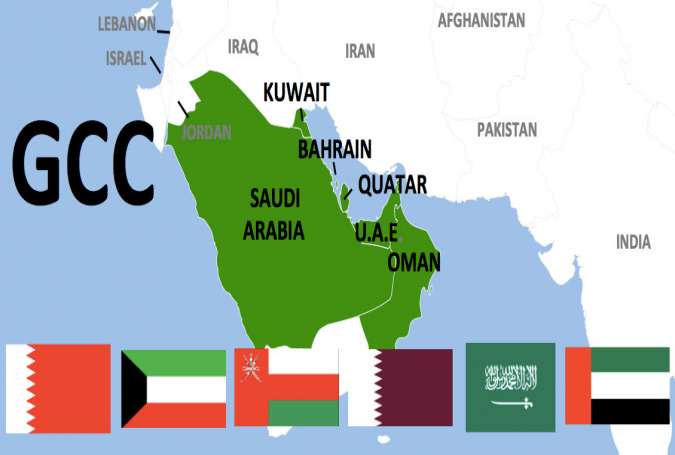
It would be an exaggeration to describe the Saudi-UAE dispute as the collapse of the Gulf Cooperation Council.
The GCC still provides an important framework for:
- Gulf diplomacy;
- economic coordination;
- security consultations;
- collective responses to regional crises.
And Saudi Arabia and the UAE continue to cooperate on many issues.
Recent regional statements demonstrate that both countries can still participate in common diplomatic positions alongside Qatar, Kuwait, Bahrain and other Arab and Muslim states.
The emerging reality is therefore more nuanced:
The GCC remains intact institutionally, while strategic alignment among its members is becoming less uniform.
Saudi Arabia and UAE: Where They Converge and Diverge
| Issue | Saudi Arabia | UAE |
|---|---|---|
| Iran | Seeks deterrence but also diplomacy | More confrontational security posture |
| Israel | No formal diplomatic relations | Abraham Accords partner |
| Yemen | Prioritizes Saudi border security and central state | Strong ties with southern actors |
| Oil | Remains central to OPEC coordination | Left OPEC/OPEC+ effective May 1, 2026 |
| Security | Expanding ties with Pakistan and Türkiye | Deep US-Israel security relationship |
| Economy | Riyadh seeks regional headquarters and investment | Dubai/Abu Dhabi remain established hubs |
| Trade | Major UAE trading partner | Major Saudi investment and trade partner |
| Regional strategy | Increasingly focused on Saudi-led regional architecture | More independent and network-based |
What Does the Financial Issue Mean for the GCC?
The biggest danger is not that Saudi Arabia and the UAE suddenly stop doing business.
The danger is that political disagreements gradually become embedded in commercial systems.
Once banks begin treating transactions differently, companies respond.
They may:
- reroute payments;
- diversify banking relationships;
- change suppliers;
- restructure ownership;
- relocate operations;
- increase compliance costs.
Even if governments later repair political relations, such changes can be difficult to reverse.
That is why the reported banking measures deserve attention.
Three Possible Futures for the Saudi-UAE Relationship
1. Managed Competition — Most Likely
Both countries continue cooperating where interests overlap while competing in Yemen, energy, finance and regional influence.
2. Strategic Accommodation
Riyadh and Abu Dhabi reach understandings over Yemen and oil policy and gradually reduce economic friction.
3. Open Rivalry
Financial restrictions, investment competition and proxy conflicts expand into broader economic confrontation.
This would be the most damaging scenario for the Gulf and for both countries’ economic transformation programmes.
What Should Pakistan Watch?
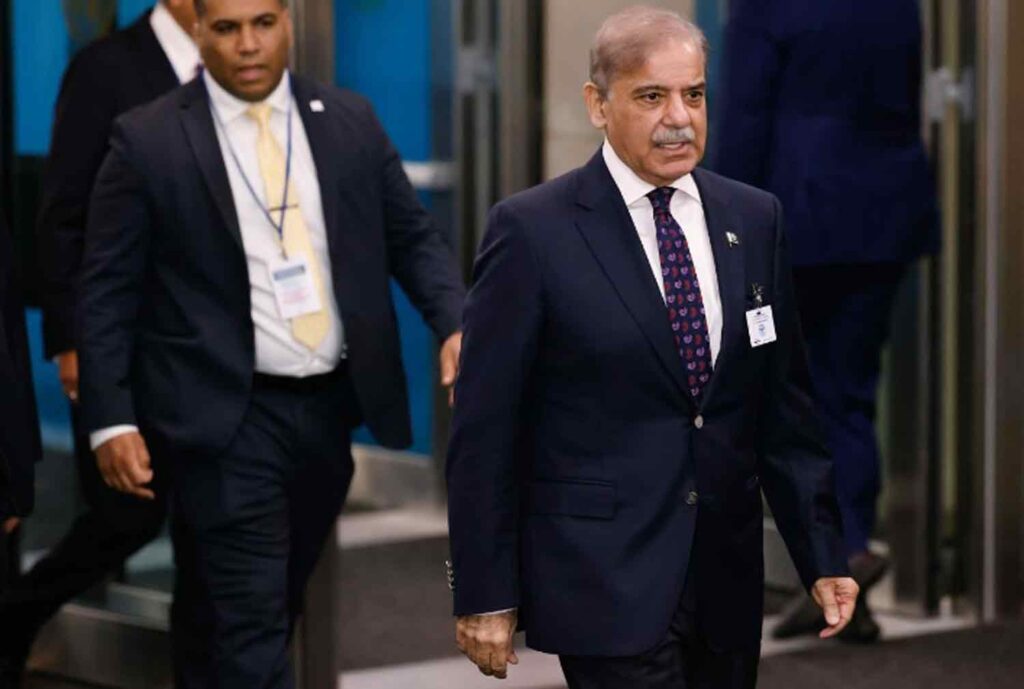
For Pakistan, the Saudi-UAE rivalry has particular importance.
Pakistan maintains strong relations with both countries.
At the same time, the new Saudi-Türkiye-Pakistan Mecca defence agreement gives Islamabad a new strategic role in the Gulf security architecture.
Pakistan therefore has an interest in avoiding the appearance of becoming part of an intra-Gulf confrontation.
Its strongest position would be to:
- maintain close relations with Riyadh;
- preserve constructive ties with Abu Dhabi;
- emphasize regional stability;
- avoid taking sides in Saudi-UAE economic disputes;
- use its diplomatic relationships to support de-escalation where appropriate.
The Mecca agreement itself has been described by its members as defensive and not designed to replace existing alliances.
That distinction will be important if Gulf rivalries continue to sharpen.
Final Assessment
The reported Saudi tightening of oversight on UAE-bound financial transfers is potentially the most significant new indicator that the Saudi-UAE rivalry is moving beyond political disagreements and into the financial system.
But it is important not to overstate what is known.
Saudi Arabia has not publicly announced a country-specific financial blockade, and both Riyadh and Abu Dhabi have denied that formal restrictions are being imposed specifically on the UAE.
Nevertheless, the reported experiences of businesses, combined with increasingly visible disagreements over Yemen, OPEC, Iran, Israel and regional leadership, suggest that the relationship is under genuine strain.
The UAE’s OPEC exit, effective May 1, 2026, removed an important institutional channel for oil-policy coordination.
The Yemen conflict has exposed competing regional networks.
The Iran war has revealed different approaches to security and escalation.
The emergence of the Saudi-Pakistan-Türkiye defence partnership adds another dimension to Riyadh’s evolving security strategy.
Yet the economic relationship remains deeply intertwined.
Saudi oil is still being moved through infrastructure connected to the UAE, while billions of dollars of trade and investment link the two economies. (Reuters)
The most accurate description, therefore, is not “Saudi Arabia and UAE are breaking apart.”
It is:
The Gulf’s two most powerful Arab states are moving from strategic partnership toward managed rivalry—while remaining too economically interconnected to afford a complete split.
That distinction will be crucial for understanding the future of the GCC, the Yemen conflict, Gulf oil policy and the emerging regional security architecture.