
India’s aviation sector is facing a striking international-market reversal, and an Indian media report has put the Pakistan factor at the centre of the problem.
According to an analysis published by The Indian Express on August 21, 2026, international passenger traffic to and from India fell by 9.1% year-on-year during April-June 2026, but the entire decline was absorbed by Indian airlines. Foreign carriers, in contrast, actually increased their passenger numbers and expanded their share of the Indian international aviation market.
The figures provide an important measure of the longer-term economic consequences of the India-Pakistan confrontation that began after the April 2025 Pahalgam attack and escalated into Operation Sindoor in May 2025.
The crucial point, however, is that the aviation damage cannot be attributed to Operation Sindoor alone. Pakistan closed its airspace to Indian aircraft on April 24, 2025, before Operation Sindoor began. The military confrontation that followed transformed an already serious aviation disruption into a prolonged strategic and economic problem.
Pakistan Airspace Closure: The Strategic Choke Point
Pakistan’s airspace sits directly on one of the most efficient westbound corridors from northern India.
For Indian airlines flying from Delhi and other northern hubs toward the Gulf, Europe, the United Kingdom, North America and parts of Central Asia, Pakistani airspace offered a relatively direct route.
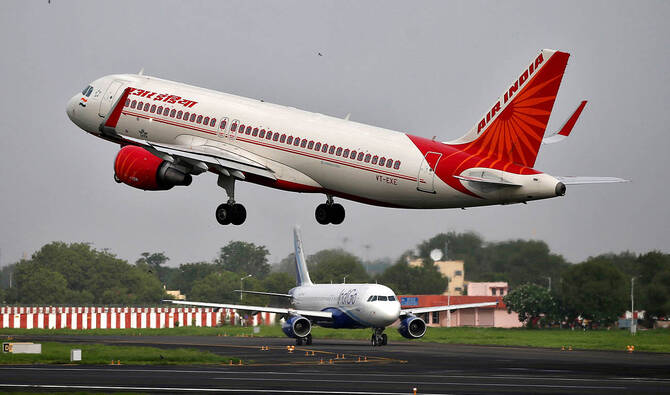
Once that corridor disappeared, Indian carriers were forced to fly around Pakistan, adding distance, fuel consumption, crew complications and, in some cases, technical stops.
The Indian Express estimates that roughly 800 weekly departures and arrivals operated by Indian airlines were adversely affected by the Pakistani airspace closure. These included services connecting India with West Asia, the Caucasus, Europe, the UK and eastern North America.
The consequences were not limited to a few additional minutes in the air. Some journeys became 15 minutes to several hours longer, while certain services required overseas refuelling stops and others were suspended altogether.
This is where the Pakistan factor becomes particularly important.
Foreign airlines operating to and from India were not subject to the same restriction. They could continue using Pakistani airspace, allowing them to operate more efficient routes while Indian airlines carried the additional cost burden.
In other words, a geopolitical restriction became a competitive disadvantage for Indian carriers.
The Numbers Tell a Bigger Story
The latest DGCA international passenger data presents a stark picture.
Between April and June 2026:
- Total international passenger traffic to and from India fell 9.1% year-on-year.
- Indian airlines’ international passenger numbers fell 26.6%, to about 64.2 lakh.
- Foreign airlines increased their passenger numbers by 6%, reaching approximately 1.08 crore.
- Foreign airlines’ market share jumped from 53.8% to 62.7%.
- Indian carriers’ market share fell from 46.2% to just 37.3%.
This is perhaps the most important statistic in the entire story.
India’s international aviation market did not simply shrink. Market share shifted from Indian airlines to foreign airlines.
That means Indian carriers were not only losing passengers because of the West Asia conflict; they were also losing competitive ground to airlines that could exploit routes and capacity unavailable to their Indian competitors.

Air India and IndiGo Take the Hit
India’s two largest international carriers have been particularly exposed.
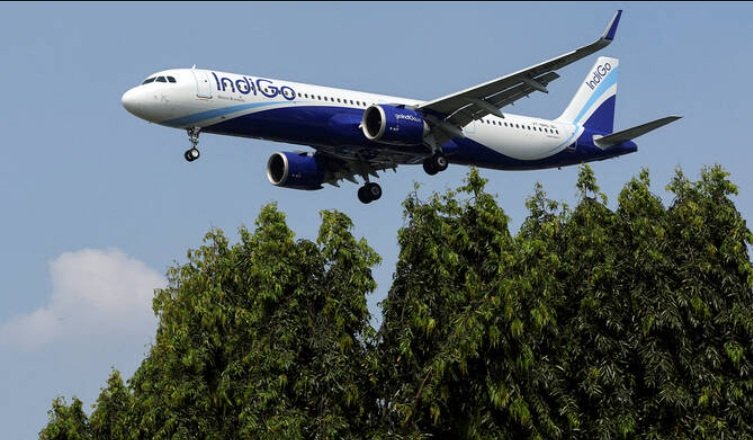
IndiGo, despite remaining India’s largest international carrier, saw its international passenger numbers decline by 15.4% to 33.4 lakh during the April-June quarter. Its international market share dropped from 20.9% to 19.4%.
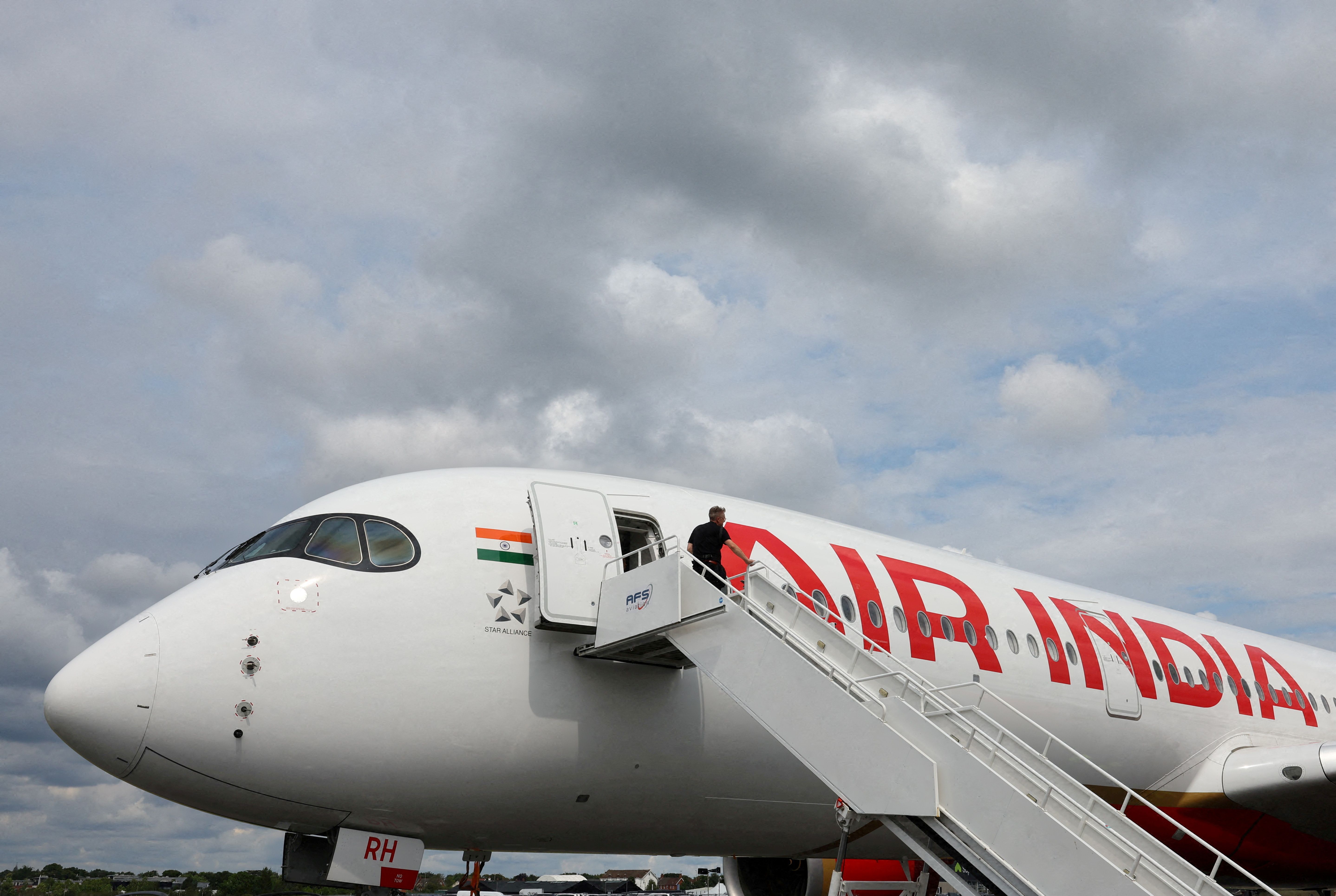
Air India suffered an even sharper decline. Its international passenger traffic fell 27.2% to 19.3 lakh, while its market share dropped from 14% to 11.2%.
The situation was worse for Air India Express, whose network is heavily concentrated in West Asia. Its international passenger traffic fell by roughly half to 8.34 lakh, cutting its market share from 8.9% to 4.8%.
Across the Air India Group, international passenger traffic fell 36.3% year-on-year to 27.61 lakh.
SpiceJet suffered the sharpest percentage decline among the major Indian carriers, with international passenger traffic falling 56% to 1.38 lakh.
The contrast with foreign airlines is striking.
Foreign Airlines Turn India’s Loss into Their Opportunity
While Indian airlines were cutting or restructuring international services, foreign airlines were able to deploy additional capacity into the Indian market.
The Indian Express analysis found that 51 of 81 foreign airlines listed in the DGCA data recorded higher passenger numbers in the April-June quarter. Ten of them had either newly entered the Indian market or resumed operations compared with the previous year.
Some of the biggest beneficiaries included airlines from Europe, the Gulf, Africa and Central Asia.
Saudi Arabian Airlines increased its India passenger traffic by 50%, while Emirates recorded a 7.3% increase, reaching about 14.8 lakh passengers. Other beneficiaries included Lufthansa, KLM, Swiss, Finnair, LOT Polish Airlines, Ethiopian Airlines, Flynas, Azerbaijan Airlines, Uzbekistan Airways and Air Astana.
This creates a strategic paradox for India.
New Delhi has invested heavily in expanding its own international aviation network, particularly through Air India and IndiGo. Yet geopolitical restrictions have allowed foreign airlines to capture part of the very international traffic that Indian carriers were trying to build.
West Asia War Delivered the Second Blow
The Pakistan airspace closure alone was already damaging.
Then came the wider West Asia conflict in late February 2026.
Airspace restrictions across parts of the Gulf and surrounding region disrupted one of the most important aviation corridors between India and Europe and North America. Indian carriers were already operating with longer routes because they could not use Pakistan.
The West Asia crisis therefore created a double disadvantage.
Indian airlines had to contend with:
- The closure of Pakistani airspace;
- Restrictions across parts of West Asia;
- Longer flight paths;
- Higher jet-fuel consumption;
- Increased crew and scheduling requirements;
- Flight cancellations and suspensions;
- Reduced capacity to key Gulf markets; and
- Greater competition from foreign carriers that could use alternative corridors.
Indian carriers consequently faced the same West Asia fuel and security problems as foreign airlines—but with an additional handicap.
They were already operating under a restricted geographic network.
Why Operation Sindoor Matters
This is where the aviation story becomes strategically significant.
Operation Sindoor was a military operation, but its consequences did not remain confined to the battlefield.
The India-Pakistan confrontation produced consequences across trade, transport, aviation and regional connectivity.
Pakistan’s airspace closure began on April 24, 2025, following the Pahalgam attack, and India subsequently imposed reciprocal restrictions on Pakistani aircraft. The restrictions have continued through repeated extensions.
As of August 2026, Pakistan has extended its restriction on Indian aircraft until September 24, 2026. The restriction covers Indian-registered aircraft as well as aircraft operated, owned or leased by Indian airlines and extends across Pakistan’s Karachi and Lahore flight information regions.
That means the aviation impact of the 2025 confrontation has now lasted for well over a year.
The important analytical point is therefore not that Operation Sindoor alone destroyed Indian aviation. That would overstate the evidence.
The stronger argument is that the India-Pakistan confrontation surrounding Operation Sindoor created a structural aviation constraint that became far more damaging when the West Asia conflict erupted in 2026.
Pakistan’s Advantage Is Not Simply Financial
The impact is also asymmetrical.
According to the Indian Express, Pakistan’s reciprocal airspace restrictions have had a comparatively limited impact on Pakistan’s own flag carrier because PIA has a much smaller international network than India’s major airlines.
Cirium data cited by the newspaper indicated that only around six PIA flights per week routinely flew over India before the restrictions. By comparison, major Indian airlines operate hundreds of westbound international flights that previously benefited from Pakistani airspace.
This creates a significant strategic asymmetry.
India has a much larger international aviation footprint, but that also means its airlines have more to lose when access to a strategically located transit corridor is denied.
For Pakistan, the closure therefore represents not merely a bilateral aviation restriction but a form of geographic leverage.
Is Indian Aviation Really “On Its Knees”?
The phrase “bringing India’s aviation sector to its knees” is powerful, but it needs qualification.
India’s domestic aviation market remains enormous, and Indian airlines continue to operate extensive networks. The latest data does not show the collapse of India’s entire aviation industry.
What it does demonstrate is something more specific—and potentially more important:
India’s international airline expansion has suffered a major setback.
Indian carriers lost more than a quarter of their international passenger traffic in the April-June quarter, while foreign carriers increased their numbers.
That is not an industry-wide collapse.
It is a loss of international competitiveness.
And for India’s ambition to turn its airlines into major global carriers capable of competing with Emirates, Qatar Airways, Singapore Airlines, Turkish Airlines and other international giants, that distinction matters.
The Bigger Strategic Lesson
The aviation numbers expose an often-overlooked dimension of modern geopolitical competition.
Airspace is not merely empty space above a country.
It is an economic corridor.
Control over access to that corridor can determine:
- Flight duration;
- Fuel consumption;
- Ticket prices;
- Aircraft utilisation;
- Crew requirements;
- Route viability;
- Airline profitability;
- Airport connectivity; and
- Market share.
Pakistan’s decision to deny Indian airlines access to its airspace therefore created an economic effect far beyond the immediate border.
When the West Asia crisis subsequently disrupted alternative routes, the cost of that lost corridor became considerably greater.
India’s airlines effectively entered the West Asia crisis with one of their most important westbound shortcuts already closed.
A Strategic Aftershock of the India-Pakistan Confrontation
The latest aviation figures provide a useful way to assess the long tail of Operation Sindoor and the wider India-Pakistan confrontation.
The military confrontation of 2025 ended with a ceasefire, but its economic consequences have not necessarily ended with the cessation of hostilities.
The continued closure of airspace demonstrates how geopolitical decisions can produce effects months or years after the guns fall silent.
For India, the immediate challenge is the financial burden on airlines.
The larger strategic challenge is the possibility that prolonged restrictions could allow foreign carriers to permanently capture passengers, routes and market share that Indian airlines had been attempting to build.
The irony is particularly striking: India’s international aviation market remained attractive enough for foreign airlines to expand even while Indian carriers were being squeezed.
That suggests the problem is not a lack of demand for international travel from India.
The problem is increasingly about who gets to carry that demand.
And in that contest, the Pakistan airspace factor has emerged as one of the most consequential—and least discussed—aftershocks of the 2025 India-Pakistan confrontation.