
The financial cost of the six-month U.S. war against Iran has reached about $38 billion, according to a new assessment by the nonpartisan Congressional Budget Office (CBO), but the headline figure tells only part of the story.
The conflict is also imposing costs on the U.S. military through depleted missile inventories, damaged aircraft and facilities, higher fuel consumption and the diversion of military resources from other potential theatres.
The CBO estimates that the Pentagon’s costs could rise by another $2 billion to $3 billion for every additional month of fighting, depending on the intensity of combat. It also warns that the depletion of missile-defense interceptors could leave the United States with reduced inventories for several years.
That creates a much larger strategic problem for Washington than the immediate price of conducting military operations against Iran.
$38 Billion and Counting
The CBO’s September 15 assessment puts U.S. Department of Defense costs through August 1 at approximately $38 billion.
The estimate includes replacement costs for expended munitions, equipment lost in combat, increased flying hours, other operational expenses and higher fuel costs. Importantly, it does not represent the entire economic cost of the war or every expense incurred by the federal government.
CBO says the Pentagon did not provide requested information for its assessment, forcing analysts to rely on government databases and publicly available reporting. That means the figures carry a degree of uncertainty.
The cost trajectory is nevertheless significant.
According to CBO, a continuation of fighting at the relatively low intensity seen in May and June would add roughly $2 billion per month. If combat remained closer to the intensity seen in July, the monthly cost could reach approximately $3 billion. A further escalation could push the figure even higher.
The White House and Pentagon have disputed suggestions that U.S. weapons stocks are approaching a critical point, maintaining that American forces retain sufficient ammunition for the president’s military objectives.
The competing assessments expose an important divide between Washington’s operational messaging and the longer-term replenishment challenge.
The Munitions Problem May Matter More Than the Dollar Figure
The most consequential part of the CBO assessment may be its warning about missile inventories.
The United States has fired large quantities of expensive precision weapons and missile-defense interceptors during the conflict. Replacing those systems is not as simple as allocating money and placing an order.
Modern precision weapons involve specialized production lines, electronics, propulsion systems, sensors and other components. Some systems already face limited production capacity.
CBO specifically identifies missile-defense interceptors as a major opportunity cost of the war and warns that depleted inventories could remain a problem for several years. That becomes particularly significant because China possesses a large ballistic and cruise missile arsenal that could become central to any conflict involving Taiwan.
This creates a difficult strategic calculation for the Pentagon.
Every interceptor used in the Middle East protects American forces from an immediate Iranian threat. But that same interceptor is no longer available for another crisis.
The issue is therefore not simply how much Washington has spent. It is also what military capacity has been consumed while fighting Iran.
Nearly $90 Billion Requested for Replenishment
The replenishment problem was already visible before the latest CBO assessment.
The Trump administration requested a major supplemental package in 2026, with $67.1 billion of the requested $87.6 billion designated for the Defense Department. CBO noted that the portion directly related to the conflict was about $42.3 billion, roughly 10% above its estimate of the Pentagon’s costs at that point.
That suggests the eventual financial burden of the war could extend well beyond the costs of missiles fired and aircraft flown during combat.
Washington will have to pay for replacement weapons, damaged equipment, repairs, replenishment of air-defense stocks and potentially reconstruction of damaged facilities.
In other words, the war generates a second bill after the battlefield bill.
Damage to US Bases Reveals Another Vulnerability
Newly released images reported by CBS News provide a different perspective on the conflict.
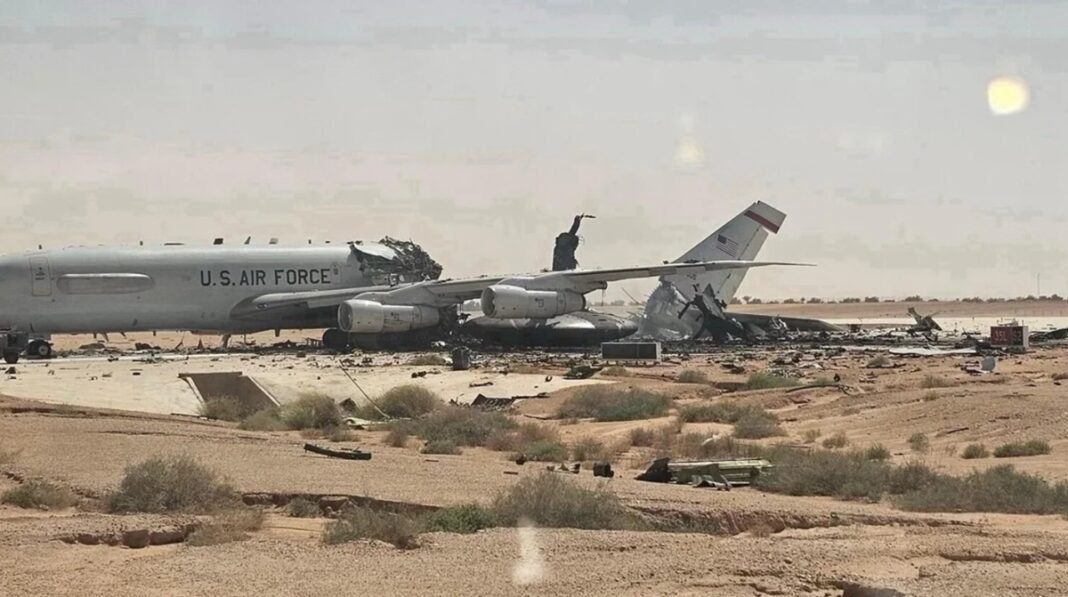
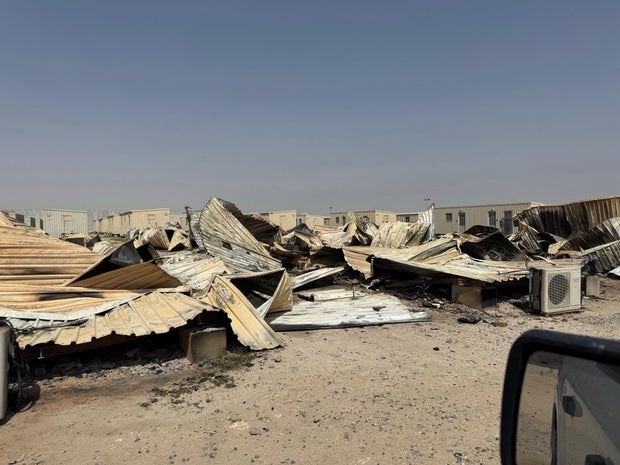
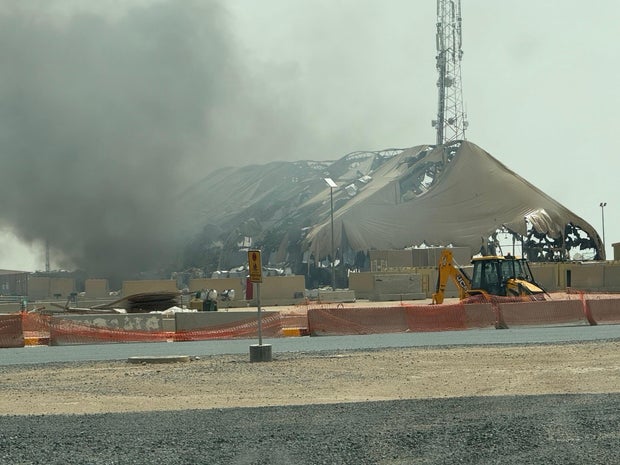
Photographs obtained from U.S. service members reportedly show significant damage at American positions in Saudi Arabia and Kuwait following Iranian missile and drone attacks.
At Prince Sultan Air Base in Saudi Arabia, one image shows an apparently destroyed E-3 Sentry airborne early warning and control aircraft, with the rear section of the aircraft severely damaged.
Other images reportedly show damaged buildings, vehicles and facilities at Camp Buehring and Camp Arifjan in Kuwait. CBS also reported that U.S. Central Command had recorded Iranian attacks on American positions in Kuwait, Bahrain, Qatar, the United Arab Emirates, Saudi Arabia, Iraq, Oman and Jordan.
The Pentagon’s inspector general has separately reported equipment losses associated with the conflict, with CBS reporting the value at up to $3.7 billion, including nearly 60 aircraft.
These losses matter because America’s Middle East military network depends heavily on forward bases.
Those installations provide air operations, logistics, surveillance, tanker support, command-and-control and force projection. Damage to them does not necessarily stop U.S. operations, but it can force Washington to spend more resources on dispersal, protection, repairs and alternative operating locations.
The E-3 Loss Is More Than an Aircraft Loss
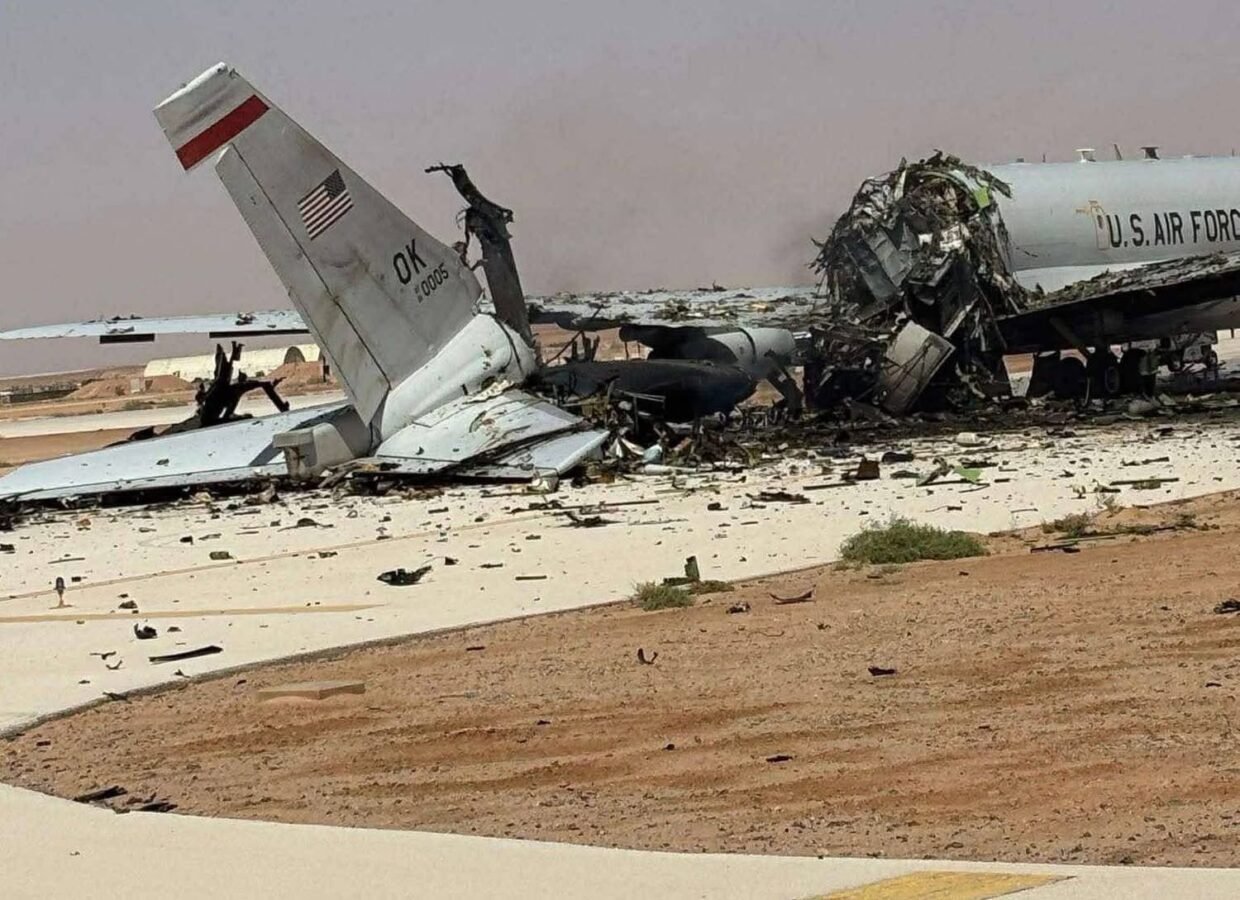
The reported destruction of an E-3 Sentry is particularly significant because the aircraft is not simply another combat platform.
The E-3 is an airborne surveillance and command-and-control asset designed to provide a broad picture of air activity and support coordination between aircraft and other forces.
Its loss therefore affects an element of the information architecture supporting U.S. air operations.
CBS previously reported that an E-3 destroyed at Prince Sultan could cost hundreds of millions of dollars to replace, although replacement cost depends on the specific aircraft, configuration and procurement circumstances.
The broader lesson is that relatively small numbers of specialized high-value platforms can have an outsized effect on military operations.
A war that consumes missiles by the thousands can also expose weaknesses in the protection of the infrastructure and support systems those missiles are supposed to protect.
The Strait of Hormuz Is Driving the Economic Cost
The military bill is only one side of the equation.
The CBO says the principal wider economic effect of the conflict has come from disruption to oil and natural-gas shipments through the Strait of Hormuz, alongside disruption to shipping through the Red Sea. Higher energy prices have pushed up the cost of gasoline, diesel and jet fuel and also feed indirectly into the prices of other goods because transportation depends heavily on petroleum.
CBO estimates that inflation in the first quarter of 2027 will be 0.5 percentage points higher than it had projected in February 2026 as a result of the changed economic environment. Core PCE inflation is projected to be 0.3 percentage points higher than previously expected.
The effect goes beyond American consumers.
The Strait of Hormuz is one of the world’s most important energy corridors. Restrictions on tanker traffic can therefore affect Asian economies, European consumers and oil-producing states simultaneously.
Recent reporting indicates that Gulf oil exports remain significantly below pre-war levels, with tanker operators using increasingly complicated routes and practices to move supplies through the disrupted region. Reuters reported that Brent crude had moved above $100 a barrel amid continuing uncertainty around Gulf shipments.
This gives the conflict a global economic dimension even when fighting occurs thousands of miles from the United States.
Satellite Intelligence Is Becoming Part of the Battlefield

Another emerging feature of the war is the importance of commercial and military satellite imagery.
Reports earlier in the conflict alleged that Russian satellites repeatedly imaged U.S. and allied military positions in the Middle East before Iranian attacks.
Ukrainian intelligence assessments cited by President Volodymyr Zelensky said Russian satellites photographed Prince Sultan Air Base before an Iranian strike that damaged or destroyed U.S. aircraft there. Reporting at the time said the satellite activity was presented as evidence of possible intelligence support to Iran, but the publicly available evidence did not independently establish exactly how any imagery was transferred or used by Iranian forces.
That distinction matters.
Satellite imagery over a military facility does not by itself prove that an attack was enabled by the imagery. But repeated imagery collection immediately before attacks has raised questions in Washington and other capitals about the growing role of space-based intelligence in modern warfare.
The issue has also expanded beyond Russia.
Recent reporting by The Wall Street Journal said U.S. officials linked satellite imagery obtained from Chinese entities to a July Iranian missile attack on Jordan’s Muwaffaq Salti Air Base that killed three American soldiers. The report did not accuse the Chinese government directly, while Beijing rejected the allegations and said Chinese cooperation with Iran complied with international obligations.
Taken together, these reports point to a broader change in the battlefield.
Iran’s ability to threaten American positions is no longer being assessed only through the range and accuracy of its missiles and drones. The quality of targeting information available to Iranian forces has become an increasingly important part of the equation.
The US Base Network Is Facing a Different Kind of Threat
For decades, U.S. military power in the Middle East has depended on an extensive network of bases and partner facilities.
That network provides Washington with something extremely valuable: proximity.
But proximity can also create vulnerability.
Large installations contain aircraft, fuel, ammunition, radar systems, command facilities, personnel and logistics infrastructure. A successful missile or drone strike does not need to destroy an entire base to impose significant costs.
A runway temporarily closed, an aircraft destroyed on the ground, a radar damaged or a logistics facility hit can force commanders to redistribute forces.
That means Iran’s strategy does not necessarily have to match the United States weapon for weapon.
The economic asymmetry is important as well. A relatively inexpensive drone or missile can force an opponent to expend a much more expensive interceptor or undertake costly protective measures.
This does not mean Iranian attacks are militarily cost-free or that they have neutralized U.S. airpower. The United States retains enormous conventional military capabilities.
But the conflict illustrates the growing importance of cost exchange ratios in modern warfare.
The Iraq and Afghanistan Comparison
The $38 billion figure also needs historical context.
The CBO itself notes that the current conflict has involved relatively few U.S. forces compared with the much larger American operations in Iraq and Afghanistan.
The broader costs of those wars ran into trillions of dollars.
The Iran conflict is nowhere near those totals yet. But comparing only the initial financial expenditure can obscure the longer-term burden.
A prolonged conflict could generate additional costs through weapons replenishment, equipment replacement, military construction, veterans’ care, higher borrowing costs and continuing deployments.
It could also impose opportunity costs by limiting the resources available for other U.S. strategic priorities.
The Taiwan Question Is Hanging Over the Pentagon
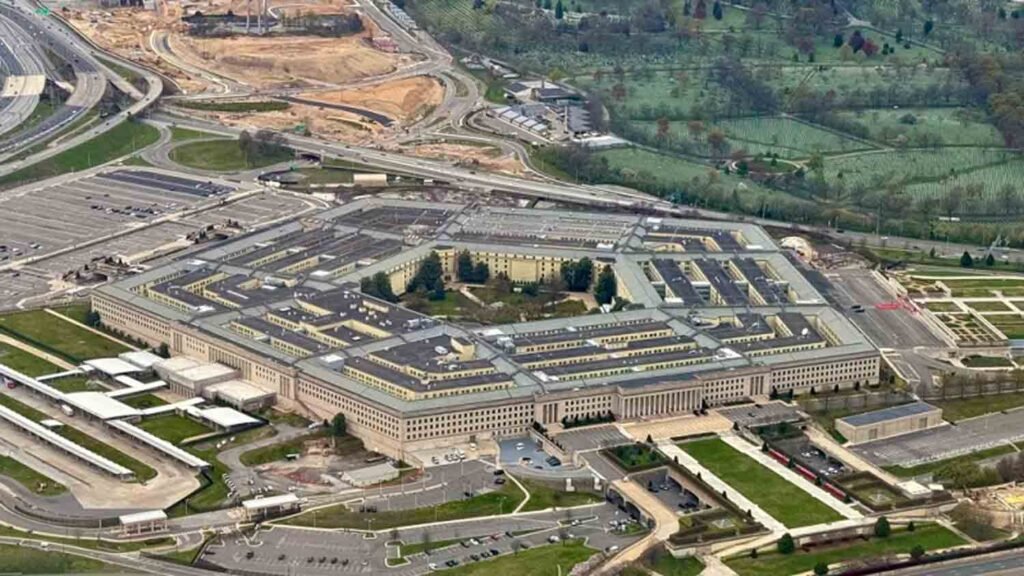
Perhaps the most strategically important warning in the CBO report concerns China.
CBO explicitly connects depleted U.S. missile-defense inventories with the possibility of a future conflict involving Taiwan, where China’s large ballistic and cruise missile arsenal could become a major factor.
This is a significant issue for U.S. defense planners.
Washington’s military strategy increasingly emphasizes the ability to deter or respond to multiple threats. A prolonged Middle Eastern conflict consumes precisely the types of weapons, aircraft hours, logistics capacity and defensive interceptors that could be required elsewhere.
The United States therefore faces a familiar military dilemma: how much capacity can be committed to one theatre without weakening readiness in another?
The Iran war is making that calculation more difficult.
A War That Is Becoming More Expensive in Every Direction
The most important development may therefore not be the $38 billion figure itself.
It is what sits behind it.
The United States is paying for missiles fired against Iranian targets. It is paying to defend its bases. It is paying to repair damaged aircraft and facilities. It will have to replenish depleted weapons inventories. Higher energy prices are feeding into inflation. And Washington must simultaneously consider the resources it needs for potential crises elsewhere.
CBO’s assessment provides a financial snapshot of the conflict through August 1, but the military and economic effects continue to evolve. The agency itself cautions that its estimates contain uncertainty because of limited information from the Defense Department.
For Washington, the central issue is therefore no longer simply how much the Iran war has already cost.
It is how much military readiness, ammunition capacity, infrastructure resilience and economic stability the United States will have to spend to sustain the conflict.
At roughly $38 billion after six months, the direct bill is already substantial.
The longer-term strategic bill could be considerably broader.