

A US Air Force C-17 Globemaster III has made a highly unusual flight from Latvia to Moscow as US-Russia diplomacy over Ukraine remains stalled. The development initially appeared to be a mystery, but US media now report that CIA Director John Ratcliffe is in Moscow for undisclosed meetings. Neither Washington nor the Kremlin has publicly confirmed the purpose of the visit. The timing is significant: Ukraine peace talks have lost momentum, the Iran war has complicated Washington’s diplomatic priorities, and the Trump administration appears to be reopening a high-level intelligence channel with Moscow.
A US military transport aircraft landing in Moscow would be unusual under any circumstances.
It is even more significant when the aircraft has flown from a NATO country, Latvia, and arrives at a time when the United States and Russia remain formally at odds over the war in Ukraine.
The flight became public on Tuesday after tracking data showed a US-registered Boeing C-17 Globemaster III, tail number 07-7181, flying from Riga to Moscow’s Vnukovo airport and landing at around 0700 GMT.
Reuters initially reported that it was unclear whether the aircraft was carrying passengers or cargo. The Kremlin said it had no information about the flight.
But the mystery became considerably more interesting later in the day.
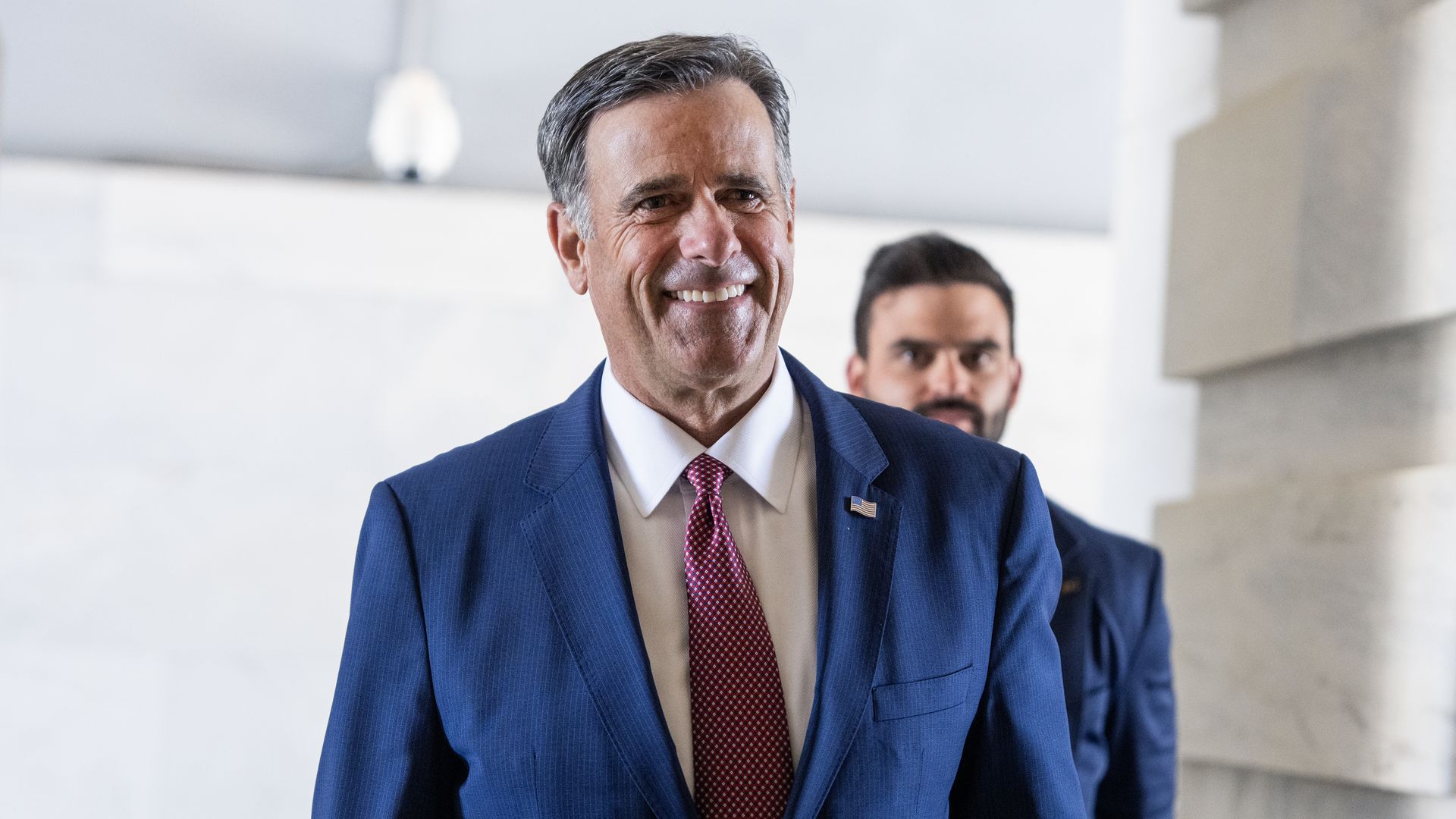
US media reported that CIA Director John Ratcliffe had travelled to Moscow for meetings.
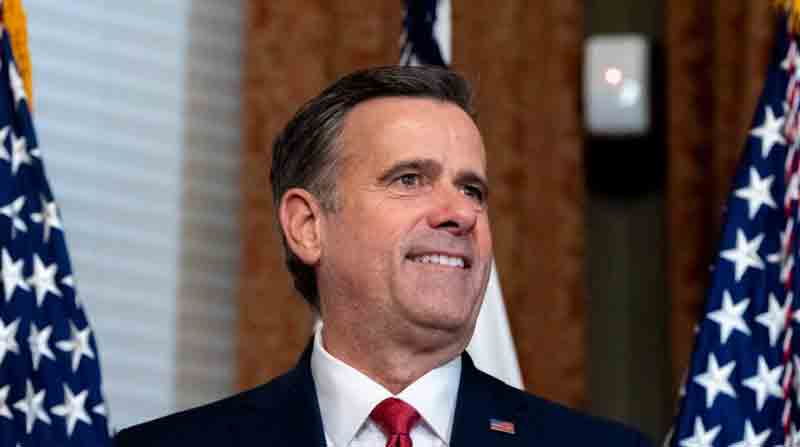
CBS News, citing sources familiar with the trip, reported that Ratcliffe was in Moscow, apparently on his first known visit to Russia since becoming CIA director. Axios separately reported the visit. Neither source disclosed whom he was meeting or what was being discussed.
That changes the significance of the aircraft.
This is no longer simply a story about an unusual military flight.
It is potentially a story about a renewed high-level US-Russia intelligence channel at a critical moment in the Ukraine war and the wider Iran crisis.
What We Know So Far
The confirmed sequence is striking.
- The US C-17 originated from the Washington area.
- It arrived in Riga on August 23.
- It then flew directly from Riga to Moscow on August 25.
- It landed at Vnukovo.
- The Kremlin initially said it had no information about the aircraft.
- US media subsequently reported that CIA Director John Ratcliffe was in Moscow for meetings.
- Washington has not publicly explained the mission.
- Moscow has not publicly confirmed Ratcliffe’s meetings.
The aircraft’s route also matters.
Riga is a NATO capital and sits on Russia’s immediate western frontier. The choice of Latvia as an intermediate stop is therefore notable, although there is no evidence that the stop itself has any political significance.
The aircraft’s previous departure point was Camp Springs, Maryland, near Washington, according to flight-tracking data.
Why Would the CIA Director Go to Moscow?
This is the central question.
There are several plausible explanations.
1. Ukraine negotiations
This is the most obvious possibility.
US-mediated negotiations with Russia over Ukraine have stalled.
The CIA can play a role in discussions involving:
- intelligence assessments;
- military intentions;
- ceasefire verification;
- prisoner exchanges;
- escalation risks;
- and private communications between senior governments.
Ratcliffe’s visit could therefore be intended to reopen a channel that has become politically difficult to manage through conventional diplomacy.
2. Iran
The timing also points toward Iran.
The Ukraine negotiations have been complicated by the wider Iran war.
Russia and Iran have strategic ties, although Moscow’s interests do not always perfectly coincide with Tehran’s.
Washington may therefore want to understand:
What is Moscow’s position on the Iran conflict?
What assistance is Russia providing Iran?
Would Putin support or undermine a US diplomatic initiative?
Could Russia help create an exit from the conflict?
These are questions better suited to an intelligence channel than a public diplomatic exchange.
3. Intelligence-to-intelligence contacts
CIA directors can sometimes communicate with foreign intelligence chiefs even when political relations are extremely poor.
The advantage is confidentiality.
A message passed through an intelligence channel can be more candid than one delivered through a foreign ministry.
Ratcliffe has already maintained contact with Russian intelligence counterparts, according to CBS.
That makes a Moscow meeting less extraordinary than the aircraft itself might initially suggest.
4. Prisoner exchanges
The CIA has also been involved in US-Russian detainee negotiations.
CBS reported that Ratcliffe personally negotiated the release of US-Russian dual national Ksenia Karelina in 2025, while the agency was also involved in the 2024 releases of Wall Street Journal reporter Evan Gershkovich and US Marine veteran Paul Whelan.
Therefore, a Moscow visit could involve detainees or future exchanges.
There is currently no evidence, however, that this is the purpose of Ratcliffe’s trip.
Why the CIA Rather Than Witkoff or Rubio?
This is perhaps the most revealing aspect.
The Trump administration’s Ukraine diplomacy has largely been associated with Steve Witkoff and Jared Kushner.
They have previously travelled to Moscow to meet Vladimir Putin.
But those talks have stalled.
The Kremlin said last week that it had no information about another planned Moscow visit by Witkoff and Kushner.
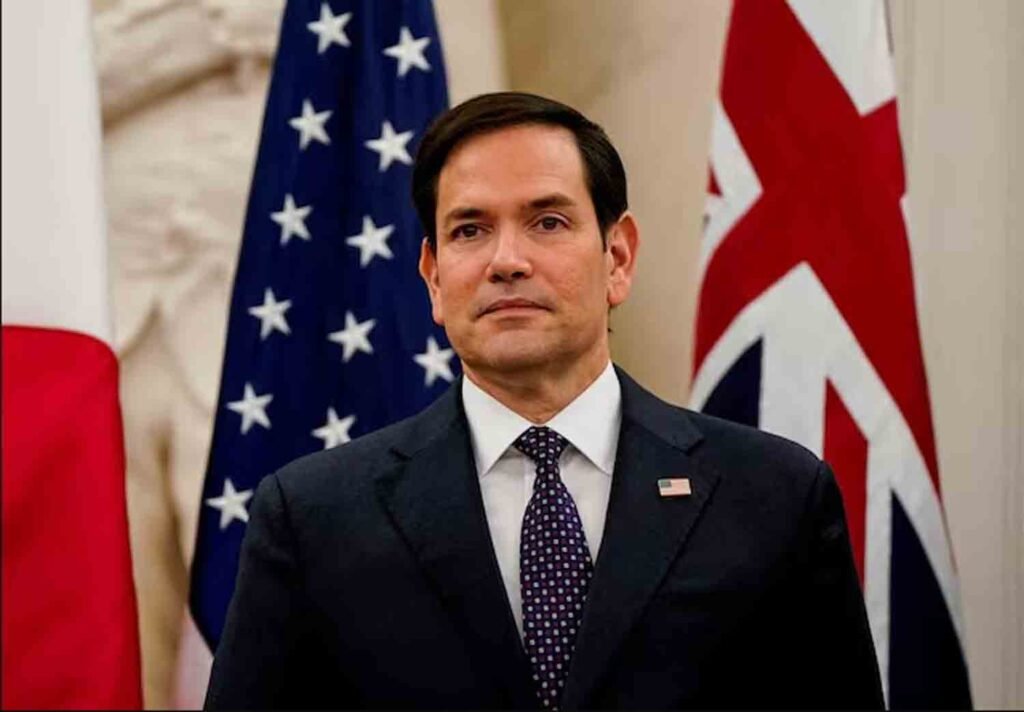
At the same time, German Foreign Minister Johann Wadephul has urged Secretary of State Marco Rubio to take a more active role in the Ukraine diplomacy, arguing that US efforts have been driven largely by presidential envoys.
Against that background, sending the CIA director could represent a different diplomatic track.
Rather than negotiating publicly over a peace framework, Washington may first be trying to understand what Moscow actually wants.
This Could Be a “Back Channel” Mission
The distinction between official negotiations and intelligence diplomacy matters.
A formal negotiation requires positions.
A back channel allows governments to ask questions such as:
What would Russia accept?
What would Putin reject immediately?
What concessions are genuinely negotiable?
What is Moscow’s military timeline?
What would be required for a ceasefire?
These conversations can occur without creating the expectation that a deal must immediately emerge.
That makes Ratcliffe’s trip potentially significant even if no agreement is announced.
The Timing Is More Important Than the Flight
The aircraft itself is interesting.
The timing is more interesting.
Three major developments are occurring simultaneously.
First: Ukraine talks are stalled.
Washington has struggled to bridge the gap between Russia and Ukraine.
Second: Iran has become a major US foreign-policy priority.
The Iran conflict is consuming military, diplomatic and economic attention.
Third: Russia remains strategically important.
Moscow has relationships with Iran, China, North Korea and other countries that Washington increasingly needs to understand.
That makes direct communication with Putin’s government valuable even when the Ukraine negotiations are stuck.
Russia May Also Have Reasons to Talk
It would be a mistake to assume that the visit is entirely about what Washington wants.
Moscow has its own interests.
Russia wants:
- sanctions relief;
- recognition of territorial realities;
- security guarantees;
- restrictions on Ukraine’s future military alignment;
- and an end to Western support for Kyiv.
But Russia also has an interest in maintaining direct communication with Washington.
A direct US-Russia channel prevents Moscow from becoming entirely dependent on Beijing or other partners.
It also gives Putin an opportunity to influence US decisions on Iran and other issues.
Russia and Iran: The Overlapping Crisis
This is particularly important now.
Moscow and Tehran have developed close relations, but they are not identical strategic actors.
Russia does not necessarily want the Iran war to continue indefinitely.
A prolonged conflict could:
- destabilise global energy markets;
- increase Western military pressure;
- strengthen US alliances in the Middle East;
- and consume Russian diplomatic resources.
At the same time, Russia may benefit strategically from the distraction of US military power away from Ukraine.
That creates a complicated calculation for Moscow.
Could Ratcliffe Be Discussing Iran?
It is possible.
But it should remain clearly labelled as a possibility, not a fact.
There is no public evidence yet establishing that Iran is the main subject of the meetings.
Still, the timing makes the subject difficult to ignore.
The Trump administration is simultaneously trying to pressure Iran economically and manage a difficult relationship with Russia.
Moscow has its own channels with Tehran.
Washington therefore has a strong intelligence interest in understanding the Russia-Iran relationship.
Ukraine Remains the Most Likely Core Issue
Despite the Iran factor, Ukraine remains the most obvious explanation.
The Trump administration wants to end the Russia-Ukraine war.
But the basic disagreements remain enormous.
Russia continues to demand recognition of its territorial claims and broader security arrangements.
Ukraine refuses to accept territorial concessions as the price of peace.
European governments want security guarantees.
Washington wants a settlement that can be presented as a diplomatic success.
The gap is substantial.
Zelenskyy Says There Is Still a Diplomatic Window
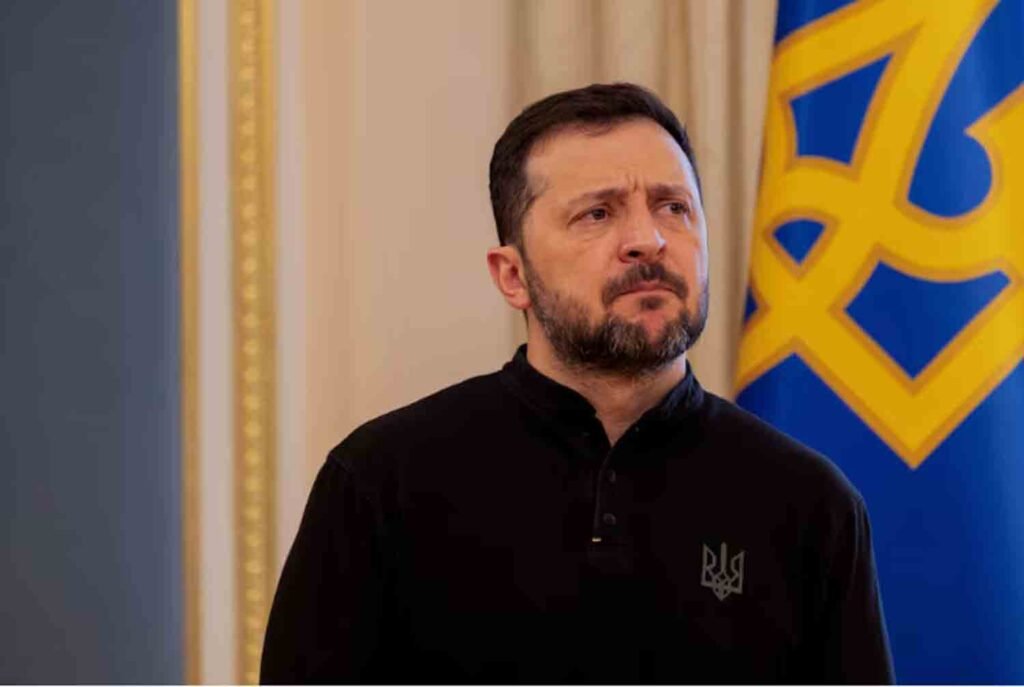
Ukrainian President Volodymyr Zelenskyy said Tuesday that he sees a diplomatic window extending into summer 2027.
Reuters reported that Ukraine and US and European officials have been working on a one-page proposal for Moscow involving a ceasefire and a proposed free economic zone in eastern Donbas managed by a neutral third party.
That is significant.
It suggests diplomacy has not been abandoned.
It may simply be changing form.
The Donbas Proposal Could Be Important
The idea of a special economic arrangement in eastern Donbas would represent a major attempt to separate the economic future of the territory from the immediate sovereignty dispute.
Russia, however, remains sceptical of international administration and continues to claim four Ukrainian regions.
That means a proposal exists—but the fundamental disagreement remains.
Ratcliffe’s discussions could potentially be about determining whether Moscow sees any space for compromise.
Why This Is Not a Normal Diplomatic Visit
There is another reason the C-17 matters.
US and Russian relations remain highly restricted.
Direct flights by US-registered aircraft into Russia are extremely unusual.
Reuters noted that the last known direct flight from Europe to Russia by a US-registered aircraft occurred in January, when Witkoff and Kushner travelled to Moscow for talks with Putin.
Therefore, the aircraft is a useful physical indicator that something unusual was happening.
It does not tell us exactly what.
But it confirms that a high-level US presence was taking place in Moscow.
The Kremlin’s “No Information” Response Is Also Interesting

The Kremlin saying it had no information should not automatically be interpreted as a denial.
There are several possibilities.
The Kremlin may genuinely not have been briefed about the aircraft.
The visit could have been arranged through intelligence channels.
Or Russian officials may simply be declining to discuss a sensitive meeting.
The absence of a Kremlin announcement is therefore consistent with a covert or semi-official intelligence mission.
The CIA Has a History of High-Level Moscow Channels
This is not unprecedented.
Former CIA Director William Burns travelled to Moscow in November 2021, before Russia’s full-scale invasion of Ukraine.
Burns met senior Russian officials and spoke directly with Putin to warn him about the consequences of an invasion.
That historical precedent is important.
The CIA channel can become especially important when ordinary diplomacy is failing.
Ratcliffe’s Visit Could Be About More Than Peace
The CIA director’s job is not to negotiate peace treaties.
His role is intelligence.
That means his Moscow meetings could be focused on:
- Russian military intentions;
- intelligence sharing;
- nuclear risks;
- escalation;
- Iran;
- cyber operations;
- detainees;
- or the Ukraine war.
A successful intelligence conversation could therefore support diplomacy without itself being a peace negotiation.
What About the CIA Director’s Relationship With Russian Intelligence?
Ratcliffe has maintained communication with Russian intelligence officials.
That is strategically important.
The CIA and Russia’s intelligence services remain adversaries.
But intelligence agencies sometimes maintain channels precisely because they need to prevent misunderstandings between adversaries.
Such channels can help reduce the risk of:
- accidental escalation;
- misinterpretation;
- uncontrolled military incidents;
- or nuclear confrontation.
Could This Be About a Prisoner Exchange?
Possible—but there is no confirmation.
The CIA has played a major role in previous US-Russia detainee exchanges.
The Trump administration has also highlighted individual releases as diplomatic successes.
A secret trip could facilitate negotiations over detainees without announcing them in advance.
But until an exchange is confirmed, this should remain only one possibility.
Could It Be About a New Trump-Putin Meeting?
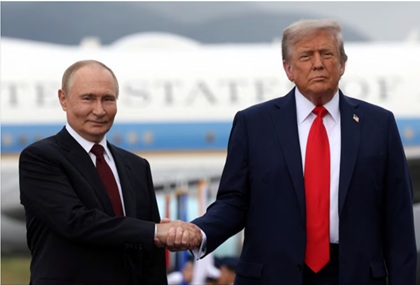
Another possibility is preparation.
Trump has maintained direct communication with Putin and has previously sent senior envoys to Moscow.
Ratcliffe could be laying groundwork for another Trump-Putin contact.
That would make sense if Washington believes the current diplomatic process needs a reset.
A CIA director can assess whether Russian leadership is genuinely prepared for another summit.
Why the US May Prefer a Secret Channel
Public diplomacy has become increasingly difficult.
Every statement is scrutinised.
Every concession can be portrayed as weakness.
Ukraine and Russia both have domestic political constraints.
A confidential intelligence channel gives the Trump administration greater freedom to explore possibilities without publicly committing to them.
That could be particularly useful before another Trump-Putin meeting.
But Ukraine Will Be Watching Closely
For Kyiv, a direct US-Russia intelligence meeting is potentially sensitive.
Ukraine wants the United States to remain firmly engaged in negotiations but does not want Washington and Moscow to reach an agreement over Ukraine’s future without Ukrainian participation.
Zelenskyy has repeatedly emphasised that Ukraine must be part of any settlement.
Therefore, even if Ratcliffe’s mission is exploratory, Kyiv will want clarity about what Washington is discussing with Moscow.
Europe Will Also Be Watching
European governments have become increasingly concerned that Washington’s Ukraine diplomacy could evolve independently of European security interests.
Germany’s foreign minister has already urged Rubio to play a more active role.
The question is whether the Trump administration is moving toward a more direct US-Russia negotiation, with European governments and Ukraine subsequently asked to accept the outcome.
That would create serious political tensions within the Western alliance.
The Iran War May Have Changed Washington’s Priorities
This is perhaps the biggest strategic context.
Before the Iran war, Ukraine was one of the Trump administration’s most important foreign-policy problems.
Now Washington has another major conflict requiring military and diplomatic attention.
That creates an incentive to reduce tensions with Russia.
If Moscow can be kept from exploiting the Iran crisis, Washington gains strategic flexibility.
This could be one reason for the renewed intelligence contact.
Russia May Also See an Opportunity
From Moscow’s perspective, the Iran war creates both risks and opportunities.
Russia can use its relationship with Tehran to increase its influence.
But it also risks becoming more directly involved in a confrontation with the United States.
Opening a channel with Washington allows Putin to understand American intentions.
It may also allow Russia to negotiate over issues beyond Ukraine.
The Bigger Strategic Picture: Washington Is Talking to Everyone
The Trump administration is simultaneously dealing with:
- Russia over Ukraine;
- Iran over the Middle East;
- China over trade and sanctions;
- Europe over NATO and defence;
- and Israel over regional military operations.
This requires multiple diplomatic channels.
The Ratcliffe mission could therefore be part of a broader effort to re-establish direct communication with Moscow at the intelligence level while political negotiations remain stuck.
What We Should Not Assume
There are several conclusions that would be premature.
It does not prove a Ukraine peace deal is imminent.
There is no evidence of that.
It does not prove Trump has abandoned Ukraine.
There is no evidence of that either.
It does not prove Russia and the US have reached an agreement.
No such agreement has been announced.
It does not prove Ratcliffe met Putin.
We do not know whom he met.
It does not prove the mission is about Iran.
Iran is a plausible subject, but its role has not been confirmed.
It does strongly suggest high-level US-Russia contact is taking place.
That is now supported by multiple reports of Ratcliffe’s presence in Moscow.
What to Watch Next
The next 24–72 hours could reveal much more.
1. Will the Kremlin acknowledge Ratcliffe?
Even a brief confirmation would be significant.
2. Who did Ratcliffe meet?
A meeting with Sergei Naryshkin, head of Russia’s SVR foreign intelligence service, would make the intelligence-channel explanation particularly strong.
3. Will the White House comment?
If Washington confirms the trip but refuses to discuss its purpose, that would itself be meaningful.
4. Will Witkoff and Kushner travel next?
A Ratcliffe visit could precede another round of political negotiations.
5. Will there be a Trump-Putin call or summit?
That would suggest the Moscow visit was part of a broader diplomatic preparation.
6. Will Ukraine respond?
Kyiv’s reaction will reveal whether it was informed about the visit and whether it sees the channel as supportive or threatening.
7. Will Iran emerge in the discussions?
Any evidence that Moscow is being asked to help with Iran would significantly broaden the importance of the trip.
The Most Likely Explanation
Based on what is publicly known, the safest conclusion is that the United States is using an intelligence channel to reopen or reinforce communication with Moscow at a moment when conventional Ukraine diplomacy is stalled.
Ratcliffe’s presence makes that assessment much stronger than it was when the only evidence was the C-17 flight.
The mission could involve Ukraine.
It could involve Iran.
It could involve detainees.
It could involve all three.
But the broader objective appears to be maintaining a direct line to the Kremlin when Washington has strong reasons to understand Russian intentions.
The Strategic Message Behind the Flight
The most interesting aspect of the story is not that an American military aircraft landed in Moscow.
It is that Washington still needs Moscow.
Despite the sanctions, despite the Ukraine war, despite the geopolitical confrontation, Russia remains too important to ignore.
Moscow remains a nuclear superpower.
It controls significant military capabilities.
It maintains relationships with Iran and China.
It has influence over global energy markets.
And it remains central to any realistic settlement of the Ukraine war.
That makes communication with Russia unavoidable.
Bottom Line
The mysterious US military flight to Moscow initially raised questions because there was no official explanation.
Those questions have now become more focused.
US media, including CBS News and Axios, report that CIA Director John Ratcliffe is in Moscow for meetings, although neither Washington nor the Kremlin has publicly disclosed the purpose or participants. Reuters has independently reported the visit based on those media reports.
The timing is highly significant.
US-Russia negotiations over Ukraine are stalled.
A new Ukrainian diplomatic proposal is reportedly being developed.
The Iran war has complicated Washington’s strategic priorities.
And the Trump administration may need Moscow’s cooperation—or at least Moscow’s restraint—on several fronts.
The most plausible interpretation is therefore not that a peace deal has suddenly been reached, but that Washington is quietly testing whether a diplomatic channel with Moscow can be revived.
Ratcliffe’s role makes the mission particularly important because intelligence contacts can explore subjects that formal diplomats cannot easily discuss.
If the visit is followed by a Witkoff-Kushner trip, a Trump-Putin call, or a new round of Ukraine negotiations, today’s flight will look like the opening move of a larger diplomatic effort.
If nothing follows, it may have been primarily an intelligence or security mission.
For now, the clearest conclusion is this:
The US-Russia diplomatic channel is not dead. It has simply moved into a much quieter and potentially more consequential phase.
And the fact that Washington sent its CIA director to Moscow—rather than another public diplomatic delegation—suggests that the Trump administration may first be trying to discover what Putin is actually prepared to discuss before making its next move.