
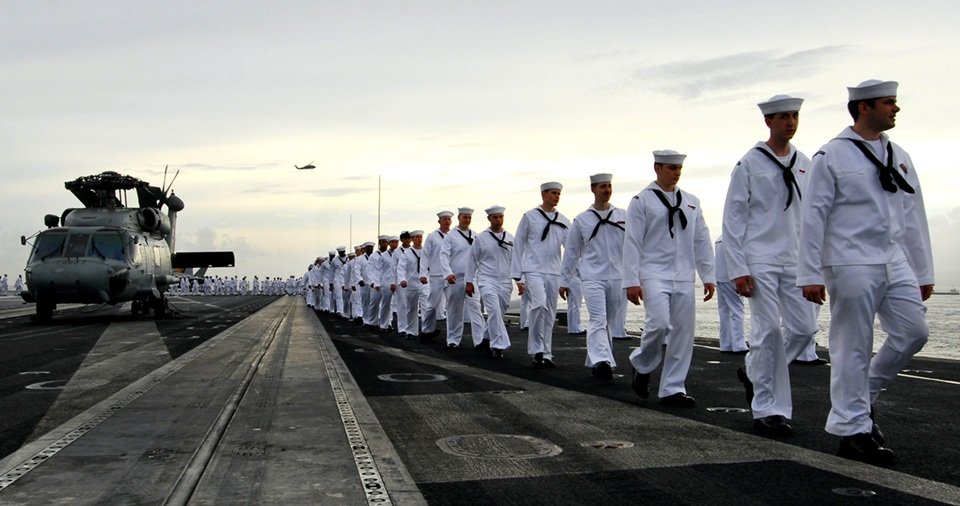
The Pentagon is reportedly moving money from US Navy payroll and other accounts to cover the cost of the prolonged Iran war, exposing a deeper problem inside the American military budget. The Navy says sailors will be paid on time, but the extraordinary funding transfers raise a more important question: how long can Washington sustain a war that was never built into the original fiscal plan without disrupting the military’s normal operations?
The financial consequences of the US war with Iran have reached an unusual point.
According to documents reviewed by The Guardian and interviews with Navy officials, contractors and defence analysts, the US Navy has been shifting money from payroll and other accounts to cover the cost of combat operations. A Pentagon memo reportedly warned of “shortfalls in payroll” accounts after funds were redirected toward overseas operations.
That does not mean American sailors are about to stop receiving their salaries.
The Navy has said it is managing its accounts and will meet its payroll obligations.
But the mechanics are significant.
Money allocated for personnel and other purposes is being moved around, with officials relying on unspent funds elsewhere to backfill the accounts.
In normal circumstances, that would be an accounting problem.
After six months of war, it becomes a measure of something bigger:
the US military is increasingly having to rearrange its normal budget simply to sustain the current conflict.
Why This Is Different From the Earlier Iran War Cost Story
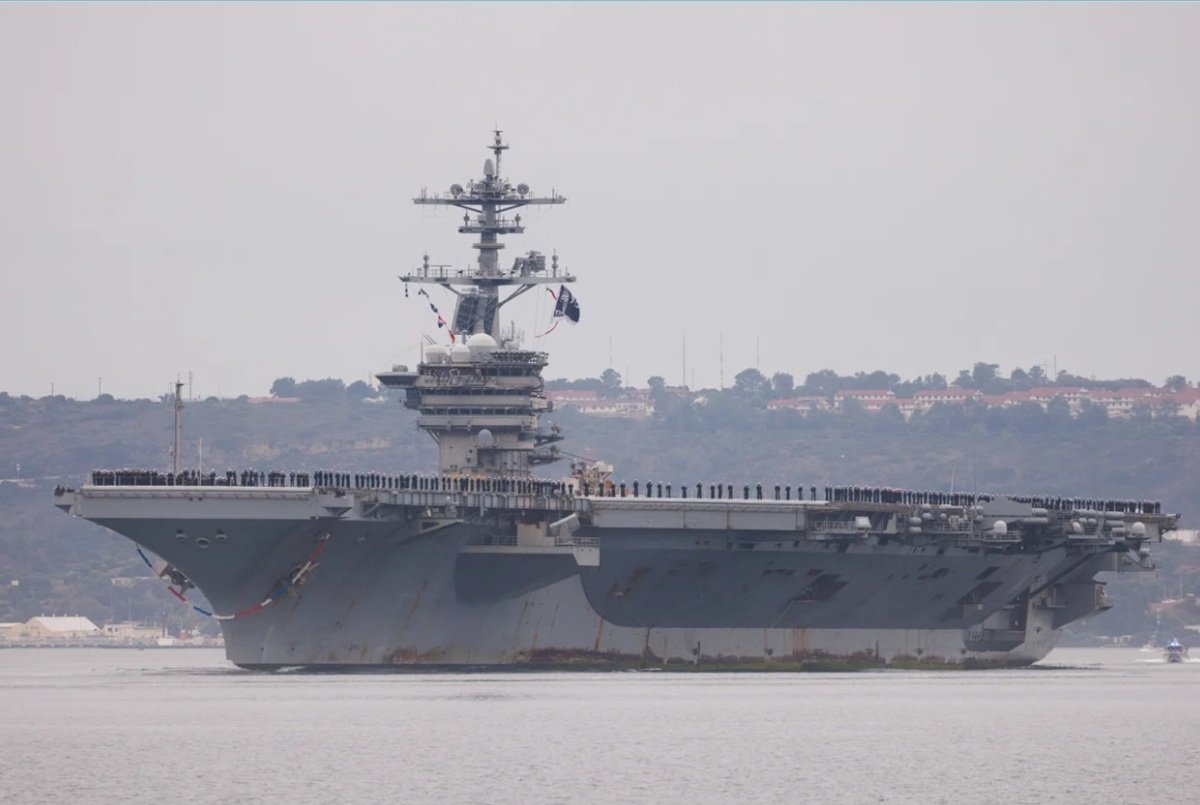
The Pentagon has been warning about the cost of the Iran campaign for months.
In June, the Trump administration asked Congress for an additional $87.6 billion, including $67.15 billion for the Defense Department. The request included $17.3 billion for operational costs and $21 billion for munitions and industrial-base requirements.
That was already a warning that the war was consuming resources much faster than the normal budget had anticipated.
But the latest revelation is different.
The issue is no longer simply:
“How much is the war costing?”
It is becoming:
“Which parts of the Pentagon’s existing budget are being squeezed to pay for it?”
That is a much more useful measure of the war’s financial pressure.
The Navy Budget Was Written Before the War
The 2026 Navy budget was not designed around a prolonged conflict with Iran.
The Department of the Navy’s fiscal 2026 budget request was roughly $292 billion, covering the Navy and Marine Corps.
That money was intended to support a huge range of activities:
- personnel;
- ship operations;
- aircraft;
- maintenance;
- training;
- procurement;
- bases;
- research;
- and global deployments.
Then the Iran war began on February 28.
The Navy suddenly had to sustain a much larger operational commitment in the Middle East, including maritime operations and support for the broader US campaign.
A budget designed for peacetime planning now had to absorb wartime expenditure.
That mismatch is at the heart of the problem.
Payroll Is the Last Account You Would Expect to Be Raided
Military payroll is normally among the least flexible parts of the budget.
Sailors still have to be paid whether a carrier is deployed or sitting in port.
That makes the reported movement of money particularly striking.
The Guardian reported that Navy funds were shifted from payroll accounts to meet overseas operational requirements and subsequently backfilled with money that had not yet been spent elsewhere.
In practical terms, this resembles a financial balancing act.
The Navy has obligations that cannot wait.
Combat operations have immediate costs.
So officials move money between accounts and attempt to restore the balances before the next obligation comes due.
That can work for a while.
But it becomes increasingly difficult when the underlying war continues generating new costs.
The Navy Is Not Going Broke
This distinction is essential.
The United States government has enormous borrowing capacity.
The Pentagon is not facing insolvency.
And there is no evidence that American sailors are about to miss their paychecks.
The problem is appropriation and timing.
Congress appropriates money for particular purposes.
The Pentagon has limited authority to move money between accounts without congressional approval.
As combat demands grow, those authorities become increasingly important.
The Washington Post reported earlier this year that the Pentagon was already shifting money and seeking congressional permission to reallocate $4.3 billion from training and weapons purchases toward more immediate requirements.
That gives the current payroll story much greater context.
The Navy is not suddenly experiencing a financial collapse.
It is experiencing budgetary displacement caused by an unplanned war.
What Gets Sacrificed When Combat Comes First?
This is where the consequences become more serious.
The Pentagon has several choices when combat operations demand more money than expected.
It can ask Congress for additional funds.
It can move money between accounts where legally permitted.
Or it can postpone lower-priority activities.
The third option is where long-term damage can begin.
Training can be reduced.
Maintenance can be delayed.
Exercises can be cancelled.
Procurement can be pushed back.
Infrastructure work can be deferred.
None of these decisions immediately affects a battlefield.
But collectively they can reduce military readiness months later.
The Navy’s Financial Squeeze Is Also a Planning Problem
The latest revelations point toward a broader weakness in Washington’s war planning.
The United States has the world’s largest defence budget.
But even a military of that size cannot instantly create a new budget when a conflict lasts far longer than expected.
The normal budget cycle operates on an annual timetable.
War operates every day.
Fuel has to be bought.
Ships have to be maintained.
Crews have to be rotated.
Bases have to be supplied.
Aircraft have to fly.
Contractors have to be paid.
That creates a financial burn rate that can quickly outrun normal planning assumptions.
The $67 Billion Request Shows the Scale of the Problem
The administration’s June supplemental request provides a useful benchmark.
Of the $67.15 billion requested for the Pentagon:
- $21 billion was earmarked for munitions;
- $17.3 billion for operational costs;
- $2.4 billion for drones;
- $1.7 billion for readiness;
- and additional money for classified programmes, fuel and other requirements.
This was not a marginal request.
It was an attempt to create a second financial pool large enough to keep the military campaign going without completely consuming the normal defence budget.
The fact that the Navy is now reportedly moving money between accounts shows why the supplemental funding fight matters.
Congress Now Has More Leverage
This could become politically significant as the US approaches the November midterm elections.
The administration needs Congress to provide additional money.
But lawmakers can now ask a much more difficult question:
If the war requires emergency funding month after month, where does it end?
That question is particularly relevant because the administration has not established a clear financial endpoint for the conflict.
A short campaign can be funded as an emergency.
A six-month war begins to look like a new military commitment.
A year-long war becomes a structural budget problem.
The Real Risk Is Not Missing Payroll
The real danger is that payroll becomes the headline while the deeper problem remains hidden.
If the Navy can protect salaries by borrowing temporarily from other accounts, the immediate crisis is manageable.
But what happens if those other accounts also become exhausted?
At that point, the choices become much harder.
The Navy could have to:
delay maintenance, reduce training, postpone procurement or reduce deployments.
Those decisions would have consequences for the fleet’s ability to generate forces later.
This Could Affect the Navy’s Global Commitments
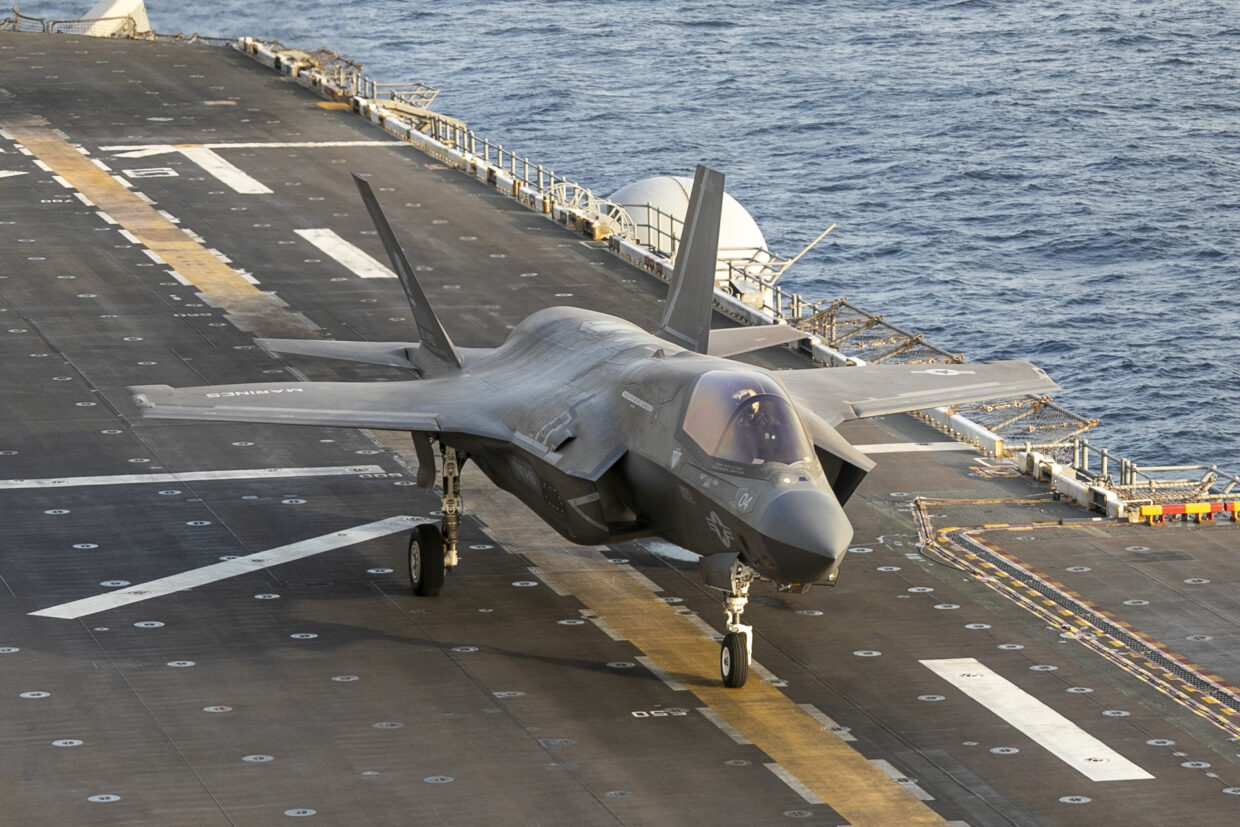
The US Navy is not fighting only in the Middle East.
It maintains forces in the Indo-Pacific.
It supports NATO operations.
It protects global shipping routes.
It conducts exercises with allies.
It maintains nuclear deterrence.
And it provides forces for crises that Washington cannot predict.
That means money spent sustaining the Iran war is not simply money spent on Iran.
It is money that could otherwise support the Navy’s global force structure.
This is the opportunity cost of the conflict.
The Most Interesting Question Is What Washington Cuts Next
This is where the story should now be watched.
If Congress provides the requested money, the immediate pressure will ease.
But if funding is delayed or reduced, the Pentagon will have to make choices.
The first signs could appear in areas that rarely make front-page news:
- cancelled exercises;
- delayed maintenance;
- slower procurement;
- reduced deployments;
- deferred base work;
- postponed modernization;
- or lower training activity.
Those are much better indicators of military financial stress than a temporary payroll-account shortage.
The War Has Already Created a Budget Cascade
The sequence is becoming clear.
War begins → operational spending rises → existing accounts become insufficient → Pentagon shifts money → Congress is asked for supplemental funding → lower-priority activities face cuts.
The longer the war continues, the more pronounced that cascade becomes.
The Pentagon can manage one emergency.
It becomes much harder to manage the same emergency repeatedly.
Could the Pentagon Simply Ask for More Money?
Yes.
And that is probably the most likely immediate solution.
The United States can appropriate additional defence funding.
But there is a political limit.
The administration already submitted a record-scale defence request for the next fiscal year, while simultaneously seeking emergency money for the Iran war.
That creates competition between:
funding the current war
and
building the future US military.
Those are not always the same thing.
The War Is Also Creating a Maintenance Debt
One of the least visible consequences could become one of the most expensive.
War accelerates wear.
Ships spend more time at sea.
Aircraft fly more hours.
Engines require servicing sooner.
Bases operate at higher tempo.
Equipment is repaired more frequently.
If maintenance is postponed because money is redirected to combat, the Pentagon is effectively creating a maintenance debt.
That debt eventually has to be paid.
And usually at a higher cost.
The Navy Could Face a Choice Between Combat Tempo and Fleet Recovery
If the Iran operation continues, the Navy may eventually have to reduce the pace of deployments simply to recover its fleet.
That would not necessarily mean withdrawing from the Middle East.
It could mean longer maintenance periods, different deployment rotations or greater reliance on allies.
In other words, the financial problem could gradually become an operational problem.
This Is Where the Latest Report Becomes Strategically Important
The significance of the payroll story is therefore not that the US Navy is financially collapsing.
It is that the Pentagon’s internal budget is beginning to show signs of war-induced distortion.
That is something worth watching because the US military’s greatest advantage is its ability to sustain operations globally.
If that advantage becomes increasingly expensive to maintain, Washington has to make choices about priorities.
And those choices will eventually be visible in force deployments, training schedules and procurement decisions.
What Could Happen If the War Continues Into 2027?
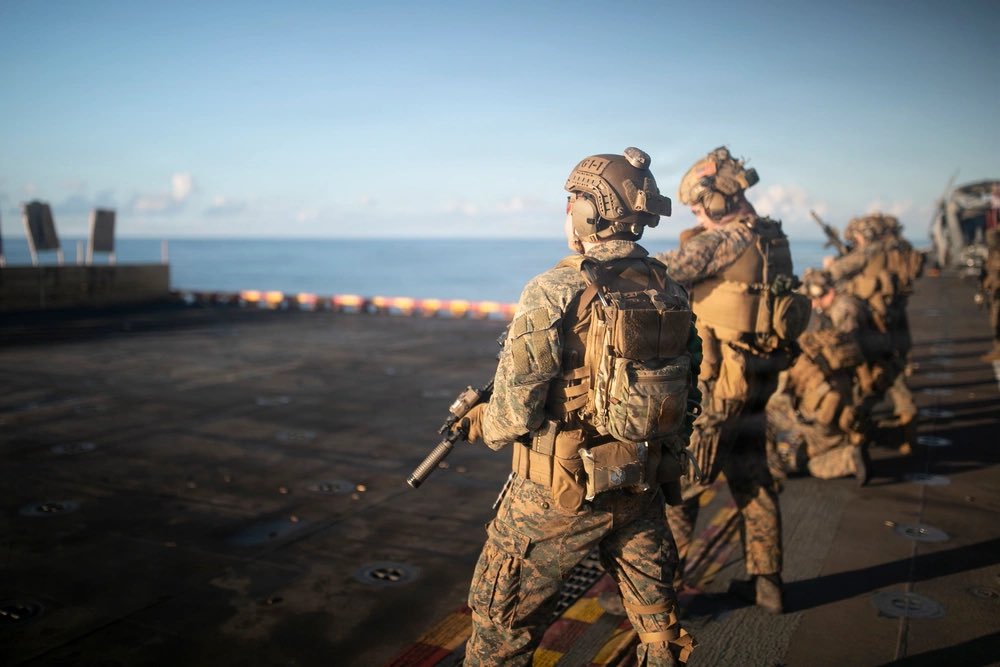
Three scenarios are plausible.
Scenario 1: Congress fully funds the war
This is the least disruptive option for the Pentagon.
Emergency money would replenish operating accounts and reduce pressure on personnel, maintenance and training budgets.
But the overall US defence bill would rise sharply.
Scenario 2: Congress provides only part of the requested funding
This would force the Pentagon to prioritise.
Some programmes and activities would almost certainly be protected while others are delayed.
This is where readiness trade-offs become more visible.
Scenario 3: The war winds down
This would immediately reduce the operational burn rate.
But it would not erase the accumulated costs.
The Navy would still need to restore maintenance schedules, replenish equipment and settle outstanding financial commitments.
The Political Question Is Becoming Harder to Avoid
Trump has repeatedly argued that the US campaign against Iran is necessary to protect American interests.
That may be the administration’s strategic case.
But military strategy and military financing eventually meet the same question:
How much is the objective worth?
The Pentagon can request more money.
Congress can appropriate it.
But taxpayers and lawmakers will eventually want to know whether the cost is producing an outcome that justifies the expenditure.
That debate is likely to become more intense as the war approaches the next fiscal year.
What the Navy Payroll Warning Really Tells Us
The most useful way to read the latest report is not as evidence of an imminent US military financial collapse.
It is an early warning about budgetary sustainability.
The Navy is apparently having to move money around to maintain combat operations.
Earlier reporting already established that training, maintenance and other activities were being squeezed while the Pentagon sought emergency funding.
Now the financial pressure is reaching personnel accounts.
That does not mean the system has broken.
But it does show how far the extraordinary costs of the Iran war have begun to penetrate the Pentagon’s normal financial machinery.
Bottom Line
The newest development in the Iran war is therefore not another story about depleted missiles or another warning about America’s global military posture.
It is much more mundane—and potentially more revealing.
The US Navy is reportedly moving money around inside its own budget to keep paying for an expensive war that was not part of the original fiscal plan.
The Navy can prevent a payroll disruption.
Congress can provide emergency funding.
The Pentagon can shift money between accounts.
But none of those measures changes the underlying arithmetic.
Every month of war adds another bill.
And every dollar directed toward sustaining the current campaign is a dollar that must either come from new congressional appropriations or from somewhere else inside the defence budget.
That makes the next phase of the story worth watching closely.
Not whether American sailors get paid.
They almost certainly will.
The more consequential question is what the Pentagon will have to postpone, cancel or scale back to keep the war funded if Washington cannot bring the conflict to an end.
That is where a temporary funding squeeze could become a genuine military readiness problem.