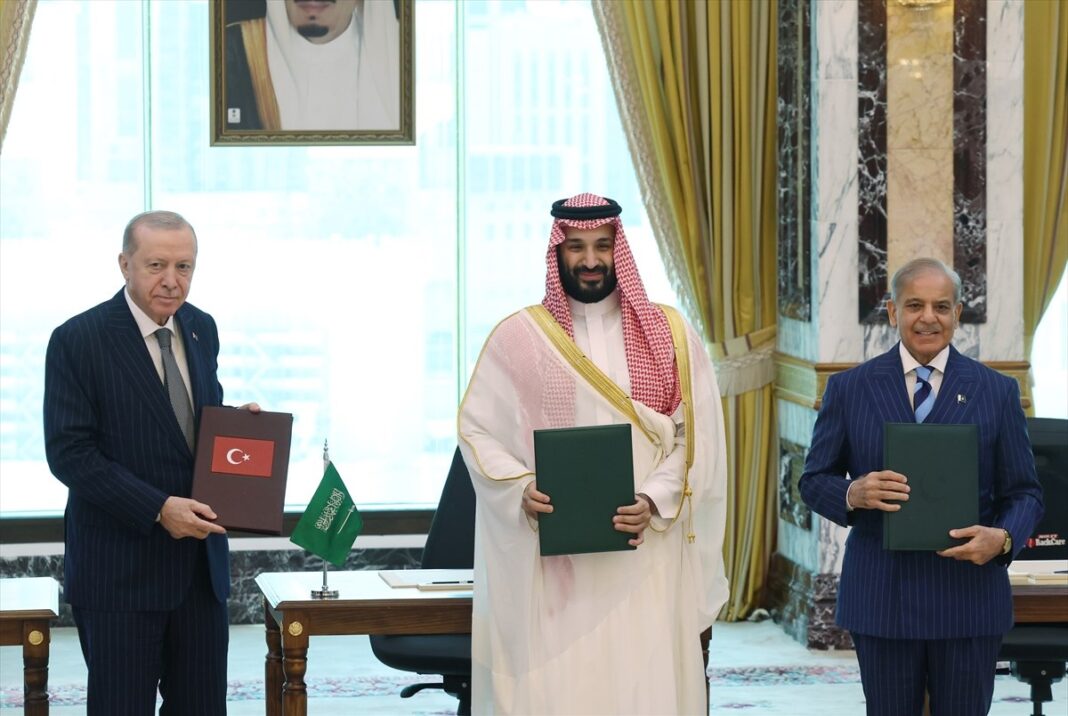
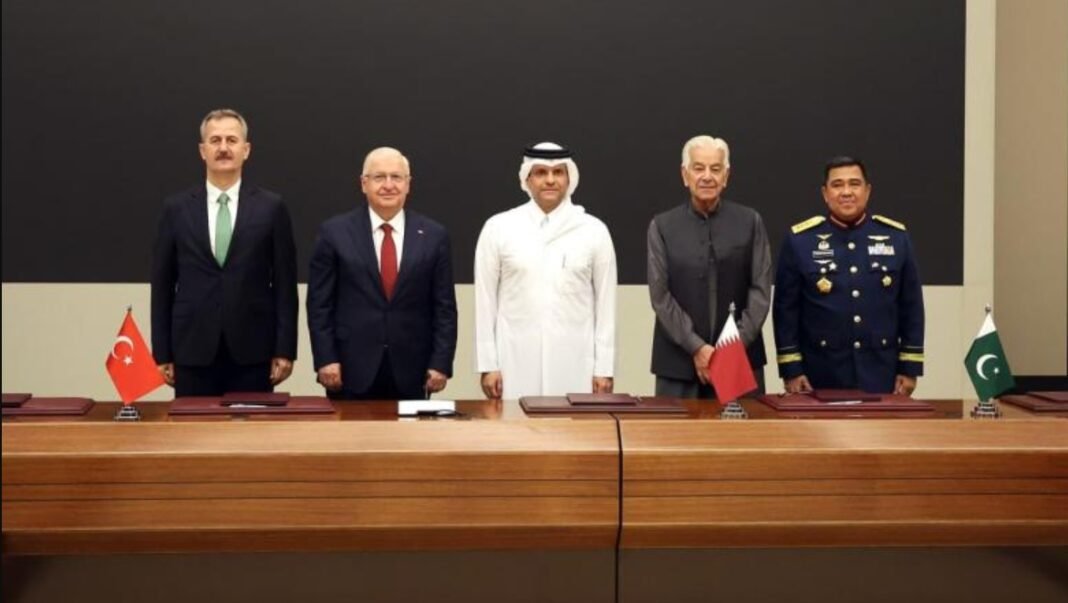
The memorandum of understanding, named “Badr,” was signed by the defence ministers of the four countries, according to Turkish media reports citing official defence authorities. The agreement aims to build on existing bilateral defence projects and expand cooperation through a multilateral framework connecting the military industries of all four states.
The agreement could create new opportunities for Pakistan’s defence industry to cooperate with Turkish defence manufacturers, Qatari investment and industrial partners, and Indonesia’s growing defence sector. However, the practical impact will depend on the projects launched, the technologies shared and the arrangements negotiated under the memorandum.

The Badr memorandum is designed to encourage the four countries to pool their defence-industrial capabilities rather than rely exclusively on conventional arms purchases. According to Turkish state broadcaster TRT Haber, the agreement also seeks to strengthen military capabilities and expand cooperation in technical military training, research and development.
The agreement’s main areas of cooperation include:
-
Joint defence production: Developing opportunities for the participating countries to manufacture military equipment together.
-
Technology transfer: Sharing technical expertise and production capabilities through mutually agreed projects.
-
Research and development: Cooperating on the development and improvement of defence technologies.
-
Technical military training: Expanding professional and technical knowledge across participating defence establishments.
-
Industrial integration: Connecting suppliers, manufacturers and defence-sector institutions to support longer-term cooperation.
The stated objective is to build on existing bilateral projects and establish a broader framework for future cooperation. The public reporting reviewed does not specify individual project contracts, financial commitments, production quotas or a detailed implementation timetable.

Pakistan’s Defence Industry Could Benefit From Joint Production
For Pakistan, the agreement offers a framework to explore additional industrial cooperation with Turkey, Qatar and Indonesia. Pakistan already has experience in defence manufacturing, aircraft production, naval construction and cooperation with foreign defence companies.
One established example is the Pakistan Navy’s PN MILGEM Babur-class corvette programme, developed through cooperation with Turkey. Under the four-ship programme, two vessels were built in Istanbul and two at Karachi Shipyard, helping strengthen Pakistan’s domestic shipbuilding infrastructure and technical expertise.
The programme demonstrates how defence cooperation can extend beyond purchasing military platforms to include local manufacturing, workforce development and industrial capability.
Under the Badr framework, further collaboration could potentially build on this experience. However, no new Pakistani production contract or specific equipment programme should be treated as confirmed unless the participating governments announce it.
Turkey brings an established defence manufacturing base
Turkey has developed a broad defence industry spanning unmanned aerial vehicles, naval platforms, armoured vehicles and military electronics.
According to Anadolu Agency, citing Turkish defence-industry export figures, Turkey’s defence and aerospace exports reached approximately $54 billion cumulatively from 2012 through September 2026. More than $30 billion of that total was recorded during 2023–2026. These are cumulative figures for the period, not annual export totals.
For Pakistan, Turkish expertise could offer opportunities for cooperation in naval engineering, electronics, equipment integration and other agreed industrial projects.
Qatar Could Contribute Investment and Industrial Partnerships
Qatar has already developed defence-industry links with Turkish companies, combining procurement with local assembly and manufacturing.
One example is BARQ, a joint venture involving Turkish defence-electronics company Aselsan and Qatar’s Barzan Holdings. The venture has undertaken local assembly, production and calibration activities involving SARP remote-controlled weapon systems and electro-optical equipment.
This existing model illustrates how Qatar’s industrial partnerships could contribute to wider cooperation under the Badr memorandum. Whether the four countries establish similar joint ventures or manufacturing facilities under the new framework remains to be determined.

Indonesia Adds Experience in Joint Military Development
Indonesia also has a record of defence-industrial cooperation with Turkey, particularly in armoured vehicle development.
The KAPLAN MT medium tank, also known as the Harimau, was jointly developed by Turkey’s FNSS and Indonesia’s PT Pindad. Production in Indonesia has continued under a technology-transfer arrangement, according to Anadolu Agency.
This experience is relevant to the Badr initiative because it demonstrates an existing model for combining foreign technical expertise with domestic manufacturing.
Indonesia’s participation could provide opportunities to explore additional joint projects, although the memorandum does not publicly identify any new tank, aircraft or other weapons programme.
Is Badr a Mutual Defence Alliance?
The distinction is important.
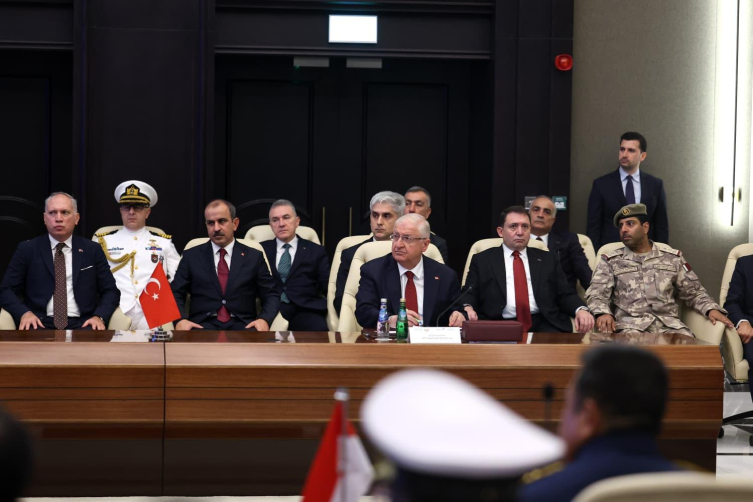
The Badr memorandum has been described as a defence-industry cooperation agreement, focused on production, technology transfer, research and development, and training. The available reporting does not establish that it includes a collective-defence clause requiring the four countries to come to one another’s military aid in the event of an armed attack.
It should therefore not be described as a NATO-style military alliance or as a commitment to deploy forces jointly without further official documentation.
The agreement also comes amid broader developments in regional defence cooperation. In August 2026, Pakistan, Turkey and Saudi Arabia signed the separate Makkah Joint Defence Agreement, which provides for closer cooperation on collective security. That is a distinct arrangement with a different set of signatories and should not be conflated with the four-country Badr defence-industry pact.
The two initiatives illustrate different dimensions of defence cooperation: one centred on industrial collaboration among four countries, and the other on security cooperation among three.
What Does the Name Badr Mean?
“Badr” is an Arabic word associated with the full moon. The name gives the memorandum a distinct identity, but the practical significance of the agreement will depend on its implementation rather than its title.
The key indicators to watch will be whether the four countries establish joint ventures, announce specific research programmes, agree on technology-transfer arrangements or commit funding to shared manufacturing projects.

What Happens Next?
The signing creates a framework for further cooperation, but the next stage will determine its practical value.
Several developments will be worth monitoring:
-
Specific projects: Whether the governments identify the first jointly developed or manufactured defence systems.
-
Industrial investment: Whether Qatar or other participating partners commit funding to joint production facilities.
-
Technology transfer: Whether new agreements specify which technologies and manufacturing capabilities can be shared.
-
Pakistan’s domestic capacity: Whether projects create additional work for Pakistani manufacturers, engineers and shipyards.
-
Implementation arrangements: Whether the parties establish working groups, project timelines and mechanisms to coordinate the four national defence industries.
The memorandum’s strategic importance will ultimately depend on the extent to which it produces measurable industrial cooperation and long-term technical benefits.
Conclusion
The Badr defence-industry pact brings Pakistan, Turkey, Qatar and Indonesia into a common framework for expanding military-industrial cooperation. By building on Turkey’s defence manufacturing partnerships, Pakistan’s industrial and naval experience, Qatar’s existing defence-industry investments and Indonesia’s joint-development programmes, the four countries have a basis for exploring further collaboration.
For Pakistan, the central opportunity is to turn established defence relationships into additional manufacturing, technical expertise and research partnerships. Whether that opportunity produces new capabilities or export opportunities will depend on the projects and commitments announced after the memorandum’s signing.