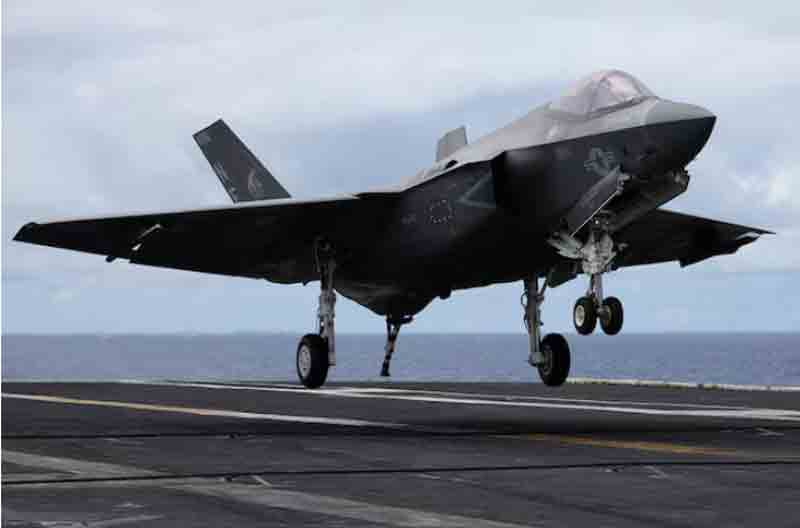
A shipment of F-35 fighter jet components sent from Australia to the United States for repairs was unexpectedly rerouted to Hong Kong, with some of the parts subsequently reported missing, triggering concern in Washington over the possible exposure of sensitive technology.
The shipment was carrying components from the F-35 program and was being transported across the Pacific by a third-party logistics company when its route changed. According to reporting cited by POLITICO, the Pentagon has confirmed that some components disappeared after the shipment was diverted.
The circumstances surrounding the rerouting remain unclear, including why the shipment was sent to Hong Kong, who authorized the change and who currently possesses the missing components.
The incident has already attracted congressional attention. U.S. officials have conducted closed-door briefings for staff of congressional committees responsible for national security, with Pentagon and State Department officials briefing lawmakers’ staff in June and additional briefings expected.
The case is particularly sensitive because at least one component reportedly included a fighter jet canopy incorporating technology associated with the F-35’s low-observable characteristics.
Why the F-35 canopy matters
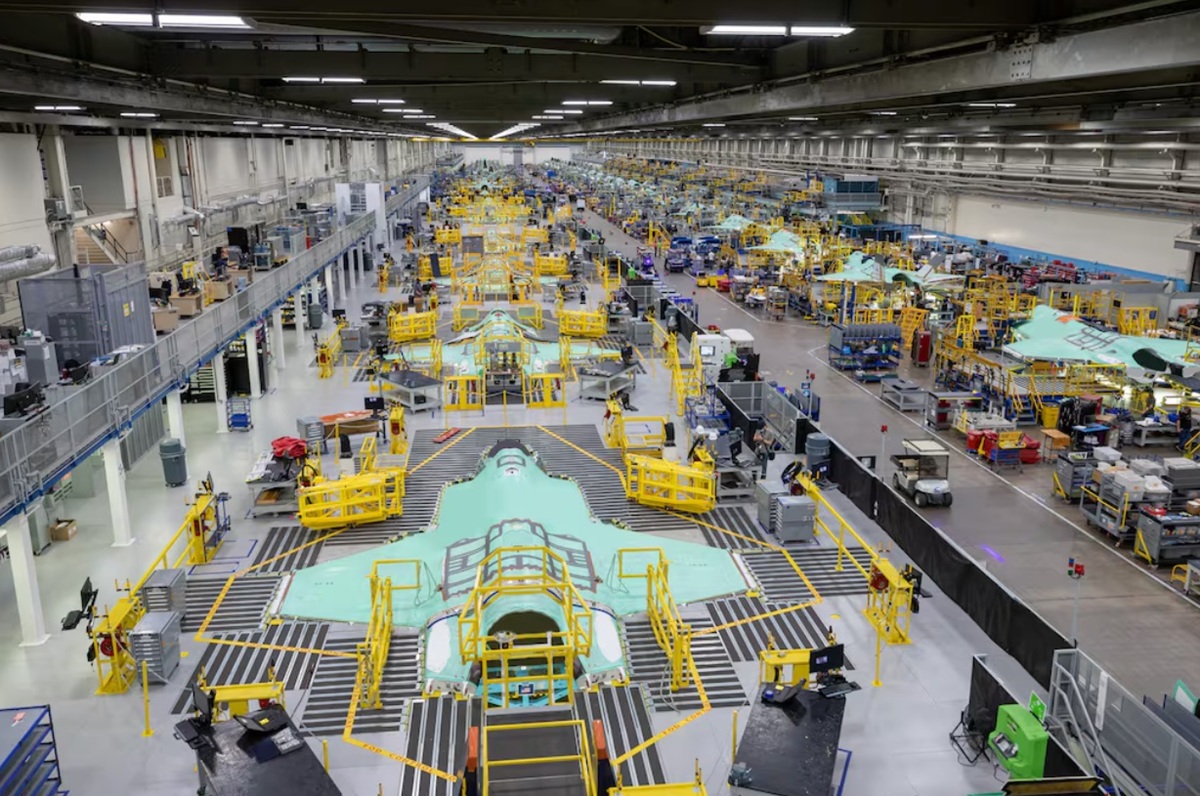
The F-35 canopy is more than a transparent cockpit cover.
The canopy is a stretched acrylic structure with a thin transparent radar-absorbing layer applied to its exterior. U.S. Air Force documentation has previously described the coating as part of the system that helps preserve the aircraft’s low radar observability. Canopy coatings have also required replacement when degradation affected their ability to support the aircraft’s stealth characteristics.
That does not mean that possession of a single canopy would automatically allow an adversary to reproduce the F-35’s stealth characteristics. The aircraft’s low observability results from the integration of its airframe shaping, materials, coatings, apertures, sensors and other design features.
Nevertheless, a component containing specialized materials or manufacturing information can have intelligence value, particularly if it provides information about how the aircraft manages radar signatures.
That is why the disappearance of F-35 components is being treated as more than an ordinary commercial shipping problem.
Shipment exposes a complicated F-35 logistics network
The incident also highlights an unusual feature of the F-35 program: its enormous international sustainment network.
The F-35 fleet is operated by the United States and a large group of international partners and customers. Spare parts are distributed through a global system rather than being held exclusively at the bases where individual aircraft operate.
The Defense Logistics Agency has described the F-35 system as a global supply network involving government-owned parts, contractors, warehouses and transportation providers. DLA has also worked with U.S. Transportation Command and other organizations to improve visibility of F-35 parts moving around the world.
This arrangement is designed to keep aircraft operating across a geographically dispersed fleet, but it also creates a complicated chain of custody.
A component can move between an operational unit, regional warehouse, repair facility, contractor and another location before returning to service.
That makes accurate tracking particularly important when the component involves sensitive military technology.
Australia has become an important F-35 sustainment hub
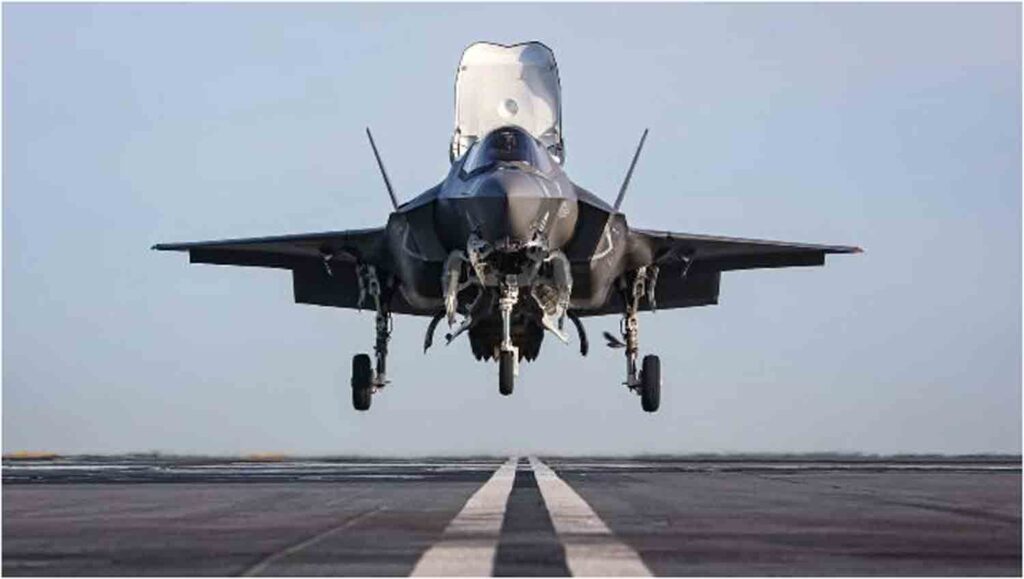
Australia is an important part of that network.
The Royal Australian Air Force operates the F-35A, while Australian industry has developed maintenance, repair, logistics and component-support capabilities for the program.
The Australian Defence Department says the country’s F-35 support system is being developed under the F-35 Global Support Solution, including airframe maintenance, engine maintenance, component repair and warehousing. Australian companies have also been selected to activate regional component-maintenance capabilities for the Asia-Pacific region.
Australia established an F-35 maintenance depot at RAAF Williamtown in 2021, while BAE Systems Australia operates a major maintenance facility supporting the Australian fleet.
The country has also been expanding its role as an Indo-Pacific sustainment center. Australian authorities have invested in additional maintenance capacity at Newcastle Airport, while a future regional hub is being developed with capabilities that include dedicated F-35 canopy repair.
That makes the reported diversion of a sensitive component from Australia particularly significant from a supply-chain security perspective.
F-35 parts tracking has faced problems before
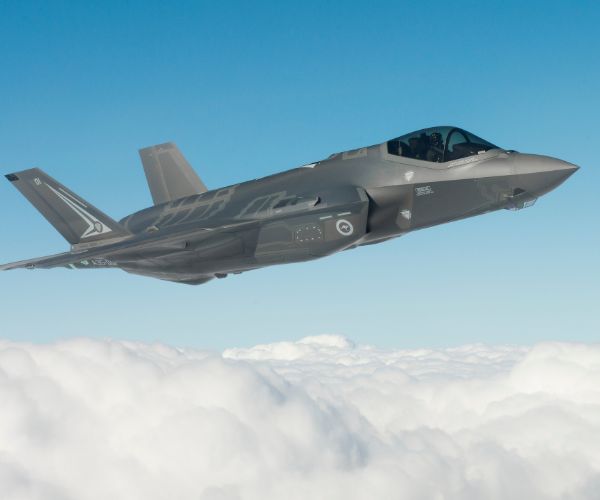
The latest incident also comes against the backdrop of long-standing concerns over accountability for F-35 spare parts.
A 2023 investigation by the U.S. Government Accountability Office found serious weaknesses in the Pentagon’s oversight of the F-35 global spare-parts pool.
According to the GAO, one F-35 prime contractor recorded more than 1 million spare parts as losses between May 2018 and October 2022, with a total value exceeding $85 million. The Joint Program Office had reviewed the circumstances surrounding less than 2% of those identified losses.
The GAO also found that more than 900,000 additional parts valued at over $66 million had not been reported to the Joint Program Office for review as of October 2022.
The distinction is important: these figures did not mean that one million highly sensitive F-35 components had vanished into foreign hands. The GAO was examining losses across a huge inventory that included items such as engines, tires, landing gear, bolts, screws and fasteners.
But the report identified a structural problem: the Pentagon did not have complete real-time visibility of all government-owned F-35 spare parts held at contractor facilities.
The GAO said the Joint Program Office did not maintain the spare-parts information in an accountable property system of record, while prime contractors maintained much of the relevant information.
New GAO report shows F-35 sustainment remains a problem
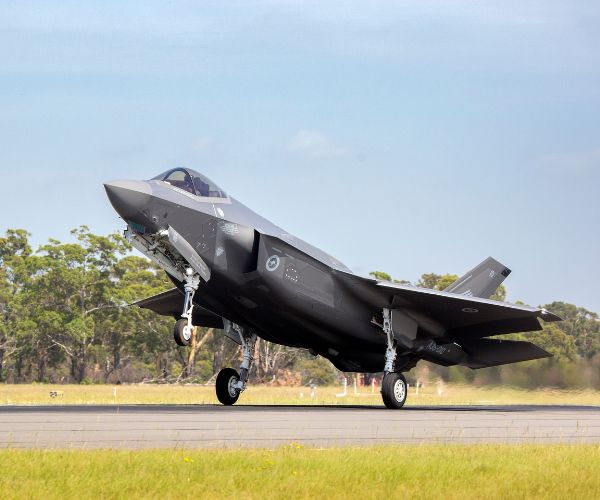
The concern has not disappeared.
In a June 2026 assessment, the GAO said the F-35 program continues to face significant sustainment challenges.
According to the report, the fleet-wide mission-capable rate declined from 67% in fiscal year 2021 to 44% in fiscal year 2025, while the full-mission-capable rate fell from 38% to 25%.
The Pentagon launched a new sustainment strategy in 2025 that requires an estimated $13.7 billion in additional funding through fiscal year 2031. The strategy is intended to address problems including spare-parts shortages and heavy dependence on contractors.
The GAO warned that the strategy itself faces risks because the F-35 program will depend heavily on private industry to deliver additional parts and material while some suppliers continue to face capacity constraints.
That makes the security of the supply chain increasingly important as the F-35 fleet expands.
F-35 sustainment is becoming a bigger strategic issue
The F-35’s supply chain has never been simply a question of moving replacement parts from one military warehouse to another.
It is a multinational industrial system involving the Pentagon, Lockheed Martin, engine manufacturer Pratt & Whitney, international operators, regional warehouses, repair facilities and commercial logistics providers.
The model offers advantages because a common pool can allow operators to obtain components without every country having to maintain a complete inventory.
But the same model creates vulnerabilities if ownership, location, transportation and custody records are not continuously synchronized.
The GAO has repeatedly identified supply-chain visibility as an issue for the F-35 program. In an earlier assessment, it said the Defense Department did not maintain complete information about the parts it had purchased, including where they were located and how much they cost.
The latest reported shipment diversion therefore comes at a time when the Pentagon is already attempting to strengthen the F-35’s sustainment system.
Rising F-35 costs add another layer to the problem
The reported incident also comes as the cost of producing new F-35s is rising.
According to figures reported in September, the average flyaway price of the F-35A for production Lots 18 and 19 has risen to approximately $92 million, compared with $82.5 million for the previous production group.
The F-35B price has risen from approximately $109 million to $121.4 million, while the carrier-capable F-35C has increased from $102.1 million to $110.8 million.
These are acquisition costs rather than the lifetime cost of operating the aircraft.
The distinction matters because the F-35 program’s financial challenge extends far beyond buying the aircraft. The Pentagon expects the long-term cost of operating and sustaining the fleet to be enormous, while GAO has repeatedly identified maintenance, parts availability and contractor dependence as continuing problems.
Why Hong Kong has become the focus
The most sensitive element of the latest case is the reported destination.
Hong Kong is under Chinese sovereignty, meaning that a shipment containing components associated with a U.S.-led fifth-generation fighter program reaching the territory would naturally attract heightened counterintelligence attention in Washington.
That does not, however, establish that China obtained the missing components.
At this stage, the key unanswered questions are how the shipment was diverted, whether the rerouting was authorized or accidental, exactly which components disappeared, what information those components contained and whether any foreign intelligence service obtained access to them.
Those questions are also likely to explain the closed-door congressional briefings.
For the United States and its F-35 partners, the issue is therefore not simply the financial value of missing aircraft parts. It is whether a highly distributed international sustainment network can reliably protect sensitive technology while moving thousands of components across borders.
The bigger F-35 security question
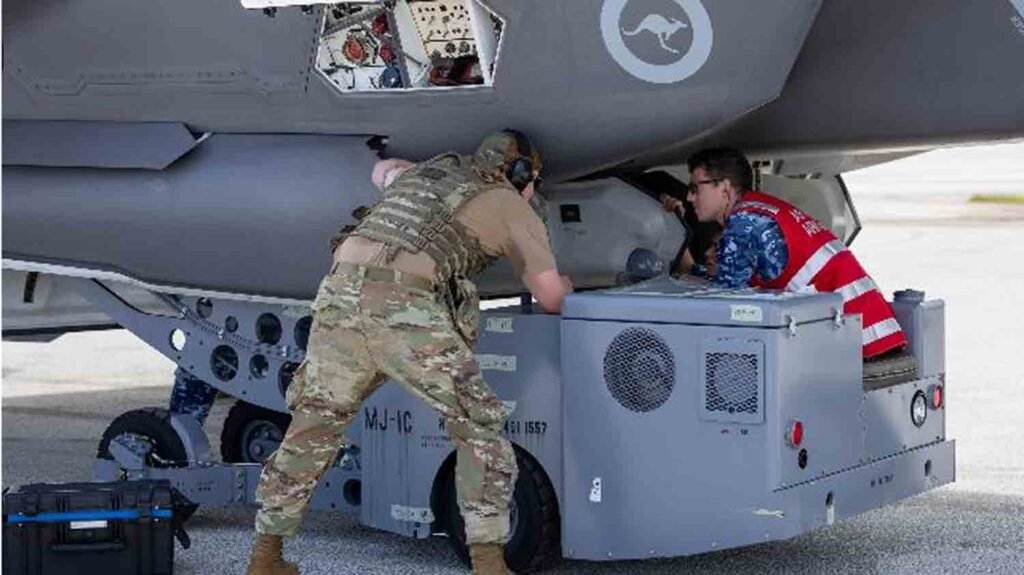
The reported loss illustrates a broader challenge facing the F-35 program as its global footprint expands.
More aircraft mean more maintenance activity, more spare parts, more repair facilities and more international movement of components.
Australia is becoming a significant regional sustainment center. Other F-35 operators are developing their own maintenance capabilities. The global fleet is expected to exceed 3,000 aircraft, according to Australian Defence.
That creates an increasingly complex logistical ecosystem.
The F-35’s technological advantage depends not only on the aircraft’s design but also on protecting the industrial and maintenance infrastructure surrounding it.
If the investigation confirms that sensitive components were improperly diverted and subsequently disappeared, the episode could lead to renewed scrutiny of how F-35 parts are tracked, who controls commercial transportation and how sensitive components are handled when they leave military facilities.
For now, however, the most important facts remain unresolved: how an F-35 shipment travelling from Australia to the United States ended up in Hong Kong, why its route changed, and where the missing components are now.