Israeli prime minister’s new security doctrine highlights a potential Sunni alignment, Iran’s regional network and the Israel-UAE partnership as geopolitical competition intensifies across the Middle East.

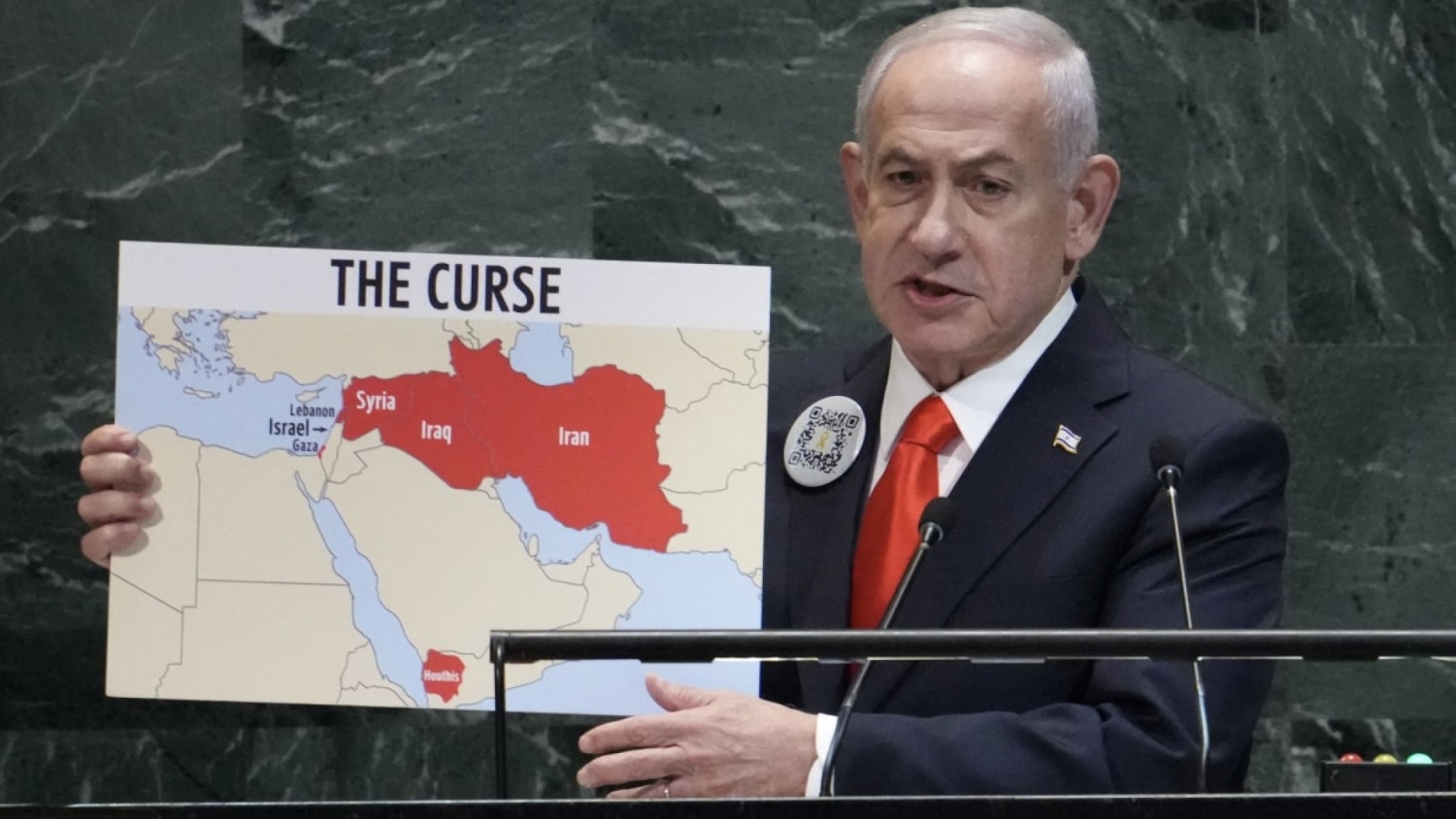
Israeli Prime Minister Benjamin Netanyahu has unveiled a revised national security doctrine accompanied by maps depicting competing regional alignments, bringing Pakistan, Türkiye, Saudi Arabia and Egypt into sharper focus in Israel’s strategic calculations.
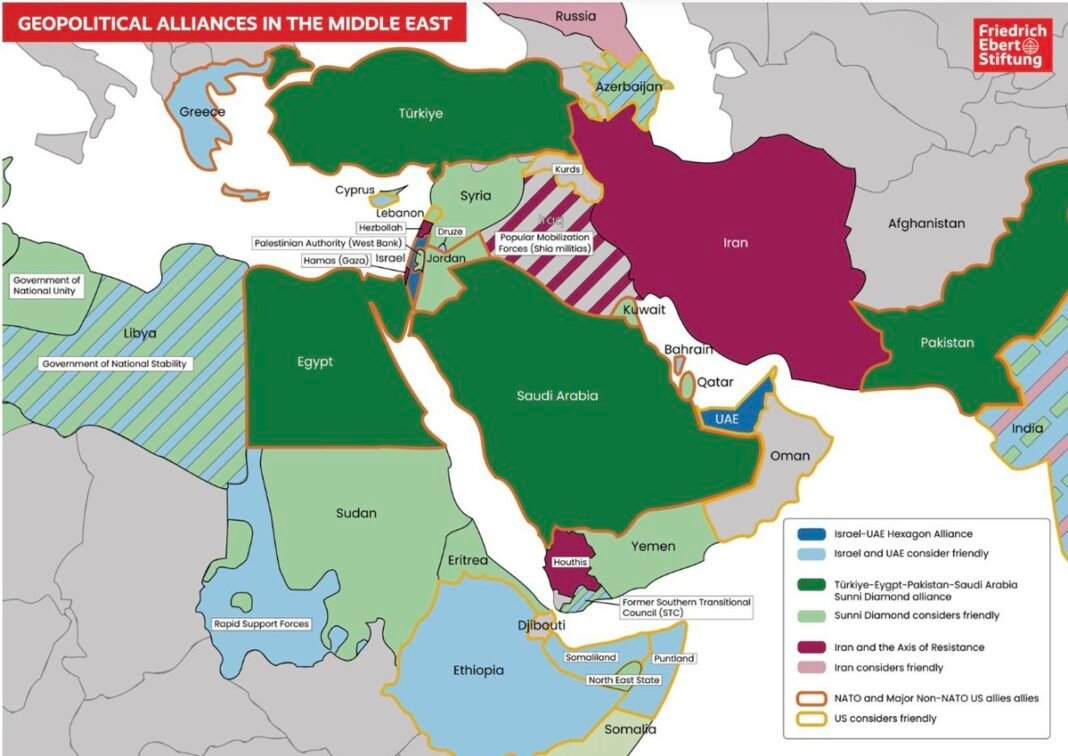
The map groups the four Muslim-majority countries under the label “Sunni Diamond Alliance,” places Iran and its regional partners within the “Axis of Resistance,” and identifies a separate alignment involving Israel and the United Arab Emirates (UAE).
The presentation offers a striking picture of the Middle East’s changing security landscape. It reflects growing competition over regional influence, military cooperation and the future of the strategic order extending from the eastern Mediterranean to the Gulf and South Asia.
However, the map should not be mistaken for evidence that three formal military alliances have been established. It depicts an emerging geopolitical framework in which countries with overlapping interests may cooperate on some issues while continuing to disagree on others. The classification also does not establish that every country shown has formally accepted Israel’s interpretation of the regional balance.
The map resembles a geopolitical framework published in May 2026 by Germany’s Friedrich-Ebert-Stiftung (FES), which described an emerging “Sunni Diamond” linking Pakistan, Saudi Arabia, Türkiye and Egypt, alongside an Israel-UAE alignment and Iran’s network of regional partners. The appearance of the framework in Netanyahu’s presentation gives the debate added political significance.
Netanyahu’s New Security Doctrine: From Containment to Pre-Emptive Action
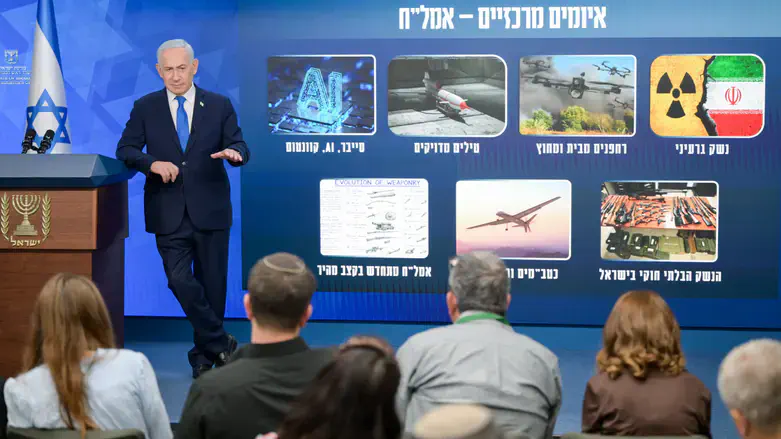
Netanyahu presented his revised national security doctrine on October 18, setting out a more explicitly offensive approach to Israel’s security following years of conflict involving Gaza, Lebanon, Iran and Yemen.
The document places greater emphasis on preventing threats before they fully materialise, conducting pre-emptive military operations, maintaining military superiority and establishing buffer zones where Israel considers them necessary.
It also calls for greater independence in weapons production, technological superiority in fields such as artificial intelligence and cybersecurity, and expanded regional and international partnerships.
These priorities reflect Israel’s effort to turn its military capabilities into a longer-term strategic advantage. The doctrine also underscores Netanyahu’s position that Israel must retain the freedom to act independently, even when its partners do not support a particular operation.
The presentation comes just days before Israel’s October 27 parliamentary election. Opposition figures, including Yair Lapid and Gadi Eisenkot, have criticised the doctrine as insufficiently detailed and politically motivated, arguing that it does not adequately address the failures exposed by the October 7, 2023, Hamas-led attack.
The political timing is therefore important: the document is both a statement of strategic intent and an attempt to present Netanyahu as a leader capable of reshaping Israel’s regional position.
1. The Sunni Diamond: Why Pakistan, Saudi Arabia, Türkiye and Egypt Matter
The grouping of Pakistan, Saudi Arabia, Türkiye and Egypt is one of the most consequential elements of the map.
These countries possess different strategic strengths, but their interests increasingly overlap on regional security, defence cooperation and the need to preserve room for independent decision-making amid intensifying Middle Eastern rivalries.
Pakistan: Military Capability and Strategic Reach
Pakistan brings substantial conventional military capabilities, an established defence industry, experience in counterterrorism and a long-standing strategic relationship with Saudi Arabia.
Its geographical position also gives it a distinctive role. Pakistan connects South Asia with the Gulf region and shares a border with Iran, making regional stability directly relevant to its national security.
Pakistan’s importance has increased with the signing of the Makkah Joint Defence Agreement with Saudi Arabia and Türkiye on August 7, 2026. The agreement formalises a significant development in regional defence cooperation, although its practical implementation and the scope of its commitments will determine how far it develops into a coordinated security framework.
Türkiye’s announcement on October 12 that it intended to submit the agreement to its parliament for ratification provided a further indication that cooperation among the three countries was moving beyond political declarations.
For Pakistan, the emerging alignment offers opportunities to deepen defence cooperation, strengthen strategic partnerships and contribute to regional stability. It also creates difficult balancing requirements: Pakistan must protect its relationships with Saudi Arabia and Türkiye without ignoring its shared border, economic interests and security concerns involving Iran.
There is no basis to conclude from Netanyahu’s map alone that Pakistan has joined an anti-Iranian or anti-Israeli military alliance.

Saudi Arabia: Security Diversification and Regional Influence
Saudi Arabia occupies a central position because of its economic weight, energy resources, religious significance and influence across the Arab and Islamic worlds.
Riyadh has reasons to strengthen defence cooperation with regional partners, particularly as attacks on energy infrastructure and instability around the Gulf and Red Sea threaten economic security.
At the same time, Saudi Arabia has historically sought to maintain a diversified network of international relationships. Its security partnership with the United States remains important, while its regional diplomacy has also included efforts to reduce tensions with Iran.
Consequently, Saudi participation in a stronger regional security framework should not automatically be interpreted as acceptance of every Israeli strategic objective.
Riyadh’s central calculation is likely to remain the protection of its territory, energy infrastructure, maritime routes and long-term regional influence.
Türkiye: A Regional Power With Its Own Agenda
Türkiye adds a significant military and diplomatic dimension to the proposed grouping.
Its NATO membership, defence industry, regional military presence and relationships across the Middle East give Ankara considerable strategic reach. Türkiye has also pursued a more active diplomatic role in regional disputes while criticising Israeli military actions and supporting Palestinian rights.
Ankara’s interests do not always align with those of Riyadh, Cairo or Islamabad. Nevertheless, growing security concerns can create opportunities for cooperation without requiring the four countries to adopt a common foreign policy.
Türkiye’s involvement is especially significant because it connects the Gulf’s security calculations with the eastern Mediterranean, the Black Sea and the wider European security environment.
Egypt: The Suez Canal and the Arab Security Balance
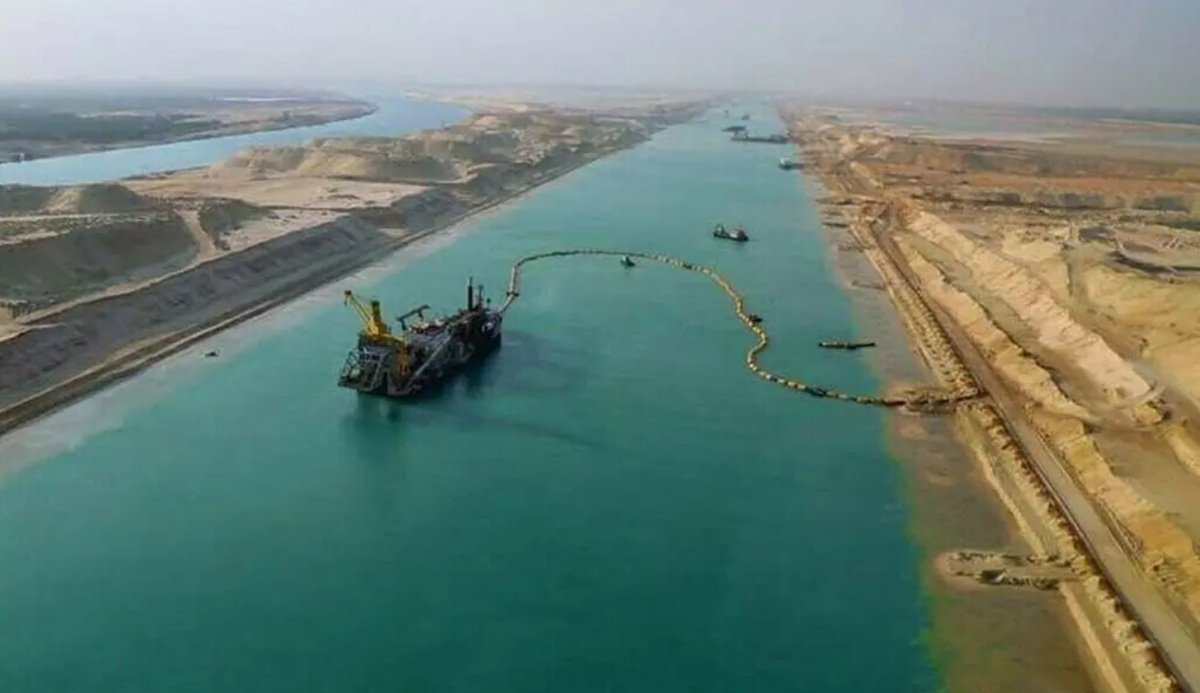
Egypt’s inclusion reflects its strategic geography and longstanding influence in Arab affairs.
The Suez Canal is a critical international shipping route, while Egypt’s proximity to Gaza, Israel and the Red Sea makes regional conflict an immediate security concern.
Cairo also has strong reasons to prevent a wider regional war that could disrupt maritime commerce, worsen economic pressures or create new instability along its borders.
Egypt’s participation in closer consultations with Pakistan, Saudi Arabia and Türkiye could therefore help connect Gulf security with the interests of the eastern Mediterranean and the Red Sea.
However, differences in threat perception and foreign policy mean that a four-country grouping would need sustained diplomatic coordination before it could function as a unified strategic bloc.
2. Iran’s Axis of Resistance: A Network Under Pressure
The second grouping centres on Iran and its relationships with regional armed movements and political actors.
The network commonly known as the “Axis of Resistance” has included Hezbollah in Lebanon, the Houthi movement in Yemen and several Iran-aligned armed factions in Iraq. The relationships differ in structure and degree of dependence; they should not all be treated as identical extensions of Tehran.
Iran has used these relationships to expand its regional influence, deter adversaries and maintain pressure on Israel and US interests without relying exclusively on direct conventional confrontation.
Israel’s revised doctrine presents the weakening of this network as a strategic objective. Israeli military operations against Iran and allied groups have sought to reduce their military capabilities and limit their ability to threaten Israeli territory.
Yet the network’s future cannot be assessed solely through battlefield losses. Iran retains its own state institutions, military capabilities, geographic depth and ability to influence regional security calculations.
The grouping also contains internal differences. Iraq’s political landscape is complex, Lebanon’s institutions face competing domestic pressures, and Yemen’s conflict involves local political and territorial dynamics as well as regional rivalries.
For this reason, the “Iranian bloc” is better understood as a network of relationships than as a conventional alliance with a single command structure.
Its future will depend on Iran’s military recovery, the calculations of its partners and whether regional governments choose renewed confrontation or diplomatic accommodation.
3. Israel and the UAE: A Strategic Partnership With Wider Ambitions
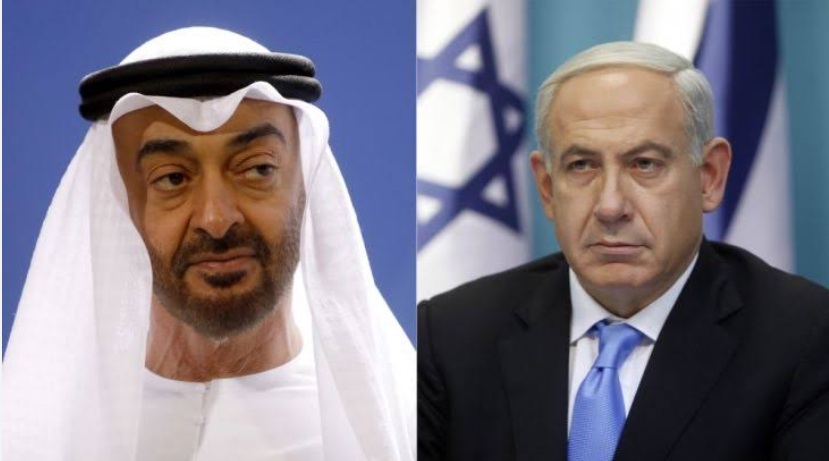
The third alignment centres on Israel and the UAE, whose relationship expanded significantly following the 2020 Abraham Accords.
The partnership provides a foundation for cooperation in trade, technology, investment and selected security-related fields. Both countries have interests in protecting maritime commerce, developing advanced technologies and countering threats they associate with Iran and other regional actors.
Netanyahu’s broader alliance vision has also included countries beyond the Middle East, notably India, Greece and Cyprus. His proposed “hexagon” of partnerships reflects an ambition to build a wider network of states that share selected strategic objectives with Israel.
However, a proposed network is not the same as an operational alliance. Publicly available information does not establish that all the countries discussed have accepted a common defence commitment or agreed to act together in a regional conflict.
The Israel-UAE relationship also has limitations. Arab public opinion, the Palestinian issue and differences over regional crises can constrain how openly or extensively Gulf governments cooperate with Israel.
The UAE’s partnership with Israel should therefore be assessed through concrete agreements, military cooperation and diplomatic decisions rather than assumptions that every area of regional policy is aligned.
Why the Three-Bloc Map Matters for Pakistan
The map is particularly significant for Pakistan because it places the country within a wider regional security framework that links the Gulf, the eastern Mediterranean and South Asia.
Pakistan’s defence relationship with Saudi Arabia, expanding cooperation with Türkiye and ties with Egypt could create opportunities for consultation on military training, intelligence, defence production and the protection of critical infrastructure.
But the same developments also raise difficult questions.
First, Pakistan must preserve strategic flexibility. Its interests are not served by automatically adopting another country’s regional threat assessment. The relationship with Iran, border security and the risk of spillover from a wider conflict remain important considerations.
Second, defence cooperation must be distinguished from automatic military intervention. The existence of a defence agreement does not, by itself, answer how each government would respond to every possible crisis. The agreement’s wording, ratification, implementation arrangements and political decisions will matter.
Third, Pakistan must consider the wider economic consequences. Any escalation affecting the Strait of Hormuz, Red Sea shipping or Gulf energy infrastructure could increase energy costs, disrupt trade and put additional pressure on Pakistan’s economy.
Finally, Pakistan’s influence will depend on its ability to combine defence partnerships with diplomacy. A regional security framework that reduces the risk of conflict could serve its interests; one that hardens competing camps could create new strategic burdens.
An analysis published by the Al Jazeera Centre for Studies on the emerging Pakistan-Türkiye-Saudi Arabia-Egypt framework highlights precisely this challenge: the four countries have converging security concerns, but they also retain different strategic priorities and constraints.
Is the Middle East Moving Towards Three Competing Blocs?
The map captures a genuine trend towards more active regional security coordination, but its three-part structure risks making a fluid situation look more settled than it is.
Several factors could strengthen these alignments:
- Defence cooperation: Joint exercises, intelligence-sharing arrangements and defence agreements could deepen coordination among selected partners.
- Regional threats: Attacks on infrastructure, missile and drone threats, maritime insecurity and prolonged conflicts can encourage countries to coordinate their responses.
- Strategic diversification: Governments may seek additional partners rather than rely exclusively on traditional security guarantors.
- Economic security: Energy exports, shipping routes, trade corridors and digital infrastructure increasingly connect the security interests of countries across the region.
Other factors could prevent the emergence of rigid blocs. Differences over Iran, Palestine, relations with the United States, domestic political priorities and economic competition could limit cooperation.
China’s diplomatic role also complicates the picture. Beijing maintains important economic relationships across the region and has an interest in preventing instability that threatens energy supplies and trade. Its relationships do not fit neatly into a three-bloc model.
The United States remains another decisive actor. Its security partnerships across the region continue to influence the calculations of Israel, Gulf states and other regional powers, even as governments seek greater strategic independence.
The result is more likely to be overlapping coalitions—formed around particular threats and interests—than three permanently opposing camps.
A Map of Strategic Intent, Not a Settled Regional Order
Netanyahu’s presentation is significant because it makes competing regional alignments part of Israel’s public security narrative. It also highlights the growing strategic importance of Pakistan, Türkiye, Saudi Arabia and Egypt at a time when regional governments are reassessing their security partnerships.
Yet the map should be read critically. It reflects a particular geopolitical interpretation, not a universally accepted division of the Middle East. The countries shown do not necessarily share identical objectives, and their appearance in a grouping does not establish a commitment to collective military action.
For Pakistan, the central question is whether closer regional defence cooperation can strengthen national security and protect economic interests without drawing the country into unnecessary confrontation.
For the Middle East as a whole, the decisive test will be whether emerging partnerships help deter attacks and manage crises—or deepen the polarisation that has made regional stability increasingly difficult to achieve.