Four-country memorandum aims to deepen defence industrial cooperation as Qatar plans a local production hub and regional partners seek stronger capabilities against missiles, drones and cyberattacks.
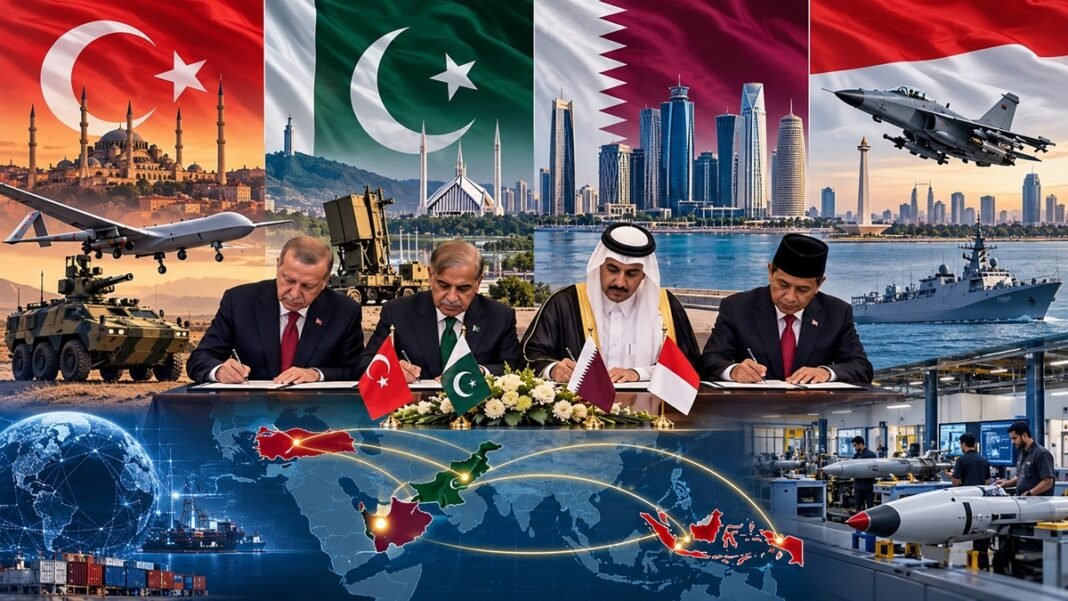
Türkiye, Pakistan, Qatar and Indonesia are expected to sign a four-country memorandum of understanding (MoU) on defence industry cooperation in Doha on Wednesday, October 21, marking a new step towards closer defence industrial ties among the four countries.
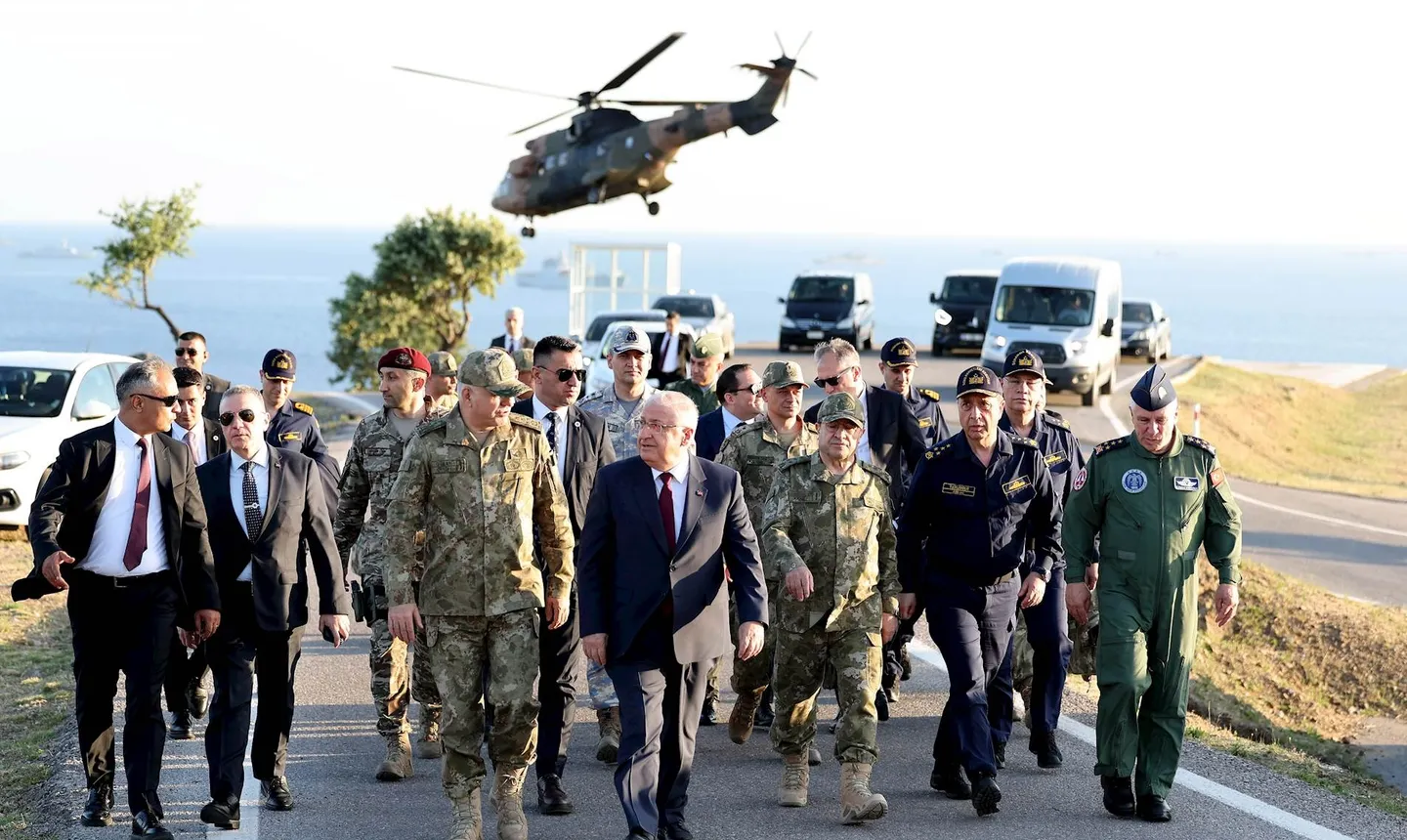
Türkiye’s Defence Minister Yaşar Güler is scheduled to travel to Qatar to attend the signing ceremony, according to officials cited by Anadolu Agency on Tuesday. The agreement comes as Qatar moves to strengthen its domestic defence production capabilities amid escalating regional security threats and disruptions to energy supplies and maritime trade.
The proposed memorandum could create opportunities for cooperation in defence manufacturing, technology development, industrial investment and the exchange of expertise. However, the four governments have not yet publicly disclosed the agreement’s detailed provisions, specific projects or implementation timetable.
The announcement coincides with Qatar’s plans to establish a domestic defence production hub and pursue a new regional partnership aimed at strengthening protection against ballistic missiles, drones and cyberattacks.
Together, the developments point towards a growing emphasis on defence industrial cooperation and greater national capacity to respond to evolving security threats.
Qatar Plans Defence Production Hub as Regional Threats Grow

Qatar’s defence industrial ambitions were outlined by Sheikh Saoud bin Abdulrahman Al Thani, the Gulf state’s Deputy Prime Minister and Minister of State for Defence Affairs, during the Global Security Forum 2026 in Doha on Monday.
According to Reuters, Al Thani said Qatar would soon announce plans for a local defence production hub. He explained that the country was working with regional partners as well as established international defence partners, including the United States, the United Kingdom and France.
The initiative is intended to strengthen Qatar’s domestic defence capabilities while creating opportunities to invest in defence companies and develop local production capacity.
Al Thani also indicated that Qatar would soon announce a new partnership with regional partners to improve capabilities against three major categories of threats:
- Ballistic missiles: Strengthening the ability to detect, track and counter missile threats.
- Uncrewed aerial systems: Improving protection against drones and associated aerial threats.
- Cyberattacks: Developing stronger defences for military networks, critical infrastructure and sensitive information systems.
The minister did not identify the regional partner involved in the proposed new initiative or provide technical details about the planned capabilities.
Although the announcement came alongside news of the four-country defence industry memorandum, it has not been confirmed that the two initiatives are the same agreement.

Why Türkiye, Pakistan, Qatar and Indonesia Matter
The four countries bring different defence industrial capabilities, strategic interests and regional relationships to the proposed arrangement.
Their cooperation could provide a framework for combining manufacturing capacity, technical expertise, investment and market access. The practical significance, however, will depend on the projects and commitments eventually agreed upon.
Türkiye: Defence manufacturing and technology development
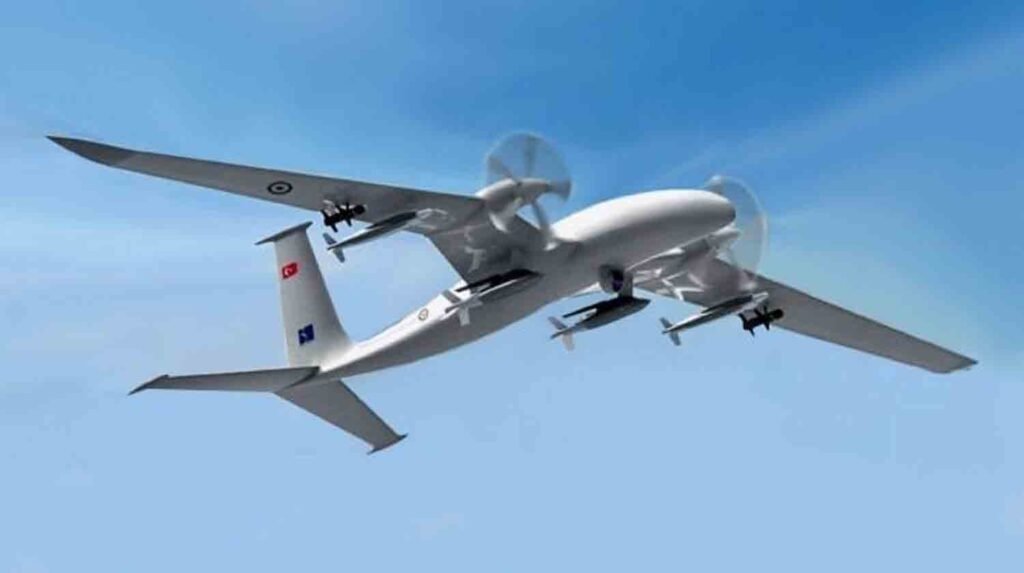
Türkiye has developed a substantial domestic defence industry covering unmanned aerial vehicles, armoured vehicles, naval systems, electronics, missiles and other military technologies.
Its defence companies have expanded their international presence through exports, joint ventures and industrial partnerships. Ankara has also pursued agreements intended to promote technology transfer and joint production with partner countries.
Türkiye’s existing relationship with Qatar provides a foundation for wider cooperation. In October 2025, the two countries signed a memorandum on defence industry cooperation, alongside other agreements aimed at deepening their strategic relationship.
The earlier arrangements included cooperation involving research and development, joint production, technology transfer and systems integration.
A new four-country memorandum could broaden the scope of cooperation beyond the bilateral Türkiye-Qatar framework, although the exact areas covered by the forthcoming agreement remain undisclosed.
Pakistan: Defence production and strategic cooperation
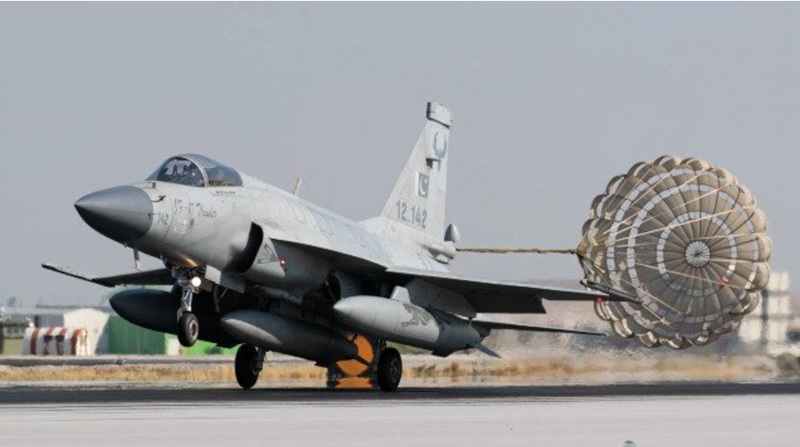
Pakistan has an established defence industrial base spanning military aircraft, aviation maintenance, armoured vehicles, ammunition, naval equipment and selected missile and electronics programmes.
Organisations including Pakistan Aeronautical Complex, Heavy Industries Taxila and Karachi Shipyard and Engineering Works have played important roles in the country’s efforts to develop domestic manufacturing and maintenance capabilities.
Pakistan’s experience in military aviation, aircraft maintenance and joint development programmes could offer areas for industrial cooperation, depending on the scope of the new memorandum.
The agreement could also provide opportunities to expand defence-related investment and industrial collaboration with Türkiye, Qatar and Indonesia.
For Islamabad, the potential benefits would extend beyond equipment purchases. Properly structured industrial partnerships can support skills development, technical training, manufacturing capacity and access to additional export markets.
However, the memorandum should not yet be described as a confirmed agreement to jointly manufacture a particular fighter, missile, drone or other weapons system. No such programme has been publicly identified in the announcement.
Qatar: Investment and a stronger domestic industrial base
Qatar has invested heavily in advanced military equipment and international defence partnerships. Its latest initiative suggests a growing interest in developing domestic industrial capacity alongside the procurement of foreign systems.
A local production hub could provide opportunities for maintenance, assembly, specialised manufacturing, technology-related investment and cooperation with international defence companies.
The extent of these activities will depend on the hub’s final structure, the partners involved, the technologies selected and the level of local production envisaged.
Qatar’s financial resources and established international relationships could also help attract investment into joint industrial projects.
The country’s immediate security concerns, including missile and drone threats, give the initiative added importance. Nevertheless, developing a sustainable defence industry requires more than funding: it also involves trained personnel, technical infrastructure, long-term contracts and reliable supply chains.
Indonesia: A Southeast Asian partner
Indonesia brings a different geographical and strategic perspective to the proposed arrangement.
As a major Southeast Asian country with a large population, an extensive maritime domain and a defence modernisation programme, Indonesia has sought to expand domestic defence production and international industrial cooperation.
Its relationship with Türkiye has already produced agreements covering defence industry cooperation and joint industrial projects. In 2025, Indonesia and Türkiye announced several cooperation arrangements, including a joint venture involving Indonesian company Republikorp and Turkish drone manufacturer Baykar to establish a drone factory in Indonesia.
That project illustrates the type of industrial cooperation that can develop when defence partnerships move beyond equipment procurement towards manufacturing and technology-related investment.
The four-country memorandum could create further opportunities for collaboration, although it remains unclear whether Indonesia’s participation will focus on joint production, research and development, procurement or other forms of industrial cooperation.
Türkiye and Qatar Already Have a Defence Cooperation Framework

The proposed four-country agreement builds on an established Türkiye-Qatar strategic partnership.
The two countries have expanded cooperation across defence, security, trade and investment, and maintain a Turkish military presence in Qatar under their bilateral defence arrangements.
Their defence industry relationship has also developed through formal agreements and cooperation involving defence companies.
In October 2025, Turkish President Recep Tayyip Erdoğan and Qatar’s Emir Sheikh Tamim bin Hamad Al Thani witnessed the signing of a memorandum on defence industry cooperation. The agreement was intended to create additional opportunities for industrial collaboration.
Subsequent arrangements involving Turkish defence companies and Qatar’s Barzan Holding included areas such as research and development, production, technology transfer and systems integration.
These existing mechanisms could provide useful experience for a broader framework involving Pakistan and Indonesia.
The main challenge will be coordinating four different industrial systems, procurement requirements, export regulations and national security priorities. A memorandum can establish the basis for cooperation, but translating it into operational programmes requires further agreements and sustained implementation.
Regional Conflict Is Accelerating Qatar’s Defence Calculations
Qatar’s defence industrial plans come amid a period of heightened regional instability.
The conflict involving the United States, Israel and Iran has affected Gulf security, energy infrastructure and maritime commerce. Qatar’s Ras Laffan liquefied natural gas complex was shut down for a period after hostilities began, while restrictions on shipping through the Strait of Hormuz disrupted international trade.
The Strait of Hormuz is a critical route for energy exports from the Gulf. Any prolonged disruption can affect shipping schedules, insurance costs, energy prices and the wider global economy.
For Qatar, these risks are particularly significant because natural gas exports are central to its economy and international economic relationships.
The prospect of missile and drone attacks also highlights the importance of integrated air and missile defence, early-warning systems, electronic protection and cybersecurity.
The planned production hub and new regional partnership appear intended to strengthen Qatar’s ability to respond to such threats while reducing its dependence on external suppliers for at least some capabilities.
That does not mean Qatar can become self-sufficient in defence production in the short term. Modern air-defence systems and advanced military technologies depend on complex supply chains, specialised components and long-term technical support.
Instead, the likely strategic objective is to build greater local capacity while maintaining partnerships with established international suppliers.
Could the Agreement Create a Wider Defence Industrial Network?
The proposed memorandum is notable because it brings together countries from the Middle East, South Asia and Southeast Asia.
Türkiye offers an expanding defence manufacturing sector; Pakistan has an established military production and maintenance base; Qatar brings investment capacity and an interest in domestic production; and Indonesia offers a major Southeast Asian market and its own industrial development ambitions.
These complementary interests could support cooperation in selected areas of defence production, maintenance, training and technology development.
Potential areas of cooperation could include:
- Joint investment in defence manufacturing.
- Maintenance, repair and overhaul facilities.
- Research and development partnerships.
- Training and technical knowledge exchange.
- Industrial collaboration involving drones, electronics and other defence technologies, if agreed by the participating governments.
- Supply-chain cooperation and access to new markets.
These are potential areas rather than confirmed commitments under the forthcoming memorandum. The agreement’s text and subsequent announcements will be needed to establish which projects the four countries intend to pursue.
The initiative should also be distinguished from a collective-defence alliance. A defence industry memorandum generally provides a framework for cooperation in manufacturing, investment or technology. It does not, by itself, establish a mutual-defence obligation or require the signatories to intervene militarily if another member is attacked.
What to Watch After the Signing
The most important developments will come after the four-country memorandum is signed.
First, the participating governments will need to clarify the agreement’s scope, including whether it covers joint production, technology transfer, research and development, procurement or investment.
Second, Qatar’s announcement on its domestic defence production hub could reveal the role of regional partners and the extent to which the initiative will involve local manufacturing.
Third, details of the proposed partnership against ballistic missiles, drones and cyberattacks will help establish whether it is primarily an industrial initiative, a technical cooperation arrangement or a broader security programme.
Finally, any named projects, company-level agreements, funding commitments or implementation schedules would indicate whether the memorandum is moving towards practical cooperation.
Until those details emerge, the agreement is best understood as a potentially significant framework for defence industrial collaboration rather than a completed joint weapons-production programme.
Conclusion
The expected defence industry memorandum between Türkiye, Qatar, Pakistan and Indonesia reflects growing interest in industrial cooperation at a time of heightened regional security concerns.
For Qatar, the initiative complements plans to build domestic defence production capacity and strengthen protection against missiles, drones and cyberattacks. For Türkiye, Pakistan and Indonesia, it could create opportunities to expand industrial partnerships and explore new areas of collaboration.
The agreement’s real significance will depend on what follows the signing ceremony: the technologies selected, investments committed, production arrangements established and projects actually implemented.
If the four countries translate the memorandum into concrete industrial programmes, it could become a useful platform for deeper defence manufacturing cooperation across three connected regions.