
India’s reported eight lobbying calls with senior US officials highlight New Delhi’s efforts to strengthen political access in Washington as defence cooperation, trade negotiations and regional security remain closely interconnected.
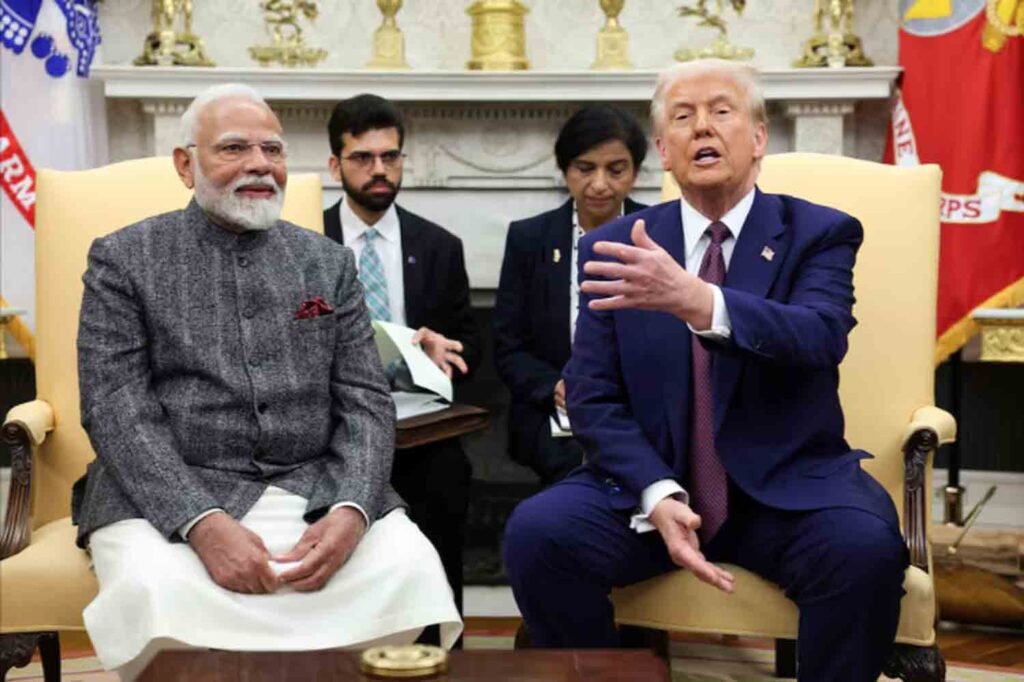
India’s diplomatic outreach in Washington has come under renewed scrutiny following disclosures that a lobbying firm linked to US President Donald Trump’s political circle arranged eight calls between Indian representatives and senior American officials in May and June 2026.
According to a November 7 report by The Indian Express, the calls were arranged by SHW Partners LLC, a lobbying firm led by Trump associate Jason Miller, under its engagement with the Indian Embassy in Washington.
The disclosures offer a glimpse into how New Delhi is using professional lobbying networks, political relationships and government-to-government engagement to protect its interests in an increasingly transactional US foreign policy environment.
While lobbying is a legal and established feature of Washington politics, the reported activities raise broader questions about the growing importance of political access in shaping US policy toward South Asia.
For Pakistan, the developments deserve attention because Washington’s engagement with India extends beyond diplomatic relations into defence technology, intelligence cooperation, military interoperability and the wider Indo-Pacific security framework.
Eight Calls Reveal India’s Washington Outreach Strategy
According to the latest disclosures under the US Foreign Agents Registration Act (FARA), SHW Partners LLC arranged eight calls between Indian representatives and senior American officials during May and June 2026.
The reported engagements included:
- US Treasury Secretary Scott Bessent
- Deputy National Security Adviser Michael Needham
- Under Secretary for Terrorism and Financial Intelligence Gene Lange
- US Trade Representative Jamieson Greer
- Assistant to the President for Policy Walker Barrett
- White House Office of Communications Director Steven Cheung
The calls reportedly focused on India-US relations and formed part of the lobbying firm’s declared political activities.
The timing is significant. The May engagements took place ahead of US Secretary of State Marco Rubio’s visit to India, while additional calls were reportedly arranged following the visit in June.
The firm also listed two embassy events involving Rubio on May 23 and 24. Rubio visited India from May 23 to May 26, participating in events connected with the US Embassy’s America @250 programme.
The disclosures demonstrate the range of American officials India sought to engage through its lobbying arrangement. However, the filings do not establish that these calls directly influenced specific US defence or foreign policy decisions.
$150,000 Monthly Retainer: How Much Is India Spending in Washington?
The Indian Embassy reportedly signed a contract with SHW Partners LLC in April 2025, renewing the agreement in April 2026.
According to the report, the contract involved a monthly payment of $150,000, equivalent to $1.8 million annually if maintained for a full year.
The declared scope of work included:
- Strategic counsel and tactical planning
- Government relations assistance
- Engagement with the US government and Congress
- Outreach to state governments
- Relations with academic institutions and think tanks
- Policy-related engagement with other relevant stakeholders
The contract was reportedly terminated on June 23, 2026, after Miller joined the Trump administration as a special government employee.
The reported termination is important because it highlights the sensitivity surrounding the movement of individuals between lobbying firms and government positions.
Although such transitions are subject to legal and ethical restrictions, the broader issue is the value foreign governments place on political relationships and access to decision-makers.
Mercury Public Affairs and Trump’s Political Inner Circle
India’s lobbying strategy in Washington reportedly extends beyond SHW Partners.
Following Trump’s return to the White House, the Indian Embassy also hired Mercury Public Affairs, a firm with connections to figures associated with the president’s political circle.
The Indian Express reported that Mercury was engaged at a monthly retainer of $75,000.
Bryan Lanza, a communications director for Trump’s transition team, was part of the firm’s core team. Susie Wiles, who later became Trump’s chief of staff, had previously been associated with Mercury as a registered lobbyist.
The firm’s declared work included government relations and strategic communications.
A separate Bloomberg report in August 2025 documented Mercury’s engagement by the Indian Embassy at a time when Washington was preparing to impose substantial tariffs on Indian exports.
The significance of these relationships lies not simply in the names involved but in the access they potentially provide to political networks, policymakers and influential institutions.
However, former employment or political association does not automatically establish privileged access or policy influence.
The Defence Connection: Why Washington Matters to New Delhi
India’s lobbying activities acquire greater strategic significance when viewed against the expanding US-India defence relationship.
The two countries have spent more than two decades transforming their military partnership, moving from a relationship historically marked by Cold War mistrust toward increasingly extensive cooperation in military technology, intelligence sharing and strategic coordination.
The February 2025 Trump-Modi joint statement reaffirmed plans to expand defence sales, industrial cooperation and military partnership.
The agreement identified opportunities for cooperation involving:
- Javelin anti-tank guided missiles
- Stryker infantry combat vehicles
- Defence industrial cooperation
- Military interoperability
- Maritime security
- Regional strategic cooperation
The United States and India also signed a new ten-year Major Defence Partnership framework on October 31, 2025.
The framework covers military cooperation across land, maritime, air, space and cyberspace domains.
According to the US Department of War, the agreement seeks to strengthen interoperability, defence industrial capacity, maritime security and operational coordination.
This is where India’s lobbying efforts become relevant to the wider strategic picture.
Washington is not merely an important diplomatic partner for New Delhi. It is a major source of advanced military technology, defence platforms, intelligence cooperation and strategic support.
Maintaining access to American policymakers can therefore help India sustain engagement across multiple defence and security priorities.
It does not mean lobbying firms independently determine arms sales or military agreements. Those decisions remain subject to government processes, strategic considerations, budgets and congressional oversight.
Defence Technology, Military Interoperability and the China Factor
The US-India defence relationship is closely connected to Washington’s Indo-Pacific strategy and its efforts to strengthen partnerships with regional powers.
India’s strategic position in the Indian Ocean and its geographical proximity to China make it an important partner in American regional planning.
The bilateral defence framework emphasises:
- Maritime domain awareness
- Military logistics and operational coordination
- Joint exercises and training
- Defence technology cooperation
- Advanced military systems
- Cooperation across emerging military domains
India has already inducted numerous American military platforms, including C-17 transport aircraft, P-8I maritime surveillance aircraft, Apache attack helicopters and Chinook heavy-lift helicopters.
These systems contribute to India’s military capabilities while increasing interoperability with US forces.
The growing relationship also extends into emerging technologies, including artificial intelligence, autonomous systems, semiconductors and advanced maritime capabilities.
For Washington, the partnership supports its wider Indo-Pacific objectives. For New Delhi, it offers access to military technology and a stronger strategic relationship with a major global power.
The lobbying disclosures therefore provide a useful window into the political and diplomatic infrastructure surrounding this partnership.
Operation Sindoor: Lobbying and the Battle for Washington’s Narrative
The latest disclosures are not the first indication that India has used lobbying firms to manage its Washington engagement during sensitive security developments.
Earlier reporting by The Indian Express revealed that India contacted American officials through SHW Partners during Operation Sindoor in May 2025.
According to the report, the Indian Embassy sought engagement with senior officials on the day the military confrontation with Pakistan reached its ceasefire phase.
The reported outreach included contacts with White House officials and the US trade representative.
The firm’s activities also involved arranging meetings for Indian officials and supporting diplomatic engagement surrounding trade negotiations.
The disclosures attracted attention because they coincided with President Trump’s public claims regarding his role in facilitating the India-Pakistan ceasefire.
India has consistently maintained that the ceasefire understanding was reached directly between the two countries’ military authorities rather than through third-party mediation.
The distinction is important.
Lobbying disclosures may demonstrate efforts to communicate with policymakers or shape media coverage, but they do not independently establish that Washington mediated the ceasefire or that lobbying caused a particular diplomatic outcome.
India and Pakistan: Competing for Strategic Attention in Washington
The lobbying disclosures also highlight the broader competition between India and Pakistan for political attention in Washington.
Both countries have recognised the importance of engaging American policymakers, lawmakers, strategic institutions and influential political networks.
Earlier reporting by The Indian Express documented lobbying activity by both countries during the 2025 India-Pakistan confrontation.
Pakistan’s diplomatic engagement with Washington has also focused on security cooperation, regional stability, economic opportunities and strategic resources.
For Islamabad, the challenge is not simply to match India’s lobbying expenditure. It is to communicate Pakistan’s strategic relevance in areas where American interests intersect with Pakistani capabilities and geography.
These include:
- Regional counterterrorism and security cooperation
- Afghanistan and regional stability
- Arabian Sea and Indian Ocean security
- Critical minerals and emerging technologies
- Trade and investment opportunities
- Crisis management between nuclear-armed South Asian states
Pakistan’s diplomatic strategy should therefore prioritise substantive engagement, credible policy proposals and sustained institutional relationships.
A lobbying expenditure comparison alone cannot establish which country enjoys greater influence in Washington.
The real measure is whether diplomatic engagement translates into durable strategic outcomes.
FARA Filings: Transparency, Not Proof of Policy Influence
The Foreign Agents Registration Act is central to understanding the disclosures.
FARA requires certain individuals and organisations acting on behalf of foreign principals in political or related activities in the United States to register and periodically disclose their relationships, activities and financial arrangements.
The purpose is transparency regarding foreign influence activities.
The existence of a lobbying contract does not automatically indicate wrongdoing. Foreign governments routinely employ professional firms to navigate Washington’s political, regulatory and policy environment.
Likewise, the disclosure of meetings or phone calls does not prove that a government official changed policy because of lobbying.
The documents are valuable because they allow journalists, researchers and policymakers to examine the nature and scale of foreign government engagement.
For defence analysts, the most relevant questions concern the policy objectives behind such engagement and whether it contributes to broader strategic developments.
What India’s Lobbying Strategy Means for Pakistan

India’s reported lobbying activity reflects a wider reality of international politics: strategic partnerships increasingly depend on both formal diplomacy and sustained engagement with political institutions.
For Pakistan, the lesson is not that lobbying itself determines regional power balances.
Rather, Washington’s policy environment requires continuous diplomatic attention, particularly when defence cooperation, trade negotiations and regional crises overlap.
India’s engagement with American political networks is part of a broader effort to protect its economic and strategic interests.
Pakistan must similarly ensure that its diplomatic outreach is supported by credible defence assessments, economic proposals and clear regional policy objectives.
In the evolving US-India partnership, political access may help facilitate communication, but military agreements, defence technology transfers and strategic commitments ultimately depend on wider national interests.
The reported eight calls therefore offer a useful insight into India’s Washington strategy—but the actual impact on US defence policy remains a question for further documentary and policy analysis.
For Pakistan, understanding that distinction is essential to assessing the evolving strategic relationship between Washington and New Delhi.