


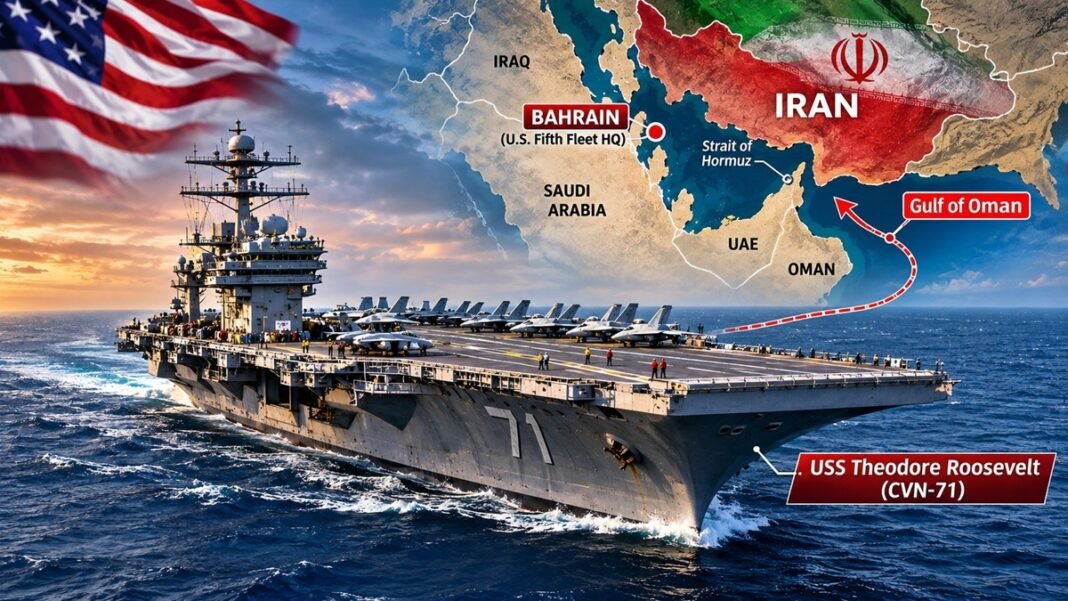
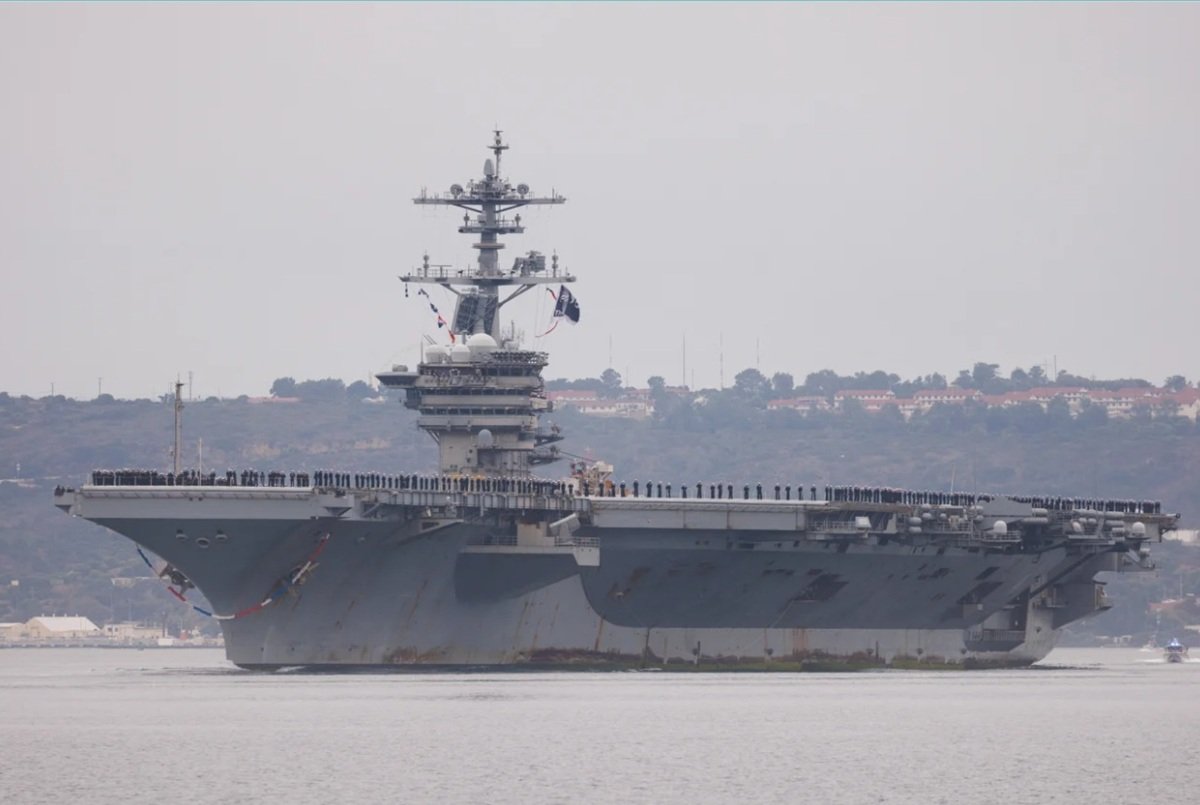
The movement of the US Navy’s USS Theodore Roosevelt aircraft carrier from the Indian Ocean towards the Middle East, the visit of the US Fifth Fleet commander to Israel and the anticipated meetings between Mossad Director Roman Gofman, CIA Director John Ratcliffe and US special envoy Steve Witkoff point to intensified strategic coordination.
At the same time, Iran has claimed that it targeted an American early-warning radar installation in Bahrain and previously shot down a US MQ-1 drone near Qeshm Island.
These developments come as Israeli Prime Minister Benjamin Netanyahu reportedly presses US President Donald Trump to resume military operations against Iran, while Washington continues to explore a diplomatic settlement through regional intermediaries, particularly Qatar.
The emerging picture is one of growing military preparedness alongside continuing diplomatic engagement. Whether this represents preparations for renewed hostilities or an attempt to strengthen Washington’s negotiating position remains the central question.
USS Theodore Roosevelt Moves Towards the Gulf of Oman

The movement of the USS Theodore Roosevelt (CVN-71) is one of the most significant developments in the latest US military deployment.
The Nimitz-class aircraft carrier departed Singapore following a port visit and continued its westward journey towards the Indian Ocean and the Middle East.
The US Naval Institute’s November 9 fleet tracker placed the carrier in the Andaman Sea, following its departure from Singapore. Its deployment is expected to bring the strike group into the wider Middle East operational theatre. However, its precise current position and arrival in the Gulf of Oman have not been independently confirmed.
The Theodore Roosevelt Carrier Strike Group includes:
-
USS Theodore Roosevelt (CVN-71), the aircraft carrier.
-
USS Chosin (CG-65), a guided-missile cruiser.
-
USS Paul Hamilton (DDG-60), an Arleigh Burke-class destroyer.
-
USS Decatur (DDG-73), another guided-missile destroyer.
-
Carrier Air Wing 11, providing fighter, electronic warfare, surveillance and airborne command capabilities.
The deployment is particularly significant because the USS George Washington and USS George H.W. Bush carrier strike groups were already operating in the Arabian Sea, according to the same USNI fleet assessment.
The Roosevelt’s arrival would therefore add another carrier strike group to the wider Indian Ocean and Middle East military picture, although its deployment may also involve relieving an existing carrier rather than establishing a permanent three-carrier presence.
The Gulf of Oman is strategically important because it provides access to the Strait of Hormuz, the narrow maritime passage connecting the Persian Gulf with international shipping routes.
An American carrier operating in this area would give Washington additional options for air operations, maritime surveillance, force protection and deterrence.
However, the carrier’s movement should not automatically be interpreted as evidence of an imminent attack. It also fits the requirements of maintaining military readiness while diplomatic negotiations remain uncertain.
Mossad Chief to Meet CIA Director as Netanyahu Presses Trump on Iran
The intelligence dimension of the confrontation is becoming equally important.
Mossad Director Roman Gofman is in Washington for discussions with senior Trump administration officials, including CIA Director John Ratcliffe.
According to an exclusive report by Axios on November 13, Gofman may also travel to Miami to meet White House special envoy Steve Witkoff.
The meetings are taking place as Netanyahu seeks to persuade Trump to resume military action against Iran. Trump has so far resisted the pressure, according to the reporting.
Gofman is one of Netanyahu’s close advisers, making his discussions with American intelligence and diplomatic officials particularly relevant.
The CIA-Mossad relationship is central to intelligence coordination between Washington and Tel Aviv, especially regarding Iran’s nuclear programme, military infrastructure, missile capabilities and regional activities.
The involvement of Witkoff adds another dimension. Unlike the intelligence discussions, his role is directly connected to the Trump administration’s diplomatic engagement with Tehran.
The possibility of meetings involving both the CIA director and the White House envoy raises questions about what intelligence assessments are being shared and whether Washington and Israel are discussing the conditions under which military operations could resume.
There is, however, no publicly confirmed evidence that these meetings have produced a decision to launch another offensive.
Netanyahu faces a changing political situation
The timing of Gofman’s Washington visit is also important for Israeli domestic politics.
Netanyahu lost his parliamentary majority following the October 27 election, while opposition leader Gadi Eisenkot has been attempting to form a new government.
The political transition has raised concerns among opposition figures about major military decisions being taken by a caretaker government.
According to Axios, Netanyahu and Trump discussed the Iran war during a November 5 telephone conversation, with the Israeli prime minister continuing to advocate renewed pressure on Tehran.
This creates an additional complication for Washington: its decisions on Iran are unfolding alongside uncertainty over Israel’s political leadership.
US Fifth Fleet Commander Completes Visit to Israel

Another important development is the completed visit of US Fifth Fleet commander Vice Admiral Curt Renshaw to Israel.
According to the Israeli military, Renshaw met Israeli Navy chief Vice Admiral Eyal Harel and other senior naval officers.
The discussions covered naval operations across different regional theatres, coordination between the two fleets, maritime security and technological cooperation.
The visit carries considerable strategic significance because the US Fifth Fleet is headquartered in Bahrain and oversees American naval operations across the Arabian Gulf, Gulf of Oman, Red Sea and surrounding waters.
Its operational responsibilities include protecting maritime routes, monitoring regional military activity and supporting US naval deployments.
The timing is particularly notable.
The Fifth Fleet is operating in a region where Iran and the United States remain locked in a confrontation over maritime access, Iranian ports and the Strait of Hormuz.
The visit therefore reinforces the importance Washington and Tel Aviv attach to naval coordination, although the Israeli military’s public statement did not identify a specific new joint military operation.
For Israel, closer coordination with the US Navy offers an important maritime security dimension to its wider defence relationship with Washington.
For the United States, cooperation with Israel is relevant to monitoring regional threats and maintaining the security of strategically important shipping routes.
Iran Claims It Shot Down US MQ-1 Drone Near Qeshm Island
Iran has also continued highlighting its claimed air-defence successes against American unmanned aircraft.
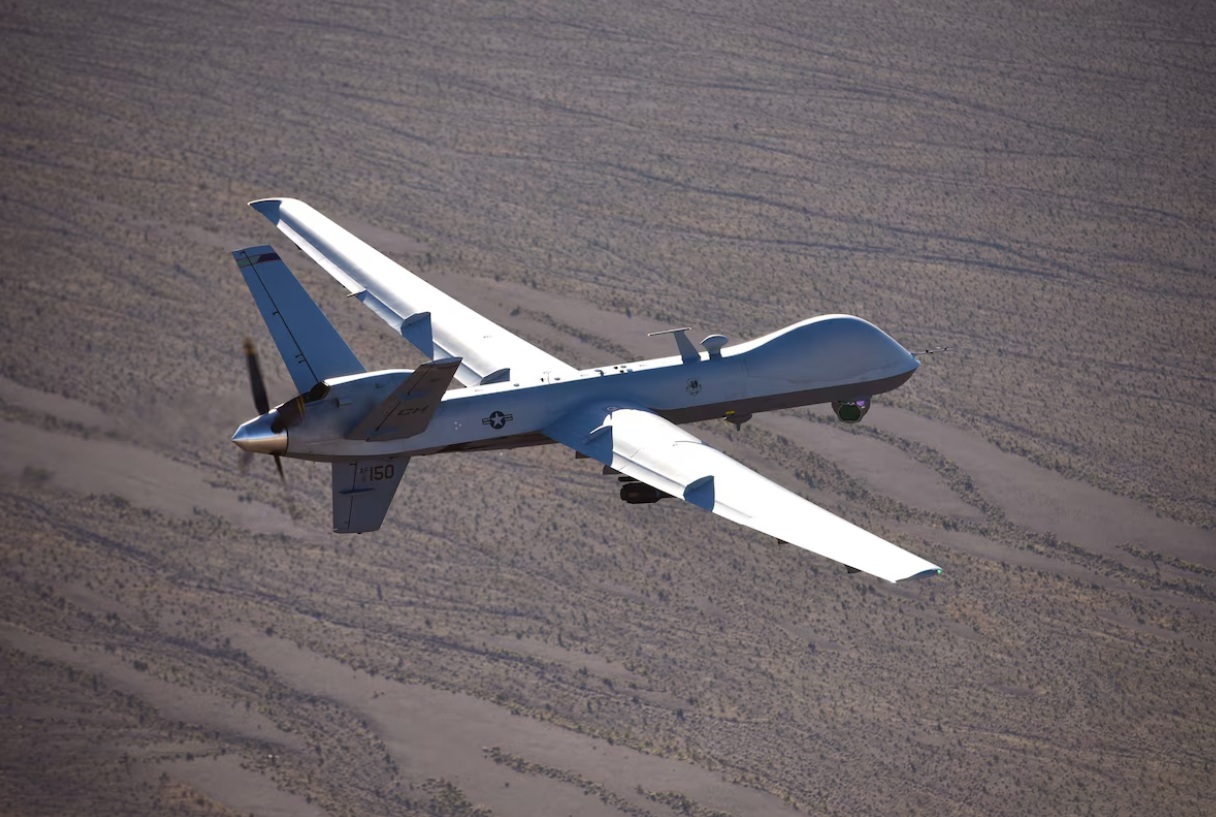
On November 6, the Islamic Revolutionary Guard Corps announced that its air-defence forces had shot down a US MQ-1 drone over Qeshm Island near the Strait of Hormuz.
Iranian state media reported that the aircraft was intercepted using an advanced air-defence system integrated into the country’s wider air-defence network.
The IRGC described it as the 16th MQ-1 drone destroyed by Iranian forces.
It also claimed that 56 MQ-9 drones had been brought down, taking the combined claimed total to 72 American unmanned aircraft. These figures remain Iranian military claims and have not been independently verified.
Qeshm Island is strategically located near the northern approaches to the Strait of Hormuz.
Its geographical position makes it important for Iranian surveillance of maritime movements and military activity in the surrounding waters.
The reported incident also highlights the continuing importance of unmanned aerial systems in the US-Iran confrontation.
For Washington, drones provide intelligence, surveillance and reconnaissance capabilities. For Tehran, targeting these aircraft can demonstrate air-defence capabilities and challenge American surveillance operations.
However, the Iranian announcement should be treated as a military claim rather than independently established confirmation of the aircraft’s destruction.
Iran Claims US Early-Warning Radar Targeted in Bahrain
The most immediate escalation in the latest developments concerns Bahrain, which hosts the headquarters of the US Navy’s Fifth Fleet.
On November 13, Iran’s Islamic Revolutionary Guard Corps claimed that it had targeted and destroyed an American early-warning radar installation in Bahrain.
Iranian state media said the operation was retaliation for an attack on a telecommunications installation in the southern Iranian province of Hormozgan.
The IRGC described the alleged operation as a warning to Washington against further attacks on Iranian infrastructure.
The claim is particularly significant because Bahrain is one of the central locations supporting American naval operations in the Gulf.
However, Washington has disputed Tehran’s account.
According to Reuters, the US military denied that Iran had struck the American early-warning radar installation. It said US forces intercepted and destroyed two Iranian one-way attack drones heading towards Bahrain, reporting no damage or injuries.
The competing accounts have not been independently reconciled.
The incident nevertheless demonstrates the continuing vulnerability of military infrastructure across the Gulf, particularly installations supporting air surveillance, early warning and naval operations.
It also brings the Fifth Fleet’s Bahrain headquarters directly into the wider strategic picture surrounding Iran, Israel and the United States.
Qatar’s Diplomatic Channel Competes With Renewed Military Pressure
While military deployments and intelligence consultations are intensifying, diplomatic efforts have not disappeared.
Qatar has been attempting to facilitate communication between Washington and Tehran, with discussions focusing on the conditions required to end the conflict and establish a more durable arrangement.
Iran has sought changes to the American naval blockade, sanctions relief and guarantees concerning its security and nuclear programme.
Washington, meanwhile, continues to demand restrictions on Iran’s nuclear activities and assurances regarding maritime security.
The Strait of Hormuz remains one of the most difficult issues.
Iran wants its position and influence over the waterway recognised in any settlement, while Washington insists on maintaining freedom of navigation and enforcing restrictions on Iranian maritime trade.
A November 9 Al Jazeera assessment of the negotiations reported that Tehran had presented a proposal through Qatari mediators, while the Trump administration was examining the diplomatic options.
The diplomatic track is also complicated by the continuing Israeli military preparations.
Israeli media have reported that the security cabinet ordered the military to increase readiness for possible renewed operations against Iran.
Tehran, in response, has warned that another attack could trigger retaliation against military installations beyond the immediate Middle East.
This means that diplomatic progress is taking place alongside preparations for the possibility that negotiations could fail.
Is Trump Preparing for Another War or Strengthening His Negotiating Position?
The central issue emerging from these developments is the apparent difference between Washington’s diplomatic messaging and its military posture.
On one side, the Trump administration is maintaining communication channels involving Qatar, Witkoff and other regional interlocutors.
On the other, American naval deployments are continuing, the Fifth Fleet is coordinating with Israel, and the CIA is holding consultations with Mossad leadership.
These developments serve several possible purposes.
First, military deterrence. The presence of carrier strike groups and supporting naval assets gives Washington the ability to respond quickly if American forces or commercial shipping come under attack.
Second, intelligence coordination. Discussions between the CIA and Mossad can help both governments assess Iranian military capabilities, strategic intentions and possible developments surrounding the nuclear programme.
Third, diplomatic leverage. A credible military option can strengthen Washington’s negotiating position, although it also increases the risks of miscalculation.
Fourth, regional security. Bahrain, the Gulf of Oman and the Strait of Hormuz remain central to the protection of American military infrastructure and international shipping.
The distinction between military preparedness and a decision to resume war is crucial. None of the developments independently establishes that Washington has authorised another major offensive.
What the Latest Developments Mean for Pakistan and the Gulf
For Pakistan, the situation deserves close attention because any renewed US-Iran confrontation could have direct economic and security consequences.
The Strait of Hormuz is a critical route for international energy supplies, and prolonged disruption could increase oil prices, shipping costs and inflationary pressures across energy-importing economies.
Pakistan would be particularly exposed to higher imported energy costs and the wider economic consequences of instability in the Gulf.
A wider confrontation could also complicate Pakistan’s diplomatic relations with regional partners, given its important relationships with Iran, Saudi Arabia, Qatar and other Gulf countries.
For Gulf states, the principal concern is the risk of military infrastructure and energy facilities becoming targets in another round of escalation.
Bahrain’s position is particularly sensitive because it hosts the US Fifth Fleet headquarters, while the surrounding maritime environment remains central to regional trade and energy exports.
The security implications therefore extend far beyond the immediate confrontation between Washington, Tel Aviv and Tehran.
Conclusion: Military Preparations Continue, but the Diplomatic Door Remains Open
The movement of the USS Theodore Roosevelt, the Mossad chief’s consultations with American intelligence officials and the US Fifth Fleet commander’s visit to Israel reveal the growing importance of military and intelligence coordination in the current Iran crisis.
Iran’s claims involving the MQ-1 drone and the Bahrain radar installation add another layer of uncertainty, particularly as Washington disputes the reported radar strike.
Yet the most important feature of the present situation is not simply the movement of American military assets. It is the simultaneous continuation of diplomatic engagement.
Trump has so far resisted reported Israeli pressure for renewed military action, while Qatar’s mediation efforts continue and Washington maintains its naval blockade against Iran.
This creates a strategic situation in which both military readiness and diplomatic bargaining are operating at the same time.
Will Trump use the growing American military presence to secure a negotiated settlement with Tehran, or will the breakdown of diplomacy open the way for another round of US-Israeli military operations against Iran?
That question will shape the next phase of the Middle East crisis, with the Gulf of Oman, Bahrain and the Strait of Hormuz likely to remain at its centre.


