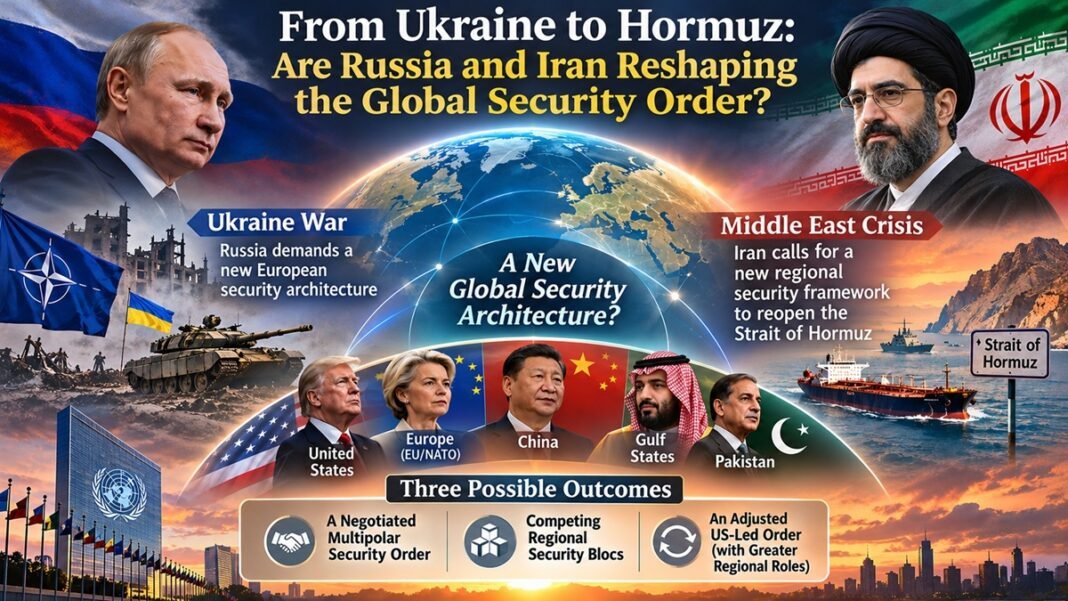
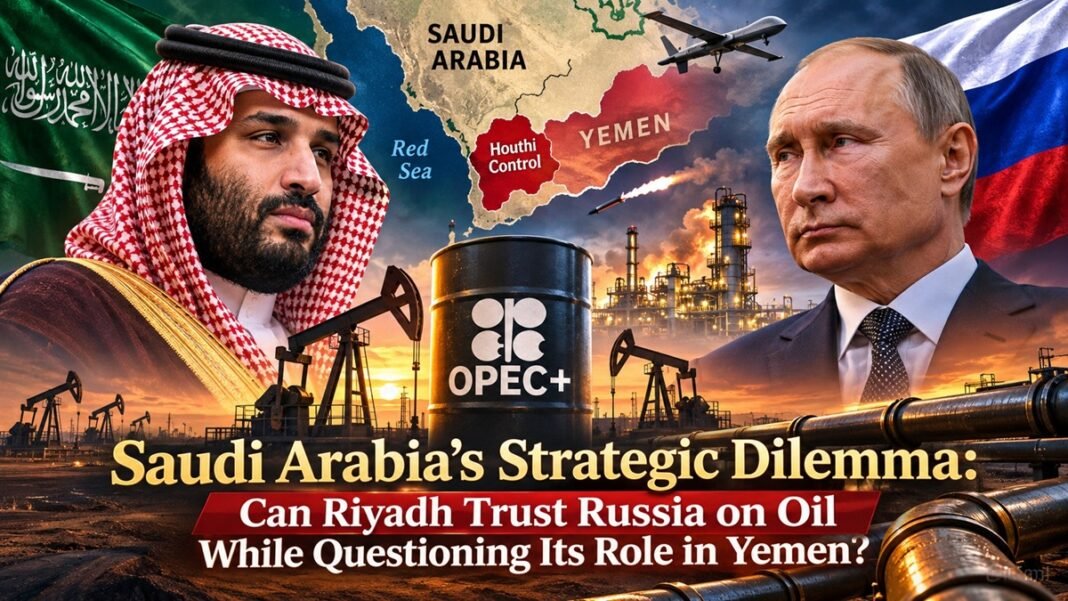
Saudi Arabia’s relationship with Russia is entering a potentially complicated phase. The two countries have spent years building cooperation around oil production, market stability and diplomatic engagement, but developments in Yemen and the wider Middle East are exposing competing strategic interests.
The latest allegations are particularly sensitive. An investigation published by the Associated Press on October 27, 2026, found evidence suggesting that Russian military and government satellites had repeatedly gathered intelligence over Saudi military and energy infrastructure before attacks attributed to Iranian-backed groups, including the Houthis.
The investigation also cited Saudi officials who said intelligence capabilities originating from Russia and China were reaching Iran and its regional partners.
If these findings are substantiated, they could create a serious problem for Riyadh. Russia is not simply another international power with which Saudi Arabia maintains diplomatic relations. It is a key participant in OPEC+, the energy cooperation framework through which Moscow and Riyadh coordinate decisions affecting global oil supply.
This creates an unusual geopolitical contradiction: Saudi Arabia needs cooperation with Russia to maintain influence in international energy markets, but it also has reasons to question Moscow’s regional activities.
The issue is no longer limited to the future of Yemen or the relationship between Russia and Iran. It concerns the extent to which energy partnerships can survive when the strategic interests of participating countries begin to diverge in another critical region.
Russian intelligence allegations put Saudi Arabia’s energy security in focus
The most consequential development is the emerging evidence of Russian intelligence capabilities potentially benefiting Iran-aligned armed groups.
An Associated Press investigation published on October 27 reported that a Geneva-based geospatial intelligence firm, AURORAH Geosignal Intelligence, examined 40 missile and drone attacks attributed to Houthi rebels and Iraqi militias between July 1 and October 19.
According to the investigation, Russian government and military satellites repeatedly appeared over relevant target areas in the days preceding and following the attacks.
The report highlighted several incidents involving Saudi infrastructure, including September strikes against pumping stations along the kingdom’s East-West oil pipeline.
Saudi Arabia’s East-West Pipeline is particularly important because it allows the kingdom to transport crude oil from its eastern production region to the Red Sea port of Yanbu, providing an alternative export route when Persian Gulf shipping faces disruption.
The AP investigation cited Saudi officials, a senior Houthi figure and intelligence analysts who said Russian intelligence capabilities had benefited Iran-aligned groups.
Saudi Foreign Ministry Deputy Minister for Public Diplomacy Rayed Krimly acknowledged that intelligence reaching Iran and the Houthis could originate from Russian and Chinese sources, including commercial capabilities.
He also indicated that Riyadh regularly discusses these concerns with Moscow and Beijing.
The allegations are significant, but an important distinction must be maintained.
The satellite observations establish a pattern of reconnaissance activity, not independently verified proof that the Kremlin ordered individual attacks or directly transferred targeting data to Houthi commanders. The AP investigation reported that Russian officials had not immediately commented on the allegations.
Nevertheless, the possibility that Russian intelligence capabilities are contributing to attacks against Saudi interests presents a serious diplomatic challenge.
For Riyadh, the concern is not simply the origin of the intelligence. It is the possibility that an important international partner could be indirectly strengthening the capabilities of groups threatening Saudi economic infrastructure.
Why Yemen has become strategically important to Russia
Russia’s interest in Yemen cannot be understood solely through the country’s internal conflict.
Yemen occupies a strategically important position near the Bab el-Mandeb Strait, one of the principal maritime passages connecting the Red Sea with the Gulf of Aden and the wider Indian Ocean.
The waterway is essential to international shipping, particularly trade between Europe and Asia through the Suez Canal.
The Houthis have demonstrated their ability to threaten commercial shipping, regional military installations and energy infrastructure through relatively inexpensive missiles and drones.
For Russia, developments involving the Houthis and other Iran-aligned groups could create several strategic opportunities.
First, geopolitical leverage: Instability around the Red Sea increases pressure on Western military and diplomatic resources, particularly those of the United States and its European partners.
Second, strategic cooperation with Iran: Moscow and Tehran have developed military and technological cooperation, particularly around unmanned aerial systems. Their interests overlap in several regional theatres, although this does not mean that they share identical objectives in Yemen.
Third, pressure on Western-aligned partners: Saudi Arabia has close defence and economic relationships with Western countries. Any deterioration in the kingdom’s security environment creates additional complications for Washington and its regional partners.
Fourth, influence over maritime security: The Red Sea and Bab el-Mandeb are important international shipping routes. Any power capable of influencing the security environment around these passages gains additional diplomatic leverage.
However, it would be premature to conclude that Russia is directing Houthi operations or pursuing a coordinated campaign against Saudi Arabia. The available reporting raises serious questions about intelligence assistance and military cooperation, but the full extent of Russian involvement remains unclear.
The Houthi strategy: Why Saudi Arabia is facing renewed pressure
The growing confrontation also reflects the changing strategic calculations of the Houthi movement.
A Reuters investigation published on October 15, 2026, reported that Houthi attacks on Saudi Arabia were aimed at more than military targets.
According to Saudi, Iranian and regional sources cited by Reuters, the campaign was designed to pressure Crown Prince Mohammed bin Salman by threatening infrastructure, investment activity and the economic ambitions associated with Saudi Vision 2030.
The report described a strategy intended to increase the economic and political costs for Riyadh while strengthening the Houthis’ negotiating position over Yemen.
Targets reportedly included Saudi energy infrastructure, airports and facilities associated with major economic activities.
Reuters also reported that the attacks disrupted important investment events in Riyadh and raised concerns among international business participants.
This approach reflects a fundamental asymmetry.
Saudi Arabia is investing heavily in economic transformation, international investment, tourism, infrastructure and technological development. Its long-term ambitions depend on maintaining a reputation for stability and security.
The Houthis, by contrast, can create significant economic and political pressure without possessing comparable conventional military or economic capabilities.
Missiles and drones capable of threatening airports, oil facilities and maritime routes can generate substantial disruption at a relatively low cost.
This gives the movement leverage that extends beyond the battlefield.
The Houthis have also rejected the suggestion that their actions are simply directed by Tehran. Their spokesperson, Mohammed Abdulsalam, told Reuters that their demands concern longstanding issues involving restrictions on Yemeni ports and airports, public-sector salaries and other economic grievances.
That distinction matters because the movement has its own political objectives, even while maintaining close relations with Iran.
For Saudi Arabia, the challenge is therefore twofold: addressing the wider regional confrontation involving Iran while dealing with an armed movement that has independent interests and considerable capacity to threaten the kingdom.
The Saudi-Russian oil partnership: Why neither side can easily walk away
Despite these security concerns, Saudi Arabia and Russia have strong reasons to preserve their energy relationship.
Their cooperation through OPEC+ has become one of the most consequential developments in international energy politics over the past decade.
The framework brings together OPEC members and non-OPEC producers, including Russia, to coordinate production policies and influence market stability.
Saudi Arabia is the group’s largest producer and a central decision-maker, while Russia is one of the world’s leading oil-producing countries.
Their cooperation is important because production decisions by these two countries can influence global supply expectations, oil prices and the calculations of other producers.
The latest production figures illustrate why this relationship remains significant.
According to OPEC’s November 11, 2026 monthly report, Saudi Arabia reported crude oil production of 10.563 million barrels per day in October, compared with 8.372 million barrels per day in September.
Russian production also increased, reaching 8.668 million barrels per day, an increase of approximately 41,000 barrels per day from September.
Saudi Arabia vs Russia: Crude Oil Production – October 2026
Million barrels per day (bpd) · Reported October 2026 figures
Reported crude oil production in million barrels per day.

| Country | Production |
|---|---|
| Saudi Arabia | 10.563 million bpd |
| Russia | 8.668 million bpd |
Key findings:
-
Saudi Arabia produced approximately 1.895 million barrels per day more than Russia.
-
Saudi production was approximately 21.9% higher.
-
Russia remained a major OPEC+ producer, with output increasing by 41,000 barrels per day.
The figures demonstrate that both countries remain major participants in the international oil market despite the disruption caused by the Iran war and maritime insecurity.
On November 1, OPEC+ members agreed to keep December production targets unchanged, reflecting uncertainty over regional exports, the recovery of shipping through Hormuz and the outlook for 2027.
For Riyadh, maintaining coordination with Moscow is important for several reasons:
-
Avoiding destabilising competition between major oil producers.
-
Maintaining influence over international oil supply.
-
Preventing unnecessary price volatility.
-
Preserving cooperation with a major non-Western energy producer.
-
Protecting the broader diplomatic relationship with Russia.
For Moscow, Saudi cooperation helps maintain the credibility and effectiveness of OPEC+.
Russia also benefits from a relationship with Riyadh that provides diplomatic access to an influential Gulf power.
This mutual dependence makes a complete breakdown of relations unlikely to be an attractive option for either side.
However, it does not mean that energy cooperation can insulate the relationship from security disagreements.
Could Saudi Arabia use oil production as leverage against Russia?
The possibility of Saudi Arabia using its production capacity to exert pressure on Moscow has attracted attention following social media claims about an alleged oil-price ultimatum from Mohammed bin Salman.
However, there is no independently verified evidence that the Saudi crown prince issued such a threat.
The economic question is nevertheless worth examining.
Saudi Arabia has considerable spare production capacity and has previously used changes in oil supply to influence market conditions.
A substantial increase in Saudi output could place downward pressure on prices, particularly if global demand is weak and other producers maintain their existing production levels.
Russia would be exposed to such a development because oil and gas revenues remain important to its economy and government finances.
But an aggressive Saudi production strategy would also carry substantial costs for Riyadh.
Lower oil prices would reduce Saudi revenue, potentially complicating the financing of Vision 2030 projects, infrastructure development and other economic transformation initiatives.
There is another complication: Saudi Arabia and Russia operate within the same OPEC+ framework.
A unilateral production increase designed to punish Moscow could undermine the cooperation that both countries have spent years developing.
It could also create uncertainty among other oil producers and encourage competitive production policies.
Consequently, oil production is a potential source of diplomatic leverage, but it is not a cost-free weapon.
The more realistic possibility is that Riyadh could raise its concerns through private diplomatic channels, seek explanations from Moscow and use its broader relationships to communicate the economic and strategic consequences of continued instability.
The kingdom would have little incentive to trigger an oil-market confrontation unless it concluded that the security costs of maintaining the existing relationship had become greater than its economic benefits.
Iran’s role: The connection between Moscow, Tehran and the Houthis
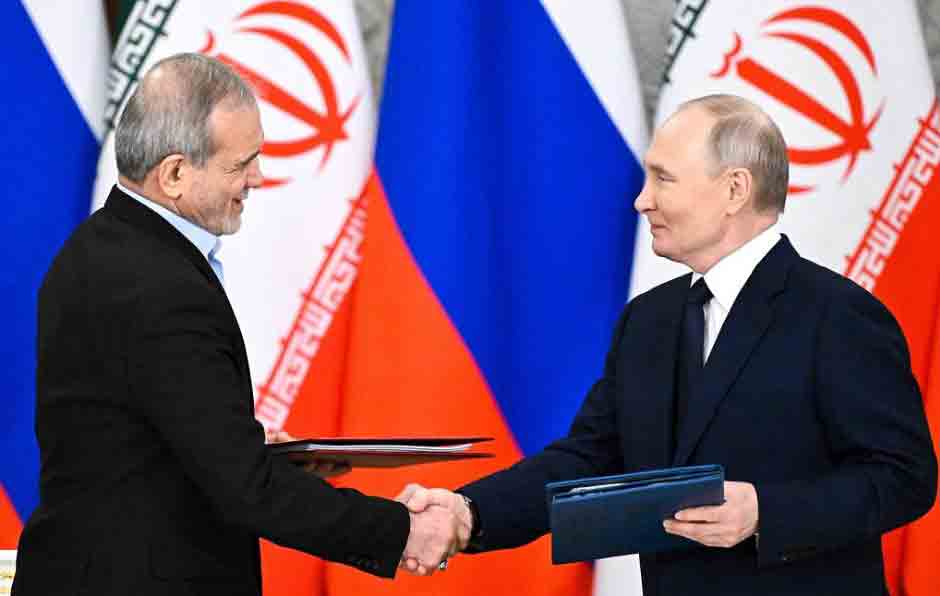
The Saudi dilemma becomes more complicated when Iran is added to the equation.
Russia and Iran have developed a significant military partnership, particularly in the areas of drone technology, defence cooperation and strategic coordination.
Their relationship has been strengthened by Western sanctions and their shared interest in reducing American influence.
However, Moscow and Tehran are not identical strategic actors.
Russia has its own economic, diplomatic and military interests in the Middle East. Iran has its own regional priorities, including its relationships with armed groups and its security concerns involving Israel, the United States and Gulf countries.
The Houthis occupy an important position within this wider regional environment.
Iran has provided the movement with military, technological and political support, although the extent of external control over individual Houthi decisions remains disputed.
The latest reporting raises the possibility that Russian intelligence capabilities could be contributing to the operational effectiveness of Iran-aligned groups.
If confirmed, this would represent an important development in the regional balance of power.
It would also create a difficult situation for Saudi Arabia: Moscow could remain an essential partner in energy diplomacy while its strategic relationship with Tehran potentially benefits actors threatening Saudi infrastructure.
This is not necessarily evidence of a deliberate Russian policy to target Saudi Arabia.
It could also reflect Moscow’s willingness to provide strategic assistance to Iran without fully accounting for the consequences for its other regional relationships.
Nevertheless, the distinction may offer little comfort to Riyadh if Saudi infrastructure continues to face threats.
The United States, China and Pakistan: Saudi Arabia’s options
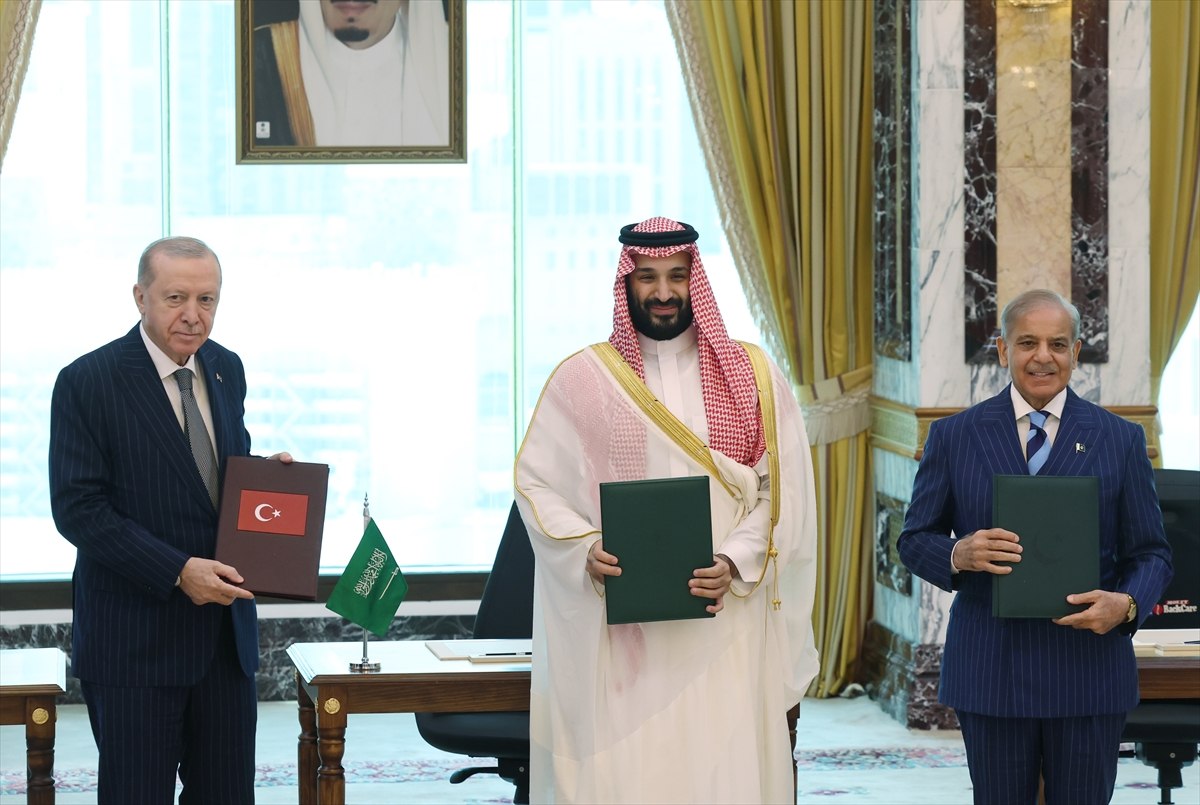
Saudi Arabia is unlikely to respond to these developments by abandoning its relationship with Russia.
Instead, Riyadh may seek to diversify its diplomatic and security partnerships while maintaining economic cooperation with Moscow.
The United States remains an important security partner, particularly in advanced defence systems, intelligence cooperation and military technology.
China offers economic opportunities, diplomatic engagement and an increasingly important role in regional relations.
Pakistan also occupies a significant position because of its defence relationship with Saudi Arabia, geographical proximity to the Gulf and diplomatic ties with both Iran and the Gulf states.
Turkey and other regional powers could also become relevant as Saudi Arabia seeks to broaden its security partnerships.
The objective would be to avoid excessive dependence on any single external power.
For Riyadh, this is particularly important because the security environment is becoming more complicated.
The kingdom faces threats involving missiles, drones, maritime disruption and attacks on critical infrastructure. These challenges require a combination of intelligence cooperation, air defence, technological capabilities and regional diplomacy.
No single international partnership can necessarily address all these requirements.
Saudi Arabia’s approach may therefore increasingly reflect strategic diversification rather than a straightforward realignment against Russia.
Could the Saudi-Russian relationship survive a growing security disagreement?
There are three possible trajectories.
1. Managed disagreement and continued oil cooperation
This is perhaps the most practical outcome.
Saudi Arabia raises its security concerns directly with Moscow while both countries preserve OPEC+ coordination.
Russia avoids actions that could further damage its relationship with Riyadh, while Saudi Arabia continues to distinguish between its energy interests and its regional security concerns.
2. Gradual deterioration in strategic relations
If allegations of Russian assistance to Iran-aligned groups become more firmly established, Saudi Arabia could begin reassessing the broader relationship.
This might involve stronger defence cooperation with other partners, reduced diplomatic trust and more difficult negotiations within OPEC+.
The two countries could continue cooperating on oil while becoming increasingly competitive in regional security.
3. An energy and geopolitical confrontation
The most serious possibility would emerge if Riyadh concluded that Moscow was deliberately enabling attacks against Saudi infrastructure.
In such circumstances, Saudi Arabia could consider using its diplomatic, economic and energy influence to increase pressure on Russia.
However, a confrontation over oil production could hurt both countries and destabilise the international energy market.
It would therefore represent a much more serious escalation than the current diplomatic disagreements.
Conclusion: Saudi Arabia cannot afford to ignore the contradiction
Saudi Arabia’s relationship with Russia is entering a phase in which economic cooperation and geopolitical competition are increasingly difficult to separate.
Moscow remains an important partner in OPEC+, and its cooperation helps Riyadh maintain influence over international oil markets. But allegations that Russian intelligence capabilities have benefited Iran-aligned groups targeting Saudi infrastructure introduce a serious security complication.
For Mohammed bin Salman, the challenge is not simply whether to trust Vladimir Putin. It is how to protect Saudi Arabia’s economic transformation, energy infrastructure and regional influence without damaging relationships that remain valuable to the kingdom.
Russia, meanwhile, must consider the consequences of allowing its relationship with Iran to create friction with one of the most influential countries in the Gulf.
The situation also illustrates a broader feature of contemporary geopolitics: countries can cooperate in one strategic domain while pursuing conflicting interests in another.
Saudi Arabia and Russia may remain partners in managing oil markets, but that partnership does not automatically translate into shared security interests in Yemen or the Red Sea.
The real test for Riyadh will be whether it can separate energy cooperation from regional security without allowing either relationship to become a source of strategic vulnerability.
For Moscow, the question is equally consequential: Can Russia expand its influence through Iran and regional partners without undermining its relationships with other important Middle Eastern powers?
The answer could shape not only the future of Saudi-Russian relations but also the wider balance of power across the Persian Gulf, Yemen and the Red Sea.