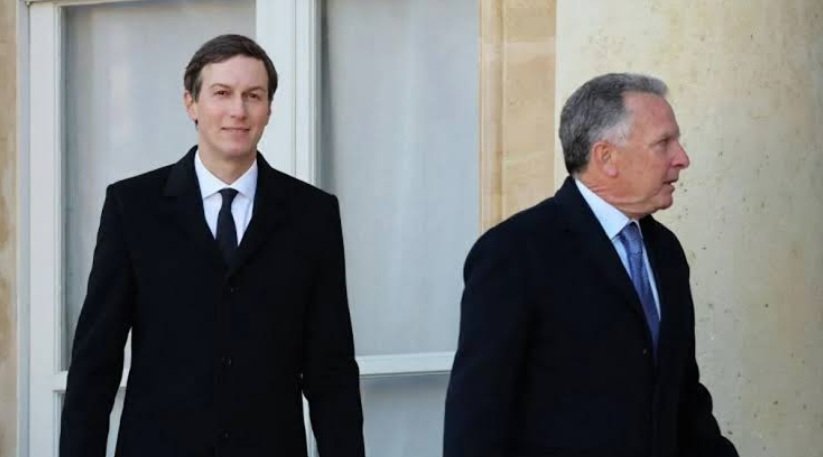
As Donald Trump’s envoys Jared Kushner and Steve Witkoff prepare to meet Vladimir Putin in Moscow before briefing Ukrainian President Volodymyr Zelenskyy in Dublin, the Ukraine peace initiative is entering a critical geopolitical phase. Moscow is seeking a broader European security arrangement that addresses NATO’s military posture and Russia’s strategic concerns, while Kyiv insists that any settlement must protect its sovereignty and provide credible security guarantees. The central question is whether Trump can end the Ukraine war without fundamentally changing Europe’s security order.

The United States is attempting to turn renewed diplomatic engagement into a settlement of Europe’s largest military conflict in decades. However, the latest negotiations suggest that the stakes extend well beyond the future of Ukraine’s eastern territories.
Russia wants the peace process to address its longstanding objections to NATO’s expansion, Western military deployments and the post-Cold War security architecture. Ukraine wants an end to Russian military aggression without surrendering its territorial sovereignty or its right to determine its own security partnerships. European governments, meanwhile, are concerned that Washington and Moscow could negotiate arrangements affecting the continent without giving European countries an adequate role.
This creates a much bigger challenge for President Donald Trump than simply arranging a ceasefire.
His administration must reconcile three competing objectives: Russia’s demand for a new European security framework, Ukraine’s insistence on credible protection against another invasion, and Europe’s determination to preserve NATO’s collective defence system.
The latest US-mediated negotiations in Abu Dhabi on November 10-11 have brought these issues into sharper focus. Following the discussions, Trump’s special envoy Steve Witkoff and presidential adviser Jared Kushner are preparing to travel to Moscow to meet Russian President Vladimir Putin. They subsequently plan to travel to Dublin to brief Zelenskyy and discuss proposals emerging from the Russian meeting.
Kushner has described the discussions as a positive opening, saying the American team sees opportunities to make progress on unresolved issues.
The diplomatic sequence could become an important test of whether Washington can negotiate an end to the war while preventing the Ukraine settlement from becoming a wider bargain over Europe’s security arrangements.
Russia Wants More Than an End to the Ukraine War

One of the most consequential aspects of the current negotiations is Moscow’s insistence that the future European security framework should be central to the peace process.
Russian representatives have made clear that they do not view the Ukraine conflict as an isolated territorial dispute. Instead, Moscow wants negotiations to address what it describes as the wider security conditions that led to the confrontation.
According to a Reuters report on November 10, a source in the Russian delegation said the main objective of the Abu Dhabi discussions should be developing a comprehensive and indivisible security architecture for Europe.
This position reflects Russia’s longstanding objections to NATO enlargement and the growing Western military presence in Eastern Europe.
Before launching its full-scale invasion of Ukraine in February 2022, Moscow demanded legally binding restrictions on NATO expansion, changes to the alliance’s military posture and limits on Western military infrastructure near Russian borders.
The United States and its European allies rejected those demands.
By linking the Ukraine settlement to a wider European security arrangement, Russia now has an opportunity to reopen some of these strategic questions through direct negotiations with Washington.
Moscow’s broader interests include:
- Restrictions on NATO’s future enlargement.
- Changes to Western military deployments in Eastern Europe.
- Limitations on foreign military infrastructure in Ukraine.
- New security arrangements between Russia and European countries.
- Mechanisms governing military exercises and deployments near Russian borders.
- A revised framework for relations between Moscow and NATO.
For the Kremlin, a settlement that addresses these issues could have significance beyond the battlefield. It could potentially change the diplomatic and military relationship between Russia and the Western alliance.
However, these are Russian negotiating objectives, not agreed terms of a settlement.
Russia Floats Non-Aggression Agreements with NATO Countries

An especially important development emerged on November 11, when Russian diplomat Alexey Drobinin outlined possible arrangements between Moscow and individual NATO member states.
According to Reuters, Drobinin suggested that Russia could pursue bilateral non-aggression agreements with NATO countries as part of a proposed European security framework.
He identified three possible models:
- Collective defence alliances or mutual-assistance arrangements.
- Political commitments not to support one another’s adversaries in the event of aggression.
- Individual bilateral non-aggression agreements between Russia and NATO member states.
The third proposal deserves particular attention.
It suggests that Moscow may be interested in developing direct security arrangements with individual European governments rather than dealing exclusively with NATO as a collective organisation.
Such arrangements could potentially create new diplomatic relationships between Russia and countries along NATO’s eastern flank.
However, these proposals remain Russian diplomatic suggestions. They have not been accepted by NATO governments and should not be interpreted as an agreed negotiating framework.
NATO’s collective defence system is based on Article 5 of the North Atlantic Treaty, under which an armed attack against one member is treated as an attack against all.
Any bilateral arrangements would therefore need to be considered alongside existing alliance commitments.
For European governments, the central concern is whether separate agreements could weaken NATO’s unity or create different security arrangements for individual members.
The Russian proposal demonstrates that Moscow is seeking to make the peace process about more than Ukraine’s territorial future. It also wants to influence the structure of European security.
Trump’s Peace Initiative Could Open a Wider NATO-Russia Negotiation
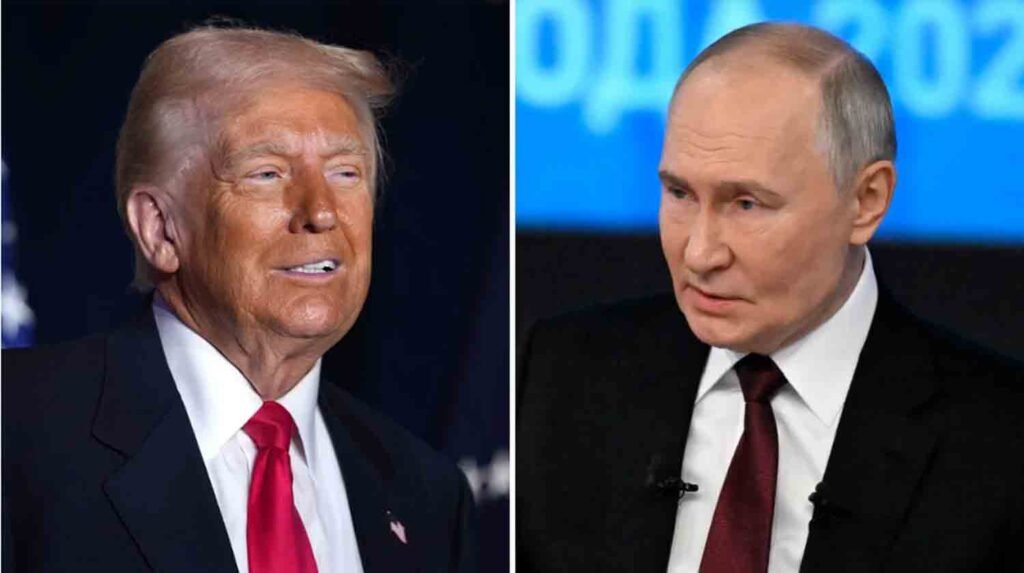
The Trump administration’s approach increasingly connects the Ukraine settlement with a broader understanding between Washington, Moscow and European governments.
This represents a significant diplomatic shift.
Instead of treating the war as an isolated territorial conflict, Washington is exploring whether some of Russia’s wider security concerns can be addressed as part of a comprehensive settlement.
The approach could create opportunities for reducing tensions between Russia and NATO, but it also raises difficult questions about the independence of countries in Eastern Europe.
Ukraine’s future relationship with NATO is particularly sensitive.
Russia wants restrictions on Ukraine’s military alignment, while Kyiv insists that its foreign-policy choices cannot be dictated by Moscow.
The United States must therefore consider how to provide Ukraine with credible security guarantees without making an agreement unacceptable to Russia.
This is where Trump’s diplomatic initiative faces its most difficult test.
If Washington offers guarantees that are too weak, Ukraine could reject the settlement. If those guarantees involve a substantial Western military commitment that Moscow considers unacceptable, Russia could refuse to agree.
The challenge is to find an arrangement that prevents renewed Russian aggression without creating a direct and permanent military confrontation between Russia and NATO.
Europe Fears a US-Russia Deal That Could Reshape Its Security

European governments support efforts to end the Ukraine war, but they do not want the future of European security decided exclusively by Washington and Moscow.
France, Germany, Britain, Italy, the European Union and NATO have been coordinating with Ukraine and the United States during the latest diplomatic initiative.
In a joint statement issued following discussions in Abu Dhabi on November 10, the participants emphasised that any future arrangement must respect Ukraine’s sovereignty, territorial integrity and independent decision-making.
They also stressed that credible security guarantees must form part of a lasting settlement.
Most importantly, the statement reaffirmed that NATO would remain central to Euro-Atlantic collective defence.
This is a significant message to Moscow.
European governments are effectively signalling that a new security arrangement cannot simply replace existing NATO commitments or undermine the sovereignty of countries in the region.
The disagreement over negotiating priorities is equally important.
Russia wants the wider European security architecture addressed as a central element of the settlement. Several European governments prefer to secure an end to hostilities and credible guarantees for Ukraine before moving into broader discussions about the continent’s future security.
The distinction could become a major obstacle in the negotiations.
For Poland, the Baltic states, Finland and other countries geographically close to Russia, NATO’s collective defence commitment remains a central element of national security.
Any bilateral understanding between Washington and Moscow that appears to restrict NATO’s ability to deploy forces, conduct military exercises or admit new members could create serious divisions within the alliance.
The European concern is therefore not simply about participation in negotiations. It is about preventing major powers from making decisions that affect the security choices of independent states without their consent.
Ukraine Faces a Difficult Choice: Peace or Long-Term Security?
For Ukrainian President Volodymyr Zelenskyy, the challenge is to secure an end to the fighting without accepting an agreement that leaves Ukraine vulnerable to another Russian invasion.
Kyiv’s negotiating position rests on two fundamental requirements: territorial sovereignty and credible long-term security guarantees.
The territorial question remains particularly difficult.
Russia currently occupies approximately one-fifth of Ukraine and continues to claim four Ukrainian regions it declared annexed in 2022, although it does not control all the territory it claims.
Moscow continues to demand Ukrainian withdrawal from the remaining areas of Donetsk under Kyiv’s control.
Ukraine has rejected demands to surrender territory that its forces continue to defend.
Washington has indicated that some flexibility may exist behind closed doors, but Ukrainian officials have rejected suggestions that Kyiv is prepared to make unilateral territorial concessions.
The second major issue is Ukraine’s future security.
Kyiv wants guarantees that would make another Russian invasion considerably more difficult. These could involve bilateral commitments from Western countries, continued military assistance and mechanisms for responding to future aggression.
However, Moscow opposes arrangements that would effectively establish a permanent Western military presence in Ukraine.
This creates a fundamental contradiction.
Ukraine wants guarantees strong enough to deter Russia. Moscow wants assurances that the eventual settlement will not allow Ukraine to become a platform for Western military power near Russian territory.
Trump’s negotiators must find a formula that addresses both concerns without undermining Ukraine’s sovereignty.
Can Putin and Zelenskyy Eventually Meet Face-to-Face?

The possibility of a direct meeting between Putin and Zelenskyy remains another important question.
For now, the American envoys are scheduled to meet the two presidents separately.
Kushner and Witkoff will first take the proposals emerging from Abu Dhabi to Moscow. Their subsequent discussions with Zelenskyy in Dublin will allow the Ukrainian president to assess Moscow’s response and consider further negotiating options.
A direct Putin-Zelenskyy meeting could eventually become necessary to resolve political questions that lower-level delegations cannot settle.
These include territorial arrangements, the status of occupied regions, security guarantees and the future relationship between Ukraine and Western military institutions.
However, arranging such a meeting before the parties have made progress on fundamental disagreements could expose the diplomatic process to another setback.
A possible summit involving Trump, Putin and Zelenskyy remains an objective of the wider American initiative, but no final agreement or confirmed date has been established.
The immediate priority is therefore to determine whether the Moscow discussions can produce enough common ground to justify moving towards leadership-level negotiations.
Three Possible Outcomes of Trump’s Moscow Peace Mission
The latest diplomatic initiative could produce three broad outcomes.
1. A negotiated end to the war with security guarantees
Washington could secure a framework in which Russia accepts an end to hostilities, Ukraine receives credible security commitments and European governments participate in a broader security arrangement.
Such an agreement would require difficult compromises on territorial and military questions, but it could provide a foundation for a sustainable settlement.
2. A wider US-Russia security understanding
The negotiations could produce an agreement addressing NATO-Russia relations, military deployments and European security alongside the Ukraine conflict.
This could advance some of Moscow’s longstanding diplomatic objectives, but it would face resistance if it appeared to limit the sovereignty or security choices of European countries.
3. Diplomatic progress without a comprehensive peace agreement
The parties could make progress on prisoner exchanges, humanitarian arrangements and further negotiations while remaining divided over territory, NATO and security guarantees.
This could reduce diplomatic tensions without bringing the war to an end.
The third outcome remains a significant possibility because the central political disagreements are considerably more difficult to resolve than humanitarian issues.
What a Ukraine Peace Deal Could Mean for NATO and the Global Balance of Power

The implications of the negotiations extend well beyond Ukraine.
A US-Russia understanding on European security could influence NATO’s military posture, the deployment of American forces across the continent and the defence policies of countries bordering Russia.
It could also affect the relationship between Washington and its European allies.
If the United States and Russia reach an understanding that European governments consider incompatible with NATO commitments, transatlantic relations could face another serious test.
Conversely, an agreement that ends the war while preserving Ukraine’s sovereignty and NATO’s collective defence framework could provide a foundation for reducing military tensions across Europe.
There are also broader implications for international diplomacy.
A settlement negotiated primarily by major powers would raise questions about the role of smaller states in decisions affecting their territorial integrity and national security.
For countries outside Europe, the outcome will be relevant to wider debates about sovereignty, military alliances and the ability of major powers to reshape regional security arrangements through negotiations.
The consequences could also extend to US strategic priorities elsewhere, including the Middle East and the Indo-Pacific, where Washington faces other significant security commitments.
A durable settlement could allow the United States to redirect diplomatic and military attention. An unstable agreement, however, could leave Europe facing renewed confrontation and continued uncertainty.
The Real Question: Can Trump End the War Without Redrawing Europe’s Security Order?
Trump’s Moscow initiative presents an important diplomatic opportunity, but the objectives of the negotiating parties remain fundamentally different.
Putin wants the Ukraine settlement connected to Russia’s wider security demands and its objections to NATO’s military posture.
Zelenskyy wants an agreement that ends the fighting without sacrificing Ukraine’s sovereignty or leaving the country exposed to another invasion.
European governments want a lasting settlement that preserves NATO’s collective defence framework and respects the independent choices of European states.
Washington is attempting to bring these competing positions into a single negotiating framework.
The Moscow meeting, followed by the planned Dublin discussions with Zelenskyy, could help establish whether the parties are prepared to move beyond their existing positions.
The immediate indicators of progress will be agreement on humanitarian measures, a verifiable ceasefire framework, credible security guarantees and a negotiating process that includes European partners.
A comprehensive peace agreement will require much more difficult political decisions.
The central issue is no longer simply whether Trump can persuade Putin to stop the war in Ukraine. It is whether Washington can secure peace without allowing the settlement to become a mechanism for reshaping Europe’s security order at the expense of Ukraine’s sovereignty or NATO’s collective defence commitments.
That distinction will determine whether Trump’s diplomatic initiative produces a durable European peace or merely opens another chapter in the strategic confrontation between Russia and the West.