Washington is expanding its economic pressure campaign against Iran beyond the Persian Gulf, targeting the land routes and commercial networks that Tehran could use to bypass the American naval blockade. But the strategy is encountering an unexpected obstacle: Turkey, Iraq and Pakistan are reluctant to close their borders with Iran, warning that such measures could damage their economies, disrupt regional trade and destabilise already sensitive border communities. With CENTCOM establishing Task Force Iron Gate to restrict the movement of weapons, dual-use technologies and sanctioned materials through Iran’s land borders and the Caspian Sea, the Trump administration is attempting to turn its maritime blockade into a wider regional containment strategy.
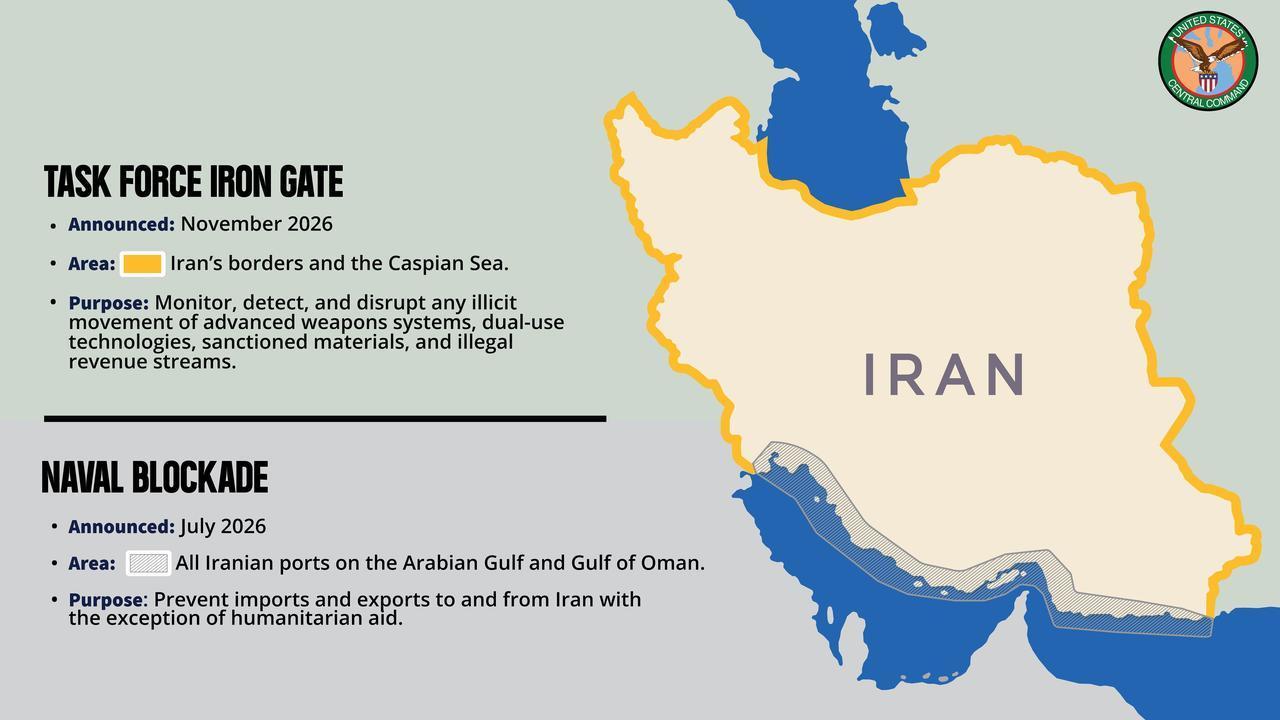
The formation of Task Force Iron Gate on November 7 marks an important expansion of the American campaign against Iran. However, developments over the following days have exposed a major weakness in Washington’s approach: the United States can impose its own naval restrictions and financial sanctions, but it cannot independently control the borders of sovereign neighbouring countries.
A November 11 investigation by The New York Times reported that American officials had spent weeks pressing Iran’s neighbours to close land crossings and restrict trade with Tehran. Turkey, Iraq and Pakistan have pushed back, concerned that implementing Washington’s demands could disrupt their economies and create instability in border regions.
The disagreement is particularly significant for Iraq. Foreign Minister Fuad Hussein disclosed that the US Treasury had asked Baghdad to close all but two border crossings with Iran. He warned that such a decision would severely affect Iraqi trade and economic activity, while confirming that discussions with Washington were continuing.
The developments raise a larger geopolitical question: Can Washington economically isolate Iran by turning its neighbours into enforcement partners, or will regional economic interests undermine the American blockade strategy?
Task Force Iron Gate: Washington expands its Iran blockade
On November 7, US Central Command (CENTCOM) announced the establishment of Task Force Iron Gate, following an order from CENTCOM Commander Admiral Brad Cooper.
The new unit consists of approximately 20 civilian and military personnel based at CENTCOM headquarters in Tampa, Florida.
Its mandate is to coordinate with other American government agencies to prevent Iran from using land-based transportation networks and the Caspian Sea to move:
- Advanced weapons systems.
- Dual-use technologies with potential military applications.
- Sanctioned industrial materials and restricted components.
- Illicit financial flows and revenue associated with prohibited activities.
CENTCOM described the initiative as an extension of its existing maritime blockade against Iran.
Admiral Cooper said the task force would strengthen interagency cooperation and further restrict Tehran’s ability to finance military activities, rebuild weapons factories and replenish its armed forces.
The command also claimed that the American naval blockade had prevented Iran from exporting more than $25 billion worth of crude oil.
The significance of Iron Gate lies in its geographical scope. Washington is no longer concentrating exclusively on Iranian ports and maritime exports. It is attempting to identify and disrupt the commercial, financial and transportation networks that could allow Tehran to maintain access to foreign supplies.
However, Iron Gate is a coordination unit rather than a force deployed to close foreign borders. Its effectiveness will depend on intelligence sharing, sanctions enforcement, financial restrictions and cooperation from governments controlling the relevant transportation networks.
This distinction is central to understanding the challenges facing the initiative.

The New York Times report: Why Iran’s neighbours are resisting Washington
The November 11 New York Times investigation, authored by Erika Solomon, Eric Schmitt and Tyler Pager, provides an important insight into the diplomatic difficulties confronting the American strategy.
According to the report, Washington has been pressing Iran’s neighbouring countries for weeks to close land crossings and tighten restrictions on trade with Tehran.
But the governments involved are reluctant to accept the economic consequences.
Iran’s neighbours have substantial commercial, energy and security interests that cannot easily be separated from their geographical relationship with Tehran.
Closing border crossings could affect food supplies, industrial imports, fuel transportation, commercial businesses and employment in border communities.
For these countries, the issue is not simply whether they support American sanctions against Iran. It is whether they should accept the domestic economic costs of implementing a broader American blockade.
The distinction explains why Washington’s pressure campaign is encountering resistance even among countries that maintain important relationships with the United States.
Iraq: US Treasury demands closure of all but two crossings
Iraq is currently at the centre of the disagreement.
On November 8, Iraqi Foreign Minister Fuad Hussein revealed that the US Treasury Department had asked Baghdad to close all border crossings with Iran except for two.
One of the crossings would reportedly remain operational in the Kurdistan Region, while another would be retained elsewhere in Iraq.
Hussein acknowledged that the American request was difficult to implement because Iraq has numerous official and unofficial crossings with Iran.
He warned that shutting down most of them would damage the Iraqi economy and disrupt trade and movement.
The foreign minister also confirmed that discussions with Washington were continuing.
Reuters independently reported his remarks, making the Iraqi government’s position one of the clearest publicly documented examples of resistance to the American demand.
The disagreement is particularly sensitive because Iran is an important commercial partner for Iraq.
The two countries maintain extensive trade connections, while Iranian goods, industrial supplies and other commodities contribute to economic activity in Iraqi markets.
A comprehensive border closure could have several consequences:
- Disruption of imports and commercial supplies.
- Financial losses for Iraqi businesses and transport operators.
- Reduced economic activity in border provinces.
- Increased incentives for informal trade and smuggling.
- Additional political pressure on the Iraqi government.
Baghdad is therefore facing a difficult balancing act. It must maintain its relationship with Washington while avoiding measures that could damage its own economic interests and relations with Tehran.
The Iraqi position also demonstrates that American sanctions policy cannot automatically override the domestic priorities of regional partners.
Turkey: Ankara faces an economic and strategic dilemma
Turkey is another important country in Washington’s calculations.
Iran shares an approximately 534-kilometre border with Turkey, which connects the two countries to major commercial networks linking the Middle East, the Caucasus and Europe.
The three principal official crossings are Gürbulak-Bazargan, Kapıköy-Razi and Esendere-Serow.
These routes support commercial transportation and provide important access to regional markets.
For Ankara, closing the crossings would mean more than restricting Iranian trade. It could disrupt Turkish exporters, transport companies and businesses that depend on commercial relations with Iran.
Turkey also has its own strategic priorities.
President Recep Tayyip Erdoğan’s government has traditionally sought to maintain diplomatic and economic relations with both Washington and Tehran, despite disagreements over regional security and foreign policy.
A comprehensive closure of the Iranian border could undermine this balancing approach.
There is also a regional transportation consideration. Turkey is an important transit country connecting Asian markets with Europe, and restrictions on Iranian routes could affect wider commercial networks.
Washington may therefore find it difficult to persuade Ankara to adopt measures that compromise Turkish economic interests without offering a compelling strategic or financial incentive.
The disagreement illustrates the limitations of treating regional partners as extensions of American sanctions policy.
Pakistan: Why Islamabad cannot afford a complete border shutdown
Pakistan’s position deserves particular attention because of its geographical proximity to Iran and the economic sensitivity of its western border.
The two countries share an approximately 900-kilometre frontier through Balochistan.
The main commercial connections include Taftan-Mirjaveh and Gabd-Rimdan, alongside other designated crossings and local trade routes.
These connections are important for the movement of goods, fuel transportation and the livelihoods of communities on both sides of the border.
Pakistan also has significant security concerns along the frontier.
The activities of militant organisations, informal transportation networks and cross-border smuggling already place considerable pressure on Pakistani security agencies.
A comprehensive closure could create additional difficulties rather than automatically resolving these problems.
For Islamabad, the consequences would include:
Economic disruption: Border communities and commercial operators could lose important sources of income.
Security complications: Restrictions could increase incentives for informal transportation and smuggling networks.
Diplomatic pressure: Pakistan would have to balance American expectations against its relationship with neighbouring Iran.
Regional stability: Further deterioration in Pakistan-Iran relations could complicate an already sensitive security environment in Balochistan.
Pakistan’s position should not be confused with an unwillingness to prevent illegal weapons transfers or enforce its own sanctions and customs regulations.
Islamabad has legitimate reasons to strengthen border security and monitor prohibited cargo.
The distinction is between targeted enforcement against illegal activities and closing legitimate commercial routes as part of another country’s economic pressure campaign.
For Pakistan, maintaining control over its own border policy is a matter of national sovereignty as well as economic necessity.
Why the Caspian Sea is becoming another target of American pressure
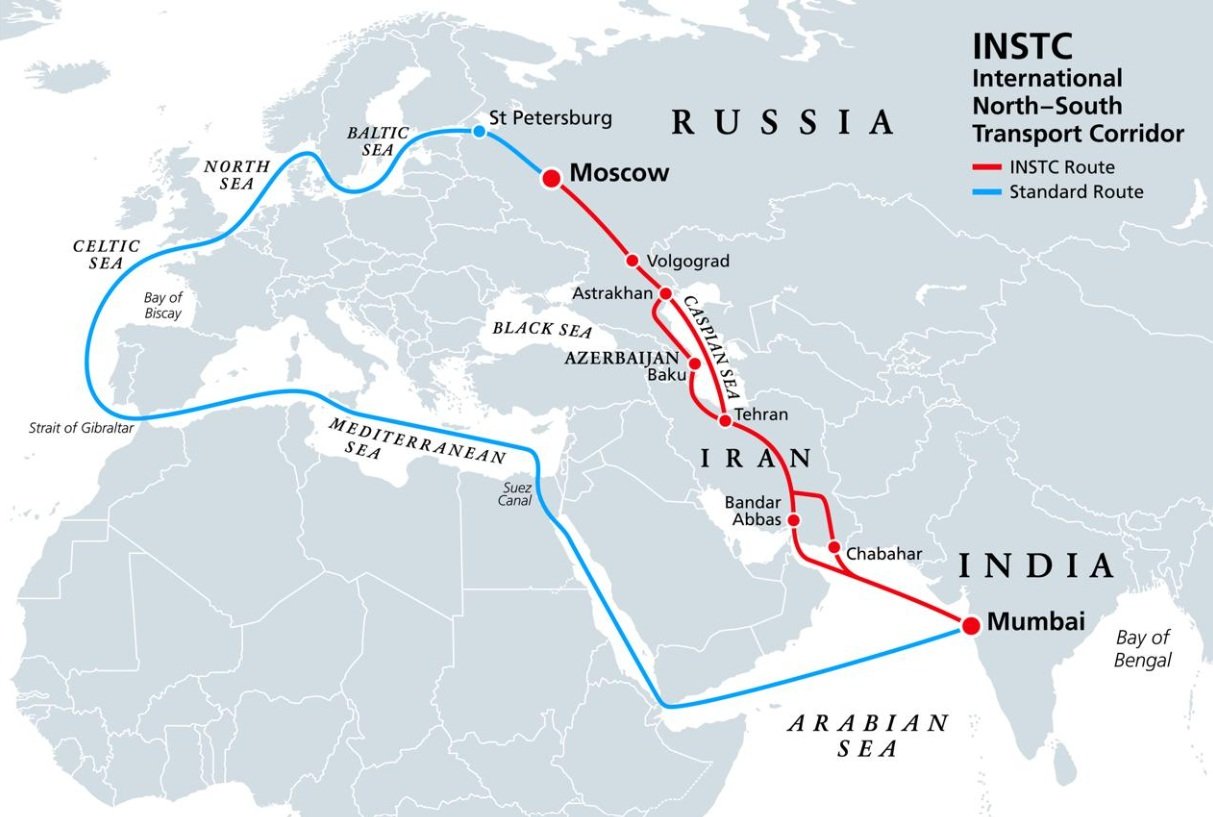
One of the most strategically important aspects of Task Force Iron Gate is its inclusion of the Caspian Sea.
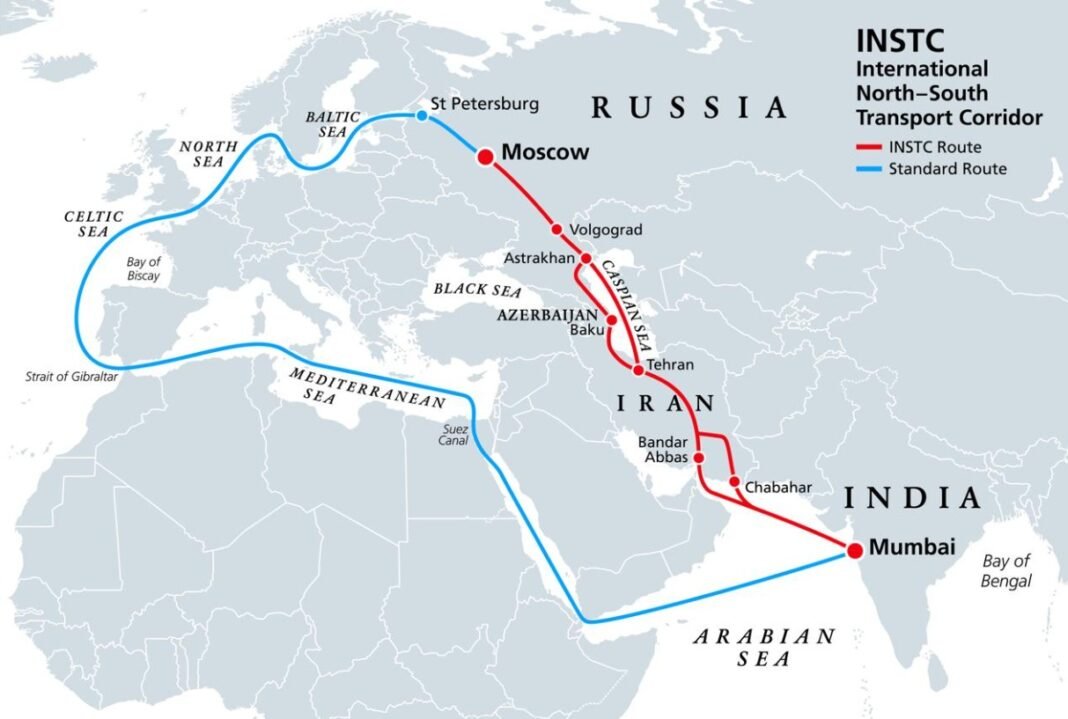
Iran’s northern maritime connections provide access to Russia and Central Asian markets, creating alternative transportation routes that do not depend on the Strait of Hormuz.
The Caspian Sea is shared by five countries: Iran, Russia, Azerbaijan, Kazakhstan and Turkmenistan.
Iran and Russia have been expanding their maritime and logistical cooperation through this region, including shipping, railway connections and the wider International North-South Transport Corridor.
The network provides Iran with additional options for importing industrial goods and other supplies.
For Russia, it strengthens commercial connections with Iran while supporting a wider Eurasian transportation system.
This is particularly relevant to Washington because the effectiveness of its maritime restrictions could be reduced if Iran continues to obtain important supplies through northern routes.
However, the Caspian is not immune to international sanctions. Financial restrictions, intelligence monitoring, cargo inspections and pressure on shipping companies can still affect trade.
The challenge for Washington is that the Caspian is an enclosed waterway governed by its five littoral states. American naval forces cannot simply extend their Persian Gulf enforcement operations into the region.
Consequently, the effectiveness of Iron Gate will depend heavily on identifying sensitive cargoes, targeting intermediary companies and persuading regional governments to cooperate.
Russia and China: The wider geopolitical challenge
The expansion of Iron Gate also has implications for Iran’s relationships with Russia and China.
Russia has developed extensive military, economic and technological cooperation with Tehran, particularly as both countries face Western sanctions.
The Caspian Sea provides an important geographical connection between the two countries, allowing commercial cargo to move without passing through the Persian Gulf.
China, meanwhile, has substantial interests in maintaining trade and transportation connections across Central Asia and the wider Middle East.
Its economic relationships with Iran and Gulf countries give Beijing an important stake in regional stability.
Washington’s effort to restrict Iran’s land-based supply networks could therefore create additional pressure on the broader Eurasian trade environment.
However, neither Russia nor China should automatically be assumed to support every Iranian activity or to participate in a unified effort to defeat American sanctions.
Their economic and strategic interests are broader than their relationship with Tehran.
Nevertheless, the development of alternative transportation and financial networks creates additional challenges for Washington’s efforts to isolate Iran.
Can Task Force Iron Gate succeed without regional cooperation?
The central question surrounding Iron Gate is whether a relatively small coordination unit can achieve its ambitious objectives.
The answer depends on several factors.
Intelligence cooperation: American agencies need to identify companies, intermediaries, transport operators and financial networks involved in prohibited shipments.
Government cooperation: Neighbouring countries must decide how far they are willing to cooperate with Washington’s restrictions.
Financial enforcement: Banks, insurers and commercial intermediaries can face sanctions if they facilitate prohibited transactions.
Supply-chain monitoring: Restricting access to specialised electronics, industrial machinery and dual-use components could affect Iran’s ability to maintain military production.
But there is a major obstacle: Iran’s neighbours have their own economic and political interests.
A comprehensive border shutdown could create economic damage without necessarily eliminating prohibited transportation networks.
It could also encourage the expansion of informal routes, increasing enforcement costs for the very governments Washington wants to cooperate with.
Iron Gate may therefore make certain supply chains more expensive and difficult to maintain, but completely sealing Iran’s land borders would be a far more complicated undertaking.
Three possible outcomes of Washington’s expanded Iran blockade
1. Selective cooperation
Turkey, Iraq and Pakistan could strengthen customs inspections, intelligence sharing and controls on specifically sanctioned goods without closing all commercial crossings.
This would allow them to cooperate with Washington while protecting legitimate trade.
It is arguably the most practical outcome.
2. Regional resistance
If neighbouring governments refuse broad restrictions, Iran could retain access to important commercial routes.
Tehran could also strengthen its connections with Russia and Central Asian countries, increasing the importance of the Caspian and other Eurasian transportation networks.
This would expose the limitations of Washington’s attempt to extend maritime restrictions into a comprehensive land blockade.
3. Escalating diplomatic and economic pressure
Washington could increase pressure on governments, banks and companies that refuse to cooperate.
This could create tensions with Turkey, Iraq and Pakistan, while encouraging Iran to deepen its economic and strategic relationships with Russia and China.
Such an outcome could further divide the regional economic environment into competing transportation, financial and security networks.
Conclusion: Washington can blockade Iran’s ports, but controlling its neighbours is a different challenge
Task Force Iron Gate represents an important expansion of the American strategy against Iran.
By targeting land transportation, dual-use technologies, sanctioned materials and financial networks, Washington is attempting to restrict the supply chains that could allow Tehran to maintain its military and industrial capabilities despite maritime restrictions.
But the resistance from Turkey, Iraq and Pakistan exposes the central weakness of this approach.
These countries have their own economic interests, security concerns and diplomatic relationships with Iran. They are unlikely to accept a comprehensive border shutdown without considering the consequences for their domestic economies and regional stability.
Iraq’s resistance to the US Treasury’s demand to close most crossings provides the clearest illustration of this dilemma. Turkey and Pakistan face similar questions about the balance between American expectations and their own national interests.
For Washington, the challenge is no longer simply identifying Iran’s alternative supply routes. It is persuading sovereign governments to help shut them down.
For Tehran, the opportunity lies in maintaining regional economic connections, strengthening alternative transportation networks and exploiting differences between Washington and its neighbours.
The real test of Task Force Iron Gate will therefore not be its ability to announce another layer of economic pressure, but whether Washington can turn that pressure into effective regional enforcement without alienating the very countries it needs as partners.
The United States may have the military and financial capabilities to impose substantial costs on Iran. But closing Iran’s economic lifelines requires cooperation from its neighbours—and that is proving to be a considerably more complicated geopolitical challenge.