
NATO’s 32 members are debating a major change to the alliance’s military planning, shifting the emphasis towards preparing for a large-scale war in Europe with Russia. The discussions come as Moscow renews demands to reshape Europe’s security architecture, Ukraine faces continuing Russian attacks, and Washington pushes European allies to assume greater responsibility for continental defence.

NATO is considering one of the most significant changes to its military planning in more than two decades, as the alliance reassesses its ability to defend Europe against a potential large-scale conflict with Russia.
The proposed overhaul would prioritise preparing for a major war on European territory rather than requiring member states to maintain sufficient military capacity for both a high-intensity European conflict and multiple smaller crisis-management operations overseas.
The debate reflects a fundamental shift in NATO’s strategic environment. For years, the alliance has balanced collective territorial defence with operations beyond its borders, including counterterrorism, stabilisation and crisis-management missions. Russia’s full-scale invasion of Ukraine, however, has brought conventional warfare, territorial defence, ammunition shortages and military-industrial capacity back to the centre of European security planning.
According to reporting by Politico, cited by European Pravda, NATO diplomats are discussing a change in the planning language that could replace the requirement to maintain forces for both scenarios with an expectation that allies prepare for one or the other.
The negotiations concern NATO’s Political Guidance, an important document in the alliance’s four-year defence-planning process. The discussions are expected to continue before a possible agreement in February. The process will eventually shape the military capabilities NATO members are expected to develop and maintain by 2029.
The proposal does not mean NATO intends to abandon overseas missions or immediately withdraw from existing operations. Rather, it would recognise that a major conflict in Europe could consume so much military capacity that maintaining simultaneous commitments elsewhere becomes increasingly difficult.
Ukraine war is driving NATO’s military rethink
The war in Ukraine has exposed the demands of modern high-intensity warfare on a scale that European militaries have not experienced for decades.
The conflict has demonstrated the importance of artillery ammunition, air defence systems, electronic warfare, drones, long-range precision weapons, logistics and the ability to replace equipment at a sustained rate.
It has also revealed the limitations of military forces designed primarily for smaller expeditionary operations. A force capable of deploying a relatively small contingent abroad is not necessarily equipped to sustain a prolonged conventional conflict involving large numbers of troops, heavy equipment and continuous ammunition requirements.
Ukraine’s battlefield experience has become particularly important for NATO planners. Both sides have relied extensively on drones, missile attacks and long-range strikes, while the front remains vulnerable to rapid technological changes. Military analysts have warned that procurement cycles in Western countries can be much slower than the pace at which battlefield technology evolves.
The continuing attacks underline the pressure. On November 13, the Associated Press reported that Russia had launched 117 drones against Ukraine, while Russian strikes on energy infrastructure caused outages across 12 Ukrainian regions. Ukraine also conducted a major drone operation against Russian targets.
These developments demonstrate that the conflict is not simply a territorial contest. It is also a prolonged test of industrial production, air defence, intelligence, technological adaptation and national resilience.
For NATO, the lesson is that preparing for a potential confrontation with Russia requires more than increasing defence budgets. Member states need forces that can operate together, replenish ammunition, protect infrastructure and sustain combat operations over an extended period.
Russia wants a wider European security agreement
The NATO planning debate is unfolding alongside renewed Russian efforts to make the future of European security a central part of negotiations over Ukraine.
Moscow has argued that the conflict cannot be resolved without addressing what it describes as the broader security concerns of Russia. A Russian delegation source told Reuters on November 10 that the main objective of negotiations should be the creation of a comprehensive European security architecture, with the settlement of the Ukraine war treated as one part of that wider process.
The position raises a difficult question for NATO: is Russia seeking security arrangements that reduce the risk of confrontation, or is Moscow attempting to secure restrictions on the alliance’s military presence and freedom of action in Eastern Europe?
Russia’s previous demands provide important context.
In December 2021, shortly before launching its full-scale invasion of Ukraine, Moscow presented proposals calling for NATO to halt further enlargement and restrict military activity in countries that joined the alliance after 1997.
Those proposals would have required substantial changes to NATO’s military posture in Central and Eastern Europe. They also sought restrictions on military deployments, weapons systems and activities in Ukraine and other parts of the region.
The demands were rejected by Western governments, which argued that Russia could not dictate the security arrangements or alliance choices of sovereign states.
The issue has returned to the negotiating table. According to the Institute for the Study of War’s November 12 assessment, Russian officials have again raised demands relating to NATO’s eastward expansion, military deployments in Eastern Europe and restrictions on Western forces in Ukraine.
Moscow is also maintaining its demand for Ukrainian withdrawal from the entirety of the four regions it claims to have annexed: Donetsk, Luhansk, Zaporizhzhia and Kherson. Russian forces do not control all the territory within those regions.
President Vladimir Putin has also reiterated opposition to Western troops being deployed in Ukraine as part of post-war security guarantees.
These positions extend beyond the immediate question of where the Ukraine front line should eventually be drawn. They concern the wider distribution of military power across Europe.
Ukraine negotiations are becoming a test of European security
The latest diplomatic discussions have added another layer of uncertainty.
US-brokered talks involving Russian and Ukrainian representatives took place in Abu Dhabi on November 10 and 11. The discussions addressed the Ukraine conflict and the question of future security arrangements.
The Trump administration has reportedly encouraged Moscow to present a new proposal for a European security agreement, including measures Russia would be prepared to take to reduce tensions with European countries.
Axios reported on November 11 that US representatives had asked Russia to outline both its security concerns and reciprocal steps that could reassure Europe that Moscow would not renew military aggression.
However, the discussions have exposed differences between Washington, Moscow, Kyiv and European capitals.
Russia wants broader negotiations on the European security order. Ukraine wants credible guarantees against another Russian invasion and rejects territorial concessions that would legitimise Moscow’s annexations. European governments are concerned that decisions affecting the continent’s security could be negotiated without their meaningful participation.
On November 13, Reuters reported that European leaders had rejected the idea that Europe’s security architecture should simply become part of negotiations over Ukraine. German Chancellor Friedrich Merz and other European officials stressed that Ukraine must be involved in decisions concerning its future, while European countries must have a voice in arrangements affecting their own security.
This disagreement matters because any future settlement that leaves Ukraine vulnerable to another attack could create a new security crisis for Europe.
For NATO, the challenge is therefore twofold: prepare for a possible confrontation with Russia while ensuring that diplomatic negotiations do not undermine the alliance’s collective defence arrangements.
Why Eastern Europe is at the centre of the debate
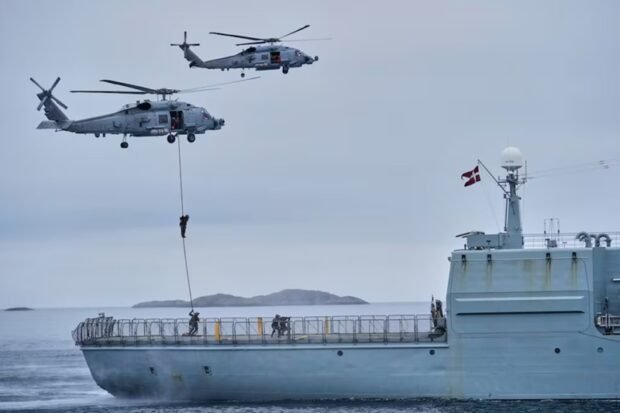
Countries along NATO’s eastern flank have a direct interest in the outcome of these discussions.
Poland, Estonia, Latvia, Lithuania, Romania and other Central and Eastern European members have consistently argued that Russia’s military actions demonstrate the need for a credible NATO presence in the region.
For these countries, the question is not merely how many troops NATO can deploy during a crisis. It is whether the alliance can respond quickly enough to deter aggression and reinforce exposed territories before a military confrontation escalates.
Russia’s earlier demands to roll back NATO’s military presence to arrangements predating the 1997 enlargement would have particularly serious implications for these states.
Such a rollback would affect the military posture of countries that joined NATO after the Cold War and would raise questions about the credibility of the alliance’s collective defence commitment.
NATO has rejected the principle that Moscow should have a veto over the military arrangements of its members.
The renewed Russian demands therefore create a direct tension between two competing security approaches: Moscow’s insistence on restrictions on NATO’s presence near Russian borders, and NATO members’ position that every ally retains the right to participate in collective defence arrangements.
The issue is especially sensitive because any perceived reduction in NATO’s eastern presence could be interpreted differently by Russia, European allies and countries outside the alliance.
Washington’s pressure and the future of NATO
The debate also reflects changing expectations within the transatlantic alliance.
The United States has been pressing European members to take greater responsibility for their own defence. Washington’s approach, often described as a refocusing of NATO on its core territorial-defence mission, places greater emphasis on European military capabilities.
This creates pressure on European governments to increase defence spending, expand ammunition production, improve air and missile defence, and strengthen the ability to move troops and equipment across the continent.
However, higher spending alone will not resolve the problem.
European countries operate different military systems, maintain varying levels of readiness and depend on the United States for several critical capabilities, including strategic intelligence, surveillance, air defence, logistics and command support.
Building a more capable European defence structure will require years of investment and closer coordination between national armed forces and defence industries.
The proposed NATO planning reset could help clarify which military capabilities must receive priority. But it could also force difficult decisions about the resources available for missions outside Europe.
NATO officials have indicated that the discussion does not automatically mean existing missions will end. The decision about where forces are deployed would remain a political one.
Nevertheless, the strategic emphasis is becoming clearer: territorial defence against a major military threat is moving ahead of the alliance’s traditional ambition to maintain capacity for multiple simultaneous overseas operations.
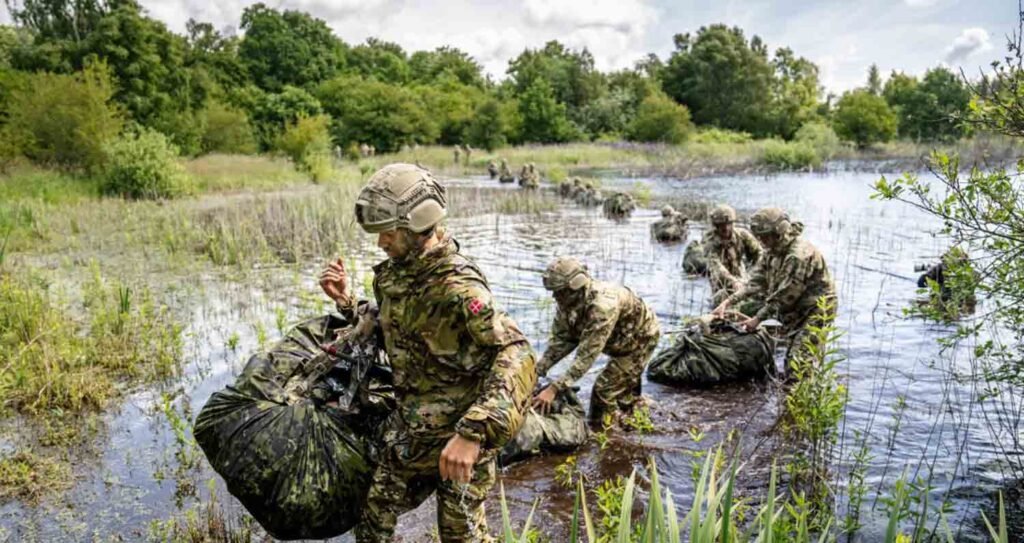
What does the NATO reset mean for Russia?
The proposed planning change could have several implications for Moscow.
First, it signals that NATO is increasingly organising its military thinking around the possibility of a prolonged confrontation in Europe. This could influence future procurement, force deployment, military exercises and defence-industrial investment.
Second, a stronger focus on territorial defence could make it harder for Russia to assume that European governments lack the capacity or political will to respond to a serious military crisis.
Third, the debate could complicate Russian efforts to secure restrictions on NATO’s eastern military posture through negotiations over Ukraine.
However, the outcome will depend on implementation. A change in planning language will not automatically produce additional battalions, ammunition stocks, air defence systems or deployable forces. The credibility of NATO’s posture will ultimately depend on whether its members can turn political commitments into operational military capability.
There is also a risk that Moscow could interpret expanded NATO preparations as evidence of a more hostile military environment, reinforcing its own military mobilisation and security demands.
That possibility makes communication, deterrence and diplomatic channels important alongside military readiness.
What happens next?
The coming months will be important for NATO’s defence planning and the wider negotiations over Ukraine.
The alliance must decide how to balance the demands of territorial defence with its responsibilities beyond Europe. Its members will also need to determine whether European governments can provide the additional capabilities required if the United States reduces some of its military responsibilities on the continent.
At the same time, the Ukraine negotiations will test whether Russia is prepared to accept a settlement that respects Ukraine’s sovereignty and the security choices of European states.
The central issue is no longer limited to the future of Ukraine’s front lines. It is increasingly about the military and political structure of Europe after the war.
Is NATO preparing for a new era of European deterrence, or is the alliance being pushed towards a strategic confrontation in which the future of Eastern Europe becomes the central question?
The answer will depend not only on NATO’s military planning decisions but also on whether diplomacy can produce a settlement that addresses security concerns without granting any outside power control over the sovereign choices of European states.