

Turkey’s defence industry has registered two significant developments, with ASELSAN and ROKETSAN signing €1.28 billion in missile technology contracts while ASELSAN demonstrates its EJDERHA electromagnetic counter-drone system against 51 drones simultaneously.

Turkey has announced a major expansion of its indigenous defence capabilities after defence companies ASELSAN and ROKETSAN signed contracts worth approximately €1.28 billion for missile data links and seeker systems.
The agreements, announced on November 16, 2026, coincide with another significant development: ASELSAN’s EJDERHA High Power Electromagnetic (HPEM) counter-drone system reportedly neutralised 51 drones simultaneously during a demonstration marking the company’s 51st anniversary.
The two developments highlight different but increasingly interconnected priorities in Turkish military modernisation: developing sophisticated guidance technologies for precision weapons and building cost-effective defences against mass drone attacks.
The contracts are also significant for Turkey’s ambition to reduce dependence on foreign defence suppliers and strengthen its position in the international arms market.
ASELSAN and ROKETSAN Sign €1.28 Billion Missile Technology Agreements
According to an announcement published on Turkey’s Public Disclosure Platform (KAP), ASELSAN and ROKETSAN signed agreements worth a combined €1,281,101,744 for the procurement of missile data link and seeker systems.
The announcement was made by ASELSAN on November 16.
The contracts involve two important components of modern guided missiles:
- Missile seeker systems: Technologies that enable a missile to detect, identify and track its intended target.
- Missile data links: Communication systems that allow missiles to receive updated information and exchange data with launch platforms or operators during flight.
The combined value of €1.28 billion makes the agreement a substantial industrial commitment between two of Turkey’s major defence companies.
ASELSAN stated that the new business relationship would positively contribute to its revenues.
However, the company has not publicly disclosed the exact missile programmes involved, the number of systems to be supplied, the division of the contract value between the two technologies or the delivery schedule.
The agreement should therefore be understood as a major missile-subsystem procurement contract rather than confirmation of a particular new missile order.

Why Missile Seekers and Data Links Matter
The significance of the agreement becomes clearer when examining the technologies involved.
A missile seeker is one of the most technologically demanding components of a modern guided weapon. Installed in the missile’s forward section, it helps detect and track a target during the engagement.
Different seeker technologies include:
- Imaging infrared seekers, which detect targets through their thermal signatures.
- Active radar seekers, which use radar emissions to identify and track targets.
- Radio-frequency seekers, which can support engagement against radar-emitting targets.
The choice of seeker depends on the missile’s intended role, target type and operational environment.
Missile data links provide another important capability.
Traditional fire-and-forget weapons generally rely on their guidance systems to complete the engagement after launch. Data-linked missiles can receive updated target information during flight, depending on their design.
This can allow operators to redirect a weapon, update its target coordinates or change an engagement decision while the missile is airborne.
For example, ROKETSAN’s UMTAS anti-tank missile uses an imaging infrared seeker and an RF data link, allowing target updates and changes during flight. Its OMTAS system also incorporates an RF data link and supports fire-and-update operations.
These capabilities demonstrate why advanced seeker and communication technologies are increasingly important to modern precision-guided weapons.
The €1.28 billion agreements could strengthen Turkey’s domestic supply chain for these critical technologies, although the specific systems covered by the new contracts have not been identified.

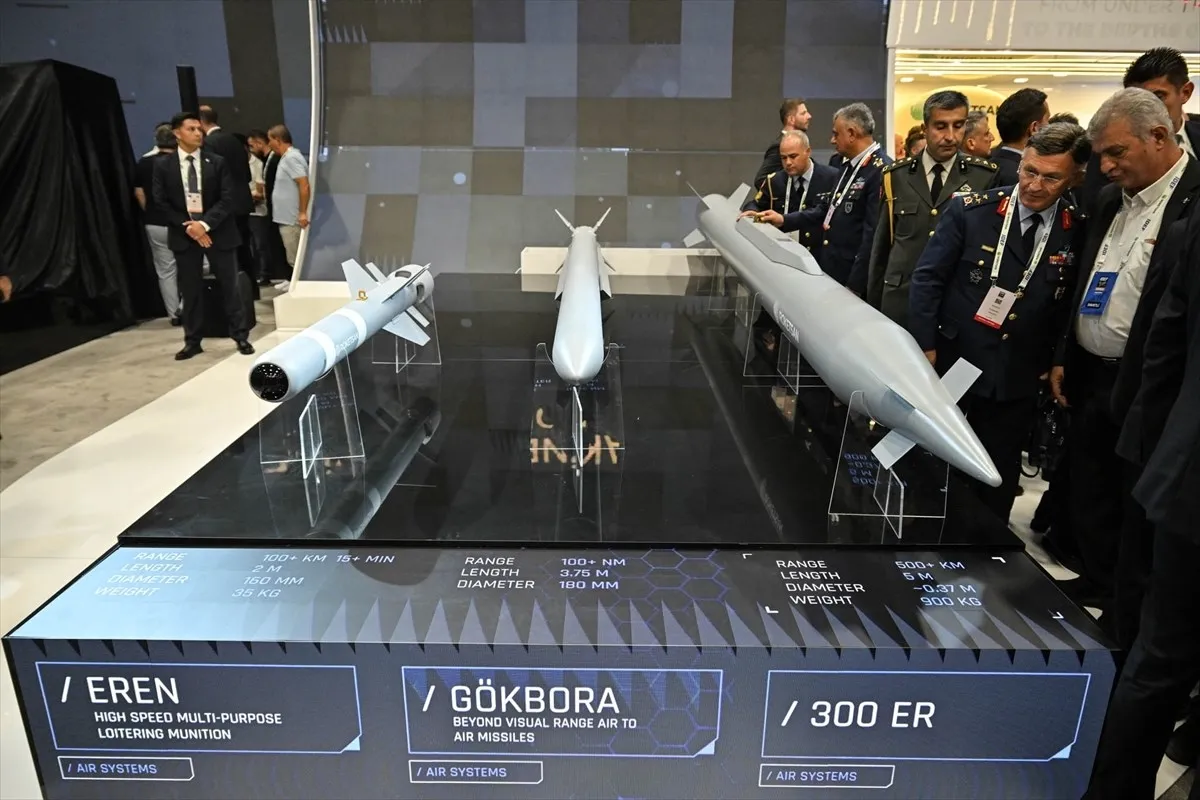
GÖKBORA Programme Provides a Glimpse of Turkey’s Missile Technology Ambitions
One existing programme illustrates the type of technological cooperation taking place between ASELSAN and ROKETSAN.
At the IDEF 2025 defence exhibition in Istanbul, Turkey’s Presidency of Defence Industries, ASELSAN and ROKETSAN signed a development agreement covering an AESA seeker and missile data link for the GÖKBORA long-range air-to-air missile programme.
The project involves developing an indigenous active electronically scanned array (AESA) seeker, identified as AGRAS 3101/AA, alongside a domestically developed missile data link.
An AESA seeker uses an electronically controlled array of radar elements rather than relying on a conventional mechanically scanned antenna.
Such technology can provide sophisticated target detection and tracking capabilities, supporting the development of advanced air-to-air weapons.
GÖKBORA reflects Turkey’s ambition to develop increasingly sophisticated indigenous air combat technologies and reduce reliance on foreign missile components.
However, ASELSAN has not confirmed that the newly announced €1.28 billion contracts are specifically connected to GÖKBORA.
The distinction is important: the earlier development agreement provides technological context, but the November 16 procurement announcement does not identify the missiles involved.
EJDERHA Neutralises 51 Drones Simultaneously Without Firing a Missile
While the missile contracts strengthen Turkey’s precision-weapons supply chain, ASELSAN’s EJDERHA demonstration highlights another area of growing importance: directed-energy counter-drone warfare.
On November 15, ASELSAN announced that its EJDERHA High Power Electromagnetic UAV Defence System had neutralised 51 drones simultaneously during a demonstration at the company’s Gölbek firing and testing centre.
The demonstration was organised to mark ASELSAN’s 51st anniversary.
According to the company, the test involved two stages.
In the first stage, EJDERHA neutralised two wire-controlled drones at a distance of approximately 1,000 metres.
This was particularly significant because wired FPV drones are designed to resist conventional radio-frequency jamming. They maintain communication through a physical fibre-optic or cable connection rather than relying on ordinary radio-control signals.
In the second stage, ASELSAN launched 51 drones simultaneously to simulate a coordinated swarm attack.
The company said EJDERHA neutralised all 51 targets within seconds using high-power electromagnetic waves.
ASELSAN President and CEO Ahmet Akyol described the demonstration as a world first, highlighting that the system achieved the result without firing missiles or using conventional ammunition.
The number of drones was selected to represent the company’s 51 years of operation.
The company also stated that EJDERHA had entered serial production and operational deployment.
How EJDERHA’s Electromagnetic Technology Works
EJDERHA belongs to a growing category of directed-energy weapons designed to counter unmanned aerial threats through electromagnetic effects.
Unlike conventional air-defence missiles or guns, the system does not depend on physically striking an incoming drone.
Instead, it generates high-power electromagnetic waves designed to affect the electronic components of hostile unmanned aircraft.
Depending on the target and exposure conditions, these emissions can disrupt, reset, disable or damage electronic circuits.
The system combines several capabilities:
- Radar-based detection of incoming aerial threats.
- Electro-optical sensors for target tracking.
- Precision electromagnetic energy direction.
- Electronic effects against drone control, navigation and onboard systems.
Its intended targets include mini and micro unmanned aerial vehicles, low-altitude fixed-wing drones and FPV systems.
The ability to affect multiple targets without launching individual interceptors is particularly relevant as military forces increasingly face coordinated drone attacks.
However, the 51-drone demonstration should not be interpreted as proof that EJDERHA can neutralise any drone swarm at any distance or under all battlefield conditions. ASELSAN has not publicly specified the engagement distance for the 51-drone phase.
The reported 1,000-metre figure relates to the separate test involving two wired drones.
Why Electromagnetic Counter-Drone Weapons Are Becoming Important
The rapid spread of inexpensive unmanned aircraft has created a difficult economic and operational problem for modern militaries.
A relatively inexpensive drone can force an air-defence operator to use a much more expensive missile or interceptor.
This creates an unfavourable cost exchange, particularly when an attacker launches dozens or hundreds of drones simultaneously.
Electromagnetic counter-drone systems offer a different approach.
Because they do not require a conventional missile for every engagement, they could reduce the cost of defending against repeated attacks, subject to power requirements, equipment costs, engagement conditions and operational limitations.
Their potential advantages include:
- Multiple-target engagement: High-power electromagnetic systems can be designed to affect several electronic threats within an engagement area.
- Reduced dependence on conventional ammunition: The system does not need to fire a separate missile at each target.
- Countering electronic-control systems: Electromagnetic effects can disrupt the electronic components on which many drones depend.
- Protection against drone swarms: Such systems are particularly relevant when conventional air-defence resources face large numbers of low-cost aerial threats.
Nevertheless, electromagnetic systems are not a universal replacement for air-defence missiles, guns or laser weapons.
Their effectiveness depends on the target’s electronics, electromagnetic protection, engagement geometry and environmental conditions.
A layered defence architecture remains necessary to address different types of aerial threats.
EJDERHA and Turkey’s Steel Dome Air Defence Architecture
EJDERHA is part of Turkey’s broader effort to establish an integrated national air and missile defence architecture known as ÇELİKKUBBE, or Steel Dome.
The programme aims to combine different air-defence technologies into a coordinated network rather than relying on individual weapon systems operating independently.
The architecture brings together:
- Early-warning and surveillance radars.
- Air-defence missile systems.
- Electronic warfare capabilities.
- Electro-optical detection and tracking.
- Laser-based counter-drone systems.
- Command-and-control and communication networks.
- Artificial intelligence-supported sensor integration.
ASELSAN’s EJDERHA contributes an electromagnetic counter-drone capability to this broader architecture.
Other systems include GÖKBERK, a mobile laser-based counter-drone platform, and GÖKALP, an autonomous interceptor drone designed to destroy hostile UAVs through direct impact.
The combination of electromagnetic, laser and kinetic interception technologies is intended to provide different responses to different types of aerial threats.
This is particularly important because modern drone attacks can involve a mixture of inexpensive commercial UAVs, military reconnaissance platforms, FPV drones and larger attack systems.
Turkey’s Steel Dome strategy seeks to coordinate these different defensive layers into a common operational picture.
Turkey’s Defence Industry Is Moving Towards Greater Technological Independence
The ASELSAN-ROKETSAN agreement and EJDERHA demonstration should also be viewed within the wider development of Turkey’s defence industry.
Over the past decade, Turkey has expanded its domestic capabilities in unmanned aircraft, missiles, radar, electronic warfare, naval systems and air defence.
ASELSAN has become a major supplier of military electronics, including radar, electro-optical systems, communications, electronic warfare and guided-weapon technologies.
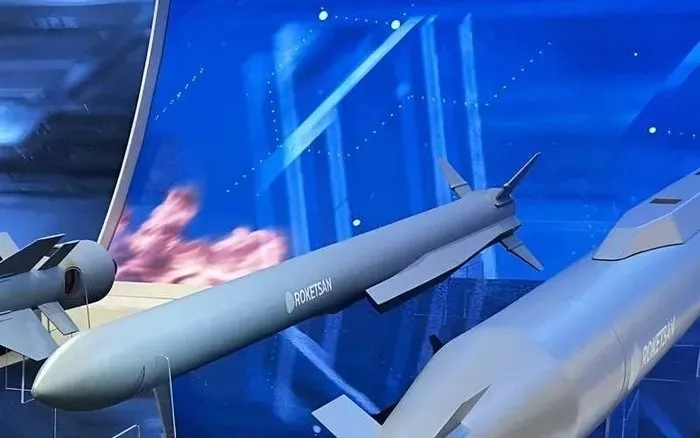
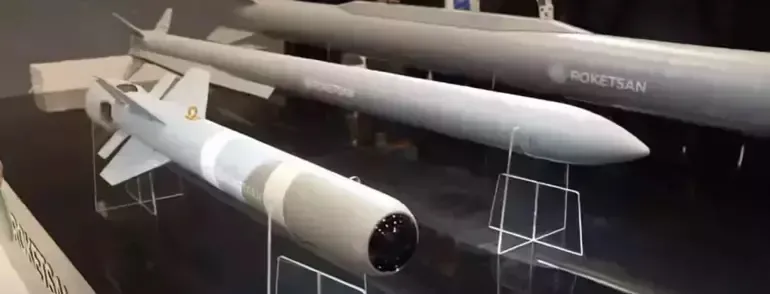
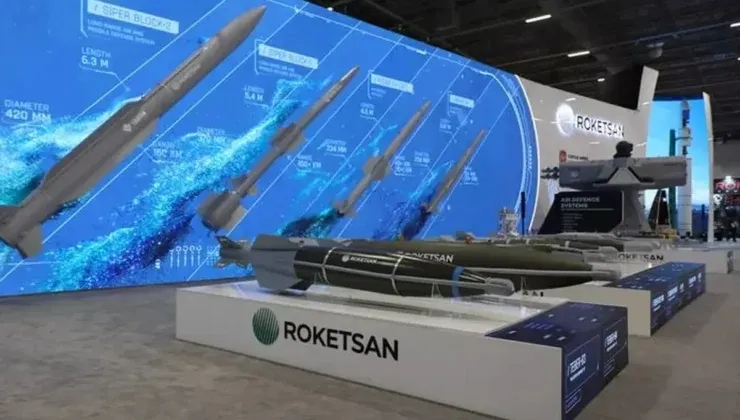
ROKETSAN has developed a broad portfolio of missile and rocket systems, including air-defence missiles, anti-tank weapons, cruise missiles and precision-guided munitions.
Their cooperation allows Turkey to combine missile manufacturing expertise with advanced electronics and sensor technologies.
The latest contracts are particularly important because seekers and data links are not simply supporting accessories. They are essential elements of modern precision-guided weapons.
Countries that cannot independently develop these technologies may face supply restrictions, export licensing conditions or delays during periods of international tension.
Increasing domestic production can therefore improve supply-chain resilience and give Turkey greater control over the development and production of its missile systems.
What Does This Mean for the Global Defence Industry?
The developments come at a time when militaries worldwide are reconsidering their air-defence requirements.
The conflicts in Ukraine and the Middle East have demonstrated the operational significance of inexpensive drones, loitering munitions and coordinated unmanned attacks.
The challenge is no longer limited to detecting and destroying individual UAVs. Militaries increasingly need systems capable of responding to large numbers of threats while preserving expensive missile inventories.
This is creating demand for electronic warfare, directed-energy weapons, autonomous interceptors and integrated air-defence networks.
Turkey’s EJDERHA demonstration adds to this technological competition.
Meanwhile, the €1.28 billion missile-subsystem agreements indicate that Ankara is also investing in the sophisticated components required for next-generation guided weapons.
Together, the developments reflect a broader shift in defence planning: future military effectiveness will depend not only on the number of missiles, aircraft or drones a country possesses, but also on the sensors, communications, guidance technologies and electronic systems connecting them.
Conclusion: Turkey Strengthens Both Missile Technology and Drone Defence
The €1.28 billion agreements between ASELSAN and ROKETSAN represent a major development in Turkey’s effort to expand domestic production of advanced missile components.
At the same time, EJDERHA’s reported neutralisation of 51 drones in a single demonstration highlights Ankara’s growing focus on electromagnetic counter-drone technology.
The two developments address different battlefield requirements but support the same broader objective: reducing dependence on foreign defence technologies while building a more integrated domestic military-industrial ecosystem.
For Turkey, the strategic importance extends beyond these individual announcements.
The country is seeking to develop an indigenous defence architecture capable of producing precision-guided weapons, detecting aerial threats and responding to increasingly complex drone attacks.
The €1.28 billion missile contracts strengthen the technological foundation of Turkey’s guided-weapons industry, while EJDERHA demonstrates how electromagnetic warfare could become an increasingly important component of future air defence.