


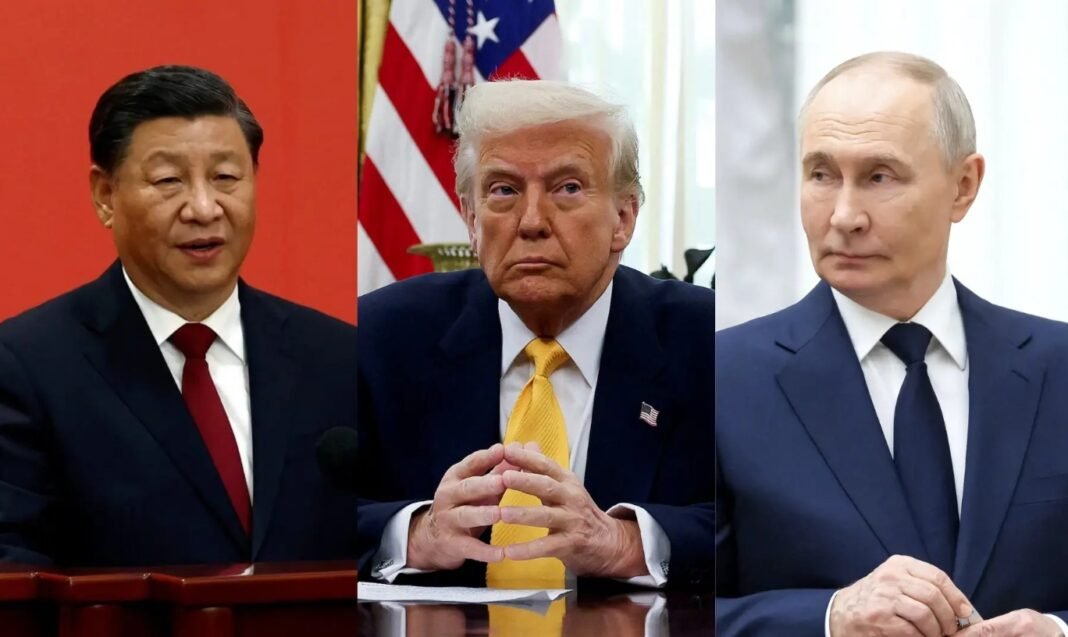
The White House has confirmed that Donald Trump, Xi Jinping and Vladimir Putin will hold an unprecedented trilateral meeting in Shenzhen next week. Nuclear arms reduction and the Iran war are expected to dominate discussions, while Ukraine is reportedly excluded from the joint agenda. The summit could open a new channel between the world’s three major powers, but deep disagreements over security, trade and global influence make an immediate breakthrough unlikely.

The world’s three most powerful nuclear-armed countries are preparing for an extraordinary diplomatic encounter as US President Donald Trump, Chinese President Xi Jinping and Russian President Vladimir Putin get ready to meet in Shenzhen, China, on November 19.
The White House confirmed the trilateral meeting on November 13, describing nuclear weapons reduction as one of the subjects Trump intends to raise. A senior US official has also confirmed that the Iran war will feature in the discussions, although Washington does not expect the meeting to produce an agreement.
The meeting will take place on the sidelines of the Asia-Pacific Economic Cooperation (APEC) summit, bringing together the leaders of the United States, China and Russia in a format that has no modern precedent at the presidential level.
The timing is particularly significant. Washington is managing military and diplomatic tensions involving Iran, attempting to maintain a working relationship with Beijing and pursuing separate negotiations over Russia’s war in Ukraine. Meanwhile, China and Russia have expanded their strategic partnership, challenging several aspects of the US-led international order.
The central question is whether the Shenzhen meeting can establish a new framework for managing competition among the three powers—or whether it will primarily serve as a diplomatic display of their global influence.
1. What is on the agenda? Nuclear weapons and Iran take priority
According to White House officials, two issues are expected to feature prominently in the trilateral discussion: nuclear arms reduction and the war involving Iran.
Trump has repeatedly expressed interest in a new nuclear arms-control arrangement involving the United States, Russia and China. The expiration of the New START treaty in February 2026 has made the issue more urgent.
New START was the last major treaty limiting the strategic nuclear arsenals of Washington and Moscow. Its expiration removed the treaty’s restrictions on the two countries’ deployed strategic nuclear forces for the first time in more than half a century.
Trump wants a new arrangement that includes China, arguing that a modern nuclear arms-control framework cannot ignore Beijing’s growing arsenal.
However, the three countries are entering the discussion from very different positions.
According to Pentagon estimates cited by the Associated Press, China possesses more than 600 nuclear warheads, while the United States and Russia each have arsenals exceeding 5,000. Beijing has historically been reluctant to accept the same restrictions as Washington and Moscow because of the considerable difference in their nuclear stockpiles.
For China, joining a three-way agreement could mean accepting limitations before its arsenal reaches a level comparable to those of the other two powers.
For Washington, however, leaving China outside a future agreement would mean negotiating nuclear limits with Moscow while Beijing’s capabilities continue to expand.
This difference could become one of the most difficult obstacles to any future agreement.
The senior US official described the Shenzhen meeting as the beginning of a conversation rather than a negotiating session expected to deliver a completed deal.
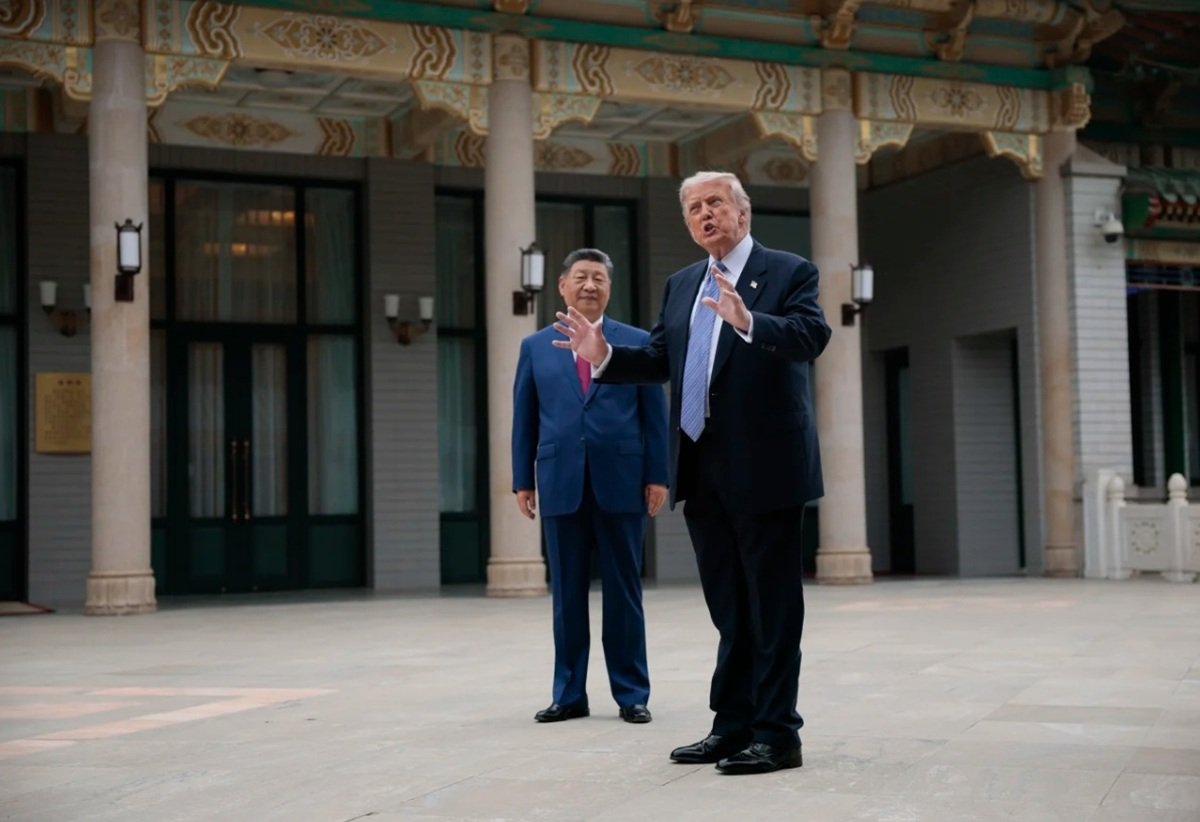
2. Iran war: Can Trump use China and Russia to influence Tehran?
The second major subject is the war involving Iran, which has created a direct point of intersection between American, Chinese and Russian interests.
Washington has a clear reason to raise the issue with both leaders.
China is a major economic partner of Iran and an important buyer of its energy exports. Russia has also expanded military, intelligence and diplomatic cooperation with Tehran.
Both countries therefore possess relationships that Washington may seek to use in support of de-escalation or diplomatic arrangements.
Trump could use the meeting to press Xi and Putin to encourage Tehran to consider negotiations, particularly on issues involving nuclear activities, regional security and maritime stability.
The Strait of Hormuz is especially important. Any prolonged disruption to shipping through this strategic waterway could affect energy supplies, oil prices and international trade.
China has a direct economic interest in keeping energy shipments moving. Russia, meanwhile, has its own interests in the changing balance of power in the Middle East and its strategic relationship with Iran.
However, the three countries do not necessarily share the same objectives.
Washington may seek arrangements that restrict Iran’s military and nuclear capabilities. Beijing is likely to prioritise regional stability and uninterrupted energy supplies, while Moscow may resist diplomatic outcomes that significantly weaken its regional partner.
The summit could therefore provide an opportunity to discuss the limits of their cooperation on Iran, but it should not be interpreted as evidence that China or Russia will accept Washington’s position.
3. Why is Ukraine reportedly excluded from the trilateral agenda?
One of the most politically sensitive aspects of the summit is the reported decision not to include Ukraine in the formal trilateral discussion.
A senior US official told reporters that Trump intends to discuss Iran with Xi and Putin but not Ukraine, because Washington is pursuing a separate negotiating track involving Moscow and Kyiv.
This distinction is important.
The Kremlin has maintained that the future of Ukraine should be discussed as part of a broader European security settlement. Russia has repeatedly sought negotiations that address NATO’s military presence, Ukraine’s future security arrangements and Moscow’s territorial demands.
The Trump administration, however, has indicated that the Ukraine issue will remain within a separate diplomatic process.
Ukrainian President Volodymyr Zelensky has expressed concern that a meeting between the three leaders could create an impression that decisions about Ukraine’s future are being made without Kyiv’s participation.
The concern is politically significant because the conflict involves Ukraine’s sovereignty, territorial integrity and future security guarantees.
A meeting between Trump, Xi and Putin does not give the three leaders authority to determine Ukraine’s future. Any settlement would still face the practical and political requirement of Ukrainian participation.
Nevertheless, Putin could gain diplomatic value from appearing alongside the American and Chinese presidents, reinforcing Moscow’s claim to be a central participant in decisions affecting the international order.
For European governments, the key concern is that a US-Russia understanding could affect European security arrangements without adequate consultation with NATO’s European members.
The absence of Ukraine from the trilateral agenda may limit the possibility of an immediate Ukraine settlement, but it will not remove the conflict from the wider strategic calculations of the three powers.
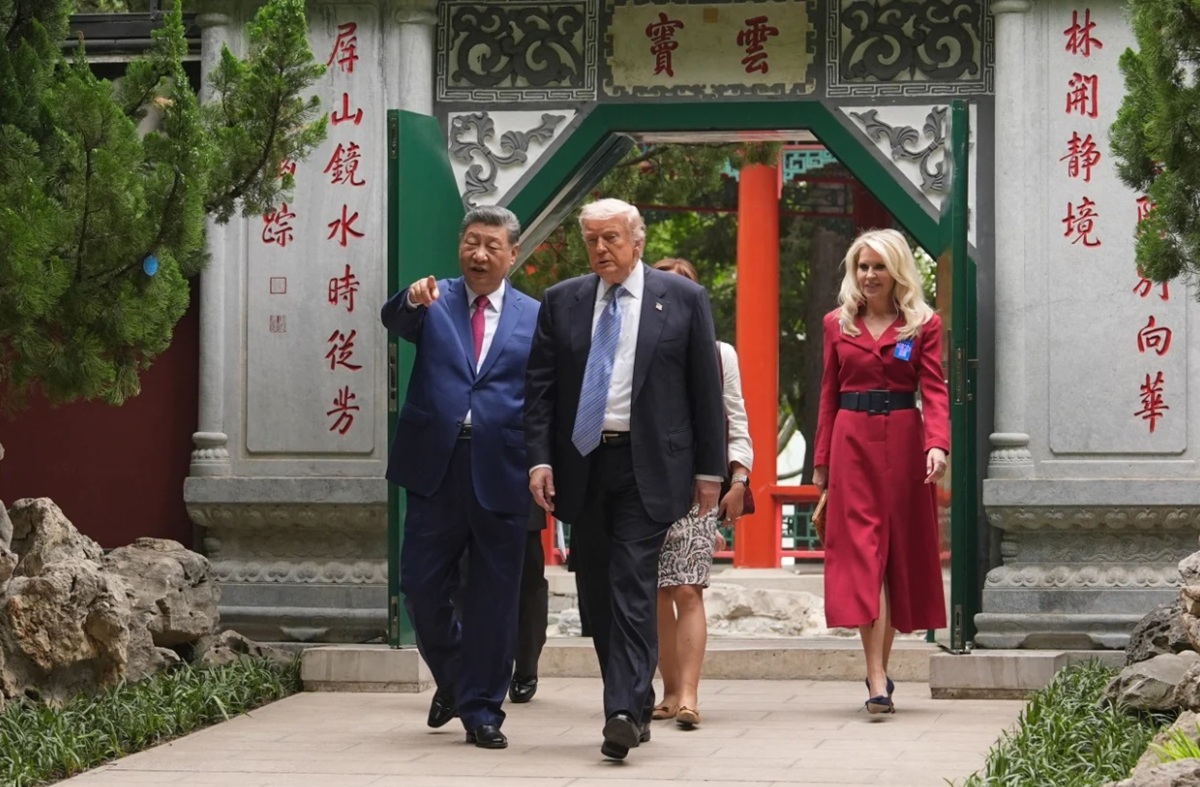
4. Xi Jinping’s opportunity: China as a central diplomatic power
For Xi Jinping, hosting the trilateral meeting offers an opportunity to demonstrate China’s ability to bring competing global powers to the same diplomatic table.
Beijing has consistently promoted a vision of international relations in which it plays a central role in economic and security affairs. The meeting provides an opportunity to showcase that position.
China has developed a close strategic relationship with Russia while maintaining extensive economic ties with the United States.
Its relationship with Moscow has deepened since the 2022 invasion of Ukraine. China has increased purchases of Russian energy and become an important supplier of technologies and components used by Russian industries, including sectors connected to defence production.
At the same time, Beijing remains deeply connected to the US-led global economic system through trade, finance and technology supply chains.
Xi therefore has to balance two important objectives: maintaining China’s strategic partnership with Russia while avoiding unnecessary damage to relations with Washington.
The trilateral summit could help Beijing present itself as a diplomatic power capable of engaging both sides.
However, there is also a potential contradiction. China has promoted multilateralism and criticised what it describes as bloc-based international politics. A highly publicised meeting in which three major powers appear to discuss global security could reinforce perceptions that major decisions are increasingly concentrated among powerful states.
For Xi, the challenge will be to demonstrate diplomatic influence without appearing to endorse a system in which smaller countries have limited influence over decisions affecting them.
5. Putin’s calculations: Diplomatic recognition and strategic leverage
For Putin, the summit offers a different set of opportunities.
Russia remains under extensive Western sanctions and continues to face military and economic pressure linked to the Ukraine war. Yet the Russian president’s participation in a meeting with Trump and Xi would demonstrate that Moscow remains an important actor in global diplomacy.
The symbolism matters.
Putin has maintained a close relationship with Xi, while seeking to restore a more functional relationship with Washington under Trump.
A trilateral meeting would place Russia alongside the world’s two largest economic and military powers in a high-profile diplomatic setting.
It could also allow Moscow to highlight the limits of Western efforts to isolate Russia.
However, Putin’s interests may not fully align with either Washington or Beijing.
Russia wants sanctions relief, strategic recognition and an outcome in Ukraine that protects its interests. China wants stability in its economic environment and continued access to energy. The United States wants to preserve its strategic position while managing conflicts involving Russia, China and Iran.
These competing objectives mean that Putin may gain diplomatic visibility without necessarily securing concrete concessions.
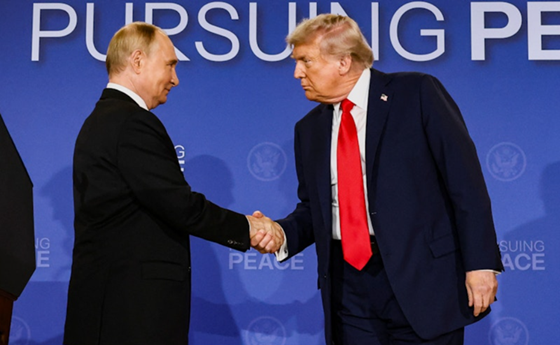
6. Will the summit revive nuclear arms control?
The expiration of New START has created a serious gap in the nuclear arms-control framework.
For decades, Washington and Moscow relied on agreements to establish limits, verification mechanisms and a degree of predictability in their strategic nuclear relationship.
The absence of a binding successor arrangement raises concerns about transparency and the possibility of an increasingly competitive nuclear environment.
Trump’s proposal to bring China into a future agreement reflects the changing distribution of nuclear power.
But a three-way agreement would be far more complicated than simply extending the previous US-Russia treaty.
It would require negotiations over different nuclear doctrines, force structures, stockpile sizes, verification systems and strategic priorities.
China may also demand that the United States and Russia make deeper reductions before Beijing accepts meaningful limits on its own arsenal.
There are additional questions about tactical nuclear weapons, missile defence, emerging technologies and the role of nuclear-capable delivery systems.
The Shenzhen meeting is unlikely to resolve these issues in a single session.
Its significance may instead lie in establishing whether the three governments are willing to begin a sustained dialogue on nuclear risks.
Even an agreement to continue discussions could become diplomatically important after the expiration of New START.
7. The Yalta comparison: Are the three powers discussing a new world order?
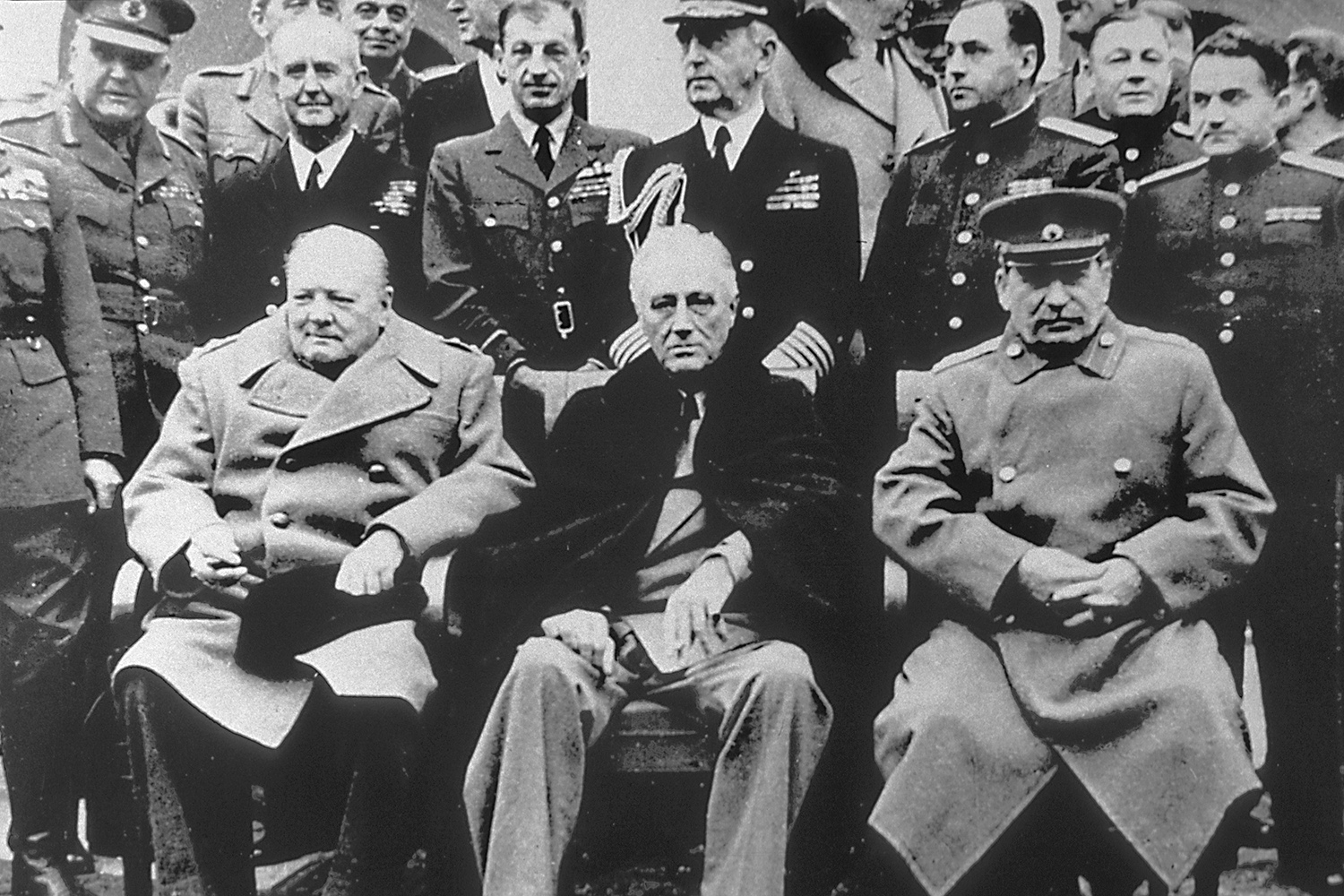
The planned meeting has already drawn comparisons with the 1945 Yalta Conference, where US President Franklin D. Roosevelt, British Prime Minister Winston Churchill and Soviet leader Joseph Stalin discussed the post-war settlement in Europe.
The comparison is politically sensitive because Yalta became associated with the division of Europe into competing spheres of influence during the early Cold War.
Ukraine’s leadership has expressed concern that a meeting involving Trump, Xi and Putin could create a similar impression of major powers discussing the future of smaller states.
The circumstances are not identical. The Shenzhen meeting is taking place within the framework of an APEC gathering, and no territorial settlement or binding agreement has been announced.
Nevertheless, the comparison highlights a larger question: are global powers moving towards a system in which strategic competition is managed through direct negotiations among a small number of major states?
The United States, China and Russia possess enormous military, economic and diplomatic influence. Their decisions can affect global energy markets, international security, trade routes and regional conflicts.
But the interests of countries such as Ukraine, Taiwan, Iran and many smaller states cannot simply be treated as bargaining positions between larger powers.
The summit could therefore become an important test of whether great-power diplomacy can coexist with the principle of national sovereignty.
8. What could emerge from the Shenzhen summit?
Several outcomes are possible, although none should be treated as guaranteed.
First: A framework for future nuclear negotiations. The leaders could agree to establish a formal dialogue or direct negotiations on a possible three-country arms-control arrangement. This would be a significant diplomatic development, even without immediate reductions in nuclear arsenals.
Second: A discussion on Iran and regional de-escalation. Trump could seek Chinese and Russian support for diplomatic efforts aimed at reducing tensions with Tehran. Beijing and Moscow may be willing to discuss regional stability, but their willingness to support Washington’s specific demands remains uncertain.
Third: A symbolic diplomatic breakthrough. The three leaders may use the meeting to demonstrate that direct communication remains possible despite strategic competition. Such a result could help establish channels for future negotiations without resolving the underlying disputes.
Fourth: Limited progress and continued disagreement. Differences over nuclear stockpiles, sanctions, Iran, Ukraine and the international security order could prevent any substantial agreement. This remains consistent with the White House’s warning that no deal is expected from the first meeting.
Fifth: A new diplomatic format. If the meeting is followed by regular consultations, it could create a new channel for managing issues that increasingly connect the security interests of all three powers.
9. What does the summit mean for Pakistan and the wider region?

For Pakistan, the meeting deserves attention beyond its diplomatic symbolism.
The discussions on Iran could have direct implications for regional stability, energy security and the wider Gulf environment. Any reduction in tensions around the Strait of Hormuz would be relevant to Pakistan because of its dependence on imported energy and its exposure to international oil-price movements.
China’s role is also particularly important. Beijing is Pakistan’s strategic partner and a major economic actor in the region. Its discussions with Washington and Moscow could influence the broader environment in which China manages its relationships across South Asia and the Middle East.
The nuclear dimension also deserves attention. Pakistan is not part of the proposed trilateral arms-control process, but any future changes in the global nuclear order could have implications for strategic stability in South Asia.
At the same time, the summit’s outcome could affect the balance between US-China competition and Russia’s efforts to retain international influence.
Pakistan will have an interest in developments that support regional stability, protect energy and trade routes, and prevent major-power competition from producing new security crises.
The meeting does not automatically signal a change in China’s policy towards Pakistan, India or South Asia. Its implications will depend on the substance of any subsequent agreements and the broader diplomatic direction of the three powers.
Conclusion: A historic meeting, but can three competing powers agree?
The Trump-Xi-Putin summit in Shenzhen will bring together three leaders whose countries possess enormous military, economic and diplomatic influence.
The agenda is significant: nuclear weapons, Iran and the management of global security. Yet the absence of Ukraine from the formal trilateral agenda, China’s reluctance to accept nuclear limits on the same terms as Washington and Moscow, and the competing interests of all three powers place clear limits on expectations.
For Trump, the meeting offers an opportunity to open nuclear negotiations and discuss Iran. For Xi, it provides a platform to demonstrate China’s diplomatic influence. For Putin, it offers international visibility and an opportunity to reinforce Russia’s position as a major global power.
The immediate outcome may be modest. But the larger significance lies in whether the three governments can establish a sustained mechanism for managing strategic competition.
Will Shenzhen become the starting point for a new era of great-power diplomacy, or will it remain a high-profile meeting in which the symbolism outweighs the substance?
The answer will depend less on the photographs taken at the summit and more on whether the three leaders are prepared to translate their discussions into verifiable diplomatic commitments.


