
French President Emmanuel Macron’s warning against becoming a political or economic “vassal” of the United States or China has resurfaced on social media just days before Donald Trump, Xi Jinping and Vladimir Putin prepare for an unprecedented trilateral summit in China. The timing has revived a fundamental geopolitical question: Is the emerging world order being shaped by three major powers while Europe and other middle powers struggle to preserve their strategic independence?
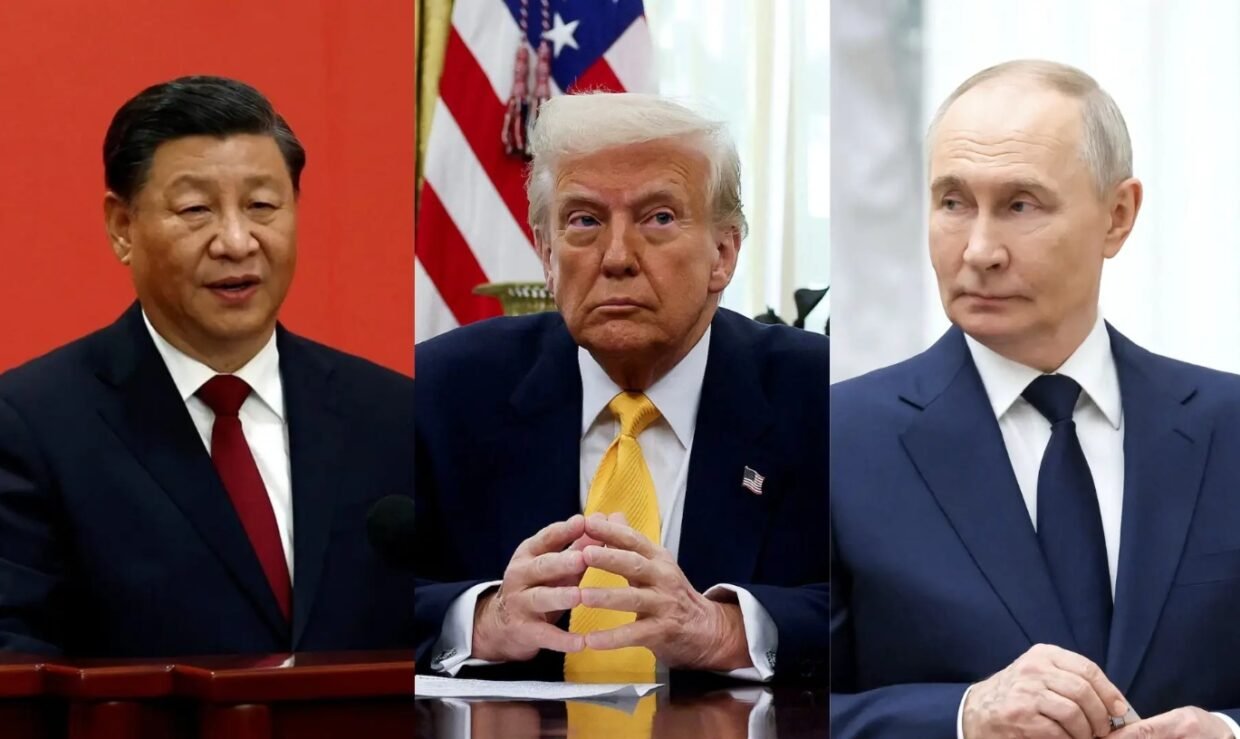
A statement made by French President Emmanuel Macron during his April 3, 2026, visit to South Korea has regained international attention as preparations intensify for the November 19 meeting between US President Donald Trump, Chinese President Xi Jinping and Russian President Vladimir Putin.
Speaking about the changing international order, Macron warned that countries could face growing pressure to align themselves with either Washington or Beijing.
French President Macron:
We are in a world of total disorder, and I think the temptation today is to become either the vassal of China or the vassal of the U.S. At least my guess is that this is the project of these two big powers.
Our intention is not to become a vassal, but to defend the multilateral order, preserve and strengthen our strategic autonomy, and become more independent.
— Clash Report (@clashreport) November 17, 2026
“We are in a world of total disorder, and I think the temptation today is to become either the vassal of China or the vassal of the U.S. At least my guess is that this is the project of these two big powers,” Macron said.
He added that France’s intention was not to become subordinate to either power but to defend multilateralism, strengthen strategic autonomy and become more independent.
Although the remarks are several months old, their renewed circulation comes at a particularly sensitive geopolitical moment.
On November 19, Trump, Xi and Putin are scheduled to hold their first face-to-face trilateral meeting in Shenzhen, China. The discussions are expected to cover nuclear arms control, the Iran conflict, Ukraine, international trade and strategic stability.
The convergence of these developments raises an important question: Is the world moving towards an international order dominated by a small group of major powers, and can Europe establish an independent strategic position outside the competing ambitions of Washington, Beijing and Moscow?
Why Macron’s Warning Is Resurfacing Ahead of the China Summit
Macron’s remarks were delivered during his April 3 visit to South Korea, where he met President Lee Jae-myung and addressed students at Yonsei University in Seoul.
The French president was discussing the future of international relations and the need for cooperation among countries that do not want their foreign policies determined exclusively by Washington or Beijing.
His argument was that the world was entering a period in which economic dependence, technological competition and military alliances could increasingly become instruments of geopolitical pressure.
The renewed attention to his statement is connected to the upcoming Trump-Xi-Putin summit.
The meeting brings together the leaders of three countries that possess enormous military, economic and diplomatic influence. All three are permanent members of the United Nations Security Council and nuclear powers.
Although the summit is being presented as an opportunity to discuss international peace and strategic stability, its very format raises questions about how global decisions will be negotiated in an increasingly competitive international system.
Macron’s warning therefore provides a useful framework for examining the wider implications of the meeting.
His concern is not simply that the United States or China might dominate international affairs individually. It is that countries without sufficient economic, military and technological capabilities could lose the freedom to make independent decisions.
Trump-Xi-Putin Summit: Three Major Powers Prepare to Discuss the World Order
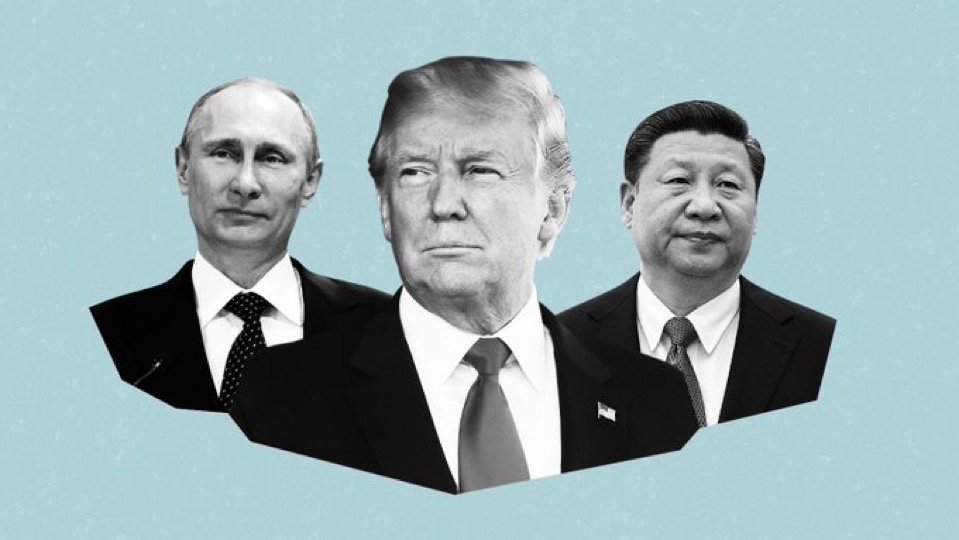
The November 19 meeting in Shenzhen represents an important diplomatic development.
China confirmed on November 16 that Xi Jinping would host Trump and Putin for the first trilateral meeting involving the three countries’ leaders.
The Chinese Foreign Ministry described the meeting as having “groundbreaking significance” for international peace and strategic stability.
According to Reuters, Beijing said the three powers had an important responsibility to cooperate in addressing global challenges.
The Kremlin also confirmed that the meeting would be the centrepiece of Putin’s November 18-19 visit to Shenzhen.
Trump has indicated that several major international issues will be discussed, including:
- Nuclear arms reduction and denuclearisation.
- The ongoing conflict involving Iran.
- The Russia-Ukraine war.
- International trade and economic relations.
- Strategic stability between major powers.
The nuclear issue is particularly important because the United States, Russia and China possess the world’s most consequential nuclear arsenals.
However, reaching a common position will be difficult. Washington and Moscow have traditionally maintained bilateral nuclear arms-control arrangements, while Beijing has resisted joining trilateral negotiations on the same terms because of the disparity between China’s nuclear arsenal and those of the two other powers.
The Iran conflict and Ukraine war introduce further complications because Washington, Beijing and Moscow have different strategic relationships and interests in both theatres.
Nevertheless, the meeting provides an opportunity for the three leaders to communicate directly on issues that could influence international security for years.
Is a New Great-Power Concert Emerging?
The summit raises comparisons with earlier periods when major powers negotiated international arrangements among themselves.
Following the Second World War, the United States, Soviet Union, Britain, France and China became central participants in the creation of the United Nations and the postwar international institutional system.
The current situation is different.
The United States remains the world’s leading military power, China has become a major economic and technological competitor, and Russia retains significant military and geopolitical influence, particularly through its nuclear capabilities and position in Eurasia.
Their combined influence gives the three countries considerable capacity to shape international security debates.
However, a trilateral meeting does not mean that they have formed an alliance or agreed to divide the world into spheres of influence.
Their interests frequently conflict.
The United States and China compete over technology, trade and regional influence. Washington and Moscow remain deeply divided over Ukraine and European security. Beijing and Moscow maintain close cooperation but also have different long-term strategic interests.
The significance of the summit lies in the fact that all three leaders are seeking direct engagement despite these disagreements.
For countries outside this group, the question is whether major-power diplomacy will strengthen multilateral cooperation or increase the influence of a small number of powerful states over international decisions.
This is precisely the concern underlying Macron’s warning.
Macron’s Strategic Autonomy: France Wants Europe to Become an Independent Power Centre

Macron has consistently argued that Europe must develop the ability to defend its interests without excessive dependence on external powers.
His concept of strategic autonomy involves more than increasing military spending.
It includes:
Defence independence: European countries should develop greater capacity to manufacture weapons, ammunition, aircraft, missiles and military technologies.
Economic sovereignty: Europe should reduce vulnerabilities arising from excessive dependence on foreign markets and suppliers.
Technological independence: Investment in semiconductors, artificial intelligence, quantum computing, telecommunications and advanced research should become a strategic priority.
Energy security: European countries need diversified energy supplies and greater control over critical infrastructure.
Independent diplomacy: Europe should retain the ability to negotiate with Washington, Beijing and Moscow according to its own interests.
Macron’s position does not necessarily mean abandoning NATO or ending the transatlantic alliance.
Rather, he argues that Europe should become a stronger strategic partner instead of remaining dependent on American military and technological capabilities.
His April statement in Seoul also highlighted the importance of cooperation with countries such as Japan, South Korea, India, Canada, Brazil and Australia.
The objective is to develop partnerships among middle powers that can collectively preserve greater freedom of action.
Why the Trump-Xi-Putin Meeting Could Concern European Leaders

The summit presents a diplomatic challenge for Europe because several issues on its agenda directly affect European security.
The Russia-Ukraine conflict is particularly important.
European governments have invested heavily in supporting Ukraine and strengthening NATO’s eastern flank. Any negotiations between Trump, Xi and Putin that influence the future of the conflict could have significant implications for European security.
European leaders also have concerns about the future of the transatlantic relationship.
Disagreements over defence spending, trade, tariffs and security commitments have intensified questions about Europe’s dependence on Washington.
The nuclear arms-control agenda creates another dimension.
France possesses its own independent nuclear deterrent, while Britain also maintains a nuclear arsenal. European security calculations therefore cannot be separated entirely from negotiations involving the United States, Russia and China.
The Iran conflict adds another complication.
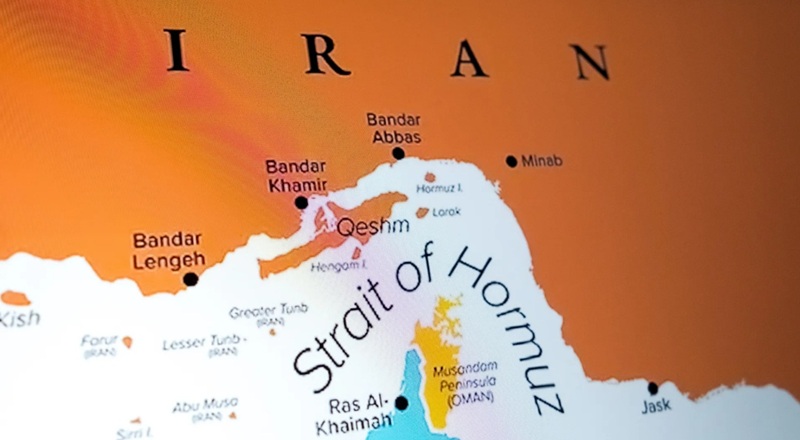
European countries have economic and energy interests in the Middle East, particularly around the security of the Strait of Hormuz.
Any agreement or escalation involving Iran could affect energy markets, maritime trade and European diplomatic priorities.
Macron’s concern is that Europe should not simply react to decisions made by other powers. It should possess sufficient political and strategic capacity to influence the decisions themselves.
Can India and Other Middle Powers Become Part of Macron’s Third Way?
Macron’s proposal extends beyond Europe.
India is particularly important because it has traditionally pursued strategic autonomy, maintaining relationships with Russia, the United States, Europe and other major powers.
New Delhi’s approach demonstrates that economic and security cooperation with competing powers does not necessarily require complete political alignment with any one of them.
Japan and South Korea are also important potential partners.
Both countries possess advanced industrial and technological capabilities and have significant interests in maintaining stable relations with China while preserving their American security partnerships.
Canada, Australia and Brazil could also contribute to cooperation on international trade, technology, energy and multilateral diplomacy.
However, building such a coalition will not be straightforward.
These countries have different security concerns, economic priorities and relationships with Washington and Beijing.
Japan and South Korea, for example, remain heavily dependent on American security guarantees.
India has its own regional priorities and is unlikely to subordinate its foreign policy to a European initiative.
Macron’s proposal is therefore better understood as an effort to encourage flexible cooperation among independent countries rather than an established third geopolitical bloc.
What Does the Emerging World Order Mean for Pakistan?
The debate over strategic autonomy is also relevant for Pakistan.
Islamabad maintains a longstanding strategic partnership with China while also having important economic, diplomatic and security interests involving the United States, Europe and Gulf countries.
As competition between Washington and Beijing intensifies, Pakistan faces the challenge of maintaining these relationships without allowing international rivalry to restrict its economic and diplomatic options.
The concept of strategic autonomy is particularly important in several areas.
Defence procurement: Pakistan benefits from diversified military partnerships and the ability to develop domestic defence production.
Economic diversification: Expanding trade, investment and industrial cooperation with multiple international partners can reduce exposure to external pressure.
Energy security: The Iran conflict and instability around the Strait of Hormuz demonstrate the economic consequences of dependence on vulnerable international energy routes.
Diplomatic flexibility: Pakistan has an interest in maintaining constructive relationships with major powers while protecting its own national priorities.
For the wider Global South, Macron’s argument also raises a fundamental question: should international institutions and rules be determined primarily by the interests of the most powerful countries, or should developing and middle powers have a greater role in shaping global governance?
This debate is likely to become increasingly important as the international system evolves.
A New World Order or Another Phase of Great-Power Competition?

Macron’s warning and the upcoming trilateral summit highlight two competing visions of international relations.
The first is a system in which major powers negotiate directly to manage conflicts, regulate strategic competition and maintain a balance of power.
The second is a multilateral system in which international institutions, alliances and a wider range of countries participate in shaping global decisions.
In practice, the two approaches can coexist.
The United Nations Security Council itself reflects the recognition that major powers have a special role in maintaining international peace and security. However, its permanent-member structure also creates an unequal distribution of decision-making authority.
Macron wants multilateral institutions to remain relevant while giving Europe and other middle powers greater capacity to influence international outcomes.
Whether that vision can be achieved will depend on the willingness of countries to coordinate their economic, technological, military and diplomatic capabilities.
Conclusion: Macron’s Warning Takes on New Meaning Ahead of the Historic Summit
Emmanuel Macron’s statement about avoiding dependence on the United States or China was made in April, not November. Its renewed circulation on November 17, however, comes at a moment when the international system is facing important diplomatic and security questions.
The November 19 Trump-Xi-Putin summit will bring together three leaders whose countries possess enormous influence over nuclear security, international trade and major geopolitical conflicts.
The meeting could create opportunities for cooperation, but it also highlights the importance of ensuring that international decisions are not shaped exclusively by the preferences of a small number of powerful countries.
Macron’s strategic autonomy argument is therefore directly relevant to the wider debate.
France wants Europe to become more independent, while other middle powers are also seeking to protect their diplomatic and economic flexibility.
For Pakistan and the wider Global South, the debate is equally important because the future international order will influence trade, defence partnerships, energy security and diplomatic choices.
The central question is no longer simply whether the United States, China or Russia will exercise greater influence over world affairs. It is whether Europe and other middle powers can preserve enough strategic independence to shape the emerging international order rather than merely respond to decisions made by the major powers.