



Trump arrived in Manila on November 17, where he is scheduled to meet Indian Prime Minister Narendra Modi, Japanese Prime Minister Sanae Takaichi and Australian Prime Minister Anthony Albanese.
The meeting is taking place on the sidelines of the ASEAN summit and represents the first Quad leaders’ gathering since September 2024.
It is also Trump’s first Quad leaders’ meeting since returning to the White House in January 2025.
The four countries are expected to discuss several strategic priorities:
- Maritime security and freedom of navigation.
- Security of international commercial shipping routes.
- Critical minerals and supply-chain diversification.
- Artificial intelligence and emerging technologies.
- Protection of undersea communication cables.
- Regional defence cooperation and disaster response.
The security of maritime routes has become particularly important amid attacks on commercial vessels and disruptions to international energy transportation.
The Strait of Hormuz crisis has demonstrated how vulnerable international energy supplies can become when major shipping routes are exposed to military confrontation. Similar concerns exist in the South China Sea, where territorial disputes and military activity have repeatedly increased tensions.
Reuters reported that the Manila discussions are expected to include the protection of commercial shipping lanes and critical mineral supplies, reflecting the growing connection between economic security and military strategy.
What Is the Quad and Why Was It Created?
The Quadrilateral Security Dialogue brings together four Indo-Pacific powers:
- United States
- India
- Japan
- Australia
The partnership has its origins in the humanitarian response to the devastating Indian Ocean earthquake and tsunami of December 2004.
Following the disaster, the four countries coordinated relief operations, providing emergency assistance, logistical support and humanitarian resources to affected communities across the region.
This cooperation created the foundation for a wider strategic dialogue.
From humanitarian cooperation to strategic partnership
The Quad’s first formal strategic discussions took place in 2007, when representatives of the four countries began exploring cooperation on regional security and maritime stability.
However, the initiative encountered political difficulties almost immediately.
Australia, under Prime Minister Kevin Rudd, withdrew from the grouping’s emerging strategic framework in 2008, amid concerns about antagonising China and damaging economic relations with Beijing.
The original Quad therefore entered a period of inactivity.
The grouping was revived in 2017 as concerns increased about China’s expanding military presence, maritime activities and economic influence across the Indo-Pacific.
Its activities gradually expanded, with the four countries increasing diplomatic consultations, maritime cooperation and joint military exercises.
In March 2021, the Quad held its first leaders’ summit virtually under US President Joe Biden.
The leaders subsequently met in person in Washington in September 2021, establishing a more regular summit-level format.
The previous leaders’ summit took place in Wilmington, Delaware, on September 21, 2024, hosted by Biden.
The Manila meeting is therefore important because it restores leaders-level engagement after a two-year gap and brings the grouping into Trump’s second presidential term.
Is the Quad an Asian NATO Against China?
Although critics sometimes describe the Quad as an Asian version of NATO, the comparison is not entirely accurate.
The Quad is not a formal military alliance and does not have a mutual-defence treaty requiring members to defend one another in the event of an attack.
It has no permanent integrated military command comparable to NATO’s structure.
Instead, it operates as an informal strategic and diplomatic partnership.
Its members coordinate through:
- Regular leaders’ and foreign ministers’ meetings.
- Defence and maritime consultations.
- Joint naval exercises.
- Intelligence and information cooperation.
- Technology and economic-security initiatives.
- Regional infrastructure and humanitarian projects.
Nevertheless, its strategic significance should not be underestimated.
The four countries possess substantial military capabilities and occupy geographically important positions across the Indo-Pacific.
The United States provides extensive military reach, Japan contributes advanced maritime and technological capabilities, Australia offers important access to the southern Pacific and Indian Ocean, while India provides a major military and geographical presence across the Indian Ocean.
Together, they can strengthen maritime surveillance, logistical coordination and regional deterrence.
The absence of a formal collective-defence obligation, however, means that the Quad remains fundamentally different from NATO.
China Remains the Central Strategic Factor Behind the Quad
Although Quad members frequently describe their partnership as promoting a free and open Indo-Pacific, China’s growing influence remains a central factor behind its strategic importance.
Beijing has expanded its naval capabilities, developed military infrastructure in the South China Sea and increased its economic and diplomatic engagement across Southeast Asia and the Pacific.
China’s expanding maritime presence has generated concerns among several regional countries, particularly Japan, India and the Philippines.
The territorial disputes in the East China Sea and South China Sea have further complicated regional relations.
China has repeatedly criticised the Quad, arguing that exclusive security groupings could increase confrontation and undermine regional cooperation.
Beijing has described the grouping as an attempt to create an Asian version of NATO and has warned against bloc-based competition.
However, the Quad’s members reject the characterisation that their cooperation is directed exclusively against China.
Their stated objective is to maintain a rules-based international order, freedom of navigation and an inclusive Indo-Pacific.
The strategic reality is that these objectives also serve as a counterweight to China’s growing regional influence.
South China Sea and Taiwan: The Maritime Security Dimension
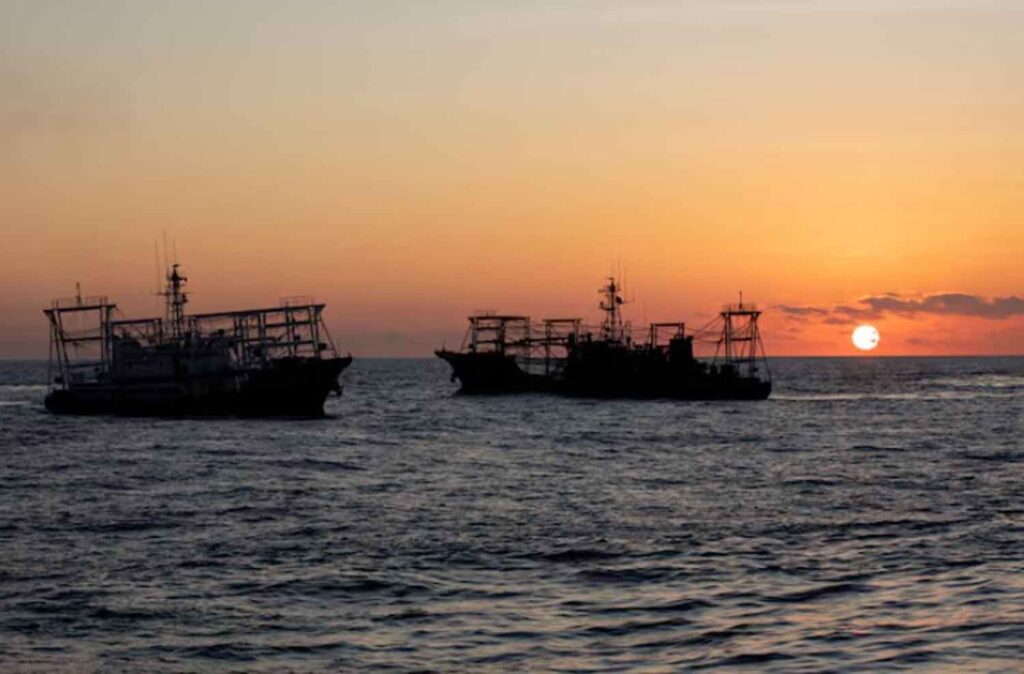
One of the most important issues likely to shape Quad discussions is the changing military environment in the western Pacific.
The South China Sea remains a major flashpoint involving China, the Philippines, Vietnam, Malaysia, Brunei and Taiwan-related regional security concerns.
China claims extensive maritime rights in the South China Sea, while the Philippines and other Southeast Asian countries dispute several of its claims.
The 2016 arbitral ruling under the United Nations Convention on the Law of the Sea rejected the legal basis for China’s claimed historic rights within the so-called nine-dash line, although Beijing rejected the ruling.
For the Philippines, the dispute is particularly important because of repeated confrontations involving Chinese and Philippine vessels around contested maritime features.
The United States has a mutual defence treaty with the Philippines, making developments in the South China Sea directly relevant to American security commitments.
Japan also faces concerns about China’s maritime activities around the Senkaku Islands, which Beijing calls the Diaoyu Islands.
India, meanwhile, has its own strategic concerns involving China’s expanding presence in the Indian Ocean and the broader regional balance of power.
These overlapping interests create a strong incentive for the four Quad countries to increase maritime coordination.
However, the grouping has to balance deterrence with the risk that excessive military signalling could increase tensions with Beijing.
Critical Minerals and Technology: The Economic Front of the China Rivalry
The Quad is increasingly expanding beyond traditional security cooperation.
Critical minerals, semiconductors, artificial intelligence and advanced manufacturing have become central to the strategic competition between the United States and China.
China occupies an important position in global mineral processing and the supply chains for several materials used in batteries, electric vehicles, defence electronics and renewable energy systems.
This creates vulnerabilities for countries dependent on Chinese processing and manufacturing capabilities.
For Washington, New Delhi, Tokyo and Canberra, diversifying these supply chains is becoming a strategic priority.
Australia possesses significant mineral resources, including lithium and rare-earth deposits.
India is seeking to expand its domestic manufacturing and technology capabilities.
Japan has extensive experience in advanced industrial production and semiconductor-related technologies.
The United States has substantial technological and financial resources.
Cooperation among the four could support alternative supply chains, reduce dependence on individual suppliers and strengthen industrial resilience.
Artificial intelligence is another important area.
The four countries have an interest in maintaining access to advanced computing infrastructure, semiconductor technology and secure digital networks.
The protection of undersea cables is equally important because these networks carry a substantial proportion of international data traffic and are essential to global communications.
The Quad’s expanding agenda demonstrates that modern geopolitical competition is no longer restricted to naval power and territorial disputes. Industrial capacity, technology and control over supply chains are becoming equally important instruments of national power.
Why the Quad Meeting Is Taking Place Before Trump’s China Summit
The timing of the Manila meeting is perhaps its most important geopolitical feature.
Trump is scheduled to travel from the Philippines to Shenzhen, where he is expected to meet Xi Jinping and Vladimir Putin on November 19.
The sequence of these diplomatic engagements is significant.
First, Trump meets the leaders of India, Japan and Australia.
Then he travels to China for discussions with Xi and Putin.
This creates an opportunity for Washington to demonstrate that its Indo-Pacific partnerships remain active before entering discussions with Beijing.
For Xi Jinping, the Quad meeting will also be an important indication of the extent to which Washington is coordinating with its Asian partners.
The summit therefore carries both a diplomatic and strategic message.
However, it would be premature to conclude that the Manila gathering represents a coordinated military plan against China.
The Quad has its own internal differences, and its members have different economic and diplomatic relationships with Beijing.
Nevertheless, the meeting reinforces the importance Washington attaches to its Indo-Pacific partnerships.
India Faces a Strategic Balancing Challenge
India’s participation is particularly important because New Delhi maintains a foreign policy based on strategic autonomy.
India has strengthened defence cooperation with the United States, Japan and Australia while continuing its economic and strategic relationship with Russia.
It also maintains extensive commercial ties with China despite the unresolved border dispute and wider security concerns.
This creates a complicated position for Prime Minister Narendra Modi.
India wants stronger cooperation with the United States and its Indo-Pacific partners to balance China’s regional influence.
At the same time, New Delhi does not want the Quad to become a formal military alliance that restricts its diplomatic flexibility.
India’s approach is therefore different from that of the United States, Japan and Australia.
For New Delhi, the Quad is an important instrument for maritime cooperation, technological partnerships and regional influence, but it is not intended to replace India’s independent foreign policy.
The Manila meeting will provide another opportunity for India to reinforce this position while discussing practical cooperation with its three partners.
Could Trump’s Trade Policy Affect the Future of the Quad?
One of the major challenges facing the partnership is the relationship between America’s security commitments and its economic policies.
Trump’s tariffs and trade restrictions have generated uncertainty among several American partners.
Australia, Japan and India all have significant economic interests involving the United States, but their relationships with Washington are not free from commercial disagreements.
For India, trade negotiations and market-access issues remain important components of its relationship with the Trump administration.
Japan and Australia also have interests in maintaining stable trade arrangements while securing American defence commitments.
This creates a potential contradiction.
Washington wants its partners to coordinate against strategic vulnerabilities linked to China, but its own trade policies can create friction with those same countries.
The long-term effectiveness of the Quad will therefore depend partly on whether its members can maintain economic confidence alongside security cooperation.
A durable strategic partnership requires more than military exercises and diplomatic declarations.
It also requires predictable economic relationships.
What the Quad’s Revival Means for Pakistan
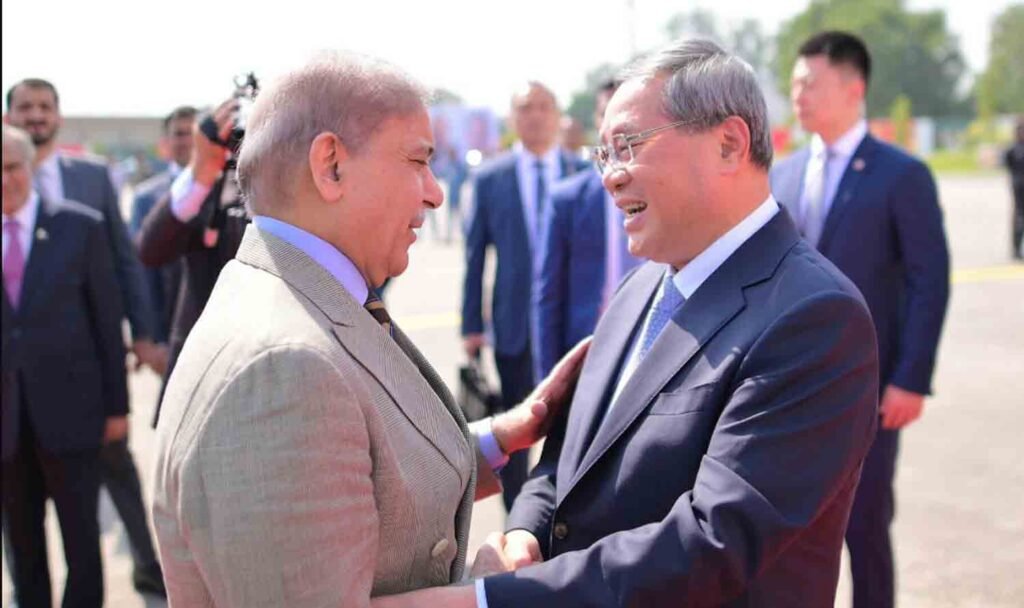
The Manila meeting also has implications for Pakistan and the wider South Asian region.
Pakistan is not a member of the Quad and has traditionally maintained a strategic partnership with China.
The growing institutionalisation of cooperation among the United States, India, Japan and Australia could influence the regional security environment, particularly in the Indian Ocean.
For Islamabad, several issues deserve attention.
First, India’s regional influence: Greater maritime and technological cooperation between India and the other Quad members could strengthen New Delhi’s strategic position in the Indo-Pacific.
Second, the Indian Ocean: Increased coordination involving surveillance, maritime domain awareness and naval exercises could affect the broader security environment in waters that are economically and strategically important for Pakistan.
Third, China-Pakistan relations: The Quad’s growing role in regional infrastructure, technology and maritime security could intersect with China’s economic and strategic interests, including the China-Pakistan Economic Corridor and Gwadar Port.
Fourth, regional diplomacy: Pakistan will need to maintain constructive relationships with major powers while avoiding unnecessary involvement in competing geopolitical blocs.
However, the Quad is not a formal military alliance, and its activities should not automatically be interpreted as a direct military threat to Pakistan.
The more immediate strategic issue for Islamabad is how changing Indo-Pacific partnerships influence India’s regional position, maritime security and the wider balance of power.
Conclusion: Quad Meeting Sends Strategic Message Before Trump-Xi-Putin Summit
Trump’s arrival in Manila and the planned meeting with the leaders of India, Japan and Australia mark an important moment for the future of the Quad.
After a two-year gap in leaders-level engagement, the grouping is attempting to renew its strategic relevance under the second Trump administration.
The discussions are expected to cover maritime security, critical minerals, artificial intelligence, undersea infrastructure and international shipping routes.
The timing, immediately before Trump’s meeting with Xi Jinping and Vladimir Putin in China, adds another geopolitical dimension.
Washington wants to maintain confidence among its Indo-Pacific partners while managing its increasingly complicated relationship with Beijing.
For India, Japan and Australia, the Quad remains an opportunity to strengthen regional cooperation without necessarily committing to a formal military alliance.
For China, the grouping represents a continuing challenge to its expanding regional influence, even as Beijing maintains that the Indo-Pacific should not become divided into competing blocs.
The central strategic question is whether the Quad can strengthen regional deterrence and economic cooperation without turning the Indo-Pacific into another arena of intensified great-power confrontation.
The Manila meeting may not transform the Quad into an Asian NATO, but it demonstrates that the United States and its three partners are seeking to keep their Indo-Pacific partnership relevant at a moment when Washington is preparing to engage Beijing and Moscow at the highest level.


