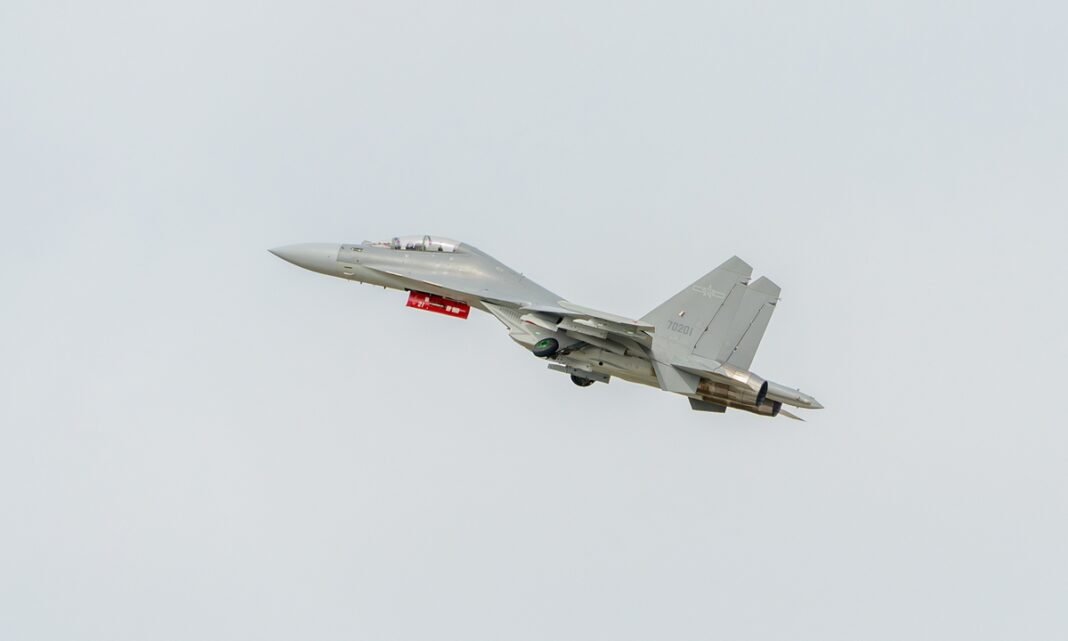
China has taken another step in expanding the overseas reach of the People’s Liberation Army Air Force, deploying J-16 heavy fighters to Egypt for the Eagles of Civilization 2026 exercise and training against Egyptian Rafale and MiG-29 fighters. The significance goes beyond the aircraft-to-aircraft encounter. The 6,000-kilometre deployment, aerial refuelling and participation of multiple support aircraft demonstrate China’s growing ability to move a combat aviation package far beyond its immediate neighbourhood. For Beijing, the exercise also provides rare operational exposure to the French-designed Rafale, a fighter operated by both Egypt and India.
China’s J-16 has conducted its first known air-combat training against French-made Rafale fighters, with Egyptian Rafales and MiG-29s participating in the latest China-Egypt Eagles of Civilization 2026 exercise.
Chinese military footage released on August 24 showed J-16s engaging Egyptian Rafales in simulated air-combat scenarios. The first flight-training day, held on August 23, focused on one-on-one combat between different aircraft types, with medium- and close-range engagements conducted under scenarios designed to resemble actual combat.
Chinese J-16 fighter jet trained against Egyptian Rafale jets in simulated dogfights for the first time during the Eagles of Civilization 2026 exercise in Egypt.
This marks the first time any Chinese fighter has conducted combat drills against a Western-built platform.
China… pic.twitter.com/XGNnN2FY14
— Clash Report (@clashreport) August 24, 2026
The headline is naturally J-16 versus Rafale.
But that is not the most important part of the story.
The more significant development is that China has demonstrated the ability to deploy its heavy multirole fighter force more than 6,000 kilometres from mainland China, using aerial refuelling and a broader package of support aircraft.
This is about expeditionary airpower.
The 6,000-Kilometre Deployment Is the Bigger Story
The Chinese force travelled more than 6,000 kilometres across two continents and several countries, taking approximately nine hours, with a YY-20 tanker providing aerial refuelling during the journey. Chinese military reporting says the deployment included fighters, tankers, special-mission aircraft and helicopters.
That is strategically more important than a single simulated dogfight.
A modern expeditionary air force needs much more than fighters.
It needs:
- aerial refuelling;
- long-range logistics;
- maintenance;
- communications;
- command and control;
- intelligence;
- airspace coordination;
- mission planning;
- and the ability to sustain aircraft once they arrive.
China is demonstrating increasing competence in precisely these areas.
The J-16 deployment to Egypt is therefore another indicator that the PLA Air Force is gradually moving from a force primarily designed for operations around China’s immediate neighbourhood toward one capable of conducting increasingly sophisticated operations overseas.
J-16’s First Known African Deployment
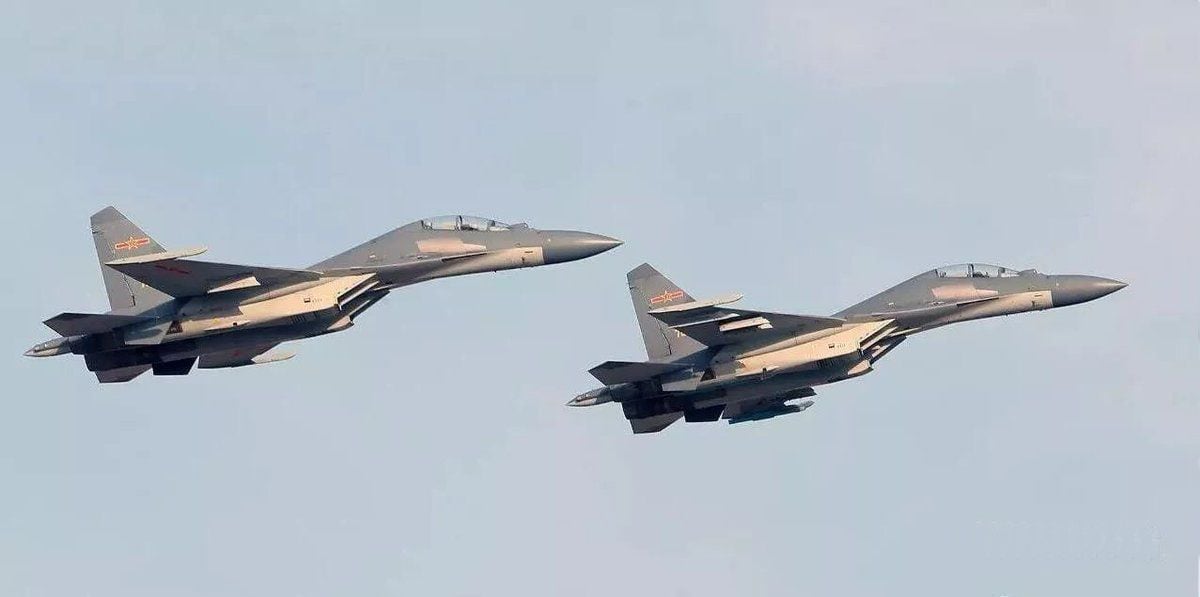
The 2026 exercise also represents the first known deployment of the J-16 to Africa.
The fighter has previously participated in overseas exercises, including with Russia and Pakistan, but its appearance in Egypt is a significant expansion of its geographic employment.
Last year’s China-Egypt exercise used the smaller J-10C.
This year’s decision to send the much larger J-16 represents a qualitative change.
The J-16 is a twin-engine, twin-seat heavy multirole fighter designed for a wide range of missions.
Its size and payload allow it to perform roles including:
- air-to-air combat;
- long-range strike;
- maritime strike;
- electronic warfare;
- suppression of enemy air defences;
- and precision attack.
China is therefore not merely sending a lightweight fighter abroad for familiarisation training.
It is deploying one of the key platforms in its modern combat-aircraft inventory.
J-16 vs Rafale: What Is Actually Being Tested?
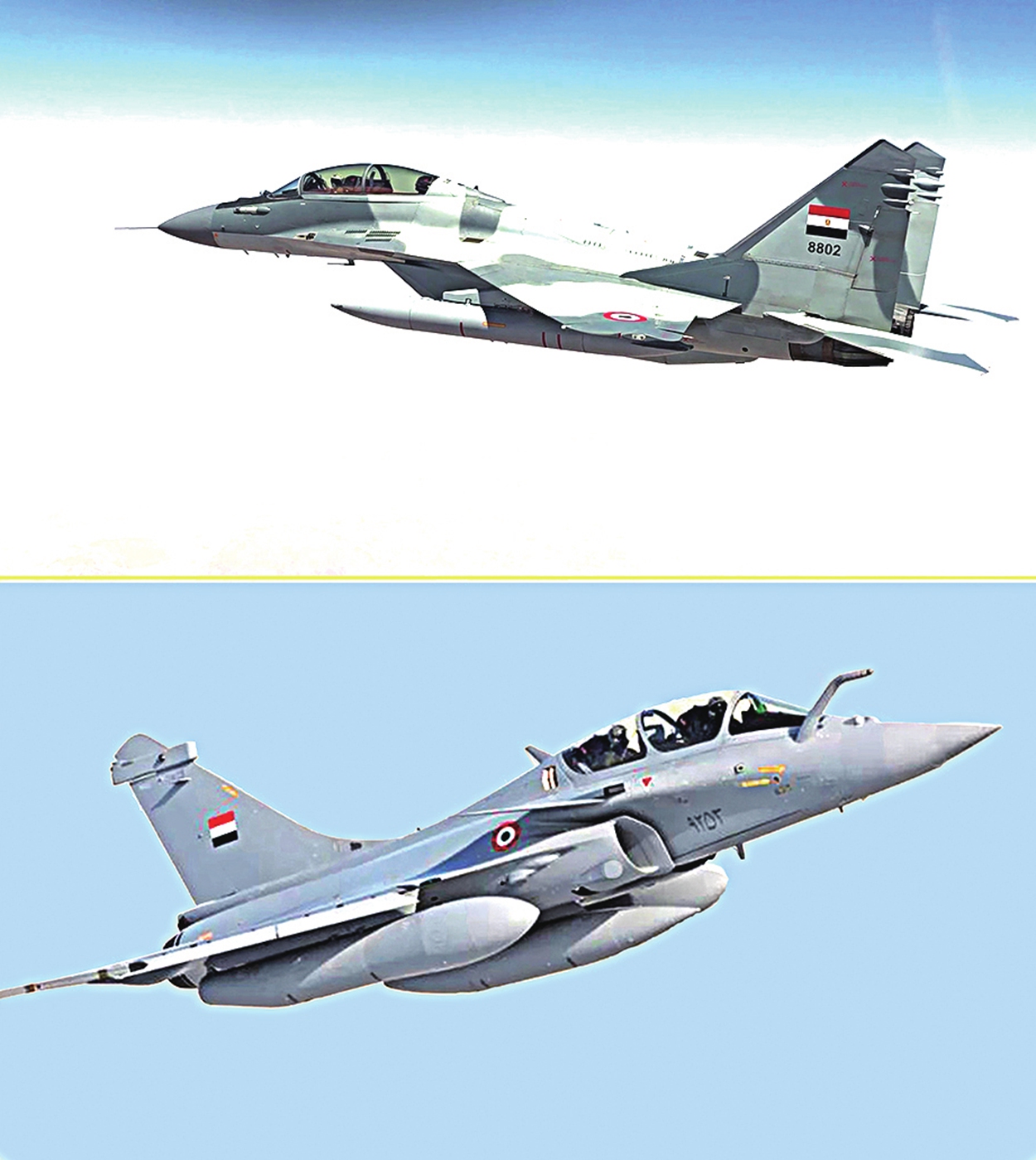
The first day’s training focused on one-on-one air combat between different aircraft types.
Chinese and Egyptian pilots first briefed each other on their aircraft and discussed the exercise’s:
- safety procedures;
- airspace rules;
- takeoff and landing procedures;
- emergency responses;
- and tactical scenarios.
That gives the pilots an opportunity to understand how another air force operates.
But it would be misleading to treat the exercise as a competition in which the aircraft that performs better in a simulated engagement has automatically proved superior.
Modern air combat is overwhelmingly dependent on the wider combat system.
A fighter’s effectiveness depends on:
radar + electronic warfare + missiles + datalinks + airborne early warning + pilot training + command and control + intelligence + tactics.
A one-on-one training engagement cannot reproduce all those variables.
So claims that the J-16 has definitively “beaten” the Rafale should be treated with considerable caution.
Why China Is Particularly Interested in the Rafale
This is where the exercise becomes strategically interesting.
The Rafale is one of Europe’s most advanced multirole fighters and is operated by several countries, including Egypt and India.
China has no realistic opportunity to routinely train directly against the French Air Force’s Rafales.
Egypt provides an unusual alternative.
By conducting air-combat training with Egyptian Rafales, Chinese pilots can gain practical familiarity with a Western-designed fighter.
They can observe aspects of:
- flight characteristics;
- pilot tactics;
- formation behaviour;
- manoeuvring;
- engagement procedures;
- and operational habits.
This does not give China access to French classified technology.
An Egyptian Rafale participating in a training exercise does not expose its complete radar parameters, electronic-warfare databases, software or missile technology.
But repeated operational interaction can nevertheless provide valuable tactical familiarity.
The India Connection Makes the Rafale Issue More Important
The Rafale’s participation has a direct South Asian dimension.
India operates the Rafale.
China is India’s principal strategic competitor.
Chinese military analysts have explicitly highlighted the fact that Egypt and India are important Rafale operators, making the exercise a useful opportunity for the PLA to become more familiar with the aircraft.
That does not mean Egypt is conducting training for China against India.
There is no evidence of that.
But from Beijing’s perspective, understanding the characteristics and employment of an aircraft operated by a major regional competitor is naturally valuable.
The exercise therefore has an indirect Indian security dimension.
China Is Learning About a Western Combat-Aircraft Philosophy
The Rafale represents a different design philosophy from the J-16.
The J-16 evolved from the Soviet/Russian Su-27 family but has been extensively redesigned and integrated into China’s modern weapons and sensor architecture.
The Rafale, by contrast, was designed by Dassault around a highly integrated Western approach involving:
- multirole flexibility;
- advanced sensors;
- electronic warfare;
- networked operations;
- precision weapons;
- and high-end air-to-air capability.
Putting the two aircraft into a training environment allows pilots to encounter different approaches to modern aerial warfare.
That is useful even when the exercise does not reveal sensitive technical information.
The J-16 Is Not Simply a Chinese Su-30
Its Russian lineage sometimes leads to the J-16 being described as essentially a Chinese version of the Su-30.
That is an incomplete picture.
The J-16 retains the broad aerodynamic heritage of the Flanker family, but China has substantially modified the aircraft and integrated it into its own weapons, sensors, electronic-warfare and command systems.
It is therefore better understood as a Chinese heavy multirole combat platform derived from a Russian design lineage, rather than simply an imported Russian aircraft with Chinese markings.
That distinction matters when evaluating China’s military-industrial progress.
From J-10C to J-16: China Is Raising the Level
The evolution of the China-Egypt exercise is revealing.
In 2025, China sent J-10C fighters to Egypt.
In 2026, it has sent J-16 heavy fighters and a broader support package. Chinese officials say this year’s training will cover air-combat tactics, air-superiority operations, combat search and rescue and force-employment drills.
The training is also expected to move from basic one-on-one and two-on-two engagements toward more systematic joint operations.
That indicates an incremental learning process.
China is not merely displaying aircraft.
It is attempting to build experience in operating them overseas.
The Tanker May Be More Important Than the Fighter
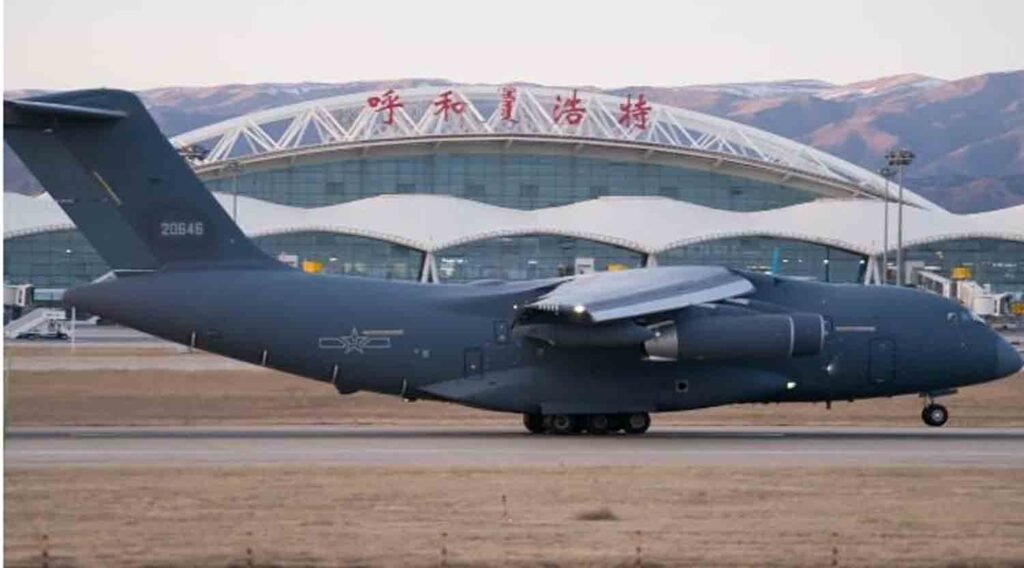
The YY-20A’s participation deserves particular attention.
A fighter deployment thousands of kilometres away becomes considerably more complicated without tanker support.
Aerial refuelling extends:
- range;
- endurance;
- operational flexibility;
- and the ability to recover from unexpected changes in mission planning.
It also demonstrates that China’s expeditionary aviation capability increasingly depends on a support architecture, not simply on the performance of the J-16 itself.
The deployment therefore tests the whole system.
China Is Learning to Move a Complete Air Package
The exercise includes more than J-16 fighters.
Chinese reporting says the force includes:
- fighters;
- tanker aircraft;
- special-mission aircraft;
- helicopters;
- and associated personnel.
That matters because expeditionary warfare is fundamentally a systems problem.
China needs to demonstrate that it can move:
aircraft + people + equipment + fuel + maintenance + command systems
to a foreign operating location.
The Egypt exercise provides precisely that experience.
Egypt Is an Ideal Partner for This Kind of Training
Egypt occupies an unusually important geographical position.
It sits between:
- North Africa;
- the Middle East;
- the Mediterranean;
- the Red Sea;
- and the Suez Canal.
For China, Egypt is therefore much more than another military partner.
It is located near some of the world’s most important strategic and commercial routes.
China’s economic interests in the region are enormous.
Its shipping and trade routes connect Asia to Europe through the wider Red Sea and Suez corridor.
Greater military familiarity with the region therefore has strategic value even without any permanent Chinese combat deployment.
China’s Presence in the Red Sea Gives the Exercise Added Context
China already maintains an overseas military support facility in Djibouti, near the Bab el-Mandeb.
Egypt is farther north, near the Suez Canal and eastern Mediterranean.
There is no evidence that the current exercise represents preparations for a Chinese air base in Egypt.
That would be an unjustified conclusion.
But repeated exercises allow China to develop:
- regional familiarity;
- logistical experience;
- relationships with local militaries;
- and knowledge of operating conditions.
That is precisely how military partnerships mature.
Egypt Is Also Playing Its Own Strategic Game
Cairo’s participation should not be interpreted as Egypt choosing China over the United States or Europe.
Egypt has traditionally maintained a diversified defence relationship.
It operates:
- American F-16s;
- French Rafales;
- Russian-origin MiG-29s;
- and other systems from different suppliers.
That diversity is itself a strategic policy.
Egypt wants relationships with several major powers.
China benefits from that strategy, but Cairo retains its own room for manoeuvre.
Egypt’s Rafale Fleet Makes It a Valuable Training Partner
The Egyptian Air Force gives China something relatively unusual.
Its pilots operate a modern Western combat aircraft while also possessing experience with Russian-origin systems.
That means Egypt can expose Chinese pilots to different operational cultures.
For China, this is more useful than training exclusively with countries operating Chinese aircraft.
The Exercise Is Also Useful for Egypt
The exchange works in both directions.
Egyptian pilots gain experience operating against a Chinese heavy fighter.
They can study:
- J-16 tactics;
- aircraft behaviour;
- Chinese formation procedures;
- and aspects of PLA operational doctrine.
This gives Egypt another source of military knowledge.
That may become increasingly valuable as China expands its role in the Middle Eastern defence market.
Could Egypt Eventually Buy More Chinese Fighters?
This question is already attracting attention.
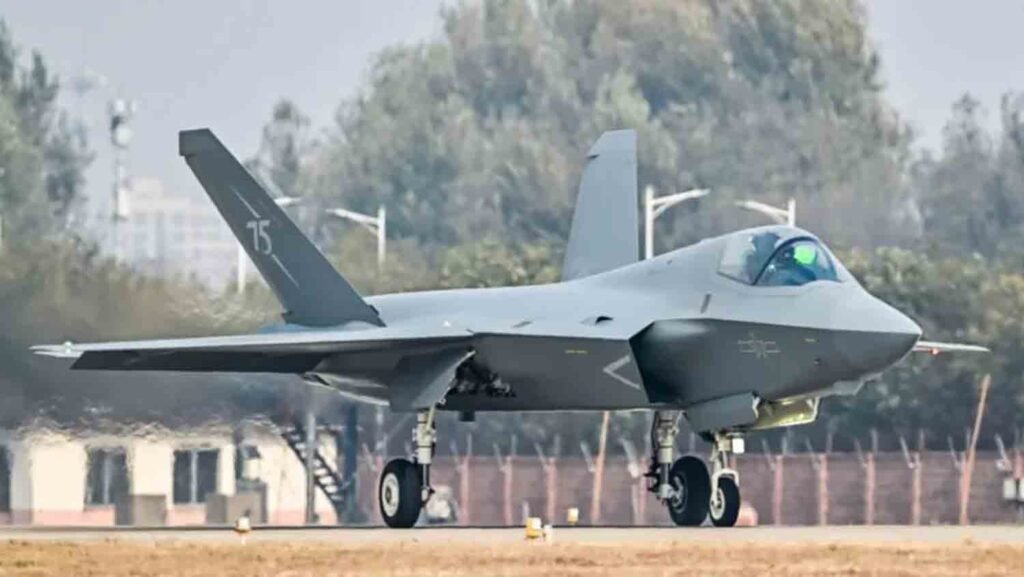
There have been reports of Egyptian interest in Chinese combat aircraft, including the J-10CE and potentially the J-35 stealth fighter.
However, interest should not be confused with a confirmed acquisition.
Egypt has invested heavily in Rafale and continues to maintain its relationship with Washington.
A Chinese fighter acquisition would therefore represent another layer of diversification rather than necessarily a strategic break with existing suppliers.
If Cairo eventually acquires a Chinese fifth-generation aircraft, however, the implications would be much greater.
It would make Egypt an important operator of Chinese advanced combat aviation in the Middle East and North Africa.
China’s J-35 Ambition Makes Egypt Even More Important
The J-16 is a fourth-generation-plus heavy fighter.
China’s bigger international ambition is likely to be the expansion of its fifth-generation fighter market.
The J-35 is potentially much more important from a defence-export perspective.
If China can establish the J-35 in multiple foreign air forces, it would begin challenging the dominance of American and European fifth-generation aircraft in the international market.
Egypt would be an especially significant customer.
But again, there is currently no basis to present a J-35 Egyptian acquisition as an established fact.
The Strategic Value of Training Against Different Fighters
China’s military needs to prepare for a variety of potential adversaries.
That means understanding:
- Western aircraft;
- Russian aircraft;
- regional fighter fleets;
- different missile systems;
- and different operational doctrines.
The Egypt exercise contributes to that learning process.
The J-16 is therefore gaining something that cannot easily be obtained through computer simulation alone:
real pilots flying real aircraft under controlled but realistic conditions.
But the Exercise Does Not Reveal Everything About Rafale
This is an important limitation.
A training encounter can reveal visible and tactical characteristics.
It cannot automatically reveal:
- radar performance;
- electronic-warfare libraries;
- missile seeker performance;
- secure datalinks;
- classified software;
- or the complete sensor-fusion architecture.
And the Egyptian Rafale’s configuration may not be identical to India’s Rafale configuration.
Weapons, software, sensors and mission systems can differ between export customers.
Therefore, China’s experience with an Egyptian Rafale should not be treated as complete knowledge of India’s Rafale capability.
The Indian Angle Is Still Important
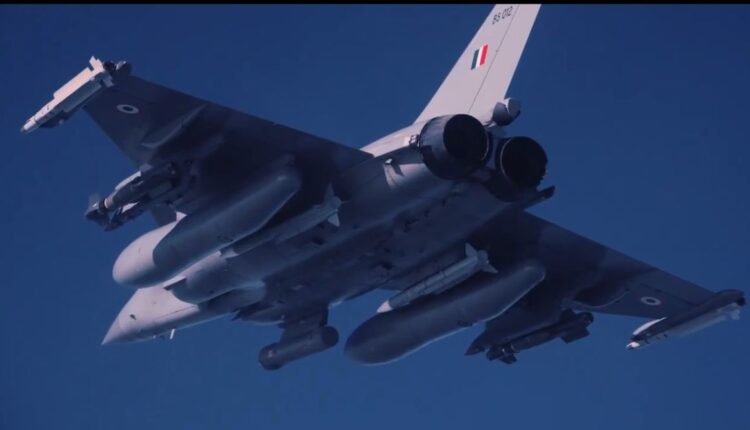
Even with that limitation, the exercise deserves attention in India.
India’s Rafales form an important component of its combat-aircraft fleet.
China’s growing experience against Rafale operators means the PLA is gaining more opportunities to understand the aircraft family.
At the same time, China is developing its own J-16 and fifth-generation J-20 fleets.
The broader contest is therefore not simply:
Rafale vs J-16.
It is:
sensor networks + missiles + electronic warfare + airborne early warning + fighters + command systems.
That is where future air wars will be decided.
Pakistan Also Has a Direct Connection to the J-16
The J-16 is relevant to South Asia for another reason.
Pakistan has a close defence relationship with China and has previously conducted joint air exercises with Chinese aircraft.
The PLA’s growing overseas experience with the J-16 therefore contributes to China’s wider operational knowledge of a platform that is also relevant to Pakistan’s military relationship with Beijing.
But the strategic importance goes further.
China is gradually building an ecosystem around its combat aircraft involving:
aircraft + weapons + training + support + exercises + logistics.
That is a more powerful model than simply exporting individual aircraft.
China’s Military Diplomacy Is Becoming More Sophisticated
The Eagles of Civilization exercise is part of a larger pattern.
China increasingly uses military exercises to establish defence relationships without entering formal alliances.
The process can be summarised as:
training → familiarity → trust → interoperability → defence cooperation → potential arms sales.
This is particularly suited to China’s foreign-policy model.
Beijing does not need a NATO-style alliance network to increase military influence.
It can build a network of defence partnerships.
Egypt is becoming an important part of that network.
China Is Building Expeditionary Experience Incrementally
Beijing is unlikely to transform overnight into a global expeditionary air force.
The process is gradual.
First:
long-range deployments.
Then:
joint exercises.
Then:
more complex aircraft packages.
Then:
greater tanker and logistics capability.
Then potentially:
sustained overseas operations.
The Egypt exercise fits neatly into that progression.
The 6,000-Kilometre Flight Is a Strategic Demonstration
The distance itself matters.
China’s ability to fly J-16s from home territory to Egypt demonstrates improvements in:
- aerial refuelling;
- long-distance planning;
- international transit coordination;
- maintenance;
- logistics;
- and crew endurance.
The Chinese military has described the journey as covering more than 6,000 kilometres and involving nearly nine hours of flight.
That is not a routine regional exercise.
It is an expeditionary deployment.
But China Still Faces Major Limitations
It would be wrong to conclude that one exercise proves China can sustain a large air war thousands of kilometres from home.
A temporary exercise deployment is not equivalent to permanent overseas combat capability.
Sustaining a significant force would require:
- large quantities of fuel;
- spare engines;
- ammunition;
- maintenance infrastructure;
- secure communications;
- extensive logistics;
- tanker availability;
- and reliable access to overseas bases.
China is improving in these areas, but its global expeditionary network remains much smaller than that of the United States.
That distinction is important.
The United States Remains in a Different League
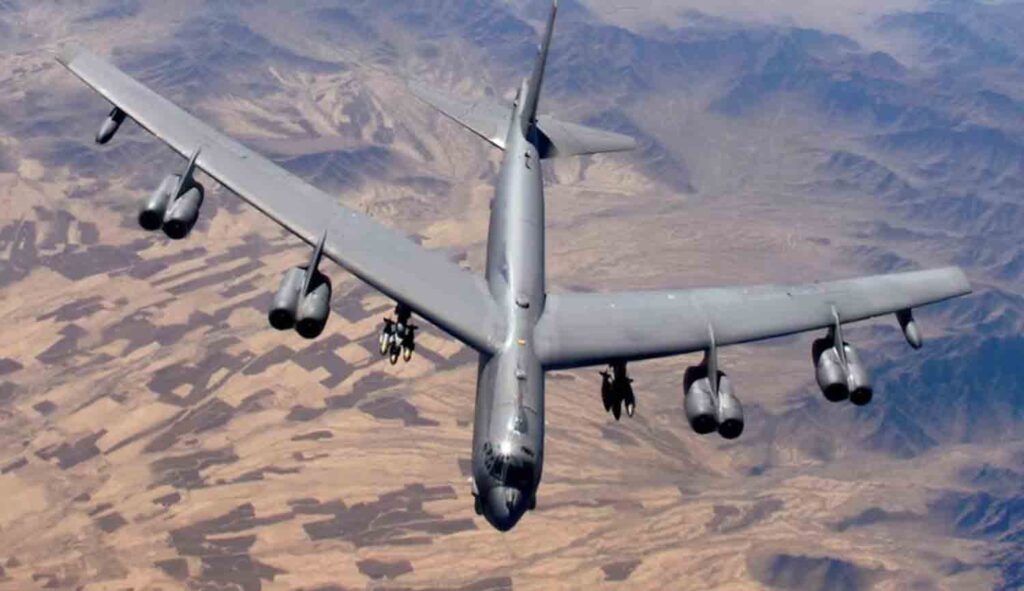
America’s global airpower is supported by decades of overseas basing and alliances.
The United States possesses:
- a large global tanker fleet;
- extensive overseas bases;
- strategic airlift;
- carrier aviation;
- global logistics;
- satellite infrastructure;
- and military alliances.
China does not yet possess an equivalent network.
Therefore, the J-16’s Egypt deployment should be viewed as evidence of growing capability, not proof that China has achieved American-style global airpower.
But the Direction of Travel Matters
Military capability is not static.
China is investing heavily in:
- tankers;
- strategic airlift;
- long-range missiles;
- space systems;
- unmanned aircraft;
- aircraft carriers;
- overseas logistics;
- and advanced fighters.
The trajectory is clear.
China wants the ability to operate farther from its shores.
The Egypt exercise is one small but visible manifestation of that ambition.
The Middle East Is Becoming a Strategic Test Area
China’s expanding military engagement with Middle Eastern states deserves particular attention.
The region provides:
- diverse aircraft;
- complex airspace;
- strategic maritime routes;
- long-range deployment opportunities;
- and relationships with multiple defence suppliers.
China can gain valuable experience there without necessarily becoming directly involved in regional conflicts.
Egypt, in particular, offers a relatively stable environment for bilateral military training.
The Exercise Could Eventually Influence Defence Markets
Military exercises often have commercial consequences.
When a foreign air force operates Chinese fighters alongside its existing Western equipment, it gains first-hand knowledge of Chinese aircraft.
That can influence future procurement decisions.
For China, the ideal outcome is therefore not simply successful training.
It is:
training → trust → operational familiarity → procurement.
Whether that happens in Egypt remains uncertain.
But the possibility explains why these exercises matter to China’s defence industry.
The Real Strategic Message From Beijing
The message is not:
“The J-16 defeated the Rafale.”
There is no credible basis for making that claim from the exercise.
The message is:
“China can take advanced combat aircraft far from home, integrate them with support aircraft, train with a major foreign air force and gain operational experience against a Western-designed fighter.”
That is considerably more important.
What India Should Watch Next
For India, the key developments to monitor are not simply the next J-16-Rafale engagement.
They are:
- How long China can sustain the deployment.
- Whether more Chinese support aircraft participate.
- Whether training moves toward larger formations and complex missions.
- Whether Egypt expands its use of Chinese aircraft.
- Whether the J-35 eventually enters the Egyptian market.
- Whether China conducts similar long-distance exercises elsewhere.
- How rapidly China’s tanker and strategic-airlift fleets expand.
Those indicators would reveal whether the Egypt exercise is an isolated event or part of a sustained expeditionary-airpower strategy.
What Pakistan Should Watch
Pakistan should similarly focus on the broader Chinese capability rather than the J-16-versus-Rafale headline.
The more important development is China’s growing ability to:
- deploy heavy fighters abroad;
- conduct complex exercises;
- integrate tanker support;
- gain experience against Western aircraft;
- and build defence relationships beyond Asia.
For Pakistan, that could eventually translate into deeper opportunities for joint training and operational learning with China.
The Bottom Line
The China-Egypt Eagles of Civilization 2026 exercise is being presented largely through dramatic images of a Chinese J-16 flying against an Egyptian Rafale.
But the strategic significance is much broader.
This is the first known Chinese J-16 deployment to Africa and the first known exercise in which a Chinese fighter has conducted combat drills with Rafale aircraft. The deployment involved a 6,000-kilometre journey and aerial refuelling, demonstrating China’s growing ability to move a sophisticated fighter force far from its home territory.
For the PLA Air Force, the exercise provides valuable experience in:
long-range deployment + tanker-supported operations + foreign-base operations + multinational coordination + dissimilar-aircraft training.
For Egypt, it provides an opportunity to train with a major Asian military while maintaining its diversified relationships with the United States, France and other powers.
For China, the Rafale offers a rare opportunity to gain practical familiarity with a Western-designed fighter that is also operated by India.
But the most important conclusion should not be that the J-16 has proved superior to the Rafale.
A simulated engagement cannot establish that.
The real development is that China is gradually learning how to take its airpower abroad.
The J-16’s journey to Egypt demonstrates increasing confidence in aerial refuelling, logistics and long-range force deployment.
The training against Rafales gives Chinese pilots exposure to a different combat-aircraft philosophy.
The broader exercise strengthens China’s military relationship with Egypt and expands Beijing’s defence diplomacy in a strategically important region.
And the progression from J-10C deployments in 2025 to J-16 deployment in 2026 suggests that the relationship is becoming more sophisticated.
China is not yet a global expeditionary air power on the scale of the United States. But it is clearly building the capabilities required to become one.
That is the real story behind the J-16 and Rafale flying together over Egypt.