Wednesday, May 13, 2026
Home Blog Page 5

If US-Iran Talks Collapse, the Next Phase Could Be Far More Destructive Than the First

0
US Vice President JD Vance and Iranian Parliament Speaker Mohammad Bagher Ghalibaf

There is now little doubt that while all sides continue to prepare for another round of negotiations and the possibility of a framework agreement, they are also actively preparing for the collapse of diplomacy.

The military preparations on both sides suggest that diplomacy and escalation are now moving in parallel.

Washington continues to concentrate forces across the region.

Iran, meanwhile, appears to be doing the same in its own way.

This includes:

  • reopening underground tunnel networks
  • reactivating missile “cities”
  • preserving launchers and missile stockpiles
  • hardening systems deep inside mountainous terrain

Image

The implication is clear:

if talks collapse, escalation is unlikely to be gradual.

It could be rapid, violent, and significantly more destructive than anything seen so far.

There Is No Quick Knockout Blow

One of the most dangerous assumptions in any future conflict is the belief that there is a quick military solution.

There is strong reason to doubt that.

Iran’s military infrastructure is built around survivability and absorption of punishment.

Key assets are designed to remain operational even after major strikes.

These include:

  • hardened missile sites
  • mountain tunnel complexes
  • dispersed launch platforms
  • mobile retaliation systems

Image

This makes the idea of a single decisive blow strategically unrealistic.

This Is Ultimately a Contest of Endurance

The central question is not whether either side can inflict damage.

Both clearly can.

The real question is:

who can absorb more pain?

This is ultimately a war of endurance rather than decisive maneuver.

Iran’s leadership appears to believe that while pressure will severely affect its own economy, the wider consequences for the global economy, Gulf states, and energy markets could be even greater.

That calculation remains central to Tehran’s strategic posture.

Global Energy Markets Would Be the First Casualty

Any rapid escalation would immediately affect global markets.

The Strait of Hormuz remains one of the most important energy chokepoints in the world.

Roughly one-fifth of global oil shipments move through this corridor.

Image

A major confrontation could affect:

  • crude oil flows
  • LNG shipments
  • marine insurance costs
  • tanker routing
  • inflation expectations

The risk expands further if tensions spill toward the Bab el-Mandeb Strait, another critical maritime chokepoint.

At that point, the economic damage would no longer remain regional.

It would become global.

Pressure Alone Is Unlikely to Change Tehran’s Core Position

This logic also explains Iran’s negotiating posture.

There is little evidence that economic pressure alone — even combined with maritime pressure — will force Tehran to abandon what it considers core strategic principles.

These include:

  • uranium enrichment capability
  • missile deterrence
  • leverage in Hormuz
  • regional strategic depth

If sustained pressure over the past several weeks has not produced those concessions, it is difficult to argue that a naval squeeze alone suddenly will.

The Core Strategic Question for Washington

This brings us back to the most important question:

what is the actual objective of war?

If the objective is to force a fundamental strategic and ideological shift in Tehran, there is strong reason to question whether military escalation can realistically achieve that.

The Iranian system is ideological in nature and historically structured to absorb severe pressure rather than capitulate.

That does not mean it cannot be damaged.

It means damage alone may not deliver the political outcome Washington seeks.

Why the Risks Are Rising

The most dangerous reality is that both diplomacy and war preparations now appear to be advancing simultaneously.

That creates a narrow and unstable window.

If negotiations fail, the transition from pressure to kinetic conflict could happen very quickly.

The next phase may be far more destructive than the current crisis.

Rosoboronexport Showcases Su-57E and Combat-Proven Drones at DSA 2026 in Malaysia

0
Rosoboronexport presents Su-57E at DSA 2026

Rosoboronexport, part of Rostec, will lead the joint Russian defense exhibit at DSA 2026 (Defence Services Asia), one of the largest military and homeland security exhibitions in the Asia-Pacific region.

The event will be held from April 20 to 23, 2026, at the Malaysia International Trade and Exhibition Centre (MITEC) in Kuala Lumpur.

According to company chief Alexander Mikheev, the Russian pavilion will focus on combat-tested air, drone, and infantry systems, highlighting Moscow’s intent to deepen military-technical ties with Malaysia and other Asia-Pacific partners.

Su-57E Fighter Draws Major Attention

The headline system at the Russian exhibit is the Sukhoi Su-57 fifth-generation fighter.

Rosoboronexport says the export variant is already generating significant international interest and is being offered only to trusted partner countries.

For Malaysia, the aircraft is being positioned as a possible modernization path for the Royal Malaysian Air Force’s Su-30MKM fleet, which already shares Russian-origin systems and weapons architecture.

This compatibility angle could be a major selling point for Kuala Lumpur’s future air force modernization plans.

Combat-Proven Drones and Loitering Munitions

Another major focus will be Russia’s UAV and loitering munition portfolio, particularly systems marketed as combat-proven.

Featured platforms include:

  • Lancet-E loitering munition
  • KUB-2E guided loitering munition
  • S350M-E (Supercam S350) reconnaissance UAV
  • Skat 350M UAV
  • Orlan-10E and Orlan-30 systems

These systems are expected to attract interest from regional militaries seeking cost-effective ISR and strike capabilities.

Small Arms and Special Forces Equipment

Rosoboronexport will also display a wide range of infantry and special operations equipment, including:

  • AK-19 assault rifle
  • AK-15
  • AK-308
  • PPK-20 submachine gun
  • Lebedev 9mm pistol
  • RPL-20 light machine gun
  • SVCh sniper rifle

The inclusion of personal equipment, optics, and protective systems suggests Russia is targeting both military and internal security procurement markets.

Cybersecurity and Security Systems Debut

A notable first-time unveiling at DSA 2026 is Echo, Russia’s new cybersecurity solution designed to counter modern cyberattacks.

The company will also present:

  • explosive detectors
  • hazardous chemical and biological screening tools
  • transport hub security systems
  • crowd protection technologies

This broadens Russia’s offering beyond traditional weapons platforms into homeland security solutions.

Why DSA 2026 Matters

DSA is widely regarded as one of the most important defense exhibitions in the Asia-Pacific.

The 2026 edition is expected to bring together over 1,400 exhibitors and around 50,000 visitors, including defense ministries, armed forces delegations, and procurement officials.

For Russia, the event offers a strategic platform to expand defense exports across Southeast Asia.

For Malaysia, it presents another opportunity to assess next-generation fighter, drone, and defense technology options.

PNS Rizwan Signals Pakistan’s New Spy War With India

0
PNS Rizwan with Tracking Systems, Radars , Sensors & Sub Systems indicate its capabilities are Top notch including monitoring Missile launch & situational analysis

Sometimes the most important military moves are the ones announced with the least noise.

Pakistan’s reported deployment of PNS Rizwan into the Arabian Sea may be one of those moments.

At first glance, it is only one ship.

But strategically, it may represent something much larger:

the opening of a new intelligence front in Pakistan’s rivalry with India.

This is not simply about naval presence.

It is about surveillance, early warning, missile telemetry, and the ability to see deeper into a rival’s strategic activity than ever before.

Image

The Rivalry Is Moving Beyond Missiles

For years, the Pakistan-India strategic competition was defined primarily by:

  • missile ranges
  • nuclear deterrence
  • fighter aircraft
  • border crises

That framework may now be evolving.

PNS Rizwan suggests the competition is increasingly shifting toward who can monitor the other side’s strategic systems first.

In modern military competition, information often matters as much as firepower.

The side that can track missile launches, warhead separation, radar signatures, and naval deployments gains a major advantage.

That is why this ship matters.

This Is About Seeing the Battlefield Before It Forms

The Arabian Sea is no longer just a maritime corridor.

It is rapidly becoming a sensor battlespace.

From sea, Pakistan can potentially observe:

  • Indian naval movements
  • missile test trajectories
  • satellite activity
  • electronic emissions
  • communications traffic

This means the battlefield may increasingly be shaped before any actual conflict begins.

Image

That is a profound strategic shift.

A Smaller Ship, a Smarter Strategy

The comparison with INS Dhruv is inevitable.

India’s larger missile-tracking ship is designed as an overt strategic platform.

Pakistan appears to be choosing a different model.

Smaller, lower-profile, and easier to blend into commercial maritime traffic, PNS Rizwan may be less visible but potentially just as disruptive strategically.

This is classic asymmetric thinking.

Rather than matching India ship-for-ship, Islamabad may be seeking strategic ambiguity and covert reach.

The China Factor Cannot Be Ignored

The fact that the vessel was built in China adds another layer of significance.

This is not only about one ship.

It may represent access to a much wider Chinese-origin surveillance ecosystem.

If integrated with broader maritime intelligence support, the implications become regional rather than bilateral.

That could extend Pakistan’s strategic visibility across the wider Indian Ocean region.

This is why Indian planners are unlikely to see the deployment as routine.

South Asia May Be Entering a New Intelligence Race

The larger story is that South Asia may now be entering a surveillance and telemetry race, not just a missile race.

Future crises may increasingly revolve around:

  • who detects first
  • who tracks better
  • who reacts faster

In that sense, PNS Rizwan may not just be Pakistan’s first spy ship.

It may be the first sign that the region’s next competition will be fought through sensors, signals, and strategic awareness.

Trump’s Iran War Is Turning America’s Allies Against Washington

0
Thousands of U.S. Marines are set to enter the Middle East on Friday—the same day as Trump’s deadline for Iran to reopen the Strait of Hormuz.

For many of America’s allies, the war involving the United States, Israel, and Iran was never supposed to become a domestic political crisis.

Now it is.

What began as a foreign policy confrontation is rapidly turning into an economic and electoral nightmare for leaders across Europe, Asia, and North America.

The real problem is not only the war itself.

It is what the war is doing to everyday life:

  • higher fuel bills
  • rising shipping costs
  • inflation pressure
  • slowing economic growth
  • growing public anger

For allied leaders already facing fragile governments, these pressures can become politically fatal.

Image

The Economic Shock Is Hitting Home

Wars become politically dangerous when voters begin to feel them in their wallets.

That moment has arrived.

The International Monetary Fund warning of a slowdown to 2.5% global growth is more than a technical forecast.

It is a warning sign for governments already struggling to protect growth and household incomes.

For countries dependent on Middle Eastern energy, the Iran conflict is no longer distant.

It is now visible in:

  • fuel prices
  • household electricity costs
  • shipping delays
  • business costs

Image

That is why leaders are becoming less willing to absorb Washington’s pressure.

Trump May Be Winning the Battlefield but Losing the Alliance

The deeper story is political.

For years, many allied leaders tried to manage or flatter President Donald Trump.

Now some are beginning to openly distance themselves.

That shift matters.

When leaders such as Giorgia Meloni and Keir Starmer begin criticizing Washington’s approach, it signals more than tactical disagreement.

It signals that the political cost of alignment is rising.

This is no longer only about diplomacy.

It is about political survival.

Voters No Longer Want Another War

The most important pressure is domestic.

Many allied electorates see the Iran war as:

  • unnecessary
  • legally questionable
  • economically damaging
  • strategically dangerous

That makes direct support politically toxic.

Leaders cannot easily send ships, troops, or political backing into a conflict their voters do not support.

This is especially true in Europe, where years of economic pressure and defense cuts have already weakened governments.

NATO’s Real Weakness Is Being Exposed

The war is also exposing an uncomfortable truth about the Western alliance.

It is not only political reluctance.

It is capability.

After years of reduced defense spending, many non-U.S. NATO members may struggle to support major maritime operations in places like the Strait of Hormuz.

This means Washington’s frustration is colliding with Europe’s political and military limits.

That combination is dangerous.

This Could Reshape the Alliance for Years

The biggest consequence may outlast the war itself.

Alliances are built on trust, shared interests, and political legitimacy.

When a war begins to damage governments at home, that legitimacy weakens.

What we may now be witnessing is not only a dispute over Iran.

It may be the beginning of a longer-term fracture between Washington and some of its closest allies.

That could reshape the Western alliance far beyond this crisis.

Japan Set to Ease Arms Export Rules as Poland and Philippines Seek New Defense Deals

0
A Japanese Ground Self-Defense Force Type 10 tank is displayed at a defence equipment fair called 'DSEI Japan' in Chiba, east of Tokyo, Japan.

Japan is preparing to significantly ease its arms export rules, a move that is already attracting strong interest from countries including Poland and the Philippines, according to a Reuters report.

The policy shift comes as global demand for military systems rises and traditional U.S. weapons supply chains face growing strain due to the wars in Iran and Ukraine, as well as uncertainty over Washington’s long-term security commitments.

Prime Minister Sanae Takaichi’s ruling party has reportedly approved the proposed changes, with the government expected to formally adopt the new rules as early as this month.

Image

Philippines and Poland Among First Potential Buyers

According to the report, one of the first deals likely to be approved involves the export of used Japanese frigates to the Philippines.

This is strategically significant as Manila continues its maritime standoff with China in the South China Sea.

Defense officials cited in the report also said that missile defense systems could follow in future agreements.

Meanwhile, Poland is exploring cooperation with Japan in areas such as:

  • anti-drone systems
  • electronic warfare
  • defense components
  • co-development programs

This reflects Europe’s broader push to diversify away from heavy dependence on U.S. arms production.

Japan’s Defense Industry Sees Major Growth Opportunity

Despite decades of post-World War II restrictions, Japan already maintains a sizable defense industrial base supported by approximately $60 billion in annual defense spending.

Major Japanese defense manufacturers such as Toshiba and Mitsubishi Electric are now expanding capacity to capitalize on export demand.

Reuters reports that Toshiba plans to hire around 500 employees over the next three years and is building new manufacturing and testing facilities.

Mitsubishi Electric expects defense sales to rise by 50% to 600 billion yen by 2031.

ImageReducing Dependence on US Supply Chains

A major strategic objective behind the rule changes is to build regional defense supply chains that are less dependent on the United States.

According to SIPRI data cited in the report, the U.S. still dominates military supply chains, accounting for:

  • 95% of Japan’s defense imports
  • 85% of Australia and UK imports
  • 77% of Saudi Arabia’s purchases

However, delays, rising costs, and strict technology controls have increasingly frustrated allies.

Japan now appears to be positioning itself as an alternative supplier, particularly across Asia and Europe.

A Strategic Shift in Global Defense Markets

The move also reflects a broader geopolitical shift.

Countries across Asia and Europe are increasingly seeking to diversify defense procurement amid global conflicts and uncertainty over U.S. political commitments.

Neighboring South Korea has already become a major defense supplier to Poland and the Philippines.

Analysts suggest Japan could potentially emerge as an even larger player given the size of its economy and industrial capacity.

Reuters cites industry experts saying Japan is moving closer to the center of global defense politics after decades of relative isolation.

Ukraine Also Sees Opportunity

Even Ukraine is seeking to leverage the rule changes.

According to the report, Kyiv’s chamber of commerce in Tokyo is preparing to launch a joint drone industry group with Japanese firms to support defense technology development.

This could create new partnerships in:

  • UAV development
  • counter-drone systems
  • autonomous battlefield technologies

How Soldiers Try to Survive FPV Drone Attacks as Drones Cause 80% of Battlefield Losses

0
Ukraine drone force members operating during war

Modern battlefield survival has entered a new and unforgiving era.

As first-person-view (FPV) drones increasingly dominate the front lines in the Russia-Ukraine war, soldiers are now being taught a harsh new reality: survival often comes down to reducing the odds, not eliminating the threat.

Military trainers no longer speak in terms of guaranteed safety.

Instead, troops are taught how to try to survive.

Image

The first rule is brutally simple:

do not stay together.

A single FPV strike can wipe out an entire group.

If soldiers scatter, the drone operator is forced to choose a single target.

After that, survival often becomes a matter of speed, terrain, and chance.

The New Rules of Battlefield Survival

Troops are increasingly trained in basic anti-drone survival tactics.

These include:

  • dispersing immediately
  • dropping low to reduce visibility
  • running toward hard cover
  • staying in shadows
  • using walls, trenches, and vegetation
  • minimizing heat signature

If no cover is available, soldiers are taught to make themselves as difficult to detect as possible.

If cover exists, speed becomes critical.

Walls, tree lines, ruined buildings, and even dense brush can reduce both visual and thermal detection.

Image


Drones Now Cause Around 80% of Battlefield Losses

The scale of the drone threat is now reshaping modern warfare.

According to current battlefield assessments, drones are now responsible for around 80% of battlefield losses in some sectors.

This includes:

  • FPV attack drones
  • reconnaissance drones
  • loitering munitions
  • thermal surveillance UAVs

The Ukraine war has become one of the clearest examples of how low-cost drones are transforming combat doctrine.

Thermal Cameras Remove the Night Advantage

One of the most significant changes is the spread of thermal imaging systems.

Unlike earlier battlefield assumptions, darkness no longer guarantees concealment.

Thermal sensors now allow drone operators to detect personnel:

  • during the day
  • at night
  • in forests
  • in open fields
  • even on snow-covered terrain

This makes movement across exposed ground increasingly dangerous.

Traditional camouflage is often no longer enough.

Drone Warfare Is Scaling Rapidly

The scale of drone operations continues to grow rapidly on both sides.

Reports indicate that in March alone, Ukrainian drones struck 151,207 targets, representing a 50% increase from February.

This highlights the extraordinary pace of battlefield drone deployment.

Meanwhile, Russia is dramatically expanding its drone warfare capacity.

Current plans reportedly aim to train up to one million drone operators by 2030.

This reflects a long-term strategic shift in force structure.

FPV Operators Have Become Prime Targets

The battlefield logic is also evolving.

Russian forces are reportedly shifting priority away from traditional artillery targeting and increasingly focusing on hunting FPV drone operators themselves.

This marks an important doctrinal shift.

Neutralizing the operator can be more effective than intercepting individual drones.

At the same time, both sides are learning rapidly.

Ukraine’s large-scale use of FPV systems is also effectively providing Russia with valuable lessons in:

  • drone interception
  • counter-drone tactics
  • electronic warfare adaptation
  • thermal detection techniques

These lessons may shape future conflicts well beyond Ukraine.

People Still Decide Outcomes

Despite the scale of drone warfare, human decisions remain central.

Technology may now dominate battlefield attrition.

But outcomes still depend on:

  • training
  • adaptation
  • decision speed
  • operator skill
  • battlefield discipline

The war in Ukraine is increasingly proving that while drones are changing how wars are fought, people still determine how they are won.

Nuclear Progress, Hormuz Pressure: Why US-Iran Talks Face a Critical Week

0
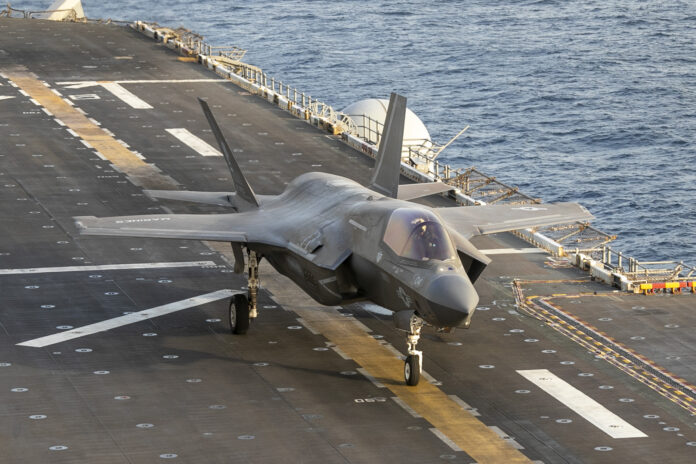
U.S. Marine Corps F-35B Lightning II takes off from USS Tripoli

The latest round of U.S.-Iran negotiations in Islamabad has brought both sides closer to what could become a significant diplomatic breakthrough — but the risks of rapid military escalation remain dangerously high.

At this stage, the outcome of the talks appears to hinge on two decisive issues:

  • Iran’s nuclear program
  • the future of the Strait of Hormuz

Other disputes remain important, but these two files are now clearly shaping the path forward.

Nuclear File Shows Signs of Real Progress

On the nuclear front, the negotiations appear to have moved closer to a possible framework.

Recent reporting suggests that discussions have shifted from whether Iran will retain future enrichment capability to when and under what restrictions such enrichment could resume.

This is a significant diplomatic shift.

Once the debate moves from “whether” to “when,” negotiators gain greater room to structure compromises around:

  • stockpile reduction
  • breakout timelines
  • verification mechanisms
  • sanctions relief

Fresh reports indicate that one major proposal under discussion includes a 20-year freeze or moratorium on uranium enrichment, though this remains one of the most difficult sticking points.

This suggests the nuclear issue may be closer to a breakthrough than at any point in recent weeks.

Strait of Hormuz Remains the Main Pressure Point

The bigger obstacle remains the Strait of Hormuz.

For Washington, freedom of navigation through the strait has become central to any diplomatic success narrative.

For Tehran, reopening the strait is directly linked to economic relief and political leverage.

Roughly 20% of global oil supplies pass through this maritime chokepoint, making it one of the most critical energy corridors in the world.

A framework that links sanctions relief to reopening the strait may now be the most realistic path to de-escalation.

US Maritime Pressure Is Raising the Stakes

The U.S. move toward what analysts describe as a de facto maritime blockade has increased pressure on Iran.

While this may reduce the immediate likelihood of large-scale airstrikes, it creates an inherently unstable environment at sea.

Recent reporting confirms that the blockade has already begun to reshape the diplomatic environment and push oil prices higher.

The danger is straightforward:

if negotiations fail, naval friction between U.S. and Iranian forces could quickly spiral into direct conflict.

At sea, miscalculation risk is significantly higher than in diplomatic settings.

Even limited incidents involving patrol vessels, drones, or tanker escorts could trigger a broader escalation.

Second Round of Talks Likely

Despite the risks, there are strong indications that both sides are preparing for another round of face-to-face talks.

Reuters, Bloomberg, and other outlets report that a second in-person meeting is actively under discussion, potentially as early as this week in Geneva or Islamabad.

This is especially important because the ceasefire deadline on April 21 is rapidly approaching.

That deadline may represent the last realistic window for diplomacy before military pressure begins to dominate events.

A Narrow Diplomatic Window

The opportunity for a framework agreement remains real.

A workable deal would likely need to connect:

  • sanctions relief
  • verifiable nuclear stockpile reduction
  • extended breakout timeline
  • guaranteed reopening of Hormuz

Without such linkage, pressure alone may become unstable.

The path to diplomacy remains open — but narrow.

Failure now risks turning strategic pressure into kinetic conflict at sea and beyond.

Hu Jintao Warned China About the Malacca Trap — Trump’s Indonesia Move Just Made It Real

0
Strait of Malacca

More than two decades ago, Hu Jintao gave a name to one of Beijing’s deepest strategic fears: the Malacca dilemma.

It was a simple but brutal truth.

China’s economic rise — its factories, exports, and industrial machine — depended on foreign oil flowing through a narrow maritime chokepoint that rival powers could monitor, pressure, or in a crisis, close.

That fear never disappeared.

Now, Washington’s new Major Defense Cooperation Partnership with Indonesia has brought Hu’s old warning back to life.

This is not just another routine defense agreement.

It is a reminder that the United States still understands where China remains most vulnerable: energy at sea.

Image

This Is About More Than Training and Diplomacy

Official statements speak the familiar language of diplomacy:

  • capacity building
  • maritime security
  • joint exercises
  • professional military education

But behind the boilerplate lies something much sharper.

The focus on maritime domain awareness, autonomous systems, underwater surveillance, and operational cooperation means one thing:

Washington wants a clearer picture of everything moving between the Indian Ocean and the South China Sea.

And in any future crisis, visibility means leverage.

That is what makes this deal strategically important.

The U.S. is not merely strengthening ties with Indonesia.

It is reinforcing oversight around one of the world’s most important energy chokepoints.


China’s Economy Still Runs Through One Narrow Strait

For all of Beijing’s talk of multipolarity and strategic autonomy, the geometry of its energy dependence remains largely unchanged.

A huge share of Chinese imported oil still moves from the Gulf and Africa by sea.

The fastest and cheapest route still runs through the Strait of Malacca.

Image

This is why the dilemma never went away.

China has spent years trying to reduce this vulnerability through:

  • pipelines from Central Asia
  • Russian energy corridors
  • the Myanmar route
  • overseas ports and logistics hubs

Yet the reality remains uncomfortable:

the bulk of China’s economic lifeblood still arrives by tanker.

The trap has been softened, not escaped.

This Is Mahan in Modern Form

More than a century ago, Alfred Thayer Mahan argued that great powers are ultimately shaped by control of sea lanes and chokepoints.

His theory now feels strikingly modern.

The Malacca dilemma is simply Mahan translated into energy geopolitics.
China may be a continental giant.

But its fuel, trade, and industrial engine remain vulnerable to maritime pressure.

The power that sees and shapes the sea lanes still holds the upper hand.

This latest U.S.-Indonesia move fits that logic perfectly.

Why Beijing Should Pay Attention

Indonesia may insist it is not choosing sides.
That may be true diplomatically.

But strategy is often shaped less by rhetoric and more by systems.

As U.S.-linked maritime sensors, patrol frameworks, and defense integration expand, the operational environment changes quietly but significantly.

For Beijing, that means one uncomfortable assumption:

in any crisis over Taiwan, the South China Sea, or even Gulf energy flows, maritime traffic near Malacca may increasingly move under a security architecture that leans toward Washington.

That is exactly the scenario Hu Jintao feared.

The Bigger Strategic Message

This is about more than one strait.

It is about the larger contest between American sea power and Chinese economic dependence.

The United States appears determined to remain the dominant maritime power of the Indo-Pacific.

And if that remains true, China’s oldest strategic nightmare is still very much alive.

The Malacca dilemma was never history.

It was simply waiting for the next crisis to remind Beijing how real it still is.

US-Indonesia Major Defense Partnership Signals New Focus on Strait of Malacca Security

0

The United States and Indonesia have announced the establishment of a Major Defense Cooperation Partnership (MDCP), marking a significant upgrade in bilateral military ties and reinforcing security cooperation across the Indo-Pacific’s critical maritime corridors.

The new framework, announced following talks between U.S. Defense Secretary Pete Hegseth and Indonesian Defense Minister Sjafrie Sjamsoeddin, is designed to deepen cooperation in military modernization, capacity building, training, and joint operations.

Image

The announcement comes at a strategically important moment as President Prabowo Subianto is in Moscow for talks with Vladimir Putin, underscoring Jakarta’s balancing diplomacy across major powers.

Three Pillars of the New Defense Partnership

According to the joint statement, the MDCP will be built around three main pillars:

  1. Military modernization and capacity building
  2. Professional military training and education
  3. Exercises and operational cooperation

The two countries also plan to explore advanced asymmetric capabilities, next-generation maritime and underwater defense systems, and autonomous technologies.

This includes possible cooperation in:

  • unmanned maritime systems
  • underwater surveillance
  • autonomous defense platforms
  • maintenance, repair, and overhaul (MRO) support

These areas are increasingly central to Indo-Pacific maritime competition.

Strategic Importance of the Strait of Malacca

One of the most important strategic dimensions of this partnership is maritime security around the Strait of Malacca.

The strait remains one of the world’s busiest shipping routes and a critical artery for China’s energy imports and global oil flows.

Image

The new defense framework strengthens another key maritime node in the region, reinforcing U.S. influence along major sea lines of communication.

This carries major strategic significance as Washington continues to emphasize energy route security and supply chain resilience across the Indo-Pacific.

US Military Overflight Access Still Under Discussion

A key development alongside the MDCP is the ongoing discussion over a proposed Letter of Intent that could allow U.S. military aircraft broader overflight access through Indonesian airspace.

Indonesia’s Defense Ministry confirmed on Monday that discussions are ongoing, but stressed that no final or legally binding agreement has yet been signed.

The ministry emphasized that:

Indonesian sovereignty remains the priority

and any agreement must comply with national law.

This clarification is important after reports suggested a “blanket overflight access” arrangement had already been approved.

Defense Technology and Industrial Cooperation

The MDCP also opens the door to deeper cooperation in defense technology.

This may intersect with Indonesia’s broader defense modernization plans, including programs linked to the KAI KF-21 Boramae fighter project with South Korea.

Potential areas include:

  • advanced fighter support systems
  • maritime ISR capabilities
  • underwater sensor networks
  • autonomous systems development

This aligns with Indonesia’s efforts to modernize its forces while maintaining an independent and active foreign policy.

Geopolitical Implications

The timing of the announcement is especially notable.

As regional tensions over energy routes, maritime chokepoints, and great-power competition continue to rise, the MDCP strengthens Washington’s position across the Indo-Pacific’s western approaches.

For Indonesia, the move reinforces its role as a major regional power while preserving strategic autonomy.

For Washington, it shores up a key maritime partner near one of the world’s most important shipping lanes.

15 US Warships Enforce Iran Port Blockade, China Signals Hormuz Standoff

1
USS Tripoli conducts night flight operations while sailing in the Arabian Sea.

The United States has deployed 15 warships to enforce a naval blockade on Iranian ports and monitor maritime activity around the Strait of Hormuz, according to a report cited from the The Wall Street Journal and senior U.S. officials.

The naval force reportedly includes:

  • an aircraft carrier
  • multiple guided-missile destroyers
  • an amphibious assault ship
  • additional support warships across the Middle East

The deployment marks one of the most significant U.S. naval concentrations in the region in recent years.

Image

According to U.S. Central Command (United States Central Command), vessels attempting to enter the Strait of Hormuz without authorization may be intercepted, diverted, or captured by U.S. forces.

CENTCOM Says Neutral Shipping Will Not Be Blocked

CENTCOM clarified that the blockade is specifically aimed at Iranian-linked maritime traffic and will not impede neutral commercial transit.

According to the official notice:

neutral passage to or from non-Iranian destinations will continue

This distinction is aimed at reassuring global energy markets and international shipping operators that normal commercial transit can continue through the world’s most important oil chokepoint.

The Strait of Hormuz handles roughly 20% of global oil shipments, making any military escalation in the area immediately relevant to global markets.

USS Tripoli and Carrier Strike Assets Move Into Theater

Among the most significant assets in the U.S. deployment is the USS Tripoli (LHA-7), which has been conducting night flight operations in the Arabian Sea.

The ship is optimized for aviation operations and can surge to support more than 20 F-35B Lightning II stealth fighters.

Image

In parallel, the USS George H. W. Bush (CVN-77) was reported transiting eastbound through the Strait of Gibraltar, suggesting additional carrier strike capability may soon enter the operational theater.

China Issues Warning Over Hormuz Shipping

The crisis widened further after China issued a strong message to Washington regarding freedom of navigation and trade agreements with Iran.

Chinese Defense Minister Admiral Dong Jun stated:

“Our ships are moving in and out of the waters of the Strait of Hormuz.”

He added that China would continue to honor its trade and energy agreements with Iran and expects other states not to interfere.

This signals that the Hormuz confrontation may be evolving from a regional standoff into a wider strategic contest involving major powers.

China Expands Legal Countermeasures

At the same time, Chinese Premier Li Qiang signed new regulations aimed at countering what Beijing describes as unlawful foreign extraterritorial jurisdiction measures.

The new State Council rules include:

  • legal blocking mechanisms
  • countermeasures against foreign sanctions
  • malicious entity lists
  • support for Chinese firms facing foreign enforcement actions

This appears designed to provide a legal framework for Chinese companies and shipping interests if the Hormuz blockade begins affecting Chinese trade routes.

Global Economic Stakes Rising

The convergence of:

  • a U.S. naval blockade
  • Iranian maritime tensions
  • Chinese legal and strategic response

raises the risk of major disruption to global energy flows.

Asian markets, particularly China, remain highly dependent on Gulf energy imports.

Any sustained disruption in Hormuz could rapidly affect:

  • oil prices
  • shipping insurance
  • LNG deliveries
  • global inflation expectations

Pakistan’s Saudi Air Mission Emerges as New Gulf Security Template

0
JF-17 Block III

Pakistan’s deployment of an air force contingent to a Saudi base on the Gulf coast is emerging as a significant development in the regional security landscape, according to a report by the South China Morning Post.

The move comes as Islamabad simultaneously mediates talks between Iran and the United States, creating a rare diplomatic and military dual role that analysts say could force Tehran to rethink any future strikes on Saudi energy infrastructure.

Image

According to the SCMP report, the deployment is viewed as defensive in nature, aimed at strengthening aerial security over Saudi Arabia’s vulnerable Eastern Province and critical oil facilities.

Why the Deployment Matters for Iran

Analysts quoted by SCMP suggest the presence of Pakistani fighter aircraft complicates Iran’s military calculations.

If hostilities resume, Tehran would now have to consider the risk of engaging aircraft from a country that currently enjoys a trusted mediating role between Washington and Tehran.

Muhammad Faisal, a South Asia security researcher at the University of Technology Sydney, told SCMP that the deployment “will complicate Iran’s targeting calculus” because any strike on Saudi targets could risk hitting Pakistani aircraft as well.

This is particularly significant after previous Iranian strikes on Saudi oil infrastructure.

PAF Aircraft and Mission Profile

While Islamabad has not officially disclosed the full composition of the task force, aircraft tracking observers reported the presence of:

  • three PAF C-130 transport aircraft
  • two PAF Il-78 aerial refueling tankers
  • fighter aircraft operating with transponders turned off

Pakistan’s air fleet includes:

  • General Dynamics F-16 Fighting Falcon
  • Chengdu J-10 (J-10C)
  • JF-17 Thunder
  • Saab 2000 Erieye AEW&C

Image

Analysts expect the mission to include:

  • combat air patrols
  • air defense planning
  • joint exercises
  • infrastructure protection
  • operational coordination with the Royal Saudi Air Force

Diplomatic Significance Beyond Saudi Arabia

Report highlights that this deployment is being closely watched by other Gulf states as a possible new security template.

Countries such as Bahrain, Kuwait, and Qatar may evaluate whether Pakistan could play a broader role in regional air defense and crisis stabilization.

This is especially relevant after Gulf states suffered extensive drone and missile attacks during the recent conflict.

Analysts believe Pakistan’s dual role as peacemaker and peacekeeper could strengthen its long-term position in Gulf security architecture.

A Test Case for Defense Diversification

The deployment may also signal a broader shift in Gulf defense partnerships.

While Saudi Arabia traditionally relies heavily on the United States, the recent conflict has prompted regional capitals to reconsider how to diversify security arrangements.

Pakistan’s role may serve as a model that other Gulf Cooperation Council states could emulate in the future.

This has implications not only for military cooperation but also for regional diplomacy.

Strategic Outlook

The PAF deployment strengthens Pakistan’s image as a responsible regional power capable of balancing diplomacy with defense commitments.

For Saudi Arabia, it offers immediate reassurance for the protection of energy infrastructure.

For Iran, it introduces a more complex risk environment.

For the Gulf, it may represent the beginning of a more diversified regional defense framework.

Saudi, Qatar and UAE Look Beyond US for Air Defense Against Iranian Drones

0
Shahed Kamikaze drone

Saudi Arabia, Qatar, and the United Arab Emirates are increasingly turning to South Korea, the United Kingdom, and Ukraine to rapidly replenish air defense systems depleted by repeated Iranian drone and missile attacks.

The shift marks a significant strategic change for some of Washington’s biggest defense customers, reflecting growing concerns over delivery delays, rising drone threats, and the need for lower-cost intercept solutions.

Recent reporting indicates Gulf states are actively exploring:

  • South Korean missile-defense systems
  • British low-cost anti-drone technologies
  • Ukrainian interceptor drones
  • electronic warfare and jamming platforms

This diversification comes as traditional U.S.-supplied systems such as MIM-104 Patriot and THAAD face heavy operational use and longer replenishment timelines.

Iranian Drone Attacks Expose Cost Problem

The main driver behind this shift is the economics of modern drone warfare.

Iranian systems, particularly Shahed-style one-way attack drones, can cost only a fraction of the missiles used to intercept them.

By contrast, interceptors such as Patriot missiles can cost millions of dollars each.

This imbalance has forced Gulf militaries to rethink their air defense architecture.

A Reuters report notes that Gulf states are now showing strong interest in low-cost interceptor drones developed with Ukrainian expertise, including systems priced in the low thousands of dollars rather than millions.

This cost equation has become especially important after repeated Iranian strikes across the region in 2026.

Why South Korea Is Emerging as a Key Supplier

South Korea has rapidly emerged as one of the world’s fastest-growing defense exporters.

Gulf states are reportedly considering South Korean systems such as:

  • medium-range SAM systems
  • counter-UAV radars
  • integrated air defense networks
  • mobile missile launchers

South Korea’s defense industry is attractive because it offers:

  • faster production cycles
  • competitive pricing
  • proven export track record
  • reduced political delivery constraints

This mirrors broader global trends, where countries in Europe, the Middle East, and Asia are increasingly buying South Korean defense systems.

Ukraine’s Drone Warfare Expertise in High Demand

One of the most notable developments is the Gulf’s increasing interest in Ukrainian counter-drone technology and operational expertise.

Ukraine has developed extensive real-world experience in intercepting Iranian-designed drones on the battlefield.

Recent reports indicate Ukrainian teams have already assisted Gulf states in improving air defense against Iranian drone attacks.

This includes:

  • interceptor drone technology
  • detection software
  • layered UAV defense tactics
  • operator training

Image

Ukraine’s appeal lies not only in hardware but in combat-tested doctrine against the exact type of Iranian drones threatening Gulf infrastructure.

UK Firms Offer Low-Cost Drone Defense Solutions

The United Kingdom is also emerging as an alternative supplier, particularly in:

  • signal jamming
  • electronic warfare
  • anti-drone radar
  • low-cost missile systems

British firms and defense startups are reportedly in discussions with Gulf buyers to provide rapid-response drone defense solutions.

This reflects a broader Gulf strategy of building multi-layered, diversified procurement channels rather than relying on a single supplier.

Strategic Shift Beyond Washington

The broader significance of this development is geopolitical.

For decades, Saudi Arabia, Qatar, and the UAE have relied heavily on U.S. weapons systems.

The new procurement shift does not necessarily signal a break with Washington, but it does indicate a recalibration of trust in supply speed and strategic dependence.

Gulf capitals increasingly appear focused on:

  • faster delivery timelines
  • cost-efficient interception
  • diversified defense partners
  • local production opportunities

This may reshape regional defense markets over the coming years.

US Aircraft Wreckage in Iran Could Trigger Strategic Intelligence Crisis

0
USAF C-130

Iran’s claim that it has recovered a critical component from one of America’s most advanced aircraft self-protection systems has transformed the wreckage of a failed rescue mission near Isfahan into what could become a major strategic intelligence crisis.

According to Iranian media, the recovered scorched spherical device may be the Guardian Laser Transmitter Assembly from the AN/AAQ-24(V) Large Aircraft Infrared Countermeasures (LAIRCM) suite, a highly classified system built by Northrop Grumman.

If confirmed, the incident could expose sensitive U.S. countermeasure technology to Iran, Russia, and China, potentially reshaping the balance between missile technology and aircraft survivability systems.

Image

What Happened Near Isfahan?

The reported recovery follows a failed U.S. special operations extraction mission in southern Isfahan province.

Iranian officials claim that during the operation:

  • at least two U.S. C-130 variants were destroyed
  • two Black Hawk helicopters were also lost
  • aircraft may have included MC-130J Commando II or HC-130J Combat King II

Washington has acknowledged that American aircraft were destroyed on the ground after becoming stranded due to mechanical problems.

However, U.S. officials insist the destruction was intentional to deny sensitive equipment from falling into hostile hands.

Despite this, even partially burned hardware could still provide valuable intelligence.

Why the LAIRCM System Matters

The AN/AAQ-24(V) LAIRCM system is one of the most advanced Western aircraft survivability technologies.

It is specifically designed to protect large aircraft against:

  • heat-seeking missiles
  • MANPADS such as FIM-92 Stinger
  • 9K38 Igla variants
  • modern imaging infrared seekers

Unlike conventional flare dispensers, LAIRCM uses a directional infrared countermeasure laser.

Once missile warning sensors detect an incoming threat, the external turret slews toward the missile and fires a precisely coded multi-band infrared laser waveform designed to blind or confuse the seeker.

Because the Guardian turret contains optics, laser source, stabilization hardware, and targeting logic, it is considered the most intelligence-sensitive part of the system.

Potential Intelligence Windfall for Russia and China

If Iran has genuinely recovered even a partially intact Guardian Laser Transmitter Assembly, it could become an intelligence prize of exceptional value.

Even damaged hardware may reveal:

  • laser wavelengths
  • optical coatings
  • cooling systems
  • tracking logic
  • modulation waveforms
  • seeker disruption methods

This information could allow rival engineers to design missile seekers specifically intended to resist or exploit Western infrared countermeasures.

For Russia and China, access to such technology could accelerate development of next-generation infrared-guided missiles.

Image

Strategic Impact on US Aircraft Survivability

The implications go far beyond a single wrecked aircraft.

LAIRCM protects multiple U.S. platforms, including:

  • Boeing C-17 Globemaster III
  • Boeing KC-46 Pegasus
  • Lockheed Martin C-130J Super Hercules variants
  • special operations aircraft

These aircraft cannot rely on speed or maneuverability like fighter jets.

Their survivability in contested airspace depends heavily on systems like LAIRCM.

If adversaries learn how the system disrupts missile seekers, the U.S. may need to:

  • modify software
  • introduce new laser waveforms
  • replace external turrets
  • upgrade large fleet segments

According to your draft’s estimate, an urgent fleet-wide modification program could exceed $2 billion.

Intelligence Battlefield Beyond the Crash Site

Even if the recovered object is later proven not to be genuine, the Isfahan incident already highlights a major reality of modern warfare:

wreckage itself has become an intelligence battlefield.

Destroyed aircraft, abandoned electronics, and battlefield fragments can yield critical insights long after combat operations end.

This makes technology denial and destruction protocols as strategically important as the mission itself.

New Russian Air Defense System Using R-77-1 Missiles Seen Near Ukraine Border

0
R-77 AA-12 Adder Vympel Russia Missile

A launcher from a newly configured Russian air defense system armed with medium-range R-77-1 air-to-air missiles has been spotted in the city of Oryol, highlighting Moscow’s continued efforts to strengthen homeland air defense against long-range Ukrainian strikes.

The images, first published by the Russian Telegram channel Voenny Osvedomitel, show a launcher carrying four R-77-1 missiles mounted on aircraft pylons attached to a guide rail, suggesting a ground-based adaptation of the well-known air-to-air weapon.

Image

The launcher’s layout visually resembles the NASAMS, the Norwegian-American surface-to-air missile system that uses AIM-9 Sidewinder and AIM-120 AMRAAM missiles.

Soviet-Era Concept Returns to the Battlefield

The idea of using R-77 missiles from ground-based launchers is not new.

Research into the concept dates back to the 1980s during the Soviet Union, when engineers explored integrating the missile into ground air defense and anti-aircraft artillery systems.

At the time, concepts reportedly included launchers based on:

  • Kvadrat-type surface-to-air missile systems
  • modified launch rails
  • systems built around the AZP-57 gun from the S-60 air defense system

This latest sighting suggests that Russia has now moved from concept and testing toward at least limited operational deployment.

Performance and Engagement Range

According to Vympel, the missile’s manufacturer, earlier ground-based versions of the R-77 had an engagement envelope of:

  • 1.2 km to 12 km range
  • 20 meters to 9 km altitude
  • course parameter up to 8 km

These figures were based on early R-77 variants, which had an air-launched range of around 80 km.

The modern R-77-1 is widely reported to have an air-launched range of up to 110 km, suggesting that its ground-launched performance may also have improved significantly.

Image

Tested in 2024, Now Possibly Operational

Russia reportedly resumed work on a ground-based R-77-1 air defense system after the start of the full-scale war in Ukraine.

In 2024, a similar system was tested at the Kapustin Yar range, though it featured a different launcher design.

The appearance of the launcher near Oryol — approximately 160 km from the Ukrainian border — strongly suggests the system may now be in limited operational service.

This deployment is particularly notable given repeated Ukrainian drone and missile strikes on Oryol during autumn and winter 2025–2026.

Response to Air Defense Missile Shortages

The system is likely intended to compensate for Russia’s growing shortage of conventional surface-to-air missiles and dedicated air defense systems.

Ukrainian forces have increasingly targeted:

  • radar sites
  • SAM batteries
  • logistics depots
  • missile stockpiles

As a result, Moscow appears to be adapting available missile stocks for homeland defense roles.

The move may also reflect strain on Russia’s air-to-air missile inventory.

Reports indicate Russian aviation has faced shortages of R-77-1 missiles, forcing greater use of older Soviet-era R-27 missiles for:

  • UAV interception missions
  • rear-area defense
  • escort operations near the front line

This suggests the new system could be part of a broader effort to maximize missile inventory flexibility across air and ground roles.

Strategic Implications

The deployment near Oryol points to Russia’s growing concern over deep-strike drone operations inside its territory.

By converting air-to-air missiles into ground-launched interceptors, Moscow may be seeking a faster and cheaper solution to defend cities, military bases, and logistics hubs.

The system could become particularly useful against:

  • long-range UAVs
  • cruise missiles
  • low-flying aerial threats

However, its actual battlefield effectiveness remains unclear.

Trump Orders Naval Blockade of Iran After Hormuz Talks Collapse, Raising Risk of Wider Gulf War

0
Iranian tankers, including shadow fleet vessels loading at Kharg Island

After the collapse of the latest negotiations in Islamabad, President Trump announced a dramatic escalation in the Gulf crisis, ordering the United States Navy to begin the process of blockading vessels entering or leaving the Strait of Hormuz.

In a strongly worded public statement, Trump declared:

“Effective immediately, the United States Navy, the Finest in the World, will begin the process of BLOCKADING any and all Ships trying to enter, or leave, the Strait of Hormuz.”

He further ordered the interdiction of vessels that paid tolls to Iran, confirmed the destruction of Iranian sea mines, and warned that any Iranian forces opening fire would be, in his words, “blown to hell.”

The move marks a major escalation in the already fragile US-Iran confrontation and raises the possibility of a wider military conflict across the Gulf region.

Strait of Hormuz Tensions Threaten Global Oil Markets

The Strait of Hormuz remains one of the world’s most important maritime chokepoints, carrying roughly one-fifth of global oil shipments.

Image

Any disruption in the waterway is likely to trigger an immediate rise in:

  • global crude oil prices
  • LNG shipping costs
  • marine insurance premiums
  • Asian energy import expenses

Asian economies, particularly those heavily dependent on Gulf energy supplies, would face significant second- and third-order economic shocks if shipping through Hormuz is interrupted.

Iran Unlikely to Back Down

Strategic assessments suggest that Tehran is unlikely to retreat under direct military pressure.

Instead, Iran may seek to test U.S. resolve by targeting American naval assets, commercial tankers, or regional energy infrastructure.

Potential flashpoints include:

  • attacks on US warships in the Gulf
  • disruption of tanker traffic
  • strikes on Gulf oil facilities
  • action near the Bab el-Mandeb Strait
  • pipeline attacks designed to bypass Hormuz

Iran may also attempt to continue exports through alternative routes such as the Jask terminal, while broadening retaliation under what analysts describe as an “oil for oil, power for power” doctrine.

Strategic Deadlock Between Washington and Tehran

The deeper issue now appears to be a growing strategic deadlock.

Washington seems to have entered the Islamabad talks assuming sustained military pressure had weakened Tehran enough to force concessions on:

  • uranium enrichment
  • freedom of navigation
  • maritime security

However, Iran’s perception appears fundamentally different.

From Tehran’s perspective, it has:

  • absorbed military strikes
  • preserved regime resilience
  • demonstrated retaliatory capability
  • avoided appearing weakened

This divergence in strategic perception now lies at the center of the diplomatic breakdown.

Image

Washington Faces Difficult Choices

The options now facing the United States remain deeply problematic.

1. Return to Negotiations

Renewed diplomacy risks reproducing the same deadlock, with neither side willing to compromise on core demands.

2. End the Confrontation Without a Deal

A de-escalation without visible gains may be perceived as weakness and could undermine U.S. deterrence.

3. Military Escalation

Further escalation carries the highest risks.

Large-scale strikes on Iranian infrastructure may impose costs, but they are unlikely to produce decisive strategic outcomes.

Instead, they risk triggering:

  • retaliation against US assets
  • Israeli targets
  • Gulf allies
  • broader energy market disruption

In short, escalation may restore tactical leverage but not necessarily deliver a strategic breakthrough.

Political Constraints Increase Pressure on Washington

Washington also faces growing political and strategic time pressure.

Key upcoming events may limit appetite for a prolonged conflict:

  • major diplomatic engagements with China
  • the approaching Soccer World Cup
  • looming midterm elections
  • rising economic concerns linked to oil prices

A ground invasion or prolonged military campaign would require months of preparation and carry significant political risk.

These constraints leave the United States in what increasingly looks like a strategic entanglement rather than a tactical confrontation.

Image

No Clear Winner in a Hormuz Conflict

At this stage, the crisis appears to be moving toward a lose-lose scenario.

While Iran would likely absorb significant economic and military damage, Gulf states, energy markets, and the global economy would also suffer severe consequences.

There is no clear winner — only varying degrees of loss.

USS Frank E. Peterson and USS Michael Murphy Lead Hormuz Mine Clearance Mission

0
USS Frank E. Peterson

U.S. Central Command (United States Central Command) announced on April 11 that American forces have begun setting conditions for mine clearance operations in the Strait of Hormuz, marking a major step toward restoring safe maritime traffic through one of the world’s most strategically important waterways.

According to the official CENTCOM press release, two U.S. Navy guided-missile destroyers — USS Frank E. Petersen Jr. (DDG-121) and USS Michael Murphy (DDG-112) — transited the Strait of Hormuz and conducted operations in the Arabian Gulf as part of a broader mission to ensure the waterway is fully cleared of sea mines previously laid by Iran’s Islamic Revolutionary Guard Corps.

US Navy Establishing a New Safe Passage

CENTCOM Commander Admiral Brad Cooper said the operation has already entered its first phase.

“Today, we began the process of establishing a new passage and we will share this safe pathway with the maritime industry soon to encourage the free flow of commerce.”

The statement underscores Washington’s priority of reopening the Strait of Hormuz, a vital international sea lane that supports both regional stability and global economic prosperity.

Why the Strait of Hormuz Matters

The Strait of Hormuz is one of the world’s most critical maritime chokepoints, carrying nearly 20% of global oil shipments and a significant share of liquefied natural gas exports.

Any disruption in this narrow sea corridor has an immediate impact on:

  • global oil prices
  • tanker insurance rates
  • Gulf energy exports
  • international supply chains

The latest operation follows weeks of disruption caused by Iranian mine-laying and attacks on commercial shipping.

Additional Forces and Underwater Drones to Join Mission

CENTCOM also confirmed that additional U.S. assets, including underwater drones and mine-countermeasure systems, will join the clearance effort in the coming days.

This indicates a broader and more technologically advanced mine-clearing mission that may include:

  • unmanned underwater vehicles (UUVs)
  • sonar detection systems
  • helicopter-based surveillance
  • explosive ordnance disposal teams

The use of underwater drones is particularly significant, as it allows U.S. forces to detect and neutralize mines while reducing risk to manned vessels.

Strategic and Economic Implications

The move is likely to reassure international shipping companies and oil markets, which have been closely watching developments in the Gulf.

Restoring a secure maritime corridor through Hormuz is seen as essential for stabilizing global energy flows, particularly for exports from Saudi Arabia, the UAE, Iraq, and Qatar.

The mission also signals continued U.S. military commitment to protecting freedom of navigation in the region.

Iran Struggles to Clear Its Own Mines in Strait of Hormuz as Ceasefire Talks Continue

0
sea mines, Strait of Hormuz

Iran is facing a major strategic setback in the Strait of Hormuz, as it is reportedly unable to fully reopen the critical shipping route because it cannot locate all the sea mines it laid during the conflict, according to senior U.S. officials cited by The New York Times.

The crisis has now become a major obstacle in the ongoing ceasefire and peace negotiations taking place in Pakistan, where Iranian and U.S. delegations are discussing terms to stabilize the region. Recent reporting also indicates that U.S. forces have begun mine-clearing operations in the waterway.

How Iran’s Mining Strategy Backfired

According to the report, the Islamic Revolutionary Guard Corps (IRGC) began chaotically mining the strait using small boats immediately after the start of U.S. and Israeli military operations against Iran in March 2026.

Senior U.S. officials believe the mines were deployed without properly recording their exact coordinates. As a result, Tehran now faces serious difficulties in locating them.

Ocean currents may also have shifted some of the mines, while others may have been placed in unstable positions that allowed them to drift from their original locations.

This has created a dangerous situation where even Iran itself cannot safely restore full maritime traffic through one of the world’s most important trade chokepoints.

Strait of Hormuz Remains Critical for Global Oil Markets

The Strait of Hormuz remains one of the most important maritime chokepoints in the world, with nearly 20% of global oil supplies passing through it every day.

Any prolonged disruption in this narrow waterway directly affects:

  • global crude oil prices
  • LNG shipments
  • Gulf energy exports
  • international shipping insurance costs

During the conflict, Iran used mine-laying as a pressure tactic against the United States and its allies.

However, this strategy now appears to have backfired on Tehran, as the mines are also preventing Iran from quickly meeting U.S. demands to restore navigation.

Currently, only limited “safe corridors” designated by Iran are open, but these routes remain insufficient for restoring normal commercial shipping.

Limited Mine-Clearing Capabilities on Both Sides

One of the biggest challenges is the severe shortage of specialized minesweeping assets in the region.

Despite possessing an estimated 2,000 to 6,000 naval mines, Iran reportedly lacks modern mine countermeasure systems.

The country primarily relies on:

  • small IRGC boats
  • limited Ghadir-class submarine capabilities
  • basic naval surveillance assets

However, it has very limited capacity to detect and neutralize mines effectively, especially when their exact locations are unknown.

Even U.S. officials acknowledge that the United States also faces challenges in rapid mine-clearing operations in the Gulf.

US Navy Faces Its Own Operational Challenges

The situation is further complicated by recent changes in the U.S. Navy’s mine warfare fleet.

In September 2025, the U.S. Navy decommissioned its last four Avenger-class minesweepers previously based in Bahrain, ending decades of dedicated mine-clearing presence in the Persian Gulf.

These vessels were replaced by Independence-class Littoral Combat Ships (LCS) equipped with the Mine Countermeasures Mission Package.

The package includes:

  • unmanned surface vessels
  • underwater drones
  • sonar systems
  • MH-60S helicopters

While technologically advanced, these systems have not yet been fully tested in major combat conditions, raising concerns over how quickly the strait can be cleared.

At the start of the conflict, some of these vessels were also deployed outside the immediate Gulf region, including areas near Singapore, Malaysia, and the Indian Ocean.

Clearing Hormuz Could Take Weeks or Months

Security and naval experts now forecast that clearing the Strait of Hormuz may take weeks or even months.

Modern mine warfare heavily favors the side laying the mines because deployment is significantly faster and cheaper than removal.

The combination of:

  • limited minesweepers
  • untested unmanned systems
  • drifting mines
  • continued military risks

means a full restoration of shipping could face prolonged delays.

This issue has now become a central element in the Pakistan-hosted ceasefire talks, where Iranian Foreign Minister Abbas Araghchi has reportedly raised the “technical limitations” surrounding the reopening of the strait.

US-Iran Talks in Islamabad Enter Technical Phase as Trilateral Meeting With Pakistan Marks Major Breakthrough

0
Iran’s 2nd Meeting with Pakistani Army Chief

Direct negotiations between the United States, Pakistan, and Iran have entered a new phase in Islamabad, with officials confirming a rare trilateral face-to-face meeting that has now moved beyond political signaling into technical-level bargaining.

According to a senior White House official, the talks mark one of the most significant diplomatic breakthroughs between Washington and Tehran in recent years, with experts from both sides now working through specific issues related to a long-term ceasefire framework.

The shift into technical discussions suggests that negotiations are no longer limited to broad principles and may now be focusing on implementation details.

Direct Talks Break Major Diplomatic Barrier

The meeting is being widely viewed as a major psychological breakthrough.

For years, direct face-to-face diplomacy between U.S. and Iranian senior leadership has remained rare and politically sensitive.

Today’s talks, however, brought senior delegations together in the same room for approximately two hours, according to Pakistani sources.

The reported participants included:

Core US Delegation

  • JD Vance
  • Steve Witkoff
  • Jared Kushner

Iranian Delegation

  • Mohammad Bagher Ghalibaf
  • Abbas Araghchi

Pakistani sources also indicated that the Pakistan Army Chief was present, underlining Islamabad’s role as a key diplomatic facilitator.

Talks Move Into Technical Negotiations

Iranian media, including Tasnim News Agency, reported that the discussions have now moved into technical negotiations on specific issues.

This suggests a significant evolution from symbolic diplomacy to actual bargaining.

Experts from both sides are now reportedly reviewing detailed frameworks.

A one-day extension of the talks remains possible, although no final decision has yet been announced.

This development strongly indicates that negotiators may be working toward a structured formula for sustaining the ceasefire.

Strait of Hormuz and Uranium Monitoring at Core of Talks

The most likely technical issues under discussion include:

  • reopening and security of the Strait of Hormuz
  • monitoring of enriched uranium stockpiles in Isfahan
  • military de-escalation mechanisms
  • phased sanctions relief

The Strait of Hormuz remains central to global markets, carrying approximately 20% of the world’s oil supply.

This makes its reopening and maritime security arrangements one of the most urgent issues on the table.

President Donald Trump also stated that the U.S. is beginning the process of “clearing out the Strait of Hormuz.”

While details remain unclear, the statement suggests continued American military involvement in ensuring freedom of navigation.

Ceasefire Could Lead to Partial Economic Reintegration

If talks progress toward a deal, Iran may be positioned for partial reintegration into the global financial system.

Potential outcomes being discussed in diplomatic circles include:

  • partial return to SWIFT
  • restoration of exports to Europe and Asia
  • removal of roughly 60–70% of economic sanctions
  • limited financial normalization

Such steps would likely be phased and linked to compliance benchmarks.

This would stop short of full sanctions removal but still represent a major economic shift.

China Could Play Major Reconstruction Role

Another key post-agreement dimension may involve China.

If a durable ceasefire framework emerges, Beijing is widely expected to take a leading role in infrastructure investment and economic reconstruction inside Iran.

This would align with China’s long-term strategic interest in Iranian energy and regional connectivity.

Long-Term Military Freeze More Likely Than Full Resolution

The most realistic near-term outcome may not be a full final settlement, but rather a managed freeze.

That would likely involve:

  • ceasefire continuation
  • uranium monitoring
  • sanctions easing
  • military rebuilding restrictions

Iran would still be expected to quietly restore military capacity over the medium term.

Some strategic assessments estimate a 3–4 year timeline for return to pre-war capability.

This makes the current talks less about permanent resolution and more about stabilizing a fragile regional balance.

Why the US 15-Point Plan and Iran’s 10-Point Proposal May Be Impossible to Bridge

0
Pakistani Prime Minister Shehbaz Sharif meets with Iranian Parliament Speaker Mohammad Bagher Ghalibaf in Islamabad, Pakistan, April 11, 2026. Pakistan's Prime Minister Office

Efforts to turn the fragile ceasefire between the United States and Iran into a broader diplomatic settlement are facing serious obstacles, with both sides still locked into demands that analysts describe as fundamentally difficult to reconcile.

According to defense analyst Michael Clarke, speaking to Sky News, the American 15-point framework and Iran’s 10-point proposal remain so far apart that a breakthrough in the near term appears unlikely.

The most realistic outcome, he suggested, may be another round of talks next week while the ceasefire continues in a fragile and uncertain state.

Maximalist Demands Continue to Block Progress

At the heart of the deadlock is a basic diplomatic problem: both sides are negotiating from maximalist positions.

Washington is pressing for broad restrictions tied to Iran’s military and nuclear capabilities.

Tehran, meanwhile, continues to insist on maintaining what it considers core sovereign rights and strategic leverage.

This has left the talks in a position where each side is effectively speaking past the other.

For now, the most likely diplomatic outcome may be a temporary extension of talks rather than a final agreement.

Nuclear Program Remains the Biggest Obstacle

One of the clearest showstoppers remains Iran’s nuclear program.

Tehran has repeatedly signaled that it will not abandon its civilian nuclear infrastructure or surrender control over its stockpile of highly enriched uranium.

Uranium enrichment

This issue remains central to any future settlement.

For Washington, any agreement must be framed in a way that can credibly claim Iran will not acquire a nuclear weapon.

For Tehran, preserving the principle of sovereign enrichment remains a red line.

That gap continues to make a comprehensive agreement extremely difficult.

Strait of Hormuz and US Military Presence Remain Red Lines

Another major sticking point is the Strait of Hormuz.

Iran is unlikely to give up its strategic leverage over the strait, which remains one of the most important energy chokepoints in the world.

At the same time, Washington is highly unlikely to accept any arrangement that restricts its military posture in the Gulf.

This includes continued operation of U.S. regional bases and troop deployments.

Both sides therefore remain entrenched on one of the conflict’s most strategically important issues.

Ballistic Missile Demands Also Remain Unresolved

The question of missile capability is another major source of friction.

The United States has continued to press Iran over the range and future development of its ballistic missile systems.

Tehran, however, has consistently treated its missile arsenal as an essential deterrent and a non-negotiable component of national defense.

This makes any compromise highly unlikely in the near term.

Lebanon Could Become the Biggest Spoiler

Even if negotiators manage to reach a vague or politically convenient formula, regional conflict dynamics could still derail progress.

The most immediate spoiler appears to be Lebanon.

With Israel signaling that the current ceasefire framework does not necessarily apply to the Lebanese front, a secondary conflict is now developing within the broader war environment.

That emerging front could quickly undermine any diplomatic gains made in the next few weeks.

Israel

This secondary war may become the single greatest threat to sustaining the broader ceasefire.

Best Case May Be Delay, Not Resolution

For now, the most realistic diplomatic scenario may be postponement rather than resolution.

A temporary political formula that allows both sides to claim limited success could emerge.

But without movement on nuclear policy, Hormuz, missile capability, and Lebanon, any deal is likely to remain fragile.

The ceasefire may survive.

A durable peace remains far more uncertain.

Pakistan Deploys Fighter Jets to Saudi Arabia in Major Deterrence Signal Amid Iran Tensions

0

Saudi Arabia has formally announced the arrival of a Pakistani military air contingent at King Abdulaziz Air Base in Dhahran, marking one of the most significant operational moves under the Strategic Mutual Defense Agreement signed between Riyadh and Pakistan in September 2025.

According to the Saudi Ministry of Defense, the deployed force includes fighter and support aircraft from the Pakistan Air Force, with the stated aim of strengthening joint operational readiness, enhancing military coordination, and supporting regional stability.

The timing of the deployment has immediately elevated its geopolitical significance, particularly as diplomatic talks involving the United States and Iran continue in Islamabad.

Pakistani Air Assets Arrive in Eastern Saudi Arabia

The Saudi statement confirmed that the force arrived at King Abdulaziz Air Base, a strategically critical installation in the kingdom’s Eastern Province.

Open-source observations over the last 24 hours indicate the landing of:

  • Lockheed C-130 Hercules C-130H transport aircraft
  • Ilyushin Il-78 Il-78MP aerial refueling tankers

The presence of transport and tanker aircraft strongly suggests that the deployment includes not only fighter jets but also sustainment and refueling capability, pointing toward an operational rather than symbolic force package.

This gives the contingent extended endurance and rapid-response flexibility across the Gulf theater.

Defense Pact Now Moves Into Operational Phase

The deployment appears to be the clearest sign yet that the Strategic Mutual Defense Agreement signed on 17 September 2025 has moved into its operational phase.

Under the terms publicly described at the time, an attack on either state is treated as an attack on both.

That clause makes this development particularly significant in the current regional environment.

The arrival of Pakistani military assets in eastern Saudi Arabia sends a visible signal that Riyadh now has an activated mutual defense layer involving one of the region’s most capable air forces.


Timing Points to Strong Deterrence Signal Toward Iran

The deployment’s timing strongly suggests a deterrence message aimed at Iran.

This comes after recent reports of attacks on Saudi energy infrastructure, including concerns surrounding the kingdom’s East-West pipeline network following the ceasefire.

Dhahran’s location near the Gulf and within operational reach of key maritime and energy infrastructure further amplifies the signal.

Military analysts are likely to interpret the move as an effort to discourage any Iranian retaliation or spillover strike into Saudi territory.

This is especially relevant as separate reports indicate possible Chinese military support shipments to Iran, further increasing regional uncertainty.

Pakistan and Saudi Military Ties Are Deep and Longstanding

While the move is significant, it is not without precedent.

Pakistan and Saudi Arabia have long maintained close military cooperation, with Pakistani personnel historically involved in training, advisory, and defense support roles inside the kingdom.

Pakistani officers and defense specialists have for years worked closely with Saudi military institutions.

This means the latest deployment is less a new alliance and more an intensification of an already deeply integrated security relationship.

That longstanding familiarity may enable faster joint operational coordination than would normally be possible between partner states.

Talks in Islamabad Remain Critical

The deployment comes as diplomatic negotiations continue in Islamabad involving the United States and Iran.

This creates a highly sensitive balance:

  • military deterrence increases in the Gulf
  • Chinese-Iran arms concerns continue
  • blocked assets remain disputed
  • ceasefire terms remain fragile

Against this backdrop, the Islamabad talks increasingly appear to be the most important diplomatic channel for preventing a broader regional war.

The coming days may determine whether the region moves toward stabilization or renewed escalation.

Why This Matters Globally

This development goes beyond Saudi-Pakistan bilateral defense ties.

It directly affects:

  • Gulf energy security
  • Strait of Hormuz stability
  • U.S.-Iran diplomacy
  • China-Iran strategic calculations

With global oil markets already highly sensitive, any further military signaling in eastern Saudi Arabia will be closely watched by international markets and allied governments.

The operationalization of the pact is now one of the most consequential regional security developments of the week.