Wednesday, May 13, 2026
Home Blog Page 4

Pentagon Eyes Hormuz Strike Plan If Iran Ceasefire Collapses

0
Ships are anchored near the shoreline, in Bandar Abbas, Iran. Bandar Abbas is a port city and the capital of Hormozgan Province, along the Persian Gulf and Strait of Hormuz.

The United States is preparing new military plans targeting Iran’s capabilities around the Strait of Hormuz if the current ceasefire collapses, according to multiple sources familiar with the planning.

The proposed strategy marks a shift toward more focused operations on maritime choke points, particularly Iran’s asymmetric naval assets that have disrupted global shipping routes.

Third US Aircraft Carrier Signals Rising Pressure

In a significant show of force, a third U.S. aircraft carrier—USS George H.W. Bush—has entered the region.

This marks:

  • the highest number of US carriers in the Middle East in over 20 years
  • a level of deployment not seen since the early phases of the Iraq War

The carrier joins existing assets, including:

  • USS Abraham Lincoln
  • USS Gerald R. Ford

Analysts say the deployment is designed to increase pressure on Tehran without immediate escalation.

Focus on Iran’s Asymmetric Naval Capabilities

The new plans emphasize “dynamic targeting” of Iran’s maritime forces, including:

  • fast attack boats
  • mine-laying vessels
  • small craft used for harassment operations

These systems have allowed Iran to:

  • disrupt tanker traffic
  • impose risk on global shipping
  • leverage control over key waterways

However, officials acknowledge that airstrikes alone may not immediately reopen the strait.

Global Economic Stakes Remain High

The disruption of Hormuz has already had major economic consequences:

  • tanker traffic has dropped sharply
  • global oil markets have reacted with volatility
  • inflation pressures have increased

Roughly 20% of the world’s oil supply passes through the strait, making it one of the most critical chokepoints in global trade.

Escalation Options Under Consideration

Beyond maritime strikes, US planners are evaluating broader options, including:

1. Infrastructure Strikes

  • targeting energy facilities
  • dual-use industrial sites

This would represent a major escalation and carries significant political risks.

2. Leadership Targeting

  • focusing on key Iranian military figures
  • including senior commanders within the Islamic Revolutionary Guard Corps

Such actions could dramatically intensify the conflict.

3. Missile and Drone Capabilities

  • targeting remaining launchers and stockpiles
  • hitting relocated systems after ceasefire repositioning

US intelligence assessments indicate that a significant portion of Iran’s missile and drone arsenal survived earlier strikes.

Iran Adapts During Ceasefire

During the ceasefire, Iran has reportedly:

  • relocated military assets
  • preserved missile capabilities
  • maintained control over maritime disruption

US Defense Secretary Pete Hegseth warned that these assets could be targeted if negotiations fail.

Carriers: Power Projection or Political Signal?

While the deployment of three carriers adds firepower, analysts note:

  • a blockade alone requires fewer assets
  • additional carriers signal intent more than necessity
  • the presence of F-35 capable carriers increases strike flexibility

At the same time, some experts argue that:

  • fighter jets may be less effective against small naval targets
  • platforms like A-10 attack aircraft are better suited for such missions

A Message Ahead of Diplomacy

The buildup appears designed to shape negotiations.

The message is clear:

  • the US prefers a deal
  • but is prepared to escalate if talks fail

Despite the show of force, uncertainty remains over whether Iran will compromise.

Conclusion: A Fragile Pause Before Possible Escalation

The current ceasefire has not resolved the core conflict.

Instead, it has created a temporary pause during which both sides are preparing for the next phase.

If diplomacy fails, the focus of the conflict is likely to shift toward:

  • maritime control
  • economic pressure
  • strategic chokepoints

And at the center of it all remains the Strait of Hormuz.

Leaked Letter and Loyalty Tweets: Inside Iran’s Hidden Power Struggle Over US Talks

0
Iran leaders trying to negotiate with US

A recent report by Iranian journalist Mehdi Parpanchi, published in The Frame, suggests that Tehran’s public display of political unity masks a deep internal divide over negotiations with the United States.

At the center of the controversy is a confidential letter reportedly sent by senior Iranian officials to Mojtaba Khamenei, warning that the country’s economic situation has reached a critical point and urging serious engagement with Washington on the nuclear issue.

A Letter That Echoes a Historic Turning Point

The reported letter carries historical weight.

Observers have drawn comparisons to 1988, when senior officials warned Ruhollah Khomeini that Iran could not sustain the war with Iraq—leading to a dramatic policy reversal.

Today, the new letter appears to signal a similar moment:

  • economic pressure is intensifying
  • strategic limits are being reached
  • parts of the leadership see negotiations as unavoidable

Who Signed—and Who Refused

According to the report, the letter included signatures from senior figures such as:

  • Mohammad Bagher Ghalibaf
  • Masoud Pezeshkian
  • Abbas Araghchi
  • Mostafa Pourmohammadi

However, not all officials supported the initiative.

Notably, Ali Bagheri Kani is reported to have refused to sign—and allegedly played a role in the letter’s leak into political circles.

The Leak That Sparked a Political Storm

The letter was intended to remain strictly confidential.

But once leaked, it triggered immediate backlash:

  • legal threats over disclosure
  • accusations of disloyalty
  • internal blame games

A figure close to Ghalibaf warned that leaking confidential state documents could carry severe legal consequences, highlighting how sensitive the issue has become.

Public Unity, Private Division

Soon after the leak, Iran’s top leadership moved quickly to present a unified front.

  • Ghalibaf declared: “There are no hardliners or moderates”
  • President Masoud Pezeshkian echoed the same message
  • Judiciary chief Gholam-Hossein Mohseni Ejei dismissed internal divisions entirely

These synchronized statements emphasized:

  • unity under the Supreme Leader
  • rejection of factional labels
  • commitment to resistance

But according to the report, these were less about unity—and more about damage control.

The Real Divide: Negotiation vs Resistance

At the heart of the crisis is a fundamental strategic disagreement:

One camp believes:

  • Iran’s economic crisis requires urgent negotiation
  • a nuclear deal is necessary to stabilize the country

The other camp argues:

  • negotiating the nuclear issue violates leadership red lines
  • engagement with the U.S. signals weakness or surrender

This divide is not tactical—it is existential.

The Mojtaba Khamenei Factor

According to the report, Mojtaba Khamenei had drawn a firm red line:

Iranian officials should not discuss the nuclear issue with the United States.

However, negotiators reportedly crossed that line during talks, triggering backlash from hardline figures who accused them of violating core principles.

Why Talks Stalled

The internal dispute helps explain why negotiations failed to progress.

Critics within Iran argued that:

  • the delegation made “strategic mistakes”
  • discussions went beyond approved limits
  • the “resistance strategy” was being undermined

The result was not just diplomatic friction—but a full-blown internal political confrontation.

Unity Tweets as Political Signaling

The coordinated public statements by Iranian leaders now take on a different meaning.

Rather than proving unity, they appear to be:

  • signals of loyalty to the leadership
  • attempts to contain political fallout
  • efforts to deny visible fractures

In short, the messaging was aimed inward as much as outward.

Conclusion: A System Under Pressure

The sequence of events suggests that Iran is facing a critical internal moment:

  • a severe economic crisis
  • strategic disagreement at the top
  • growing pressure over nuclear policy

While Tehran insists there is no division, the evidence points to a significant internal debate over the country’s future direction.

As Parpanchi’s report indicates, the narrative of unity may be less a reflection of reality—and more a necessary political shield.

MQ-9 Reaper vs Bayraktar TB2: Which Combat Drone Dominates Modern Warfare?

0
An MQ-9 Reaper flies a training mission over the Nevada Test and Training Range

The rise of armed drones has reshaped modern warfare—and few comparisons capture that shift better than the MQ-9 Reaper vs Bayraktar TB2.

One represents high-end, networked strike power.
The other embodies low-cost, mass-deployable battlefield effectiveness.

And in today’s conflicts, both approaches are proving critical.

Payload Capacity: Where the Gap Is Clear

The most decisive difference between the two systems is payload capacity.

MQ-9 Reaper

  • Carries up to 3,800 pounds (1,700+ kg)
  • Equipped with:
    • Hellfire missiles
    • JDAM bombs
    • Paveway laser-guided munitions
    • advanced ISR sensor suites

Bayraktar TB2

Ukrainian servicemen push a Bayraktar TB2 UCAV at the Kulbakyne aerodrome during the Exercise Sea Breeze 2021.

  • Carries about 150 kg (330 pounds)
  • Typically armed with:
    • MAM-L precision munitions
    • MAM-C lightweight bombs

Verdict:
The Reaper carries more than 10x the payload, allowing multiple strikes in a single mission.

Range and Operational Reach

The MQ-9 Reaper is designed for global operations.

  • satellite-controlled (SATCOM)
  • long endurance missions
  • real-time data links across continents

The TB2, by contrast, was initially limited to line-of-sight control, though newer versions include SATCOM.

  • best suited for regional operations
  • effective in localized conflict zones

Combat Record: Real-World Performance

MQ-9 Reaper

Used extensively in:

  • Afghanistan
  • Iraq
  • Syria
  • counterterror operations

It excels in:

  • intelligence, surveillance, reconnaissance (ISR)
  • precision strikes against high-value targets

Bayraktar TB2

Gained global attention in:

  • Libya
  • Nagorno-Karabakh
  • Ukraine

It proved highly effective against:

  • tanks
  • artillery
  • poorly defended air defense systems

Key takeaway:
TB2 thrives in low-to-medium threat environments, while the Reaper operates as part of a larger high-tech warfare ecosystem.

Survivability: Neither Is Invisible

Both drones share a critical limitation:

  • neither is stealth
  • both are vulnerable to advanced air defense systems

However:

  • the Reaper is a high-value target
  • the TB2 is cheaper and easier to replace

This makes TB2 more suitable for attrition-style warfare, where losses are expected.

Cost and Export Strategy

One of the biggest differences lies in economics.

MQ-9 Reaper

  • expensive platform
  • tightly controlled exports
  • limited to close allies

Bayraktar TB2

  • significantly cheaper
  • widely exported
  • used by countries across:
    • Europe
    • Africa
    • Middle East
    • Asia

Turkey has leveraged TB2 exports to expand geopolitical influence, while the U.S. maintains stricter control over Reaper sales.

Which Drone Wins? It Depends

There is no single winner—only different use cases.

MQ-9 Reaper Dominates When:

  • heavy strike capability is required
  • long-range operations are needed
  • integration with advanced networks matters
  • multiple targets must be engaged

Bayraktar TB2 Excels When:

  • cost efficiency is critical
  • rapid deployment is needed
  • large fleets are required
  • tactical battlefield support is the priority

The Bigger Picture: A Shift in Warfare

The real story isn’t which drone is better.

It’s what they represent:

  • Reaper → precision, power, and network dominance
  • TB2 → affordability, scale, and disruption

Modern warfare is increasingly shaped by a combination of both.

Conclusion: Power vs Scale

The MQ-9 Reaper is clearly superior in raw capability.

But the Bayraktar TB2 has proven that affordable drones can reshape battlefields.

In today’s wars:

  • power wins battles
  • scale wins wars

And the future will likely combine both approaches.

Ceasefire or Cover? How the US-Iran Pause Is Reshaping a Global Maritime Conflict

0
Iran’s 2nd Meeting with Pakistani Army Chief

The ceasefire between the United States and Iran was supposed to slow things down.

Instead, it is exposing something else entirely:

this conflict isn’t ending—it’s evolving.

Despite the pause in direct strikes, the U.S. has continued enforcing a naval blockade and maintaining a heavy military presence in the region.

At the same time, Iran has responded not with retreat—but with counter-pressure, including ship seizures and tighter control over maritime traffic.

This is not de-escalation.

It is competition under a different name.

The Blockade Is Already a Global Story

The U.S. naval blockade, formally imposed in April 2026, targets vessels linked to Iran and has already led to ship seizures and interceptions.

But its effects are not confined to the Gulf.

  • Shipping through the Strait of Hormuz has been heavily disrupted
  • Oil flows—roughly 20% of global supply—have been affected
  • Energy markets have reacted sharply to uncertainty and disruption

And crucially, enforcement is not absolute—some vessels continue to bypass restrictions, highlighting the limits of control.

This is not a clean blockade.

It is a contested one.

Escalation Is Already Happening—Just Differently

Recent developments make that clear:

  • Iran has seized commercial vessels in the strait
  • The U.S. has intercepted and seized Iranian-linked ships
  • Shipping disruptions continue despite ceasefire claims
  • Oil prices are rising amid stalled diplomacy

This is escalation—just not in the traditional sense.

Instead of large-scale strikes, both sides are testing pressure thresholds in the maritime domain.

The Strategic Logic Is Changing

The assumption behind pressure campaigns is simple:

Apply enough force, and the other side will concede.

But Iran’s behavior suggests a different logic.

Rather than absorbing pressure passively, Tehran is:

  • raising global economic costs
  • leveraging chokepoints
  • shifting pressure outward

In other words:

it is turning geography into strategy.

This Isn’t Just About Iran

The broader implication is harder to ignore.

The conflict is no longer purely regional.

It touches:

  • global energy flows
  • maritime trade networks
  • great power competition

Even isolated incidents—like ship seizures or interdictions—now carry wider geopolitical meaning.

They are signals.

And signals can escalate faster than strategy can contain.

The Illusion of Control

The U.S. retains overwhelming naval power.

But power does not equal control.

Because:

  • ships can be intercepted—but not all
  • routes can be restricted—but not sealed
  • pressure can be applied—but not contained

And every action invites a counteraction.

That is the reality of a contested maritime environment.

A Pause Before a Bigger Phase?

The ceasefire has not resolved any of the core issues:

  • nuclear tensions remain
  • sanctions remain
  • blockade remains

Even clearing the Strait of Hormuz could take months due to mines and security risks, underscoring how fragile the situation is.

That means the current pause is not an endpoint.

It is a holding pattern.

Final Thought: The Conflict Is Expanding, Not Ending

The most important takeaway is this:

the battlefield is widening.

What began as a regional confrontation is now shaping:

  • global trade
  • energy security
  • maritime norms

The ceasefire may still be in place.

But the system around it is under increasing strain.

And in conflicts like this, strain rarely leads to stability.

It leads to the next phase.

Trump Extends Iran Ceasefire Indefinitely—But Without Concessions, Escalation Looks Inevitable

0
US Vice President JD Vance walks with Pakistani officials after arriving for talks with Iran in Islamabad, Pakistan

Donald Trump has extended the ceasefire with Iran indefinitely, citing a “fractured” Iranian government.

On paper, it looks like de-escalation.

In reality, it may be something far more fragile: a pause without a plan.

Because ceasefires do not resolve conflicts—they delay them. And in this case, the underlying tensions remain unchanged.

Pressure Without Concessions Is a Dead End

The current U.S. approach appears built on a familiar assumption:

  • apply pressure
  • maintain sanctions
  • force concessions

But Iran is not a typical negotiating partner.

Tehran has historically shown a high tolerance for economic pressure, and there is little evidence that threats alone will force it to back down.

If anything, the opposite dynamic is more likely:

the more pressure Iran faces, the less willing it becomes to concede.

Hormuz—and Beyond—Remains Iran’s Ultimate Leverage

Iran’s strategy is rooted in geography.

The Strait of Hormuz remains the most powerful lever at its disposal:

  • nearly 20% of global oil flows through it
  • disruption impacts global markets instantly
  • even limited interference raises costs dramatically

But the risk does not stop there.

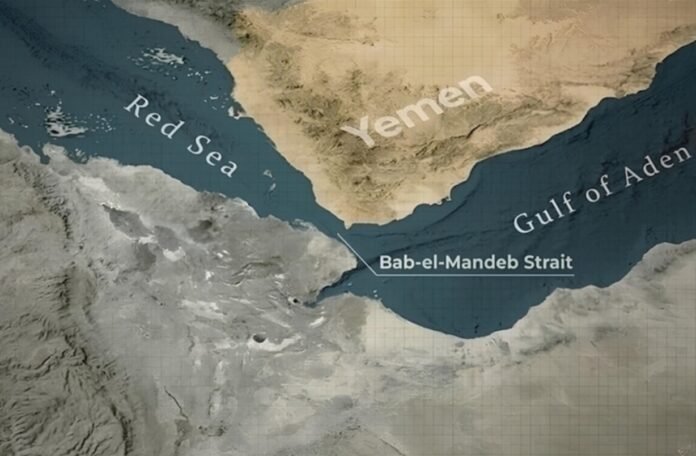
Escalation could extend to other chokepoints, including the Bab al-Mandab Strait, amplifying global economic pressure.

Maritime Pressure Cuts Both Ways

A U.S. maritime blockade may seem like a strong coercive tool.

But it comes with a strategic paradox:

  • If ineffective → it weakens U.S. credibility
  • If effective → it provokes Iranian retaliation

Iran is unlikely to absorb sustained pressure passively.

Instead, it may respond by:

  • targeting shipping routes
  • increasing disruption in the Gulf
  • raising costs for the global economy

This turns the confrontation into a mutual pressure cycle with no clear exit.

The “No War, No Peace” Phase Is Breaking Down

For months, the situation has hovered in a fragile equilibrium:

  • no full-scale war
  • no meaningful agreement

But that balance is inherently unstable.

Without progress in negotiations, the system begins to shift:

  • pressure increases
  • mistrust deepens
  • timelines shorten

At that point, escalation becomes less a choice—and more a matter of timing.

Iran Is Not Signaling Compromise

There are currently no clear signs that Tehran is preparing to make major concessions.

This is partly structural.

Power within Iran remains heavily influenced by the Islamic Revolutionary Guard Corps, which has historically favored:

  • strategic resistance
  • deterrence through escalation
  • limited flexibility under pressure

That internal dynamic makes rapid diplomatic breakthroughs unlikely.

Trump’s Dilemma: Escalate or Step Back

The longer negotiations stall, the narrower Washington’s options become.

Eventually, the administration may face a difficult choice:

  • escalate militarily
  • accept concessions
  • or disengage from the confrontation

None of these options offers a clean outcome.

The Missing Piece: Mutual Concessions

The core problem is simple:

negotiations cannot move forward without incentives.

Iran is unlikely to return to talks without:

  • some form of sanctions relief
  • economic breathing space
  • a credible diplomatic pathway

Without that, the current approach risks becoming self-defeating.

A Conflict With No Easy Solution

At its core, the US-Iran standoff is defined by a dangerous imbalance of expectations:

  • Iran believes it can inflict greater global economic harm
  • the U.S. believes pressure will force compliance

Both assumptions cannot hold indefinitely.

And that is what makes the situation so unstable.

Final Thought: Delay Is Not De-Escalation

Extending a ceasefire may buy time.

But time alone does not solve strategic contradictions.

Without movement toward a real agreement:

  • pressure will increase
  • risks will compound
  • escalation will become more likely

The ceasefire may still be holding.

But the conditions that led to conflict are not going away.

Pakistan’s 600km Taimoor Missile Could Reshape Arabian Sea Power Balance

0
Pakistan unveiled Taimoor Air-Launched Cruise Missile at World Defense Show 2026

Pakistan’s successful live firing of the Taimoor air-launched cruise missile marks a significant step in its evolving maritime strategy, introducing a new level of uncertainty into the Arabian Sea security environment.

With a reported range of up to 600 kilometers, the missile allows Pakistan to target hostile naval vessels from stand-off distances, potentially altering long-standing assumptions about India’s naval superiority.

A New Layer in Pakistan’s Deterrence Strategy

The Taimoor is not just another missile test—it represents a broader shift.

Pakistan appears to be building a layered anti-access/area-denial (A2/AD) network, combining:

  • air-launched missiles
  • ship-launched systems
  • future submarine-based capabilities

This approach aims to complicate adversary planning rather than match naval power directly.

What Makes the Taimoor Missile Significant

Developed indigenously, the missile is believed to be derived from the Ra’ad family but optimized for maritime strike missions.

Key features include:

  • range of up to 600 km
  • subsonic speed (~Mach 0.8)
  • low-altitude flight profile to evade radar
  • multiple warhead configurations (400–450 kg class)
  • high-precision guidance systems

Its ability to fly at low altitude reduces detection time for shipborne defenses, increasing its effectiveness against naval targets.

Implications for India’s Naval Strategy

India maintains a clear advantage at sea, with:

  • aircraft carriers like INS Vikramaditya and INS Vikrant
  • advanced destroyers and frigates
  • layered air-defense systems such as Barak-8

However, the introduction of Taimoor introduces a new air-launched strike vector that could force operational changes.

Indian naval planners may now need to:

  • operate farther from Pakistan’s coastline
  • increase reliance on airborne surveillance
  • allocate more resources to missile defense

This could complicate strategies such as blockade operations near Karachi or Gwadar.

Stand-Off Warfare and Asymmetric Advantage

One of the missile’s key advantages is its stand-off capability.

Aircraft launching Taimoor can remain outside engagement range of many naval defenses, reducing risk to pilots and platforms.

Pakistan has already tested the missile on Mirage III aircraft, suggesting even older platforms can play a role in modern warfare.

This reflects a broader shift toward:

  • low-cost precision strike
  • dispersed launch platforms
  • asymmetric deterrence

Part of a Broader Military Build-Up

The April 21 test is part of a wider pattern.

Pakistan has recently:

  • tested ship-launched anti-ship missiles
  • inducted new naval platforms
  • expanded indigenous weapons programs

Together, these developments point to a deliberate effort to reduce reliance on imported systems and improve wartime sustainability.

Deterrence vs Escalation Risk

While the Taimoor strengthens Pakistan’s conventional deterrence, it also introduces new risks.

In a crisis:

  • both sides may fear early strikes
  • pressure to act preemptively could increase
  • escalation timelines could shorten

Given that any India-Pakistan conflict operates under a nuclear backdrop, these dynamics are particularly sensitive.

Not a Game-Changer — But a Strategic Signal

Despite its significance, the Taimoor does not fundamentally overturn India’s naval advantage.

Challenges remain:

  • subsonic speed makes interception possible
  • production scale is unclear
  • operational integration is still ongoing

Indian forces also possess advanced systems like:

  • BrahMos supersonic missiles
  • Rafale-launched SCALP systems
  • S-400 air defense

However, the missile represents a meaningful incremental shift that increases uncertainty and raises the cost of conflict.

Conclusion: A More Complex Arabian Sea Battlespace

The introduction of the Taimoor missile reflects a broader transformation in regional warfare:

  • precision strike over platform dominance
  • deterrence through uncertainty
  • layered defense against stronger adversaries

The Arabian Sea is no longer just a domain of naval superiority.

It is becoming a contested battlespace shaped by missiles, drones, and stand-off warfare.

Qatar Moves Toward Defense Pact With Pakistan in Major Shift in Gulf Security Strategy

0
Qatar Ship al khor visit Karachi port, Pakistan

Qatar is moving toward a strategic defense agreement with Pakistan, a development that could significantly reshape the Gulf’s evolving security architecture.

The proposed pact comes amid rising regional uncertainty following the September 2025 Israeli strikes on Doha, which exposed vulnerabilities in Gulf security despite longstanding Western military presence.

From Dependence to Diversification

The emerging agreement reflects a broader shift across the Gulf:

  • moving away from reliance on a single external security guarantor
  • building layered deterrence systems
  • strengthening regional and extra-regional partnerships

By engaging Pakistan, Qatar is signaling that future security planning will rely more on diversified alliances and operational readiness rather than reactive external intervention.

Pakistan’s Rising Strategic Value

Pakistan is increasingly viewed as a valuable military partner due to its:

  • nuclear deterrence capability
  • large standing military
  • combat and operational experience
  • existing Gulf deployment footprint

Approximately 13,000 Pakistani personnel are already deployed in Saudi Arabia in training and advisory roles, providing a ready-made framework for deeper Gulf integration.

What the Agreement Will Likely Include

Unlike the earlier Saudi-Pakistan mutual defense pact, the Qatar agreement is expected to focus on practical military readiness rather than immediate troop deployment.

Key areas under discussion include:

  • joint military exercises
  • intelligence sharing
  • cybersecurity cooperation
  • drone and counter-drone capabilities
  • professional military education

These measures aim to build interoperability before a crisis occurs, reducing response time and operational friction.

A Focus on Modern Threats

The agreement places strong emphasis on 21st-century security challenges, including:

  • cyber threats to critical infrastructure
  • unmanned aerial systems
  • integrated air defense
  • multi-domain warfare

Pakistan’s experience in intelligence fusion, counterterrorism, and drone operations is seen as particularly valuable for Qatar’s evolving defense needs.

Defense Industry Cooperation Emerging

Beyond military coordination, the deal is expected to include a defense-industrial dimension.

Discussions have reportedly explored:

  • joint production of military equipment
  • maintenance and support systems
  • co-development of unmanned platforms
  • communications and electronics technology

For Qatar, this offers affordable alternatives to Western suppliers, while Pakistan gains export revenue and technological partnerships.

A New Gulf Security Model Taking Shape

The significance of the agreement extends beyond bilateral ties.

It points toward a broader transformation in regional security:

  • flexible partnerships instead of rigid alliances
  • operational coordination over formal defense guarantees
  • scalable cooperation tailored to specific threats

This emerging model could eventually involve other Gulf states such as:

  • Saudi Arabia
  • United Arab Emirates
  • Kuwait
  • Oman

Complementing — Not Replacing — the US Role

Importantly, the Qatar-Pakistan agreement is not expected to replace the U.S. military presence.

Instead, it will complement existing arrangements, including operations around key installations like Al Udeid Air Base.

However, the shift signals that Gulf states are increasingly preparing for scenarios where external intervention may not arrive quickly enough.

Strategic Implications

If finalized, the agreement could:

  • expand Pakistan’s influence into the Gulf
  • strengthen regional deterrence
  • complicate adversary calculations
  • accelerate a shift toward multipolar security structures

Even without a formal mutual-defense clause, the perception of closer coordination may itself act as a powerful deterrent signal.

Conclusion: A Turning Point in Gulf Security

The Qatar-Pakistan defense talks represent more than a bilateral agreement.

They reflect a deeper transformation:

the Gulf is moving from dependence to strategic autonomy.

As regional threats evolve and global power competition intensifies, partnerships like this may define the next phase of Middle Eastern security architecture.

Pakistan Puts $1.5 Billion Sudan Arms Deal on Hold After Saudi Arabia Withdraws Support

0
JF-17 Block III

Pakistan has put a planned $1.5 billion arms deal with Sudan on hold after Saudi Arabia withdrew financial backing and urged Islamabad to terminate the agreement, according to security and diplomatic sources cited by Reuters.

The deal, which included the supply of weapons and aircraft, had reportedly reached its final stages earlier this year.

Image

Saudi Arabia Withdraws Financing

Sources indicate that Riyadh played a key role in brokering the agreement but later decided not to finance the deal.

Saudi Arabia “signaled that Pakistan should terminate the deal” after backing away from funding, a security source said.

The move reflects Saudi Arabia’s cautious approach to involvement in conflict zones and proxy dynamics, particularly in Africa.

Sudan Conflict at the Center of Tensions

The deal comes against the backdrop of Sudan’s ongoing war between:

  • the national army
  • the paramilitary Rapid Support Forces (RSF)

The conflict has triggered one of the world’s worst humanitarian crises and drawn in competing foreign interests.

Sudan’s strategic importance — including its Red Sea access and gold resources — has made it a focal point for regional competition.

External Pressure Influenced Decision

According to sources, some Western countries advised Saudi Arabia to avoid deeper involvement in proxy conflicts in Africa.

This external pressure may have contributed to Riyadh’s decision to step back from financing the deal.

The situation highlights how defense trade is increasingly shaped by geopolitical calculations, not just commercial interests.

Pakistan-Saudi Strategic Ties Remain Key

The decision also underscores the importance of Pakistan’s relationship with Saudi Arabia.

The two countries:

  • maintain close economic ties
  • signed a mutual defense pact last year
  • rely on each other for strategic support

Pakistan has historically depended on Saudi financial backing, particularly during periods of economic stress.

This makes Riyadh’s position a critical factor in Islamabad’s major defense decisions.

UAE-Saudi Rivalry in Sudan

The development also reflects broader regional dynamics.

While Saudi Arabia is seen as backing Sudan’s army, the United Arab Emirates has been accused of supporting the RSF — an allegation it denies.

This divergence highlights a growing strategic competition between Gulf powers across Africa.

Impact on Pakistan’s Defense Exports

The halted deal is significant for Pakistan’s defense sector.

The agreement was part of a broader push by Islamabad to expand arms exports, particularly after increased attention on its military capabilities following tensions with India last year.

A delay or cancellation could:

  • affect export momentum
  • impact defense revenues
  • signal limits of expansion in politically sensitive markets

Conclusion: Geopolitics Overrides Defense Trade

The suspension of the Sudan deal illustrates a broader reality:

Defense agreements are increasingly vulnerable to geopolitical pressure.

While Pakistan continues to pursue new markets, major deals — especially in conflict zones — will remain subject to:

  • financing constraints
  • regional rivalries
  • external diplomatic pressure

For now, the Sudan agreement remains on hold, with its future uncertain.

Russia Delivers New Batch of Su-35S Fighters as Rostec Highlights Combat Performance

0
Russia Su-35S

Russia has taken delivery of another batch of Su-35S multirole fighter jets, as defense conglomerate Rostec confirmed that the aircraft were handed over by the United Aircraft Corporation (UAC) to the Russian Aerospace Forces.

The announcement underscores Moscow’s continued focus on sustaining and expanding its frontline combat aviation fleet.

Image

Rostec Praises Su-35S Combat Performance

Senior Rostec official Vladimir Artyakov highlighted the aircraft’s operational record, describing the Su-35S as one of the most effective modern combat aircraft currently in service.

According to Artyakov:

  • the aircraft has demonstrated strong battlefield performance
  • pilots have praised its flight characteristics
  • it has achieved a high number of aerial interceptions

Such statements reflect Russia’s continued emphasis on showcasing the platform’s combat credibility.

Limited Transparency on Delivery Numbers

As with previous announcements, the exact number of aircraft included in the latest batch was not disclosed.

This follows a broader pattern of limited transparency regarding production and delivery figures.

Available open-source estimates suggest that during 2025:

  • multiple delivery batches were completed
  • shipments occurred throughout the year
  • individual batches typically included two to three aircraft

Total deliveries are estimated to range between:

  • at least 7 aircraft
  • up to 15 or possibly 21 units

However, precise figures remain unconfirmed.

Steady Production Despite Uncertainty

Despite the lack of official numbers, the delivery timeline indicates consistent production output.

Reported delivery dates during 2025 include:

  • March 29
  • May 12
  • June 25
  • August 21
  • September 24
  • November 1
  • December 25

This steady cadence suggests that Russia is maintaining a regular production cycle for the Su-35S platform.

Image

Role of the Su-35S in Russian Air Power

The Su-35S is a highly maneuverable 4++ generation fighter designed for:

  • air superiority missions
  • long-range interception
  • strike operations
  • escort duties

It features:

  • advanced radar systems
  • thrust-vectoring engines
  • extended combat range
  • multi-role weapons capability

The aircraft serves as a key component of Russia’s tactical airpower, bridging the gap between legacy fighters and newer platforms.

Strategic Implications

Continued Su-35S deliveries indicate that Russia is prioritizing:

  • fleet sustainment
  • replacement of losses
  • maintaining air superiority capabilities

At the same time, the lack of detailed disclosure highlights ongoing sensitivities around production capacity and operational readiness.

Conclusion

The latest delivery confirms that Russia’s fighter production remains active, even as exact output levels remain unclear.

For now, the Su-35S continues to play a central role in the country’s airpower strategy — both as an operational platform and as a symbol of ongoing defense industrial activity.

Petraeus Warns US: Ukraine’s Drone War, Not Gulf Success, Defines the Future of Warfare

0
The AI-enabled drone of Swarmer company flies, amid Russia's attack on Ukraine, in Kyiv region, Ukraine.

Retired U.S. General David Petraeus has warned that America’s recent military success against Iran may risk obscuring the far more important lessons emerging from the war in Ukraine.

Writing in The Wall Street Journal, Petraeus argued that while U.S. forces performed effectively in the Gulf, the defining conflict of modern warfare is unfolding elsewhere.

The real war of the 21st century, he suggests, is already being fought in Ukraine.

Image


Two Wars, Two Completely Different Environments

Petraeus highlights a critical contrast.

The Gulf conflict was fought under permissive conditions, where U.S. and allied forces:

  • controlled the electromagnetic spectrum
  • faced limited disruption
  • operated with technological superiority

In contrast, the war in Ukraine is defined by:

  • constant electronic warfare
  • GPS jamming and spoofing
  • rapid destruction and replacement of systems
  • near-peer military capabilities

This difference fundamentally changes how wars are fought.

Lesson One: Mass Matters More Than Cost

The first major lesson, according to Petraeus, is scale.

Ukraine is producing millions of drones annually, with projections reaching up to seven million units this year.

This represents a dramatic shift away from traditional military thinking.

Instead of relying on small numbers of expensive platforms, modern warfare is moving toward:

  • high-volume production
  • low-cost systems
  • continuous replacement cycles

Image

This model allows forces to absorb losses while maintaining operational pressure.

Lesson Two: Speed of Adaptation Is Critical

The second lesson is speed.

Ukrainian drone developers are reportedly:

  • updating software on a weekly basis
  • modifying hardware every few weeks

At the same time, battlefield units are rapidly adapting tactics to match.

This creates a continuous innovation loop between industry and frontline forces.

Petraeus argues that traditional U.S. procurement systems are too slow to compete with this model.

Lesson Three: Resilience in Contested Environments

The third lesson is survivability.

Modern systems must operate in environments where:

  • communications are degraded
  • signals are jammed
  • GPS is unreliable

This is driving the development of:

  • autonomous drones
  • AI-enabled targeting
  • coordinated swarm systems

The future battlefield may rely less on direct human control and more on machine-to-machine coordination.

Cheap Drones vs Traditional Naval Power

One of the most striking examples comes at sea.

Despite lacking a conventional navy, Ukraine has used maritime drones to:

  • damage
  • disable
  • and sink Russian naval assets

These operations have forced parts of Russia’s Black Sea Fleet to relocate away from contested zones.

Image

This demonstrates how relatively inexpensive systems can challenge traditional naval power.

A Warning for US Military Strategy

Petraeus concludes with a stark warning.

The Gulf conflict shows what U.S. forces can achieve from a position of dominance.

But Ukraine shows what war looks like when:

  • technology is contested
  • advantages are limited
  • and adaptation determines survival

The danger, he argues, is that success in one environment could lead to misreading the future battlefield.

The Urgency of Change

The lessons from Ukraine are not theoretical.

They are already shaping the future of warfare:

  • mass production over precision scarcity
  • rapid innovation over slow procurement
  • resilience over technological superiority

For the United States, the challenge is clear:

adapt quickly — or risk falling behind.

Iran’s Strategy Is Clear: Escalate Costs, Not Concede

0
sea mines, Strait of Hormuz

Tensions in the Strait of Hormuz are rising once again after Iranian military officials signaled renewed restrictions on maritime traffic, linking the situation to ongoing U.S. naval pressure in the region.

Statements attributed to Iran’s Khatam al-Anbiya Central Headquarters, reported by Fars News Agency, suggest that Tehran is once again willing to use the strait as a strategic lever.

Image

Whether formally “closed” or simply restricted, the message is clear:

Iran retains the ability to disrupt one of the world’s most critical energy chokepoints.

Control Without Formal Closure

In practical terms, control of the Strait does not require a full shutdown.

Iran can influence traffic through:

  • routing restrictions
  • naval presence
  • inspection regimes
  • selective disruption

This creates a situation where the waterway remains technically open, but operationally constrained on Tehran’s terms.

For global markets and shipping companies, the distinction matters little — uncertainty alone is enough to drive risk.

Pressure Is Being Answered With Pressure

It would be a mistake to interpret Iran’s behavior as restraint.

The current approach suggests a calibrated strategy:

  • avoid immediate large-scale escalation
  • gradually increase pressure points
  • raise costs for adversaries and global stakeholders

The Strait of Hormuz is the most effective tool available for that purpose.

Image

Rather than direct confrontation, Tehran appears to be signaling capability and intent, while leaving room for negotiations.

Hardline Influence Remains Dominant

Internal dynamics in Iran also shape this posture.

Public messaging from figures like Mohammad Bagher Ghalibaf points to a continued dominance of hardline elements within the political and security establishment.

This matters because it defines the limits of compromise.

Iran’s red lines remain unchanged:

  • uranium enrichment
  • missile capabilities
  • regional influence
  • control over Hormuz dynamics

There is little indication that Tehran is prepared to concede on any of these under pressure alone.

Escalation Without Clear Endgame

Image

The central strategic question is not whether escalation is possible — it clearly is.

The real question is:

what does escalation achieve?

History suggests that sustained pressure on Iran tends to produce:

  • internal consolidation
  • stronger hardline positioning
  • increased strategic resilience

rather than political capitulation.

A Regime Built to Absorb Pressure

Iran’s system is structurally different from many past U.S. adversaries.

It is built around:

  • ideological cohesion
  • long-term strategic patience
  • willingness to absorb economic and military costs

This makes it particularly resistant to coercive strategies.

Even significant military pressure may not fundamentally alter its trajectory.

The Hormuz Lever and Global Impact

The stakes extend far beyond regional politics.

The Strait of Hormuz carries roughly 20% of global oil shipments, making it one of the most important chokepoints in the world.

Any sustained disruption could impact:

  • global energy markets
  • shipping insurance costs
  • inflation trends
  • supply chains

That gives Iran leverage not just over the United States, but over the global economy.

Image

Negotiation vs Confrontation

The current situation presents a familiar dilemma:

  • Negotiation may stabilize the situation but leave Iran’s core capabilities intact
  • Escalation may weaken Iran in the short term but strengthen its long-term resolve

Neither path offers a clean or immediate solution.

Conclusion: A Predictable Pattern

When reduced to its essentials, the pattern is clear:

  • pressure leads to counter-pressure
  • constraints trigger resistance
  • escalation risks unintended consequences

Iran’s strategy is not about immediate victory.

It is about shaping the cost environment until a more favorable balance emerges.

And in that equation, the Strait of Hormuz remains its most powerful tool.

Gulf States Reassess US Military Presence as Regional Power Balance Begins to Shift

0
US military bases in the Gulf

The recent conflict involving the United States and Iran may have triggered a deeper strategic shift across the Gulf.

While Washington still maintains a significant military footprint in the region, Gulf Cooperation Council (GCC) states are increasingly reassessing the long-term value of hosting U.S. forces, especially after the costs and risks exposed during the latest escalation.

The question is no longer whether the U.S. will remain present.

It is on what terms — and for how long.

Image

The Backbone of US Power in the Gulf

For decades, U.S. regional dominance has relied on a network of major bases across the Gulf:

  • Al Udeid Air Base – largest U.S. air base in the region
  • Al Dhafra Air Base – key air operations hub
  • Naval Support Activity Bahrain – headquarters of the U.S. Fifth Fleet
  • Camp Arifjan – major U.S. Army logistics base

These installations have enabled U.S. operations across the Middle East for decades.

But rebuilding, maintaining, and politically sustaining them is becoming increasingly complex.

Bahrain and Kuwait Signal Policy Friction

Image

In Bahrain, public and political voices are increasingly calling for a shift toward diplomacy and a reassessment of foreign troop presence.

Questions are being raised about the long-term role of the U.S. Fifth Fleet, especially in a region moving toward de-escalation.

Meanwhile, Kuwait has taken a more cautious approach.

While officially limiting offensive operations from its territory, it has still played a role in enabling U.S. military activity — highlighting the gap between public policy and strategic reality.

Qatar and Oman Take Divergent Paths

Qatar has reportedly signaled one of the most significant shifts, with discussions about reducing or restructuring U.S. troop presence.

This reflects growing concern that hosting foreign forces may increasingly expose Gulf states to retaliation.

In contrast, Oman has taken a more openly critical stance, condemning recent military actions and emphasizing neutrality.

This positions Muscat as a potential diplomatic bridge — but also underscores widening divisions within the GCC.

Saudi Arabia Draws Red Lines

Saudi Arabia has made perhaps the clearest strategic move.

Crown Prince Mohammed bin Salman has reportedly communicated that the Kingdom will not allow its territory, airspace, or waters to be used for offensive operations in conflicts it is not directly part of.

This marks a significant shift from past practice.

At the same time, Riyadh is expanding its strategic options, including:

  • deeper security coordination with non-Western partners
  • diversified defense procurement
  • broader regional deterrence posture

Image

UAE Reassesses Its Strategic Position

The United Arab Emirates, long seen as one of Washington’s closest regional partners, has also faced growing pressure.

Recent attacks and economic disruptions have exposed vulnerabilities, particularly for hubs like Dubai.

At the same time, Abu Dhabi is increasingly engaging with China, including high-level diplomatic outreach aimed at securing long-term stability in a shifting regional order.

A Shift From Dependence to Diversification

Across the Gulf, a broader pattern is emerging:

  • reduced reliance on a single security partner
  • increased hedging between global powers
  • greater emphasis on regional autonomy

This does not mean the United States is leaving the region.

But it does suggest its role is evolving — from dominant security guarantor to one of several competing external powers.

Is the US Still Seen as a Stabilizing Force?

Perhaps the most important shift is perception.

For decades, U.S. presence was viewed as a stabilizing force.

Now, in some Gulf capitals, it is increasingly seen as:

  • a source of escalation risk
  • a trigger for regional retaliation
  • a factor complicating diplomacy

This change in perception may prove more significant than any physical redeployment of forces.

Image

Entering a New Phase of Regional Order

The region now appears to be entering what some analysts describe as a new phase — a transition toward a multi-polar security environment.

In this emerging order:

  • Gulf states play a more independent role
  • the U.S. remains influential but less dominant
  • China and Russia gradually expand their presence

The outcome of this shift will shape the Middle East for years to come.

Isfahan Speculation Grows as Trump Reveals Uranium Removal Plan

0
Military personnel stand guard at a nuclear facility in the Zardanjan area of Isfahan, Iran.

Donald Trump has said the United States is working with Iran on a plan to recover and remove enriched uranium, offering the clearest signal yet that negotiations between the two sides may be nearing a breakthrough.

In an interview with Reuters, Trump described a potential joint effort to retrieve nuclear material from Iranian sites.

“We’re going to get it together. We’re going to go in with Iran, at a nice leisurely pace, and go down and start excavating with big machinery… We’ll bring it back to the United States,” he said.

Image

The comments suggest a possible technical solution to one of the most difficult issues in US-Iran negotiations — Iran’s stockpile of highly enriched uranium.

Iran’s Uranium Stockpile at Center of Talks

Iran is believed to possess more than 900 pounds of uranium enriched up to 60% purity, a level far beyond civilian requirements and close to weapons-grade thresholds.

The issue has long been one of the most contentious points in negotiations.

Trump has repeatedly argued that preventing Iran from developing a nuclear weapon was a primary objective of recent military pressure, while Iran maintains its nuclear program is for peaceful civilian purposes.

Unverified Claims About Isfahan Remain Unclear

Alongside Trump’s remarks, unverified reports have circulated suggesting possible arrangements involving nuclear-related sites near Isfahan.

These claims include speculation about:

  • direct U.S. involvement in uranium recovery operations
  • potential on-site activity near nuclear facilities

However, no official confirmation has been provided by either Washington or Tehran regarding:

  • a U.S. military presence inside Iran
  • establishment of any base
  • or operational control over nuclear infrastructure

Given the sensitivity, these reports remain unverified and should be treated cautiously.

No Money, Continued Pressure

Trump also dismissed reports of a financial deal tied to uranium removal.

“It’s totally false. No money is changing hands,” he said.

At the same time, he confirmed that U.S. military pressure will continue:

  • the naval blockade on Iran remains in place
  • restrictions will stay until a final agreement is reached

This reflects a dual-track strategy combining diplomacy and coercive leverage.

Hormuz, Mines and Maritime Control

Trump added that the United States is also working with Iran to remove naval mines from the Strait of Hormuz, a critical global shipping route.

Image

This comes as both sides have declared the strait open to commercial shipping, though under differing operational conditions.

Deal May Be Close — But Not Final

Trump struck an optimistic tone about negotiations:

“I think the deal will go very quickly. We’re getting along very well with Iran.”

He added that further talks are expected soon, possibly over the weekend, and could involve additional diplomatic engagement, including a potential visit to Islamabad.

However, key elements remain unresolved, including:

  • verification mechanisms
  • long-term nuclear limits
  • enforcement structure
  • regional security conditions

A Critical Moment With High Stakes

The emerging framework suggests a possible pathway:

  • Iran limits or gives up enriched uranium stockpiles
  • the U.S. maintains pressure until compliance is verified
  • maritime stability improves in parallel

But the gap between public statements and confirmed agreements remains significant.

For now, negotiations appear to be moving forward — but with limited clarity and high strategic risk if talks collapse.

Congressional Report Details How China Bypasses US AI Chip Restrictions

0
China US AI rivalry

A new investigation by the House Select Committee on the Strategic Competition between the United States and the Chinese Communist Party has laid out a stark assessment of China’s artificial intelligence ambitions, concluding that Beijing is pursuing a dual strategy to secure dominance: “buy what it can, steal what it must.”

The report argues that while China has made rapid progress in AI development, it remains structurally dependent on Western technology—particularly in advanced semiconductor manufacturing.

Image


China’s Core Weakness: Advanced Chip Manufacturing

Despite significant investment, China still struggles to produce cutting-edge AI chips at scale.

According to the report:

  • China lacks the ability to manufacture frontier AI chips at required scale and yield
  • It remains dependent on foreign suppliers for chipmaking equipment and software
  • Domestic firms lag behind global leaders in advanced logic and memory chips

For example, China’s top chipmaker has not yet achieved mass production of advanced processors, while its memory sector also remains behind in high-bandwidth memory (HBM) — a key component for AI systems.

How China ‘Buys’ Its Way Into AI Capability

The report highlights that China continues to legally acquire significant amounts of AI-related technology despite export controls.

Key findings include:

  • China remains the largest global buyer of chipmaking equipment
  • It lawfully purchases large volumes of near-threshold AI chips
  • It accesses advanced computing power through foreign cloud services

In 2024 alone, China reportedly spent $38 billion on foreign semiconductor equipment, underscoring the scale of its reliance on external supply chains.

Cloud Loopholes and Global Workarounds

One of the most critical vulnerabilities identified is the ability of Chinese firms to bypass restrictions through offshore infrastructure.

Instead of importing restricted chips directly, companies:

  • train AI models using data centers in Southeast Asia
  • access U.S. chips through cloud platforms and APIs
  • rely on foreign intermediaries to maintain compute capacity

This effectively allows Chinese firms to use advanced hardware without physically importing it into China.

How China ‘Steals’ Technology

Where legal access is restricted, the report alleges that Chinese actors turn to more covert methods.

These include:

  • smuggling networks routing chips through third countries
  • use of shell companies to bypass export controls
  • unauthorized access to AI models via API exploitation
  • industrial-scale data extraction from U.S. firms

In some cases, investigators found large-scale operations involving:

  • relabeling hardware shipments
  • using fake end-users
  • routing transactions through multiple jurisdictions

AI Model ‘Extraction’ Raises New Concerns

Beyond hardware, the report highlights a growing concern: extraction of AI model capabilities.

Chinese firms are accused of:

  • using large volumes of API queries
  • reverse-engineering outputs from U.S. AI systems
  • training competing models using extracted data

The report describes this as a form of industrial-scale digital espionage, enabled by proxy networks and thousands of fraudulent accounts.

Image

Why the US Still Holds the Advantage

Despite China’s progress, the report concludes that the United States and its allies still control key chokepoints in the AI supply chain.

These include:

  • advanced semiconductor manufacturing equipment
  • high-end AI chips
  • software ecosystems
  • cloud infrastructure

However, the report warns that policy gaps and weak enforcement are allowing China to continue narrowing the gap.

Policy Recommendations and the Road Ahead

The Committee calls for a major tightening of U.S. policy, including:

  • stricter export controls on AI chips
  • regulation of cloud access to advanced compute
  • stronger penalties for violations
  • new laws targeting shell companies and smuggling

It also recommends treating AI capability extraction as economic espionage.

A Defining Front in Global Competition

The report frames AI as the central battleground of 21st-century geopolitical competition.

China’s strategy, it argues, is not simply about catching up—but about controlling the entire AI ecosystem, from chips to models to applications.

At the same time, its continued dependence on Western technology suggests that the outcome of this competition remains undecided.

US MQ-4C Triton Drone Conducts Extended Surveillance Near Cuba Amid Rising Policy Tensions

0
U.S. MQ-4C Triton unmanned aerial vehicle has begun active reconnaissance flights near Cuba

A U.S. Navy MQ-4C Triton high-altitude surveillance drone carried out an extended reconnaissance mission near Cuban territory, underscoring heightened attention on U.S. policy toward the island.

Flight tracking data and open-source reporting show the drone, operating under the callsign BLKCAT6, conducted a more than 12-hour mission over waters near Cuba, including repeated passes close to Havana and the area surrounding Guantanamo Bay.

Image

The aircraft departed from and later returned to Naval Air Station Jacksonville in Florida.

High-Altitude Persistent Surveillance

The MQ-4C Triton, developed by Northrop Grumman, is designed for long-endurance maritime surveillance missions.

During this operation, tracking data indicates the drone maintained:

  • an altitude of approximately 49,000 feet
  • a ground speed of around 290 knots
  • repeated looping flight patterns over key areas

These patterns suggest the mission was not a simple transit flight, but rather sustained monitoring of specific locations.

Unlike short-duration overflights, the Triton is capable of remaining on station for extended periods, building a continuous picture of activity across wide maritime and coastal regions.

Focus on Havana and Guantanamo Bay

The drone’s route indicates particular focus on:

  • waters near Havana
  • northern Cuban coastline
  • areas around Guantanamo Bay

The repeated back-and-forth tracks suggest an effort to maintain persistent coverage, allowing analysts to monitor movements and detect patterns over time.

This type of surveillance is typically used to support:

  • maritime domain awareness
  • coastal activity tracking
  • intelligence gathering for contingency planning

Context: Increased Attention on US-Cuba Policy

The timing of the mission comes amid renewed attention to U.S. policy toward Cuba.

Reports have indicated that the Pentagon is reviewing a range of contingency plans related to the region. In response to such reporting, U.S. defense officials have reiterated that the Department of Defense routinely prepares for multiple scenarios and stands ready to execute presidential directives if required.

Image

No official confirmation has been provided regarding specific operational plans tied to this particular flight.

Role of Triton in Modern Surveillance Operations

The MQ-4C Triton plays a key role in modern intelligence and surveillance operations due to its ability to:

  • remain airborne for extended durations
  • monitor large geographic areas
  • provide real-time sensor data
  • track surface and coastal activity

Its high-altitude operation allows it to cover broad areas while remaining outside immediate risk zones.

This makes it particularly suited for persistent surveillance missions in sensitive or strategically important regions.

What the Flight Suggests

While the U.S. Navy has not issued a public statement about this specific mission, the available data indicates a prolonged and focused reconnaissance operation rather than routine transit activity.

Such missions typically support broader situational awareness, especially during periods of increased geopolitical attention.

At this stage, the flight highlights heightened monitoring of the region, rather than any confirmed shift toward direct military action.

India Expands Arabian Sea Military Exercise After Pakistan’s SMASH Missile Test, Raising Regional Tensions

0
Indian warship launching BrahMos missile

The Indian Navy has declared a large exclusion zone in the Arabian Sea for a four-day missile firing and naval aviation exercise, just days after Pakistan conducted a live-fire test of its SMASH anti-ship ballistic missile.

The timing has intensified regional tensions, turning what began as a single missile test into a broader maritime confrontation between South Asia’s nuclear-armed rivals.

Image

India’s NOTAM (Notice to Airmen) establishes a restricted zone extending roughly 400 kilometers offshore, covering key waters near its western coastline.

Pakistan’s SMASH Missile Test Sparks Strategic Response

The escalation follows Pakistan’s recent test of the SMASH anti-ship ballistic missile, designed to target high-value naval assets such as:

  • aircraft carriers
  • destroyers
  • logistics vessels

Pakistan’s naval chief, Admiral Naveed Ashraf, personally observed the launch, signaling Islamabad’s intent to present the system as a credible asymmetric deterrent.

Unlike traditional anti-ship cruise missiles, ballistic missiles travel at high speeds and follow steep trajectories, reducing reaction time for naval defenses.

INS Dhruv Deployment Highlights Intelligence Dimension

India’s most significant response may not have been the exercise itself, but the early deployment of INS Dhruv, its specialized missile-tracking and surveillance vessel.

The ship was reportedly positioned in international waters before Pakistan’s test window concluded.

Image

INS Dhruv carries advanced:

  • telemetry receivers
  • AESA radar systems
  • electronic intelligence sensors

This allowed India to potentially collect critical data on:

  • missile trajectory
  • radar signatures
  • guidance systems
  • electronic emissions

Such intelligence could strengthen India’s missile defense and interception capabilities.

Arabian Sea Emerging as Strategic Battlespace

The latest developments highlight a broader shift.

The Arabian Sea is increasingly becoming a frontline strategic domain for India-Pakistan competition.

Traditionally, rivalry between the two countries was concentrated along:

  • land borders
  • airspace

Now, maritime competition is growing due to:

  • sea lane security
  • energy routes
  • naval modernization
  • missile deployment

This shift has major implications because the region contains vital global shipping and energy corridors.

Exercise Signals Escalation Control and Deterrence

India’s exercise, scheduled from April 22 to 25, appears designed to demonstrate:

  • combat readiness
  • maritime surveillance capability
  • missile and aviation integration
  • blue-water naval power

The exclusion zone extends from sea level to 30,000 feet, indicating coordination between naval aviation and surface forces.

Despite the scale, Indian officials have described the exercise as routine.

Pakistan has similarly framed its missile test as a standard demonstration of indigenous capability.

Yet the sequence of events creates a clear pattern:

Pakistan tests offensive capability → India collects intelligence → India responds with larger-scale exercise

Asymmetric Strategy vs Naval Dominance

The underlying strategic logic reflects an imbalance.

India maintains a larger and more capable navy.

Pakistan, with a smaller fleet, is increasingly relying on asymmetric systems like anti-ship ballistic missiles to counter that advantage.

Such systems can:

  • threaten high-value targets
  • force naval dispersion
  • increase operational risk
  • complicate carrier operations

This creates a cost imbalance where relatively cheaper missiles can challenge billion-dollar warships.

A Managed but Dangerous Rivalry

Despite rising tensions, both sides appear to be managing escalation carefully.

The use of NOTAMs and maritime warnings allows both countries to:

  • avoid accidental conflict
  • signal military capability
  • maintain deterrence
  • operate below the nuclear threshold

However, the frequency and scale of such activities are increasing.

The Arabian Sea is now emerging as a critical theater for future India-Pakistan crises.

US Launches High-Risk Mine-Clearing Operation in Strait of Hormuz Using Drones and Underwater Robots

0
A formation of Avenger-class mine countermeasure ships USS Devastator (MCM 6), USS Gladiator (MCM 11), USS Sentry (MCM 3), USS Dextrous (MCM 13), the Arleigh Burke-class guided missile destroyer USS Mason (DDG 87) and an MH-53E Sea Dragon helicopter assigned to the “Blackhawks” of Helicopter Mine Countermeasures Squadron (HSM) 15 maneuver in the Arabian Sea.

The United States has begun a complex and high-risk mine-clearing operation in the Strait of Hormuz, deploying warships, underwater drones, and explosive-laden robotic systems to restore safe navigation through one of the world’s most critical energy chokepoints.

The operation comes after Iran’s mining activity severely disrupted shipping and global oil flows following the escalation that began after U.S. and Israeli strikes in late February.

Image

According to the report, the U.S. military has already sent two warships through the strait, while additional forces, including underwater drones, are expected to join the effort in the coming days.

Why Mine Warfare Is So Dangerous

Naval mines remain one of the most effective and low-cost maritime weapons.

As retired British Rear Admiral Jon Pentreath noted, even the threat of a minefield can halt commercial shipping.

This is especially dangerous in the Strait of Hormuz, through which roughly 20% of global oil shipments pass.

Because mines are cheap to deploy but expensive and time-consuming to remove, they create disproportionate strategic pressure.

Image

The report states that Iran may have deployed around a dozen mines, although their exact locations remain unknown.

Drones and Robots Leading the Operation

Unlike older mine-clearing missions that relied on manned minesweepers entering the danger zone, the U.S. Navy is now increasingly using unmanned and semi-autonomous systems.

These include:

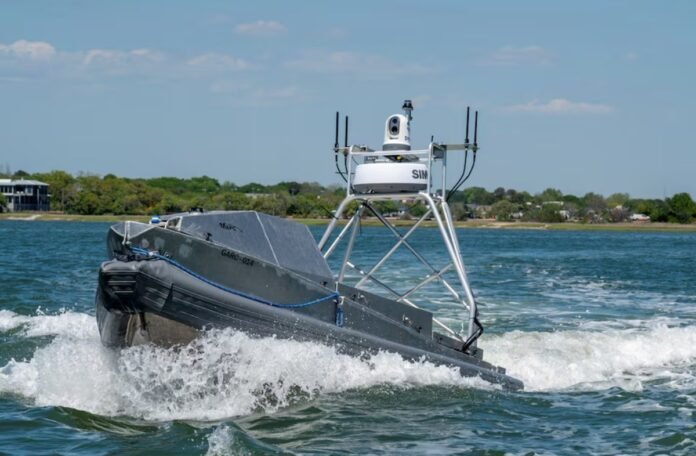
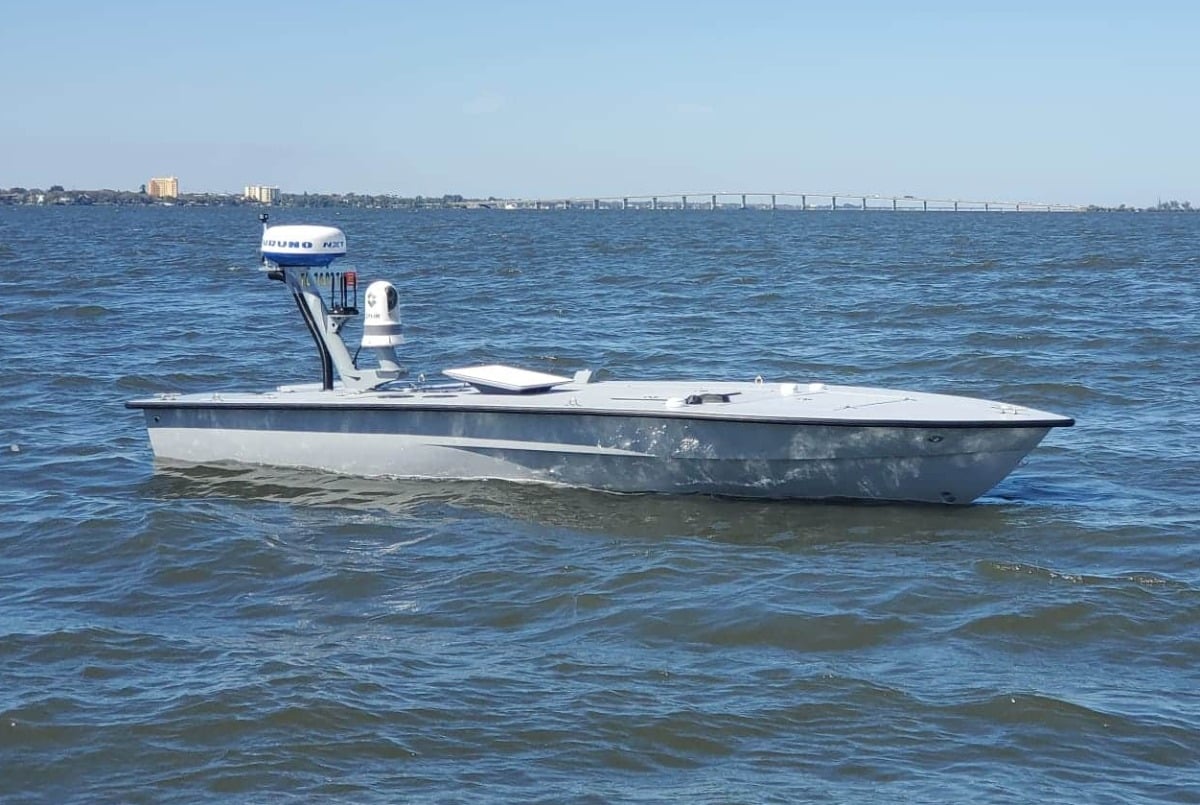
  • unmanned surface vessels
  • underwater drones
  • sonar-equipped robots
  • helicopter mine-hunting systems
  • remotely operated explosive devices

One system that may be used is the Archerfish, a torpedo-shaped remotely operated robot built by BAE Systems.

The device transmits live video back to operators and carries an explosive charge to destroy detected mines.

This allows crews to remain outside the immediate danger zone.

How the Mine-Clearing Process Works

The operation is expected to be slow and multi-stage.

The typical sequence involves:

  1. detection using sonar-equipped drones
  2. identification by remote crews
  3. classification of the device type
  4. neutralization or detonation

The report notes that Iran may possess several types of maritime mines, including:

  • bottom mines
  • tethered mines
  • drifting mines
  • limpet mines

Each requires a different response method.

This is why clearing the waterway may take two to three weeks, according to retired U.S. naval officer Bryan Clark.

Iranian Attack Risk Remains a Major Concern

One of the biggest risks is that mine-clearing crews and unmanned systems could themselves become targets.

Iran may still retain the ability to deploy additional mines or attack the operation with:

  • drones
  • fast boats
  • coastal missile systems
  • naval assets

This means the U.S. may need to deploy defensive layers, including:

  • escort warships
  • surveillance drones
  • airborne overwatch

to protect the clearance effort.

This vulnerability is one reason naval mine warfare remains strategically effective.

AI and New Technology Could Change Future Operations

The report also highlights new technologies designed to accelerate mine-clearing missions.

Thales says its latest sonar can scan suspected mines from three angles in one pass, significantly reducing search time.

Artificial intelligence is also improving onboard data analysis for unmanned vessels.

Longer term, navies are working toward fully autonomous mine-hunting swarms capable of searching, identifying, and destroying mines in a single process.

However, experts note that this capability does not yet fully exist operationally.

Global Market Impact

The strategic significance goes far beyond military operations.

Any delay in reopening Hormuz directly affects:

  • global oil prices
  • LNG shipments
  • shipping insurance
  • inflation risk

This makes the operation critical not only for regional security but for the wider global economy.

Turkey to Host Regional Security Talks With Pakistan, Saudi Arabia and Egypt in Major Diplomatic Push

0
Foreign Minister of Turkey Hakan Fidan

Turkey is preparing to host high-level talks later this week aimed at creating a new regional security platform with Pakistan, Saudi Arabia, and potentially Egypt, in what could become a major diplomatic initiative for Middle East stability.

The meeting is expected to take place on the sidelines of the Antalya Diplomacy Forum, beginning Friday in Antalya, where foreign ministers from the participating countries are expected to meet.

According to officials cited by Bloomberg and Reuters, this would be the third such meeting in the past month, following earlier consultations in Riyadh and Islamabad.

Focus on Regional Stability and Gulf Security

The primary objective of the talks is to establish a structured regional consultative mechanism focused on:

  • Middle East security
  • Gulf maritime stability
  • ceasefire diplomacy
  • crisis de-escalation
  • economic and energy security

The move comes as regional powers continue efforts to prevent renewed escalation linked to the U.S.-Iran crisis and the security of the Strait of Hormuz.

This gives the talks immediate strategic relevance beyond traditional diplomacy.

Pakistan’s Mediation Role Remains Central

Pakistan’s role in the proposed platform is especially significant.

Islamabad has already emerged as a key mediator in recent U.S.-Iran negotiations, hosting previous rounds of diplomacy and coordinating with multiple regional capitals.

Pakistan’s Foreign Minister Ishaq Dar has recently held consultations with his Turkish, Saudi, and Egyptian counterparts on ceasefire and Hormuz proposals.

This positions Pakistan as both a diplomatic bridge and a potential long-term security partner in the emerging framework.

Saudi Arabia and Egypt Add Strategic Weight

The participation of Saudi Arabia and Egypt gives the platform significant regional weight.

Saudi Arabia brings:

  • Gulf political influence
  • energy market importance
  • regional defense coordination

Egypt adds strategic value through:

  • Red Sea security
  • Suez Canal route stability
  • diplomatic leverage across Arab states

Together with Turkey and Pakistan, this creates a potentially influential four-country consultative mechanism.

Why Turkey Is Leading the Initiative

Turkey’s leadership in hosting the talks reflects Ankara’s growing diplomatic activism.

Foreign Minister Hakan Fidan has repeatedly emphasized the need for regional states to take collective responsibility for each other’s sovereignty and security.

For Turkey, this initiative strengthens its position as a regional diplomatic power broker.

A New Security Bloc or Consultative Platform?

At this stage, officials appear to be framing the talks as a security platform rather than a formal alliance.

This distinction is important.

The focus seems to be on:

  • regular consultations
  • diplomatic coordination
  • crisis response mechanisms
  • shared economic stability

rather than a treaty-based defense pact.

Still, if institutionalized, the format could evolve into a more structured regional bloc.

Strategic Implications

The broader significance lies in the possibility of a region-led security architecture.

For years, Middle East security has largely depended on external powers.

This initiative may represent an attempt by key regional states to create a framework driven by local actors.

If successful, it could reshape diplomacy around:

  • Gulf stability
  • maritime trade routes
  • crisis mediation
  • energy security

Pakistan Eyes Turkish AKYA Torpedo for Hangor-Class Submarines in Major Underwater Strike Upgrade

0
Guided by wire, active/passive sonar and/or propeller wake, Roketsan's AKYA heavy torpedo can track enemy ships & submarines from well over 50km at breakneck speeds of 100km/h to overcome acoustic countermeasures & deploy a massive 350kg warhead.

Pakistan may be preparing one of the most significant upgrades to its undersea strike capability in decades after reportedly entering discussions with Turkey for the AKYA heavyweight torpedo, a weapon increasingly regarded as one of the most advanced submarine-launched torpedo systems in NATO-aligned inventories.

If negotiations progress beyond the current technical evaluation stage, Islamabad would gain not only a new weapon but a long-range underwater strike architecture capable of reshaping naval planning across the Arabian Sea and northern Indian Ocean.

The reported talks have drawn strategic attention because the AKYA could eventually arm Pakistan’s incoming Hangor-class submarines, a fleet already expected to significantly strengthen the Pakistan Navy’s anti-access posture.

What Makes the AKYA Torpedo Significant

Developed by Roketsan, the AKYA is a fully indigenous 533mm heavyweight torpedo designed to replace older imported systems used by the Turkish Navy.

Unlike legacy torpedoes that rely mainly on conventional sonar homing, AKYA reportedly combines:

  • active sonar
  • passive sonar
  • fiber-optic wire guidance
  • wake-homing
  • autonomous engagement modes

This multi-layer guidance architecture allows the torpedo to continue tracking targets even when hostile warships deploy:

  • acoustic decoys
  • electronic jamming
  • evasive maneuvers
  • countermeasure bubbles

Defense analysts increasingly view it as one of the most sophisticated torpedo solutions currently available in its class.

Range, Speed and Warhead

According to the report, the torpedo weighs between 1,200kg and 1,700kg, measures roughly seven meters, and carries a 350kg to 380kg warhead.

Its electric propulsion system reportedly uses:

  • brushless DC motor
  • counter-rotating propellers
  • high-energy batteries

This enables speeds above 45 knots and engagement ranges exceeding 50 kilometers.

Such range offers a major tactical advantage, allowing submarines to remain farther away from hostile escorts, maritime patrol aircraft, and anti-submarine helicopters while still engaging distant targets.

Hangor-Class Integration Could Be a Strategic Game Changer

The strategic significance of the talks is closely linked to Pakistan’s Hangor-class submarine program, the largest submarine acquisition project in the country’s history.

The eight-submarine deal, reportedly valued at $4–5 billion, was signed with China in 2015.

The fleet is based on the Type 039A / Yuan-class design and includes air-independent propulsion (AIP), allowing longer submerged endurance than conventional diesel-electric submarines.

Each submarine is expected to carry six standard 533mm torpedo tubes, making AKYA integration technically feasible.

This could significantly improve Pakistan’s anti-access and area-denial capability across the Arabian Sea.

Technology Transfer Could Be the Bigger Story

The most strategically important aspect may not be the purchase itself, but the reported possibility of technology transfer.

According to the report, talks may include:

  • local assembly
  • maintenance support
  • co-production
  • software and guidance access

This would align with Pakistan’s broader defense industrial strategy of combining imports with local manufacturing capability.

If realized, it could reduce Pakistan’s dependence on single-source Chinese submarine armament and deepen its naval-industrial ties with Turkey.

Broader Pakistan-Turkey Defense Partnership

The AKYA discussions fit into a wider pattern of growing defense cooperation between Islamabad and Ankara.

Both countries have already collaborated on:

  • Babur-class corvettes
  • submarine upgrades
  • drone technology
  • naval electronics
  • training exchanges

This suggests the torpedo deal would carry significance beyond underwater warfare.

It would symbolize a deeper bilateral commitment to long-term military self-reliance and defense industrial cooperation.

Strategic Impact in the Arabian Sea

If eventually deployed aboard the Hangor-class, AKYA-equipped submarines could create a more layered underwater threat environment in the northern Arabian Sea.

This would affect planning for:

  • destroyers
  • frigates
  • amphibious vessels
  • carrier task groups
  • hostile submarines

Combined with possible future Babur-3 submarine-launched cruise missile capability, Pakistan’s submarine fleet could evolve from a coastal defense force into a broader strategic deterrent.

Ukraine’s Robots Force Russian Troops to Surrender in Historic First as Ground Bots Enter Direct Combat

0
Russian troops surrendered to robots. Drones and ground bots took a Russian position without infantry and without losses on Ukraine’s side

Ukraine says it has achieved a historic first in modern warfare: capturing a Russian position using only unmanned systems, with no infantry involved and no Ukrainian casualties.

According to President Volodymyr Zelenskyy, this marks the first time in the war that an enemy position was taken exclusively by drones and unmanned ground vehicles (UGVs).

Image

The development is being seen as a major milestone in the evolution of battlefield robotics and autonomous warfare.

Russian Troops Reportedly Surrendered to Robots

The claim follows reports that Russian troops surrendered after being confronted by an armed Ukrainian ground robot near Lyman earlier this year.

Video footage released in January reportedly showed three Russian soldiers laying down their weapons in front of a UGV.

This week’s reported assault goes further.

Instead of supporting infantry, the robots themselves carried out the full operation:

  • reconnaissance
  • suppression
  • direct assault
  • position capture

This suggests that unmanned systems are now moving from force multipliers to direct combat actors.

22,000 Missions in Three Months

The scale of Ukraine’s robotic warfare expansion is striking.

Zelenskyy says ground robotic systems have completed more than 22,000 missions in the last three months.

Commander-in-Chief Oleksandr Syrskyi said robotic systems handled 50% more missions in March than in February.

These systems are now used for:

  • direct assault
  • casualty evacuation
  • mine clearance
  • logistics
  • supply runs
  • battlefield reconnaissance

Image

Ukraine’s Robot Industry Is Scaling Fast

Ukraine’s defense industry has expanded rapidly around unmanned systems.

Officials say there are now more than 280 companies producing ground robots, with plans to manufacture over 20,000 units this year, around 99% domestically produced.

This makes robotics one of the fastest-growing sectors of Ukraine’s wartime defense industry.

Some front-line models can reportedly operate at distances of up to 31 miles and cost between £7,500 and £22,000.

This relative affordability makes mass deployment increasingly realistic.

Could Robots Replace Infantry?

Some Ukrainian commanders now believe UGVs could replace 30% of infantry roles this year, with longer-term projections reaching up to 80%.

That would represent one of the most significant doctrinal shifts in modern land warfare.

Still, there are clear limitations.

Robotic systems remain vulnerable to:

  • signal jamming
  • terrain obstacles
  • weather
  • Russian drones
  • electronic warfare

Despite these constraints, their battlefield role continues to expand.

The Future of Ground Combat May Already Be Here

The broader implication is strategic.

For decades, drone warfare primarily meant the air domain.

Ukraine is now pushing that transformation onto the ground battlefield.

If these systems continue to prove effective, the war may be remembered as the conflict that accelerated the arrival of robot-led land combat.

What was once experimental is now beginning to shape front-line outcomes.