U.S. President Donald Trump reignited one of the most contentious geopolitical issues within NATO on Tuesday by once again declaring that Greenland should be controlled by the United States rather than Denmark. His remarks came as NATO leaders gathered in Ankara, Turkey, for a summit focused on strengthening allied defense spending and addressing growing security challenges across Europe and beyond.
Trump’s comments quickly drew firm responses from Denmark and Greenland, underscoring continuing divisions within the alliance even as members seek to project unity against evolving global threats.
Trump Renews Push for U.S. Control of Greenland
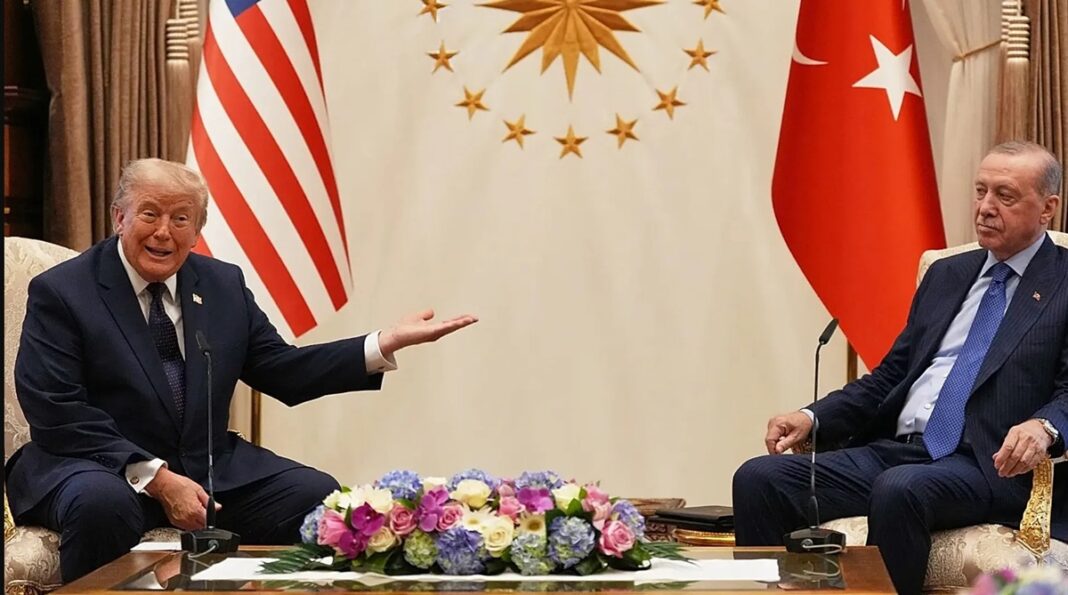
Speaking to reporters during a meeting with Turkish President Recep Tayyip Erdoğan, Trump argued that Greenland’s strategic location makes it essential to U.S. national security.
“That should be controlled by the United States, not by Denmark,” Trump said.
The remarks revive a long-running dispute that began during Trump’s first presidency, when he proposed purchasing Greenland from Denmark. Copenhagen rejected the proposal outright, while Greenland’s leaders repeatedly emphasized that the island’s future would be determined solely by its people.
Although the issue has since shifted into diplomatic discussions, Trump’s latest comments indicate that Washington continues to view Greenland as strategically significant.
Denmark Rejects Trump’s Remarks
Danish Prime Minister Mette Frederiksen responded within hours, reaffirming Denmark’s position that Greenland is not for sale.
Speaking in Ankara, Frederiksen said NATO allies should respect the sovereignty of the Kingdom of Denmark.
“It is a well-known position of the United States that it wants to own and take over Greenland. I hope it is equally well known that this is not going to happen.”
She also confirmed there were no plans for NATO leaders to discuss Greenland, Arctic affairs, or broader High North security issues during the summit.
Greenland Reaffirms Right to Self-Determination
Greenland’s leadership also dismissed Trump’s renewed proposal.
Greenland’s foreign minister stated that the island’s future must be decided exclusively by its own people.
“That’s how it has always been. And that’s how it always will be.”
Officials in Nuuk have consistently supported close cooperation with NATO allies while maintaining that any constitutional changes or questions regarding sovereignty remain matters for Greenland’s population.
Why Greenland Matters Strategically
Greenland has become increasingly important in global geopolitics due to its location between North America and Europe, its proximity to Arctic shipping routes, and its vast untapped reserves of rare earth minerals and other natural resources.
The island also hosts the Pituffik Space Base (formerly Thule Air Base), a key U.S. military installation that supports missile warning, space surveillance, and Arctic defense operations.
As climate change accelerates Arctic ice melt, new maritime routes and resource opportunities have intensified strategic competition among major powers, including the United States, Russia, and China.
Trump argued that the United States cannot ignore growing Russian and Chinese activity in the Arctic.
According to Trump, Greenland’s security is directly linked to broader U.S. national interests.
Trump Criticizes Denmark’s Defense Role
Trump also claimed Denmark has failed to adequately invest in Greenland’s defense.
He argued that the United States spends heavily defending Europe while Denmark contributes insufficiently to securing the Arctic territory.
Trump further suggested that disagreements over Greenland have complicated Washington’s relations with NATO allies.
Despite the rhetoric, U.S. Secretary of State Marco Rubio indicated earlier this year that Washington continues regular diplomatic discussions with both Danish and Greenlandic officials regarding Arctic cooperation and regional security.
NATO Summit Overshadowed by Political Disputes
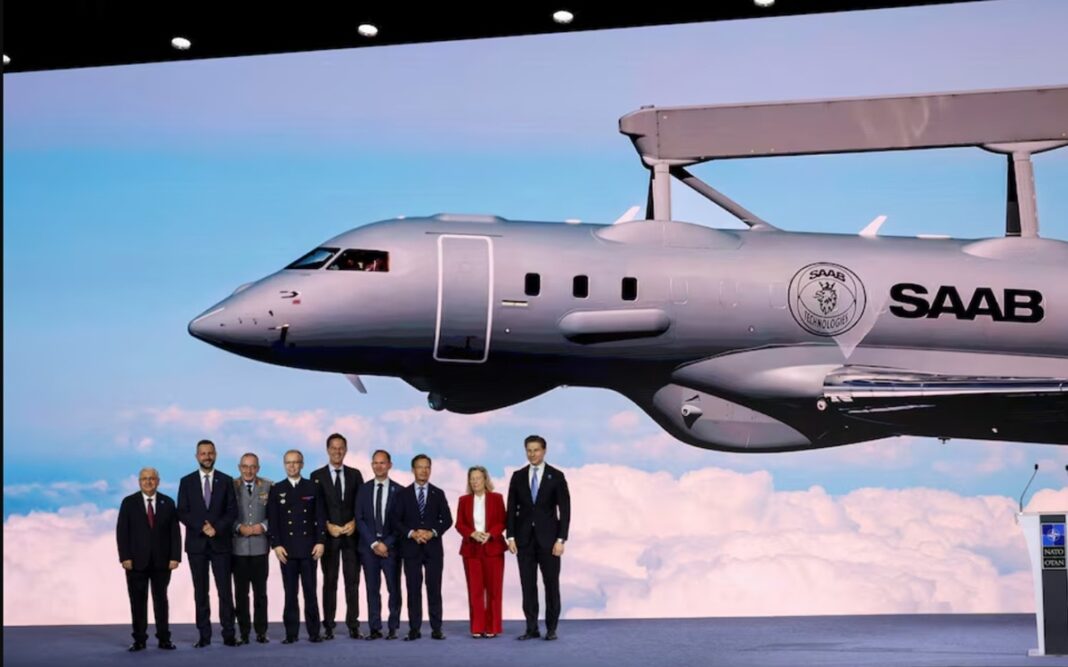
Trump’s comments came only hours after NATO members unveiled tens of billions of dollars in new defense procurement initiatives under a broader effort to strengthen the alliance’s military capabilities.
European allies and Canada announced approximately €50 billion in new defense investments as part of a broader modernization initiative aimed at increasing collective readiness and expanding defense production.
Alliance leaders had hoped the summit would focus primarily on higher defense spending, industrial cooperation, and long-term support for Ukraine.
Instead, Trump’s remarks on Greenland and his renewed criticism of NATO members quickly dominated headlines.
Trump Again Pressures NATO Allies
Upon arriving in Ankara, Trump criticized European allies for what he described as insufficient support for recent U.S. military operations against Iran.
He expressed disappointment that NATO partners did not provide stronger backing during the conflict.
Trump has repeatedly argued that European members rely too heavily on American military power while failing to contribute proportionately to collective defense.
His administration has consistently pushed NATO members to increase defense spending beyond the alliance’s existing targets.
Warm Reception from Turkey
Despite tensions with several European allies, Trump received a ceremonial welcome from Turkish President Recep Tayyip Erdoğan at the Beştepe Presidential Palace in Ankara.
The visit featured a military honor guard, ceremonial cannon fire, and formal talks between the two leaders.
Trump praised Erdoğan during their meeting.
“You are a leader respected all over the world.”
He also described the Turkish president as a “great friend” and said stronger U.S.-Turkey cooperation would benefit both countries.
Trump Signals Possible Return of Turkey to F-35 Program
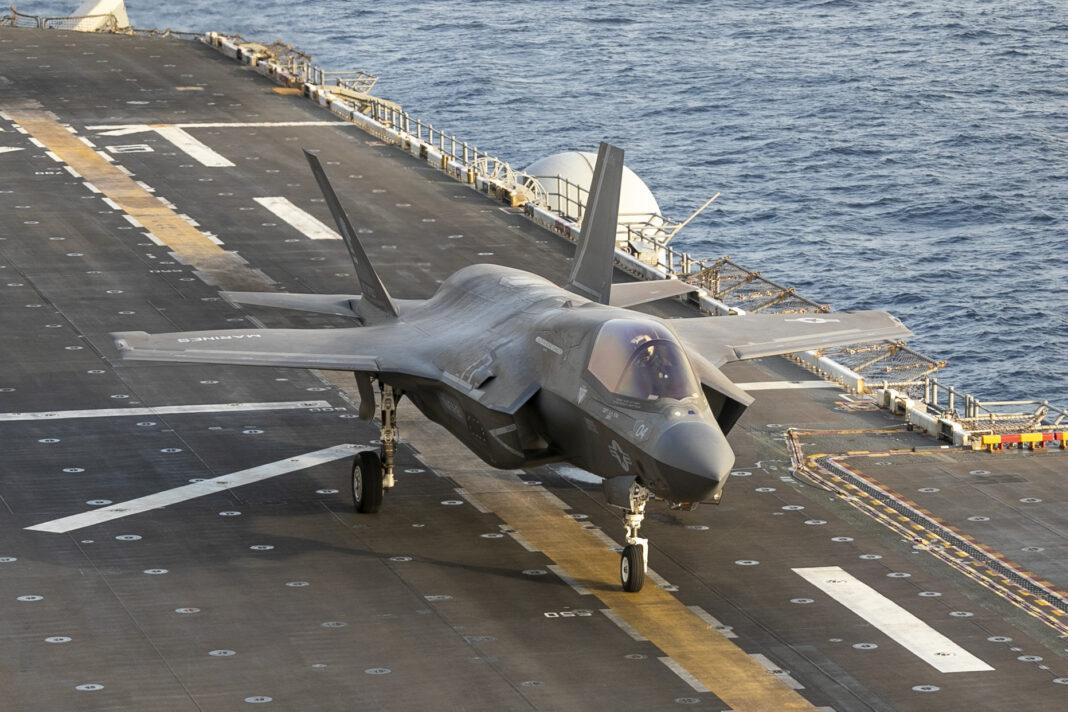
One of the summit’s most significant defense developments involved Turkey’s possible return to the F-35 Lightning II stealth fighter program.
Speaking to reporters, Trump said Washington is considering allowing Ankara to rejoin the multinational fighter program.
“That’s a decision we’re going to make. It’s a great plane… and it’s certainly something we will consider.”
Turkey was removed from the F-35 program in 2019 after acquiring the Russian-made S-400 Triumf air defense system.
The United States argued that operating the S-400 alongside the F-35 posed unacceptable security risks because the Russian system could potentially gather intelligence on the aircraft’s stealth capabilities.
Washington subsequently imposed sanctions on Turkey under the Countering America’s Adversaries Through Sanctions Act (CAATSA) and suspended Turkish participation in F-35 production.
A decision to readmit Turkey would represent a significant shift in U.S.-Turkey defense relations and could reshape NATO’s military balance on its southeastern flank.
Arctic Security Becoming a Growing Strategic Priority
Security analysts increasingly view the Arctic as one of the world’s most important emerging geopolitical arenas.
Russia has expanded its Arctic military infrastructure in recent years, reopening Cold War-era bases, deploying advanced air defense systems, and increasing naval patrols across the region. China has also declared itself a “near-Arctic state” and invested in Arctic research, shipping routes, and infrastructure projects.
Against this backdrop, Greenland’s strategic value has grown substantially for the United States and NATO, making it a recurring focus of American defense policy discussions.
Outlook
Trump’s renewed call for U.S. control of Greenland has once again exposed political fault lines within NATO, even as allies work to strengthen collective defense against shared security threats.
At the same time, his willingness to consider Turkey’s return to the F-35 program signals a possible reset in U.S.-Turkey defense relations after years of tension.
As NATO confronts challenges ranging from the war in Ukraine to Arctic security and evolving great-power competition, the outcomes of the Ankara summit could have lasting implications for the alliance’s strategic direction and transatlantic relations.