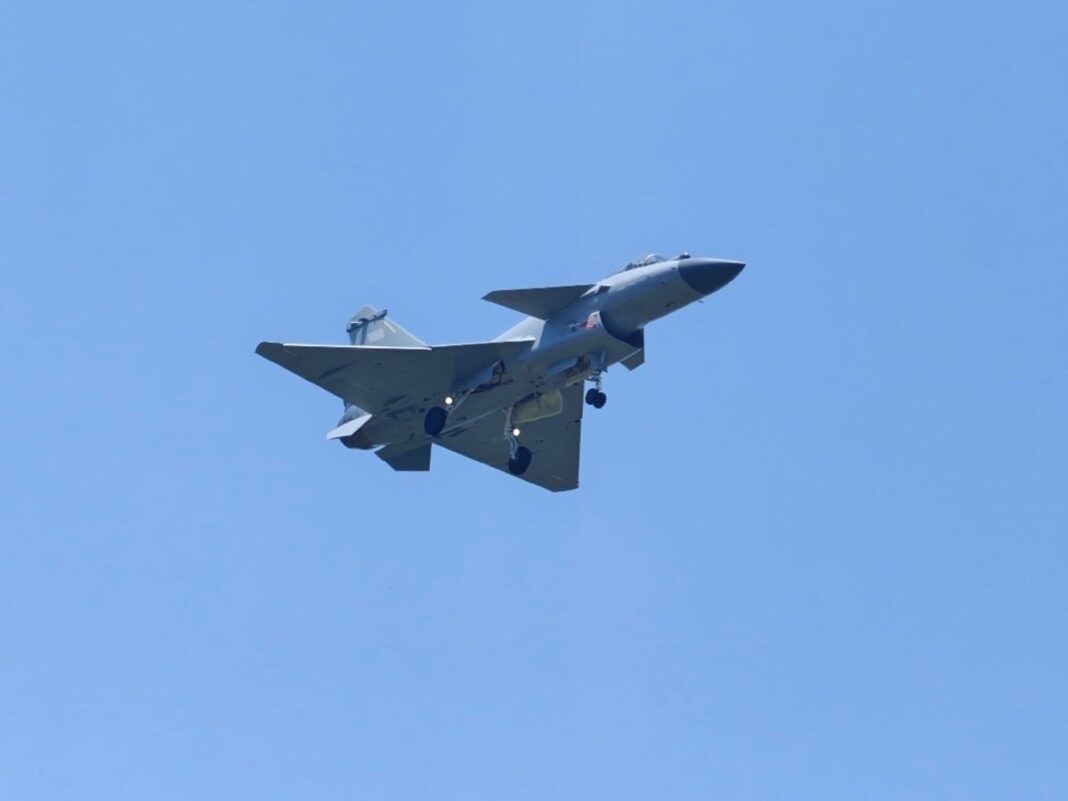
A newly circulated photograph, reportedly showing an Uzbekistan Air Force Chengdu J-10CE, has reignited debate over China’s rapidly expanding role in Central Asian military modernization. While the aircraft’s distinctive design strongly suggests it is a J-10CE, the image does not independently confirm that the fighter belongs to Uzbekistan, making it important to separate verified facts from open-source speculation.
If authenticated, however, the image could become another milestone in China’s growing defence presence across a region historically dominated by Russian military equipment.
🇨🇳🤝🇺🇿
A possible first clear image of an Uzbekistan Air Force J-10CE fighter jet has surfaced.The image is being shared as evidence of the aircraft’s presence in Uzbekistan, but its identity and affiliation have not yet been independently confirmed.#Uzbekistan #J10CE pic.twitter.com/Y9aOwtOdGW
— International Defence Analysis (@Defence_IDA) August 16, 2026
What the Photograph Actually Shows
The image, widely shared on social media on 16 August 2026, depicts a fighter featuring:
- Canard-delta wing configuration
- Diverterless Supersonic Inlet (DSI)
- Single-engine layout
- Dark radome
- Light-grey camouflage
These characteristics strongly support identification as a J-10CE export fighter.
However, several critical details remain unresolved:
- National insignia are unclear.
- Serial numbers cannot be read.
- Location cannot be geolocated.
- No official confirmation has been issued by either Uzbekistan or China.
As a result, the photograph should be treated as credible but unverified evidence, rather than confirmation of operational service.
Could Uzbekistan Now Operate Six J-10CE Fighters?
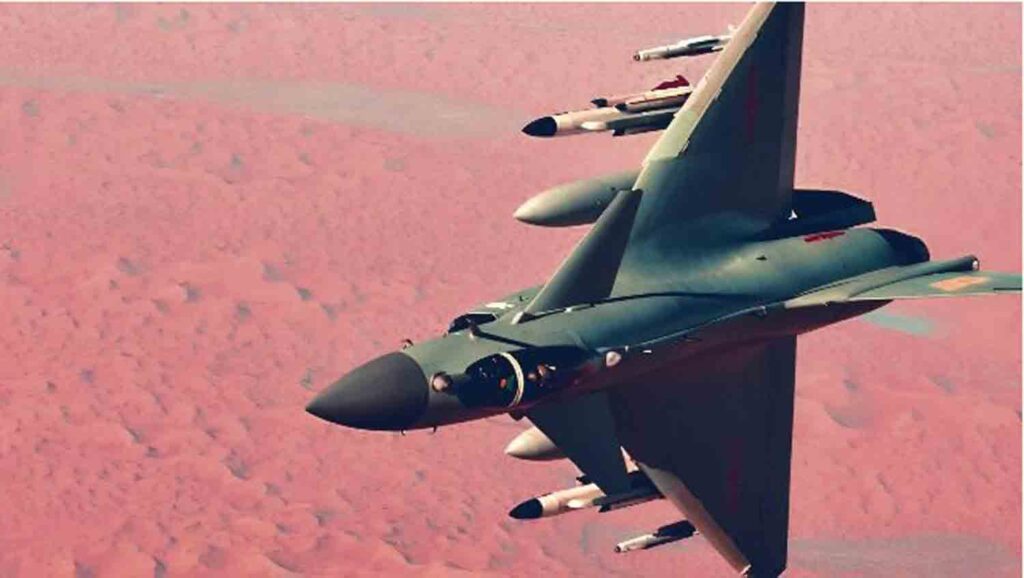
The image has renewed speculation surrounding reports that four additional J-10CE aircraft arrived in Uzbekistan during July 2026.
The only officially confirmed baseline remains:
- Uzbekistan ordered 24 J-10CE fighters.
- Defence Minister Major General Shukhrat Khalmukhamedov confirmed the acquisition in 2025.
- The first two aircraft were acknowledged as delivered around July 2025.
- Uzbek pilots have been undergoing conversion training in China.
If reports of a second batch prove accurate, Uzbekistan’s fleet would increase from two to six aircraft, although this has yet to receive official confirmation.
Why the J-10CE Matters More Than Numbers
The significance of the J-10CE lies less in fleet size than in capability.
Compared with Uzbekistan’s aging Soviet-era aircraft, the Chinese fighter introduces:
- Active Electronically Scanned Array (AESA) radar
- Modern digital avionics
- Advanced electronic warfare systems
- Beyond-visual-range combat capability
- Precision multirole strike potential
- Indigenous WS-10-series engine
Collectively, these technologies could significantly improve the Uzbek Air Force’s ability to detect, track and engage hostile aircraft, drones and border threats.
The transformation therefore concerns combat readiness and technological leap, not merely replacing older airframes.
Moving Beyond Russia’s Defence Ecosystem
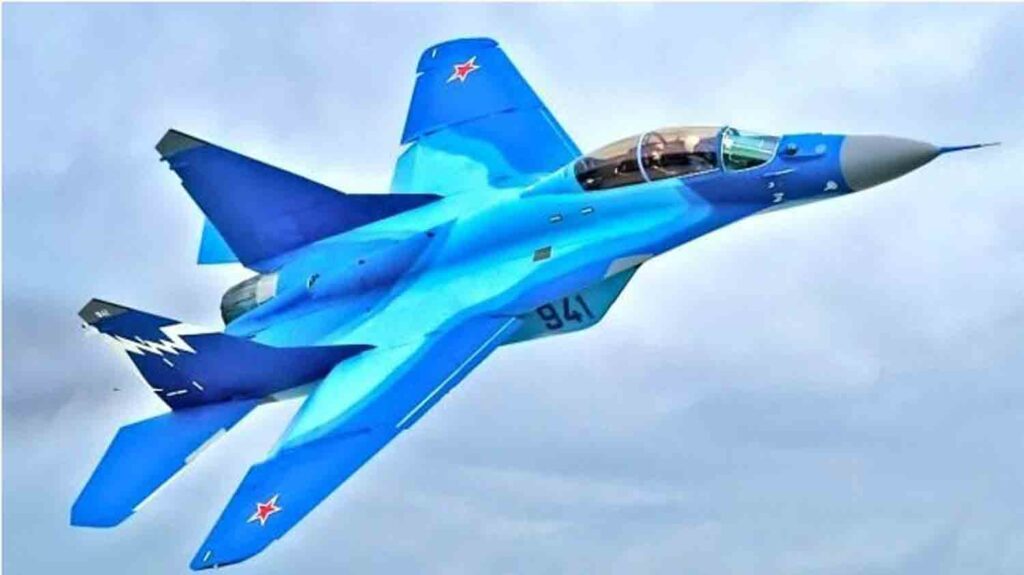
Perhaps the most strategically important aspect of the programme is its impact on regional defence dependence.
For decades, Uzbekistan relied heavily on Russian aircraft, maintenance networks and logistics support.
Its combat fleet largely consisted of:
- MiG-29 fighters
- Su-27 fighters
- Su-25 attack aircraft
Many of these platforms entered service during the late Soviet period.
Over time, aging engines, obsolete avionics, shrinking spare-part inventories and the collapse of domestic overhaul facilities significantly reduced operational readiness.
Russia’s war in Ukraine further complicated the situation by redirecting industrial capacity toward Moscow’s own military requirements.
The J-10CE therefore offers Uzbekistan an opportunity to diversify away from exclusive dependence on Russian defence support.
China’s Growing Influence in Central Asia
The acquisition also illustrates China’s expanding defence diplomacy.
Unlike previous decades, Beijing is now capable of offering:
- advanced combat aircraft;
- long-range air defence systems;
- pilot training;
- logistics support;
- financing packages;
- defence industrial cooperation.
China already supplies Uzbekistan with several modern air-defence systems, creating opportunities for future integration between Chinese ground-based air defence and Chinese-built combat aircraft.
Such integration could eventually improve command-and-control and regional air defence effectiveness.
Building an Entire Combat System
Importing a modern fighter involves far more than purchasing aircraft.
Uzbekistan must also develop:
- pilot conversion programmes;
- weapons instructors;
- maintenance specialists;
- simulator infrastructure;
- secure mission-planning facilities;
- logistics chains;
- spare engine inventories;
- munitions storage;
- software support systems.
Without these elements, modern fighters cannot achieve sustained combat readiness.
Military modernization therefore remains a gradual institutional process rather than an immediate operational transformation.
Interoperability Remains the Biggest Challenge
Even if all 24 fighters are eventually delivered, operational capability will depend on several factors:
Pilot Training
Dozens of Uzbek pilots are reportedly training in China, but instructor development and squadron leadership will require years.
Weapons Inventory
A modern fighter without sufficient stocks of PL-15E beyond-visual-range missiles and supporting equipment cannot sustain prolonged operations.
Maintenance Capacity
Readiness depends on domestic repair capability, technical documentation, spare parts and engine support—not simply aircraft deliveries.
Infrastructure
Air bases require upgraded maintenance facilities, mission-data centres, secure storage and specialized ground equipment to support advanced Chinese aircraft.
A Geopolitical Shift—But Not a Strategic Realignment
Some observers interpret the J-10CE purchase as evidence that Uzbekistan is abandoning Russia.
That conclusion would be premature.
Tashkent continues to maintain:
- extensive military cooperation with Moscow;
- bilateral exercises;
- economic ties;
- security dialogue.
At the same time, China has become Uzbekistan’s largest trading partner and a major investor in infrastructure, energy and manufacturing.
Rather than choosing between Russia and China, Uzbekistan appears to be pursuing its long-standing multi-vector foreign policy, balancing relationships with multiple major powers while preserving strategic autonomy.
Implications for China’s Defence Exports
If Uzbekistan successfully integrates all 24 fighters, the programme could become one of China’s most important defence export successes in the former Soviet space.
It would demonstrate that Chinese combat aircraft can compete against traditional Russian suppliers in markets where Moscow once enjoyed near-monopoly status.
Success in Uzbekistan may also encourage other Central Asian countries to evaluate Chinese aircraft more seriously as they modernize aging Soviet-era fleets.
However, there is currently no verified evidence that neighbouring states are preparing similar acquisitions.
What Must Happen Next?
To verify that Uzbekistan’s J-10CE programme has progressed beyond initial deliveries, analysts will require stronger evidence, including:
- official government confirmation;
- readable aircraft serial numbers;
- unmistakable Uzbek national markings;
- identifiable airbase imagery;
- independent satellite observations;
- documented operational flights;
- squadron activation announcements.
Until such evidence emerges, the recently circulated photograph should be viewed as an important indicator—but not definitive proof—of expanded operational service.
Final Assessment
The newly surfaced image adds momentum to growing reports that Uzbekistan is accelerating its transition toward China’s J-10CE fighter.
Nevertheless, responsible defence analysis requires distinguishing between confirmed procurement, reported deliveries, and unverified visual evidence.
What is already clear is that Uzbekistan is undertaking one of the most significant combat aviation modernization programmes in Central Asia.
If fully implemented, the 24-aircraft J-10CE fleet will not simply replace aging MiG-29s and Su-27s—it will fundamentally reshape Uzbekistan’s air combat capability while strengthening China’s position as an increasingly influential supplier of advanced military technology across Eurasia.
Whether the newly circulated aircraft truly belongs to Uzbekistan remains to be officially confirmed, but the broader strategic trend is unmistakable: China’s defence footprint in Central Asia is steadily expanding.