
India is reportedly evaluating the acquisition of Russia’s Su-57 fifth-generation stealth fighter as an interim solution while its indigenous Advanced Medium Combat Aircraft (AMCA) remains under development.
According to a report published by The Tribune, New Delhi’s decision is no longer purely a military procurement issue but has evolved into a geopolitical calculation involving relations with Russia, the United States, and Western partners.
The report says discussions have taken place within the Indian Air Force (IAF) and the Ministry of Defence over the possible purchase of around 80 to 100 Su-57 fighters, although no final decision has been announced.
AMCA Delays Leave Capability Gap

India has long sought a fifth-generation combat aircraft to modernize its air force amid rapid military developments across Asia.
However, the indigenous AMCA program is still years away from operational service.
Most defence analysts expect the aircraft to enter squadron service only in the next decade after prototype testing, certification, and production.
That timeline has reportedly prompted Indian planners to examine interim options capable of maintaining a fifth-generation capability until AMCA becomes operational.
The Russian Su-57 has therefore re-emerged as a possible candidate.
Su-57 Returns to India’s Defence Debate
India was originally a partner in Russia’s Fifth Generation Fighter Aircraft (FGFA) program, which was based on the Su-57 platform.
New Delhi later withdrew from the project, citing concerns over costs, technology transfer, stealth characteristics, engine performance, and aircraft maturity.
Since then, Russia has continued improving the Su-57, introducing upgraded avionics, sensors, weapons integration, and production-standard aircraft into service.
Moscow has also promoted the fighter aggressively to export customers, presenting it as one of the few operational fifth-generation aircraft available on the international market.
US Sanctions Could Complicate Any Deal
The biggest obstacle to any potential purchase may not be technical but political.
The Indian newspaper notes that Washington is considering tougher sanctions on countries purchasing Russian defence equipment.
A proposed sanctions bill introduced in the U.S. Senate, known as the Lindsey Graham Sanctioning Russia Act of 2026, reportedly seeks to expand economic penalties against nations that continue buying Russian military hardware.
If enacted in its current form, the legislation could significantly increase the political and financial risks of any large-scale Russian defence procurement.
Although the bill still requires further legislative approval, it has added uncertainty to India’s defence planning.
India Has Previously Defied US Pressure
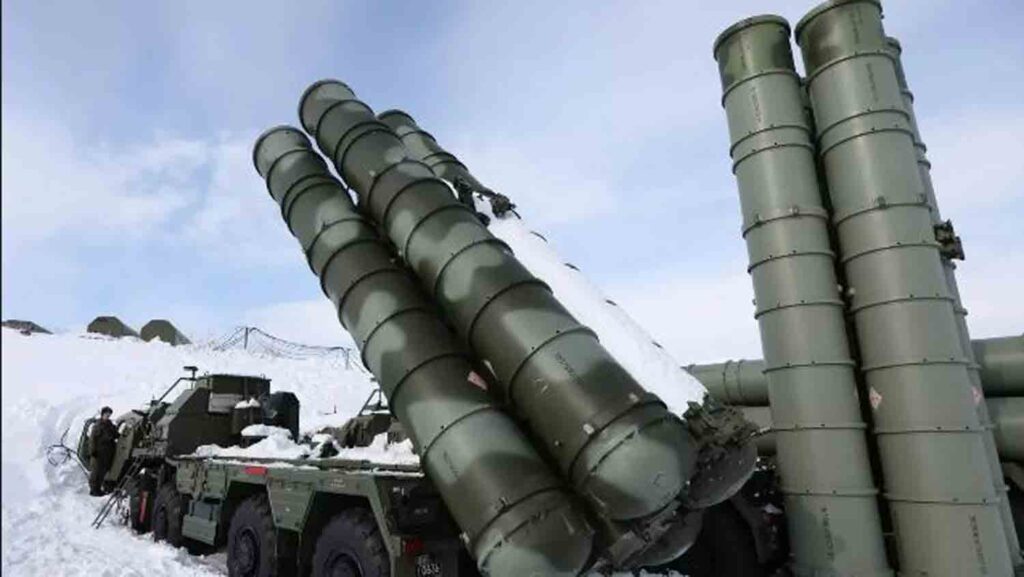
India has previously demonstrated its willingness to proceed with major Russian defence purchases despite U.S. objections.
In 2018, New Delhi signed a contract for the S-400 Triumf air defence system, despite warnings that the acquisition could trigger sanctions under the Countering America’s Adversaries Through Sanctions Act (CAATSA).
The first S-400 systems have since entered Indian service, while Washington ultimately refrained from imposing CAATSA sanctions on India.
That experience has fueled speculation that New Delhi may once again attempt to balance strategic relations with both Moscow and Washington if it chooses to pursue the Su-57.
Why India Wants a Fifth-Generation Fighter
The Indian Air Force has repeatedly expressed concern over declining fighter squadron strength and the need to maintain a technological edge.
A fifth-generation fighter would provide capabilities including:
- Low observable (stealth) characteristics
- Advanced sensor fusion
- High-performance electronic warfare systems
- Long-range precision strike capability
- Network-centric operations
Indian planners also closely monitor regional military modernization, including China’s expanding fleet of J-20 stealth fighters and Pakistan’s ongoing efforts to modernize its combat aviation capabilities.
These developments have increased pressure on New Delhi to accelerate its own next-generation fighter plans.
Russia’s Export Strategy
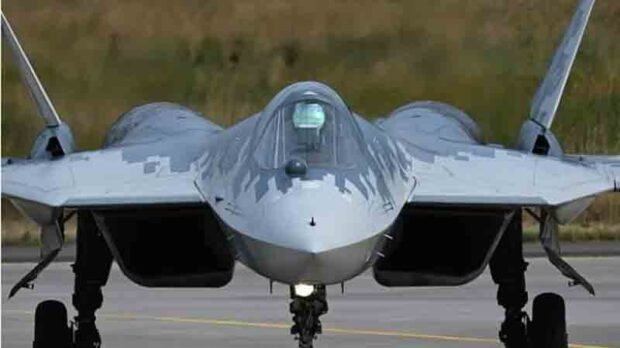
For Moscow, a successful Su-57 export to India would represent one of the most significant defence contracts in recent years.
Beyond its financial value, such a deal would strengthen Russia’s position in one of its largest traditional defence markets at a time when Western sanctions continue affecting its defence industry.
Russia has also indicated its willingness to offer technology cooperation and localized production opportunities for export customers, although no official details regarding a potential Indian package have been announced.
Balancing Strategy and Diplomacy
Any decision to purchase the Su-57 would require India to balance several competing priorities:
- Preserving long-standing defence ties with Russia.
- Expanding strategic cooperation with the United States and Europe.
- Accelerating domestic defence manufacturing under the “Make in India” initiative.
- Managing the financial costs of acquiring an interim fifth-generation platform while simultaneously funding the AMCA program.
Indian officials have not publicly confirmed any procurement decision, and the Ministry of External Affairs has stated only that it continues to monitor developments while prioritizing India’s national interests.
Strategic Outlook
India’s reported consideration of the Su-57 reflects a broader challenge facing its defence modernization strategy. While the AMCA promises an indigenous fifth-generation capability, development timelines leave the Indian Air Force with a potential capability gap during a period of rapid regional military modernization.
Whether New Delhi ultimately opts for the Su-57, accelerates the AMCA program, or explores alternative solutions will depend not only on operational requirements but also on evolving geopolitical dynamics, U.S. sanctions policy, and India’s long-standing effort to maintain strategic autonomy.