
Donald Trump’s latest attempt to reopen direct negotiations with North Korean leader Kim Jong Un has failed, exposing a growing shift in the nuclear balance and diplomatic calculations surrounding the Korean Peninsula. With Pyongyang’s nuclear arsenal estimated at around 60 warheads, its intercontinental ballistic missile capabilities advancing and military cooperation with Russia expanding, Kim is approaching Washington from a position of considerably greater strategic confidence. The central question is whether Trump can secure meaningful limits on North Korea’s nuclear programme without formally or practically accepting its nuclear status.

Trump’s Letter Rejected as Kim Refuses to Reopen Diplomatic Channel
US President Donald Trump’s latest effort to establish direct communication with North Korean leader Kim Jong Un has encountered an unusual diplomatic setback, illustrating how little influence Washington currently has over Pyongyang’s negotiating calculations.
According to a report published by The Wall Street Journal on November 22, Trump repeatedly attempted to reach Kim through telephone channels last year but received no response. He subsequently decided to send the North Korean leader a personal letter.
The White House reportedly devised an unusual plan to deliver the communication. A group was instructed to wait outside North Korea’s permanent mission to the United Nations in Manhattan. When a North Korean diplomat walked past, the group approached him and placed the letter in his hands.
The diplomatic effort reportedly ended in embarrassment for Washington. At a subsequent United Nations meeting, the North Korean diplomat threw the unopened letter in front of a US representative.
Trump nevertheless continued to express interest in meeting Kim during his November Asia trip, hoping to arrange an encounter in Shenzhen, China, on the sidelines of the Asia-Pacific Economic Cooperation (APEC) gathering.
The meeting did not materialise. Trump returned to Washington on November 19 without meeting the North Korean leader, despite speculation that Chinese President Xi Jinping might help facilitate an encounter.
Trump subsequently told NBC News that the two leaders would meet at some point, suggesting that the diplomatic channel had not been abandoned.
The episode highlights a fundamental change in the relationship since Trump’s first presidency. In 2018 and 2019, Kim was interested in obtaining sanctions relief and international legitimacy through negotiations with Washington. Today, North Korea believes that its expanding military capabilities and stronger international partnerships have improved its negotiating position.

Why Trump Wants to Meet Kim Jong Un
Trump’s renewed interest in Kim is not simply an attempt to revive the personal relationship established during his first presidency. It reflects several important American strategic calculations.
1. North Korea’s Nuclear Arsenal Is Becoming a Direct US Security Concern
The most immediate reason for Washington to pursue negotiations is the expansion of North Korea’s nuclear capabilities.
According to the Stockholm International Peace Research Institute (SIPRI), North Korea had assembled an estimated 60 nuclear warheads by January 2026, compared with approximately 20–30 estimated in January 2019.
SIPRI also assesses that Pyongyang possesses sufficient fissile material to potentially produce at least 30 additional warheads.
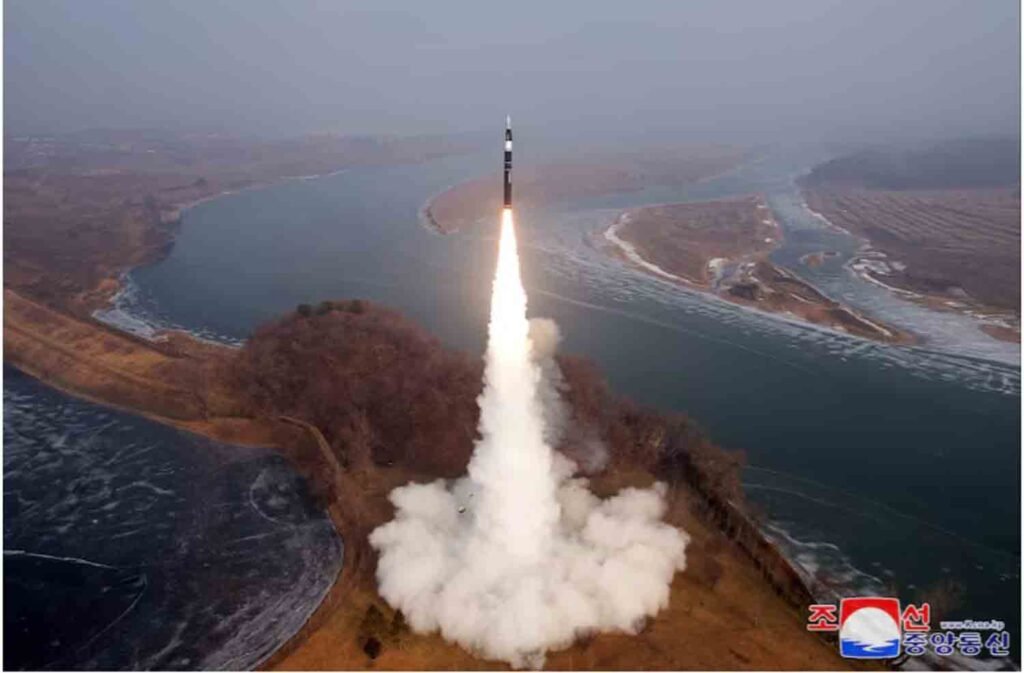
North Korea has also developed increasingly sophisticated ballistic missile systems, including solid-fuel intercontinental ballistic missiles (ICBMs).
The development of solid-fuel systems is particularly significant because they can be prepared for launch more quickly than traditional liquid-fuel missiles, reducing the time available for an adversary to detect and respond to a launch.
The US Congressional Research Service has noted that North Korean ICBMs are capable of reaching the entire American homeland.
For Washington, this changes the nature of the threat. North Korea is no longer only a regional security challenge for South Korea and Japan. It has become a potential direct nuclear threat to the United States.
Trump therefore has an incentive to establish limits on further nuclear expansion, missile testing and technological development, even if complete denuclearisation remains unattainable in the immediate future.
2. Trump Wants a Diplomatic Achievement That Previous Administrations Failed to Secure
Trump’s personal diplomacy with Kim remains an important part of his political and diplomatic legacy.
His Singapore summit in June 2018 was the first meeting between a sitting US president and a North Korean leader. The encounter generated international attention and temporarily raised expectations of a breakthrough in one of the world’s most difficult nuclear disputes.
However, the February 2019 Hanoi summit collapsed without an agreement on sanctions relief and nuclear dismantlement.
Their final encounter took place at Panmunjom in June 2019, but it did not produce a lasting negotiating framework.
A new meeting would allow Trump to demonstrate that his direct engagement strategy remains relevant.
It would also provide an opportunity to establish a new framework for managing North Korea’s nuclear programme, potentially giving his administration a diplomatic achievement that could not be secured during his first term.
However, a summit without concrete concessions from Pyongyang could expose the limitations of Trump’s personal diplomacy once again.
3. Washington Wants to Prevent Further North Korean Military Integration With Russia
The growing military relationship between North Korea and Russia is another major reason behind Washington’s renewed diplomatic interest.
Pyongyang has provided Moscow with substantial quantities of ammunition, ballistic missiles and military personnel for its war against Ukraine.
According to a September 2026 Congressional Research Service assessment, North Korea deployed more than 10,000 troops to support Russian operations in the Kursk region in 2025 and supplied large quantities of ammunition and ballistic missiles.
In return, Russia has provided North Korea with financial benefits, diplomatic support and defence cooperation.
The possibility of Russian assistance in advanced military technologies, air defence, electronic warfare, space capabilities and submarine development is particularly concerning for Washington.
The United States has an interest in preventing North Korea from acquiring technologies that could further improve its nuclear delivery systems and reduce the effectiveness of regional missile defence arrangements.
A renewed diplomatic relationship could offer Washington an opportunity to reduce Pyongyang’s dependence on Moscow. However, there is little indication that Kim is prepared to sacrifice his strategic partnership with Russia simply to restore relations with the United States.
4. Trump Wants to Avoid a Wider Indo-Pacific Security Crisis
North Korea’s expanding military capabilities also complicate America’s wider Indo-Pacific strategy.
The United States maintains significant military commitments in South Korea and Japan, while continuing to compete with China over regional influence and security architecture.
A military confrontation on the Korean Peninsula could force Washington to divert substantial military and diplomatic resources towards Northeast Asia.
It could also create additional pressure on American forces and alliances at a time when Washington is already managing several international security challenges.
For Trump, maintaining direct communication with Kim could reduce the risk of miscalculation and prevent a regional crisis from escalating into a wider confrontation.
In this context, even a limited agreement on missile testing, nuclear activities or military communication could be strategically valuable.
Kim Jong Un’s Position: Recognition Before Disarmament
The most important development in the current diplomatic standoff is the change in North Korea’s negotiating position.
Kim is no longer approaching negotiations with Washington under the same conditions that existed during the 2018 Singapore summit.
North Korea has continued expanding its nuclear programme despite international sanctions, diplomatic isolation and repeated American demands for denuclearisation.
The North Korean leadership now regards nuclear weapons as an essential guarantee of regime survival and national security.
At the Ninth Congress of the Workers’ Party of Korea in February 2026, Kim made clear that the prospects for improved relations with Washington depended on the American government’s attitude towards North Korea’s nuclear status and its broader policy towards Pyongyang.
According to North Korean state media, Kim indicated that his country had no reason not to maintain good relations with the United States if Washington respected its existing status and abandoned what Pyongyang describes as its hostile policy.
He also reaffirmed the intention to strengthen North Korea’s nuclear forces.
This position effectively reverses the traditional American negotiating formula.
Washington has historically demanded denuclearisation in exchange for sanctions relief and improved relations. Kim now wants Washington to accept the nuclear reality first and negotiate other issues afterwards.
His principal objectives include:
- Nuclear recognition: Securing American acceptance of North Korea’s existing nuclear capabilities as a permanent strategic reality.
- Regime security: Obtaining assurances against military intervention or attempts to remove the North Korean leadership.
- Sanctions relief: Reducing economic pressure and securing access to international economic opportunities.
- Diplomatic normalisation: Establishing formal communication channels and potentially diplomatic liaison offices with Washington.
- Strategic independence: Preserving the freedom to maintain relations with Russia and China while negotiating with the United States.
For Kim, nuclear weapons are not merely military instruments. They are also diplomatic leverage.
Giving them up without receiving substantial security and economic concessions would undermine the central strategic achievement of his leadership.
Is Washington Considering a Shift From Denuclearisation to Arms Control?
One of the most significant aspects of the latest reporting is the possibility that American officials are exploring a more flexible approach to negotiations.
According to The Wall Street Journal, officials considered a framework that could include a formal declaration ending the Korean War and a statement that would leave the question of North Korea’s nuclear status unresolved rather than immediately demanding that Pyongyang surrender its weapons.
In return, Washington would seek restrictions on North Korean nuclear and missile testing.
The discussions reportedly also included the possibility of establishing liaison offices as an initial step towards formal diplomatic relations.
These proposals are particularly important because they suggest that some American policymakers recognise the limitations of the traditional denuclearisation-first approach.
However, they should not be interpreted as an officially adopted US policy or an agreement with North Korea.
There is also an important distinction between accepting the practical existence of North Korea’s nuclear arsenal and formally recognising it as a nuclear-weapon state under the Nuclear Non-Proliferation Treaty (NPT).
The treaty formally recognises five nuclear-weapon states: the United States, Russia, China, Britain and France. North Korea’s withdrawal from the treaty and possession of nuclear weapons have not given it the same recognised status under the treaty framework.
Washington could negotiate arms-control restrictions with Pyongyang without formally recognising it as an NPT nuclear-weapon state.
Nevertheless, such an arrangement would represent a major practical shift if it allowed North Korea to retain its existing arsenal in exchange for limits on future expansion.
The American calculation would be straightforward: controlling a growing nuclear threat may be more achievable than eliminating it.
But this approach would also create a difficult strategic precedent for international non-proliferation efforts.

China: The Strategic Gatekeeper in Trump’s North Korea Diplomacy
China remains indispensable to any serious diplomatic initiative involving North Korea.
Beijing has historically been Pyongyang’s most important economic partner and continues to exercise considerable influence over the North Korean leadership.
Although China and North Korea have their own political and strategic differences, Beijing has consistently opposed instability on the Korean Peninsula.
A military confrontation could generate a humanitarian emergency, destabilise China’s northeastern border and potentially increase the American military presence in the region.
China therefore has an interest in preventing North Korea from triggering a crisis that strengthens US military cooperation with South Korea and Japan.
At the same time, Beijing does not necessarily want Washington to achieve a diplomatic breakthrough that significantly reduces North Korea’s dependence on China.
Trump’s decision to leave the possibility of a meeting with Kim partly in Xi Jinping’s hands reflected the importance of China’s role.
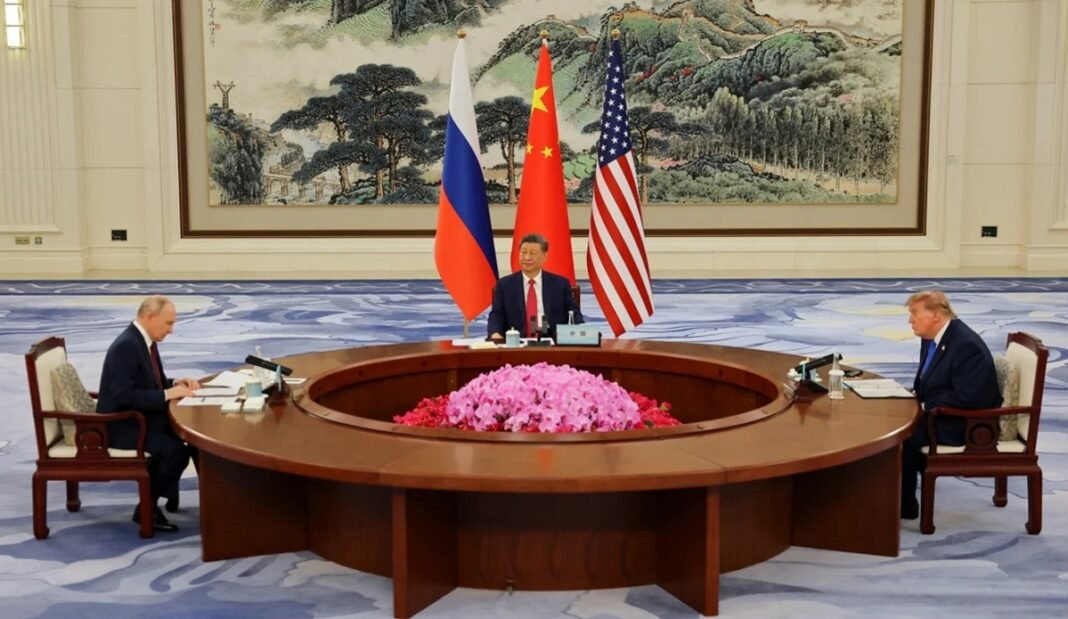
The November 19 trilateral meeting involving Trump, Xi and Russian President Vladimir Putin in Shenzhen was itself significant. The three leaders issued a declaration supporting dialogue on reducing nuclear risks and preventing proliferation, although the declaration did not specifically mention North Korea or denuclearisation of the Korean Peninsula.
The absence of a reference to North Korea is noteworthy because Pyongyang remains one of the most serious nuclear security challenges in East Asia.
China may support dialogue between Washington and Pyongyang, but its broader objective is likely to preserve regional stability without allowing the United States to reshape the Korean Peninsula’s security arrangements to Beijing’s disadvantage.
Russia: A New Source of Strategic Leverage for Pyongyang
Russia’s expanding relationship with North Korea has significantly changed the diplomatic environment.
The June 2024 Comprehensive Strategic Partnership Treaty between Putin and Kim established a mutual military assistance commitment in the event of armed aggression against either country.
The relationship has subsequently expanded beyond conventional diplomatic cooperation.
North Korea has provided ammunition, ballistic missiles and troops to support Russia’s war effort, while Moscow has offered economic assistance, diplomatic backing and defence cooperation.
A September 2026 Congressional Research Service assessment also highlighted Russia’s potential transfer of air defence equipment, electronic warfare systems and other military technologies to North Korea.
For Kim, this relationship provides an alternative source of military and economic support at a time when Western sanctions remain in place.
For Putin, North Korean assistance has helped sustain Russian military operations in Ukraine while strengthening Moscow’s position in Northeast Asia.
The relationship also creates a problem for Washington.
Even if Trump succeeds in reopening negotiations, Kim will have less incentive to make concessions if he believes Russia can continue providing economic and military support.
Moscow may also benefit from maintaining its influence over Pyongyang because any future negotiations concerning North Korea’s nuclear programme could become another arena for Russian-American competition.

South Korea and Japan: The Risk of an American-North Korean Deal
Any potential agreement between Trump and Kim would have direct consequences for South Korea and Japan.
Both countries depend on American security commitments and remain within the range of North Korean missile systems.
South Korea faces the most immediate danger because of its geographical proximity to North Korea and the concentration of military and civilian infrastructure near the border.
Seoul may welcome renewed dialogue if it reduces the possibility of military confrontation. However, an agreement that restricts future North Korean nuclear testing while leaving the existing arsenal intact could create serious concerns.
Such an arrangement might reduce the direct threat to the American mainland without adequately addressing the nuclear threat facing South Korea.
Japan also has substantial security concerns.
North Korean missiles have the potential to threaten Japanese territory and American military installations in the region. Tokyo is also concerned about North Korea’s missile development, military cooperation with Russia and the unresolved issue of Japanese citizens abducted by Pyongyang.
The larger concern is the possibility of Washington prioritising its own homeland security over the broader security interests of its East Asian allies.
If Trump negotiates an arrangement that limits North Korea’s ability to strike the United States but leaves South Korea and Japan exposed to its existing nuclear capabilities, it could raise questions about the credibility of American extended deterrence.
This would be a major strategic problem for Washington because its regional influence depends heavily on the confidence of its allies.
What Does the Failed Meeting Mean for the Future of the Korean Peninsula?
The failure to arrange a Trump-Kim meeting during the November Asia trip does not necessarily mean that diplomacy has ended.
Both sides have reasons to maintain communication.
Washington wants to prevent further nuclear expansion and reduce the risk of confrontation, while Pyongyang may eventually seek sanctions relief, economic opportunities and diplomatic normalisation.
However, the negotiating environment has changed considerably.
Kim now has three important sources of leverage:
First, North Korea possesses a significantly larger nuclear arsenal and more advanced delivery systems than it did during the previous Trump-Kim meetings.
Second, its military partnership with Russia has created new opportunities for economic assistance, technological cooperation and diplomatic support.
Third, its relationship with China provides an important economic and strategic cushion against Western pressure.
These developments have reduced the effectiveness of the traditional American strategy of using sanctions and diplomatic isolation to force North Korea into denuclearisation negotiations.
Washington, meanwhile, must balance several competing objectives: preventing North Korea from expanding its nuclear capabilities, protecting South Korea and Japan, limiting Russian military cooperation with Pyongyang and avoiding a wider confrontation with China.
The possibility of a limited arms-control agreement may therefore become increasingly attractive.
However, any such agreement would need to address more than nuclear testing. It would also have to consider missile development, fissile material production, weapons stockpiles, verification mechanisms and the security concerns of American allies.
Without these elements, a diplomatic agreement could freeze only part of the problem while allowing North Korea’s overall military capabilities to continue growing.

Conclusion: Trump Wants a Deal, but Kim Wants a Different Nuclear Order
Trump’s failed attempt to deliver a letter to Kim Jong Un and the absence of a meeting during the November 2026 Asia trip reveal a significant change in the balance of diplomatic leverage between Washington and Pyongyang.
During Trump’s first presidency, Kim was seeking sanctions relief and international legitimacy through direct engagement with the United States.
Today, North Korea has a larger nuclear arsenal, increasingly sophisticated missile capabilities and stronger strategic relationships with Russia and China.
Kim therefore has little reason to return to negotiations based on the conditions that led to the collapse of the Hanoi summit in 2019.
Trump, meanwhile, faces a more difficult strategic problem than his previous administration did. Washington must find a way to limit North Korea’s nuclear capabilities without making concessions that undermine American alliances or international non-proliferation principles.
The most consequential possibility is a gradual shift towards arms control rather than immediate denuclearisation.
Such an approach could reduce the risk of nuclear confrontation, but it would also acknowledge that decades of sanctions and diplomatic pressure have failed to eliminate North Korea’s nuclear programme.
The real test for Trump is no longer whether he can secure another photograph with Kim Jong Un. It is whether he can negotiate meaningful limits on North Korea’s nuclear expansion without granting Kim the strategic recognition and diplomatic concessions he has spent years seeking.