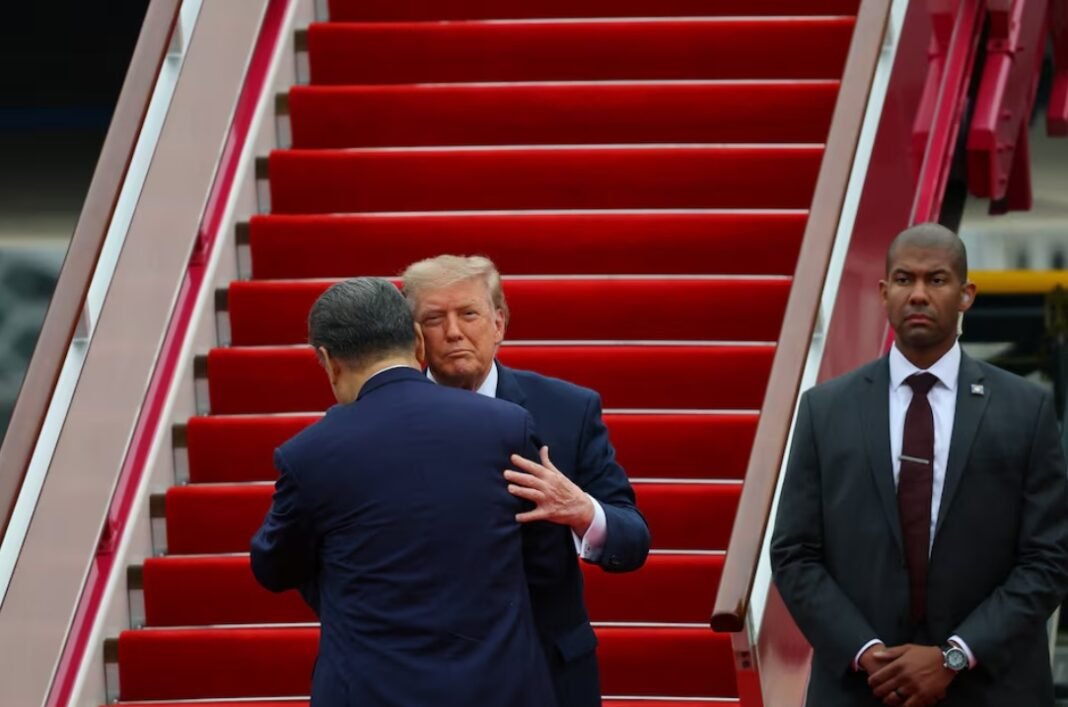
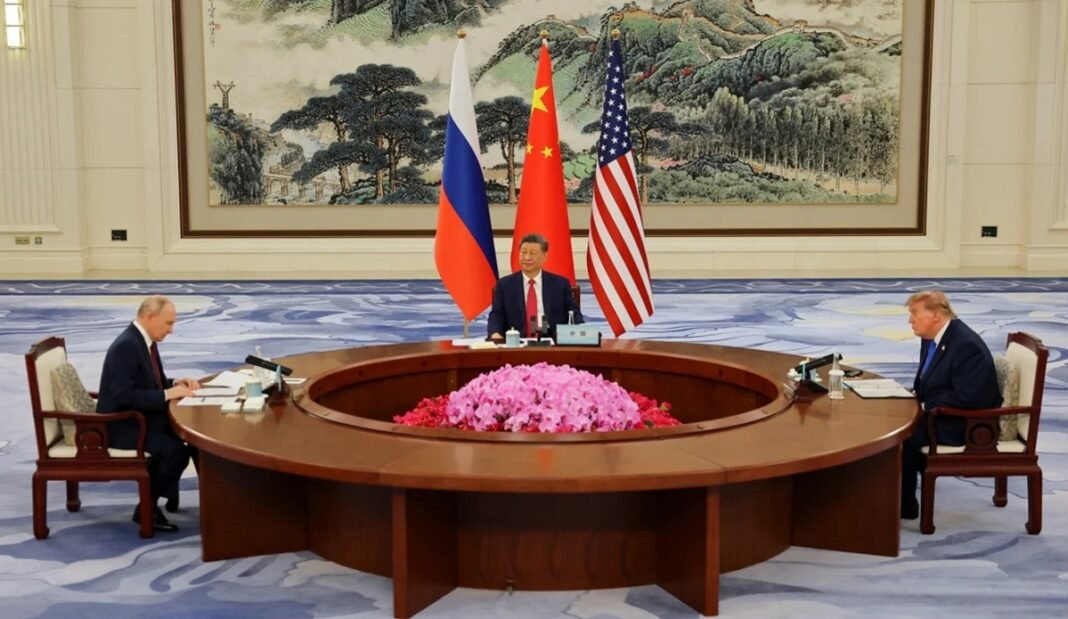
Global diplomacy has entered an unusually active phase, with Trump, Xi and Putin meeting in China, European leaders discussing Ukraine in Berlin, Iran expanding regional contacts and Gulf states intensifying security consultations. Qatar’s latest engagement with Pakistan adds another dimension to a rapidly evolving diplomatic landscape.
The international diplomatic landscape is witnessing an intense period of high-level engagement across Asia, Europe and the Middle East, as major powers and regional governments navigate overlapping security crises, economic uncertainty and geopolitical rivalries.
On November 19, US President Donald Trump, Chinese President Xi Jinping and Russian President Vladimir Putin gathered in Shenzhen for an unprecedented trilateral summit on the sidelines of the 33rd Asia-Pacific Economic Cooperation (APEC) Economic Leaders’ Meeting. At almost the same time, European leaders and Ukrainian representatives were meeting in Berlin, while Iran continued its diplomatic outreach through Oman and other regional channels.
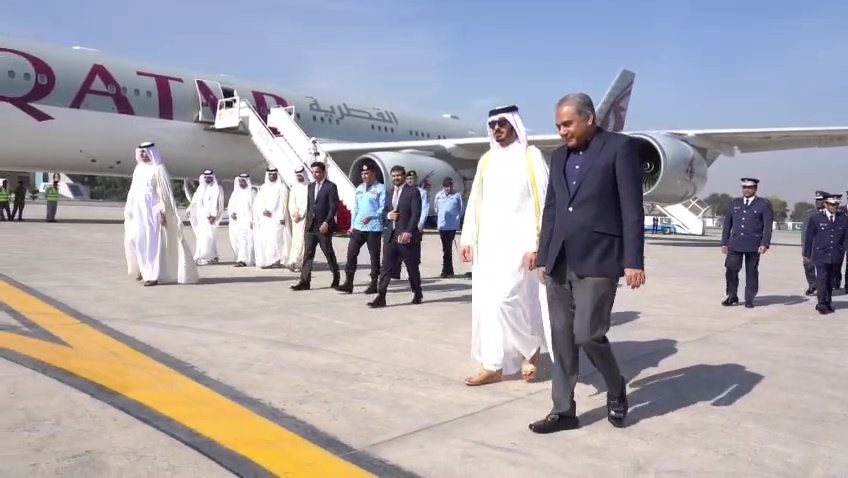
Meanwhile, Qatar reaffirmed its mediation efforts between Washington and Tehran, six Arab countries intensified diplomatic consultations over Gulf security, and Qatar’s Interior Minister arrived in Islamabad for discussions with his Pakistani counterpart.
Although these engagements are not part of a single diplomatic initiative, their timing highlights how governments are attempting to manage increasingly interconnected international crises through multiple political and diplomatic channels.
China Hosts Historic Trump-Xi-Putin Trilateral Summit

The most prominent diplomatic development is the meeting between Trump, Xi and Putin in Shenzhen, marking the first-ever trilateral summit involving the leaders of the United States, China and Russia.
The three countries possess enormous economic, military and diplomatic influence, making their direct engagement particularly significant amid continuing conflicts involving Iran and Ukraine, tensions over nuclear weapons and growing competition between Washington and Beijing.
Trump has indicated that discussions could address nuclear arms control and ways to end the wars involving Iran and Ukraine. The leaders also have important bilateral disagreements over trade, technology, military competition and international security.
Before the trilateral engagement, Trump held separate meetings with Xi and Putin. His discussions with the Chinese president included trade relations, artificial intelligence and broader economic cooperation, while his meeting with Putin addressed international security and Ukraine.
However, expectations of an immediate breakthrough remain limited. The three governments have different strategic priorities, and the presence of their leaders at the same negotiating table does not automatically translate into agreement on major international disputes.
The meeting nevertheless creates an important diplomatic opportunity to communicate directly on issues that could have consequences far beyond the three countries.
APEC Adds an Economic Dimension to China’s Diplomatic Outreach
The Shenzhen summit is also hosting the 33rd APEC Economic Leaders’ Meeting, providing China with an opportunity to advance its regional economic agenda.
Xi Jinping has called for greater Asia-Pacific economic integration, open trade and investment, stronger connectivity, technological cooperation and inclusive development.
Artificial intelligence, digital infrastructure, energy security and supply-chain resilience are among the important themes.
China has also announced a contribution of $20 million to support practical APEC cooperation and the establishment of a Centre for Asia-Pacific Community Studies in Shenzhen.
The economic discussions are particularly important at a time when geopolitical rivalries are affecting international trade, technology transfers, energy markets and investment decisions.
For Beijing, APEC provides a multilateral platform to reinforce its economic engagement with regional partners while presenting itself as an advocate of regional connectivity and cooperation.
Berlin: Europe Seeks a Role in Ukraine’s Future
While the three major powers are engaging in China, European leaders are gathering in Berlin to discuss the future of Ukraine and the continent’s security arrangements.
The Coalition of the Willing meeting includes key European leaders, Ukrainian representatives, NATO Secretary-General Mark Rutte and US presidential envoys Steve Witkoff and Jared Kushner.
The discussions are focused on security guarantees for Ukraine, the framework for a potential ceasefire and the country’s longer-term security and reconstruction.
European governments are particularly concerned that decisions concerning Ukraine and European security could be shaped through direct Washington-Moscow negotiations without adequate European participation.
The timing of the Berlin meeting is therefore significant. As Trump engages with Xi and Putin, European governments are attempting to maintain their influence over the diplomatic process and ensure that Ukraine’s security interests remain central.
The meeting also illustrates the difficulties facing Western unity. Washington and European capitals have not always shared the same approach to negotiations with Moscow, while Kyiv continues to seek credible guarantees against another Russian military offensive.
Berlin’s diplomatic engagement is therefore about more than Ukraine alone. It also concerns Europe’s future security architecture and its relationship with Washington.
Iran Expands Diplomatic Engagement Through Oman and Uzbekistan
Iran is pursuing its own diplomatic track as the confrontation with the United States continues to create uncertainty across the Middle East.
Iranian Foreign Minister Abbas Araghchi travelled to Muscat, where he met Omani Foreign Minister Sayyid Badr bin Hamad Al Busaidi and Uzbekistan’s Foreign Minister Bakhtiyor Saidov in a trilateral meeting on November 17.
The discussions covered political relations, trade, investment, transport, logistics and regional developments.
The three countries also discussed the importance of addressing regional tensions through diplomatic means and maintaining dialogue.
Oman’s participation is particularly important because Muscat has historically served as a channel for communication between Iran and Western governments.
The engagement comes at a time when Tehran faces mounting military and economic pressure, making its relations with neighbouring countries and regional diplomatic partners increasingly important.
Iran’s outreach should not be interpreted as evidence of an imminent agreement with Washington. However, maintaining diplomatic channels provides Tehran with additional avenues for communication and regional engagement.
Qatar Continues Mediation Between Washington and Tehran
Qatar is also maintaining an active diplomatic role in the continuing US-Iran confrontation.
On November 17, Qatar’s Foreign Ministry spokesperson and adviser to the prime minister, Majed bin Mohammed Al Ansari, confirmed that Doha’s mediation efforts between Washington and Tehran were continuing.
He said a meeting with the Iranian side was expected later that day to exchange views on proposals under consideration.
Qatar has repeatedly warned that further escalation threatens maritime security, regional stability and the global economy.
The country’s diplomatic role is particularly relevant because of its relationships with both Western governments and regional actors.
Doha has also been engaging other Arab governments over the security implications of the confrontation.
Its mediation efforts demonstrate that diplomatic communication has not completely disappeared despite the continuing military tensions.
Six Arab Countries Intensify Gulf Security Consultations
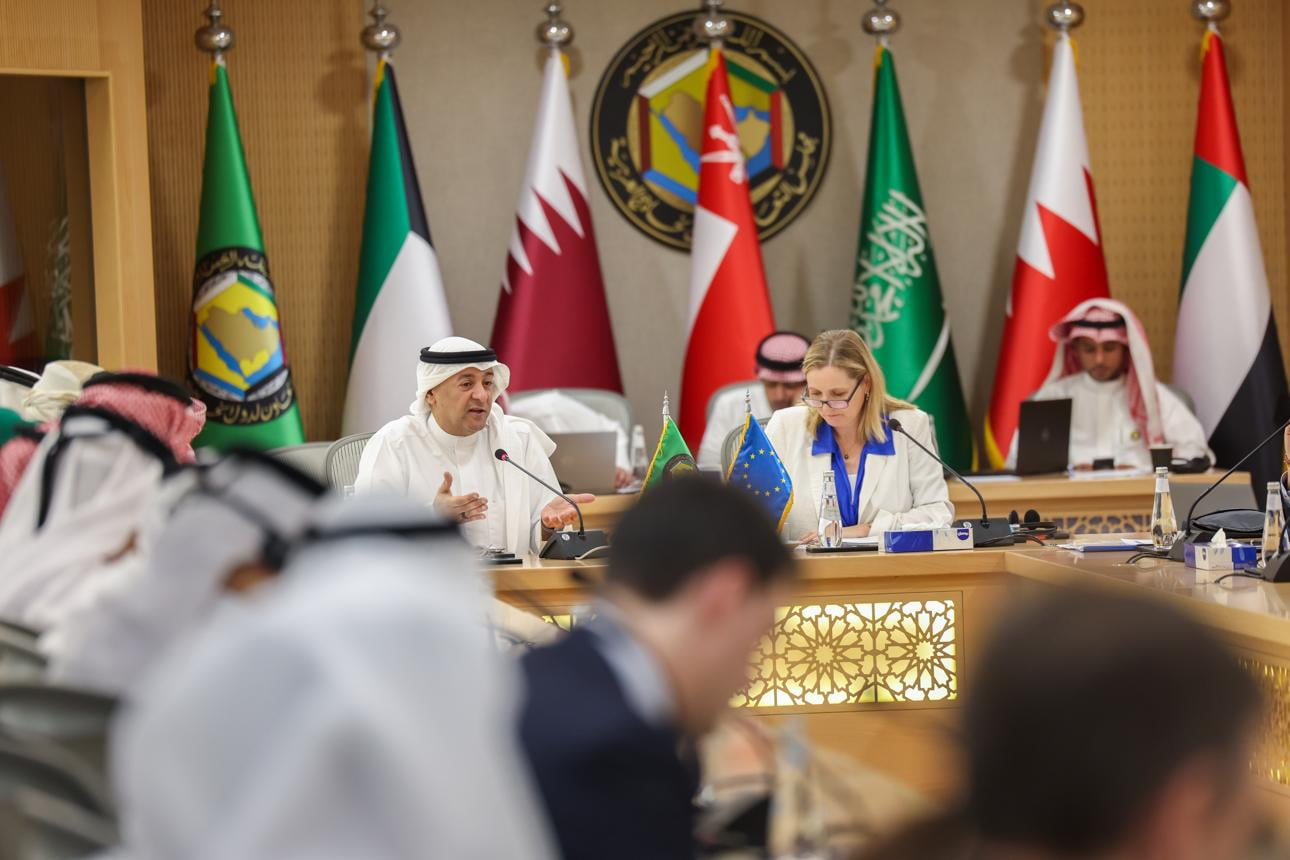
Another significant development has been the increased diplomatic coordination among six Arab countries.
Foreign ministers and senior officials from the United Arab Emirates, Qatar, Oman, Bahrain, Jordan and Egypt held separate telephone discussions on November 17.
The consultations focused on regional security, maritime safety and preventing further escalation.
The contacts came as Bahrain reported intercepting another Iranian aerial attack, adding to concerns about the widening confrontation and its potential impact on neighbouring countries.
The security of international shipping routes is particularly important for Gulf governments because disruptions in the Strait of Hormuz could affect energy exports, international trade and global oil markets.
The diplomatic consultations indicate that regional governments are attempting to coordinate their responses and reduce the risks of a wider confrontation.
However, their participation in these discussions should not be interpreted as evidence of a unified military or diplomatic position on Iran. Individual Gulf countries maintain different relationships and strategic calculations.
Qatar’s Interior Minister Arrives in Pakistan

Pakistan has also become part of this wider diplomatic activity through Qatar’s high-level engagement in Islamabad.
Qatar’s Interior Minister Sheikh Khalifa bin Hamad bin Khalifa Al Thani arrived in Pakistan on November 19 and was received by Interior Minister Mohsin Naqvi.
The visit comes amid continuing US-Iran hostilities and growing diplomatic efforts to prevent further regional escalation.
The visiting minister also commands Qatar’s Internal Security Force, known as Lekhwiya, making the engagement particularly relevant to bilateral security cooperation.
Pakistan and Qatar have maintained close diplomatic, economic and security relations. Their interior ministers have previously held discussions on security cooperation and regional developments, including meetings in Doha during July and October.
The latest visit provides another opportunity to strengthen institutional cooperation between the two countries.
Qatar is also an important energy partner for Pakistan, particularly through long-term liquefied natural gas supplies, while a substantial Pakistani expatriate community lives and works in the Gulf state.
For Islamabad, maintaining close relations with Doha is important not only for bilateral economic cooperation but also for its broader diplomatic engagement with Gulf countries.
Pakistan has consistently supported diplomatic efforts to reduce tensions between Washington and Tehran. Its engagement with Qatar therefore takes place against a wider regional background in which communication channels remain important.
Nevertheless, the visit should primarily be understood through its confirmed bilateral security and diplomatic agenda rather than assuming that it represents a new mediation arrangement.
A Wider Diplomatic Realignment or Parallel Crisis Management?
Taken together, the developments across China, Europe, Iran, the Gulf and Pakistan reveal an international system in which diplomatic engagement is intensifying even as military confrontations continue.
Three broader trends stand out.
First, major powers are attempting to maintain direct communication despite their strategic differences. The Trump-Xi-Putin meeting demonstrates the importance of high-level engagement on nuclear security, international conflicts and economic competition.
Second, regional powers are becoming increasingly active in managing crises that directly affect their security and economic interests. Iran’s outreach to Oman and Uzbekistan, Qatar’s mediation efforts and consultations among six Arab countries illustrate the importance of regional diplomatic channels.
Third, Europe and smaller regional states are seeking to preserve their influence in decisions that could reshape their security environments. The Berlin meeting demonstrates Europe’s determination to remain involved in discussions about Ukraine, while Pakistan’s engagement with Qatar reflects the importance of maintaining regional partnerships during a period of uncertainty.
There is also an important economic dimension. The APEC discussions on trade, artificial intelligence, connectivity and energy security show that governments are simultaneously addressing economic challenges that cannot be separated from international politics.
The developments do not yet establish the emergence of a new international diplomatic order. Nor do they demonstrate that the major powers or regional governments have reached a common understanding on the conflicts confronting them.
What they do reveal, however, is that diplomatic engagement is taking place on multiple fronts at a time when the consequences of military escalation are becoming increasingly difficult to contain.
As the meetings in Shenzhen and Berlin proceed and regional consultations continue, the central question is whether these parallel diplomatic efforts can produce practical understandings capable of reducing tensions.
For now, the world is witnessing an unusually busy diplomatic calendar, with the decisions and discussions taking place across these capitals carrying implications for global security, energy markets, trade and the future balance of international power.