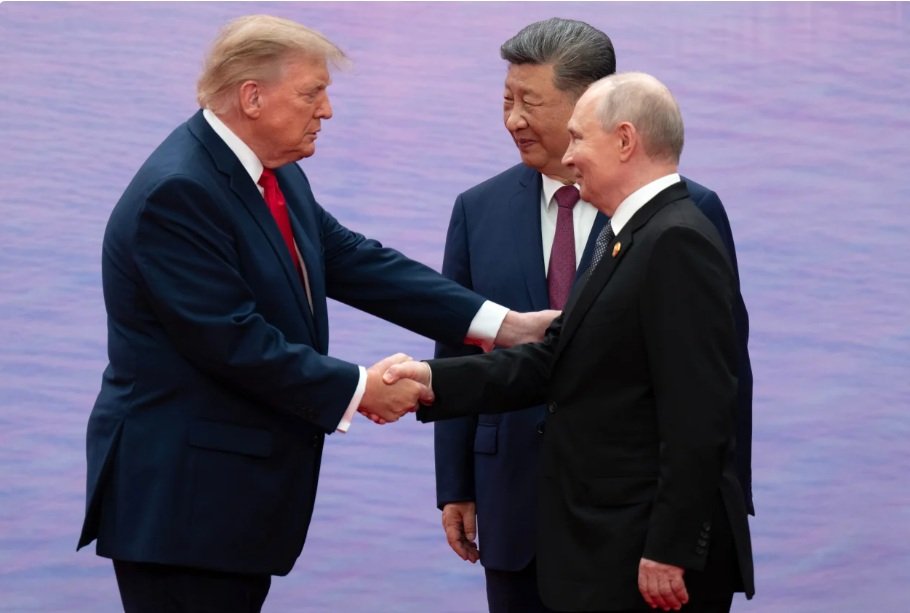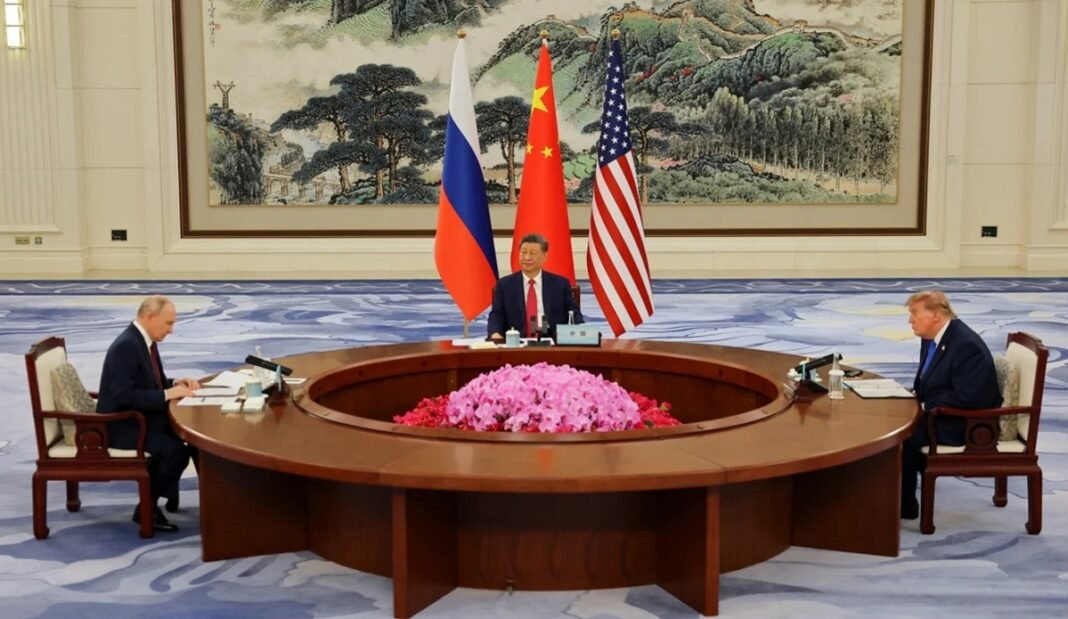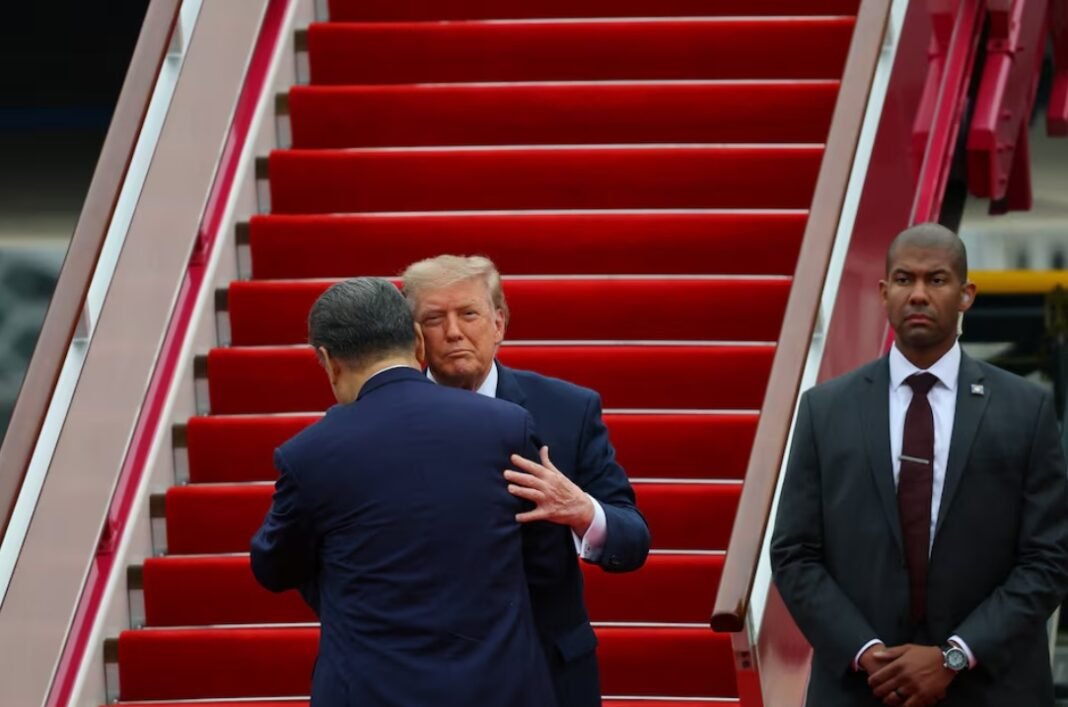
The 2026 US-China Economic and Security Review Commission report reveals Washington’s growing concerns over China’s control of critical supply chains, artificial intelligence, global financial networks, military infrastructure and strategic influence across South Asia and the Indo-Pacific.
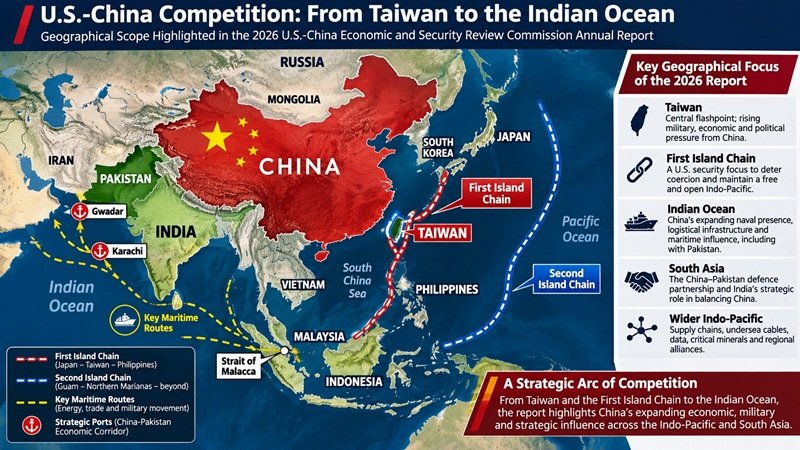
The timing of the U.S.-China Economic and Security Review Commission’s 2026 Annual Report to Congress is particularly significant. Submitted on November 18, as President Donald Trump visits China for talks with President Xi Jinping, the 705-page assessment provides an insight into how Washington’s national security establishment views the long-term trajectory of the US-China relationship.
While Trump’s engagement with Xi reflects an effort to manage trade disputes, maintain diplomatic communication and prevent immediate escalation, the Commission’s report presents a much broader strategic picture. It suggests that Washington is increasingly concerned about China’s ability to reshape the international economic, technological, financial and security systems on which American influence has traditionally depended.
The report goes considerably beyond the familiar question of whether Washington and Beijing trust each other. Its central concern is that China is building structural advantages across multiple sectors that could gradually reduce American influence without requiring a direct military confrontation.
This distinction is important. The Commission is not simply warning about China’s military expansion or trade policies. It is examining how Beijing is positioning itself to influence the rules, infrastructure, supply chains and institutions that underpin international power.
The report contains 30 recommendations for congressional consideration, with 10 identified as the most important priorities. All 10 serving commissioners unanimously approved the report, although two positions on the Commission remain vacant.
The Commission also conducted its first official fact-finding visit to mainland China since 2019, travelling to Beijing, Hangzhou and Shanghai in July 2026. Discussions covered artificial intelligence, advanced technology, biotechnology, business conditions, economic security and regional security. It also undertook visits to India, Panama and Mexico to examine China’s expanding international influence.
The Commission has indicated that it wants to return to China at least annually. This is significant because the report is based not only on Washington’s assessment of publicly available information but also on direct engagement with Chinese institutions, businesses and other interlocutors.
The larger question emerging from the report is whether diplomatic engagement with Beijing can coexist with an increasingly comprehensive American strategy to contain strategic vulnerabilities and preserve US influence.
1. Washington is concerned about China’s ability to reshape the international order
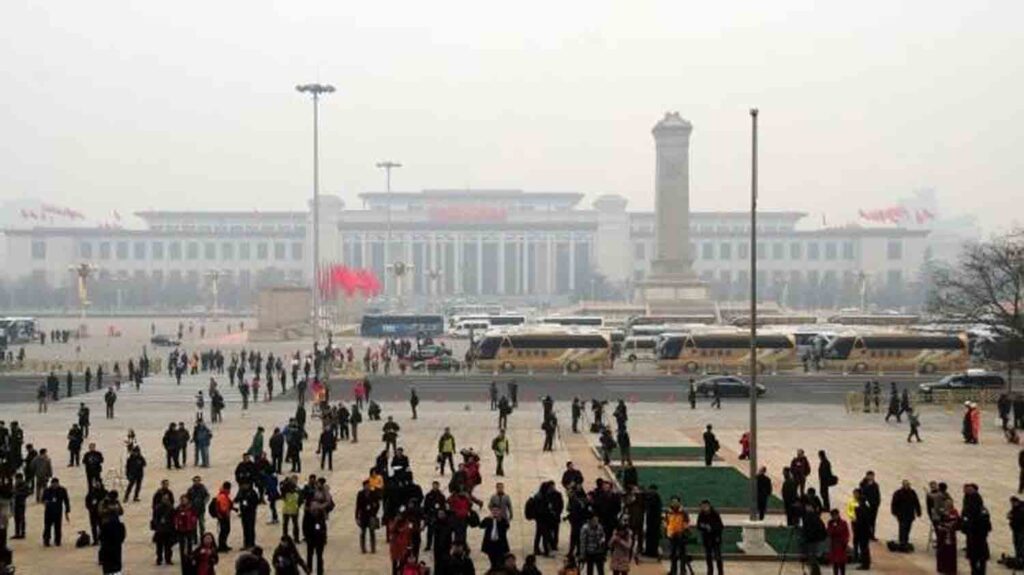
Perhaps the most important message of the report is that Washington increasingly views China’s ambitions as extending beyond becoming an economic and military peer of the United States.
The Commission argues that Beijing is attempting to translate its growing economic, technological and military capabilities into strategic leverage, while challenging American influence in international institutions and regional security arrangements.
This approach involves expanding China’s influence over international standards, commercial networks, critical infrastructure, financial markets and technological ecosystems.
The concern is not simply that China is becoming more powerful. It is that Beijing may increasingly influence the rules under which other countries conduct international trade, access technology, manage financial transactions and secure critical resources.
The report describes a Chinese approach that combines economic engagement with military modernisation and strategic pressure, while attempting to avoid a direct confrontation that could jeopardise its longer-term objectives.
This is a particularly important distinction in the context of Trump’s visit.
Diplomatic engagement does not necessarily mean strategic accommodation. Beijing can negotiate with Washington while continuing to expand its economic and military capabilities. Similarly, Washington can pursue commercial agreements while preparing for a prolonged competition.
The Commission’s assessment suggests that the United States is increasingly concerned about the possibility of losing influence through gradual structural changes rather than a single decisive geopolitical event.
2. Economic interdependence is becoming a national security vulnerability

One of the strongest themes in the report is China’s ability to convert economic interdependence into geopolitical leverage.
The Commission identifies China’s dominance in several industrial sectors as a strategic vulnerability for the United States and its allies.
These include:
- Rare earth elements and critical minerals.
- Pharmaceutical ingredients and essential medicines.
- Battery materials and processing technologies.
- Semiconductor supply chains.
- Advanced manufacturing equipment.
- Industrial chemicals and intermediate components.
The report highlights China’s use of export restrictions and regulatory measures to demonstrate how control over essential industrial inputs can become an instrument of economic statecraft.
Its concern is that countries dependent on Chinese supplies may find their industrial production, technological development and defence manufacturing exposed to decisions made in Beijing.
The Commission also examines China’s growing manufacturing overcapacity and expanding exports, describing the emerging challenge as a second China shock.
Its concern is that Chinese industrial expansion could put additional pressure on manufacturing economies, weaken domestic producers in other countries and deepen international dependence on Chinese products.
The report therefore recommends diversifying essential pharmaceutical supply chains through a proposed Comprehensive Critical Drug Diversification programme built around US-India cooperation.
This is not simply a commercial recommendation. It reflects Washington’s recognition that economic security requires alternative production capacity, reliable suppliers and long-term industrial investment.
The larger strategic message is that economic dependence can create political leverage even when no military confrontation takes place.
3. China is challenging American advantages beneath the oceans
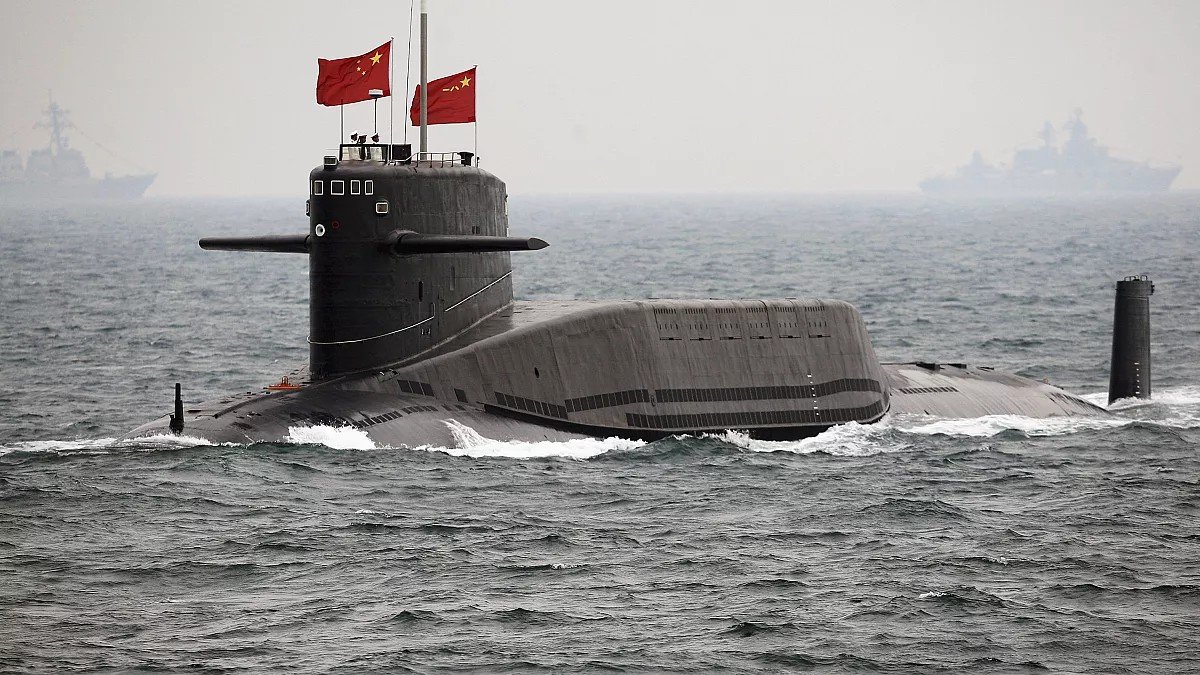
One of the most consequential security dimensions of the report concerns China’s expanding activities beneath the oceans.
The Commission’s chapter, titled Active Intercept: China’s Efforts to Narrow US Undersea Advantage, examines Beijing’s efforts to develop capabilities involving submarine operations, seabed research, underwater surveillance, autonomous systems and commercial subsea infrastructure.
The report argues that China is increasingly integrating commercial, scientific and military capabilities to improve its understanding of the underwater environment.
This matters because undersea infrastructure is central to modern military operations and the global digital economy.
Submarine communication cables carry enormous volumes of international data, including financial transactions, government communications and commercial information.
The Commission warns that China’s growing involvement in cable manufacturing, installation, maintenance and repair creates potential security vulnerabilities.
It also examines the possibility of undersea cable disruption as a form of pressure that could be difficult to attribute and might remain below the threshold of conventional military confrontation.
Taiwan is particularly vulnerable because of its dependence on submarine cables for communications and international data connectivity.
The Commission recommends expanding American legal authority against intentional sabotage of critical undersea infrastructure and establishing a Pacific Allied Cable Repair Fleet involving trusted partners, including Japan, South Korea and Taiwan.
It also wants the US government to examine China’s so-called Transparent Ocean programme, which the report associates with the development of a persistent undersea surveillance architecture integrating sensors and autonomous systems.
The implication is that future military competition will not be determined exclusively by aircraft carriers, fighter aircraft, missiles and conventional naval forces.
Control, monitoring and protection of critical infrastructure beneath the oceans could become equally important components of strategic competition.
4. Artificial intelligence and data are becoming instruments of national power

The report’s chapter Collect, Steal, Buy, Fuse, Monetize: How China Is Turning Data into Assets and Ammunition deserves particular attention.
The Commission argues that China is developing an integrated approach to collecting information from commercial, public and other sources, combining it for intelligence purposes and converting it into economic, technological and strategic advantages.
Its concern is that data collected for commercial purposes can also support intelligence analysis, technological development and military applications.
The report also identifies weaknesses within the American system, particularly fragmented federal data governance and insufficient coordination between government agencies.
Its most prominent recommendation is the establishment of an American Data Initiative.
The proposed initiative would:
- Establish coordinated federal data governance.
- Improve the availability of secure, AI-ready datasets.
- Strengthen restrictions on transfers of sensitive American data to China and other countries of concern.
- Improve oversight of commercial data brokers.
- Establish standards for recognising data as an economic asset.
- Introduce stronger auditing and accountability mechanisms.
The Commission is effectively arguing that data should be treated as a strategic national asset rather than simply a commercial resource.
The AI competition is similarly more complicated than the contest over advanced semiconductors.
The report acknowledges that the United States retains important advantages in advanced computing hardware and semiconductor manufacturing equipment. However, it warns that China’s open-weight AI models, lower-cost development strategies and growing international adoption could allow Beijing to expand its influence despite computing constraints.
It also identifies China’s dominance in processing critical minerals as an important upstream vulnerability for American AI infrastructure.
This suggests that maintaining American technological leadership will require more than restricting China’s access to advanced chips. It will require investment across the entire AI ecosystem, including energy, networking, data centres, software and industrial inputs.
5. Taiwan is becoming the most immediate test of American deterrence

The report identifies Taiwan as one of the most consequential areas of US-China competition over the next 24 months.
However, its assessment goes beyond the possibility of a conventional Chinese invasion.
The Commission argues that Beijing is increasingly using military, political, economic and maritime pressure to influence Taiwan’s political choices while complicating Washington’s ability to respond.
These activities include:
- Military and coast guard pressure.
- Maritime encirclement and blockade exercises.
- Cyber operations.
- Political influence and coercion.
- Economic pressure.
- Civilian maritime assets and fishing fleets.
The report highlights China’s preparations for blockade operations and its integration of military, law enforcement and civilian assets around Taiwan.
It warns that a blockade or quarantine could threaten international semiconductor supplies and challenge American influence in the Western Pacific without requiring an immediate invasion.
Taiwan’s importance extends beyond its geographical position.
Its semiconductor industry is central to the production of advanced chips required for artificial intelligence, military systems, data centres and numerous civilian technologies.
The Commission argues that Beijing’s control of Taiwan would create major strategic consequences for American defence treaty allies and significantly constrain US options in the Western Pacific.
It therefore recommends deeper US-Taiwan legislative exchanges, stronger defence cooperation and support for Taiwan’s civilian and military drone manufacturing capabilities.
The report also proposes examining a more formal Western Pacific security framework involving American allies and partners.
An important distinction concerns the widely discussed 2027 deadline.
The Commission refers to Xi Jinping’s reported direction that the People’s Liberation Army should possess the capability to conduct a successful invasion of Taiwan by 2027.
However, the report explicitly distinguishes military readiness from a decision to launch an invasion. The 2027 benchmark should not be interpreted as a confirmed invasion date.
The concern is that Beijing could possess a broader range of military options while continuing to use coercion to alter the status quo.
6. India is central to Washington’s China strategy, but strategic autonomy remains an obstacle
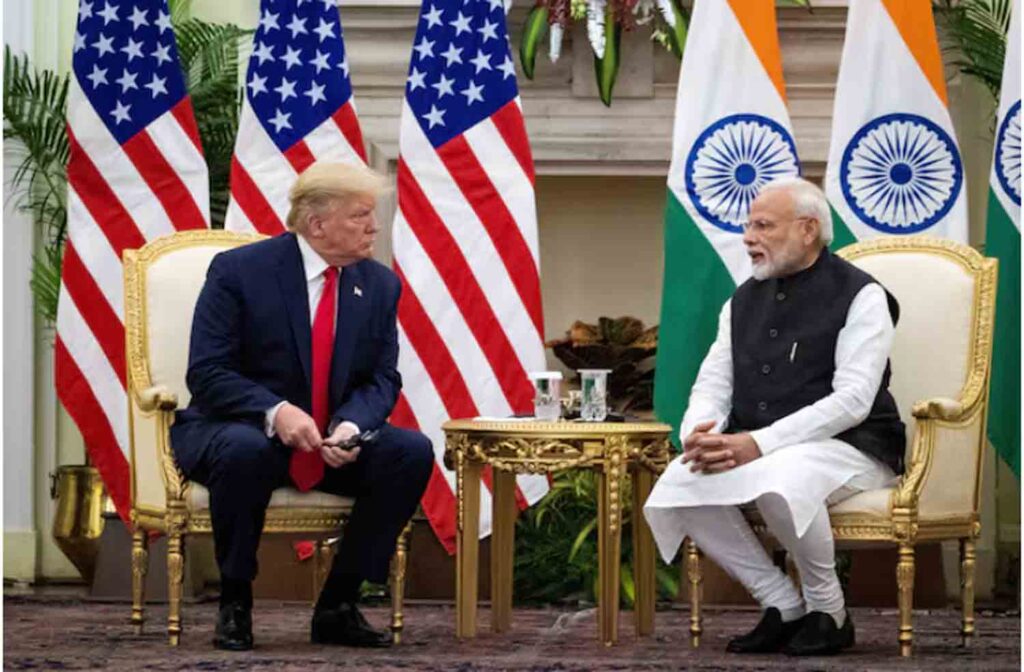
The report’s chapter on India and the future of US strategy in the Indo-Pacific is particularly important for South Asia.
The Commission describes India as one of the few countries with sufficient demographic, economic, military and geographical weight to influence the long-term balance of power with China.
Washington wants India to become a stronger manufacturing and supply-chain alternative to China while expanding defence, technology and maritime cooperation with New Delhi.
However, the Commission identifies a significant contradiction.
Despite efforts to reduce dependence on Chinese products, India’s industrial expansion continues to rely heavily on Chinese machinery, components, technology and technical expertise.
This creates difficulties for American efforts to establish India as an alternative production centre.
The report also recognises that India will continue to protect its strategic autonomy rather than automatically align itself with American geopolitical objectives.
Washington and New Delhi may share concerns about China’s regional influence, but their interests are not identical.
This creates an important limitation for American strategy: closer defence and technology cooperation with India does not automatically translate into a formal anti-China alignment.
The Commission’s assessment also highlights the growing significance of China’s military partnership with Pakistan.
It notes that Beijing supplied 81 percent of Pakistan’s arms imports during 2020–2024, according to the report.
The May 2025 India-Pakistan conflict is examined as an example of how Chinese military support can influence regional military calculations.
The report discusses Pakistan’s use of Chinese-origin equipment and cites Chinese state television’s account of Chinese aviation industry personnel providing technical support in Pakistan during the conflict.
It also refers to Indian concerns about possible Chinese intelligence and satellite support. However, the Commission does not independently establish that Beijing provided real-time intelligence to Pakistan during the fighting.
The report further examines China’s naval and surveillance activities in the Indian Ocean, arguing that Beijing is developing infrastructure and logistical networks that could sustain more persistent maritime operations.
For Washington, these developments connect the China-Pakistan defence relationship with the wider balance of power in the Indian Ocean.
For Pakistan, the report is significant because it places the country’s defence relationship with China within a broader American strategic assessment of South Asia.
It also demonstrates that Washington increasingly considers regional military developments, maritime access, technology transfers and industrial dependence as interconnected elements of the US-China competition.
7. The Indian Ocean is emerging as an increasingly important strategic theatre
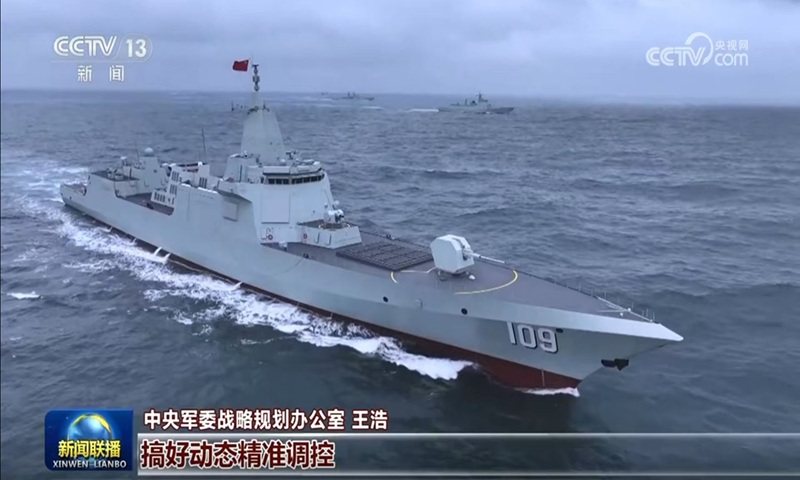
The report’s discussion of China’s expanding naval presence in the Indian Ocean deserves separate attention.
The Commission argues that Beijing is developing commercial and military infrastructure to reduce its vulnerability to disruptions at important maritime chokepoints.
Chinese naval, surveillance and research vessels are increasingly active near important sea lanes and areas of strategic interest to India.
The report also raises concerns about China’s efforts to expand its logistical networks and bring elements of its South China Sea approach into the Indian Ocean.
This is important because the Indian Ocean is not simply a regional maritime space. It is a major route for international energy shipments, commercial trade and strategic military movement.
China’s interest in the region is connected to its energy security, overseas economic interests and the protection of maritime trade routes.
The Commission views this expansion as a challenge to India’s traditional maritime advantages and an additional consideration for American regional planning.
For Pakistan, the strategic implications are particularly relevant.
Its location near the Arabian Sea, its defence relationship with China and its position along important regional connectivity routes place it within the geographical environment being examined by the Commission.
However, the report’s analysis also demonstrates that Washington’s concerns are not limited to Pakistan-China cooperation. China’s expanding commercial, research and military presence across the wider Indian Ocean is part of a much broader strategic assessment.
8. China is using commercial infrastructure and financial networks to expand global influence
The Commission’s examination of China’s activities in Latin America provides another important insight into Beijing’s international strategy.
The report argues that China’s economic engagement is increasingly creating long-term dependencies through ports, power grids, telecommunications, digital infrastructure and commercial relationships.
It highlights a shift from financing projects towards greater involvement in ownership and control of strategic infrastructure.
The concern is that commercial investment can gradually become political leverage when governments attempt to change contractual arrangements or reconsider strategic partnerships.
The report also examines China’s influence in international commodity markets.
Chapter Six, The Price of Everything: China’s Bid to Reshape Global Commodities Markets, argues that Beijing is attempting to expand its influence over the pricing and trading of essential commodities.
China’s growing role in the processing of critical minerals, purchasing of raw materials and development of domestic commodity exchanges could provide it with additional influence over international markets.
The Commission specifically highlights China’s use of state-backed purchasing institutions to consolidate demand and encourage the adoption of Chinese-preferred commodity benchmarks.
It also raises concerns about the growing use of the renminbi in certain commodity transactions.
This is an important development because global economic influence is not determined exclusively by the size of an economy or its military capabilities.
The ability to influence commodity prices, trading arrangements, financial transactions and supply contracts can also provide significant geopolitical leverage.
The Commission is therefore concerned about the emergence of parallel economic systems that could gradually reduce the effectiveness of existing American financial and economic instruments.
9. Hong Kong remains a strategic financial channel

The report also dedicates an entire chapter to Hong Kong, examining its evolving role in China’s global financial and technological ambitions.
The Commission argues that Hong Kong’s integration with mainland China has created additional risks for American companies, particularly concerning legal uncertainty, data security, intellectual property and regulatory compliance.
It identifies Hong Kong-based financial and corporate networks as potential channels for sanctions and export-control evasion involving Russia, Iran and North Korea.
The Commission recommends that Congress require an annual Hong Kong Business Advisory, jointly prepared by the US Departments of State, Treasury and Commerce.
It also proposes financial restrictions on Hong Kong virtual asset service providers that fail to prevent cryptocurrency transactions involving sanctioned Russian, Iranian and North Korean interests.
The broader concern is that Hong Kong’s international financial infrastructure could continue serving China’s geopolitical and economic objectives while exposing foreign businesses to additional regulatory and legal risks.
10. The recommendations expose Washington’s own institutional weaknesses
Perhaps the most revealing aspect of the report is that it does not exclusively focus on China’s capabilities.
It repeatedly identifies weaknesses within the American system.
The Commission argues that fragmented bureaucratic structures, inconsistent economic policies and insufficient coordination with allies are limiting Washington’s ability to respond effectively to China’s expanding influence.
Its recommendations include:
- Establishing an American Data Initiative.
- Diversifying essential pharmaceutical supply chains through US-India cooperation.
- Strengthening the domestic and allied semiconductor and technology ecosystem.
- Expanding legal protections for critical undersea infrastructure.
- Establishing a Pacific Allied Cable Repair Fleet.
- Monitoring China’s growing influence in international commodity markets.
- Strengthening post-quantum cybersecurity.
- Expanding institutional cooperation with Taiwan.
- Improving coordination with allies on Western Pacific security.
The report also renews concerns about the speed of America’s transition towards post-quantum cryptography.
It argues that Chinese collection of encrypted information could create future vulnerabilities if sufficiently advanced quantum computing capabilities become available.
The Commission recommends accelerated migration of sensitive federal systems to approved post-quantum cryptography.
This is an indication that Washington is increasingly thinking about strategic competition across technological timelines extending well beyond the current presidential term.
The recommendations also demonstrate that the Commission sees domestic industrial capacity, data governance, regulatory coordination and alliance management as essential components of national security.
In effect, the report is asking Congress to address weaknesses within the United States rather than assuming that existing American advantages will remain permanent.
11. The report exposes the difference between Trump’s China diplomacy and Washington’s long-term strategy

This is perhaps the most politically significant aspect of the report.
President Trump’s visit to China represents an effort to manage immediate disputes through direct engagement with Xi Jinping.
The priorities include trade, economic arrangements, diplomatic communication and maintaining stability in the bilateral relationship.
However, the Commission’s assessment reflects a different time horizon.
It is concerned about China’s long-term military modernisation, technological ambitions, economic statecraft and expanding global influence.
These two approaches are not necessarily mutually exclusive.
The US administration can pursue negotiations while Congress and national security institutions continue preparing for possible strategic competition.
Nevertheless, the report highlights the limits of leader-level diplomacy.
An agreement on trade or tariffs cannot automatically resolve disagreements over Taiwan, semiconductor technology, maritime security, critical minerals, data governance or the future of international financial systems.
The Commission also identifies 2027 as an important year because of the PLA centenary, China’s military modernisation objectives and the approaching 21st Communist Party Congress.
The report’s assessment suggests that Washington wants to strengthen its strategic position before these developments further influence the regional balance.
The fact that the report was approved unanimously by the serving commissioners also gives its recommendations institutional significance, although the Commission’s assessment should not be confused with an adopted White House policy or binding congressional legislation.
Its recommendations are proposals for congressional consideration, not proof that the US government has already implemented the suggested measures.
12. What does this mean for Pakistan and South Asia?
For Pakistan, the report deserves attention beyond its discussion of military cooperation with China.
Three broader developments are particularly relevant.
First, the US-China competition is becoming increasingly connected to the Indian Ocean and South Asian security environment.
The Commission examines China’s military relationship with Pakistan, its expanding maritime presence and India’s growing concerns about a potential two-front security challenge.
This indicates that regional defence developments are increasingly being evaluated within the wider US-China strategic framework.
Second, economic and technological dependence could become a major consideration in future American policy.
The report’s emphasis on critical supply chains, data governance, semiconductor manufacturing and financial infrastructure suggests that Washington is likely to pay greater attention to how countries interact with Chinese strategic industries.
For Pakistan, this creates both opportunities and challenges.
Its economic relationship with China and participation in regional connectivity projects can provide important industrial and infrastructure opportunities. However, maintaining access to multiple international markets and technology partnerships will remain important for its economic resilience.
Third, the growing strategic importance of the Indian Ocean could increase the significance of Pakistan’s geographical position.
The Commission’s assessment of China’s maritime infrastructure, naval operations and surveillance activities demonstrates that the Arabian Sea and surrounding maritime routes are increasingly relevant to the wider strategic competition.
Pakistan’s defence planners and policymakers will therefore need to follow developments in maritime security, supply-chain resilience and regional connectivity with particular attention.
The report also reveals that Washington’s approach to South Asia is not exclusively centred on India. China’s military and economic relationships across the region, including its partnership with Pakistan, are part of a wider American assessment.
Conclusion: The Trump-Xi meeting is only one part of a much longer strategic competition
The most important message of the 2026 US-China Economic and Security Review Commission report is that Washington increasingly sees China as a competitor capable of challenging American influence across multiple interconnected systems.
The competition is no longer confined to tariffs, trade deficits, semiconductor restrictions or military deployments in the Western Pacific.
It extends to international commodity markets, artificial intelligence, data ownership, pharmaceutical supply chains, undersea communications, financial infrastructure, maritime access and the rules governing global economic activity.
The report also reveals that Washington is concerned about its own ability to respond. Its recommendations call for greater domestic coordination, industrial investment, stronger cybersecurity, supply-chain diversification and deeper cooperation with allies.
The timing of its release during Trump’s China visit makes the contrast particularly significant.
Presidential diplomacy may help manage immediate disagreements, but it cannot by itself resolve the structural competition identified by the Commission.
For Pakistan and the wider South Asian region, the report offers an important indication of how Washington is connecting developments in the Indian Ocean, the China-Pakistan defence relationship, India’s strategic position and global supply-chain competition.
Ultimately, the question is not simply whether Trump and Xi can reach an understanding during their meeting.
It is whether the United States can maintain a workable diplomatic relationship with China while simultaneously preparing for a prolonged competition over technology, economic power, military influence and the international order.
The Commission’s recommendations suggest that Washington does not intend to leave that question to presidential diplomacy alone.