
Jaishankar has questioned what the Mecca defence pact has actually achieved. But the question itself highlights why the emerging Pakistan-Saudi-Türkiye security framework matters for India and the wider region.
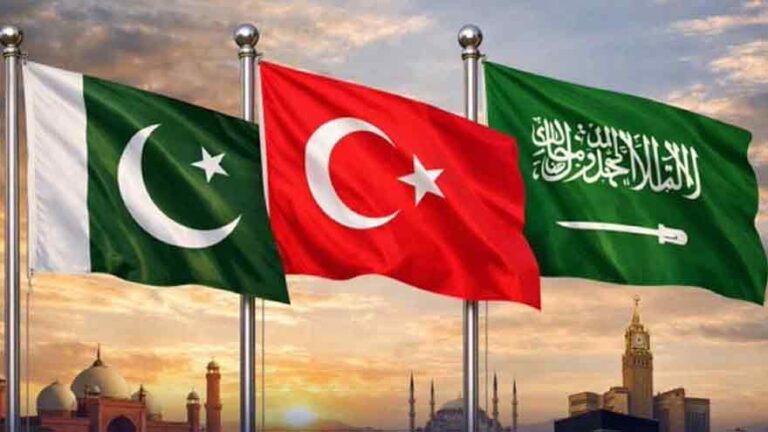
Indian External Affairs Minister S. Jaishankar has questioned the effectiveness of the Makkah Joint Defence Agreement signed by Pakistan, Saudi Arabia and Türkiye, asking what the pact has actually achieved.
Reacting on Mecca Pact, EAM Jaishankar says, “…sometimes things need to play out”; Points,”live military situation each of the signatory faces, what has the Mecca Pact done”
Vdo Ctsy: EAM Jaishankar X/ Economic Times pic.twitter.com/BwlTYWkIeU
— Sidhant Sibal (@sidhant) August 22, 2026
The remark came as Jaishankar discussed India’s concerns about Pakistan and the changing regional security environment. Rather than treating the agreement as an immediate military threat, his response focused on its practical value and the continuing security challenges facing the three countries.
That distinction is important.
The Makkah Joint Defence Agreement is not NATO, and there is currently no evidence of an integrated military command comparable to the Atlantic alliance.
But it would also be a mistake to dismiss it as a ceremonial agreement.
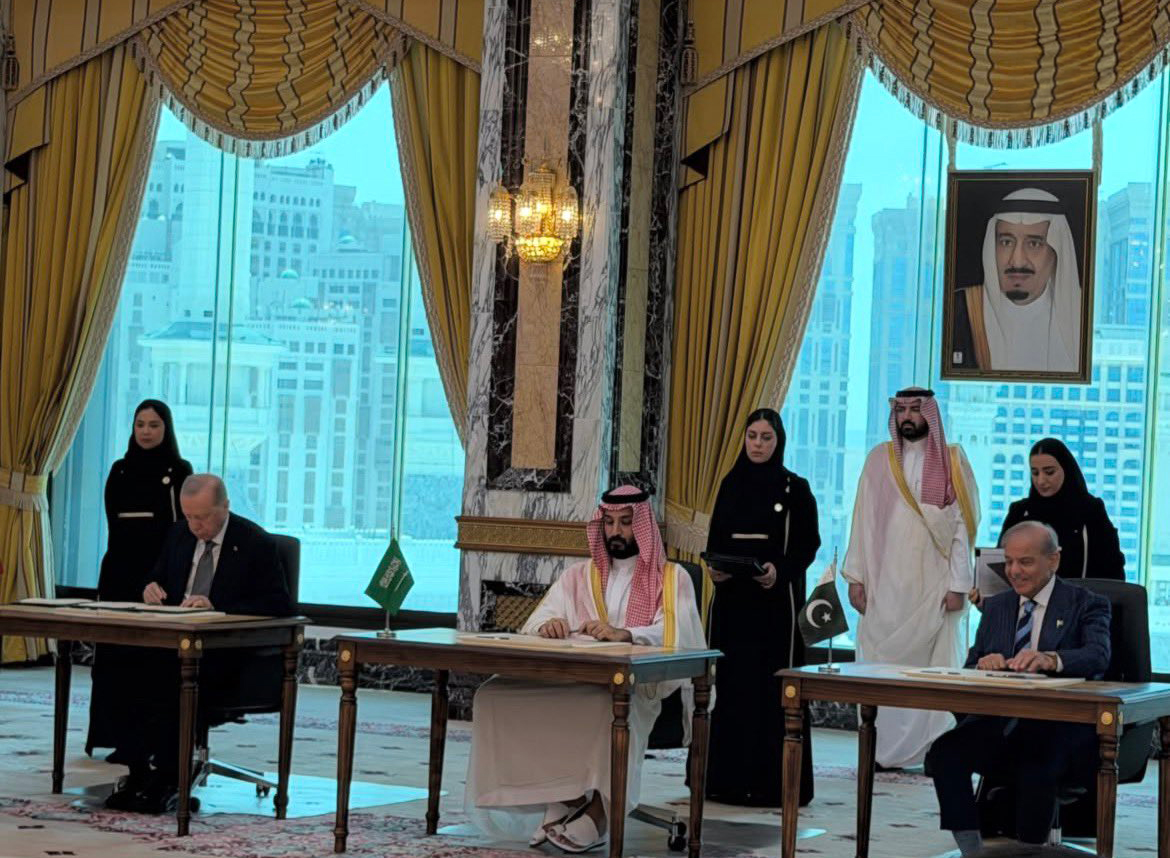
The pact stipulates that an armed attack against any one of the three states will be regarded as an attack against all three and calls for enhanced defence cooperation.
More importantly, the agreement is already moving beyond symbolism.
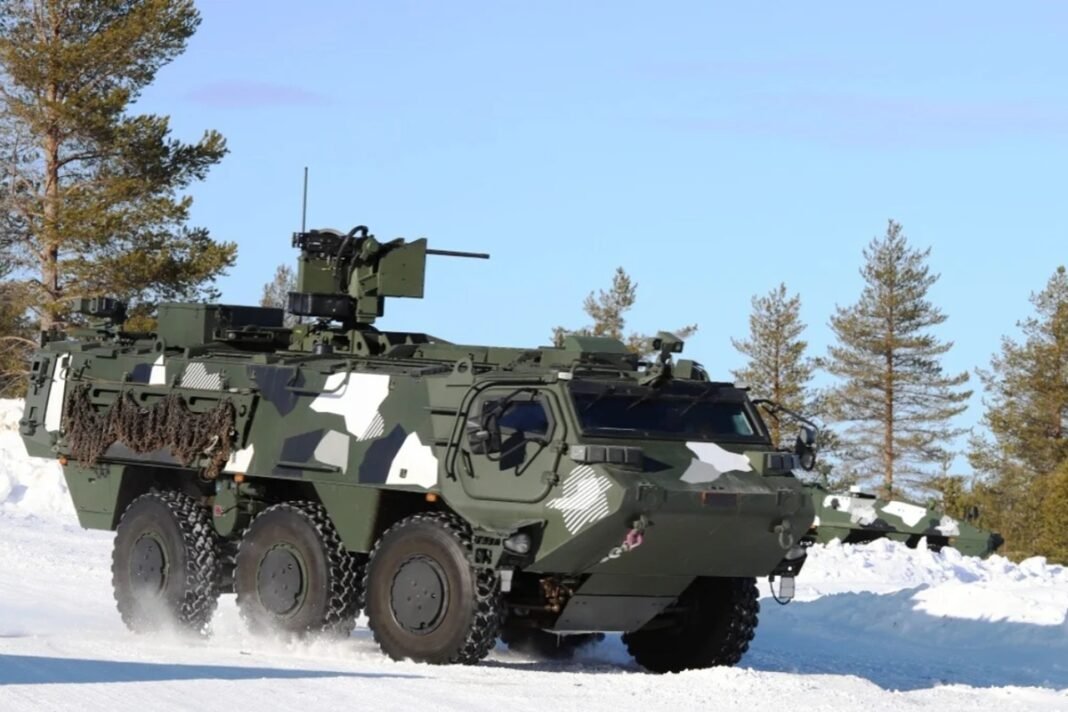
Türkiye has said the three countries will establish political and military coordination mechanisms involving defence ministers, foreign ministers and military chiefs. Ankara has also indicated plans for joint military exercises and cooperation in areas including unmanned systems, electronic warfare, artificial intelligence, joint production and technology transfer.
That is where the strategic significance begins.
Why Is India Watching the Mecca Pact?
India’s concern is unlikely to be that Saudi Arabia, Türkiye and Pakistan will suddenly form a military coalition aimed at India.
The more consequential issue is what Pakistan could become within a new regional security architecture.
The three countries bring very different forms of strategic power:
- Pakistan: a large and battle-tested military, strategic deterrence and extensive experience in regional security operations;
- Türkiye: a growing defence industry, advanced drone and electronic-warfare capabilities and NATO experience;
- Saudi Arabia: enormous financial resources, energy influence and deep political weight in the Gulf and Muslim world.
The agreement potentially connects these capabilities.
That does not automatically create a military bloc against India.
But it could produce a more strategically connected Pakistan.
And that is a development New Delhi has to factor into its calculations.
Jaishankar’s Question: Dismissal or Strategic Warning?
Jaishankar’s question about what the pact has achieved can be interpreted in two ways.
The first is straightforward: the agreement is new, and its practical military value has not yet been demonstrated.
That is a legitimate observation.
A defence treaty becomes credible through implementation—not ceremonies.
NATO’s deterrence is based on decades of military planning, integrated command structures, interoperability, intelligence cooperation, logistics and established political commitments.
The Makkah agreement has not reached that stage.
The second interpretation is more revealing.
By publicly questioning its effectiveness, New Delhi is also signalling that it is tracking the evolution of the agreement.
If India genuinely regarded the pact as irrelevant, there would be little strategic value in repeatedly discussing what it has achieved.
The real issue is therefore not what the agreement has accomplished in its first weeks.
It is what the three countries intend to build around it.
The Pact Has Already Moved Beyond a Piece of Paper

The original announcement was relatively broad.
The agreement committed the three countries to strengthening collective deterrence and stated that an armed attack on one would be considered an attack on all.
Pakistan has described it as defensive and consistent with the right of individual and collective self-defence under Article 51 of the UN Charter. Saudi Arabia has likewise stressed that the pact is not directed against a particular country.
But Ankara has now provided considerably more detail about what comes next.
The planned mechanisms include:
Political coordination: foreign ministers and other senior officials.
Military coordination: defence ministers and military chiefs.
Joint exercises: across different military domains.
Defence technology: cooperation in advanced systems.
Defence production: possible joint manufacturing.
Technology transfer: deeper industrial cooperation.
Unmanned systems and electronic warfare: areas specifically identified by Türkiye.
Artificial intelligence: another emerging area of cooperation.
This changes the equation.
A political agreement can remain symbolic.
A defence-industrial ecosystem is much harder to reverse.
Pakistan Is the Key Variable for India
From India’s perspective, the most important member of the pact may be Pakistan.
Saudi Arabia and India have developed substantial economic and strategic relations over the past decade.
Türkiye and India have significant economic ties despite political disagreements.
But Pakistan is India’s principal strategic rival.
Therefore, any arrangement that increases Pakistan’s military, diplomatic or economic resilience inevitably attracts attention in New Delhi.
The concern is not necessarily that Saudi Arabia or Türkiye would fight India.
It is that Pakistan could gain:
- deeper access to defence technology;
- more opportunities for joint production;
- additional military training;
- intelligence cooperation;
- greater diplomatic backing;
- stronger Gulf relationships; and
- potentially greater economic support for defence modernisation.
The cumulative effect could be more important than any single weapons system.
Türkiye Could Become the Technological Engine
The Türkiye dimension deserves particular attention.
Pakistan and Türkiye already have extensive defence cooperation.
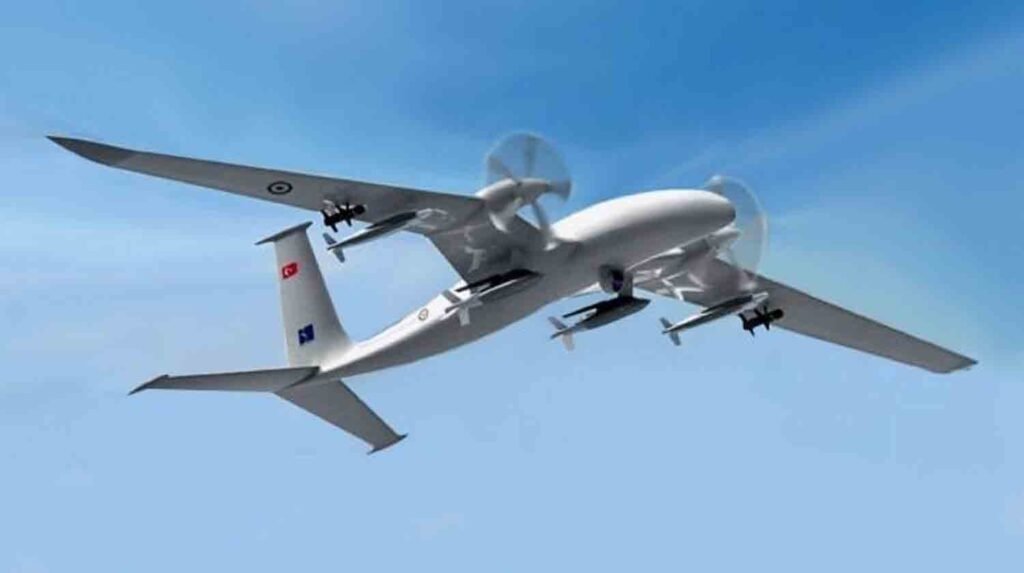
Türkiye has become a significant defence exporter and has developed indigenous capabilities in drones, naval platforms, electronic warfare and other advanced military technologies.
Pakistan has already acquired or partnered with Türkiye on several defence programmes.
The Makkah pact could potentially provide an institutional framework for taking this relationship further.
Saudi Arabia could bring capital and market scale.
Türkiye could bring defence technology and industrial capacity.
Pakistan could contribute military experience, manpower, operational knowledge and an established defence relationship with both countries.
That creates a potentially powerful triangle.
Saudi money + Turkish technology + Pakistani military capability
That formula is more strategically significant than the political symbolism surrounding the signing ceremony.
Saudi Arabia Is Not Choosing Pakistan Over India
However, an important qualification is necessary.
There is no evidence that Saudi Arabia has abandoned its relationship with India.
Quite the opposite.
Riyadh has substantial economic interests in India and has invested heavily in expanding its partnership with New Delhi.
Saudi Arabia therefore has little incentive to turn the Makkah pact into an anti-India military arrangement.
Saudi officials have explicitly said the agreement does not represent an intention to create a military axis or sectarian bloc and is not directed against a particular country.
This is why describing the agreement as an “anti-India alliance” would be analytically weak.
The more realistic interpretation is that Saudi Arabia is diversifying its security partnerships.
And that distinction matters.
Riyadh’s Main Concern Is Regional Security
The agreement emerged during an extraordinary period of regional instability.
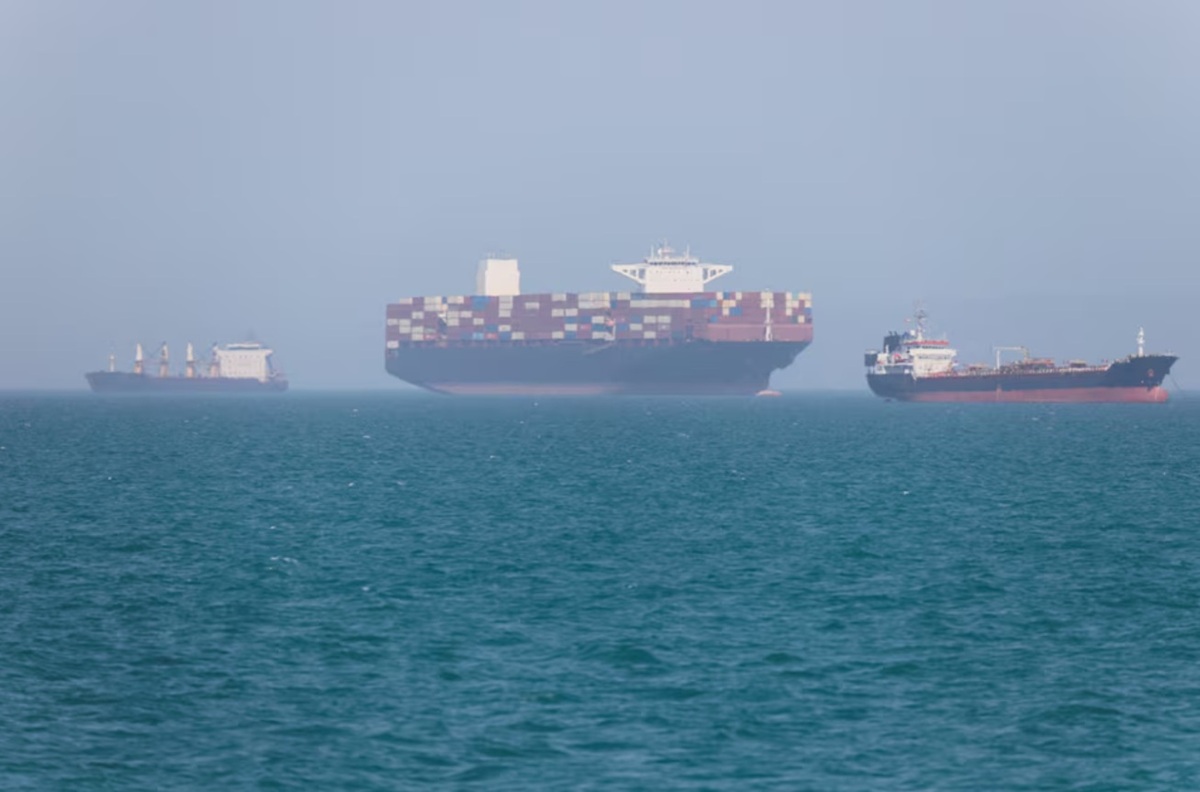
The war involving the United States, Israel and Iran has disrupted regional security and threatened energy infrastructure and shipping.
Saudi Arabia has faced direct security risks from the regional conflict.
For Riyadh, therefore, the Makkah agreement is primarily about creating additional layers of deterrence and strategic autonomy.
The traditional Gulf security model has depended heavily on the United States.
That relationship remains important.
But repeated regional crises have encouraged Gulf states to diversify their security partnerships.
The Makkah agreement fits into that broader trend.
Pakistan becomes valuable because of its military capabilities.
Türkiye becomes valuable because of its defence industry.
And Saudi Arabia provides enormous financial and geopolitical weight.
This Is Why the Iran War Matters
Without the Iran war, the Makkah pact would still have strategic significance.
But the conflict has accelerated its relevance.
Saudi Arabia has had to reconsider how regional security will work if conflicts can threaten its territory, energy infrastructure and shipping routes.
Türkiye has its own concerns about regional instability.
Pakistan has strong relations with both Saudi Arabia and Iran and has attempted to maintain diplomatic channels across the regional divide.
This gives Islamabad an unusual position.
Pakistan is simultaneously:
- a South Asian military power;
- a Gulf security partner;
- a Turkish strategic partner;
- a country with relations with Iran; and
- a state increasingly involved in regional diplomacy.
That broadens Pakistan’s strategic relevance beyond its traditional India-centric security framework.
India Has to Watch the Pakistan-Iran-Saudi Triangle Too
Another reason the pact matters is that Pakistan’s relations with Iran have not collapsed despite its new defence agreement with Saudi Arabia.
Pakistan has emphasised that the Makkah agreement is defensive and not directed against any country.
Islamabad has also sought to reassure Tehran that the pact is not an instrument of confrontation.
That is strategically important.
If Pakistan can maintain relations with both Saudi Arabia and Iran while simultaneously deepening its defence partnership with Türkiye, it could emerge as an important diplomatic bridge in the wider Middle East.
That would give Islamabad influence beyond the traditional India-Pakistan theatre.
For New Delhi, this matters because Pakistan’s international strategic profile could become broader.
Why the Word “Collective” Matters
The most important phrase in the agreement may be collective deterrence.
Pakistan’s traditional security relationship with Saudi Arabia was largely bilateral.
Türkiye had its own defence relationship with Pakistan.
Saudi Arabia and Türkiye had their own growing military-industrial links.
The Makkah pact puts these relationships into a common framework.
An attack against one is to be treated as an attack against all.
The precise operational meaning remains unclear.
But the political message is straightforward:
An adversary contemplating military action against one member must now consider the possibility of consequences involving the other two.
That is deterrence.
Whether it will work in practice remains to be demonstrated.
This Does Not Mean Saudi Troops Would Fight India
This is another point that requires caution.
The agreement does not publicly establish an automatic military intervention mechanism comparable to a detailed NATO war plan.
Even NATO’s Article 5 does not mean every member automatically responds with identical military action.
Each member decides what action it considers necessary.
The Makkah agreement is even less operationally defined at this stage.
Therefore, it would be misleading to suggest that a future India-Pakistan conflict automatically means Saudi Arabia and Türkiye would enter the war.
There is currently no evidence for such a conclusion.
But deterrence does not require automatic intervention.
Sometimes the possibility of wider involvement is enough to influence an adversary’s calculations.
Operation Sindoor Makes This More Relevant
The agreement also has to be viewed against the backdrop of the India-Pakistan military confrontation of 2025.
That confrontation demonstrated that the two countries can move rapidly from political crisis to military action.
India has repeatedly emphasised that future terrorist attacks could result in strong responses.
Pakistan has demonstrated its willingness and ability to retaliate.
The emergence of a trilateral defence arrangement therefore adds another variable.
In any future crisis, Indian planners would have to assess not only Pakistan’s military response but also the diplomatic and strategic reactions of Saudi Arabia and Türkiye.
That does not necessarily mean direct military intervention.
It could involve:
- diplomatic pressure;
- intelligence cooperation;
- logistical assistance;
- military resupply;
- economic support;
- international diplomatic mobilisation; or
- political signalling.
Even such indirect support could affect crisis calculations.
The Nuclear Question Should Be Handled Carefully
The fact that Pakistan is a nuclear-armed state inevitably attracts attention when it enters a collective-defence arrangement.
But there is currently no evidence that the Makkah agreement creates a nuclear-sharing arrangement.
Saudi officials have explicitly rejected linking the pact to nuclear ambitions or an arms race.
Therefore, claims that Saudi Arabia has acquired a Pakistani nuclear umbrella through the agreement are premature.
The more relevant issue is conventional deterrence.
If Pakistan’s defence capabilities become increasingly integrated with Turkish technology and Saudi resources, its overall strategic resilience could increase without any change in nuclear policy.
Is This Really an “Islamic NATO”?
No—not yet.
The phrase is useful as shorthand, but it risks exaggerating the current reality.
The agreement lacks the institutional maturity, command integration and decades-long operational history of NATO.
The three countries also have different threat perceptions.
Saudi Arabia is heavily focused on Gulf security and Iran.
Türkiye has its own regional priorities and maintains NATO membership.
Pakistan’s principal conventional strategic rival remains India.
Their interests overlap, but they are not identical.
The International Institute for Strategic Studies has also cautioned that the agreement’s deterrent effect remains uncertain, noting that previous regional defence arrangements have struggled to translate political commitments into effective collective military action.
That is an important reality check.
But “Not NATO” Does Not Mean “Not Important”
This is where some of the criticism of the pact goes too far.
An alliance does not have to become NATO overnight to change strategic calculations.
The real test is whether the three states develop:
- permanent military coordination;
- regular joint exercises;
- intelligence-sharing mechanisms;
- common operational procedures;
- joint defence production;
- technology transfer;
- interoperable systems; and
- a credible political mechanism for responding to aggression.
Türkiye’s latest statements indicate that at least some of these mechanisms are already being planned.
If they materialise, the strategic significance of the pact will rise considerably.
Egypt Could Be the Next Important Development
Türkiye has indicated that Egypt could eventually join the arrangement.
That possibility would materially change the equation.
Egypt is a major Arab military power, controls the Suez Canal and has strategic interests extending across the Red Sea, Mediterranean and Middle East.
Its inclusion would expand the geographic reach of the arrangement from:
South Asia → Gulf → Anatolia
to a framework extending toward:
South Asia → Gulf → Türkiye → Egypt → Red Sea/Mediterranean.
That would be a much more significant regional security architecture.
But Egypt’s participation is not guaranteed, and its strategic interests differ from those of the current three members.
Therefore, it should be treated as a possibility, not an established next step.
India Has Its Own Strategic Options
The emergence of the Makkah framework does not leave India without options.
New Delhi has built extensive relationships with Saudi Arabia, the UAE and other Gulf states.
India also has deepening strategic ties with the United States, France and Israel.
Its naval capabilities give it considerable influence in the Indian Ocean.
And its defence-industrial base is expanding.
India can therefore respond through diplomacy, economic engagement and its own defence partnerships rather than treating the Makkah pact as an immediate military challenge.
In fact, the most effective Indian response may be to deepen bilateral relationships with Saudi Arabia and Türkiye rather than attempt to confront the pact as a bloc.
That would be particularly important with Riyadh.
The Saudi-India Relationship Is India’s Strategic Buffer

Saudi Arabia has reasons to maintain good relations with both India and Pakistan.
India is a huge market and a major energy customer.
Pakistan is a long-standing defence partner with deep societal ties to Saudi Arabia.
Riyadh is therefore likely to continue balancing both relationships.
This is precisely why the Makkah pact should not be viewed through a simplistic India-versus-Pakistan lens.
Saudi Arabia’s primary objective is likely to preserve its strategic autonomy and security—not to become an instrument of either South Asian rival.
India’s challenge is to ensure that its growing relationship with Riyadh remains strong enough that Pakistan’s new defence partnership does not translate into a significant diplomatic shift against New Delhi.
The Real Strategic Shift Is Bigger Than India
Ultimately, the Makkah pact is part of something larger.
For decades, much of Gulf security was organised around external powers, particularly the United States.
That model is not disappearing.
But regional powers are increasingly seeking multiple security pillars.
The Makkah agreement represents one expression of that trend.
Saudi Arabia wants greater autonomy.
Türkiye wants a greater regional role.
Pakistan wants to expand its strategic relevance and defence partnerships.
The three objectives overlap.
That is why the pact matters.
What Jaishankar Should Be Watching

If the Indian foreign minister wants to assess whether the Makkah pact is significant, the answer will not come from the signing ceremony.
It will come from the next stages.
India should watch five indicators:
1. Military exercises
Are Pakistan, Saudi Arabia and Türkiye conducting increasingly sophisticated joint exercises?
2. Defence production
Does Saudi capital begin supporting Turkish-Pakistani joint production?
3. Technology transfer
Do advanced drones, electronic-warfare systems, AI and air-defence technologies enter common programmes?
4. Intelligence cooperation
Does the agreement create permanent intelligence-sharing mechanisms?
5. Crisis response
Most importantly, how do the three governments respond to the next serious regional or South Asian crisis?
These indicators will reveal whether Jaishankar’s scepticism is justified—or whether the pact is becoming something much more consequential.
What It Means for Pakistan
For Pakistan, the agreement potentially offers three major advantages.
First, strategic diversification.
Pakistan is not relying on a single major partner.
Second, defence-industrial opportunities.
Türkiye’s growing defence industry creates possibilities for joint development and production.
Third, diplomatic relevance.
Pakistan becomes part of a security framework connecting South Asia with the Gulf and Türkiye.
That could strengthen Islamabad’s role in regional diplomacy.
But it also creates obligations.
If the pact develops into a genuine mutual-defence arrangement, Pakistan could find itself under pressure to respond to conflicts that are not directly related to its own security.
That is a risk Islamabad will have to manage.
What It Means for Saudi Arabia
For Riyadh, the agreement provides another layer of deterrence at a time when the Gulf security environment is changing rapidly.
Saudi Arabia retains its relationship with Washington.
But it now has additional security partners.
Pakistan brings military capability.
Türkiye brings defence technology.
The arrangement therefore gives Riyadh more strategic options.
That is valuable even if the pact is never activated militarily.
What It Means for Türkiye
Türkiye gains something different.
Ankara strengthens its influence across both the Gulf and South Asia while potentially opening new markets for its defence industry.
The country can also position itself as a central security actor connecting Europe, the Middle East and South Asia.
The Makkah pact therefore fits Türkiye’s broader ambition to play a greater role in regional security rather than leaving the region’s strategic architecture entirely to the United States or other external powers.
The Bottom Line
Jaishankar’s question—what has the Mecca pact actually achieved?—is a reasonable test of a newly signed defence agreement.
At this stage, the pact has not demonstrated NATO-level military integration.
It has not created an automatic mechanism for Saudi or Turkish intervention in a future India-Pakistan war.
And its members have repeatedly said it is defensive and not directed against any country.
But dismissing it as insignificant would be equally short-sighted.
The agreement has already moved toward institutional mechanisms, joint exercises and defence-industrial cooperation.
Its real significance lies in the combination of three capabilities:
Pakistan’s military and strategic deterrence, Türkiye’s defence technology and Saudi Arabia’s financial and geopolitical weight.
That combination does not constitute an anti-India alliance.
But it could produce a stronger, more connected and more strategically resilient Pakistan.
For India, that is the development worth watching.
And this is why Jaishankar’s remarks matter.
The real question is not whether the Makkah pact has already transformed the regional balance.
It is whether Pakistan, Saudi Arabia and Türkiye can turn a political agreement into a functioning security architecture.
If they fail, Jaishankar’s scepticism will look justified.
If they succeed, New Delhi will have to rethink an important part of its strategic calculations—not because an “Islamic NATO” has suddenly appeared, but because a new regional security network will have taken shape around Pakistan.
That is a much more consequential development.