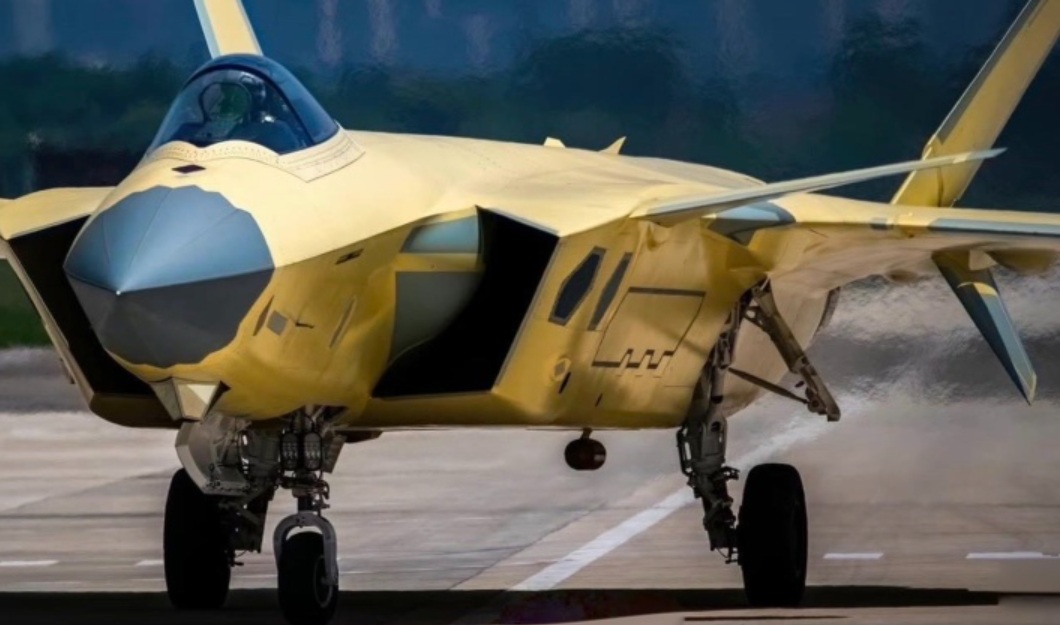
China’s growing military aviation capabilities are receiving renewed attention after commercial satellite imagery revealed nearly 300 People’s Liberation Army Air Force (PLAAF) aircraft concentrated across 11 airbases in the country’s western region. The deployment, believed to be part of the annual Red Sword combat exercise, raises an important question: Is China moving beyond demonstrating its expanding aircraft inventory towards developing the ability to sustain a large-scale air campaign?
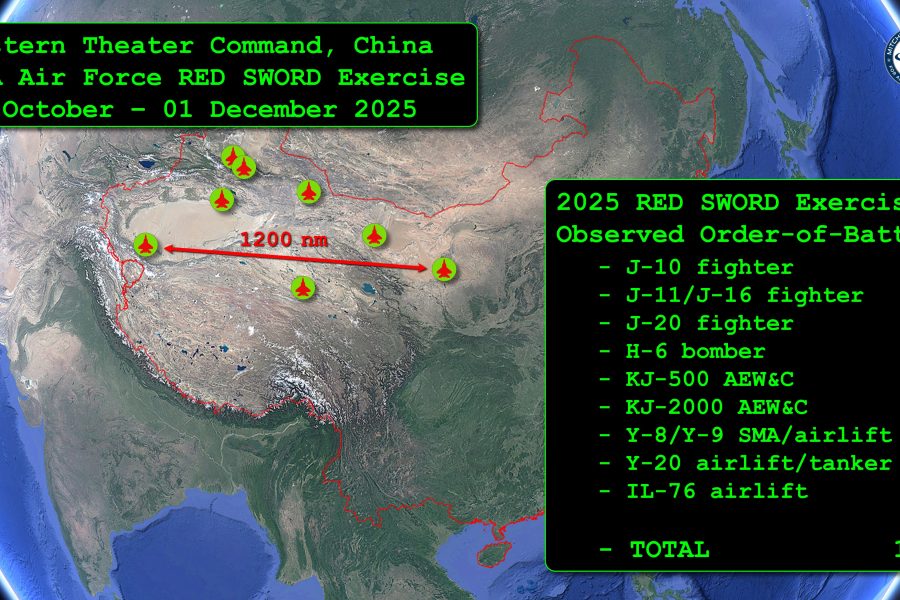
The scale of the reported deployment suggests that Beijing is placing increasing emphasis on force concentration, operational coordination and logistical endurance. Unlike short-duration military drills involving limited numbers of aircraft, the suspected exercise brings together multiple categories of combat and support aviation, including J-20 stealth fighters, J-10 and J-16 fighters, H-6 bombers, KJ-500 airborne early-warning aircraft and Y-20 transport and tanker platforms.
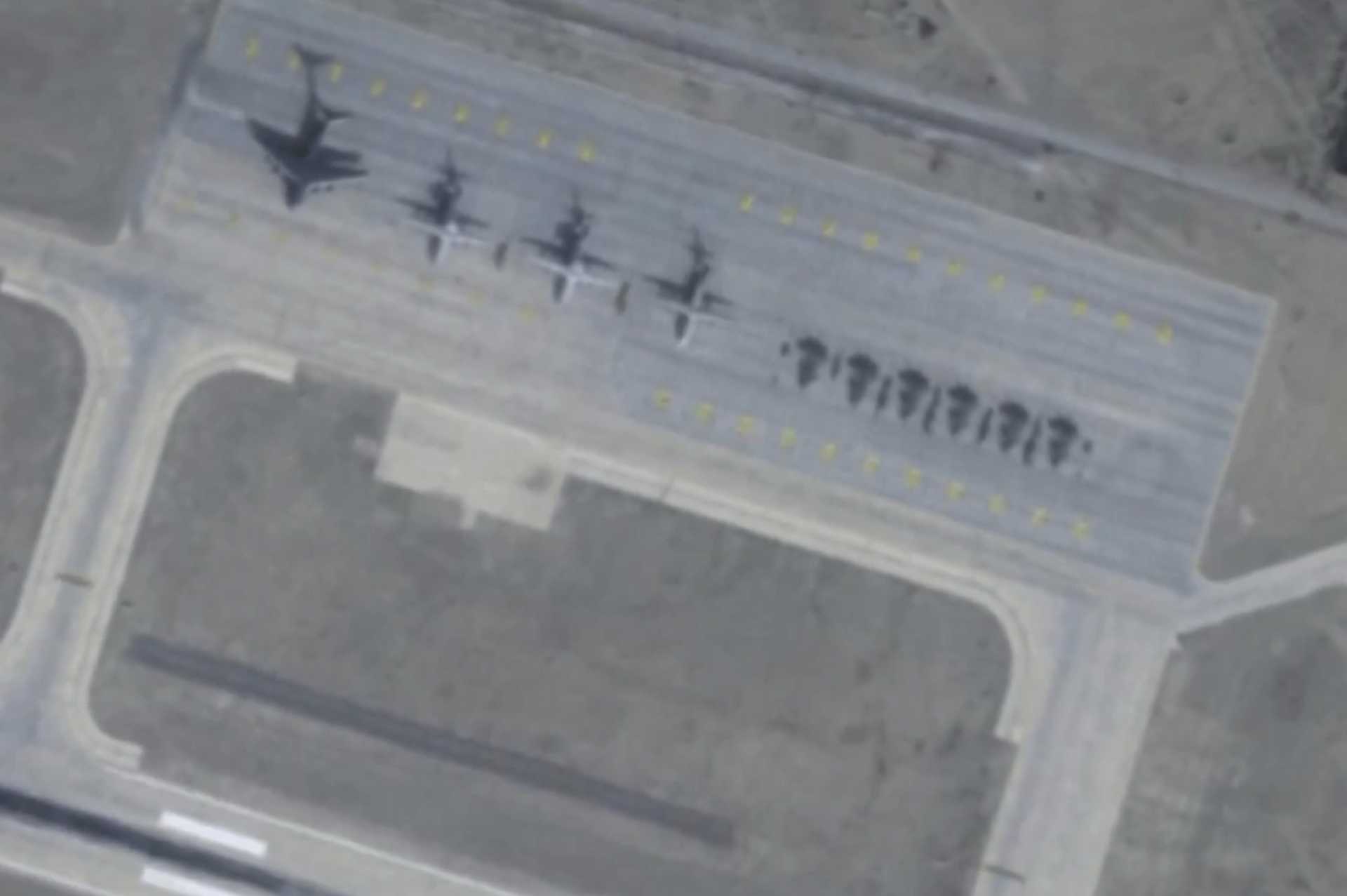
An assessment released on November 11 by the US-based Mitchell Institute for Aerospace Studies identified approximately 279 aircraft visible across 11 western Chinese airbases. The number could exceed 300 if aircraft inside hangars and other sheltered facilities are included.
The concentration represents a substantial increase compared with a similar exercise in 2025, when satellite imagery identified 194 aircraft across eight airbases. The latest build-up began in mid-October, with transport and tanker aircraft arriving before the main fighter and bomber formations.
Although China has not officially confirmed the exercise’s designation or disclosed its objectives, retired US Navy intelligence officer Michael Dahm, a senior fellow at the Mitchell Institute, assessed that the deployment was very likely this year’s Red Sword exercise. He described it as potentially the largest PLA Air Force drill conducted in at least several years.
The significance, however, extends beyond the number of aircraft visible in satellite images. The deployment provides an opportunity to examine how effectively the PLAAF can assemble, coordinate and support a diverse aviation force operating across a geographically dispersed network of military installations.
From Aircraft Numbers to Actual Combat Readiness
China has spent years modernising its military aviation fleet, introducing advanced combat aircraft, improving airborne surveillance and expanding its heavy transport and aerial refuelling capabilities.
However, possessing modern aircraft does not automatically translate into the ability to conduct sustained air operations during a major conflict.
A modern air campaign requires much more than fighter aircraft. It depends on the coordination of combat formations, intelligence collection, airborne command and control, electronic warfare, aerial refuelling, maintenance and continuous logistical support.
The suspected Red Sword exercise appears to bring many of these elements together.
The presence of J-20 stealth fighters alongside J-10 and J-16 aircraft is particularly important. It potentially allows Chinese planners to examine how fifth-generation fighters can operate alongside advanced fourth-generation platforms during complex missions.
The operational challenge is to ensure that different aircraft types can exchange information, receive targeting instructions and coordinate their activities under a common command structure.
If the PLAAF is successfully developing these capabilities, the implications could extend well beyond individual fighter performance.
It would indicate progress towards an integrated air combat system in which different aircraft contribute specialised capabilities to a broader operational mission.
Nevertheless, satellite imagery alone cannot establish whether such integration was successfully demonstrated during the exercise.
J-20 Stealth Fighters and the Integration Challenge
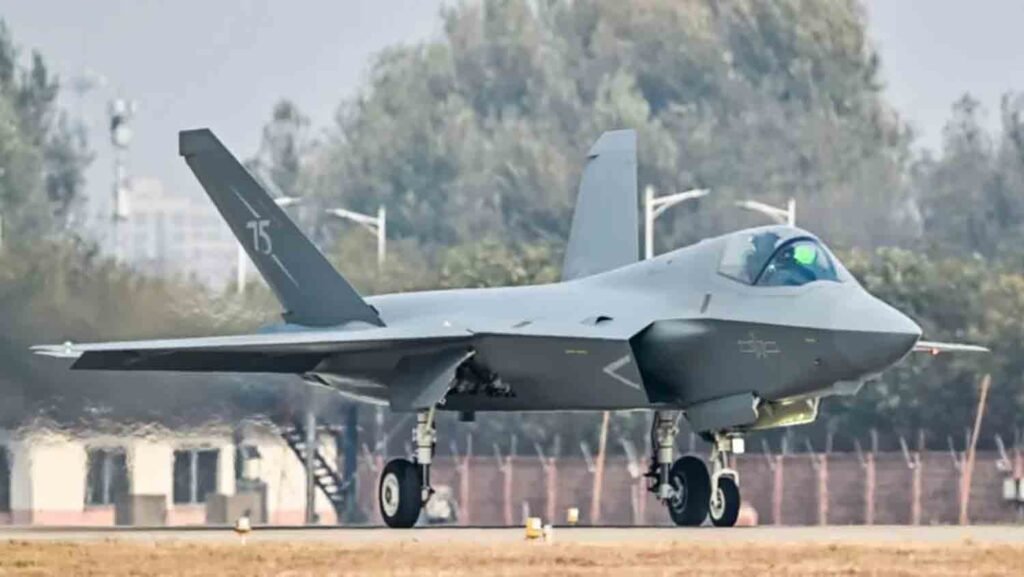
One of the most important elements of the reported deployment is the presence of China’s J-20 fifth-generation stealth fighter.
The aircraft is designed to combine reduced radar observability with advanced sensors, long-range weapons and modern avionics. Its role in a large-scale exercise involving conventional fighters and airborne surveillance platforms deserves particular attention.
The reported aircraft breakdown identified approximately 43 J-20 fighters among the visible deployment.
Their presence alongside J-10 and J-16 aircraft raises the possibility that the PLAAF is testing different approaches to mixed-generation fighter operations.
A fifth-generation aircraft can potentially contribute through its sensor capabilities, situational awareness and ability to operate in environments where conventional aircraft face greater detection risks. Other fighters can provide additional combat capacity and perform complementary missions.
The KJ-500 airborne early-warning and control aircraft adds another important dimension.
Equipped with airborne radar and command capabilities, the KJ-500 can help improve the detection and tracking of aircraft and coordinate fighter operations. Its integration with J-20 and conventional fighter formations could strengthen the overall effectiveness of China’s air combat network.
The critical question is whether the PLAAF can translate the technological capabilities of individual platforms into reliable cooperation between different units.
That requires extensive training, common operational procedures, secure communications and experienced personnel.
The Red Sword exercise may provide an important environment for developing and evaluating these capabilities.
Y-20 Tankers and Transport Aircraft: The Logistics Behind China’s Airpower
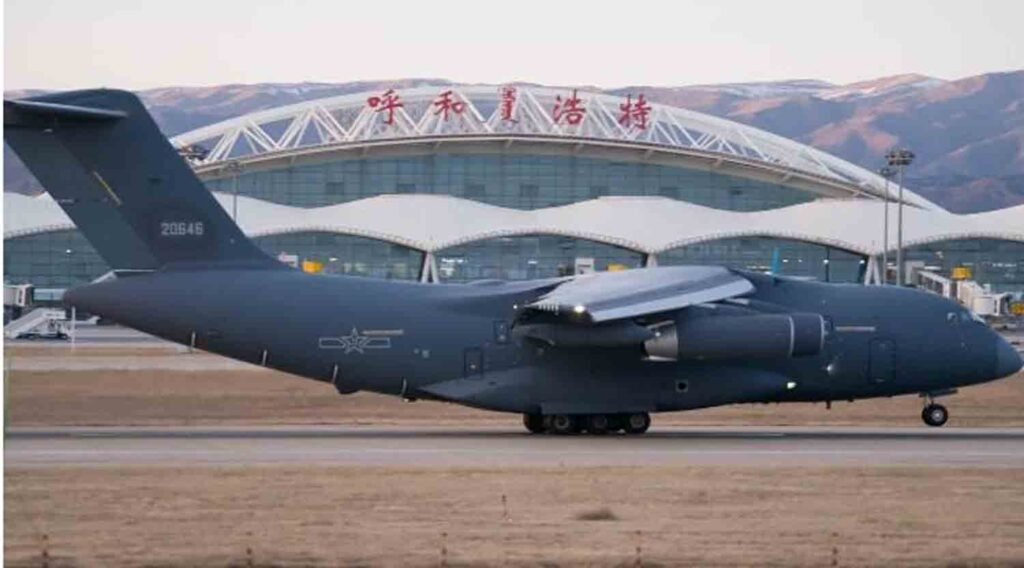
Perhaps one of the most revealing aspects of the deployment is the early arrival of Y-20 transport aircraft and tanker variants.
According to the satellite imagery assessment, these aircraft began arriving around October 17 and 18, before the main combat formations appeared at the western airbases.
The sequence is significant because it highlights the logistical requirements of deploying a large aviation force away from its permanent installations.
The Y-20 transport aircraft provides heavy airlift capacity, allowing the PLA to move personnel, equipment, maintenance supplies and other essential resources.
Its tanker variant adds aerial refuelling capabilities, potentially extending the operational endurance and range of compatible combat aircraft.
Aerial refuelling is particularly important during prolonged operations because it can reduce the need for fighters to return to their home bases for fuel and allow commanders greater flexibility in managing flight operations.
The arrival of support aircraft ahead of combat formations is consistent with the preparation of a logistical network capable of receiving and sustaining multiple aviation units.
This is an important distinction between simply deploying aircraft and maintaining their operational availability over several weeks.
In a prolonged conflict, aircraft require continuous maintenance, replacement components, trained ground crews, fuel and weapons replenishment. Any weakness in these support arrangements can reduce the number of aircraft available for combat missions.
The reported deployment therefore offers an opportunity to examine whether China is developing the logistical capacity required to sustain a large and diverse aviation force.
However, the presence of tankers and transports does not establish how many refuelling missions were conducted or how effectively the logistical system performed.
Why 11 Airbases Matter
The expansion from eight airbases in the 2025 exercise to 11 in the latest deployment is another important development.
The bases are located across China’s western military region, placing the exercise within the area of responsibility of the PLA Western Theater Command.
Operating from multiple installations creates additional coordination challenges. Aircraft must be deployed, maintained and supported at different locations while commanders ensure that participating units follow a common operational plan.
This requires effective command and control, communication networks and logistical coordination.
A geographically dispersed deployment can also provide operational flexibility. Instead of relying on a limited number of major airbases, the PLAAF can practise distributing aircraft across several installations.
Such an approach is relevant to modern military planning, where the ability to disperse forces and maintain operations from multiple locations can become important during a conflict.
For China, the western region presents additional geographical challenges, including long distances, mountainous terrain and high-altitude operating environments.
The exercise could therefore help the PLAAF evaluate its ability to coordinate aviation operations under conditions different from those encountered along China’s eastern coastline.
What Does the Exercise Mean for India?
The geographical location of the deployment gives the exercise particular significance for India.
China’s Western Theater Command is responsible for military operations along the country’s western frontiers, including the disputed border with India.
The ability to bring additional combat aircraft, airborne surveillance platforms and logistical support into the region could provide Beijing with greater flexibility during a future regional crisis.
The presence of J-20 fighters, J-16 aircraft and KJ-500 airborne early-warning platforms is especially relevant when assessing China’s evolving airpower posture along the Himalayan frontier.
However, the exercise should not automatically be interpreted as preparation for an imminent confrontation with India.
Its broader significance lies in the development of capabilities that could be relevant to multiple operational scenarios.
For Indian military planners, the important consideration is not simply the number of Chinese aircraft stationed at individual bases, but how quickly China can reinforce its western airfields and sustain additional aviation units.
The ability to coordinate fighters, surveillance platforms and aerial refuelling assets could complicate operational planning for any opposing air force.
The latest exercise provides another indication of why China’s military aviation modernisation is an important factor in the regional military balance.
Implications for the United States and the Indo-Pacific
Although the exercise is taking place in western China, its implications are not necessarily limited to the country’s immediate neighbourhood.
The capabilities being developed through large-force training could have wider relevance to China’s military posture across the Indo-Pacific.
The ability to coordinate fifth-generation fighters, conventional aircraft, bombers, airborne command platforms and tankers is relevant to any major air operation requiring sustained activity over large distances.
For the United States and its regional partners, the development raises questions about China’s growing ability to organise and support complex air operations.
It also highlights the importance of logistics and operational endurance in any future regional confrontation.
A large aircraft inventory can create significant military potential, but its effectiveness depends on how many aircraft can be deployed, maintained and generated for missions over an extended period.
The Red Sword exercise may therefore provide useful insights into an aspect of Chinese military modernisation that is less visible than the introduction of new aircraft: the development of organisational and logistical capabilities required to employ them together.
However, the western China exercise does not establish that the deployment was designed for a Taiwan contingency or that the same operational arrangements would necessarily apply to a maritime conflict in the western Pacific.
Red Sword 2026 Compared With the 2025 Exercise
The scale of the latest deployment becomes clearer when compared with the previous year’s activity.
In 2025, the Mitchell Institute’s assessment identified 194 aircraft on open ramps across eight airbases. The estimated overall exercise participation was approximately 200 to 250 aircraft.
The exercise reportedly continued for around five weeks, with more than 100 aircraft subsequently observed operating from Dingxin Air Base in the Gobi Desert for over two weeks.
The 2026 deployment has expanded to 11 airbases, with approximately 279 aircraft visible in the latest assessment.
This suggests an increase in both the geographical footprint and the number of aircraft involved in the observed concentration.
However, the two exercises should not be compared solely through their headline aircraft numbers. Differences in satellite collection dates, aircraft parking arrangements and the presence of aircraft inside hangars can influence the visible count.
The more important development is the apparent expansion of the training footprint and the continued presence of multiple aircraft categories.
If the PLAAF is able to sustain this type of deployment while maintaining high levels of aircraft availability and coordinating different formations, it would represent an important development in its large-scale operational training.
Does the Build-Up Prove China Is Combat Ready?
The latest satellite imagery provides important evidence of China’s ability to concentrate a substantial number of military aircraft across a wide network of airbases.
It also highlights the growing importance of logistical support, airborne surveillance and mixed-generation fighter operations in the PLAAF’s training priorities.
However, there is an important distinction between demonstrating the ability to assemble a large force and proving that the force can successfully conduct sustained combat operations.
Satellite imagery cannot establish the number of sorties flown, the effectiveness of simulated engagements, the performance of pilots or the reliability of command networks under combat conditions.
It also cannot determine how the participating aircraft would perform against a technologically advanced opponent employing electronic warfare, long-range missiles and integrated air defence systems.
Actual combat readiness depends on several interconnected factors: aircraft serviceability, pilot proficiency, weapons effectiveness, mission planning, command and control, intelligence support and the ability to sustain operations under pressure.
The exercise should therefore be viewed as evidence of expanding training scale and operational preparation rather than definitive proof of combat effectiveness.
The Bigger Picture: China Is Preparing to Operate Airpower as an Integrated System
The most significant message from the suspected Red Sword 2026 exercise is that China’s military aviation development is increasingly focused on the ability to bring different capabilities together.
The concentration of J-20 stealth fighters, J-10 and J-16 combat aircraft, H-6 bombers, KJ-500 surveillance platforms and Y-20 transport and tanker aircraft illustrates the complexity of the operational environment the PLAAF is seeking to train in.
The expansion from eight to 11 airbases also highlights the importance Beijing appears to attach to geographically dispersed operations.
For regional military planners, the key question is increasingly about China’s ability to generate and sustain combat airpower rather than simply the size of its aircraft inventory.
The latest deployment does not prove that the PLA Air Force has achieved the level of proficiency required for a prolonged major conflict. However, it provides a significant indication of the scale and complexity of the training through which China is seeking to develop that capability.
The real measure of China’s future airpower will depend on whether it can translate this growing force concentration, technological modernisation and logistical preparation into reliable combat performance.