Wednesday, April 22, 2026
Home Blog Page 118

Prime Minister Trudeau will meet with provincial premiers to discuss U.S. relations

0

Prime Minister Justin Trudeau announced on Tuesday that he would convene with the premiers of Canada‘s ten provinces this week to address relations with the United States. This meeting comes a day after President-elect Donald Trump declared his intention to impose tariffs on Canadian exports.

Trudeau, who has emphasized the Liberal government’s experience in navigating the previous Trump administration, called for solidarity among the provinces.

“This relationship requires ongoing effort, and that is what we will undertake,” he stated to the press. “It is crucial that we all work together on this matter.”

Trump indicated he would implement a 25% tariff on imports from Canada and Mexico until those countries took action against drug trafficking, particularly fentanyl, and illegal immigration.

In a sign of potential discord, Alberta’s premier expressed on Monday that Trump’s concerns regarding illegal activities at the border were legitimate.

“We urge the federal government to collaborate with the incoming administration to address these issues promptly, thus preventing any unwarranted tariffs on Canadian exports to the U.S.,” Danielle Smith wrote on social media.

“The majority of Alberta’s energy exports to the U.S. are transported through secure pipelines that do not contribute to these illegal border activities,” added Smith, who has a strained relationship with Trudeau.

Mexican president cautions that Trump’s tariffs will exacerbate inflation and lead to job losses

0
Mexico's President Claudia Sheinbaum

Mexican President Claudia Sheinbaum announced her intention to send a letter to U.S. President-elect Donald Trump on Tuesday, advocating for dialogue and collaboration in light of his proposed blanket tariffs of 25% on imports from Mexico and Canada.

Sheinbaum expressed concern during a press conference, stating, “One tariff will lead to another, jeopardizing our shared businesses.” She warned that such tariffs could trigger inflation and job losses in both nations.

In addition to the letter, Sheinbaum plans to request a phone conversation with Trump and will also reach out to Canadian Prime Minister Justin Trudeau. Trump, who is set to take office on January 20, indicated on Monday that he would implement a 25% tariff on imports from Canada and Mexico until they took stronger measures against drug trafficking, particularly fentanyl, and illegal immigration.

As of September, Mexico stands as the United States’ largest trading partner, accounting for 15.8% of total trade, with Canada following at 13.9%. The U.S. is also Mexico’s primary trading partner.

Sheinbaum questioned the rationale behind escalating tariffs between the two countries, emphasizing the detrimental impact on U.S. automakers with operations in Mexico, including General Motors and Ford.

The automotive sector is crucial to Mexico’s economy, representing over 35% of the country’s manufactured exports by value. The U.S. is the main destination for vehicles produced in Mexico, with approximately 79% of these vehicles exported northward.

Mexico contributes nearly 25% to the total vehicle production in North America.

The proposed tariffs could potentially breach the United States-Mexico-Canada Agreement, a trade pact established in 2020 during Trump’s first term.

In early trading on Tuesday, the Mexican peso depreciated by about 1.3%. Analysts at Banco BASE noted that the peso was among the currencies most adversely affected globally due to heightened risk aversion.

They added, “The possibility of a more radical second term is increasing, posing a risk to Mexico’s export sector.”

Sheinbaum emphasized that her administration has demonstrated Mexico’s commitment to addressing the fentanyl crisis affecting the United States, highlighting a decrease in migrant apprehensions at the border and the absence of new migrant caravans arriving at the U.S.-Mexico border.

Nevertheless, she pointed out that criminal organizations in Mexico continue to receive firearms from the United States. She stressed that the shared challenges in the region necessitate collaboration, open dialogue, and mutual understanding. “We do not manufacture weapons, nor do we consume synthetic drugs. Unfortunately, we are left with individuals who are victims of violence driven by the demand in your country,” she stated.

Giulia Bellicoso, an economist at Capital Economics, remarked that “downside risks are particularly pronounced for Mexico, given the country’s heightened vulnerability to the policies proposed by Trump.”

While regional markets have shown a degree of resilience, likely due to investors’ already pessimistic outlook on the possibility of a second Trump administration, Bellicoso indicated that the forthcoming challenges are expected to adversely affect Latin American assets and currencies.

Sweden calls on a Chinese vessel to return for an investigation into the undersea cable

1
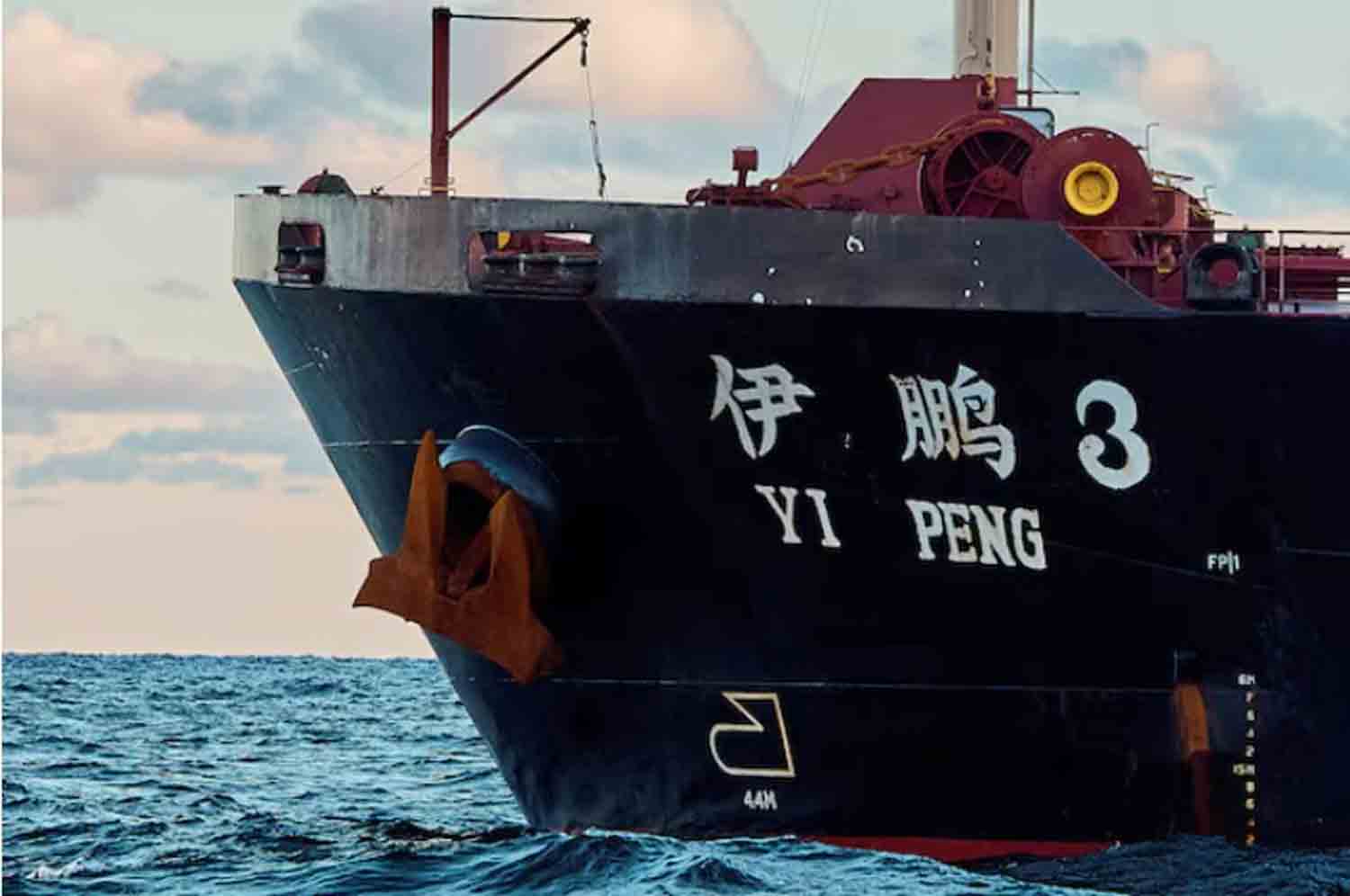
A view of the anchor of the Chinese ship, the bulk carrier Yi Peng 3, in the sea of Kattegat, near the City of Grenaa in Jutland, Denmark.

Sweden has requested that a Chinese vessel return to its waters to assist in the investigation of recent damage to undersea fibre-optic cables in the Baltic Sea, as stated by Prime Minister Ulf Kristersson on Tuesday.

On November 17-18, two subsea cables—one connecting Finland and Germany and the other linking Sweden to Lithuania—were damaged within a 24-hour period, prompting suspicions of sabotage from the nations and companies affected.

The Danish military reported that its vessels are monitoring the Chinese bulk carrier Yi Peng 3, which was navigating the Baltic Sea during the incident and is currently anchored in international waters, yet within Denmark’s exclusive economic zone.

The damage occurred within Sweden’s exclusive economic zone, prompting Swedish prosecutors to initiate a preliminary investigation.

Kristersson mentioned at a press conference, “We have been in contact with the ship and with China, expressing our desire for the vessel to head towards Swedish waters.”

Countries bordering the Baltic Sea, including Finland, Sweden, Denmark, and Germany, are collaborating on the investigation and maintaining diplomatic communications with China, according to Finnish Prime Minister Petteri Orpo.

Danish Prime Minister Mette Frederiksen expressed her expectation for cooperation from Beijing regarding the situation.

The Chinese vessel departed from the Russian port of Ust-Luga on November 15 and was present in the vicinity of the cable damage, as indicated by MarineTraffic vessel tracking data, which also noted the presence of other ships in the area.

“We are not making any accusations, but we are seeking clarity on what has transpired,” Kristersson stated.

He added, “This marks the second occurrence of significant cable breaches in a relatively short timeframe.” Sweden remains optimistic that China will respond favorably to the request, Kristersson noted.

On Monday, China’s foreign ministry indicated that Beijing has maintained “smooth communication” with all involved parties.

A subsea gas pipeline and multiple telecommunications cables located on the Baltic Sea floor sustained significant damage last year. Finnish authorities have indicated that they suspect a Chinese vessel may have caused the incident by dragging its anchor. However, investigators have not clarified whether they consider the damage in 2023 to be the result of an accident or a deliberate act.

EU will discuss adding tankers and Chinese companies to its sanctions list against Russia

0

European Union representatives are set to convene on Wednesday to deliberate on a 15th sanctions package in response to Russia‘s invasion of Ukraine in 2022. This package will target tankers transporting Russian oil and Chinese companies involved in drone production for Russia, according to EU diplomats.

The proposed measures will include adding 29 entities and 54 individuals to an existing sanctions list that already includes over 2,200 names, imposing travel bans and asset freezes within the 27-member bloc. The diplomats do not foresee any major opposition to these additions.

A more comprehensive sanctions package is anticipated in January, following Poland’s assumption of the EU’s rotating presidency from Hungary, whose pro-Russian leadership has often hindered or obstructed initiatives supporting Ukraine.

In September, Reuters reported that Russia had initiated a weapons program in China aimed at developing and manufacturing long-range attack drones.

The initiative to include 48 tankers in the sanctions list is part of broader efforts by Western allies to curtail Russian oil revenues by reinforcing the Group of Seven (G7) price cap on Russian oil.

Western officials have indicated that the effectiveness of this cap, which was implemented in late 2022, is expected to diminish over time.

As previously noted by Reuters, the upcoming 16th sanctions package is likely to impose stricter limitations on Russian liquefied natural gas (LNG) exports and broaden the application of the “No Russia” clause, which would require subsidiaries of EU companies in third countries to refrain from re-exporting specific goods to Russia.

Additionally, the EU aims to exert pressure on financial institutions that assist Russia in evading Western sanctions, aligning with actions taken by Washington earlier this year.

G7 reaffirms its backing for Ukraine and denounces the escalation by Russia

0
U.S. Secretary of State Antony Blinken, Foreign Minister of France, Jean-Noel Barrot, Foreign Minister of Canada, Melanie Joly, Foreign Minister of Italy, Antonio Tajani, Foreign Minister of Japan, Takeshi Iwaya, Foreign Minister of Germany, Annalena Baerbock, Britain's Foreign Office Political Director Christian Turner, and European Union foreign policy chief Josep Borrell, Foreign Minister of South Korea, Tae-yul Cho, Foreign Minister of Indonesia, Sugiono, Foreign Minister of India, Subrahmanyam Jaishankar and Foreign Minister of Philippines, Enrique Manalo, pose for a family photo at the G7 of foreign Ministers in Fiuggi, Italy.

Foreign ministers from the Group of Seven democracies convened on Tuesday to reaffirm their support for Ukraine and denounce what they termed Russia‘s “irresponsible and threatening nuclear rhetoric.”

They cautioned that North Korea’s backing of Russia signifies a perilous escalation of the conflict, posing significant risks to security in both Europe and the Indo-Pacific. The ministers urged China, a traditional ally of North Korea, to take action in this regard.

In a joint statement released at the conclusion of their meeting, they noted, “Russia’s deployment of an intermediate-range ballistic missile on November 21 is further proof of its reckless and provocative conduct.”

They emphasized, “Our commitment to Ukraine’s territorial integrity, sovereignty, and independence remains steadfast.”

Currently, Russia is intensifying its efforts along the frontlines in eastern Ukraine, where it has achieved some of its most significant territorial advances since 2022.

The G7 ministers expressed their intention to begin distributing funds from a $50 billion loan package derived from frozen Russian assets by the year’s end. They also committed to taking measures against entities that assist Russia in circumventing the sanctions imposed following its invasion of Ukraine nearly three years ago.

This joint statement was released after a two-day meeting held in Fiuggi, a spa town located southeast of Rome, which was attended by Ukrainian Foreign Minister Andrii Sybiha.

Ministers have intensified their efforts to persuade Israel to agree to a ceasefire arrangement with Hezbollah in Lebanon, emphasizing that “now is the time to finalize a diplomatic resolution.”

They urged the Israeli government to enable humanitarian aid for the civilian population in Gaza, the West Bank, and East Jerusalem.

The statement further expressed strong condemnation of the increasing violence by extremist settlers against Palestinians, highlighting that such actions jeopardize security and stability in the West Bank and threaten the potential for enduring peace.

Indian defense chief is set to commission a Russian-built frigate next month, according to reports

0

Indian Defense Minister Rajnath Singh is scheduled to visit Russia next month to officially commission a stealth frigate at a shipyard in Kaliningrad, as reported by media outlets in both countries on Tuesday, citing government sources.

The three-day visit will commence on December 8 and will feature discussions with Singh’s Russian counterpart, Andrey Belousov, according to the TASS news agency. Following these talks, the Indian minister will proceed to the Yantar shipyard in the Russian Baltic exclave, where the INS Tushil has been constructed.

The Admiral Grigorovich-class frigates were designed in the 2010s, with plans for six warships to enhance the Russian Navy’s capabilities. However, the project faced setbacks due to the cessation of cooperation with Ukraine, which withdrew following the 2014 US-backed coup in Kiev.

As a result, Russia had to create alternative power plants to complete three of the vessels, while also considering foreign buyers for the remaining three, which were put on hold. In 2018, India signed a contract to acquire two of these frigates, with an option for two additional ships to be constructed using Russian technology at Goa Shipyard Limited in India.

The Yantar Shipyard has previously constructed three of the six Talwar-class frigates currently operational in the Indian Navy, which share a similar design with Russia’s Krivak-class frigates.

The INS Tushil and the INS Tamala, both built in Kaliningrad and set for transfer to India, are regarded by the Indian military as part of the same class. They are equipped with India-specific communication systems and weaponry. The commissioning of the second vessel is anticipated in early 2025.

India and Russia have maintained a long-standing defense partnership, engaging in various joint production initiatives as New Delhi aims to enhance its domestic manufacturing capabilities to support its armed forces.

Russia has expelled a British diplomat, alleging involvement in espionage activities

0
A flag flies above the British embassy in Moscow, Russia.

Russia announced on Tuesday the expulsion of a British diplomat, accusing him of espionage, further straining the already tense relations between the two nations.

The FSB, Russia‘s security service, stated that the diplomat, whose image was prominently featured in news broadcasts, had deliberately provided false information upon his arrival in the country.

“In addition, the FSB has identified indications that this diplomat was engaged in intelligence and subversive activities that pose a threat to the security of the Russian Federation,” the agency noted in its statement.

There was no immediate response from the UK‘s Foreign, Commonwealth and Development Office, and the British embassy in Moscow did not reply to inquiries for comment.

The TASS news agency reported that Maria Zakharova, spokesperson for the Russian Foreign Ministry, indicated that the ministry had summoned the British ambassador, a common diplomatic action to convey a strong objection.

The FSB mentioned that the expelled diplomat was filling the position of one of six UK diplomats who were expelled earlier this year on similar espionage allegations.

Since the onset of the Ukraine conflict, relations between Britain and Russia have deteriorated to their lowest point since the Cold War. The UK has participated in multiple rounds of sanctions against Russia and has supplied military aid to Ukraine.

Recently, Russia claimed that Ukraine had launched British Storm Shadow cruise missiles into its territory for the first time. President Vladimir Putin referenced this incident, along with the use of U.S. ATACMS ballistic missiles by Ukraine, as justification for Russia’s response, which included the launch of a new hypersonic missile targeting the Ukrainian city of Dnipro on November 21.


Greece supports a stronger EU defense role and closer NATO collaboration

0
Greek Prime Minister Kyriakos Mitsotakis

The European Union must enhance its defense capabilities and arms manufacturing while fostering closer collaboration with NATO, stated Greek Prime Minister Kyriakos Mitsotakis on Tuesday following discussions with NATO Secretary-General Mark Rutte.

In response to Russia’s invasion of Ukraine in 2022, the EU has been working to strengthen its defense posture, with the European Commission committing to advance key initiatives in air and cyber defense.

“During our meeting, we concurred on a critical priority for all allies: the necessity to enhance our collective defense. Achieving this goal demands a robust defense industry, substantial investments, and improved cooperation between the EU and NATO,” Mitsotakis remarked after their meeting in Athens.

As an EU member and NATO ally, Greece allocates approximately 3% of its gross domestic product (GDP) to defense annually. However, analysts indicate that the EU as a whole is facing challenges in making sufficient investments to prepare for potential large-scale conflicts.

Despite increased defense spending since the onset of the Ukraine crisis, the EU’s total defense budget for 2024, estimated at around 326 billion euros, accounts for only 1.9% of its GDP, according to the European Defence Agency.

Greece has proposed measures to provide member states with greater fiscal flexibility for defense investments. The country aims to reform its military and modernize its defense sector as it emerges from a prolonged debt crisis that necessitated significant budget cuts. Additionally, Greece is in negotiations with Israel to establish a 2 billion euro ($2.10 billion) anti-aircraft and missile defense system.

Mitsotakis emphasized the importance of ongoing support for Ukraine, while Rutte, the former Dutch prime minister, commended Greece for its role in expediting the training of Ukrainian pilots and technicians on F-16 fighter jets.

“We must enhance our deterrence and defense capabilities, which includes increasing our defense investments and production. The positive aspect is that we have NATO, the alliance essential for safeguarding every part of our territory,” Rutte stated.

EU’s Borrell calls on Israel to agree to a ceasefire with Lebanon ‘today’

0

The European Union‘s foreign policy chief Josep Borrell called on the Israeli government on Tuesday to endorse a proposed ceasefire agreement in Lebanon, asserting that it includes all necessary security assurances for Israel.

During a G7 Foreign Ministers meeting in Italy, Josep Borrell emphasized that there is no justification for delaying the implementation of the deal with Iran-backed Hezbollah, insisting that pressure should be applied on Israel for immediate approval.

“Let us hope that today (Israeli Prime Minister Benjamin) Netanyahu will endorse the ceasefire agreement put forth by the U.S. and France. No further excuses. No additional demands,” Borrell stated, criticizing hardline Israeli officials who have opposed the agreement.

A senior Israeli official indicated that Israel is poised to approve a U.S. plan for a ceasefire with Hezbollah on Tuesday.

Borrell, who recently visited Lebanon to discuss the potential deal, noted that one of the contentious issues is whether France should be part of a committee overseeing the ceasefire’s implementation, which the U.S. is set to lead.

He mentioned that the Lebanese have specifically requested France’s participation, but Israeli officials have reservations.

“This remains one of the unresolved issues,” he remarked.

Borrell also condemned what he perceives as Western double standards regarding the International Criminal Court’s (ICC) arrest warrants for Netanyahu, his former defense chief, and a Hamas leader, related to alleged war crimes and crimes against humanity in the Gaza conflict.

“You cannot celebrate when the court acts against (Russian President Vladimir) Putin and remain silent when it acts against Netanyahu,” he stated, urging EU member states to back the ICC.

Italy, which currently holds the G7 presidency, announced on Monday that it is working to establish a unified stance on the ICC’s decision, although progress is challenging given the U.S. refusal to recognize the court’s jurisdiction and its opposition to the arrest warrant for Netanyahu.

Head of Russia’s FSB warned that Washington’s support for Kiev’s long-range strikes may escalate the conflict

0
The head of Russia’s security service (FSB), Aleksandr Bortnikov.

Washington’s approval for Kiev to conduct strikes on internationally recognized Russian territory with long-range weapons supplied by the West is bound to escalate the conflict, warned Aleksandr Bortnikov, head of Russia‘s Federal Security Service (FSB).

Bortnikov emphasized that Moscow should brace itself for provocations from Washington, London, and their allies. He specifically mentioned that US President Joe Biden and his administration are likely to intensify tensions in critical global regions before the transition of power in January.

“The primary objective is to obstruct the new administration’s potential for achieving a political resolution to the existing issues,” Bortnikov asserted.

He also expressed skepticism regarding the incoming Trump administration’s approach, suggesting that “it is improbable that the election of a new US president will result in a significant shift in Washington’s foreign policy.”

Bortnikov accused the US and its allies of employing the most “unsightly methods” to instigate disorder in the post-Soviet region, aiming to transform it into a low-cost resource hub.

As an illustration of these tactics, the FSB chief cited Ukraine, asserting that the West is converting the nation into a testing ground for strategies aimed at undermining Russia’s security and that of the entire CIS region, “subtly encouraging Kiev towards a perilous escalation” and inciting it to engage in acts of “nuclear terrorism.”

The awareness of the Ukrainian populace has undergone a transformation characterized by Russophobia. Transnational corporations are acquiring land, mineral resources, and industrial assets on a large scale. The region has attracted mercenaries and terrorists from around the globe. A global illicit arms market has emerged, facilitating the ongoing transfer of weapons to other unstable areas, Bortnikov noted.

He expressed particular concern regarding the efforts of Ukrainian intelligence services to carry out sabotage against Russian military and civilian installations abroad, as well as their involvement in training terrorist operatives aimed at toppling regimes deemed unfavorable by their Western allies and eliminating political figures.

Bortnikov also asserted that “international terrorism” has become a key instrument employed by foreign intelligence agencies to destabilize security in various parts of the world, especially within the post-Soviet region.

Additionally, he indicated that the West has intensified its initiatives to incite “nationalistic and xenophobic sentiments” in CIS nations, distort shared historical narratives, and promote extremist and terrorist ideologies in the area. The FSB chief cautioned that any engagement with the West carries considerable security risks, which could escalate into a “serious threat to sovereignty and constitutional order.”

Russia seeks a lasting peace in Ukraine, according to Putin’s intelligence chief

0
Russian Foreign Intelligence Service (SVR) Director Sergey Naryshkin.

Russia is against merely freezing the conflict in Ukraine, as Moscow seeks a “solid and long-term peace” that addresses the fundamental issues underlying the crisis, stated President Vladimir Putin‘s foreign intelligence chief on Tuesday.

Sergei Naryshkin, who leads Russia’s Foreign Intelligence Service (SVR), emphasized that Russia currently holds the initiative on the battlefield.

Naryshkin expressed Russia’s firm opposition to the idea of “freezing the conflict,” reiterating the country’s desire for a lasting peace. He also mentioned that Russia remains open to negotiations.

What prompted Joe Biden to permit Ukraine to launch long-range missiles into the depths of Russia?

0
Ukrainian President Volodymyr Zelenskiy is embraced by U.S. President Joe Biden in the Oval Office of the White House in Washington.

US President Joe Biden‘s decision to permit Ukraine to deploy Western long-range missiles on previously occupied Russian territory marks a significant escalation in the ongoing conflict, which has persisted for two and a half years.

Although the battlefield dynamics have yet to fully adapt to this development, the accompanying rhetoric has escalated to unprecedented levels, with Moscow quickly invoking the threat of nuclear action. In the West, conservative factions criticize Biden for potentially igniting World War III, while liberal voices express cautious approval, albeit with reservations. The only leader seemingly content with the situation is Ukrainian President Vladimir Zelensky, who acts as though victory is imminent, despite the lack of substantial achievements.

There are substantial concerns regarding the effectiveness of Biden’s decision in altering the course of the war.

Even Biden’s advisors acknowledge that Ukraine’s primary need is for more troops rather than advanced weaponry. The advanced systems provided thus far have not demonstrated significant effectiveness on the battlefield.

Since 2023, Ukraine has been utilizing Storm Shadow/SCALP systems and, starting in spring 2024, ATACMS. Nevertheless, strikes on Russian military sites in Crimea and other newly acquired territories have produced minimal results. The precise quantity of missiles remaining in Ukraine’s arsenal is uncertain, but estimates indicate a limited supply. The Times reported that there are fewer than 50 ATACMS, while The Telegraph characterized the number of Storm Shadow/SCALPs as “relatively few,” likely around 100.

With dwindling reserves, the critical question arises: What effect can these missiles truly have? If Ukraine conducts a few significant strikes and subsequently encounters shortages, is the risk justified, particularly in light of Moscow’s increasingly assertive responses and the possibility of severe retaliation? The answer is no.

From a military perspective, the West’s decision seems both reckless and illogical. This represents a significant shift from Biden’s typically cautious stance, implying that political motivations, rather than military strategy, are driving this decision.

There is a prevailing sentiment in both Russia and the West that Biden aims to undermine President-elect Donald Trump’s intentions to facilitate negotiations between Moscow and Kiev upon his return to power. The theory posits that Putin, concerned about reputational harm, may escalate the conflict to appease Russian hardliners, thereby compelling Trump to maintain support for Ukraine to avoid being labeled a “loser” who neglected U.S. interests.

However, this approach risks backfiring. What if the American public’s growing discontent with the outgoing administration’s actions becomes overwhelming? In that scenario, Trump could find a strong rationale to withdraw U.S. involvement in Ukraine, transforming from a “loser” to a hero—someone who averted World War III. Biden and his Democratic allies are unlikely to desire such an outcome that would inadvertently bolster Trump’s position.

The West understands that, given the current circumstances, Ukraine will ultimately engage in negotiations. The arrival of Trump is unlikely to alter this trajectory; in fact, it may expedite the peace process.

In this context, Biden’s decision to supply arms to Ukraine during the final months of his presidency appears more rational. The intention is not to escalate tensions for a significant breakthrough, but rather to buy time, ensuring that Kyiv is in a more advantageous position when talks commence. This strategy involves maintaining a degree of control, especially in certain areas of the Kursk Region, to use as leverage. Ukrainian forces might even consider further incursions across the border.

From a political standpoint, Biden’s choice is relatively low-risk. It is unlikely to impact the upcoming elections, as his party has already faced significant losses. The potential for a peace agreement could also deter the Kremlin from responding too aggressively, or at least that is the hope from the White House. Ultimately, only Biden and his close advisors know the full implications.

What might Russia’s reaction be? Given the political nature of this provocation, a political response is anticipated. We have already witnessed part of this response through a more assertive nuclear posture. Additionally, the recent unveiling of the new Oreshnik hypersonic missile serves as a demonstration of military capability. While some may contend that the concept of “red lines” has diminished in significance, I believe it is sufficient to temper the more aggressive elements in the West. For the time being, that is all that is required.

U.S. Navy patrol aircraft traversed the sensitive Taiwan Strait

0

A U.S. Navy patrol aircraft traversed the Taiwan Strait on Tuesday, operating “in international airspace,” according to a statement from the U.S. 7th Fleet. This action underscores the United States’ dedication to maintaining a free and open Indo-Pacific region.

U.S. military vessels and aircraft typically navigate through or over this strategically significant waterway, which separates Taiwan, a democratically governed entity, from China, approximately once a month, often provoking strong reactions from Beijing.

China asserts its sovereignty over Taiwan and claims jurisdiction over the strait, a position contested by Taiwan and the United States, which maintain that the Taiwan Strait is an international waterway.

The 7th Fleet confirmed that a P-8A Poseidon maritime patrol aircraft conducted the flight through the strait.

“By operating in the Taiwan Strait in accordance with international law, the United States affirms the navigational rights and freedoms of all nations,” the statement read.

There was no immediate comment from China’s defense ministry.

In April, China’s military reported that it had dispatched fighter jets to monitor and issue warnings to a U.S. Navy Poseidon in the Taiwan Strait, an operation that occurred shortly after a conversation between the defense leaders of China and the United States.

Russia is rapidly advancing in Ukraine, with analysts noting progress into Kurakhove

0
Investigators work in the courtyard of a damaged multi-story residential building following an alleged Ukrainian drone attack in the course of Russia-Ukraine conflict, in Ramenskoye in the Moscow region, Russia

Russian forces have been making significant advances in Ukraine, achieving their fastest progress since the early stages of the conflict. They are currently moving into the strategically important town of Kurakhove and taking advantage of weaknesses in Ukrainian defenses, according to analysts on Monday.

The Washington-based Institute for the Study of War reported that Russian forces have been advancing at a notably accelerated pace compared to their activities throughout 2023.

The report highlighted recent confirmed territorial gains near Vuhledar and Velyka Novosilka, located in the Donetsk region of eastern Ukraine. Over the past week, the Russian military has captured nearly 235 square kilometers (91 square miles) of territory, marking a weekly record for 2024, as reported by the independent Russian news organization Agentstvo.

Agentstvo utilized data from Deep State, a group closely associated with the Ukrainian military that analyzes combat footage and provides frontline maps.

Both the Institute for the Study of War and pro-Russian military bloggers indicate that Russian troops are present in Kurakhove, which serves as a crucial link to the logistical center of Pokrovsk in Donetsk. Deep State reported on its Telegram channel on Monday that Russian forces are positioned near Kurakhove.

Analysis from Deep State, as examined by Agentstvo, revealed that Russia has gained more territory in Ukraine since early November than it did throughout October, which had already seen the most rapid advances since the initial months of Russia’s invasion in 2022.

Russian military gains in southeastern Ukraine can be attributed to the identification and tactical use of weaknesses in Ukraine’s defensive lines, according to analysts from the Institute for the Study of War in their recent report.

Facing a numerical disadvantage against Russian forces, the Ukrainian military is finding it difficult to recruit new soldiers and supply equipment to emerging units. President Volodymyr Zelenskiy has been persistently urging Western allies in Kyiv for increased military support.

Zelenskiy has expressed his belief that Russian President Vladimir Putin aims to fully occupy the Donbas region, which includes Donetsk and Luhansk, and to drive Ukrainian forces out of the Kursk area, where they have maintained a presence since August.

A Republican senator has blocked the advancement of a U.S. Army general tied to the Afghanistan withdrawal

0
U.S. Army Major General Chris Donahue, commander of the 82nd Airborne Division, steps on board a C-17 transport plane as the last U.S. service member to leave Hamid Karzai International Airport in Kabul, Afghanistan August 30, 2021 .

A Republican senator has impeded the advancement of U.S. Army Lieutenant General Christopher Donahue, who led the 82nd Airborne Division during the U.S. exit from Afghanistan and was the final American service member to depart the country in 2021.

An anonymous U.S. official indicated that Senator Markwayne Mullin is responsible for the hold, but he did not provide any comments regarding the reasons behind his decision.

On Monday, the Pentagon confirmed its awareness of the hold on Donahue, who has been nominated by President Joe Biden for a fourth star to oversee U.S. Army operations in Europe and Africa.

“We acknowledge that there is a hold on Lieutenant General Donahue,” stated Pentagon spokesperson Sabrina Singh during a press briefing.

President-elect Donald Trump and his supporters have criticized the military’s withdrawal from Afghanistan and pledged to pursue accountability for those involved. In August, Trump announced his intention to demand the resignation of every senior official associated with what he termed the “Afghanistan calamity.”

“You must dismiss individuals when they perform poorly. We never dismiss anyone,” Trump remarked.

According to Reuters, Trump’s transition team is compiling a list of military personnel to be removed, which would represent an extraordinary overhaul at the Pentagon.

While the image of Donahue, with his rifle at his side as he boarded the last C-17 flight out of Afghanistan in August 2021, has become emblematic of the tumultuous withdrawal, he is regarded within military circles as one of the most capable leaders in the Army.

Tony Thomas, the former head of U.S. Special Operations Command, expressed on X that Chris Donahue, whom he regards as the best officer he has ever worked alongside, is a leader of a generation now being utilized for political ends. Having spent over thirty years at the forefront of defending the nation, he is now being treated as a political pawn.

According to Senate regulations, a single senator has the power to delay nominations, even if the remaining 99 are in favor of swift action.

Trump vows new tariffs on Canada, Mexico, and China, raising global trade disruption concerns

0
Donald Trump attends a campaign event, in Allentown, Pennsylvania, U.S.

President-elect Donald Trump announced on Monday his intention to impose significant tariffs on the United States’ three largest trading partners: Canada, Mexico, and China. This move is part of his strategy to fulfill campaign promises that may lead to trade conflicts.

Taking office on January 20, 2025, Trump stated that he would implement a 25% tariff on imports from Canada and Mexico until those countries take action against drug trafficking, particularly fentanyl, and curb illegal immigration. This approach could be seen as a breach of existing free-trade agreements.

Additionally, Trump proposed an extra 10% tariff on imports from China, marking one of his most detailed statements regarding his economic plans since his election victory on November 5, where he emphasized a “put America first” agenda.

“In my first Executive Orders on January 20th, I will sign the necessary documents to impose a 25% tariff on all products entering the United States from Mexico and Canada, addressing the issue of our open borders,” he stated in a post on Truth Social.

Despite record migrant arrests during President Joe Biden’s administration, which have put pressure on U.S. border enforcement, illegal crossings have significantly decreased this year due to new border policies and increased enforcement from Mexico.

In 2023, over 83% of Mexico’s exports were directed to the U.S., while 75% of Canadian exports were also sent to the United States.

These tariffs could pose challenges for foreign companies, particularly Asian auto and electronics manufacturers that rely on Mexico as a cost-effective production hub for the U.S. market.

Trump’s proposed new tariff seems to breach the provisions of the U.S.-Mexico-Canada Agreement (USMCA) on trade. This agreement, which Trump enacted in 2020, maintained the largely duty-free trade among the three nations.

During the contentious negotiations that led to the USMCA, Canada and the United States had previously imposed sanctions on each other’s goods. Trump will have the chance to renegotiate the agreement in 2026, when a “sunset” clause will necessitate either a withdrawal or discussions regarding modifications to the agreement.

Following his tariff announcement, Trump spoke with Canadian Prime Minister Justin Trudeau about trade and border security, according to a Canadian source familiar with the matter. The source indicated, “It was a productive discussion, and they will maintain communication.”

William Reinsch, a former president of the National Foreign Trade Council, suggested that Trump might be leveraging the tariff threat to initiate an early renegotiation of the USMCA. “This appears to be more of a threat than a genuine policy move,” Reinsch commented. “The strategy seems to be that if you keep pressuring them, they will eventually concede.”

Ricardo Monreal, leader of Mexico’s lower house and a member of the ruling Morena party, advocated for “the use of bilateral, institutional mechanisms to address human, drug, and arms trafficking.” He cautioned that “increasing trade retaliation would only harm consumers and does not address the root issues,” as he stated on the social media platform X.

Trump’s announcement led to a surge in the dollar’s value, which increased by 1% against the Canadian dollar and 2% against the Mexican peso. Meanwhile, Asian stock markets declined, as did European equity futures, with S&P 500 futures dropping by 0.3%.

CHINA: NO ONE WINS TRADE WARS

The president-elect criticized Beijing for not taking sufficient measures to halt the influx of illegal drugs entering the U.S. from Mexico. “Until they take action, we will impose an additional 10% tariff on all their products imported into the United States, on top of any existing tariffs,” Trump stated.

In response, a spokesperson from the Chinese embassy in Washington emphasized, “China believes that economic and trade cooperation between China and the U.S. is mutually beneficial. A trade war or tariff war will not yield any winners,” said Liu Pengyu.

The embassy also highlighted the measures China has implemented since a 2023 meeting with U.S. officials, during which Beijing committed to curbing the export of materials used in the production of fentanyl, a significant contributor to drug overdoses in the U.S. “These actions demonstrate that the notion of China intentionally allowing fentanyl precursors to enter the United States is entirely unfounded,” the spokesperson added.

Trump has previously vowed to revoke China’s most-favored-nation trading status and impose tariffs on Chinese imports exceeding 60%, significantly higher than those during his first term. The Chinese economy is currently facing increased vulnerabilities due to a prolonged property slump, debt concerns, and weak domestic consumption.

As the November 5 election approaches, Trump has proposed implementing blanket tariffs ranging from 10% to 20% on nearly all imports and suggested tariffs as high as 200% on vehicles crossing the U.S.-Mexico border. He also expressed his intention to activate the USMCA’s six-year review clause upon taking office, which is currently scheduled for July 2026.

Mexico’s finance ministry commented on Trump’s tariff commitment, stating, “As the leading trade partner of the United States, Mexico benefits from the USMCA, which offers a stable framework for both domestic and international investors.”

Economists argue that Trump’s proposed tariffs, which may represent his most significant economic initiative, could elevate U.S. import duty rates to levels not seen since the 1930s. This could lead to increased inflation, a decline in U.S.-China trade relations, provoke retaliatory measures, and significantly disrupt supply chains.

They explain that the burden of tariffs falls on the companies importing the affected goods, which must either transfer the costs to consumers or accept reduced profit margins.

Trump often emphasizes that countries will bear the financial consequences of his tariff strategy, asserting on Monday that Mexico and Canada will “pay a very big price.”

Netanyahu has reportedly approved a ceasefire agreement with Lebanon, with a vote set for Tuesday

0

Israeli Prime Minister Benjamin Netanyahu has given preliminary approval to a ceasefire agreement with Hezbollah during a security meeting with Israeli officials on Sunday night, according to a source familiar with the discussions.

The Israeli cabinet is scheduled to vote on the agreement on Tuesday, as confirmed by Netanyahu’s spokesperson to CNN.

Israel has expressed concerns regarding certain aspects of the deal, which are anticipated to be communicated to the Lebanese government on Monday, the source indicated.

Negotiations are ongoing, and multiple sources have emphasized that the agreement will not be finalized until all outstanding issues are addressed.

Approval from the Israeli cabinet is still required for the ceasefire agreement, which has yet to be granted.

Sources involved in the negotiations noted that discussions are progressing positively toward a resolution, but they also recognized that ongoing hostilities between Israel and Hezbollah could jeopardize the talks if any miscalculations occur.

U.S. envoy Amos Hochstein stated in Beirut last week that a ceasefire agreement between Israel and Lebanon is “within our grasp,” but ultimately rests on the decisions made by the involved parties.

He met with Lebanese Prime Minister Najib Mikati and Parliament Speaker Nabih Berri, who is acting as the intermediary with Hezbollah, and reported that there had been “constructive” and “very good discussions” aimed at bridging the gaps.

“We have a real opportunity to bring conflict to an end,” he remarked last week. “The window is now.” He left Lebanon for Israel on Wednesday to expedite the negotiations toward a conclusion.

The proposal supported by the United States seeks to establish a 60-day halt to hostilities, which some believe could serve as a foundation for a sustainable ceasefire.

On Sunday, Axios reporter Barak Ravid referenced a source indicating that Hochstein informed the Israeli ambassador to Washington on Saturday that he would withdraw from mediation efforts if Israel did not respond favorably to the ceasefire proposal in the coming days.

Hochstein’s visit to the region came after Beirut expressed a “positive” response to a US-backed initiative aimed at halting the conflict, as stated by Mikati last week, who noted that significant portions of the draft agreement had been addressed.

Israel initiated a significant military campaign in Lebanon in mid-September, following months of reciprocal border assaults that began on October 8 of the previous year when Hezbollah attacked Israeli-controlled areas in solidarity with Hamas and the Palestinian people in Gaza.

Since that time, Israel has conducted a ground invasion, eliminated several Hezbollah leaders—including one of its founders, Hassan Nasrallah—and caused injuries to thousands through attacks involving explosive devices.

Norway has ended its investigation into possible links to the exploding pagers in Lebanon

0
Pagers on display at a meeting room at the Gold Apollo company building in New Taipei City, Taiwan.

Norway  police announced on Monday that it found no basis to pursue further investigations into any Norwegian connections to the provision of booby-trapped pagers to Hezbollah in Lebanon, which detonated in September, resulting in numerous fatalities and injuries.

Israel has taken responsibility for the pager attacks, which caught Hezbollah off guard and led to a significant military response involving air and ground operations against the Iran-backed group.

The PST had initiated a preliminary inquiry into potential Norwegian involvement after it was revealed that a Norwegian individual was listed as the owner of a Bulgarian company currently under investigation in Bulgaria for possible connections to the incident.

“PST’s comprehensive evaluation of the evidence in this matter suggests that there is no justification for commencing a formal investigation within our jurisdiction,” stated PST’s attorney Haris Hrenovica to Reuters through a spokesperson.

He did not provide further details. The PST functions as a counterintelligence and counterterrorism agency.

On September 20, Bulgaria’s security agency, DANS, confirmed that it had “indisputably established” that no pagers involved in the Lebanon attack were manufactured or exported from Bulgaria.

The Norwegian owner of the Bulgarian company under scrutiny, Rinson Jose, 39, departed Norway for the United States on September 17, the same day the pagers detonated in Lebanon.

Jose had been employed in sales at DN Media Group in Norway, which subsequently reported him as missing to the police. Authorities closed the missing persons case on November 5 after Jose made contact with his employer.

Norwegian officials have not disclosed Jose’s current location. When Reuters attempted to reach him via his Norwegian phone number on Monday, the message indicated that the phone was turned off. He did not respond to a request for comment sent through WhatsApp.

Russia will not instill fear in us through cyber threats, asserts UK minister to NATO

0

Britain and its allies remain resolute in their support for Ukraine, undeterred by Russian cyber threats, according to British cabinet office minister Pat McFadden on Monday. He emphasized the necessity for NATO to enhance collaboration to maintain an advantage in what he termed “the new AI arms race.”

In light of recent escalations in cyber attacks from Moscow targeting nations that support Ukraine, McFadden urged the U.S.-led military alliance, along with businesses and institutions, to take comprehensive measures to secure their digital infrastructures against an increasingly assertive Russia.

Speaking at a NATO Cyber Defence Conference in London, McFadden called for a renewed commitment to assist Kyiv in its struggle against Russian President Vladimir Putin, who he accused of attempting to dissuade support for Ukraine through intimidation.

“We will not align with those advocating for weakness who wish to grant Putin a say in our assistance to Ukraine,” McFadden stated, though he did not provide specific details.

“While the Russian cyber threat to NATO is both aggressive and reckless, we refuse to be intimidated by it, and we will not allow it to influence our decisions or policies. We are committed to defending our nations against such threats.”

Moscow has not yet responded to McFadden’s comments, having previously denied involvement in cyberattacks and characterized such allegations as efforts to foster anti-Russian sentiment.

McFadden highlighted the need for NATO to bolster its collective cybersecurity and announced Britain’s initiative to establish a new Laboratory for AI Security Research. This facility aims to develop improved defense mechanisms and enhance intelligence capabilities.

With an initial government investment of £8.22 million ($10.3 million), the laboratory will unite academic and governmental experts to evaluate the implications of AI on national security and to better comprehend its application by Russia. “Seventy-five years after its inception, it is evident that NATO is more essential than ever,” he remarked.

McFadden, in his capacity as Chancellor of the Duchy of Lancaster with oversight of national security, stated that he, along with senior officials in national security, will be meeting with British businesses in the coming days to explore ways to enhance their security measures.

He also noted that artificial intelligence could be utilized as a weapon against nations that support Ukraine, particularly since Russia’s full-scale invasion in 2022, which has intensified what he referred to as the ongoing reality of cyber warfare targeting Britain and its allies.

Israel indicates progress towards a ceasefire with Lebanon, although several issues persist

0
A man walks on the rubble of damaged buildings in the aftermath of Israeli air strikes on Beirut's southern suburbs, Lebanon

Israel is progressing towards a ceasefire in its conflict with Hezbollah, although several issues remain unresolved, according to statements from its government on Monday. Meanwhile, Lebanese officials expressed cautious optimism, emphasizing that Prime Minister Benjamin Netanyahu‘s reliability is in question.

The Israeli ambassador to the United States indicated that a potential agreement could be reached within days. CNN reported that Netanyahu has given preliminary approval to the developing deal, although Israel still harbors concerns regarding certain aspects.

As diplomatic efforts continue, hostilities have escalated. Over the weekend, Israel conducted significant airstrikes, one of which resulted in the deaths of at least 29 individuals in central Beirut. In response, Hezbollah launched one of its largest rocket attacks to date, firing 250 missiles on Sunday.

On Monday, Israeli airstrikes further devastated Hezbollah-controlled areas in southern Beirut, creating large clouds of debris over the city.

Last week, efforts to secure a truce seemed to gain momentum when U.S. mediator Amos Hochstein announced substantial progress following discussions in Beirut, which were followed by meetings in Israel and a return to Washington.

“We are heading towards a deal, but there are still some matters to resolve,” stated Israeli government spokesperson David Mencer, without providing further details.

Michael Herzog, Israel’s ambassador in Washington, informed Israel’s GLZ radio that an agreement is imminent and “could occur within days… We just need to finalize the last details,” as reported by GLZ senior anchorman Efi Triger on X.

In Beirut, Deputy Parliament Speaker Elias Bou Saab indicated that a critical juncture is nearing, expressing a sense of cautious optimism. He noted, “The balance is slightly leaning towards the possibility of an agreement, albeit marginally, as one cannot place trust in a figure like Netanyahu.”

Additionally, a second high-ranking Lebanese official, who requested anonymity, mentioned that Beirut has not received any new demands from Israeli representatives through U.S. mediators, who are characterizing the current atmosphere as positive and indicating that “progress is being made.”

The official informed Reuters that a ceasefire could potentially be established within this week. The conflict between Israel and Hezbollah escalated into a full-scale war in September, following Israel’s offensive actions, which included extensive airstrikes across Lebanon and troop deployments in the southern region.

Israel has inflicted significant damage on Hezbollah, resulting in the deaths of its leader Sayyed Hassan Nasrallah and other senior commanders, alongside widespread destruction in areas under Hezbollah’s influence.

Diplomatic efforts are concentrated on reinstating a ceasefire in accordance with U.N. Security Council Resolution 1701, which concluded the 2006 war between Hezbollah and Israel. This resolution mandates that Hezbollah withdraw its fighters approximately 30 kilometers (19 miles) from the Israeli border.

“absolute victory”

Israeli Foreign Minister Gideon Saar emphasized that the effectiveness of any agreement hinges on the enforcement of two critical aspects.

“The first aspect is to prevent Hezbollah from advancing south of the Litani River, and the second is to stop Hezbollah from rebuilding its military capabilities and rearming throughout Lebanon,” Saar stated during a broadcast to the Israeli parliament.

Far-right National Security Minister Itamar Ben-Gvir insisted that Israel must continue its military operations until achieving “absolute victory.” In a message directed at Netanyahu on X, he remarked, “It is not too late to halt this agreement!”

Conversely, Agriculture Minister Avi Dichter advocated for reaching a consensus regarding Lebanon. “When we assert that Hezbollah must not be positioned south of the Litani, we are serious about it,” he conveyed to reporters.

Hezbollah leader Sheikh Naim Qassem indicated last week that the group had assessed and provided input on the U.S. ceasefire proposal, asserting that the decision for any truce now rests with Israel.

Designated as a terrorist organization by the United States, the heavily armed Shi’ite group Hezbollah has backed Parliament Speaker Nabih Berri of the Shi’ite Amal movement to lead negotiations.

Israel’s objective is to facilitate the return of tens of thousands of individuals who were evacuated from northern areas due to rocket fire from Hezbollah, which began its attacks in support of Hamas at the onset of the Gaza conflict in October 2023.

The ongoing Israeli offensive has displaced over 1 million people in Lebanon.

Diplomatic efforts are concentrated on reinstating a ceasefire in accordance with U.N. Security Council Resolution 1701, which concluded the 2006 conflict between Hezbollah and Israel. This resolution mandates that Hezbollah withdraw its fighters approximately 30 kilometers (19 miles) from the Israeli border, while the Lebanese army is to be deployed in the border region.