Saturday, June 6, 2026
Home Blog Page 130

Brazil’s first lady insults Elon Musk at a G20 gathering

0
Brazil's President Luiz Inacio Lula da Silva and first Lady Rosangela "Janja" da Silva attend the closing ceremony of the G20 Social summit, in Rio de Janeiro, Brazil, November 16, 2024.

Brazil’s first lady, Janja Lula da Silva, expressed her frustration towards billionaire Elon Musk during a G20 social event on Saturday, where she emphasized the importance of regulating social media to combat misinformation.

As she was speaking, a ship’s horn blared, prompting her to quip, “I think it’s Elon Musk,” before asserting, “I’m not afraid of you, screw you, Elon Musk.” Musk, who owns the social network X, responded to a video of her comments with a laughing emoji. He further commented, “They are going to lose the next election,” referring to President Luiz Inacio Lula da Silva.

Janja Lula da Silva addressed attendees at an event leading up to the G20 summit in Rio de Janeiro, scheduled for Monday and Tuesday.

Earlier this year, Musk’s social media platform faced a month-long suspension in Brazil due to its failure to appoint a legal representative in the country and its disregard for court orders to block accounts accused of disseminating “fake news” and hate speech.

Japanese forces will train with Australian and U.S. military personnel in Darwin

0
Australian Deputy Prime Minister and Defence Minister Richard Marles speaks during a tour of the Sheffield Forgemasters site

Japanese forces are set to commence regular deployments in northern Australia as part of a military collaboration with Australia and the United States, announced Australia’s Defence Minister Richard Marles on Sunday.

Currently, approximately 2,000 U.S. Marines are stationed in Darwin, the capital of the Northern Territory, for a six-month period each year, reflecting increasing apprehension among Washington and its allies regarding China’s expanding military influence in the Indo-Pacific region.

“Today, we are revealing that Japan’s amphibious Rapid Deployment Brigade will have regular deployments to Australia,” Marles stated during a televised press conference in Darwin, where he was joined by U.S. Defense Secretary Lloyd Austin and Japanese Defence Minister Gen Nakatani.

Marles emphasized the importance of enhanced training opportunities with Japan and the U.S., describing it as a significant advancement for Australia’s defense capabilities in an interview with Sky News on Sunday, as per a transcript.

This deployment holds particular historical importance, as Darwin served as a crucial base for Allied forces during World War II and experienced extensive bombing by Japanese forces. The air raids on this port city are often likened to Australia’s Pearl Harbor.

Austin expressed confidence on Sunday that the U.S. would fulfill the commitments outlined in the AUKUS agreement, which includes Australia acquiring U.S. nuclear submarines and collaborating with the U.S. and Britain to develop a new class of nuclear-powered submarines.

The U.S. Defense Department is concentrating on ensuring a “smooth and effective transition” to the administration of President-elect Donald Trump, according to Austin.

Austin expressed pride in the achievements of the current administration over the past four years, particularly in enhancing alliances and collaborating with nations that advocate for a free and open Indo-Pacific region.

The trilateral meeting held on Sunday in Darwin, involving Australia, the U.S., and Japan, marks the 14th such gathering among these allies. During the previous trilateral meeting in Singapore in June, the countries voiced significant concerns regarding security in the East China Sea and condemned “any destabilizing and coercive unilateral actions” in the area, implicitly referring to China.

In September, China, which has been expanding its military capabilities in the Indo-Pacific, conducted a rare test of an intercontinental ballistic missile that landed in the Pacific Ocean. This test launch raised alarms among several Pacific nations, including Australia.

India’s hypersonic missile test places it among an elite group of nations

0

India has announced the successful testing of a domestically developed long-range hypersonic missile, marking a significant milestone in its military advancements and joining a limited number of countries with this sophisticated technology.

The global race for hypersonic weaponry is part of the strategic initiatives of several nations, including India, which is working to enhance its long-range missile capabilities alongside China, Russia, and the United States.

The missile, created by the state-owned Defence Research and Development Organisation in collaboration with industry partners, is intended to deliver payloads over distances greater than 1,500 km (930 miles) for military applications, as stated by the government.

“The flight data … confirmed the successful terminal manoeuvres and impact with a high degree of accuracy,” the statement noted.

The test was conducted from Dr. APJ Abdul Kalam Island, located off the eastern coast of Odisha state, on Saturday.

Defence Minister Rajnath Singh described the test as a “historic achievement” in a post on X, emphasizing that it positions India among a select group of nations with access to such vital and advanced technologies.


Xi announces collaboration with Trump’s team during his meeting with Biden in Peru

0
Joe Biden and Xi Jinping, APEC Summit, Lima, November 16, 2024.

Chinese President Xi Jinping expressed his commitment on Saturday to collaborate with the incoming U.S. administration under Donald Trump during his final discussions with outgoing President Joe Biden. The talks addressed various issues, including cybercrime, trade, Taiwan, the South China Sea, and relations with Russia.

Biden and Xi engaged in a two-hour meeting at the hotel where the Chinese leader was staying, coinciding with the Asia-Pacific Economic Cooperation forum in Lima, Peru. This marked their first conversation in seven months.

Xi stated that “China’s goal of a stable, healthy, and sustainable China-U.S. relationship remains unchanged” following Trump’s election, while recognizing the “ups and downs” in bilateral relations. He emphasized China’s readiness to collaborate with the new U.S. administration to enhance communication, broaden cooperation, and address differences.

Biden acknowledged that while the two leaders have not always seen eye to eye, their exchanges have been “frank” and “candid.”

With just two months until Trump assumes the presidency, U.S. officials are increasingly concerned about potential conflicts during the transition period. Biden conveyed to Xi the importance of maintaining direct communication between leaders even after his departure from office, as noted by national security adviser Jake Sullivan.

The president-elect has pledged to implement sweeping 60% tariffs on U.S. imports of Chinese products as part of his “America First” trade strategy, a move that Beijing opposes. Additionally, Trump intends to appoint several hardline figures on China to key positions, including U.S. Senator Marco Rubio as secretary of state and Representative Mike Waltz as national security adviser.

Biden has sought to ease tensions with China, yet there were limited indications of progress on key issues.

However, both Biden and Xi concurred that decisions regarding the use of nuclear weapons should be made by humans rather than artificial intelligence, marking the first known discussion of this topic between the two nations, as stated by the White House.

The leaders also addressed concerns regarding North Korea, a Chinese ally, whose increasing collaboration with Russia and troop deployments in support of Moscow’s conflict in Ukraine have raised alarms in Washington, Beijing, and European capitals.

“President Biden emphasized that the People’s Republic of China’s publicly articulated stance on the Ukraine war advocates for no escalation or expansion of the conflict, and the deployment of DPRK troops contradicts that position,” Sullivan remarked.

“He further noted that the PRC possesses both influence and capability, and should leverage these to help avert further escalation or the introduction of additional DPRK forces into the conflict.”

KEY ISSUES

Among the significant topics discussed during the meeting were a recent cyberattack linked to China that targeted the communications of U.S. government officials and presidential campaign staff, increased pressure from Beijing on Taiwan, and developments in the South China Sea, as well as China’s support for Russia. Biden also brought up the cases of Americans he believes are unjustly detained in China.

Regarding Taiwan, the leaders reportedly had a tense exchange. Biden urged an end to Beijing’s “destabilizing” military actions surrounding the island, according to the White House.

In response, Xi asserted that the “Taiwan independence” activities of Taiwanese President Lai Ching-te were at odds with peace and stability in the region, as conveyed by the Chinese foreign ministry. Lai is expected to make a stop in Hawaii and possibly Guam during a sensitive visit that is likely to provoke Beijing in the upcoming weeks, as reported by Reuters.

Taiwan’s foreign ministry expressed gratitude to President Biden for his remarks, asserting that China is the primary instigator of tensions.

In a statement, it emphasized that “China’s ongoing military provocations surrounding Taiwan pose the most significant threat to regional peace and stability, as well as a considerable risk to global economic prosperity.”

Former Economy Minister Lin Hsin-i met with Biden at the summit on Friday, extending an invitation for him to visit Taiwan soon.

China considers Taiwan, which operates as a democratic entity, to be part of its territory. The United States remains Taiwan’s key international supporter and arms supplier, despite the absence of formal diplomatic ties. Taiwan firmly rejects China’s claims of sovereignty.

Simultaneously, China’s economy is facing challenges due to Biden’s trade policies, which include plans to limit U.S. investments in Chinese sectors such as artificial intelligence, quantum computing, and semiconductors, along with export restrictions on advanced computer chips. Biden has characterized these measures as essential for U.S. national security and stated that they do not hinder the majority of trade.

During their meeting, Xi claimed that there was no evidence to support allegations of Chinese involvement in cyberattacks, as reported by Chinese state media. He also advised Biden that the U.S. should refrain from engaging in disputes concerning the Spratly Islands, a contested area between China and the U.S.-aligned Philippines.

Beijing has dismissed a 2016 ruling from the Permanent Court of Arbitration in The Hague, which determined that its extensive maritime claims in the South China Sea lack legal foundation, a case initiated by Manila.

Xi conveyed to Biden through an interpreter, “When our two nations regard each other as partners and friends, seek common ground while setting aside differences, and assist one another in achieving success, our relationship can advance significantly. However, if we view each other as rivals or adversaries, engage in harmful competition, and aim to undermine one another, we risk destabilizing our relationship or even reversing our progress.”

The two leaders also took a moment to candidly reflect on the straightforward nature of their longstanding relationship, according to Sullivan, the U.S. national security adviser.

Shen Dingli, an international relations expert based in Shanghai, noted that China aims to reduce tensions during this transitional phase. “China certainly does not wish for its relations with the United States to be destabilized before Trump officially assumes office,” Shen remarked.

Leaders from the Pacific Rim convened at the APEC summit to evaluate the potential effects of Trump’s reinstatement on January 20. The South American summit highlights the challenges facing U.S. influence in its own region, where China is actively engaging in diplomatic outreach.

Xi, who arrived in Lima on Thursday, is set to embark on a week-long diplomatic initiative in Latin America, which includes a revised free-trade agreement with Peru, the inauguration of the significant Chancay deep-water port, and a state visit to Brazil’s capital next week. Additionally, China has announced its intention to host the APEC summit in 2026.

China is pursuing Latin America’s metal ores, soybeans, and other resources, but U.S. officials express concerns that China may also be seeking new military and intelligence facilities near the U.S. Chinese state-affiliated media have dismissed these allegations as unfounded.

Biden and Xi convene in Peru as the Trump era approaches

0
Joe Biden and Xi Jinping, APEC Summit, Lima, November 16, 2024

Joe Biden held his final meeting with Chinese President Xi Jinping as U.S. president on Saturday, aiming to ease tensions ahead of Donald Trump‘s inauguration. However, this objective was complicated by new disputes regarding cybercrime, trade, Taiwan, and Russia.

The two leaders convened at a hotel where Xi was staying during the Asia-Pacific Economic Cooperation forum in Lima, Peru, marking their first discussions in seven months.

Upon meeting, Biden and Xi exchanged handshakes before settling into their seats for brief opening statements.

Xi expressed that China’s commitment to collaborating with the United States remains “unchanged” following the elections, indicating Beijing’s readiness to engage with the incoming administration.

The U.S. is outraged by a recent cyberattack linked to China that compromised the communications of government officials and presidential campaign staff. Additionally, there are growing concerns regarding China’s increasing assertiveness towards Taiwan and its support for Russia.

Taiwan’s President Lai Ching-te is expected to make a stop in Hawaii and possibly Guam during an upcoming visit that is likely to provoke Beijing’s ire, as reported by Reuters on Friday. Concurrently, Biden met with Taiwan’s representative at the summit, former economy minister Lin Hsin-i, who extended an invitation for him to visit Taiwan soon.

China considers Taiwan, which operates as a democracy, to be part of its territory. The U.S. remains Taiwan’s most significant international ally and arms supplier, despite the absence of formal diplomatic relations.

Biden is seeking China’s assistance regarding North Korea, particularly in light of the country’s increasing connections with Russia and troop deployments that have raised concerns in Washington. Concurrently, China’s economy is facing significant challenges due to Biden’s trade policies, which include plans to limit U.S. investments in Chinese sectors such as artificial intelligence, quantum computing, and semiconductors, as well as imposing export restrictions on advanced computer chips. U.S. officials anticipate that these issues will be central to the discussions.

China consistently refutes U.S. allegations of hacking, views Taiwan as a domestic issue, and has expressed objections to American comments on Sino-Russian trade. A representative from the Chinese Embassy in Washington chose not to provide a statement.

BLANKET TARIFFS

Trump has pledged to implement sweeping 60% tariffs on U.S. imports of Chinese products as part of his “America First” trade agenda, which Beijing strongly opposes. The Republican president-elect is also expected to appoint several hardline figures on China to key positions, including U.S. Senator Marco Rubio as secretary of state and Representative Mike Waltz as national security adviser.

On Wednesday, Jake Sullivan, Biden’s national security adviser, characterized the transition period as one where competitors and adversaries might perceive opportunities. Biden intends to emphasize to Xi the importance of maintaining stability, clarity, and predictability during this transition between the United States and China.

Shen Dingli, an international relations expert based in Shanghai, noted that China is eager for the meeting to help alleviate tensions during this transitional phase. “China certainly does not wish for relations with the United States to become chaotic before Trump officially assumes office,” Shen remarked.

Leaders from the Pacific Rim convened at the APEC summit are evaluating the potential impacts of Trump’s return to the presidency on January 20. The South American summit highlights the challenges facing U.S. influence in its own region, where China is actively engaging in diplomatic outreach.

Xi, who arrived in Lima on Thursday, is set to embark on a week-long diplomatic initiative across Latin America. This agenda includes revitalizing a free-trade agreement with Peru, inaugurating the significant Chancay deep-water port, and receiving a warm welcome in Brazil’s capital next week for a state visit. Additionally, China has announced its intention to host the APEC summit in 2026.

China is actively pursuing Latin America’s metal ores, soybeans, and various other commodities. However, U.S. officials express concerns that China may also be seeking to establish new military and intelligence outposts near the U.S. Chinese state media, backed by the government, has dismissed these allegations as unfounded.

A U.S. official emphasized that Washington remains committed to the region, noting that Chinese infrastructure investments abroad have diminished in recent years due to domestic issues and challenges with ongoing projects.

Ryan Berg, director of the Americas Program at the Center for Strategic and International Studies, a Washington-based think tank, indicated that Xi is likely to receive a favorable response during his visit.

“Biden’s trip will be significantly overshadowed by Xi Jinping’s activities at APEC,” he remarked. “When Xi engages with Biden, part of his audience extends beyond just the White House or the U.S. government. It also includes American CEOs, as he aims to foster continued U.S. investment in China and dispel the notion of a hostile business climate there.”

Trump’s pro-Israel cabinet choices have upset his Muslim voter base

0

U.S. Muslim leaders who previously backed Republican Donald Trump in response to the Biden administration’s support for Israel‘s actions in Gaza and Lebanon have expressed significant disappointment with his recent cabinet selections, according to Reuters.

“Trump’s victory was partly due to our support, and we are dissatisfied with his choice for Secretary of State and other appointments,” stated Rabiul Chowdhury, a Philadelphia investor and co-founder of Muslims for Trump, who also led the Abandon Harris campaign in Pennsylvania.

Strategists believe that Muslim backing was instrumental in Trump’s success in Michigan and may have influenced victories in other key states.

Trump has appointed Republican Senator Marco Rubio, a strong advocate for Israel, as Secretary of State. Earlier this year, Rubio indicated he would not advocate for a ceasefire in Gaza, asserting that Israel should eliminate “every element” of Hamas, referring to them as “vicious animals.”

Additionally, Trump nominated Mike Huckabee, a former governor of Arkansas and a fervent pro-Israel conservative who opposes a two-state solution, as the next ambassador to Israel. He also selected Republican Representative Elise Stefanik, who criticized the UN as a “cesspool of antisemitism” for its statements regarding casualties in Gaza, to serve as the U.S. ambassador to the United Nations.

Rexhinaldo Nazarko, the executive director of the American Muslim Engagement and Empowerment Network (AMEEN), expressed disappointment regarding the cabinet selections made by President Trump, noting that Muslim voters had anticipated appointments that would promote peace, which have not materialized.

“We are very disappointed,” he stated.

Nazarko criticized the administration for being predominantly filled with neoconservatives and individuals who are strongly pro-Israel and pro-war, indicating a failure on President Trump’s part to align with the pro-peace and anti-war movements.

He emphasized that the community would persist in advocating for an end to the conflict in Gaza, stating, “At least we’re on the map.”

Hassan Abdel Salam, a former professor at the University of Minnesota, Twin Cities, and co-founder of the Abandon Harris campaign that supported Green Party candidate Jill Stein, remarked that while Trump’s staffing choices were not unexpected, they had turned out to be even more extreme than he had anticipated.

“It feels like he’s in overdrive for Zionist interests,” he commented. “We have always been quite skeptical… While we are still observing the direction of the administration, it appears that our community has been sidelined.”

The Trump campaign did not respond immediately to a request for comment.

Some Muslim and Arab supporters of Trump expressed hope that Richard Grenell, the former acting director of national intelligence, would assume a significant role, given his extensive outreach to Muslim and Arab American communities and his introduction as a potential candidate for secretary of state at various events.

Additionally, Massad Boulos, the Lebanese father-in-law of Trump’s daughter Tiffany, has held multiple meetings with Arab American and Muslim leaders.

Both Arab American and Muslim voters were assured that Trump would be a candidate for peace, promising to take decisive action to conclude conflicts in the Middle East and elsewhere. Neither individual was available for immediate comment.

Trump visited several cities with significant Arab American and Muslim communities, including a stop in Dearborn, a city with a majority Arab population, where he expressed his admiration for Muslims. In Pittsburgh, he referred to Muslims for Trump as “a beautiful movement,” emphasizing their desire for peace and stability.

Bill Bazzi, the mayor of nearby Dearborn Heights and a Trump supporter, mentioned that he had met the president-elect three times and maintained his belief that Trump would strive to end the war, despite the appointments made to his cabinet. Rola Makki, the Lebanese American and Muslim vice chair for outreach of the Michigan Republican Party, shared a similar sentiment.

“I don’t expect everyone to agree with every appointment Trump makes, but what truly matters is the outcome,” she stated.

“I am confident that Trump seeks peace, and it is important for people to recognize that there have been 50,000 Palestinian deaths and 3,000 Lebanese deaths during the current administration.”

Ukraine faces growing frontline challenges, while Russia is under significant pressure

0
Members of police demining unit remove a warhead from a Russian kamikaze unmanned aerial vehicle landed by a radio electronic warfare during one of latest drone strikes, amid Russia's attack on Ukraine.

The situation continues to deteriorate for Ukraine, as Moscow appears to hold the upper hand in various regions.

Russia is advancing in critical areas along the eastern and southeastern frontlines, while simultaneously launching relentless aerial assaults on Ukrainian urban centers.

Additionally, Moscow is gearing up for a counteroffensive in the Kursk region, where Ukraine achieved its only significant military victory this year. According to Ukrainian President Volodymyr Zelensky, nearly 50,000 Russian troops have been deployed to Kursk, a number that has been augmented by the arrival of North Korean forces.

George Barros from the Institute for the Study of War stated in an interview with CNN that “the Russians currently possess the initiative along the frontlines, effectively capitalizing on tactical advantages and reinforcing them.” Barros, who oversees the Russia and Geospatial Intelligence teams at the Washington, D.C.-based conflict monitoring organization, emphasized that Russia’s battlefield superiority hampers Ukraine’s ability to mount a counteroffensive.

The Russians are taking the initiative, compelling the Ukrainians to react. This is detrimental, as being perpetually on the defensive leads to losing conflicts. It results in being cornered, forcing one to select from a range of unfavorable choices, Barros noted.

The circumstances are particularly critical in Kupiansk. This vital northeastern city is once again in jeopardy of being recaptured by Russia after its liberation by Ukrainian forces in September 2022, following over six months of Russian control.

Kupiansk is strategically located at the intersection of two significant supply routes and the Oskil River, which serves as a crucial defensive barrier in the region. Capturing Kupiansk would facilitate Russia’s advance deeper into the Kharkiv area, thereby increasing the pressure on Kharkiv, Ukraine’s second-largest city, which has been subjected to near-daily assaults from Russian drones and missiles.

On Friday, the Russian state news agency Tass reported that Russian troops had reached the outskirts of the city, although Ukrainian officials maintained that Kupiansk was still fully under their control.

Concurrently, Ukraine is facing challenges in preventing Russian advances further south, particularly around the city of Kurakhove, which has been encircled on three sides for several months. Earlier this week, President Zelensky described the situation in Kurakhove as “the most difficult area” along the frontline.

While Russia appears ready to capture the city in the near future, Barros indicated that this may not represent a strategically critical setback for Kyiv, as it will not greatly affect its capacity to defend the broader area.

Ukraine has mounted a strong defense in the region over recent months, despite experiencing some territorial losses.

Kurakhove is located approximately 40 kilometers (25 miles) south of Pokrovsk, a vital logistical center that has been a target for Russia for several months. By late summer, the fall of Pokrovsk seemed almost inevitable. However, Ukrainian forces have, for the time being, succeeded in thwarting Russian advances there, compelling Moscow to revise its strategies.

Barros noted that the situation in Pokrovsk exemplifies Russia’s inability to meet its publicly declared objectives.

“They aimed to capture Pokrovsk this fall, but they have now abandoned this operational goal and shifted their attacks in another direction,” Barros stated.

“It’s not solely a failure on the part of the Russians. It is also indicative of a robust Ukrainian defense,” he added.

Since taking Avdiivka in early 2024, Russia has only managed to push approximately 30 to 40 kilometers (18 to 25 miles) further into Ukrainian territory, a minimal gain considering the significant costs incurred by the Russian military.

According to the ISW’s analysis of visual evidence from the battlefield, Moscow has lost around five divisions’ worth of mechanized equipment, including hundreds of tanks and armored personnel carriers, in the Pokrovsk area over the past year.

Losing five divisions’ worth of tanks and personnel carriers over a year while only advancing approximately 40 kilometers is a significant underperformance, especially when compared to other major mechanized offensives of the 21st century and the notable battles of World War II, Barros remarked.

The conflict has become a war of attrition—yet how much longer can this continue?

Since the onset of the full-scale invasion, Ukraine has consistently found itself at a disadvantage in terms of resources and manpower, despite support from its allies.

Russia possesses superior weaponry, ammunition, and personnel.

President Vladimir Putin’s strategy seems focused on gradually depleting Ukraine’s resources through superior firepower and financial investment, while also attempting to exhaust the resolve of its Western partners.

However, many analysts suggest that Putin’s window to realize this strategy is limited, particularly given the significant losses Russia is incurring to achieve even minor territorial gains.

The economic strain of the conflict on Russia is becoming increasingly evident. Over the past two years, Russia has dramatically ramped up military expenditures, leading to signs of economic overheating: inflation rates are high, and businesses are experiencing labor shortages. In an effort to stabilize the situation, the Russian Central Bank raised interest rates to 21% in October, marking the highest level in decades.

Russia, despite having a larger population than Ukraine, is experiencing considerable losses, and the recruitment of new soldiers has become increasingly challenging. During the last instance of partial mobilization, a significant number of men left the country.

The recent arrival of North Korean troops may provide temporary assistance, but the material losses incurred could prove more difficult to replace.

Barros noted that the combination of economic challenges, a manpower shortage in Russia, and the loss of essential military vehicles necessary for their current warfare strategy are critical resources that could create substantial issues for the Kremlin if the current pace of conflict continues over the next year.

Ukraine’s ability to capitalize on these challenges largely hinges on the commitment of its allies to maintain support. The potential return of former President Donald Trump to the White House raises significant uncertainties regarding this support.

This week, Zelensky remarked that the war could conclude more swiftly with Trump back in office.

Barros emphasized that if the international Western coalition, particularly the United States, continues to support Ukraine over the next 12 to 18 months, there will be significant opportunities to disrupt Russia’s war efforts. The outcome could ultimately depend on whether the Russians prevail or falter.

Russia and China are deepening their relationship. What does this mean for India?

0
Indian Prime Minister Narendra Modi, Russian President Vladimir Putin and Chinese President Xi Jinping attend a family photo opportunity by heads of the delegations at the 16th BRICS summit in Kazan

Russia and China, two vast neighboring nations occupying the largest expanse of land in Asia, share a multifaceted historical relationship marked by both competition and practical collaboration. Since the conclusion of World War II, their relationship has fluctuated significantly, heavily influenced by external factors.

In response to the West’s coercive tactics—such as urging Russia to launch a military operation in Ukraine—Moscow has increasingly found common ground with Beijing. This alignment is particularly significant in light of the rising tensions between the US and China in the Western Pacific, prompting considerations regarding the implications for India, which maintains strategic alliances with both Moscow and Washington.

Russia, China Historical context

The historical rivalry between Russia and China dates back to the 17th century, characterized by territorial conflicts over Siberia. The dynamics underwent a significant transformation in the 20th century, particularly after the founding of the People’s Republic of China (PRC) in 1949, which received support from the Soviet Union during the Chinese Civil War. However, ideological differences soon emerged. Mao Zedong’s discontent with Nikita Khrushchev’s policies and the Soviet Union’s relations with India heightened tensions, leading to the Sino-Soviet split and military clashes along the border in the late 1960s.

In 1979, China launched an invasion of Vietnam, a Soviet ally, resulting in skirmishes between the two powers during 1979-80. Additionally, China provided support to the Mujahedin in their fight against the Soviet invasion of Afghanistan in 1979.

A thaw in relations began under Deng Xiaoping, paving the way for renewed diplomatic and economic connections following the dissolution of the Soviet Union in 1991. This subsequent rapprochement has fostered a strategic partnership that increasingly influences regional geopolitics.

In the aftermath of the Soviet Union’s dissolution, despite existing tensions related to trade imbalances, intellectual property issues concerning defense technologies, and China’s growing ambitions in Central Asia—an area historically influenced by Russia—Moscow and Beijing managed to forge several significant agreements during the first decade. These agreements addressed various cooperative efforts and resolved outstanding border disputes. In 1996, both nations released a joint communiqué that committed to establishing an “equal and reliable partnership,” indicating that their relationship had evolved into a strategic partnership, particularly in light of the emerging competition with Washington.

The eastward expansion of NATO, led by the United States, has notably reinforced the strategic alliance between China and Russia. The potential for Ukraine to join NATO may have been viewed by Russia as a “Cuba moment,” reminiscent of Cold War anxieties. As NATO rallied in support of Kiev, Moscow found itself increasingly aligned with Beijing, a shift that could ultimately undermine its own strategic interests. The growing trade relationship between Russia and China is not coincidental; it aligns closely with the tightening of U.S. sanctions on Russia and the rising tensions of the U.S.-China trade conflict, illustrating a complex web of geopolitical dynamics.

At the core of the Sino-Russian partnership is a shared interest in Russia’s abundant natural resources and China’s significant investments. However, Moscow harbors concerns about becoming overly dependent on China, often described as becoming a “junior partner.” This apprehension has prompted Russia to pursue additional investments from nations such as the UAE, Saudi Arabia, and India, aiming to create a strategic balance against its reliance on China.

The US-China Relationship

The relationship between Washington and Beijing has been characterized by significant complexities since the establishment of the People’s Republic of China, which initially led the US to recognize Taiwan as the legitimate government. Tensions intensified during the Cold War, particularly after the Korean War and the Vietnam War, as both China and the Soviet Union opposed US interests.

Following China’s acquisition of nuclear capabilities in 1964, the US contemplated pre-emptive strikes to disrupt its nuclear ambitions. Observing the Sino-Indian border conflict in 1962 and China’s actions during the Cuban Missile Crisis, US officials determined that China posed a greater threat than the Soviet Union.

In an effort to deepen the Sino-Soviet rift, President Nixon’s visit to China in 1972, part of Ping Pong Diplomacy, represented a crucial turning point, paving the way for increased dialogue and trade. Although the US recognized the One-China policy, significant disagreements persisted, particularly regarding China’s requests for advanced technology, which were frequently denied.

The tenure of President Ronald Reagan marked a decline in US-China relations, as his strong anti-communist stance reignited various contentious issues, including the Taiwan question. Tensions were further exacerbated by President Barack Obama’s Asia-Pacific defense strategy, perceived as an attempt to isolate China.

During his presidency, Donald Trump adopted a more confrontational approach towards China, imposing substantial tariffs on Chinese imports and initiating a significant trade conflict. His administration also provided South Korea with the THAAD missile-defense system. Under President Joe Biden, military presence in Asia has continued to grow, with a focus on strengthening military ties with India through the Quad alliance. Biden was overheard during a summit in Wilmington, Delaware, expressing concerns to his Quad partners about China’s aggressive behavior in regions such as the South China Sea, indicating that it is “testing us all across the region.”

Implications for India

India finds itself at a pivotal moment as it navigates its relationships with both Russia and China. The evolving partnership between Russia and China presents a situation that India must closely observe and strategically address, as it aims to protect its national interests within a swiftly changing geopolitical environment.

Although Russia has been a longstanding ally, the strengthening of ties between Moscow and Beijing introduces considerable strategic challenges for India. New Delhi views these developments with caution, particularly in light of its own border disputes and tensions with China. The Indian government has frequently voiced its apprehensions regarding China’s increased military activities in the disputed South China Sea.

As a result, India is compelled to reevaluate its diplomatic strategy, weighing its historical connections with Russia against the backdrop of a more assertive China.

Historically, the Soviet Union transitioned its alliances from China to India following the Sino-Soviet split. During the 1962 Sino-India conflict, the USSR aligned itself diplomatically with communist China, which led India to seek closer ties with the United States. However, after the mid-1960s Sino-Soviet split, the Soviets cultivated a friendship with India, providing open support during the 1971 India-Pakistan war. They effectively deterred both the US and China through military and diplomatic means, utilizing their veto power at the UN Security Council.

India’s dependence on Russia for military equipment is significant, making their partnership essential. This connection is expected to remain strong for at least the next thirty years. Additionally, India has benefited from Russian technological assistance in the fields of nuclear energy and space exploration.

The country has significantly increased its oil imports from Russia, resulting in record levels of bilateral trade. Recently, Moscow officials acknowledged that India has become Russia’s second-largest trading partner, following China. India continues to be a vital defense market for Russia, which is keen to preserve this relationship.

The Russia-India-China (RIC) grouping, initially proposed by former Russian Foreign Minister Yevgeny Primakov in the late 1990s to foster dialogue and cooperation among these three influential Asian nations, is currently dormant. Nevertheless, it still serves as a platform for diplomatic engagement. Russia may have subtly facilitated the recent improvement in Sino-Indian relations, nearly four and a half years after the two nations’ military confrontation in the Galwan Valley along the poorly defined Line of Actual Control.

In the long run, it could benefit New Delhi if Russia were to distance itself from China. While India may not currently possess the geopolitical influence to effect this change, its power is on the rise. Moscow would also find it advantageous to have New Delhi as a counterweight to Beijing.

With the largest population globally, surpassing China, India is on track to become the third-largest economy. Russia would require India’s support to balance against China.

Despite external pressures regarding the Ukraine conflict, India has upheld a stance of neutrality. New Delhi’s commitment to strategic autonomy is contributing to a stable international balance, a fact that Moscow is likely to appreciate.

The ongoing interactions between Indian and Russian leaders indicate a shared acknowledgment of their respective significance. Narendra Modi and Vladimir Putin are holding regular meetings and collaborating closely. India’s increasing influence may enable it to serve as a crucial mediator in upcoming discussions related to Russia and Ukraine, positioning it as one of the most strategically positioned global actors to facilitate dialogue between Moscow and Kiev.

As Trump’s return approaches, China’s Xi critiques protectionism at APEC

0
Chinese President Xi Jinping

As Donald Trump‘s potential return to the U.S. presidency casts a shadow over the Asia-Pacific Economic Cooperation (APEC) summit in Lima, Chinese President Xi Jinping emphasized on Friday the necessity of rejecting unilateralism and protectionism in favor of economic globalization.

Xi’s remarks on protectionism at APEC provide insight into China’s strategy for positioning itself following Trump’s inauguration in January.

Trump has committed to imposing tariffs exceeding 60% on Chinese imports, yet Beijing and its businesses are optimistic that his protectionist stance may also alienate U.S. allies in Europe and Asia, thereby creating an opportunity for China to enhance its global influence and strengthen trade relationships.

In a speech delivered to business leaders by Chinese Commerce Minister Wang Wentao at the APEC CEO Summit, Xi remarked that economic globalization is encountering “countercurrents,” without naming any specific nation or leader.

“The world has entered a new era of turmoil and transformation, with unilateralism and protectionism on the rise, and the fragmentation of the global economy becoming more pronounced,” Xi stated.

“Impediments to economic cooperation under various justifications, along with attempts to isolate our interconnected world, are reversing the historical trajectory,” he continued.

Xi also highlighted several recent initiatives by the Chinese government aimed at attracting foreign investment, such as expanding the range of Chinese industries eligible for foreign investment and offering unilateral visa exemptions for foreigners traveling to China.

China will pursue more independent and unilateral policies for opening up, enhance the network of high-standard free trade zones globally, and further increase access to its markets, according to the Chinese leader.

Nevertheless, some analysts argue that China’s appeal as an alternative or counterbalance to a protectionist United States under Trump has diminished since 2016, the year Trump was first elected.

Ja Ian Chong, a political scientist at the National University of Singapore, noted that unlike in 2016, there are now significant concerns within the international community regarding the impact of Chinese state subsidies on industrial sectors and the resulting overcapacity, which adversely affects other economies.

“China exhibits protectionist tendencies similar to those of the U.S., and its economy is considerably less open today than it was in the past,” Chong stated.

Austria will be disconnected from Russian gas supplies starting Saturday

0
A view shows the Gazprom logo installed on the roof of building in Saint Petersburg, Russia.

Russia’s Gazprom has informed Austria of its decision to halt gas deliveries starting Saturday, as reported by a gas flow monitoring platform on Friday. This development may indicate the conclusion of the last remaining Russian gas supplies to Europe.

In a notice released on the central European gas hub platform, Austrian oil and gas firm OMV stated that Gazprom had communicated its intention to cease natural gas deliveries entirely from 0500 GMT on November 16.

OMV had previously warned that the supply of Russian gas via Ukraine could be jeopardized before the year’s end due to an ongoing arbitration case against Gazprom.

Austria remains one of the few European nations still reliant on Russian gas, as many other countries have significantly reduced their imports following Russia’s full-scale invasion of Ukraine in 2022.

The current volume of gas is 7,400 megawatt hours per hour, equating to roughly 5 terawatt hours per month.

Gazprom has refrained from making any comments on the matter.

Regardless, the agreement between Moscow and Kyiv regarding Russian gas exports through Ukraine to Europe is set to expire at the end of the year. This transit route primarily serves Austria and Slovakia.

Kyiv has consistently stated that it will not renew the contract with Gazprom.

OMV has indicated that it has been preparing for a potential cessation of Russian gas supplies and is capable of meeting its customers’ needs. The company has secured transport capacity from Germany and Italy to Austria, along with long-term contracts with alternative suppliers. Additionally, it can obtain liquefied natural gas from the Netherlands.

OMV has asserted that it has procured sufficient gas from other sources to compensate for the loss of Russian supplies. However, analysts at Eurointelligence caution that this situation is likely to intensify the energy crisis in Austria, which has already led to a significant decline in gas demand and adversely affected the manufacturing sector.

Austria’s economy is presently in a recession. When Germany experiences economic difficulties, Austria feels the impact. Additionally, rising energy costs have limited companies’ capacity to invest, they noted.

EU Energy Commissioner Kadri Simson informed Reuters during a UN climate conference in Azerbaijan that all EU nations receiving gas through the Ukraine route have alternative supply options to address any shortages. “We have made it clear that alternative supplies are accessible, and there is no necessity for the ongoing transit of Russian gas through Ukraine to Europe,” Simson stated.

Ukrainian forces train in trench warfare near World War I battlefields in France

0

Soldiers navigate through trenches enveloped in a yellow smoke haze, the sound of machine gunfire reverberating across the fields, while unseen drones drone overhead and voices shout in Ukrainian, “Watch out!”

This scenario could easily be mistaken for the Donbas region of Ukraine, located 3,000 km (1,860 miles) away. However, approximately 2,000 Ukrainian conscripts and veterans are currently undergoing training in the muddy terrain of France‘s eastern Marne region, a site historically significant for the fierce battles between French and German forces during World War I.

This training initiative is part of a European Union-funded program that has already equipped 60,000 Ukrainians for combat since Russia’s invasion in 2022.

In an effort to simulate the conditions faced by Ukrainian troops, the French military has designed the training to mirror the challenges encountered back home, while also familiarizing them with the equipment being supplied by France.

This includes 128 armored vehicles for troop transport and reconnaissance, Caesar howitzers, anti-tank missile systems, surface-to-air missiles, and battlefield radar technology.

The Anne of Kyiv brigade, named after a princess who wed French King Henri I in 1051 at the nearby Reims cathedral, has been training in France since September. In the coming ten days, they will move to Poland before being deployed to the front lines.

French officials indicate that Ukraine requires as many as 15 new highly trained, combat-ready brigades, particularly in light of the uncertainty surrounding future Western military support following Donald Trump’s victory in the U.S. elections, where he has been a vocal opponent of such assistance.

CONFLICT FOR OUR SURVIVAL

Most of the Ukrainians undergoing training here enlisted in the army just a month prior to their arrival in France, with approximately 10% being veterans. The average age of the trainees is 38, with some individuals reaching up to 50 years old.

Those who shared their thoughts with Reuters expressed a mix of apprehension and a strong resolve to protect their homeland.

“Fear is an inherent part of warfare. For us, this is a conflict for our survival and existence,” stated Colonel Dmytro Rymschyn, 38, who leads the Anne of Kyiv brigade.

“We will soon return to our homeland, and our brigade will demonstrate its capabilities. I have faith in our eventual victory.”

Mykhailo, 50, who transitioned from a chemical factory to military service, has been trained to command an AMX light tank squadron.

When asked if he anticipated the war concluding by the end of the year, he offered an awkward smile: “The hope is that it ends before we have to return.”

French officials noted that the current group of trainees, many of whom are civilians, are adapting quickly and demonstrating how Ukraine’s military can adjust despite facing resource shortages.

After nine weeks of training, the Ukrainians are now equipped to defend their trenches and execute counter-attacks.

French Defence Minister Sebastien Lecornu informed reporters that France aims to train more troops in the upcoming months.

“There is a significant human aspect to this,” he remarked. “There is an interaction with individuals who will soon find themselves in combat situations on the front lines, and some may tragically lose their lives.”

Putin told Scholz that Russia is open to energy collaboration, per the Kremlin

0
Russian President Vladimir Putin chairs a meeting

President Vladimir Putin informed German Chancellor Olaf Scholz on Friday that Russia is open to discussing energy agreements if Berlin expresses interest, according to a statement from the Kremlin. This marked their first phone conversation since December 2022.

The Kremlin reported that the two leaders engaged in a “detailed and frank exchange of views” regarding Ukraine, with Putin reiterating his long-standing position that any peace agreement must consider Moscow’s security concerns and reflect “new territorial realities,” highlighting that Russian forces currently control approximately one-fifth of Ukraine.

Putin also noted a significant deterioration in relations between Russia and Germany, attributing this to what he described as unfriendly actions by Germany, as stated by the Kremlin.

The statement emphasized that Russia has consistently honored its treaty and contractual obligations in the energy sector and is prepared for mutually beneficial cooperation if Germany shows interest.

Prior to the conflict, Germany was heavily dependent on Russian gas, but direct supplies halted following the destruction of the Nord Stream pipelines in 2022.

In response to the war, Germany and other European Union nations have implemented multiple rounds of sanctions against Russia and have taken measures to reduce their reliance on Russian oil and gas.

Regarding Ukraine, the Kremlin reiterated Putin’s position from June, which stated that the war could conclude if Kyiv renounced its NATO aspirations and ceded control of the four regions claimed by Russia. Ukraine has dismissed these terms as equivalent to capitulation.

The Kremlin asserted that any potential agreements must consider the security interests of the Russian Federation, reflect new territorial realities, and address the fundamental causes of the conflict.

U.N. nuclear watchdog conducted a visit to two Iranian nuclear facilities

0
International Atomic Energy Agency (IAEA) Director General Rafael Mariano Grossi speaks during a press conference with Head of Iran's Atomic Energy Organization Mohammad Eslami, in Tehran, Iran.

The head of the U.N. nuclear watchdog conducted a visit to two Iranian nuclear facilities on Friday as part of a trip to Iran, coinciding with an anticipated diplomatic initiative from Europe regarding Tehran’s nuclear activities prior to Donald Trump’s potential return to the White House.

During this visit, Iran’s foreign minister informed International Atomic Energy Agency (IAEA) chief Rafael Grossi that Tehran is open to addressing unresolved issues related to its nuclear program but will not yield to external pressure.

Grossi toured the Natanz nuclear facility and the Fordow enrichment site, which is located approximately 100 km (60 miles) south of Tehran, according to state media reports, although specific details were not provided.

The relationship between Tehran and the IAEA has deteriorated due to several persistent issues, including Iran’s restriction on the agency’s uranium-enrichment experts entering the country and its inability to clarify the presence of uranium traces at undisclosed locations.

“The ball is in the EU/E3 court,” stated Foreign Minister Abbas Araqchi on X after discussions with Grossi in Tehran on Thursday, referring to the three European nations—France, Britain, and Germany—that represent Western interests alongside the United States in nuclear negotiations.

“We are prepared to negotiate in line with our national interests and inalienable rights, but we will not engage in talks under pressure or intimidation,” Araqchi emphasized.

France’s foreign ministry spokesperson informed reporters that the three European nations will await the outcomes of Grossi’s visit before determining their course of action.

“We are fully engaged with our E3 partners and the United States to ensure Iran adheres to its international obligations and commitments, as well as to foster good faith cooperation with the agency,” he stated.

“This engagement manifests in various forms, including through resolutions… We anticipate that these messages will be conveyed during Rafael Grossi’s visit, and we will adjust our response accordingly.”

The potential return of Trump to the presidency in January could disrupt nuclear negotiations with Iran, which had been stalled under the previous administration of Joe Biden following months of indirect discussions.

During Trump’s earlier administration, the U.S. abandoned the 2015 nuclear agreement between Iran and six global powers, which had limited Tehran’s nuclear activities in exchange for relief from international sanctions.

Trump has yet to clarify whether he will reinstate his “maximum pressure” strategy on Iran upon taking office.

Ukrainian President Zelenskiy advised Scholz to be cautious in talks with Putin, a Kyiv source said

0
Ukraine's President Volodymyr Zelenskiy appears at a joint press conference

Ukrainian President Volodymyr Zelenskiy advised German Chancellor Olaf Scholz against a phone conversation with Vladimir Putin on Friday, warning that it would diminish the Russian leader’s isolation and prolong the conflict, according to a source from Ukraine’s presidential office.

A spokesperson for the German government stated that Scholz encouraged Putin to initiate discussions with Kyiv to pave the way for a “just and lasting peace.” This marked the first phone call between the leaders since December 2022, amidst the ongoing war in Ukraine.

The source in Kyiv informed Reuters that Scholz, a steadfast ally of Ukraine during the conflict with Russia, had notified Zelenskiy beforehand about his intention to speak with the Russian president.

“The chancellor communicated to our president his plans to engage with Putin. The President expressed that this would merely assist Putin by lessening his isolation. Putin is not seeking genuine peace; he desires a pause,” the source remarked.

“Engaging in dialogue with him will allow Putin to alter perceptions and sustain the war. It will not lead to peace, as Putin will merely reiterate the falsehoods he has propagated for years, creating the illusion that he is no longer isolated,” the source added.

During a one-hour phone call, Scholz insisted on the withdrawal of Russian forces from Ukraine and reiterated Germany’s ongoing support for the country, according to a spokesperson from Germany.

Berlin plays a significant role as a financial supporter of Ukraine and is the largest supplier of arms after the United States, whose future assistance to Kyiv seems uncertain following Donald Trump’s recent election victory.

Chancellor Scholz urged President Putin to start talks with Ukraine during a phone call

0
German Chancellor Olaf Scholz

German Chancellor Olaf Scholz engaged in a rare phone conversation with Russian President Vladimir Putin on Friday, urging him to initiate discussions with Ukraine to pave the way for a “just and lasting peace.”

During the one-hour call, which marked their first dialogue in nearly two years, Scholz called for the withdrawal of Russian forces from Ukraine and reiterated Germany’s unwavering support for the country, according to a spokesperson for the German government.

This conversation occurs as Ukraine grapples with increasingly challenging conditions on the battlefield, facing shortages in both arms and personnel while Russian troops continue to make gradual progress.

“The Chancellor emphasized the need for Russia to demonstrate a willingness to engage in talks with Ukraine aimed at achieving a just and lasting peace,” the spokesperson stated.

“He reaffirmed Germany’s steadfast commitment to support Ukraine in its defense against Russian aggression for as long as necessary,” the spokesperson added.

Prior to his discussion with Putin, Scholz had a conversation with Ukraine’s President Volodymyr Zelenskiy and planned to update him on the call’s outcome, the spokesperson noted.

Germany stands as Ukraine’s largest financial supporter and its primary supplier of weapons after the United States, whose future assistance to Kyiv appears uncertain following Donald Trump’s recent electoral victory in the U.S. presidential race.

Trump has consistently criticized the extent of Western financial and military aid to Ukraine, suggesting he could quickly resolve the conflict, though he has not provided details on how this would be achieved.

Scholz and Putin last communicated in December 2022, ten months following Russia’s comprehensive invasion of Ukraine, which has led to the most severe deterioration in relations with the West since the Cold War era.

As the least popular German chancellor in history, Scholz is gearing up for a national election scheduled for February 23, where his Social Democrats are confronted with significant challenges from both leftist and far-right parties that oppose Germany’s support for Ukraine.

UK fighter jets monitor Russian aircraft near the nation’s airspace

0
Russian “Bear” aircraft

British jets monitored a Russian aircraft operating near the UK’s airspace, as reported by the Royal Air Force on Friday. This incident follows the Royal Navy’s recent detection of Russian military vessels traversing the English Channel.

Luke Pollard, the British minister for the armed forces, emphasized in a statement that “our adversaries should be in no doubt of our steadfast determination and formidable ability to protect the UK.”

The Royal Navy and RAF consistently observe the activities of Russian warships and aircraft in proximity to British waters and airspace.

According to the Ministry of Defence (MOD), this marks the second occurrence in three months where the RAF and Royal Navy have identified Russian aircraft and ships within a week of each other.

On Thursday, two RAF Typhoons tracked a Russian Bear-F bomber over the North Sea, while the Royal Navy monitored two distinct groups of Russian military vessels, comprising a total of five ships, as they moved towards the Atlantic and Baltic regions.

Israel strikes a Beirut suburb after the U.S. delivers a ceasefire proposal

0

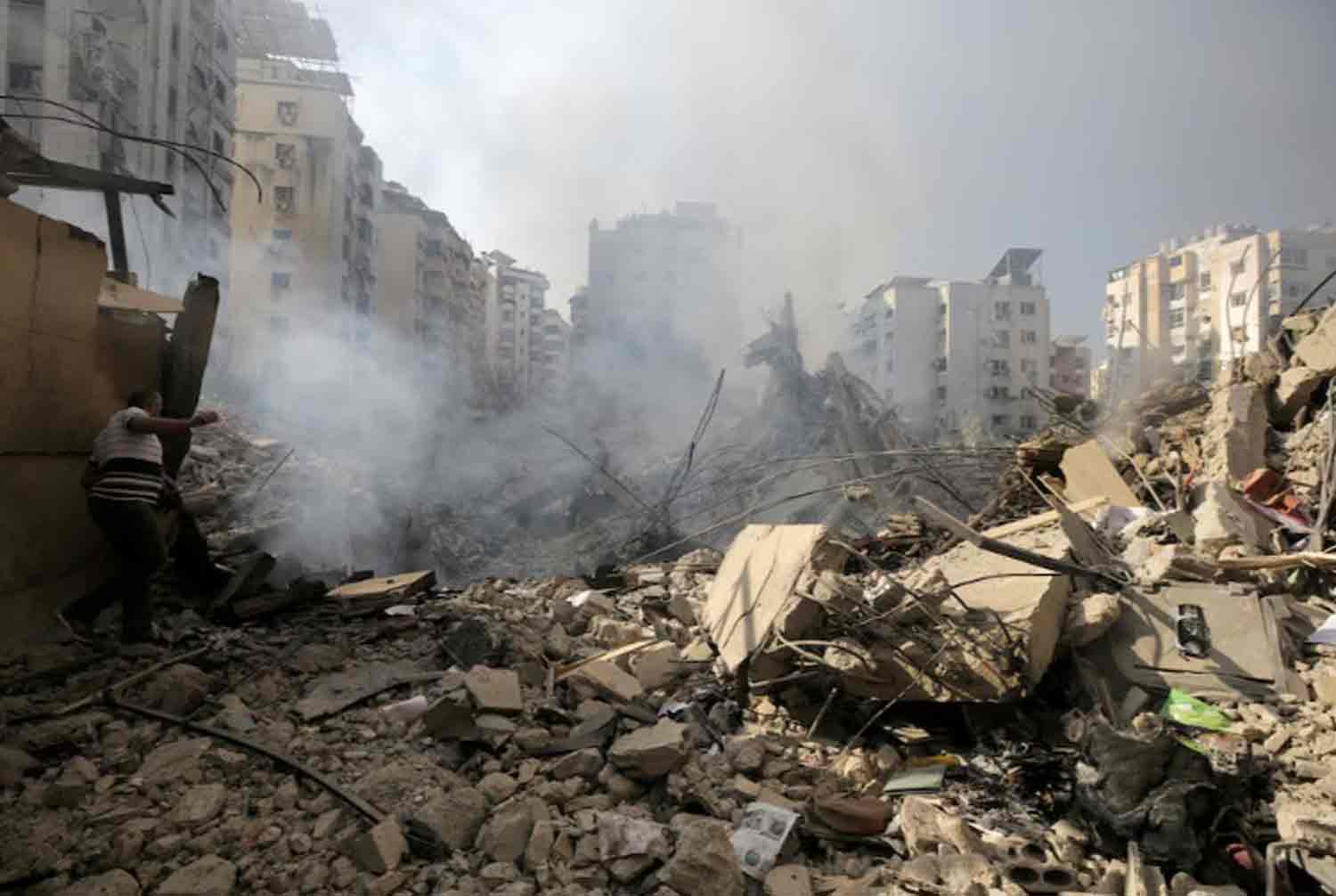
An Israeli airstrike demolished a building near one of Beirut‘s busiest intersections on Friday, causing significant tremors in the Lebanese capital as Israel continued its intensified bombardment of areas controlled by Hezbollah.

This airstrike was one of several conducted on Friday morning, targeting the vicinity of the Tayouneh junction, where the Hezbollah-dominated southern suburbs intersect with other parts of the city, marking a more central target than many previous strikes.

Throughout this week, Israel has escalated its airstrikes against the Hezbollah-controlled southern suburbs, a surge that coincides with U.S.-led diplomatic efforts aimed at resolving the conflict.

On Thursday, the U.S. ambassador to Lebanon presented a draft truce proposal to Nabih Berri, the speaker of Lebanon’s parliament, who is backed by Hezbollah for negotiations, according to two senior Lebanese political sources who requested anonymity.

This draft represents Washington’s first formal proposal to cease hostilities between its ally Israel and the Iran-supported Hezbollah in several weeks, the sources indicated.

“It is a draft intended to gather feedback from the Lebanese side,” one source informed Reuters. In response to inquiries about the proposal, a spokesperson for the U.S. Embassy in Beirut stated: “Efforts to reach a diplomatic resolution are ongoing.”

A senior diplomat, who spoke on the condition of anonymity, suggested that additional time would be necessary to finalize a ceasefire but expressed optimism that it could be achieved.

The diplomatic efforts represent a final attempt by the outgoing U.S. administration to achieve a ceasefire in Lebanon, as initiatives to resolve the conflict in Gaza seem to be completely stalled.

According to reports from Lebanese and Iranian media, senior Iranian official Ali Larijani, an advisor to Iran’s Supreme Leader, met with Berri and Lebanon’s caretaker Prime Minister Najib Mikati in Beirut on Friday.

Prior to the recent airstrikes, the Israeli military issued a warning via social media, identifying buildings in the southern suburbs and advising residents to evacuate due to their proximity to Hezbollah facilities.

Footage of the airstrike near Tayouneh captured the sound of an incoming missile, as the targeted structure was reduced to a cloud of rubble and debris that spread into the nearby Horsh Beirut, the city’s main park.

On Thursday, Eli Cohen, Israel’s energy minister and a member of its security cabinet, informed Reuters that the chances for a ceasefire were the most favorable since the onset of the conflict.

The Washington Post reported that Israeli Prime Minister Benjamin Netanyahu was hastening efforts to establish a ceasefire in Lebanon, aiming to provide an early foreign policy success for President-elect Donald Trump, who is anticipated to be a strong supporter of Israel.

Israel initiated its offensive against Hezbollah following nearly a year of cross-border tensions exacerbated by the Gaza war, stating its objective was to facilitate the return of tens of thousands of individuals who had to evacuate from northern Israel.

Hezbollah has suffered significant losses, including the death of its leader, Sayyed Hassan Nasrallah, along with other key commanders. Israel has conducted airstrikes targeting regions in Lebanon where Hezbollah holds political and military influence, and has deployed troops to the southern areas.

In response, Hezbollah has continued to launch rocket attacks into Israel, and its fighters have engaged in confrontations with Israeli forces in the south.

A critical issue in the ceasefire negotiations is Israel’s insistence on maintaining the right to respond if Hezbollah breaches any agreement, a condition that Lebanon has firmly opposed.

Israel’s military operations have resulted in over 1 million people being displaced within Lebanon, leading to a severe humanitarian crisis.

As reported by Lebanon’s health ministry, Israeli strikes have resulted in at least 3,386 fatalities since October 7, 2023, with the majority occurring since late September. The ministry does not differentiate between civilian and combatant casualties.

According to Israeli sources, Hezbollah’s actions have resulted in approximately 100 deaths among civilians and soldiers in northern Israel, the Israeli-occupied Golan Heights, and southern Lebanon over the past year.

Lai Ching-te is planning to make a sensitive stop in Hawaii,

0

Taiwan’s President Lai Ching-te is reportedly planning to make a stop in Hawaii and potentially Guam during an upcoming visit to Taiwan’s diplomatic allies in the Pacific, according to Reuters. This trip is particularly sensitive as it follows the recent U.S. elections.

Since taking office in May after his election victory in January, Lai has not yet traveled abroad. China, which considers Taiwan a part of its territory, opposes Lai’s leadership, labeling him a “separatist” and consistently objecting to any diplomatic engagements between Taiwan and foreign officials.

Six sources familiar with the plans, who requested anonymity due to the delicate nature of the situation, indicated that Lai intends to include a stop in Hawaii as part of his overseas itinerary in the coming weeks. Discussions are also underway regarding a potential stop in Guam, as confirmed by four of the sources. Both locations host significant U.S. military installations.

According to two sources, these stopovers would be integrated into Lai’s visits to Taiwan’s diplomatic allies in the Pacific region. The Pacific nations of the Marshall Islands, Tuvalu, and Palau are among the 12 remaining countries that maintain formal relations with Taipei. However, Reuters could not ascertain the specific countries Lai plans to visit or the exact dates of these trips.

Taiwan’s presidential office stated that Lai currently has no overseas travel scheduled, but any future plans will be announced at an appropriate time. The United States remains Taiwan’s most crucial international supporter and arms supplier, despite the absence of formal diplomatic recognition.

A State Department spokesperson stated, “For the travel arrangements of high-ranking officials from Taiwan, we direct you to the Taiwan authorities. We have no additional information on this matter.”

Lin Jian, a spokesperson for the Chinese foreign ministry, expressed to reporters in Beijing that the government’s stance has always been to oppose such transits, urging the United States not to allow this for Lai.

U.S. GOVERNMENT TRANSITION

Lai’s visit is scheduled to occur towards the end of President Joe Biden’s administration, during which he has affirmed that U.S. forces would defend Taiwan in the event of a Chinese invasion.

President-elect Donald Trump, who previously showed strong support for Taiwan during his first term, caused concern in Taipei during his campaign by suggesting that the island should bear the costs of its protection. He has since appointed pro-Taiwan Marco Rubio as his nominee for secretary of state.

The offices of the presidents of Palau and the Marshall Islands, as well as the government of Tuvalu, have not yet responded to requests for comments.

Typically, Taiwanese presidents utilize what are officially termed stopovers in the United States to engage with supportive U.S. politicians and deliver speeches. These stopovers usually occur during trips to distant allies in the Pacific, Latin America, or the Caribbean.

An individual familiar with the U.S. segment of the trip indicated that Lai’s visit is expected to be more subdued than usual, with logistical details still being finalized. The visits to Pacific island nations are also significant, as China has been steadily reducing the number of countries in the region that maintain diplomatic relations with Taiwan. In January, the small nation of Nauru shifted its allegiance back to Beijing.

China has significantly increased its military operations near Taiwan over the past five years, conducting another series of war games in May, shortly after Lai’s inauguration, which it characterized as a warning against “separatist actions.”

The Taiwanese government firmly disputes Beijing’s claims of sovereignty and asserts its right to engage with other nations and for its leaders to undertake foreign visits.

In August of the previous year, China conducted a day of military exercises around Taiwan following Lai’s return from the United States, where he made only brief stopovers but delivered speeches en route to and from Paraguay.

Additionally, in April of the same year, China carried out military drills in response to then-President Tsai Ing-wen’s visit to the U.S., where she met with then-Speaker of the House Kevin McCarthy in Los Angeles. Notably, during her trips to Pacific allies in 2017 and 2019, Tsai made stopovers in Hawaii.

World leaders are cautious about Trump ahead of key summits, while China’s Xi sees a potential advantage

0
Chinese President Xi Jinping attends a presentation ceremony of national medals and honorary titles, at the Great Hall of the People.

As global leaders convene for two significant summits in South America in the coming days, the uncertainty surrounding Donald Trump’s potential return to the White House is expected to cast a long shadow.

Many will be contemplating the implications of Trump’s “America First” policy on the global economy and ongoing conflicts in Europe and the Middle East.

China, in particular, is preparing for potentially strained relations with the United States. For Chinese leader Xi Jinping, however, the upcoming events and the inauguration of a Chinese-funded megaport in Peru present a chance to further Beijing’s interests in light of Trump’s electoral success.

A primary goal for China is to create divisions between the US and its allies while positioning itself as a stable alternative leader.

The effectiveness of Beijing’s strategy at the APEC summit of 21 Asia-Pacific economies in Peru this week, followed by the Group of 20 (G20) meeting in Brazil next week, could be crucial for China as it navigates the expected challenges ahead.

During his first term, Trump initiated a trade and technology conflict with China, framing the nation as a competitor to the US—a stance that has been largely continued by his successor, Joe Biden, who has further aggravated Beijing by aligning US allies with his China strategy.

With the prospect of Trump’s second term potentially leading to increased tariffs and heightened uncertainty, Xi and his team will be strategically adjusting their diplomatic approach during the upcoming meetings.

Among the leaders anticipated to participate in both summits are President Biden, Japanese Prime Minister Shigeru Ishiba, and Australian Prime Minister Anthony Albanese, while Indian Prime Minister Narendra Modi is set to join the G20.

Xi’s arrival in Peru on Thursday for a state visit prior to the summits highlighted his strategic messaging. During this visit, he and President Dina Boluarte participated via video link in the inauguration of a Chinese-funded megaport, signaling Beijing’s commitment to nations in the Global South.

This $3.5 billion project, developed by China’s COSCO Shipping in a bay north of Lima, is intended to serve as a trade gateway connecting Latin America to Asia, as reported by Chinese state media.

“It is logical for Chinese officials to leverage these significant events to influence current international narratives,” noted Li Mingjiang, an associate professor of international relations at Singapore’s Nanyang Technological University. “Time is limited before January 2025.”

“great global opportunities.”

Trump has suggested imposing tariffs exceeding 60% on all Chinese imports to the United States and may expand upon the Biden administration’s policies that limit Beijing’s access to critical high technology. Additionally, he seems inclined to appoint individuals with a hardline stance on China to his cabinet, reportedly considering Congressman Mike Waltz for the role of national security adviser and Marco Rubio for secretary of state, as per CNN’s coverage.

Last week, Xi’s congratulatory message to Trump seemed to reflect some of Beijing’s apprehensions. The Chinese leader cautioned that both nations “will benefit from cooperation and lose from confrontation,” according to statements from China’s Foreign Ministry.

Xi is likely to emphasize this sentiment during a concluding meeting with Biden, which senior U.S. officials have indicated will occur on Saturday in Lima. Observers believe that Beijing intends to use this meeting to convey its desire for communication and stability in bilateral relations.

However, as uncertainties regarding the future of U.S.-China relations persist, Beijing views maintaining strong ties with a diverse array of countries and ensuring unrestricted access to their markets as essential for safeguarding its economy. This is particularly crucial as China faces challenges such as slowing economic growth, diminished consumer demand, and rising unemployment.

From Beijing’s perspective, the unpredictability surrounding Trump presents an opportunity to undermine the growing collaboration that had developed between the U.S. and its allies under Biden in areas such as trade and security, aimed at countering the perceived threat posed by China.

Leaders who previously collaborated with Biden are likely to observe with caution how Trump, known for his unpredictable and transactional diplomatic approach, may reshape their relationships once he assumes office in January.

The president-elect has indicated plans to impose a 10% tariff on goods imported from all nations, including close allies. He has urged U.S. partners in Asia to contribute more towards the costs of hosting American military personnel and has suggested that he would allow Russia to act freely towards any NATO member that fails to meet its obligations.

China aims to convey that aligning entirely with the United States may not be prudent and encourages consideration of collaboration with China, according to Liu Dongshu, an assistant professor of international affairs at the City University of Hong Kong.

In recent months, Beijing has taken measures to strengthen its ties with key allies and partners of the U.S., such as granting visa-free access to citizens from several European nations and reinstating a trilateral summit with Japan and South Korea.

In October, Xi Jinping and Indian Prime Minister Modi held their first formal bilateral meeting in five years, following an agreement on military disengagement along their disputed border, marking a crucial step toward reducing tensions.

Earlier this month, Chinese Premier Li Qiang assured leaders and executives at a trade expo that China would further open its market to foster “great global opportunities.”

A challenging endeavor?

During the upcoming summit meetings in Lima and Rio de Janeiro, Xi and his team are expected to continue delivering these messages to U.S. partners, while also aiming to position China as a prominent power committed to global stability.

“For the G20 and APEC, China’s message will be ‘There is significant uncertainty ahead, but China represents certainty and will remain dedicated to peace and development,'” stated Yun Sun, director of the China program at the Stimson Center think tank in Washington.

However, analysts suggest that Chinese leaders will encounter significant challenges in gaining the trust of U.S. partners in both Europe and Asia.

Countries have observed with concern as Xi has intensified his assertiveness in the South China Sea and towards Taiwan, while also supporting Russian President Vladimir Putin in his conflict with Ukraine, regardless of any tensions with the incoming US president.

However, they may find themselves compelled to engage more with China if Trump decides to replicate his previous administration’s approach of withdrawing from organizations such as the World Health Organization or international accords like the Paris climate agreement.

Such actions would further Xi’s long-term objective of transforming the international liberal order, which he perceives as disproportionately favoring the US, positioning China as a viable alternative leader. This vision has garnered significant backing in the Global South, where initiatives like the Belt and Road Initiative have already enhanced China’s influence.

“If the US is stepping back from the global framework, it creates an opportunity for another nation to take its place – and China is among the few countries with both the capability and the desire to occupy that role,” stated Liu in Hong Kong.

Nonetheless, China’s ability to do so is contingent upon the robustness of its economy and its response to potential increased pressure from the US, he noted.

Consequently, Beijing may adopt a cautious approach in its diplomatic engagements and broader international strategies in the near future, according to Sun in Washington.

“Beijing is indeed concerned about Trump’s potential backlash and the impact it could have on China’s interests at a bilateral level,” she remarked. “China will need to navigate its pursuit of global leadership while considering its relationship with the US, ensuring it does not provoke Trump unnecessarily.”

Elon Musk is said to have had a meeting with Iran’s ambassador to the United Nations

0

Elon Musk, the richest individual globally and a close associate of President-elect Donald Trump, reportedly met with Iran’s ambassador to the United Nations on Monday, according to a report by the New York Times, which cited two Iranian officials.

The discussion between Musk and Iran’s envoy, Amir Saeid Iravani, took place at a confidential location in New York and extended for over an hour. The New York Times indicated that the conversation primarily revolved around strategies to alleviate tensions between the two nations, as described by the Iranian officials.

CNN is attempting to obtain comments from Elon Musk and Trump’s transition team. Meanwhile, Iran’s UN mission has chosen not to provide any remarks.

Officials from the Biden administration at the UN were not informed about the meeting and have yet to receive independent verification of its occurrence, as stated by a US official to CNN.

This reported meeting arises amid speculation that the upcoming four years could present a considerable challenge for Iran. Experts suggest that under Trump’s scrutiny, Tehran may face a revival of the “maximum pressure” campaign he enacted during his previous presidency, which significantly heightened Iran’s isolation and severely impacted its economy.

Since Trump’s departure from office in 2020, Iran has accelerated its uranium enrichment, boosted oil exports, intensified support for regional militant factions, and has set a concerning precedent by directly attacking Israel on two occasions.

The conversation reportedly held between the billionaire and the Iranian official prompts speculation regarding the potential impact of his influence in the forthcoming administration, particularly in relation to US foreign policy.

Just a week ago, following the presidential election, Musk participated in a call with former President Trump and Ukrainian President Volodymyr Zelensky, as reported by two sources. During the call, which was conducted on speakerphone, Zelensky expressed gratitude to Musk for his assistance in providing communication support via Starlink amid the ongoing conflict with Russia.

On Tuesday, Trump announced that Musk, alongside Vivek Ramaswamy, will head a newly established “Department of Government Efficiency” in his anticipated second term. Musk, who serves as the CEO of SpaceX and Tesla, has received substantial federal contracts from agencies such as NASA and the military, raising immediate concerns regarding possible conflicts of interest.

The operational framework of this department, which Trump indicated would “offer advice and guidance from outside of Government,” remains unclear. Additionally, it is uncertain whether a Congress entirely controlled by Republicans would be inclined to endorse such a significant restructuring of government spending and operations.