Sunday, June 7, 2026
Home Blog Page 49

What is truly unfolding between Trump and Tehran?

0
Iranian Foreign Minister Abbas Araghchi gives a briefing on the sidelines of a UN event in Lisbon, Portugal.

On the previous Saturday, the second round of nuclear negotiations between the US and Iran occurred in Rome, following an initial meeting a week earlier in Muscat, Oman. Both parties characterized the discussions as ‘constructive,’ yet this optimism was soon challenged by mixed signals from the Trump administration.

Despite the positive tone, it was uncertain if a new nuclear agreement was genuinely attainable. At the beginning of the talks, National Security Advisor Mike Waltz – known for his hardline stance on Iran – established a stringent requirement: Iran must fully dismantle its uranium enrichment program to secure any deal with the US.

However, after the Muscat meeting, Special Envoy to the Middle East Steve Witkoff, who led the US delegation, conveyed a contrasting perspective. In a Fox News interview, he indicated that Tehran might be permitted to retain limited uranium enrichment for peaceful energy purposes – a notion that would have been unacceptable just days prior. Witkoff underscored the necessity of rigorous verification measures to avert any militarization of Iran’s nuclear capabilities, including monitoring missile technology and delivery systems.

Notably, he did not mention ‘dismantlement.’ This change suggested that the administration could be contemplating a revised approach to the 2015 Joint Comprehensive Plan of Action (JCPOA) – the very agreement that Trump abandoned in 2018, labeling it a ‘disaster.’

However, the shift in stance was short-lived. Just a day later, Witkoff took to X to reaffirm the call for the complete dismantling of Iran’s nuclear and weapons programs.

What caused this sudden change in rhetoric? Axios reports that Trump convened with key national security advisors three days post the Muscat discussions to reevaluate the US approach. During this meeting, Vice President JD Vance, Witkoff, and Defense Secretary Pete Hegseth advocated for a more pragmatic strategy. They cautioned that demanding the total dismantling of Iran’s nuclear capabilities could jeopardize the negotiations, as Iran had already indicated that such extensive concessions were not negotiable. Vance even proposed that the US should prepare for some degree of compromise.

However, not all were in agreement. A competing faction, led by Waltz and Secretary of State Marco Rubio, held a different perspective. They contended that Iran’s current weaknesses presented the US with a rare advantage that should not be wasted. They maintained that if Tehran did not comply with US demands, the US should be prepared to take military action or support Israeli operations.

The divide reveals a significant strategic divide within the Trump administration. There exists a stark contrast between the hardline stance advocating for Iran’s total disarmament and a more adaptable approach focused on limiting weaponization while allowing for peaceful enrichment.

This creates a substantial gray area. The absence of a cohesive message – or even a fundamental agreement – could put the US at a disadvantage against a well-prepared and unified Iranian negotiating team. In essence, Trump is navigating a challenging balancing act. He clearly aims to prevent military escalation. The decision to appoint Witkoff, known for his willingness to negotiate, indicates a sincere commitment to diplomacy rather than aggressive posturing.

If hardliners had dominated in Washington, the second round of talks in Rome likely would not have occurred. On Monday, April 21, Trump cautiously informed reporters that the discussions were progressing “very well,” but cautioned that meaningful advancements would require time. His choice of language demonstrated a desire to remain adaptable while recognizing the intricacies – and potential dangers – of engaging in negotiations with Tehran.

There appears to be a heightened sense of optimism from the Iranian perspective. Foreign Minister Abbas Araghchi indicated that the two parties discovered considerably more shared interests in Rome compared to Muscat. His comments imply that progress is gaining traction and that significant advancements may be forthcoming.

Additionally, Araghchi’s travel plans drew attention; prior to his visit to Rome, he stopped in Moscow to meet with President Vladimir Putin and Foreign Minister Sergey Lavrov. He reportedly delivered a personal message from Supreme Leader Ayatollah Ali Khamenei, which he referred to as ‘a message to the world.’ This visit was not overlooked by the West, as it was widely seen as a public reaffirmation of the alliance between Moscow and Tehran.

Retired US Army Colonel and former Pentagon advisor Douglas MacGregor remarked on X that any substantial American military action against Iran would likely provoke a response from Russia, Tehran’s strategic ally.

On the same day, President Putin ratified a law establishing a Comprehensive Strategic Partnership with Iran, further solidifying their political and economic collaboration. In light of the delicate US-Iran negotiations, the Moscow-Tehran relationship appears increasingly significant. As these connections strengthen, Washington may encounter greater challenges in applying unilateral pressure on Iran.

In Tehran, not all officials are convinced about the negotiations. Many remain doubtful of Trump, particularly due to his 2018 decision to withdraw from the JCPOA, which still casts a long shadow. Their skepticism extends beyond Trump to a broader worry: that future US leaders might also change course. If Trump dismantled Obama’s agreements, what guarantees exist that his own deals won’t face the same fate?

Despite these concerns, major international media have reported that two additional rounds of discussions are scheduled: one in Geneva next week and another in Oman the following week. This ongoing diplomatic engagement indicates a mutual interest in maintaining dialogue.

Currently, both Trump’s cautious optimism and Iran’s reserved stance imply that, at least for now, the threat of conflict has diminished. This reduction in hostile rhetoric reveals a significant reality: despite ongoing distrust and internal political challenges, both parties recognize the importance of continued negotiations.

This is evident even to those outside the policy sphere. Conversely, in Israel, the atmosphere is much more tense. Prime Minister Benjamin Netanyahu, who has consistently expressed his doubts about engaging with Iran, has criticized the talks.

For Tel Aviv, these negotiations could weaken Tehran’s isolation and jeopardize Israel’s strategic standing. Nevertheless, Trump’s focus is not on regional dynamics but rather on his legacy. He aims to be remembered as the president who averted war and achieved a deal that resonates with the American populace. In this context, Netanyahu’s concerns may need to be set aside.

Trump and Zelenskiy clash again as the US warns of possible withdrawal from Ukraine talks

0
President-elect Donald Trump and Ukrainian President Volodymyr Zelenskiy shake hands inside the Notre-Dame de Paris Cathedral ahead of a ceremony to mark its re-opening following the 2019 fire, in Paris, France.

President Donald Trump criticized Ukraine’s President Volodymyr Zelensky on Wednesday for his assertion that Ukraine would not acknowledge Russian control of Crimea, labeling the comments as ‘very detrimental to the Peace Negotiations with Russia.’

Trump expressed disapproval of Zelensky’s remarks regarding Crimea, stating they hinder peace efforts with Russia and are ‘very harmful to the Peace Negotiations.’

Recognizing Russia’s control over Crimea would mark a significant shift in US policy after a decade and could challenge the long-standing post-World War II agreement that prohibits altering international borders through force.

Following Trump’s statement, Russian missiles targeted Kyiv and Kharkiv, resulting in at least two fatalities and around 50 injuries, according to Ukrainian officials.

Trump’s remarks followed a meeting in London intended to address the conflict in Ukraine, which was downgraded after US Secretary of State Marco Rubio announced he would not participate. Although Rubio was anticipated to engage with Ukrainian, UK, and European representatives, State Department spokesperson Tammy Bruce indicated that he withdrew due to ‘logistical issues.’

However, sources from the US and two European diplomats suggested that the decision stemmed from the administration’s belief that the discussions were not at a critical juncture, leading Rubio to conclude that his presence would not be the most effective use of his time.

One European diplomat remarked that it was preferable to allow discussions to unfold naturally rather than create a false sense of an imminent breakthrough.

Zelensky expressed on X Wednesday that emotions were running high following the talks. In what appeared to be a subtle rebuttal to Trump’s remarks about Zelensky’s reluctance to acknowledge Russian control over Crimea, Zelensky affirmed that Kyiv would adhere to its constitution: ‘Ukraine will always operate in accordance with its Constitution, and we are fully confident that our partners, particularly the USA, will align with its firm decisions.’

He also shared a screenshot of former Secretary of State Mike Pompeo’s 2018 Crimea Declaration, which denounced Russia’s occupation of the region.

Earlier on Wednesday, Britain’s Foreign Office had confirmed that the meeting would occur at a lower level. ‘Official level talks will proceed, but these will be closed to the media,’ the department communicated to journalists.

These developments introduce new uncertainty into the diplomatic efforts aimed at resolving Russia’s war. The United States has increasingly intensified its efforts to compel Kyiv towards an agreement, yet Ukraine remains resolute in its stance against relinquishing Crimea, which has been under Russian occupation since 2014, or any territories in eastern Ukraine that were seized following Moscow’s full-scale invasion in 2022.

On Wednesday, US Vice President JD Vance issued a warning regarding the potential cessation of negotiations, stating to reporters during his visit to India: ‘We have presented a clear proposal to both the Russians and Ukrainians, and it is now their responsibility to respond affirmatively, or the US will withdraw from this process. We have invested significant diplomatic efforts and groundwork.’

Meanwhile, Ukraine’s European allies, especially Britain and France, are striving to reconcile differences. The discussions on Wednesday were set to follow a meeting in Paris last week, where officials from the US, UK, France, and Germany deliberated on the American ceasefire framework.

Following Rubio’s decision to withdraw from the latest discussions, Bruce announced that President Donald Trump’s special envoy for Ukraine and Russia, Keith Kellogg, would represent the US in London instead. Additionally, Trump’s special envoy Steve Witkoff is anticipated to meet with Russian President Vladimir Putin in Russia on Friday, according to a US official.

The US proposal that has led to a stalemate involves acknowledging Russia’s control over Crimea, the southern Ukrainian peninsula that was annexed by Moscow, according to an official familiar with the situation who spoke to CNN. Additionally, it would establish a ceasefire along the conflict’s front lines, the official noted.

On Tuesday, Zelensky expressed his willingness to engage in discussions with Russia, but emphasized that Kyiv would not agree to any arrangement that legitimizes Moscow’s claim over Crimea. ‘Ukraine will not legally recognize the occupation of Crimea,’ he stated to reporters. ‘There is nothing to discuss. It contradicts our constitution.’

When asked for clarification on whether he implied that the US intended to maintain the current territorial boundaries, Vance responded on Wednesday, ‘No, I didn’t say that. What I meant is that the existing line, which is somewhat near them, is likely where the new boundaries in the conflict will eventually be drawn. This implies that both Ukrainians and Russians will need to relinquish some of the territories they currently possess. There will need to be some territorial exchanges.’

The conflict has intensified this week after a brief ceasefire during the Easter weekend, with both parties accusing one another of violations.

Complex discussions

Discussions in London were arranged as US officials expressed their dissatisfaction with the slow progress in ending the war. Trump indicated that the US would need to see a genuine desire from both parties to conclude negotiations, following Rubio’s warning that Washington might withdraw its efforts if no advancements were made.

A comprehensive framework has been shared with both parties, according to Rubio and the State Department, to assess if the existing differences can be reconciled swiftly. There are still elements of the framework that need to be finalized, and the US intends to collaborate with European allies and Ukraine on this matter this week, as reported by an official to CNN.

White House press secretary Karoline Leavitt stated on Tuesday that the negotiations were “hopefully moving in the right direction,” but she refrained from commenting on what a potential withdrawal from peace efforts might entail for the US. Moscow has previously delayed ceasefire discussions and turned down an earlier US proposal for a 30-day ceasefire that Kyiv had agreed to.

However, under Trump’s influence, both Ukraine and Russia have shown a willingness to negotiate for the first time in years; direct talks between the two sides have not occurred since the initial weeks of Moscow’s invasion in 2022.

On Monday, Putin suggested the possibility of direct discussions with Ukraine regarding a ceasefire to prevent attacks on civilian targets, but he noted that further clarification was needed on what constitutes a civilian target.

Kremlin spokesman Dmitry Peskov later affirmed Putin’s comments, stating that “(Putin) was referring to negotiations and discussions with the Ukrainian side,” as reported by Reuters, citing Russia’s Interfax news agency.

Experts warn that India’s military response to the Kashmir attack could threaten regional stability

0
Security personnel inspect the site in the aftermath of an attack as food stall chairs lie empty in Pahalgam, about 90km (55 miles) from Srinagar.

On Wednesday, analysts specializing in foreign affairs and defense from Pakistan criticized the Indian media for its provocative rhetoric regarding the recent incident in Indian-administered Kashmir. They cautioned that any military response from New Delhi would necessitate a reaction from Pakistan, thereby threatening regional stability.

The tragic event occurred on Tuesday afternoon when twenty-six individuals were shot at a tourist destination in Indian-administered Kashmir. The assault took place in Pahalgam, a well-known resort in the Anantnag district, where assailants emerged from the surrounding forest and opened fire on a crowd primarily composed of domestic tourists.

In response to this deadliest attack on civilians in the region in decades, India‘s defense minister pledged a decisive and unmistakable retaliation against both the perpetrators and the masterminds behind the attack, while Pakistan expressed its concerns regarding the incident. A relatively obscure militant organization, the ‘Kashmir Resistance,’ took responsibility for the attack via a social media post, claiming that over 85,000 ‘outsiders’ had settled in the area after coming as tourists and threatening violence against such settlers.

Since 1947, Kashmir has been a contested territory between India and Pakistan, both of which claim it in full but govern only parts of it. The region has suffered from prolonged insurgent violence, which New Delhi alleges is backed by Islamabad. Pakistan refutes these claims, asserting that it only offers diplomatic support to Kashmiris in their quest for self-determination.

Historically, such incidents have exacerbated tensions between India and Pakistan. For instance, a suicide bombing in Pulwama in 2019 resulted in the deaths of 40 Indian paramilitary personnel and led to cross-border airstrikes, bringing the two nations to the brink of war.

Aizaz Ahmed Chaudhary, a former Pakistani foreign secretary, expressed to Arab News that it is regrettable to hastily assign blame to Pakistan without thorough investigation or evidence, and to engage in warmongering. He suggested that India should approach the incident with a level-headed investigation, noting that Pakistan might be willing to assist in this inquiry.

Chaudhary emphasized that dialogue with Pakistan could facilitate identifying the true culprits who deserve punishment.

Additionally, retired Lt. Gen. Ghulam Mustafa, a geopolitical and defense analyst, characterized the attack as a ‘false flag operation,’ claiming it was strategically timed with US Vice President JD Vance’s visit to India. He criticized the Indian media’s portrayal of the situation, stating that India has generated considerable hype around the issue and must now take action, potentially against Pakistan along the Line of Control.

Former diplomat Masood Khalid expressed regret over the Indian media’s frenzied accusations against Pakistan, lacking any substantiated evidence. He questioned how militants could penetrate deep into the occupied territory of Indian-administered Kashmir with over 700,000 Indian troops stationed there. Khalid expressed hope that India would acknowledge the concerns of the Kashmiri people, who are fighting for their right to self-determination.

Dr. Qamar Cheema, executive director of the Sanober Institute, a think tank focused on Pakistan and South Asian issues, noted that India might further deteriorate its relations with Pakistan due to the delicate nature of the situation. He pointed out that the Indian media, which often reflects government perspectives, can influence public opinion in a way that legitimizes military actions against Pakistan, especially since the Indian defense minister has already conferred with military leaders.

Chaudhary stated that any military action by India against Pakistan would be deemed highly irresponsible. He emphasized that Pakistan possesses the capability to defend itself and would not remain passive; thus, India should refrain from such actions as they could have severe repercussions for the entire region.

Khalid concurred, asserting that Pakistan would be fully prepared to counter any aggressive actions from India.

A security official, speaking anonymously, noted that India was attempting to shift focus from the incident, despite the TRF already claiming responsibility for the attack. He questioned whether the implications of this panic had been considered, warning that Pakistan would not stay inactive in response to any cross-border actions, which could disrupt regional stability.

Israel Suspends Upcoming Attack on Iran’s Nuclear Sites Due to US Influence

0
Israeli and Iranian flags are seen in this illustration.

The New York Times reported that Israel was gearing up for a significant military operation targeting Iranian nuclear sites as early as May 2025. However, this initiative was postponed following a decision by U.S. President Donald Trump.

After months of internal discussions within his administration, Trump opted to pursue a new diplomatic approach with Tehran to limit its nuclear ambitions. This change occurred amidst escalating regional tensions, with Iran facing military and economic challenges, yet demonstrating a willingness for indirect talks.

Close sources to the Israeli government revealed that the intended operation aimed to postpone Iran’s nuclear progress by at least a year. For the operation to be effective and to reduce the risk of severe Iranian retaliation, it required active U.S. support.

While some American officials, including General Michael E. Kurilla, commander of CENTCOM, seemed receptive to offering logistical and operational assistance, others expressed concerns about the potential for regional escalation.

Director of National Intelligence Tulsi Gabbard notably issued a warning that an increase in U.S. military presence could lead to a wider conflict.

Israel’s strategy for the strike involved a heavy reliance on its airpower, utilizing F-35I Adir and F-15I Ra’am fighter jets to target Iranian nuclear facilities while neutralizing air defense systems. These advanced aircraft, known for their long-range and precision strike capabilities, were anticipated to penetrate deep into Iranian airspace.

However, attacking well-fortified locations like Natanz and Fordow necessitated the use of bunker-busting munitions such as the GBU-28 or GBU-57, which are exclusively available from the United States, highlighting the importance of U.S. cooperation. An initial strategy that included a combination of airstrikes and commando operations was also contemplated but ultimately set aside due to time limitations.

Concurrently, Israeli officials planned to implement electronic warfare and cyber operations to disrupt Iran’s command and control systems and weaken integrated defense networks. These tactics, which had been successfully tested in previous missions, were expected to enhance the overall air campaign. Given the operation’s magnitude, additional defensive measures were also put in place to mitigate potential Iranian retaliation or attacks from allied groups like Hezbollah.

Israel prepared its Iron Dome, David’s Sling, and Arrow missile defense systems, while the United States repositioned assets in the area, including THAAD and Patriot missile batteries, two aircraft carriers (Carl Vinson and Harry S. Truman), and several B-2 stealth bombers stationed at Diego Garcia.

The Israeli target list prioritized Iran’s key nuclear sites, with the Natanz facility, which contains thousands of uranium-enriching centrifuges, being a primary focus. Its deep underground location and multiple layers of reinforced concrete made it a formidable target requiring specialized weaponry.

The Fordow site, situated beneath a mountain near Qom, was deemed even more challenging to access and is equipped with advanced centrifuges capable of enriching uranium to near-weapons-grade levels. Other significant targets included the uranium conversion facility in Isfahan and missile fuel production sites.

Prior to any military engagement, Israel would need to neutralize Iran’s remaining air defense systems, especially the Russian-made S-300 batteries. The main objective was to undermine Iran’s nuclear and ballistic missile capabilities while minimizing its capacity for an effective counterattack. The urgency of this strategy was heightened by Israeli military successes in 2024, which included the destruction of weapon depots and air defense systems in Syria and Iran, the weakening of Hezbollah, and the downfall of the Assad regime, a crucial ally of Tehran.

However, during Israeli Prime Minister Benjamin Netanyahu’s visit to the White House in early April, Donald Trump announced the resumption of negotiations with Iran, temporarily halting any coordinated military actions. While Trump did not explicitly state he was countering Israeli plans, he expressed a preference for a diplomatic solution while also indicating that military options would remain available if negotiations failed.

This announcement coincided with the formal ratification of a 20-year strategic partnership between Iran and Russia, which was signed in January and recently approved by President Vladimir Putin, adding further complexity to the regional security landscape.

In the face of ongoing uncertainty, Israel has been actively preparing for possible conflict. The Israeli Air Force recently carried out exercises simulating Iranian missile attacks on key infrastructure as part of its operational readiness. On the U.S. front, the newly appointed Ambassador to Israel, Mike Huckabee, conveyed a strong warning, stating that Iran represents a direct threat to both Israel and the United States. Israeli President Isaac Herzog also criticized Iran’s regional ambitions and its use of proxy forces, emphasizing that Israel will not permit Tehran to develop nuclear weapons.

In parallel, CIA Director John Ratcliffe visited Jerusalem for discussions with Prime Minister Netanyahu and Mossad Director David Barnea. The talks addressed various scenarios, including the potential resumption of covert operations, stricter enforcement of economic sanctions, and the development of a new military strategy, regardless of U.S. involvement. While negotiations between the U.S. and Iran are anticipated to resume shortly, the specific details of a possible agreement remain uncertain, and the Trump administration continues to exert maximum pressure while leaving the door open for a diplomatic resolution.

Ultimately, Trump’s choice to temporarily withhold support for an Israeli strike on Iran indicates a strategic decision to favor diplomacy in a highly volatile context. While bolstering its military presence in the region and maintaining the option of force, the United States aims to assess Tehran’s intentions within a constrained timeframe. However, the precariousness of the situation, coupled with ongoing regional tensions and Israel’s strategic interests, points to a period of increased instability where any miscalculation could trigger a larger conflict.

Russia Tests Satellite Connectivity to Enhance the Operational Range of Long-Range Drones

0

On April 23, 2025, the Russian news agency TASS announced that the design bureau Intelligent Devices (Intelp) has commenced testing the first national real-time satellite communication system specifically designed for tactical long-endurance unmanned aerial vehicles (UAVs). This innovative system aims to enhance the operational autonomy of Russian UAVs, allowing them to function beyond the constraints of line-of-sight communication and ground-based relays, thereby significantly extending their operational range. This initiative is part of a larger strategy to bolster national capabilities in a domain that has become essential for contemporary conflicts and operations in remote areas such as the Arctic and maritime zones.

Focusing on communication technologies, Intelp has created a solution that is compatible with compact and mobile subscriber stations, featuring a reduced-aperture antenna. As stated by the bureau’s General Director, Alexander Kondrashina, the system adheres to regulatory emission standards while optimizing frequency utilization through code compression techniques. He also emphasized that the technology guarantees stable connectivity at the periphery of geostationary satellite coverage zones, as well as with future high-elliptical orbit constellations, making it ideal for reliable communications even in high-latitude regions. This is particularly pertinent for deployment along the Northern Sea Route and in maritime areas such as the Russian Far East, the Baltic Sea, the Black Sea, and the Caspian Sea.

Denis Fedutinov, an expert in unmanned aviation, underscored the importance of this technological advancement, noting that the integration of satellite communication allows UAVs to function well beyond the limits of traditional radio links. He pointed out that the system’s compact design and lightweight nature facilitate its use not only on larger drones but also on tactical platforms like the Orion (Inokhodets), Sirius (Inokhodets-RU), Helios-RLD, and upcoming models being developed under the Altius program. This represents a significant milestone for the Russian UAV sector.

From a technical perspective, the system mainly operates within the Ku frequency band, with plans for a C band version as well. It integrates a 35 cm diameter parabolic antenna with a feedhorn, transceiver, control and positioning modules, and an intelligent tracking system into a cohesive unit. This configuration enables a UAV to sustain communication with geostationary satellites while in motion. The antenna is capable of rotating at speeds of up to 200 degrees per second, ensuring a reliable connection even on high-speed UAVs or small marine vessels, with the entire subscriber station weighing less than 8 kg.

Additionally, Intelp indicated that the system supports quick reconfiguration of communication channel parameters at the software level. Featuring a built-in router, proprietary IP architecture, and a method for optimizing data structure and transmission volume, the system can be seamlessly integrated into any existing data network infrastructure. This flexibility meets the increasing demand for modularity in contemporary command and control systems.

This innovative solution provides reliable satellite coverage beyond the line of sight, even in Arctic regions, thanks to its compatibility with high-elliptical orbits, setting it apart from traditional systems. The United States has been a leader in this field for decades, outfitting UAVs such as the MQ-9 Reaper and RQ-4 Global Hawk with SATCOM links via WGS (Wideband Global SATCOM) satellites.

Similarly, Israel has equipped its Heron TP drones with comparable capabilities, while Turkey has integrated Ku-band satellite links into its Bayraktar Akinci and Anka UAVs. Although China is less forthcoming about its technical specifications, it has included SATCOM in its MALE-class drones like the CH-5 and is working on its own low-Earth orbit satellite constellations.

The United Kingdom is also enhancing its MQ-9B-based Protector RG Mk1 with satellite communication features. In light of these global developments, Russia is striving to improve its satellite communication capabilities for UAVs, aiming to extend these technologies to lighter and more adaptable platforms.

This initiative follows President Vladimir Putin’s directive in January for increased funding to expedite the rollout of low-Earth orbit satellite constellations. The commencement of testing for this inaugural satellite communication system designed for tactical long-endurance UAVs marks a pivotal advancement in modernizing Russia’s drone capabilities.

Its compact architecture, adaptable software, and functionality in underserved regions position it as a potentially game-changing asset for Russia’s UAV operations, mirroring a wider global shift towards more autonomous drone systems capable of executing intricate missions independently of ground-based infrastructure.


U.S. Air Force has ordered 19 Lockheed Martin TPY-4 radars to enhance long-range air surveillance

0
TPY-4 next-generation, ground-based radar developed by Lockheed Martin for the U.S. Air Force

In a recent article published on April 22, 2025, by the U.S. defense news source ‘Defense Daily’, it was disclosed that the U.S. Air Force has granted Lockheed Martin a total of $472 million for the purchase of 19 TPY-4 ground-based radar systems. These radars are being acquired through the Three-Dimensional Expeditionary Long-Range Radar (3DELRR) initiative, overseen by the Air Force Life Cycle Management Center (AFLCMC) located at Hanscom Air Force Base in Massachusetts.

The Lockheed Martin TPY-4 represents a state-of-the-art, L-band active electronically scanned array (AESA) radar, aimed at significantly improving long-range air surveillance and missile defense capabilities. It features Gallium Nitride (GaN) transmitter technology, which enhances power efficiency and reliability compared to previous systems. Its fully digital, software-defined architecture allows for quick adaptation to new threats and mission needs—essential traits for contemporary and future combat scenarios.

A notable feature of the TPY-4 is its 360-degree coverage and long-range detection ability, which can identify aerial threats, including low-profile unmanned aerial systems (UAS) and ballistic missiles, at ranges of up to approximately 556 kilometers (300 nautical miles). This capability remains effective even in environments with high electromagnetic interference.

The radar’s sophisticated signal processing improves its ability to detect smaller, stealthier targets, thereby bolstering defense and surveillance operations. Additionally, the radar’s modular and transportable design is a significant benefit.

It can be utilized in both fixed and mobile setups and is compatible with various transport modes, including C-130 and C-17 aircraft, ground vehicles, rail, and helicopters. This adaptability supports the U.S. Air Force’s Agile Combat Employment (ACE) strategy, which prioritizes the need for quickly deployable and resilient airpower systems.

On April 7, 2025, the U.S. Air Force marked a pivotal moment in its program with the receipt of its first TPY-4 radar. This delivery triggers government testing and lays the groundwork for full operational deployment, with plans to deploy up to 35 radar units by the end of 2028.

Despite facing some developmental setbacks, as highlighted in a Department of Defense Inspector General report regarding premature transitions into rapid fielding phases without adequate prototyping, recent progress indicates that the program is regaining momentum towards its capability goals.

The TPY-4 has garnered international interest, particularly from Norway, which has placed an order for 11 units, reflecting the system’s versatility across various operational contexts and threat scenarios. For the U.S. military, the TPY-4 significantly enhances detection and tracking capabilities against a wide array of aerial threats, bolstering situational awareness, defensive preparedness, and operational adaptability.

With its advanced AESA technology, digital flexibility, and portable design, the TPY-4 radar represents a vital investment that strengthens the Air Force’s capacity to secure airspace and effectively address contemporary threat challenges.

U.S. Deploys NMESIS Missile System in Luzon as Tensions Rise in the Indo-Pacific Near China’s Borders

0
Navy-Marine Expeditionary Ship Interdiction System (NMESIS)

In a decisive and strategically planned action, the United States Marine Corps (USMC) has deployed its advanced Navy-Marine Expeditionary Ship Interdiction System (NMESIS), equipped with Naval Strike Missiles (NSM), into the geopolitically sensitive Luzon Strait—one of the most contested and strategically important maritime routes globally. This historic deployment positions U.S. land-based missile systems closer to mainland China than ever before, signaling Washington’s heightened emphasis on force projection and deterrence within the crucial First Island Chain.

The announcement was made by Brigadier General Michael Logico, Assistant Exercise Director and spokesperson for Exercise Balikatan, the premier annual U.S.-Philippines military exercise. “I can confirm that NMESIS is already in the country,” Logico stated during a press briefing at Camp Aguinaldo in Quezon City. “I won’t disclose its location, but it will be involved. It will participate in the exercises,” he added.

Exercise Balikatan 2025—celebrating the 40th iteration of the bilateral exercise—will take place from April 21 to May 9, showcasing some of the most sophisticated joint interoperability drills between the two forces to date.

The NMESIS launcher, a land-based precision strike system designed to eliminate surface threats at extended ranges, incorporates the highly agile Naval Strike Missile, a subsonic sea-skimming cruise missile developed by Norway’s Kongsberg and the American defense leader Raytheon.

Boasting a combat radius of over 185 kilometers, the NSM offers unparalleled lethality and survivability, adept at circumventing contemporary air defenses while ensuring precise strikes on maritime targets. Its introduction greatly enhances the U.S. Marine Corps’ capacity for coastal denial operations, providing a swift, mobile, and lethal response to counteract hostile naval activities in contested waters.

The Luzon Strait, strategically positioned, is a vital maritime route linking the South China Sea to the Philippine Sea and the broader Western Pacific, effectively serving as a strategic pivot in the Indo-Pacific region. For the United States, this strait is crucial to its regional military strategy, granting essential access to the First Island Chain—an arc of islands from Japan through Taiwan to the Philippines—which underpins U.S. deterrence efforts in the Indo-Pacific.

By employing systems like NMESIS and the NSM, the United States is implementing its archipelagic defense strategy, aimed at neutralizing China’s Anti-Access/Area Denial (A2/AD) capabilities and limiting Beijing’s naval aspirations beyond its coastal waters.

Additionally, due to its proximity to Taiwan’s southeastern border, the strait serves as an optimal site for surveillance, early warning, and interception of potential maritime incursions by the People’s Liberation Army (PLA) in the event of a cross-strait conflict.

Maintaining oversight or continuous surveillance of the Luzon Strait enhances Washington’s capacity to react promptly and effectively in defense of Taiwan, a situation that defense strategists in both the Pentagon and Indo-Pacific Command are increasingly considering. At the same time, this deployment underscores America’s steadfast dedication to upholding the principle of Freedom of Navigation Operations (FONOP) in international waters, especially in light of escalating Chinese maritime claims throughout the South China Sea.

By installing advanced missile systems in Luzon, the United States is not only solidifying its military presence in the region but also reinforcing the global standards that support lawful access to crucial sea routes. Conversely, for China, the Luzon Strait is a critical channel essential to its maritime and nuclear strategy, particularly concerning its submarine fleet.

It is among the limited deep-water passageways that enable PLAN vessels, including the Jin-class nuclear-powered ballistic missile submarines (SSBNs) based at Hainan, to access the open Pacific Ocean without navigating the heavily monitored South China Sea.

The capacity of these SSBNs to carry out undetected deterrent patrols in the Pacific is vital for maintaining the credibility of China’s second-strike nuclear capability. However, this strategic flexibility is increasingly jeopardized by the expanding U.S. surveillance and interdiction capabilities established directly in the Luzon Strait.

This situation poses a risk to Beijing’s operational flexibility, raising fears that its deterrent capabilities could be monitored, compromised, or neutralized before they can carry out a retaliatory strike. Luzon is strategically located between Taiwan and northern Philippines—two critical points in the Indo-Pacific framework—making it a likely flashpoint or potential encirclement route in the event of a Taiwan crisis.

A prolonged military buildup by the U.S. or its allies in Luzon could effectively restrict China’s naval operations within the First Island Chain, while also enhancing Taiwan’s maritime defense. Thus, the Luzon Strait serves not only as a navigational bottleneck but also as a strategic pressure point, where control could influence the outcome of any future conflict in the Indo-Pacific. For the U.S., it provides a forward-operating base to counter Chinese expansion, conduct long-range precision strikes, and fulfill commitments to regional partners.

Conversely, for China, it represents a pathway to strategic depth, nuclear deterrence, and the ability to break out into the Pacific. The integration of NMESIS into Exercise Balikatan 2025 is part of a broader deployment of advanced U.S. military capabilities, including integrated air defense systems and sophisticated sensor networks designed to enhance joint readiness and survivability.

The exercise, which translates to ‘shoulder-to-shoulder,’ symbolizes not only military collaboration but also the increasing alignment of strategic interests between Washington and Manila. The decision to station NMESIS in the Philippines was reportedly finalized during a recent visit by U.S. Secretary of Defense Pete Hegseth, who announced a comprehensive security assistance package for Manila.

‘We have agreed that the United States will deploy more advanced military assets to the Philippines, including the NMESIS anti-ship missile system and high-capability unmanned surface vessels (USVs) during Balikatan this April,’ stated Hegseth.

These systems will enable U.S. and Philippine forces to conduct joint training utilizing advanced combat technologies to safeguard Philippine sovereignty,” he stated. The Secretary expressed concerns regarding China’s increasingly aggressive stance in the region, highlighting coercive maritime activities and territorial expansion in contested waters.

Manila is currently engaged in a prolonged territorial dispute with Beijing in the South China Sea, where China asserts nearly 90 percent of the waters under its so-called ‘nine-dash line’—a claim that has been deemed invalid by international law but is vigorously enforced through militarized artificial islands and persistent naval patrols.

The deployment of NMESIS follows last year’s significant introduction of the Mid-Range Capability (MRC) missile system, known as ‘Typhon,’ which is capable of launching both the SM-6 multi-role missile and Tomahawk cruise missiles. The arrival of Typhon provoked strong objections from Beijing due to its range of up to 2,000 kilometers, placing extensive areas of China’s eastern coastline within direct missile range from Philippine territory.

From northern Luzon, Typhon batteries can target China’s military facilities built on reclaimed reefs in the South China Sea, complicating Beijing’s strategic calculations in any potential regional conflict. Each Typhon unit consists of four mobile launchers, a command-and-control center, and support vehicles, operated by the U.S. Army’s Strategic Fires Battalion, which also includes High Mobility Artillery Rocket Systems (HIMARS) and the newly introduced Dark Eagle hypersonic missiles.

Collectively, the deployments of NMESIS and Typhon represent a significant transformation in America’s military posture across the First Island Chain—effectively turning Luzon into a forward-operating missile stronghold aimed at containing Beijing’s influence and supporting the evolving security framework of the Indo-Pacific.

USS Toledo Returns to Service Following Major Overhaul to Address Increasing Undersea Threats

0
nuclear-powered USS Toledo (SSN 769)

The USS Toledo (SSN 769), a highly capable nuclear-powered fast-attack submarine of the United States Navy, has officially resumed operational status after a lengthy and intricate Engineered Overhaul (EOH) at Norfolk Naval Shipyard. This development highlights America’s dedication to maintaining undersea dominance in an ever-changing security environment.

The comprehensive maintenance and modernization effort, which took years and involved millions of man-hours, was essential not only for prolonging the submarine’s service life but also for equipping it to face the growing geopolitical competition for supremacy in the world’s oceans.

The Toledo’s return to service represents more than just a technical achievement; it reinforces the strategic necessity of ensuring the U.S. submarine force retains its combat advantage—an essential element of American maritime power and deterrence. The EOH included extensive refits to both structural and system components, requiring the submarine to be drydocked for a complete overhaul aimed at improving its survivability, stealth, and lethality across various missions.

Captain Jip Mosman, Norfolk Shipyard Commander, expressed gratitude for the exceptional commitment demonstrated by the project team, ship’s crew, and industry partners who worked tirelessly to reach this milestone. Initially planned as a two-year project with an estimated 3.5 million man-hours of work, the overhaul ultimately extended beyond four years, reflecting the complexity and unexpected challenges involved in maintaining an aging yet strategically vital warfighting asset.

The Toledo arrived at Norfolk Naval Shipyard on January 21, 2021, but could not enter drydock until May 1, 2021, due to ongoing repairs at the facility, resulting in significant rescheduling of essential maintenance tasks.

The delays impacted the entire overhaul schedule, challenging logistical flexibility and industrial preparedness, while underscoring the pressure on the United States’ submarine maintenance infrastructure in light of increasing requirements for forward-deployed underwater capabilities. After undergoing one of the Navy’s most rigorous submarine modernization initiatives in recent history, the USS Toledo was officially declared operational on April 19, 2025, rejoining the fleet with enhanced systems, improved structural integrity, and prolonged service life.

In addition to routine repairs, the overhaul incorporated cutting-edge combat systems, advanced electronics, next-generation sensors, and enhancements for platform survivability to maintain operational effectiveness in high-threat and denied-access maritime scenarios.

As part of this modernization effort, the crew underwent refresher training on the newly installed systems to ensure complete mission readiness under operational stress. The Toledo’s return to the fleet represents a crucial advancement in sustaining the combat readiness of the U.S. Navy’s Improved Los Angeles-class submarines, especially as Russia and China continue to expand their naval presence in contested regions such as the Arctic, South China Sea, and North Atlantic.

Commissioned on February 24, 1995, the USS Toledo was specifically designed for multi-mission capabilities within the undersea domain, including anti-submarine warfare, anti-surface engagements, land-attack operations, covert intelligence collection, and support for special operations.

As a member of the Improved Los Angeles-class (688i), Toledo features enhanced acoustic stealth, upgraded sonar and combat systems, and diving planes capable of Arctic operations, setting it apart from earlier 688 models and making it well-suited for operations beneath the ice.

When surfaced, the submarine has a displacement of approximately 6,200 tons, which increases to around 6,900 tons when submerged, highlighting the class’s strong construction and payload capabilities. Measuring 360 feet in length, with a beam of 33 feet and a draft of 32.3 feet, Toledo is powered by a single S6G nuclear reactor that produces steam for two geared turbines, which drive a single shaft and propulsor with an estimated output of 35,000 shaft horsepower.

Although its maximum submerged speed is classified, it is believed that the vessel can achieve flank speeds exceeding 30 knots, allowing for swift maneuverability in vast maritime areas. Its nuclear propulsion system provides virtually unlimited range, enabling the submarine to remain submerged for up to 90 days, with operational constraints determined solely by crew endurance and onboard supplies.

With a certified test depth of over 800 feet and a likely actual maximum depth exceeding 1,000 feet, Toledo can operate in deep-ocean environments that are inaccessible to most rival navies, greatly enhancing its survivability and mission adaptability. The submarine is operated by a highly skilled crew of 147 personnel, including 18 officers and 129 enlisted sailors, forming a cohesive warfighting unit capable of conducting high-intensity undersea operations.

Toledo is outfitted with four bow-mounted 21-inch torpedo tubes, allowing it to launch Mk-48 ADCAP torpedoes for both anti-submarine and anti-surface warfare with deadly accuracy.

The platform can be set up to launch UGM-84 Harpoon anti-ship missiles and BGM-109 Tomahawk cruise missiles, enabling standoff land-attack capabilities from both torpedo tubes and, in certain models, 12 vertical launch system (VLS) cells. It has a total weapons capacity of 26 to 30 warloads, which includes torpedoes, missiles, and sea mines, allowing for extensive mission customization for conventional deterrence and area-denial operations.

The sensor systems feature the AN/BQQ-5 or AN/BQQ-10 sonar suite with active/passive arrays, AN/BQR-19 for high-frequency navigation and surfacing, and a towed array sonar for long-range submarine detection. The AN/BSY-1 integrated sonar and combat system improves fire control accuracy, while the AN/WLR-8 radar warning receiver and acoustic decoy systems enhance survivability in contested electromagnetic environments.

Toledo navigates using an inertial guidance system supported by GPS when surfaced and utilizes traditional periscopes along with photonic masts for stealthy visual surveillance. Designed with retractable bow planes for maneuvering under ice, the submarine can also accommodate Dry Deck Shelters, facilitating covert deployment of SEAL teams or unmanned undersea vehicles (UUVs).

Its anechoic coating and machinery isolation systems significantly lower its acoustic signature, making it nearly undetectable to enemy sonar—crucial for operating in hostile waters without being noticed.

The Toledo’s significance stems from its unparalleled blend of stealth, range, endurance, and versatility in missions, establishing it as a fundamental element of America’s global undersea strategy. Equipped with the Mk-48 ADCAP torpedo and AN/BSY-1 system, it is crucial for protecting carrier strike groups and ensuring maritime dominance in multi-domain operations.

In its land-attack capacity, the Tomahawk missile system has proven its effectiveness, as demonstrated when Toledo launched cruise missiles during Operation Iraqi Freedom in 2003, successfully targeting enemy command and control centers. Its intelligence, surveillance, and reconnaissance (ISR) capabilities were notably showcased during a 2019 deployment in the U.S. European Command’s operational area, earning a Navy Unit Commendation for executing unprecedented intelligence missions and enhancing NATO collaboration through joint anti-submarine warfare exercises.

Toledo is also capable of deploying special operations forces and unmanned underwater vehicles (UUVs) for unconventional warfare, strategically mining critical chokepoints, and delivering impactful results far exceeding its size through stealthy maneuvers and precise strikes.

With its nuclear propulsion and varied payloads, it supports extended global missions, including significant operations in the Mediterranean (1997–1998), assistance during Operation Enduring Freedom (2001–2002), strikes in Iraq (2003), and intelligence activities in the Eastern Atlantic (2019).

Whether operating autonomously or in conjunction with carrier groups, Toledo ensures a continuous U.S. presence in contested areas, providing reassurance to allies and deterring potential threats through credible undersea force projection.

Although it lacks nuclear ballistic missiles, the Tomahawk cruise missile capability provides a formidable conventional deterrent, threatening enemy infrastructure without escalating to strategic conflict. Its capacity to operate undetected in enemy coastal areas offers commanders vital intelligence and preemptive strike options during crises, enhancing the strategic significance of U.S. undersea doctrine. Enhancements made during the 2006–2009 Depot Modernization and the 2025 Engineered Overhaul have ensured the submarine remains at the forefront of lethality and survivability, incorporating the latest advancements in combat systems, sonar technology, and structural fortification.

The Combat Systems Department coordinates sonar, fire control, torpedo, and deck divisions to ensure smooth operational effectiveness in combat situations. During the Kursk submarine incident in 2000, Toledo was actively monitoring Russian naval movements in the Barents Sea, and despite Moscow’s assertions of a collision, U.S. seismic data and the submarine’s operational status validated its integrity, showcasing its stealth and resilience in high-stakes environments.

In 2019, Toledo reaffirmed its strategic importance through rapid-deployment ISR missions, receiving high praise and bolstering NATO’s undersea capabilities through effective multinational cooperation.

As the global undersea environment becomes increasingly competitive, the USS Toledo exemplifies America’s steadfast dedication to maritime supremacy through silent strength, strategic reach, and unwavering preparedness.

Officials are working to revive peace talks for Ukraine following Rubio’s absence

0
Ukrainian service members of the 25th Sicheslav Airborne Brigade fire a BM-21 Grad multiple rocket launch system towards Russian troops near the frontline town of Pokrovsk, amid Russia's attack on Ukraine, in Donetsk region, Ukraine.

On Wednesday, officials from the U.S., Ukraine, and Europe engaged in significant discussions aimed at revitalizing peace negotiations, following the cancellation of U.S. Secretary of State Marco Rubio’s trip, which raised concerns about the progress being made. Rubio’s absence from the London talks led to the cancellation of a larger meeting involving foreign ministers from Ukraine, the UK, France, and Germany, highlighting the existing differences between Washington and its European allies regarding the resolution of Russia’s war in Ukraine.

This setback in talks comes at a pivotal moment, just days after U.S. President Donald Trump cautioned that the U.S. might withdraw if a deal is not reached soon. Trump intensified the pressure on Sunday by expressing hope that Moscow and Kyiv would finalize an agreement this week to end the three-year conflict.

Central to Wednesday’s discussions was the exploration of what Kyiv might be willing to accept after Trump’s special envoy, Steve Witkoff, presented proposals during a similar meeting in Paris last week. According to three diplomats, these proposals seemed to require more concessions from Ukraine than from Russia.

A spokesperson for British Prime Minister Keir Starmer downplayed any disappointment regarding Rubio’s sudden cancellation, stating that the discussions involved substantive technical meetings with European, U.S., and Ukrainian officials on how to stop the fighting.

‘either accept it or for the United States to withdraw from the negotiations’

Vice President JD Vance expressed optimism during his visit to India, stating that he believes the Europeans, Russians, and Ukrainians can ultimately reach an agreement. However, he also issued a challenge, saying, ‘We have presented a clear proposal to both the Russians and Ukrainians, and it is now their choice to either accept it or for the United States to withdraw from the negotiations.’

He emphasized that both parties would need to concede some territory and engage in territorial exchanges. The cancellation of Rubio’s trip highlighted the challenges in bridging the divides among the parties involved. A source familiar with the talks indicated that the trip was downgraded after Ukraine submitted a document to European leaders on Tuesday, asserting that discussions on territorial matters would not commence until there is a ‘full and unconditional ceasefire.’

According to sources, the evident anxiety from the U.S. may suggest that Ukraine’s stance does not correspond with the agreements reached by Washington’s representatives with the Russians. Some of Witkoff’s suggestions, which Rubio noted were positively received in Paris, have been dismissed by Kyiv.

Ukrainian Deputy Prime Minister Yulia Svyrydenko stated that Kyiv will not acknowledge Russian sovereignty over Crimea, the peninsula annexed by Russia in 2014. ‘Ukraine is prepared to negotiate – but not to capitulate,’ Svyrydenko expressed on X. ‘A comprehensive ceasefire – on land, in the air, and at sea – is the essential initial step. Should Russia choose a limited pause, Ukraine will reciprocate accordingly. Our citizens will not tolerate a frozen conflict masquerading as peace.’

UK government officials highlighted the ongoing technical discussions as evidence of efforts to achieve some form of agreement. British Foreign Minister David Lammy and Defence Minister John Healey engaged in ‘substantial’ talks with their Ukrainian counterparts, and Healey also met with U.S. Ukraine envoy Keith Kellogg.

Rubio communicated with Lammy late Tuesday and expressed his eagerness to reschedule his visit, according to officials.

In addition to Crimea, other significant obstacles persist. Sources indicate that U.S. proposals involve Ukraine and European nations acknowledging Russia’s control over the remaining 20% of Ukraine’s territory.

Russia is advocating for the removal of EU sanctions before negotiations conclude, a stance that Europe firmly opposes, according to diplomats.

Last week, Washington suggested the creation of a neutral zone around the Zaporizhzhia nuclear power plant located in Russian-occupied Ukraine, as reported by European diplomats. Ukrainian President Volodymyr Zelenskiy expressed on Tuesday his willingness to collaborate with the United States to reactivate the plant.

Some of Washington’s proposals may also irritate Moscow. According to two diplomats, the U.S. is not advocating for Russia’s demand to demilitarize Ukraine and is open to the idea of a European force as part of future security assurances for Ukraine.

Although Witkoff was not involved in the discussions in London, he is scheduled to meet with Putin this week in Russia as part of Washington’s ongoing diplomatic efforts with Moscow, according to the White House.

Ukraine is urging for a ceasefire, while reports suggest that Russia is offering concessions

0
Ukraine's President Volodymyr Zelenskiy gives a press conference in Kyiv, Ukraine, on February 19, 2025, amid the Russian attack on Ukraine.

On Tuesday, President Volodymyr Zelenskiy announced that Ukraine is prepared to engage in discussions with Russia in any format, contingent upon the establishment of a ceasefire. Meanwhile, the Financial Times revealed that President Vladimir Putin has proposed to suspend Russia’s invasion at the current front lines.

Both parties are striving to show progress towards concluding Russia’s ongoing war in Ukraine, which has now entered its fourth year, especially after U.S. President Donald Trump indicated he might withdraw from peace efforts if no significant advancements are made.

Zelenskiy stated, ‘We are prepared to acknowledge that following a ceasefire, we are willing to meet in any format to avoid dead ends,’ during a press briefing at the presidential office in Kyiv. He emphasized that discussions regarding the terms of a peace agreement should only commence once hostilities have ceased, noting that reaching a consensus on all matters swiftly would be unrealistic.

The Ukrainian president mentioned that his delegation would be authorized to negotiate a full or partial ceasefire during talks with European and U.S. officials in London on Wednesday, following last week’s meeting in Paris. Concurrently, the White House announced that Trump’s special envoy, Steve Witkoff, will travel to Russia later this week for discussions with Putin.

According to sources cited by the Financial Times, Putin suggested during a meeting with Witkoff in St. Petersburg earlier this month that he would be willing to halt the invasion along the front line and abandon claims to full control over four Ukrainian regions.

Russia currently only partially controls the Donetsk, Kherson, Luhansk, and Zaporizhzhia regions, which it claimed during the full-scale invasion. Putin has publicly insisted that Ukraine withdraw its forces from areas in these regions held by Kyiv.

The Financial Times noted that this proposal marks the first formal indication from Putin since the early months of the war that Russia might reconsider some of its more extreme demands, with European officials briefed on U.S. efforts suggesting that Russia’s apparent concession could be a strategic negotiating maneuver.

On Tuesday, The Washington Post reported, citing sources familiar with the discussions, that Washington had suggested recognizing Russia’s annexation of Crimea and establishing a ceasefire along the war’s front lines as part of a potential agreement. The Crimean peninsula, which Russia took from Ukraine in 2014, is not included in the four regions mentioned in Putin’s proposal as reported by the Financial Times.

President Zelenskiy has consistently stated that Ukraine will not acknowledge Russia’s occupation of Crimea and other territories, as this would contravene the nation’s constitution. Nevertheless, he has indicated that Ukraine might regain control of these areas through diplomatic means over time, rather than through military action.

According to the Washington Post, the U.S. presented these proposals to Kyiv during a meeting with Western nations in Paris last week. Additional contentious issues that hinder the peace process include the Kremlin’s demand for Ukraine to adopt a formal stance of neutrality and refrain from joining the NATO military alliance.

Ukraine also seeks the deployment of an international force to ensure the enforcement of the peace agreement, providing a security guarantee against any further Russian aggression, a condition Moscow has repeatedly rejected.

In a notable shift, U.S. Secretary of State Marco Rubio will not participate in the discussions in London, as confirmed by a State Department spokesperson on Tuesday, who noted that Washington’s envoy to Ukraine, General Keith Kellogg, would be present instead.

Last week, Trump and Rubio indicated that Washington might withdraw from its peace initiative unless significant progress was made within days. On Sunday, Trump expressed hope for a deal to be reached this week.

A state of emergency has been declared in a Russian region after a military facility explosion

0
blast at military unit in Russia

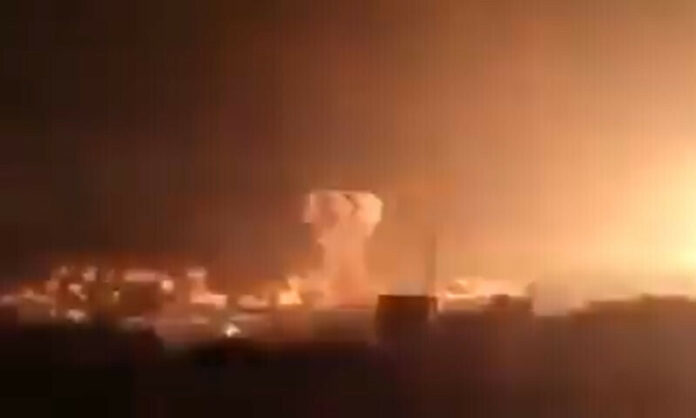
A significant explosion occurred on Tuesday in a Russian town east of Moscow, where a weapons depot is situated, according to local media and Telegram channels affiliated with Russia‘s security services.

This incident led to the evacuation of multiple villages. Local officials declared a state of emergency in the Vladimir region, where unverified footage shared on Telegram depicted a massive fireball and thick smoke billowing into the sky.

The defense ministry attributed the fire to a violation of safety protocols, which resulted in the detonation of ammunition stored in a warehouse. Preliminary reports indicated that there were no injuries, the ministry stated.

Alexander Avdeev, the governor of Vladimir, confirmed that an explosion took place in the Kirzhach district, with emergency responders currently on-site, although he did not specify the target.

Baza, a Telegram channel linked to security services, reported that at least 10 to 11 explosions were recorded, prompting the dispatch of firefighters from nearby regions to manage the fire.

The Kirzhach district administration announced on Telegram that evacuations were in progress in the villages of Barsovo and Mirniy.

Emergence of a new Chinese non-nuclear bomb raises international military apprehensions

0
non-nuclear hydrogen bomb china

In a controlled field experiment carried out by Chinese scientists, a two-kilogram explosive device produced a fireball that exceeded 1,000 degrees Celsius and lasted for more than two seconds—15 times longer than a similar explosion from TNT.

This device, developed by the 705 Research Institute of the China State Shipbuilding Corporation (CSSC), a prominent entity in underwater weaponry, is characterized as a non-nuclear hydrogen bomb. It utilizes a magnesium-based solid-state hydrogen storage material known as magnesium hydride.

The findings of this test, published in a peer-reviewed article in the Chinese-language Journal of Projectiles, Rockets, Missiles, and Guidance, represent a significant advancement in China’s military technology, raising concerns about its potential uses and the wider implications for global security.

Although the device does not utilize nuclear materials, its capacity to inflict prolonged thermal damage positions it as an innovative asset in contemporary warfare, leading analysts to evaluate its significance in China’s strategic objectives.

The explosive device functions through a distinct mechanism that differentiates it from conventional chemical or nuclear weapons. Magnesium hydride, a silvery powder, can store hydrogen at a density much higher than that of traditional pressurized tanks, a characteristic that was initially investigated for clean energy solutions such as fuel cells in remote areas.

When activated by a conventional explosive, the magnesium hydride breaks down into micron-sized particles, triggering a rapid thermal decomposition that releases hydrogen gas. This gas then combines with the surrounding air and ignites, resulting in a white-hot fireball capable of melting aluminum alloys.

The test demonstrated a maximum overpressure of 428.43 kilopascals at a distance of two meters, which is approximately 40% of the explosive force of TNT. However, its thermal impact significantly exceeded that of traditional explosives, presenting a novel method for achieving precise destruction across extensive areas.

This technological advancement relies on China’s capacity to address considerable production hurdles related to magnesium hydride. Traditionally, the material’s high reactivity posed challenges for production, with laboratories only able to generate a few grams daily under strict conditions due to the risk of spontaneous combustion when exposed to air.

Recently, a new facility in Shaanxi province, which began operations earlier this year, has successfully increased production to 150 tonnes per year by employing a “one-pot synthesis” technique developed by the Dalian Institute of Chemical Physics. This safer and more economical method has not only facilitated the development of this explosive device but has also paved the way for additional military uses, such as powering fuel cells for submarines and long-endurance drones.

The facility’s production marks a significant transition from limited laboratory experiments to large-scale industrial output, highlighting China’s advancing capabilities in sophisticated materials and its dedication to incorporating clean energy solutions into its military framework.

The creation of this device should be viewed in the context of China’s extensive military modernization initiatives. In recent years, the People’s Liberation Army (PLA) has emphasized technological innovation to bolster its global presence, especially in contested areas like the South China Sea.

The China State Shipbuilding Corporation (CSSC), renowned for its progress in naval and underwater technologies, is central to this strategy. Its 705 Research Institute has a rich history of developing advanced weaponry, including torpedoes and unmanned underwater vehicles (UUVs).

The magnesium hydride device’s lightweight design, coupled with its significant thermal capabilities, indicates its potential for integration into various platforms. For example, a torpedo utilizing this technology could inflict severe heat-based damage on enemy ships or infrastructure, while an unmanned underwater vehicle (UUV) could use it for coastal defense or area denial missions.

Additionally, the device’s compact form factor makes it ideal for targeted strikes against widely dispersed targets, such as supply hubs or troop formations, providing tactical versatility in asymmetric warfare.

To understand the importance of this advancement, it is helpful to compare it with current non-nuclear explosives employed by other nations. The United States, for instance, has utilized thermobaric weapons like the BLU-118/B, which create extreme heat and pressure to obliterate fortified positions and personnel in enclosed areas.

Similarly, Russia’s TOS-1A “Buratino” rocket launcher employs thermobaric munitions with devastating results, especially in urban warfare. While these weapons depend on fuel-air mixtures for extended explosions, the Chinese device’s magnesium hydride offers a more compact and potentially more manageable option.

In contrast to thermobaric weapons that necessitate larger delivery systems, the two-kilogram Chinese device can be launched from smaller platforms, including drones or precision-guided munitions.

Its thermal output can maintain temperatures exceeding 1,000 degrees Celsius for several seconds, surpassing the brief 0.12-second explosion of TNT. This characteristic makes it particularly effective for targets that require prolonged heat exposure, such as fuel depots and communication hubs.

The historical quest for non-nuclear weapons with strategic significance has influenced military strategies globally. During the Cold War, both the United States and the Soviet Union investigated fuel-air explosives and enhanced blast weapons to effectively counter armored units and fortifications without escalating to nuclear conflict.

These initiatives were motivated by the necessity to uphold deterrence while complying with international agreements aimed at limiting nuclear proliferation. China’s recent development aligns with this tradition, providing a weapon that offers considerable destructive capability within the constraints of current arms control agreements.

In contrast to nuclear weapons, which China tested from 1964 until it signed the Comprehensive Nuclear-Test-Ban Treaty in 1996, the magnesium hydride device does not pose a risk of radioactive fallout, making it a legally and politically acceptable option for deployment in various situations. This is consistent with China’s official no-first-use nuclear policy, which prioritizes conventional and technological superiority to achieve strategic goals.

The timing of this test is significant, especially in light of rising geopolitical tensions in the Indo-Pacific region. While some analyses have connected China’s military developments to potential conflicts over Taiwan, the versatility of the magnesium hydride device indicates a wider range of possible applications.

For instance, in a maritime setting, it could be employed to disrupt naval supply routes or incapacitate essential infrastructure along disputed coastlines. Its capability to “easily achieve uniform destruction of targets across extensive areas,” as noted by Wang Xuefeng’s team, further highlights its potential in area denial strategies, aimed at preventing adversaries from accessing critical terrain or resources.

This capability would hold significant importance in the South China Sea, where China has strengthened its artificial islands and increased its naval presence to assert its territorial claims. By incorporating such a weapon into its military arsenal, China could improve its power projection capabilities without crossing into nuclear territory.

In addition to its direct military uses, the advancement of this technology signifies China’s strategic commitment to dual-use innovations. The potential of magnesium hydride as a clean energy source for submarines and drones underscores the PLA’s focus on sustainable military solutions.

In March, China revealed a 7.2 percent rise in its defense budget, totaling $249 billion, with an emphasis on integrating renewable energy sources such as solar, wind, and hydrogen into its military operations. This move aligns with global trends, as countries like the United States investigate hydrogen fuel cells for next-generation naval vessels and unmanned systems.

For example, the U.S. Navy’s XLUUV (Extra Large Unmanned Underwater Vehicle) initiative aims to create long-endurance submarines powered by alternative energy sources, mirroring China’s interest in magnesium hydride for similar applications. The ability to produce this material on a large scale provides China with a competitive advantage, not only in weaponry but also in the wider race for energy innovation.

However, despite its notable capabilities, the magnesium hydride device has its drawbacks. Its blast pressure, which is only 40% that of TNT, makes it less effective against heavily armored targets or bunkers, where kinetic force is essential.

The dependence on thermal damage raises concerns regarding its efficacy in challenging conditions, such as strong winds or rain, which may disperse the hydrogen gas prior to ignition. Additionally, although the Shaanxi facility has made strides in overcoming production hurdles, the long-term scalability and safety of magnesium hydride remain in question.

Previous incidents, including a 2019 explosion at a hydrogen startup in France, highlight the dangers associated with handling such reactive substances. The Chinese research paper notably lacks information about the origin of the magnesium hydride utilized in the experiment, hinting at potential sensitivities related to its production or supply chain. These omissions necessitate caution when evaluating the device’s immediate operational readiness.

The global reaction to this advancement will likely center on its ramifications for arms control and regional stability. In contrast to nuclear weapons, which are governed by treaties like the Non-Proliferation Treaty, non-nuclear explosives encounter fewer regulatory limitations.

Nevertheless, the destructive capacity of the magnesium hydride device could ignite discussions about the necessity for new regulations to oversee advanced conventional weapons. For the United States, this test serves as a stark reminder of China’s advancing technological capabilities and its intent to challenge Western supremacy in military innovation.

The Pentagon’s 2024 report on China’s military capabilities indicated that the People’s Liberation Army is increasing its nuclear stockpile to over 600 warheads, yet the emergence of non-nuclear alternatives like this device suggests a complementary strategy to enhance its military capabilities.

In reaction, the U.S. may expedite its own investigations into high-energy explosives or countermeasures, including sophisticated thermal protection for vehicles and infrastructure.

Looking forward, the magnesium hydride device has the potential to alter both tactical and strategic considerations in contemporary warfare. Its compact design and extended thermal effects render it a flexible asset for offensive and defensive maneuvers, especially in maritime and asymmetric engagements.

However, its introduction also highlights the difficulties of sustaining technological dominance in a time of swift innovation. For China, this test exemplifies its capability to convert scientific advancements into military uses, bolstering its goal to excel in essential technologies.

For the United States and its allies, this raises a critical question: how can they counter a weapon that merges the accuracy of traditional explosives with the destructive heat of a chemical blaze? As the global arms race progresses, the solutions to this dilemma will influence the future of conflict and deterrence in an increasingly intricate world.

US Army vision 2030 reveals vulnerabilities of potential adversaries

0
US service members

The US Army is experiencing a significant transformation as it gears up for future combat scenarios, with a well-defined vision for its divisions by 2030. This vision, outlined in a series of strategic graphics released by the Army, presents a force that is interconnected, technologically sophisticated, and prepared to excel in multi-domain operations by 2040.

These graphics, unveiled as part of a larger conversation on military modernization, illustrate the Army’s strategy to incorporate state-of-the-art technologies and innovative tactics to secure a competitive advantage over its adversaries. The emphasis is on developing a division that can effortlessly link its units, utilize advanced systems, and operate with unmatched speed and effectiveness.

This transformation is propelled by the swift evolution of digital warfare, where dominance in information, autonomous systems, and resilient networks are becoming as vital as conventional firepower.

At the core of the Army’s 2030 vision is the concept of a network-centric division. This framework prioritizes a highly integrated force where every component, from individual soldiers to division headquarters, functions as part of a cohesive system.

The division is structured into several essential functional groups: command and control, protection, fires, aviation, and sustainment. Command and control, commonly known as C2, forms the foundation of this organization, enabling swift decision-making and effective communication across all tiers.

The illustrations depict multiple C2 nodes, indicating a distributed command strategy that enhances survivability by eliminating single points of failure. Protection units are designed to address various threats, including aerial assaults and electronic warfare, while fire units are tasked with delivering long-range precision strikes to neutralize enemy targets.

Aviation assets, including helicopters and drones, play a vital role in providing support for reconnaissance, mobility, and close air support. Sustainment units are essential for enabling the division to function autonomously for extended durations through effective logistics networks.

A significant aspect of this network-centric strategy is the incorporation of cutting-edge communication technologies. The visuals demonstrate the application of satellite communications (SATCOM) to ensure global connectivity, allowing units to stay connected even in contested areas.

Furthermore, the Army intends to utilize a hybrid cloud combined with a tactical data fabric, a system engineered to process and share information in real-time across the battlefield. This capability facilitates quicker decision-making and improved coordination among units, as data from sensors can be swiftly analyzed and distributed to the relevant forces.

The emphasis on multi-orbit satellite constellations is also noteworthy, as they provide path diversity to sustain communications even if certain satellites experience disruptions. Another significant feature is the improved sensor-to-shooter linkage, which allows the division to swiftly identify and engage targets with accuracy, minimizing the time from identification to action.

The battlefield technologies envisioned for the division in 2030 aim to enhance both maneuverability and lethality, ensuring the force can adapt to evolving threats while maintaining a decisive advantage. One of the highlighted systems in the visuals is the Forward Based Laser Platform Directed Energy Weapon (FBLP DEW).

This system marks a substantial advancement in military technology, utilizing directed energy to accurately and swiftly engage targets. In contrast to conventional munitions, directed energy weapons employ concentrated energy, such as lasers, to neutralize or incapacitate threats.

The Forward Based Laser Platform (FBLP) Directed Energy Weapon (DEW) is likely designed to counter aerial threats, including drones and missiles, providing a cost-effective and environmentally friendly alternative to traditional air defense systems. The Army has been investigating directed energy technologies for several years, with the U.S. Army Space and Missile Defense Command spearheading initiatives to incorporate these systems into active units.

According to a report from 2023, the command highlighted that directed energy weapons could offer a “near-infinite magazine” for addressing threats, constrained only by the power supply rather than the availability of ammunition.

Another vital component is the Active Protection System (APS), which is part of the Forward Based Laser Platform. The APS is engineered to shield vehicles from incoming threats, such as anti-tank missiles or rocket-propelled grenades, by detecting and intercepting them prior to impact.

This system employs sensors to monitor incoming projectiles and activates countermeasures, including small explosives or electronic jamming, to mitigate the threat. The Army has been evaluating APS technologies for over a decade, with systems like the Trophy APS already operational on M1 Abrams tanks.

In a 2018 evaluation conducted by the Army, the Trophy system successfully intercepted all 15 incoming threats during live-fire exercises, underscoring its effectiveness in combat situations.

The combination of Active Protection Systems (APS) with a laser platform indicates a comprehensive defense strategy that merges conventional countermeasures with advanced directed energy technology, thereby improving the survivability of vehicles.

The visuals also highlight the implementation of robotic systems, particularly focusing on the charging of robots through microgrids. These microgrids are compact, localized power networks capable of functioning independently from the main grid, ensuring a dependable energy supply for autonomous systems deployed in the field.

The Army has been prioritizing investments in robotic technologies to mitigate risks to human soldiers. Systems like the Squad Multipurpose Equipment Transport (SMET) are already operational, assisting infantry units by transporting supplies and equipment.

The vision for 2030 includes robot charging, reflecting an increasing dependence on unmanned systems for various roles such as reconnaissance, logistics, and direct combat, which enables the division to exert power while reducing casualties.

Aviation is integral to the division’s operations, with assets like the Joint Air Defense Command (JADC) orchestrating air defense and support missions. The visuals illustrate helicopters and drones collaborating with ground forces, delivering real-time intelligence and fire support.

The CH-47 Chinook, a heavy-lift helicopter, is renowned for its slingload capabilities, enabling it to transport substantial equipment and supplies to isolated areas. Since the 1960s, the CH-47 has been a vital component of Army aviation, with its latest model, the CH-47F Block II, providing enhanced performance and increased payload capacity.

As noted in a 2022 Army fact sheet, the CH-47F can carry cargo weighing up to 24,000 pounds and achieve a maximum speed of 170 knots, making it exceptionally suited for supporting prolonged operations in challenging environments.

The incorporation of human-machine interaction (H-MI) is a fundamental aspect of the 2030 division, reshaping the soldier’s role on future battlefields. The visuals highlight various H-MI enablers, such as standardized modular computing systems that facilitate seamless data processing and sharing among soldiers.

These systems are engineered for interoperability across multiple platforms, ensuring that soldiers can access essential information regardless of their equipment. Additionally, non-line-of-sight munitions (NLOS) are emphasized, allowing soldiers to engage targets obscured by terrain or structures.

The Army has been advancing NLOS capabilities for several years, exemplified by systems like the Precision Strike Missile (PrSM), which is designed to target locations up to 300 miles away. A 2023 test of the PrSM confirmed its capability to accurately strike a target at 180 miles, highlighting its potential to revolutionize long-range combat operations.

Electronic warfare capabilities are a significant priority, particularly with the development of man-portable electronic warfare systems (EW MMP) that enable infantry units to interfere with enemy communications and sensor operations. These systems are designed to be lightweight and easily transportable, allowing soldiers to take them into the field and deploy them as necessary.

In light of increasing threats from adversaries such as Russia and China, who have made substantial investments in electronic warfare technologies, the Army has been enhancing its electronic warfare capabilities.

For instance, Russia’s Krasukha-4 system, which has been widely utilized in conflicts like the war in Ukraine, is capable of jamming radar and communication systems from distances of up to 190 miles, presenting a formidable challenge to U.S. forces. The Army’s focus on EW MMP systems is intended to equip soldiers with the means to disrupt enemy operations at the tactical level in response to such threats.

Logistical support is another vital component of the H-MI framework, with tethered unmanned aerial systems (UAS) offering continuous surveillance and reconnaissance capabilities. These systems are linked to a ground station via a tether, which supplies both power and data connectivity, enabling them to remain airborne for prolonged durations.

The Army has been evaluating tethered UAS for several years, with models like the Hoverfly Tethered UAS already deployed for perimeter security and intelligence collection. A 2021 Army assessment revealed that tethered UAS could function continuously for up to 72 hours, providing a considerable advantage over conventional drones that have limited battery life.

The tactical scenarios illustrated provide insight into the operational strategies of the 2030 division in combat situations. The visuals depict a division making progress against enemy forces by leveraging a mix of ground, aerial, and robotic resources to fulfill its mission.

Key challenges such as enemy electronic warfare and cyber threats are emphasized, with the division implementing sophisticated countermeasures to sustain its operational pace. The Mobile and Survivable Command Post (MASCP) is pivotal in these scenarios, serving as a robust command center that can swiftly relocate to evade detection.

To ensure uninterrupted communication, the division utilizes redundant network pathways, which allow for continued situational awareness and coordination even if some communication channels are compromised.

Historically, the U.S. Army has evolved in response to technological and strategic changes to preserve its battlefield superiority. During the Cold War, the Army formulated the AirLand Battle doctrine to address the Soviet Union’s numerical advantage, focusing on rapid maneuvers and deep strikes to disrupt enemy operations.

The 1991 Gulf War showcased the success of this strategy, as coalition forces employed advanced technology and coordination to secure a decisive victory over Iraqi troops. The 2030 division builds upon this historical foundation, integrating lessons learned from recent engagements in Iraq and Afghanistan, where the Army confronted asymmetric threats such as improvised explosive devices and insurgent tactics.

The emphasis on network-centric warfare and autonomous systems indicates the Army’s understanding that future conflicts are expected to encompass both conventional and unconventional threats, necessitating a force that is both flexible and adaptable.

In summary, the U.S. Army’s strategy for its 2030 division marks a significant advancement in military modernization. It integrates network-centric operations, cutting-edge technologies, and human-machine collaboration to forge a force capable of achieving battlefield supremacy by 2040.

The focus on connectivity, survivability, and lethality guarantees that the division can function effectively in contested areas, addressing threats that range from enemy electronic warfare to cyber assaults. Innovations such as the FBLP DEW, APS, and NLOS munitions illustrate the future of warfare, where precision and adaptability will be crucial for success.

As the Army progresses in developing these capabilities, it is poised to set a benchmark for military forces globally, potentially prompting adversaries to hasten their own modernization initiatives. Nonetheless, challenges persist regarding the Army’s capacity to deploy these technologies on a large scale, considering the complexities involved in integrating such advanced systems throughout a vast force.

Will the Army manage to strike a balance between innovation and cost-effectiveness, or will the financial implications of this transformation hinder its ability to sustain a decisive advantage? Only time will reveal the answer, but the vision presented in these plans provides a compelling guide for the future of American military strength.

Philippines acquires India’s BrahMos missile system

0
Brahmos missile

India has successfully delivered a second batch of BrahMos supersonic cruise missiles to the Philippines, representing a notable advancement in a $375 million defense agreement established in January 2022. This shipment, which arrived by sea, follows the first delivery made in April 2024 and highlights India’s expanding influence as a global arms supplier.

For the Philippines, a country that has traditionally depended on U.S. military assistance, the procurement of these sophisticated weapons indicates a strategic shift towards diversifying its defense alliances.

The BrahMos system, which can hit targets located 290 kilometers away at speeds approaching three times the speed of sound, provides Manila with an enhanced deterrent capability in the increasingly unstable Indo-Pacific region. While this development stems from a bilateral arrangement, it has wider implications for regional security and the changing landscape of the global arms market.

The BrahMos missile, developed through a collaboration between India’s Defence Research and Development Organisation (DRDO) and Russia’s NPO Mashinostroyeniya, is a highly adaptable and powerful weapon. Named after the Brahmaputra and Moskva rivers, it reaches speeds of Mach 2.8, or approximately 3,400 kilometers per hour, making it one of the fastest supersonic cruise missiles available.

With a range of 290 kilometers, it can target locations well beyond the horizon, and its capability to be launched from various platforms—land, sea, air, or submarines—enhances its operational versatility. The missile is equipped with a 200-kilogram warhead, allowing for accurate strikes against both maritime and land targets.

In contrast to subsonic missiles like the U.S.-made Harpoon, the BrahMos’s high speed significantly shortens the response time for enemy defenses, making interception exceedingly challenging. Its low-altitude flight path, which hovers just above the ocean surface, further boosts its stealth and effectiveness against naval targets.

For the Philippines, which maintains a relatively small navy and encounters difficulties in monitoring its extensive maritime territory, the BrahMos missile system significantly enhances its coastal defense capabilities.

The recent delivery includes components for the second of three missile batteries outlined in the 2022 contract, featuring mobile launchers mounted on Tatra 6×6 vehicles, command-and-control systems, and integrated logistics support.

The Philippine Marine Corps, which received the initial batch last year, has already participated in comprehensive training in India to operate and maintain the system. Unlike the standard configuration utilized by the Indian military, which consists of three launchers per battery, the Philippine version has been modified to include two launchers per battery, specifically designed for the tropical conditions of the archipelago.

This adaptation demonstrates the practical considerations necessary for deploying advanced weaponry in a country with limited defense infrastructure. The training, led by Indian experts, emphasized both operational tactics and long-term maintenance, ensuring that Filipino personnel can independently sustain the system.

The transfer of knowledge is a vital component of the agreement, as it enables the Philippines to incorporate the BrahMos into its overall defense strategy without becoming overly dependent on foreign assistance.

To grasp the importance of this acquisition, one must recognize the distinct challenges the Philippines faces. The nation comprises over 7,000 islands, covering a vast maritime area, much of which is situated within the contested South China Sea.

Manila has been actively pursuing the modernization of its military forces, which have historically depended on outdated technology and constrained budgets. The BrahMos system, particularly its shore-based anti-ship variant, empowers the Philippines to exert influence from strategic coastal areas like Palawan and Luzon, effectively covering vital maritime routes.

From these strategic points, the missile’s range of 290 kilometers can dominate significant portions of the Philippines’ exclusive economic zone, serving as a credible deterrent against potential naval threats.

The system’s mobility, facilitated by truck-mounted launchers, allows for swift repositioning, complicating efforts for adversaries to anticipate or counter its locations. This advancement represents a significant improvement for a military that has faced challenges in asserting its presence in contested waters.

When comparing the BrahMos to other regional missile systems, its technological superiority becomes evident. The U.S. Harpoon, a staple in Western navies, has a range of approximately 120 kilometers and a subsonic speed of around 850 kilometers per hour.

Although reliable and widely used, the Harpoon is less effective against contemporary air defense systems due to its slower speed and predictable trajectory. In contrast, China’s YJ-12, another supersonic anti-ship missile, offers a range and speed comparable to the BrahMos but is primarily launched from naval and aerial platforms, which limits its versatility compared to the multi-platform capabilities of the BrahMos.

Norway’s Naval Strike Missile (NSM), utilized by several Southeast Asian navies, is known for its stealth and accuracy, though it has a limited range of approximately 185 kilometers and operates at subsonic speeds.

In contrast, the BrahMos missile stands out due to its impressive speed, extended range, and adaptability, providing the Philippines with a capability to confront larger and more sophisticated naval forces. This acquisition elevates Manila’s status among regional military powers, enabling it to project military strength in ways that were previously not possible.

The choice to procure BrahMos from India, instead of depending solely on traditional suppliers like the United States, indicates a strategic pivot. The Philippines has maintained a long-standing alliance with the U.S., supported by a mutual defense treaty and the presence of American troops under the Enhanced Defense Cooperation Agreement. Recent joint military exercises and the introduction of U.S. Typhon missile systems in the Philippines highlight the robustness of this alliance.

However, Manila’s decision to invest in Indian defense technology reflects a strategic intent to diversify its military resources, thereby decreasing reliance on a single supplier. The BrahMos contract, valued at $375 million, is competitively priced compared to Western alternatives, delivering high performance at a more affordable cost.

Additionally, India’s readiness to offer training and logistical assistance aligns with the Philippines’ requirements for sustainable, long-term defense solutions. This decision does not indicate a deterioration of U.S.-Philippine relations but rather represents a practical strategy to enhance the country’s defense capabilities.

Russia’s participation in the BrahMos program introduces additional complexity to the agreement. This missile, developed through a collaborative effort, utilizes Russian propulsion technology and guidance systems, while India has contributed to its airframe and electronic components.

Currently, approximately 83% of BrahMos components are produced domestically in India, reflecting the nation’s commitment to achieving defense self-sufficiency. Nevertheless, the involvement of Russia raises concerns for the Philippines, which has traditionally refrained from acquiring Russian military equipment due to geopolitical factors, about how it will manage this partnership.

The hybrid design of the BrahMos enables Manila to access technology derived from Russia indirectly, allowing it to avoid direct transactions with Moscow while still benefiting from a reliable system. This situation underscores the intricate compromises countries must navigate in the global arms market, balancing their technological requirements with diplomatic realities.

For India, this deal exemplifies its capacity to utilize international collaborations to enhance its defense exports, aligning with its “Make in India” initiative.

The delivery of BrahMos is part of a larger trend of militarization in the Indo-Pacific region, where countries are striving to strengthen their defenses in response to evolving power dynamics. For example, Vietnam is reportedly close to finalizing a $700 million agreement to acquire BrahMos coastal batteries, following a similar strategy as the Philippines.

Indonesia has also shown interest, with discussions for a $450 million deal gaining traction after a high-level delegation visited BrahMos Aerospace in January. These developments indicate the formation of a loose coalition among Southeast Asian nations, supported by Indian technology, aiming to address regional security challenges.

In contrast to alliances led by Western nations, which frequently involve political conditions, India’s strategy focuses on providing cost-effective, high-impact systems without requiring explicit ideological alignment. This adaptability makes the BrahMos missile an appealing choice for nations that are reluctant to fully commit to either the U.S. or China.

The historical background of the BrahMos program sheds light on its importance. Initiated in 1998, the collaboration between India and Russia aimed to develop a missile capable of competing with the world’s best. Although early models encountered technical difficulties, by the 2000s, the BrahMos had demonstrated its reliability through rigorous testing.

India’s military has successfully deployed the missile on various platforms, including warships, submarines, and Su-30 fighter jets. Its success led India to pursue export opportunities, with the Philippines becoming the first international customer in 2022.

The missile’s export potential increased after India became a member of the Missile Technology Control Regime in 2016, which relaxed restrictions on the sale of long-range systems. Currently, BrahMos Aerospace is working on a next-generation variant, the BrahMos-NG, which is expected to feature a lighter design and compatibility with smaller platforms.

Additionally, a hypersonic variant, the BrahMos-II, is under development, which could significantly enhance the missile’s capabilities with speeds surpassing Mach 5. These developments reflect India’s ambition to lead in missile technology, influencing its position as a defense supplier.

For the Philippines, acquiring the BrahMos marks a significant step in its military modernization initiatives. The armed forces, historically underfunded, have faced challenges in replacing outdated equipment inherited from the U.S. and other allies.

The 2012 standoff at Scarborough Shoal with China highlighted Manila’s weaknesses, leading to efforts to bolster its maritime defenses. The BrahMos agreement, along with plans to procure submarines and additional missiles, demonstrates a commitment to establishing a credible deterrent.

General Romeo Brawner Jr., the head of the Armed Forces of the Philippines, has highlighted the necessity for advanced systems to address aggressive maritime activities, although securing funding poses a significant challenge. The BrahMos missile, known for its affordability and substantial impact, presents a viable option for a resource-limited nation, serving as a force multiplier that strengthens Manila’s strategic capabilities.

The implications of the BrahMos agreement extend beyond national borders. Southeast Asia is currently experiencing a discreet yet intense arms race, fueled by maritime disputes and the imperative to safeguard essential trade routes.

Countries such as Vietnam, Indonesia, and Malaysia, which have overlapping territorial claims in the South China Sea, are actively modernizing their naval forces and missile inventories. Australia, a crucial ally of the U.S., has made significant investments in long-range strike capabilities, including hypersonic missiles as part of the AUKUS agreement. While the spread of advanced weaponry may stabilize individual nations, it also poses a risk of escalating tensions in an already precarious region.

The introduction of the BrahMos, capable of shifting local power dynamics, may encourage other nations to hasten their own military acquisitions, potentially triggering a wave of increased defense spending. The impact of this development on deterrence versus instability remains uncertain.

India’s emergence as a defense exporter adds another layer to this narrative. Once dependent on foreign military supplies, India has made substantial investments in domestic production, with BrahMos standing out as a notable success.

Samir V. Kamat, the chief of the DRDO, has forecasted that India’s defense exports could reach $6 billion by 2028, driven by the demand for systems like BrahMos. Interest from nations in the Middle East, Africa, and South America highlights the missile’s international appeal.

The acquisition of BrahMos missiles by the Philippines marks a significant turning point for both countries. For Manila, this development signifies a move towards greater military independence, empowering it to confidently uphold its maritime rights. For India, it reinforces its status as a dependable defense ally, demonstrating its competitiveness in the global arms market.

This agreement underscores the complex relationship between technology, geopolitics, and regional security, illustrating how a single missile system can alter alliances and strategic approaches. As Southeast Asia faces a period of uncertainty, the BrahMos missile acts as both a protective measure and a statement, indicating that even smaller nations can exert considerable influence.

However, as more nations gain access to such advanced capabilities, the fragile equilibrium in the region may be at risk. Will the proliferation of sophisticated missiles like BrahMos lead to stability or spark new tensions? Only time will reveal the outcome.

China warns countries against trade agreements with the United States that may harm its interests

0

On Monday, China accused the United States of misusing tariffs and cautioned other nations against entering into broader economic agreements that would disadvantage China, intensifying its rhetoric amid an escalating trade conflict between the two largest economies in the world. The Commerce Ministry of Beijing stated that it would staunchly oppose any agreements made at China’s expense and would respond with decisive and reciprocal measures.

This statement came in reaction to a Bloomberg report, which referenced sources familiar with the situation, indicating that the Trump administration is preparing to exert pressure on countries seeking tariff reductions or exemptions from the U.S. to limit their trade with China, potentially including financial sanctions. President Donald Trump had previously suspended extensive tariffs he announced on numerous countries on April 2, with the exception of those targeting China, which has been singled out for the most significant levies.

In a series of actions, the U.S. has increased tariffs on Chinese imports to 145%, leading China to impose retaliatory tariffs of 125% on American goods, effectively creating trade barriers between the two nations. Recently, China indicated that it would not further increase its overall tariff rates.

A spokesperson for the ministry remarked, “The United States has exploited tariffs against all trading partners under the guise of ‘equivalence’, while simultaneously compelling all parties to engage in so-called ‘reciprocal tariffs’ negotiations.” The ministry emphasized China’s determination and capability to protect its rights and interests, expressing a willingness to enhance cooperation with all parties involved.

Bo Zhengyuan, a partner at the China-based policy consultancy Plenum, noted, “In reality, no one wants to take sides. Countries that heavily depend on China for investment, industrial infrastructure, technological expertise, and consumption are unlikely to acquiesce to U.S. demands. Many Southeast Asian nations fall into this category.”

Taking a firm approach, Beijing is set to hold an informal United Nations Security Council meeting this week to accuse Washington of intimidation and “casting a shadow over global peace and development efforts” by weaponizing tariffs.

Earlier this month, U.S. Trade Representative Jamieson Greer reported that nearly 50 countries have reached out to him regarding the significant additional tariffs imposed by Trump. Since then, several bilateral discussions on tariffs have occurred, with Japan contemplating an increase in soybean and rice imports during its negotiations with the U.S., while Indonesia plans to boost imports of U.S. food and commodities while reducing orders from other countries.

Caught in the crossfire

Trump’s tariff policies have unsettled financial markets, as investors worry that a major disruption in global trade could lead to a recession. On Monday, Chinese stocks saw a slight increase, showing minimal response to comments from the commerce ministry, although investors remain generally cautious about Chinese assets due to escalating growth risks.

The Trump administration has also been working to limit Beijing’s advancements in the development of sophisticated semiconductor chips, which it claims could have military applications. Last week, it introduced port fees on vessels built in China to curtail the country’s shipbuilding dominance.

Nvidia, a leading AI chip manufacturer, announced last week that it would incur $5.5 billion in charges due to the administration’s restrictions on AI chip exports. Meanwhile, China’s President Xi Jinping visited three Southeast Asian nations last week to strengthen regional relationships, urging trade partners to resist unilateral bullying.

Beijing has stated that it is “tearing down walls” and broadening its network of trading partners amid the ongoing trade dispute. The stakes are particularly high for Southeast Asian countries caught in the middle of the Sino-U.S. tariff conflict, especially considering the significant two-way trade within the ASEAN bloc with both China and the United States.

Economic ministers from Thailand and Indonesia are currently visiting the United States, with Malaysia expected to join them later this week to engage in trade discussions. Six Southeast Asian nations have faced tariffs ranging from 32% to 49%, posing a threat to their trade-dependent economies, which have previously benefited from investments affected by tariffs imposed on China during Trump’s first term.

According to China’s customs agency, ASEAN is China’s largest trading partner, with total trade reaching $234 billion in the first quarter of 2025. Additionally, trade between ASEAN and the United States amounted to approximately $476.8 billion in 2024, making the U.S. the fourth-largest trading partner for the regional bloc.

In an article published in Vietnamese media, Xi remarked, “There are no winners in trade wars and tariff wars,” without specifically referencing the United States.

Hegseth reportedly disclosed classified Yemen war strategies during a second conversation on Signal

0
U.S. Defense Secretary Pete Hegseth

U.S. Defense Secretary Pete Hegseth disclosed information regarding a March attack on Yemen‘s Iran-aligned Houthis in a messaging group that included his wife, brother, and personal attorney, as reported by a source familiar with the situation to Reuters on Sunday.

The emergence of a second Signal chat raises further concerns about Hegseth’s use of an unclassified messaging platform to communicate sensitive security information, particularly as he faces scrutiny following the dismissal of senior officials from the Pentagon last week amid an internal leak investigation.

In this second chat, Hegseth shared information about the attack that echoed details previously published by The Atlantic magazine. This earlier disclosure occurred after the magazine’s editor-in-chief, Jeffrey Goldberg, was inadvertently added to a separate Signal chat involving top national security officials from President Donald Trump’s administration, leading to an embarrassing situation.

According to the anonymous source, the second chat comprised around a dozen participants and was established during Hegseth’s confirmation process to address administrative matters rather than intricate military strategies. The conversation included specifics about the timing of the airstrikes.

Hegseth’s wife, Jennifer, a former producer for Fox News, has participated in sensitive meetings with foreign military officials, as evidenced by publicly available images from the Pentagon. During a March meeting with his British counterpart at the Pentagon, she was observed seated behind him. Hegseth’s brother serves as a liaison to the Pentagon for the Department of Homeland Security.

The Trump administration has taken a strong stance against leaks, a campaign that Hegseth has actively supported within the Pentagon. Pentagon spokesperson Sean Parnell claimed, without providing evidence, that the media was “enthusiastically taking the grievances of disgruntled former employees as the sole sources for their article.”

The media, which has shown a strong aversion to Trump, remains fixated on undermining anyone who supports President Trump’s initiatives. “We have accomplished a great deal for the American warfighter and will not waver,” Parnell stated on X.

White House spokesperson Anna Kelly remarked that “recently dismissed ‘leakers’ are distorting the truth to mend their bruised egos and sabotage the President’s agenda.”

TUMULTUOUS MOMENT FOR HEGSETH

Democratic lawmakers have asserted that Hegseth should no longer retain his position. “We continue to uncover how Pete Hegseth has endangered lives,” Senate Minority Leader Chuck Schumer posted on X. “Yet Trump remains too feeble to dismiss him. Pete Hegseth must be terminated.”

Senator Tammy Duckworth, an Iraq War veteran who sustained serious injuries in 2004, stated that Hegseth “must resign in disgrace.”

A U.S. official at the Pentagon expressed disbelief that Hegseth could maintain his role following the latest developments.

This news follows the recent dismissal of Dan Caldwell, one of Hegseth’s top advisers, who was removed from the Pentagon after being implicated in a leak investigation at the Department of Defense.

While Caldwell may not be as prominent as other senior Pentagon figures, he has been instrumental for Hegseth and was designated as the Pentagon’s liaison by the Secretary in the initial Signal chat.

“We are extremely disheartened by how our service at the Department of Defense concluded,” Caldwell posted on X on Saturday. “Unnamed Pentagon officials have tarnished our reputation with unfounded accusations as we departed.”

In the wake of Caldwell’s exit, less-senior officials Darin Selnick, who recently took on the role of Hegseth’s deputy chief of staff, and Colin Carroll, who served as chief of staff to Deputy Defense Secretary Steve Feinberg, were placed on administrative leave and subsequently terminated on Friday.

Russia has deployed a new North Korean rocket system in Ukraine

0
North Korean-made multiple rocket launch systems

Russia has been confirmed to be utilizing multiple rocket launch systems manufactured in North Korea in its ongoing conflict with Ukraine.

Ukrainian journalist Yurii Butusov shared intercepted video evidence that displays a North Korean M1991 240mm multiple rocket launcher (MRL) located within a Russian military facility.

The launcher appeared to be undergoing modifications, including the addition of protective screens designed to defend against Ukrainian FPV drone strikes.

The M1991 can launch 240mm rockets with a range of 40 to 60 kilometers. It is equipped with 22 tubes mounted on the back of a truck chassis, allowing it to deliver a substantial volume of fire across a broad area, making it particularly effective against fortified positions and large troop concentrations.

This represents the first visual evidence of the M1991 being used by Russian forces, although reports of its deployment had emerged as early as November 2024.

While the M1991 lacks the accuracy of more modern precision-guided systems, its significant firepower poses an additional threat to Ukrainian forces, who are already facing North Korean short-range ballistic missiles and artillery.

Japan introduces a railgun designed for maritime use

0
ship-mounted electromagnetic railgun

Japan has unveiled a detailed view of its ship-mounted electromagnetic railgun for the first time.

The image, released by the Japan Maritime Self-Defense Force (JMSDF) on April 18, features Admiral Katsushi Omachi, commander of the Self-Defense Fleet, examining the prototype on the experimental vessel JS Asuka.

This railgun, being developed by Japan’s Acquisition, Technology & Logistics Agency (ATLA), signifies an advanced artillery system that utilizes electromagnetic energy to propel projectiles.

In contrast to traditional chemical-based artillery, it can accelerate projectiles to speeds exceeding 2,500 meters per second, while conventional tank guns typically achieve around 1,750 m/s.

The JMSDF reports that the system’s velocity, energy, and range are adjustable, and the smaller projectiles are designed to be more difficult to detect or intercept. Officials believe the railgun could effectively target air, sea, and land threats with enhanced speed and precision, while also alleviating the logistical demands associated with conventional munitions.

Japan’s Ministry of Defense confirmed the initiation of sea-based railgun trials in 2023, conducted aboard the JS Asuka. Progress has been consistently documented, including video updates and symposiums throughout late 2023 and into 2024.

“The Self-Defense Fleet is actively collaborating with ATLA to facilitate the prompt deployment of critical equipment for the Maritime Self-Defense Force,” stated the JMSDF. “This partnership is vital for enhancing Japan’s future combat readiness and national defense strategy.”

The choice to showcase the system publicly indicates a strong belief in the advancements made with the railgun. Although it is still in the development phase for operational use, Japan is intensifying its initiatives to deploy next-generation weaponry in response to increasing regional tensions and shifting military challenges in the Indo-Pacific.

The JS Asuka, a specialized test platform launched in the 1990s, has facilitated various technology demonstrations, with the railgun system being one of the most sophisticated showcased on the ship.

As the U.S. has recently halted its own railgun program, Japan’s ongoing research could establish it as a frontrunner in the field of operational electromagnetic weapon systems.

Simultaneously, China is also pursuing the development of an electromagnetic railgun.

Images that emerged on Chinese social media in 2018 have resurfaced, revealing the Haiyangshan, a Type 072 III-class landing ship, outfitted with a prototype electromagnetic railgun.

How Trump Retreated from His Commitment to Resolve the Russia-Ukraine Conflict Within 24 Hours

0
President-elect Donald Trump and Ukrainian President Volodymyr Zelenskiy shake hands inside the Notre-Dame de Paris Cathedral ahead of a ceremony to mark its re-opening following the 2019 fire, in Paris, France.

During his campaign, Donald Trump frequently asserted that he could resolve the conflict between Russia and Ukraine “in 24 hours” once he assumed office. However, his rhetoric has shifted since he returned to the presidency.

As various U.S. representatives have engaged in discussions aimed at ending the war, both Trump and his senior officials have adopted a more cautious stance regarding the likelihood of a peace agreement. On Friday, Secretary of State Marco Rubio indicated that the U.S. might soon withdraw from negotiations if no significant progress is made, which seemed to contradict the president’s earlier statements.

It is common for the promises made by presidential candidates to be challenged by the complexities of governance. Nevertheless, Trump’s change in tone is particularly significant given his previous presidency and his long-standing relationships with both Russian President Vladimir Putin and Ukrainian President Volodymyr Zelenskyy.

The White House did not provide an immediate response to a request for comment regarding Trump’s shifting remarks about deadlines.

Here’s an overview of Trump’s changing perspective on the Russia-Ukraine conflict:

‘A very easy negotiation’

MARCH 2023: “There’s a very easy negotiation to take place. But I don’t want to tell you what it is because then I can’t use that negotiation; it’ll never work,” Trump stated during an interview with Fox News Channel’s Sean Hannity, asserting that he could “solve” the war “in 24 hours” if he were back in the White House.

“But it’s a very easy negotiation to take place. I will have it solved within one day, a peace between them,” Trump remarked about the war, which had been ongoing for over a year since Russia’s full-scale invasion of Ukraine in February 2022.

MAY 2023: During a CNN town hall, Trump stated, “They’re dying, both Russians and Ukrainians. I want this to stop. I will make it happen — I will make it happen within 24 hours.”

JULY 2024: In response to Trump’s assertion about resolving the conflict in a day, Russia’s UN Ambassador Vassily Nebenzia remarked to reporters that “the Ukrainian crisis cannot be resolved in just one day.” Following this, Trump campaign spokesperson Steven Cheung emphasized that “a key focus of his second term will be to swiftly negotiate an end to the Russia-Ukraine war.”

AUGUST 2024: At a National Guard Conference, Trump declared, “Before I even step into the Oval Office, shortly after winning the presidency, I will have the devastating war between Russia and Ukraine resolved. I will resolve it very quickly. I don’t want you all going over there. I don’t want you going over there.”

After Trump’s victory in November

DEC. 16, 2024: During a press conference at his Mar-a-Lago club, Trump expressed, “I’m going to try,” when asked if he believed he could broker a deal with Putin and Zelenskyy to end the conflict.

JAN. 8, 2025: In an interview with Fox News Channel, retired Lt. Gen. Keith Kellogg, now serving as Trump’s special envoy to Ukraine and Russia, suggested a 100-day timeline to conclude the war. That Friday marked 100 days since the interview, with the 100th day of Trump’s presidency falling on April 30.

Trump assumes presidency and initiates negotiations

JAN. 31: Trump announces that his administration has engaged in “very serious” discussions with Russia, suggesting that he and Putin may soon take “significant” steps to resolve the ongoing conflict.

“We will be in talks, and I believe we might achieve something substantial,” Trump stated during a press interaction in the Oval Office. “Our goal is to end that war, which would not have begun if I had been president.”

FEB. 12: Trump and Putin converse for over an hour, after which Trump speaks with Zelenskyy. Following these discussions, Trump remarks, “I believe we are on the path to achieving peace.”

FEB. 19: Trump shares on his Truth Social platform that Zelenskyy is acting as a “dictator without elections.” He further claims, “We are successfully negotiating an end to the war with Russia, something that only ‘TRUMP’ and the Trump Administration can accomplish.”

FEB. 28: Trump and Zelenskyy have a tense meeting in the Oval Office. Trump criticizes Zelenskyy for being “disrespectful” and abruptly cancels the signing of a minerals agreement that he claimed would have brought Ukraine closer to resolving the conflict.

Positioning himself as “in the middle” and not favoring either Ukraine or Russia, Trump criticized Zelenskyy’s “hatred” for Putin as an obstacle to peace.

“You can see the animosity he has for Putin,” Trump remarked. “That makes it very challenging for me to broker a deal with that level of animosity.”

Following Trump’s outburst, Zelenskyy was asked to leave the White House by senior Trump advisors. Trump later informed reporters that he desired an “immediate ceasefire” between Russia and Ukraine but expressed skepticism about Zelenskyy’s willingness to pursue peace.

MARCH 3: Trump temporarily halts military assistance to Ukraine to encourage Zelenskyy to pursue peace negotiations.

Trump asserts his 24-hour claim was made in jest

MARCH 14: Trump stated that his assertion as a candidate about resolving the Russia-Ukraine conflict within 24 hours was intended to be “a little bit sarcastic.”

In a clip from an interview with the “Full Measure” television program, Trump explained, “I was being a little bit sarcastic when I said that. What I truly mean is that I would like to see it resolved, and I believe I can be successful in doing so.”

MARCH 18-19: Trump engages in discussions with both Zelenskyy and Putin on consecutive days.

During a call on March 18, Putin informed Trump that he would refrain from targeting Ukraine’s energy infrastructure but declined to agree to a full 30-day ceasefire that Trump had suggested. Following this, Trump took to social media to celebrate the development, stating it came “with an understanding that we will be working swiftly towards a Complete Ceasefire and, ultimately, an END to this very terrible War between Russia and Ukraine.”

In a conversation with Zelenskyy the next day, Trump proposed that Ukraine consider transferring ownership of its power plants to the U.S. to ensure their long-term security. He indicated that the U.S. could provide significant assistance in managing those plants, leveraging its expertise in electricity and utilities, as noted in a statement from Secretary of State Marco Rubio and national security adviser Mike Waltz.

APRIL 14: Trump assigns blame to everyone: Zelenskyy, Putin, and Biden.

“This is a conflict that should never have been allowed to begin. Biden could have prevented it, Zelenskyy could have intervened, and Putin should never have initiated it,” Trump stated to reporters in the Oval Office.

Discussion of moving forward

APRIL 18: Rubio indicates that the U.S. may “move on” from efforts to secure a peace agreement between Russia and Ukraine if no progress is made in the near future.

He made these comments in Paris following significant discussions among U.S., Ukrainian, and European officials, which yielded preliminary steps toward peace and seemed to show some long-awaited advancements. A new meeting is anticipated next week in London, and Rubio hinted that it could be crucial in deciding whether the Trump administration will maintain its involvement.

“We are approaching a point where we need to determine if this is feasible or not,” Rubio told reporters. “If it’s not, then I believe we will simply move on. This is not our conflict. We have other priorities to address.”

He mentioned that the U.S. administration aims to reach a decision “within days.”

Later that day, Trump echoed Rubio’s sentiment at the White House, stating that a Ukraine peace agreement needs to be reached “quickly.”

“I don’t have a specific timeline, but it needs to happen soon. We want to finalize it,” he remarked.

Acknowledging that “Marco is right” about the need for a shift in the negotiation dynamics, Trump refrained from indicating that he is prepared to abandon peace talks.

“Well, I don’t want to say that,” Trump commented. “But we want to see this resolved.”

China’s ambassador to the U.S. urges a resolution to the trade conflict but warns that Beijing is ready to respond if needed

0
Chinese and U.S. flags, in Beijing.

China’s ambassador to the United States, Xie Feng, has called on Washington to find common ground with Beijing and strive for peaceful coexistence, while also cautioning that China is prepared to respond to the intensifying trade conflict.

During a public event in Washington on Saturday, the details of which were shared on the Chinese embassy’s website, Xie warned that tariffs could severely harm the global economy, likening the current situation to the Great Depression and the tariffs enacted by the U.S. in 1930.

Drawing on principles from traditional Chinese medicine, such as the need to balance yin and yang, Xie emphasized that harmony should be the foundation of relations between the two largest economies in the world. “A well-crafted traditional Chinese medicine recipe typically includes various ingredients that complement each other to achieve the best therapeutic outcome,” he stated. “In the same way, the world is large enough to support both China and the U.S. We should aim for peaceful coexistence instead of direct confrontation and assist each other in achieving success, rather than falling into a lose-lose situation.”

The ongoing trade war has nearly paralyzed trade between the two economic giants, with tariffs exceeding 100% in both directions, alongside a range of trade, investment, and cultural restrictions.

On Saturday, China‘s leading shipbuilding association criticized a U.S. proposal to impose port fees on vessels linked to China. While Japan, Taiwan, and other nations are either in discussions or preparing to negotiate with Washington regarding President Donald Trump’s “Liberation Day” tariffs, there are currently no plans for high-level talks with China.

Trump mentioned on Friday that the U.S. is engaging in positive private discussions with China amid the ongoing trade conflict between the two nations. “By the way, we have nice conversations going with China,” he stated to reporters at the White House. “It’s, like, really very good,” although he did not provide further specifics.

China has asserted that the U.S. must demonstrate respect before any negotiations can occur. Xie emphasized that China opposes the trade war and would respond to any country that imposes tariffs against it.