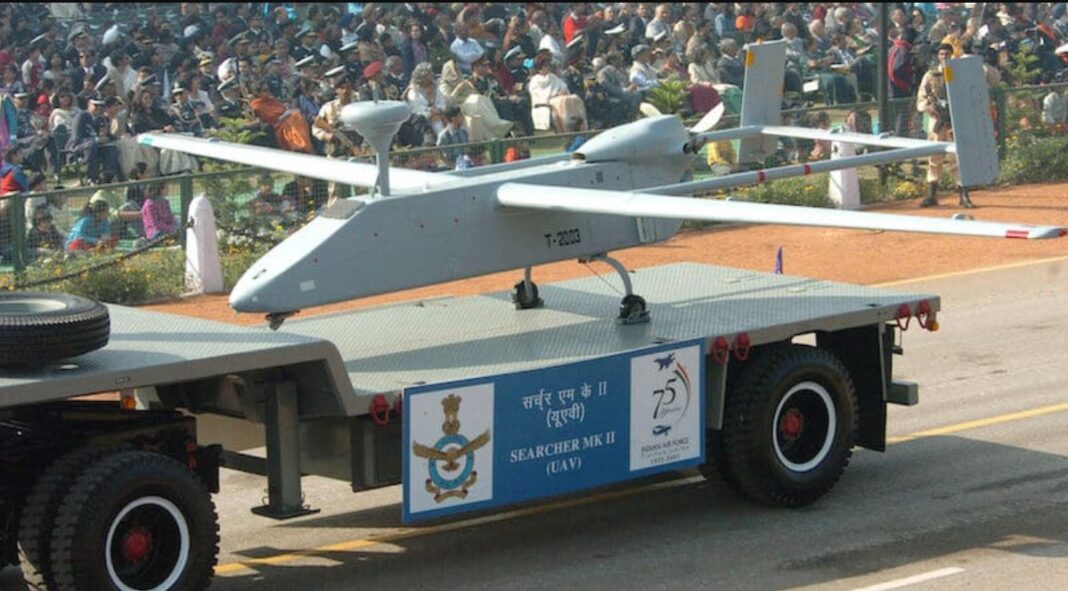
India is rapidly expanding its military drone inventory, but a report in the Indian media has exposed a fundamental contradiction in New Delhi’s Make in India defence strategy.
The Indian Army wants military drones supplied by domestic manufacturers to meet much stricter security requirements, including restrictions on Chinese-origin hardware and software. Yet the proposed security framework for testing vulnerabilities has reportedly remained stuck in the Ministry of Defence approval process for almost 18 months.
Simply because it demands that Chinese hardware and software should not be used in drones being supplied to the military under Make in India. And the drone manufacturers are unwilling to do so, and the Modi govt is playing along. The armed forces suffer. pic.twitter.com/RhMuhTD7xi
— Sushant Singh (@SushantSin) August 18, 2026
The problem is bigger than a delayed government document.
It raises a much more fundamental question:
When India describes a military drone as “Made in India”, how much of the technology inside it is actually Indian?
The answer matters because modern drones are not simply aircraft. They are networks of processors, flight controllers, navigation systems, radio-frequency components, sensors, software and communications equipment.
A drone assembled in India can therefore still remain dependent on foreign technology.
And India’s own reporting has already demonstrated that this is not merely a theoretical concern.
In February 2025, India’s Ministry of Defence cancelled contracts for 400 drones worth about ₹230 crore after concerns emerged over Chinese components and electronics in systems intended for deployment along India’s China border.
That episode should have been a warning.
The latest controversy suggests the underlying problem has not yet been completely resolved.
What Is the Army Waiting For?
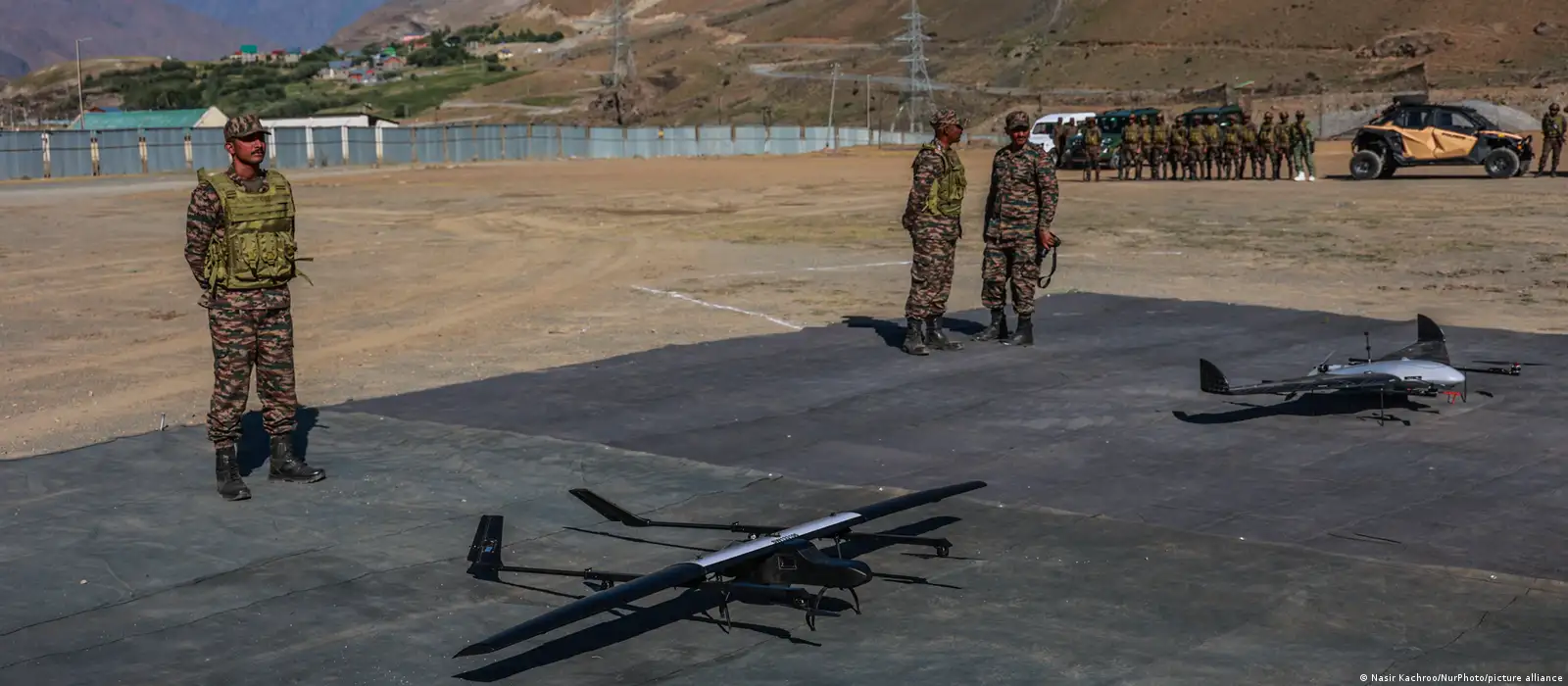
According to the Indian media report, the Army Design Bureau prepared a Framework for Testing Cyber Vulnerabilities in Drones and submitted a revised version to the Ministry of Defence after consultations with industry and other stakeholders.
The framework reportedly addresses:
- hardware vulnerabilities;
- software vulnerabilities;
- foreign-origin electronic components;
- integrated circuits and microchips;
- cyber-security certification;
- supply-chain security;
- firmware;
- communication systems;
- vulnerability testing.
The reported delay is particularly significant because India is simultaneously placing large orders for military drones.
This creates an obvious policy contradiction:
India is accelerating drone procurement while its own security standards for those drones remain under prolonged review.
That is a procurement-management problem, not simply a technology problem.
The Chinese Component Issue Has Already Hit India’s Drone Procurement

The most damaging part of the story for India’s Make in India narrative is that the concern over Chinese components has already resulted in procurement cancellations.
Indian media reported in February 2025 that the Ministry of Defence cancelled three contracts involving 400 drones after concerns over Chinese-origin components and electronics.
The systems were reportedly intended for use along India’s China border.
That episode raises an uncomfortable question for New Delhi:
If domestic manufacturers can supply systems containing components considered a security risk, how effective is the existing certification system?
The answer appears to be that India is still developing the mechanisms necessary to independently verify the entire technological supply chain.
“Made in India” Does Not Necessarily Mean “Indian Technology”
This is the central weakness in the current policy debate.
A military drone can be:
- designed in India;
- assembled in India;
- tested in India;
- marketed by an Indian company;
while still containing foreign-origin:
- processors;
- cameras;
- navigation modules;
- radio systems;
- flight controllers;
- electronic components;
- software.
That does not automatically make the drone insecure.
But it does mean that assembly location alone cannot establish strategic autonomy.
For military drones operating in a contested electromagnetic environment, the critical question is whether the armed forces can independently verify the hardware and software that determine how the aircraft communicates, navigates and processes information.
Why the Army Is Worried About Hardware and Software
A modern UAV contains multiple potential points of failure.
The flight-control system determines how the aircraft responds to commands.
The navigation system determines its position and route.
The communications architecture links the drone to its operators.
The mission computer processes information.
Sensors collect battlefield data.
Software determines how these systems interact.
Consequently, simply inspecting the airframe does not establish whether a drone is secure.
The real security question is buried inside the electronics and software.
That explains why the reported framework is seeking more extensive testing rather than relying exclusively on manufacturer certification.
Operation Sindoor Made the Issue More Urgent—But Also More Complicated
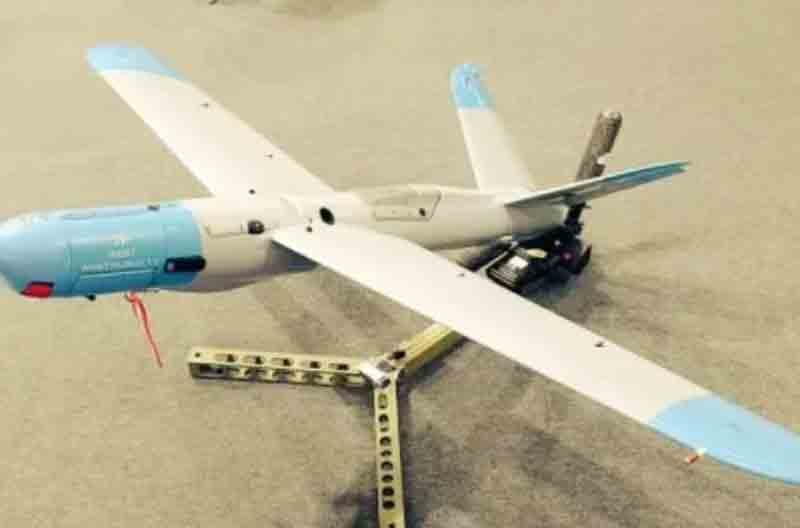
India’s experience during Operation Sindoor has become a major reference point in its subsequent drone procurement.
Indian reporting says the Army conducted trials designed to replicate severe jamming and GPS-spoofing environments before placing more than ₹5,000 crore in orders for indigenous unmanned systems.
The procurement process reportedly included screening for Chinese-origin components.
This is important because it demonstrates that the Army itself recognizes that electronic resilience and supply-chain security are separate but interconnected issues.
A drone can be domestically manufactured and still fail if:
- its navigation is disrupted;
- its communications link is compromised;
- its software behaves unpredictably;
- its electronics are vulnerable to electronic warfare.
The real challenge is therefore not simply producing more drones.
It is producing drones that remain useful in a contested electronic environment.
India Is Buying More Drones While Still Building the Security Architecture
This is where the story becomes particularly revealing.
Indian reporting says the Army has moved toward more than ₹5,000 crore worth of orders for indigenous drones after battlefield-oriented testing. Those trials reportedly included heavy jamming and spoofing conditions and screening for Chinese-origin components.
At the same time, the broader security framework is reportedly still awaiting approval.
This creates two parallel tracks:
Procurement Track
Buy and induct more drones quickly.
Security Track
Develop and approve a comprehensive framework to determine whether those drones can be trusted.
The fact that these tracks are moving at different speeds is the real issue.
Industry Resistance Exposes Another Weakness
The Indian report says drone manufacturers have raised objections to some requirements in the proposed framework, including requirements relating to integrated circuits and microchips.
This is understandable from an industrial perspective.
India does not yet possess a completely self-sufficient electronics ecosystem capable of replacing every foreign component immediately.
The problem is that the government’s industrial ambitions and the military’s security requirements are therefore pulling in different directions.
Manufacturers want:
- lower costs;
- faster certification;
- flexible sourcing;
- scalable production.
The military wants:
- traceability;
- trusted components;
- independent testing;
- cyber-security;
- electronic-warfare resilience.
The Ministry of Defence has to reconcile those competing priorities.
The reported 18-month delay suggests that this process has been far from straightforward.
India’s Drone Problem Is Not Just About China
It would also be misleading to reduce the issue to “Chinese components versus Indian components.”
The broader issue is trusted supply chains.
The United States, Europe and other advanced military powers have also become increasingly concerned about dependence on foreign electronics and commercial drone ecosystems.
The difference is that India is attempting to rapidly expand its domestic drone industry while simultaneously trying to reduce external technological dependence.
That transition takes time.
Regional Context: Pakistan Has Taken a Different Route
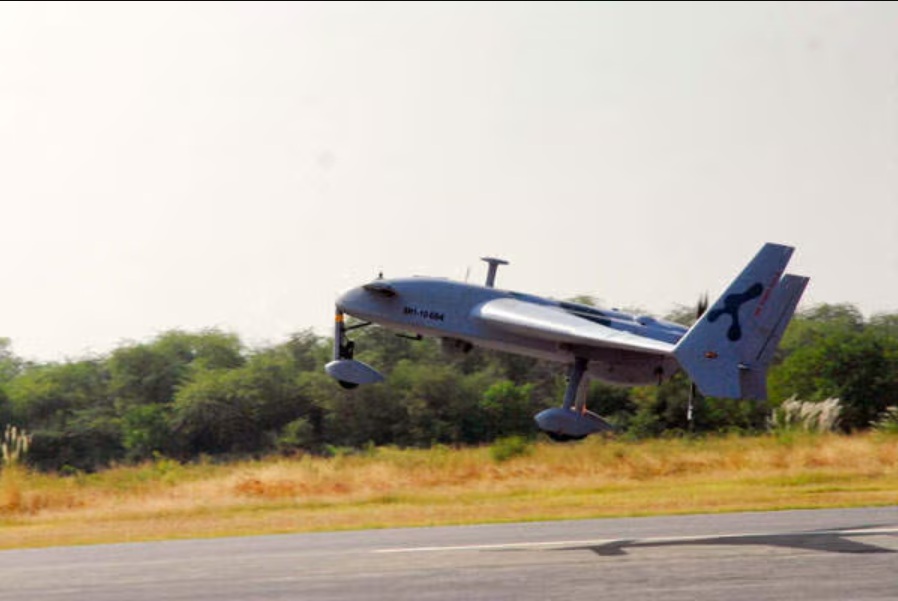
The Indian debate becomes more interesting when viewed against Pakistan’s drone development strategy.
Pakistan has built its unmanned capability through a combination of indigenous development and partnerships with China and Türkiye.
The International Institute for Strategic Studies lists Pakistan among regional operators of systems including the Shahpar-II, CH-4B, Bayraktar Akıncı and other UAVs.
An analysis published by the Institute of Strategic Studies Islamabad also identifies Pakistan’s UAV inventory as including the Bayraktar Akıncı, Songar, Chinese CH-4 and Wing Loong II, as well as indigenous Shahpar and Burraq systems.
This model is different from India’s attempt to reduce foreign component dependence.
Pakistan’s approach has been to use external partnerships where they provide technological or industrial advantages while developing selected indigenous systems and production capabilities.
That means Pakistan’s UAV strategy should not be judged simply by asking whether every component is domestically manufactured.
The more relevant question is whether the overall ecosystem provides credible operational capability, diversification and upgrade potential.
Pakistan’s UAV Capability Is Becoming More Diversified
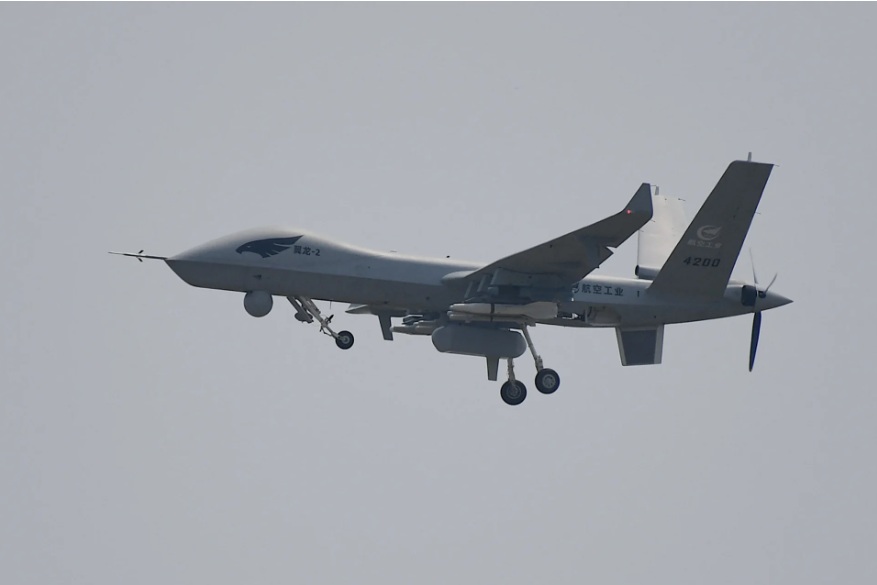
Pakistan’s unmanned inventory is no longer confined to one category of drone.
Open-source defence assessments identify systems spanning:
- tactical ISR;
- armed MALE UAVs;
- heavy UAVs;
- loitering systems;
- indigenous platforms;
- Turkish systems;
- Chinese systems.
The Shahpar-II, for example, is identified by IISS as a heavy CISR UAV with an endurance of approximately 20 hours, while the CH-4B operated in Pakistan has an endurance listed at around 40 hours.
The Bayraktar Akıncı adds another layer, with Baykar describing the platform as capable of ISR and air-to-ground and air-to-air missions, with a stated payload capacity of up to 1,500 kg and endurance of up to 24 hours.
This gives Pakistan a diversified UAV portfolio without requiring every technological element to be developed domestically.
The Real Regional Contest Is About Systems, Not Labels
The India-Pakistan drone competition should therefore not be reduced to:
“Made in India” versus “Chinese-made.”
The more important competition involves:
- drone numbers;
- endurance;
- sensors;
- weapons integration;
- electronic warfare resistance;
- communications;
- autonomy;
- data links;
- command-and-control;
- counter-UAS systems;
- industrial replenishment.
A drone that is entirely domestically manufactured but vulnerable to jamming is not automatically superior to a foreign-origin platform that has demonstrated operational reliability.
Likewise, dependence on foreign technology can create strategic risks if the supplier relationship becomes politically or technologically constrained.
Both models carry advantages and vulnerabilities.
The Electronic Warfare Dimension Is Particularly Important
The 2025 India-Pakistan conflict demonstrated that drones cannot be considered separately from electronic warfare.
A modern UAV operating near a sophisticated adversary has to contend with:
- GPS disruption;
- communications jamming;
- spoofing;
- RF detection;
- cyber threats;
- navigation interference.
A recent academic study examining drone warfare in the India-Pakistan context concluded that the 2025 conflict marked an evolution from drones being used primarily for ISR toward their employment as offensive systems and deeper strike tools.
That means India’s proposed security framework is arriving at a time when drone warfare itself is rapidly changing.
India Faces a Difficult Procurement Choice
New Delhi essentially has three options.
Option 1: Ban Vulnerable Foreign Components
This maximizes supply-chain security but could slow production and increase costs.
Option 2: Allow Foreign Components With Certification
This could accelerate procurement but requires extremely sophisticated testing and verification.
Option 3: Build a Completely Indigenous Electronics Ecosystem
This would provide the greatest long-term autonomy but is the most expensive and time-consuming option.
India appears to be trying to combine elements of all three.
The problem is that the industrial base may not yet be ready to support the most ambitious version of the policy.
Why the 18-Month Delay Matters
The delay matters because drones are becoming a major part of India’s military procurement.
If the Army expects thousands of UAVs to enter service, a security framework cannot remain an administrative afterthought.
Every additional drone increases the importance of:
- component traceability;
- software verification;
- firmware control;
- secure updates;
- cyber testing;
- electronic-warfare trials.
Otherwise, the phrase “Make in India” risks becoming primarily an assembly label rather than a guarantee of technological sovereignty.
The Bigger Problem for the Modi Government
The Narendra Modi government has made Atmanirbhar Bharat and defence indigenisation major policy themes.
But the drone issue exposes a gap between political messaging and industrial reality.
The government wants India to become:
- a defence manufacturer;
- a defence exporter;
- a technology power;
- a major UAV producer.
At the same time, the armed forces are demanding that manufacturers meet increasingly stringent security standards.
Those goals are compatible in the long term.
But they cannot be achieved simply by issuing procurement contracts.
India needs the supporting ecosystem:
semiconductors → electronics → software → sensors → communications → testing laboratories → cybersecurity → final assembly.
Without that chain, domestic assembly does not automatically equal technological independence.
What This Means for Pakistan
For Pakistan, the Indian debate should be viewed carefully.
The issue does not mean that Pakistan can simply assume an advantage because India has encountered supply-chain problems.
Pakistan faces its own requirement to ensure that imported and indigenous systems remain secure and operationally effective.
The more important lesson is that the regional drone competition is moving toward trusted and resilient systems, not merely larger inventories.
Pakistan’s combination of indigenous programmes and partnerships with China and Türkiye provides access to multiple technological ecosystems.
The strategic objective should therefore be continued diversification, local integration and electronic-warfare resilience rather than simply matching India’s procurement numbers.
India-Pakistan Drone Competition: A More Useful Comparison
| Area | India | Pakistan |
|---|---|---|
| Industrial approach | Strong emphasis on Make in India and Atmanirbhar Bharat | Combination of indigenous systems and foreign partnerships |
| Chinese technology | Increasingly scrutinized and restricted in sensitive military drones | Significant Chinese-origin systems remain part of the ecosystem |
| Turkish technology | Growing cooperation | Significant UAV cooperation and acquisition |
| Indigenous UAVs | Expanding private and state-sector ecosystem | Shahpar and Burraq families among indigenous programmes |
| Heavy UAVs | Growing capability, including MQ-9B lease for Navy | CH-4B, Shahpar-II, Akıncı and other systems |
| Main challenge | Trusted supply chain and secure indigenous electronics | Sustaining diversified supply, integration and indigenous development |
| Key battlefield issue | Jamming, spoofing and cyber resilience | Jamming, spoofing, counter-UAS and network resilience |
| Strategic priority | Reduce foreign dependence | Combine external technology with domestic capability |
This comparison avoids the simplistic assumption that either country possesses an automatic advantage.
What India Needs to Fix
If New Delhi wants its drone programme to become genuinely secure, five changes are particularly important.
1. End reliance on self-certification
Critical military components should be independently verified.
2. Establish rapid certification
A security framework that takes years to approve will eventually become an obstacle to military modernization.
3. Create trusted component suppliers
India needs alternatives to Chinese electronics before imposing requirements that manufacturers cannot practically meet.
4. Test drones under realistic EW conditions
Laboratory certification is not enough. Systems must demonstrate resilience under jamming and spoofing.
5. Separate assembly from technological sovereignty
A drone should not be classified as strategically indigenous simply because its final assembly occurs inside India.
Final Assessment
The Indian military drone story is less a tale of technological triumph than a test of whether New Delhi can reconcile its industrial ambitions with the security requirements of modern warfare.
The reported 18-month delay in approving a military drone vulnerability framework exposes a significant weakness in the implementation of India’s Make in India strategy.
The issue becomes even more serious because India is simultaneously expanding drone procurement after the lessons of Operation Sindoor. Indian Army trials have reportedly emphasized resistance to jamming and spoofing and screening for Chinese-origin components, demonstrating that the military itself recognizes the risks.
But procurement alone does not create technological independence.
India still has to solve the harder problem of building a trusted electronics, software and component ecosystem capable of supporting military UAVs at scale.
For Pakistan, the lesson is equally important—but it should not be framed as an Indian weakness that automatically creates a Pakistani advantage. Pakistan’s own drone strategy, based on indigenous programmes combined with Chinese and Turkish systems, offers a different model of capability development. (Orf Online)
The emerging regional competition will ultimately be decided by something more important than slogans such as “Make in India”:
Which side can field larger numbers of drones that remain operational, connected, secure and effective when the electromagnetic environment becomes hostile?
That is the real test of modern drone warfare.