India has spent years debating integrated theatre commands, repeatedly declaring that the reform is close to implementation, yet the final structure remains unresolved. The latest warning from Air Chief Marshal AP Singh suggests that the central problem is no longer whether India wants jointness—but whether New Delhi can design a command system suited to India’s actual military weaknesses rather than importing a foreign model.
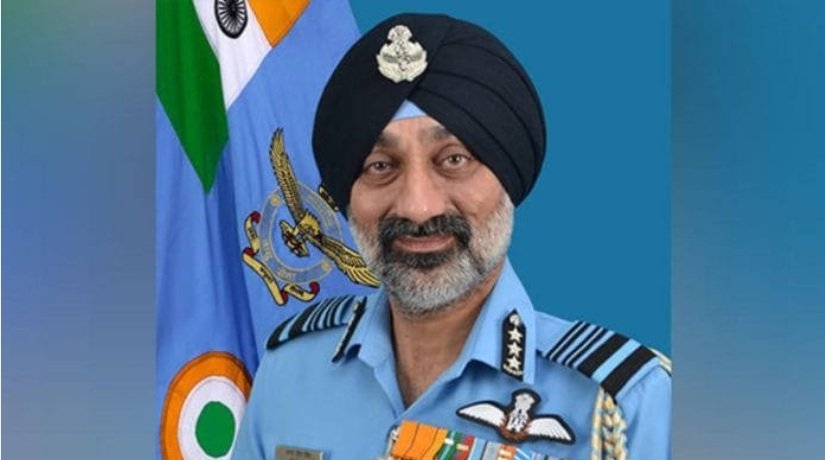
India’s long-running debate over integrated theatre commands has entered another critical phase after Indian Air Force Chief Air Chief Marshal AP Singh backed the principle of joint commands but warned against adopting a “pre-baked” structure borrowed from another country.
Speaking in Kanpur on August 22, Singh said the IAF was “not against” geographically defined operational joint commands, but argued that India needed a graded, step-by-step transition that would avoid disrupting ongoing military operations. He also stressed that India should first identify its actual shortcomings and then design a command structure around those requirements.
His remarks are important because they come after years of official assurances that India’s theatre-command reform is nearing completion.
And that raises an uncomfortable question:
Why is one of India’s biggest military reforms still being debated after more than six years of planning?
The answer is not simply inter-service rivalry.
It reflects unresolved questions over the role of the Air Force, the division of scarce combat assets, command authority, two-front war planning, strategic airpower and whether India’s proposed structure actually fits the country’s geography and military capabilities.
India’s Theatre Command Reform Has Been Going on for Years
The idea of theatre commands gained political and military momentum after the creation of the Chief of Defence Staff (CDS) post in 2019.
General Bipin Rawat, India’s first CDS, was tasked with driving greater integration among the Army, Navy and Air Force.
In 2020, Rawat said he had been given three years to create theatre commands despite strong institutional resistance.
The original concepts changed several times.
The initial proposal envisaged four commands, including an air-defence command, a maritime theatre command and land-based commands.
After Rawat’s death in December 2021, his successor, General Anil Chauhan, reopened the concept and sought a different model.
The proposal gradually moved toward adversary-oriented commands, including western and northern theatres and a maritime theatre command.
Years of consultations, tabletop exercises and military discussions followed.
Yet the final structure still has not been formally implemented.
2026 Was Supposed to Be the Breakthrough Year
The latest phase appeared much more promising.
In April 2026, then-CDS General Anil Chauhan said discussions among the three services had been completed and that the theatre-command proposal would soon be sent to the government. The military had reportedly completed more than 90% of the planning.
A separate April report said the proposed structure had broadly settled on:
- a Western Theatre Command focused on Pakistan;
- a Northern Theatre Command focused on China; and
- a Maritime Theatre Command.
The Western command was expected to be led by an IAF officer, the Northern command by an Army officer and the Maritime command by a Navy officer.
By July, Indian media were reporting that the CDS had sought Defence Ministry approval for the rollout and that the proposal would subsequently require consideration by the Cabinet Committee on Security.
That made it appear that the years-long debate was finally approaching its conclusion.
Then came the latest statement from the IAF chief.
What AP Singh Is Actually Saying

It would be wrong to describe the latest statement simply as opposition to theatre commands.
Singh explicitly said the IAF was not against geographically defined joint operational commands.
His objection is to implementing a structure merely because another major military power uses it.
He wants India to first answer three questions:
What problem is theatreisation supposed to solve?
What are India’s actual operational weaknesses?
What command structure best addresses those weaknesses?
Only then, in his view, should India build the organisation.
That is a substantially more sophisticated objection than simply resisting military integration.
The IAF’s Central Concern: Airpower Cannot Be Treated Like Land Forces
This is probably the most important issue in the entire debate.
An Army formation is largely tied to geography.
A corps defending one sector cannot suddenly move hundreds of kilometres and conduct a mission in another theatre within hours.
Aircraft are different.
A fighter squadron can potentially be shifted between operational areas much faster.
This gives airpower a strategic flexibility that can be lost if aircraft are permanently divided among geographically defined commands.
The IAF has therefore repeatedly argued for centralised control with decentralised execution.
Its concern is particularly serious because India does not have an enormous surplus of combat aircraft.
The IAF’s fighter strength is substantially below its authorised 42 squadrons.
If those limited assets are permanently divided between three theatre commanders, each commander may have sufficient aircraft for local requirements but India could lose the ability to mass airpower rapidly where the strategic situation demands it.
The Scarcity Problem Makes India Different
This is where simply copying the American or Chinese model becomes problematic.
A theatre command works best when it has enough organic resources to operate effectively.
But India’s problem is not an excess of military assets.
It is scarcity.
The IAF is simultaneously dealing with:
- fighter-squadron shortages;
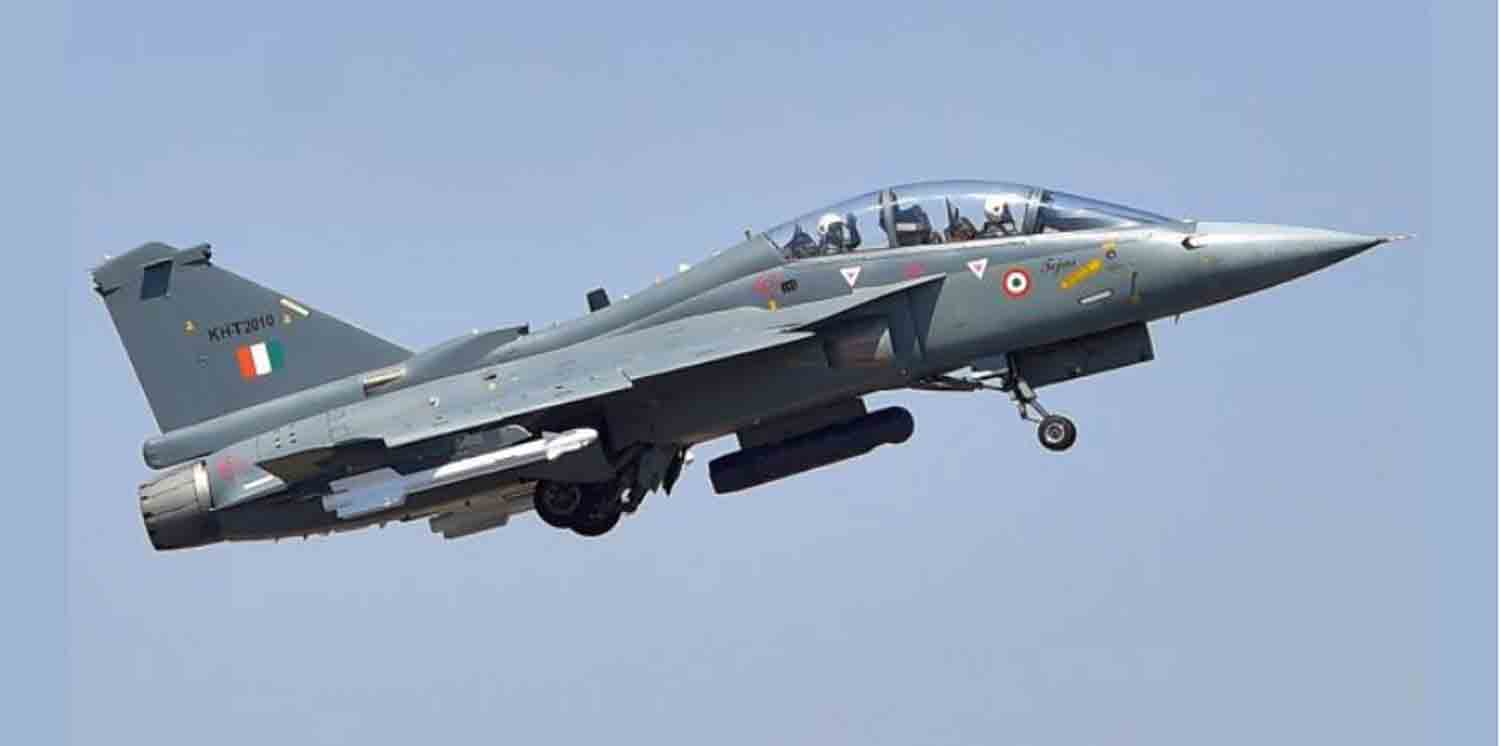
- delays in Tejas Mk1A deliveries;
- ageing aircraft;
- limited airborne early-warning capacity;
- limited aerial-refuelling resources;
- long-range missile requirements; and
- the need to maintain capabilities against both China and Pakistan.
Under these circumstances, permanently allocating scarce assets to individual theatres could create inefficiency.
One theatre might have an immediate requirement for additional fighters while aircraft are tied to another command’s allocation.
That is precisely the flexibility the IAF wants to protect.
The Strategic Assets Problem
The issue is even more complicated with high-value support aircraft.
Consider:
Aerial refuellers.
AWACS and AEW&C aircraft.
Strategic transport aircraft.
Electronic intelligence platforms.
Space-based assets.
These are not assets that India possesses in unlimited numbers.
An April 2026 report said the emerging consensus was that strategic air assets such as refuellers, transport aircraft, airborne early-warning and control aircraft, future electronic-intelligence aircraft and space assets would remain under Air Headquarters rather than being permanently assigned to individual theatres.
That arrangement is effectively an acknowledgment of the IAF’s central concern.
If strategic assets remain centrally controlled, the theatre commanders would receive access to them according to operational requirements.
In other words:
the proposed theatre system may itself need exceptions to the theatre principle.
That tells us something important about the difficulty of the reform.
Operation Sindoor Complicates the Debate
The 2025 India-Pakistan conflict has become an important reference point in India’s theatre-command discussion.
The IAF has argued that the services demonstrated considerable coordination during Operation Sindoor without having fully established theatre commands.
In August 2025, Air Chief Marshal AP Singh went further, saying that after the conflict there was no immediate need for another lower-level command structure and that India should not simply copy theatre models from the United States or China.
His latest statement is more conciliatory.
But the underlying argument remains:
If existing joint planning and coordination can produce effective operational results, what specific deficiency will a completely new command hierarchy solve?
That question deserves a clear answer before the reform becomes permanent.
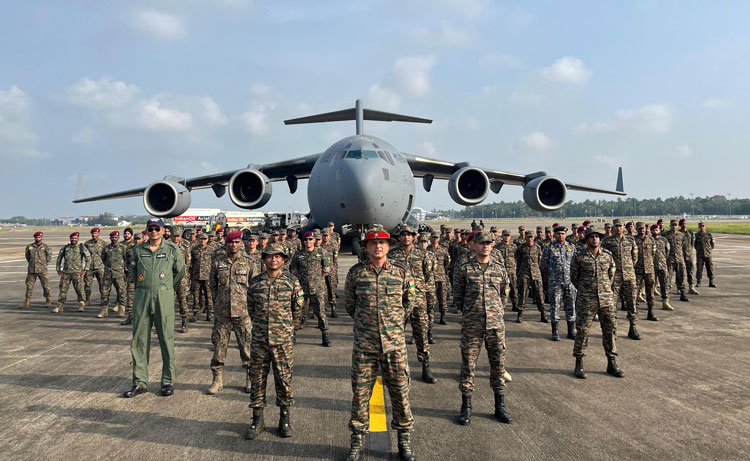
Jointness Is Not the Same as Theatreisation
This distinction is frequently lost in the political debate.
India needs the Army, Navy and Air Force to operate jointly.
There is little serious argument against that.
Modern warfare increasingly requires:
- integrated intelligence;
- common communications;
- shared surveillance;
- coordinated targeting;
- electronic warfare;
- cyber operations;
- air defence;
- long-range precision strike; and
- joint logistics.
But there are different ways of achieving jointness.
A country can have:
joint planning without permanent theatre commands.
It can have:
common intelligence and targeting networks.
It can establish:
joint operational centres.
Or it can create fully integrated geographical theatre commands.
The real question is not whether India needs jointness.
It is which institutional mechanism delivers the greatest combat effectiveness.
India’s Problem May Be More Basic Than Command Structure
This is where the debate becomes particularly important.
India has spent years discussing organisational charts while simultaneously struggling with fundamental military-capability shortages.
The IAF needs more fighters.
India needs more airborne early-warning aircraft.
It needs more tankers.
It needs more long-range weapons.
It needs stronger electronic warfare.
It needs greater unmanned capability.
It needs better joint intelligence and communications.
A new command headquarters does not automatically create any of those capabilities.
There is a danger that theatreisation becomes a bureaucratic reform mistaken for a military capability upgrade.
Changing who commands an aircraft does not increase the number of aircraft.
Changing headquarters does not create additional tankers.
Creating a joint command does not automatically solve weaknesses in intelligence, logistics or ammunition stocks.
The Reform Could Actually Create More Bureaucracy
This is another question India needs to answer.
If the existing service headquarters remain responsible for:
- training;
- recruitment;
- maintenance;
- logistics;
- personnel;
- modernisation;
- force generation;
while theatre commanders control operations, India could potentially create an additional layer between the services and national leadership.
The exact division of authority has been one of the major unresolved issues throughout the debate.
Earlier proposals envisaged service chiefs retaining responsibility for raise, train and sustain, while theatre commanders would control operations. Later discussions considered retaining some operational responsibilities with the service chiefs as well.
That creates an obvious question:
Who has the final say when an operational requirement conflicts with training, maintenance or long-term force-generation priorities?
If the answer is unclear, jointness can become another layer of institutional friction.
Three Different Wars Require Three Different Structures
India’s security geography makes theatreisation unusually complicated.
A potential conflict with Pakistan would be very different from a conflict with China.
A maritime confrontation in the Indian Ocean would be different again.
Western Theatre: Pakistan
The western theatre involves relatively short distances, dense military infrastructure and the possibility of rapid air and missile exchanges.
Northern Theatre: China
The China frontier involves enormous geography, high-altitude terrain, difficult logistics and very different airfield and infrastructure requirements.
Maritime Theatre
The Indian Ocean is a completely different operational environment involving sea lanes, submarines, aircraft carriers, maritime patrol aircraft, long-range missiles and distant naval deployments.
A single template cannot automatically fit all three.
That is precisely why Singh’s warning against a “pre-baked” model matters.
India Should Not Copy the US or China
The temptation to imitate major military powers is understandable.
The United States operates extensive geographic combatant commands.
China has reorganised its military around theatre commands.
But both countries have different strategic requirements.
The United States operates a global military with extensive overseas bases and expeditionary commitments.
China’s theatre commands are designed around its own geography, political structure and military doctrine.
India is a continental and maritime power with two principal land-based security challenges and an expanding Indian Ocean role.
Its command structure should therefore be designed around Indian military geography and Indian capabilities.
The China Challenge Makes Delay Dangerous
There is also a counterargument to the IAF’s caution.
India cannot debate military reform indefinitely.
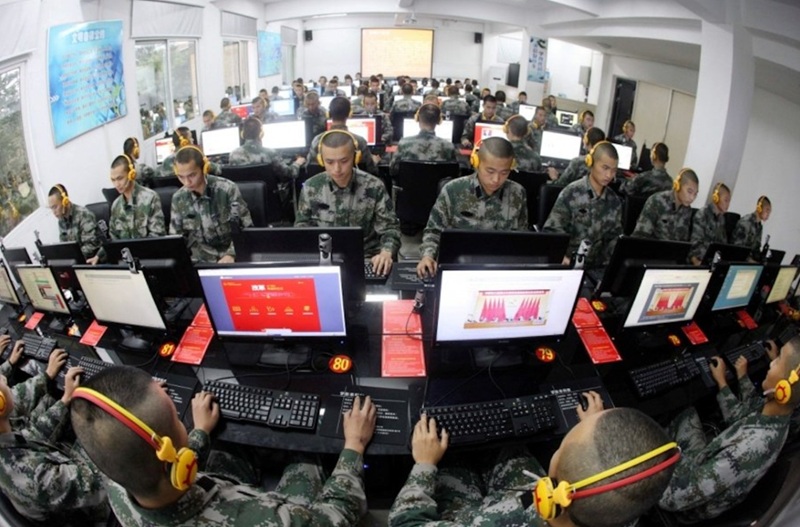
China has already reorganised its armed forces into a theatre-command structure and has been pursuing joint operations, integrated fires, information warfare and multi-domain operations.
India therefore risks falling behind institutionally if its services continue debating command structures without making a decision.
The objective should not be speed for its own sake.
But endless deliberation carries its own strategic cost.
A military cannot remain in permanent organisational transition.
The Pakistan Front Makes the Question Even More Urgent
The Pakistan front presents another problem.
India’s proposed Western Theatre Command would presumably need to integrate land, air and other capabilities.
But the 2025 conflict demonstrated the importance of rapid airpower, stand-off weapons, intelligence and electronic warfare.
That raises the question of whether the Western Theatre should be genuinely joint or effectively become an Army-centric structure with the IAF providing support.
The proposed decision to have an IAF officer lead the Western Theatre is therefore significant.
It appears to recognise the importance of airpower on that front.
But leadership alone does not solve the deeper issue of asset control.
The IAF Does Have a Legitimate Institutional Interest
Critics of the IAF sometimes portray its concerns as nothing more than resistance to losing authority.
That would be too simplistic.
There is certainly an institutional dimension to the disagreement.
Theatre commands would change the power structure of India’s military.
But the IAF also has a legitimate operational argument.
Its aircraft are:
- expensive;
- limited;
- mobile;
- multirole;
- technologically complex; and
- capable of operating across theatres.
A fighter squadron is not equivalent to an infantry brigade.
It can be used against:
- enemy aircraft;
- air-defence systems;
- command centres;
- logistics;
- naval targets;
- ground formations;
- strategic infrastructure.
Therefore, allocating it permanently to one geographical theatre may reduce strategic flexibility.
But the IAF Cannot Reject Integration Forever

The other side of the argument is equally important.
Modern warfare is becoming more integrated, not less.
A future conflict will not neatly separate Army, Navy and Air Force operations.
A Chinese or Pakistani military campaign could combine:
- drones;
- missiles;
- cyber attacks;
- electronic warfare;
- airpower;
- ground forces;
- satellites;
- naval forces;
- information operations.
India therefore needs commanders who can synchronise multiple domains.
The IAF is right to demand a carefully designed model.
But it also has to ensure that legitimate operational concerns do not become a permanent veto over institutional integration.
The Real Test Should Be the Kill Chain
Instead of asking whether India should create three theatre commands, planners should ask:
Can the proposed structure shorten India’s kill chain?
Can it move intelligence to commanders faster?
Can it identify targets faster?
Can it assign weapons faster?
Can it move fighters between theatres faster?
Can it coordinate air and missile defence?
Can it synchronise Army fires with airpower?
Can it integrate naval and air operations?
Can it survive cyber and electronic attacks?
If the answer is yes, theatre commands may be justified.
If the answer is no, India risks creating a new hierarchy without improving warfighting.
India Needs a Unified Doctrine Before a Unified Command
One of the more fundamental criticisms of the process is that organisational reform should follow doctrine rather than precede it.
India has service-specific doctrines, but the challenge is developing a truly integrated concept for future warfare.
The Ministry of Defence has explicitly promoted “Jointness 2.0” as the move from basic inter-service cooperation toward deeper joint operational structures.
But a joint structure needs a clear answer to fundamental questions:
What is India’s theory of victory?
How will it fight a two-front conflict?
How will it prioritise airpower?
How will it employ missiles?
How will it integrate cyber and space?
How will it allocate scarce aircraft?
How will it sustain operations?
Until those questions are answered, drawing command boundaries may be premature.
The Two-Front Problem Is the Biggest Test
This may ultimately determine whether India’s theatre-command model succeeds.
Imagine simultaneous crises involving China and Pakistan.
If fighter aircraft, tankers and surveillance assets are divided permanently between two theatres, each commander may resist releasing them to the other.
But if those assets remain centrally controlled, the theatre commanders may not have sufficient authority to execute operations rapidly.
India therefore needs a hybrid system.
Theatre commanders need operational autonomy.
But national-level commanders must retain the ability to mass scarce strategic assets rapidly.
That balance is much harder than simply drawing three boxes on a map.
India May Need a Hybrid Theatre Model
A more practical solution could be:
Theatre commanders control:
- geographically assigned Army formations;
- locally assigned air assets;
- local naval forces;
- tactical logistics;
- battlefield ISR;
- integrated air defence;
- operational planning.
Central military authorities retain:
- strategic airpower;
- aerial refuellers;
- long-range transport;
- strategic ISR;
- space assets;
- selected long-range strike capabilities;
- national-level reserves.
That would preserve the principal advantage of theatre commands—joint operational control—while retaining the IAF’s strategic flexibility.
Interestingly, reporting on the 2026 proposal already suggests that some elements of precisely such a compromise are being considered.
The Most Important Question: Why Has It Taken So Long?
This is where India’s theatre-command story deserves more criticism.
The idea has been under serious discussion since around 2020.
India created the CDS position.
It established the Department of Military Affairs.
It conducted consultations.
It changed the proposed structure.
It ran exercises and tabletop studies.
It repeatedly announced that the reform was close.
And yet in August 2026, the serving IAF chief is still publicly explaining why the structure must not be “pre-baked.”
This suggests that the military leadership has still not reached complete institutional consensus.
That is not necessarily evidence of failure.
Complex military reform requires debate.
But there is a point where debate itself becomes a capability problem.
India Cannot Afford Permanent Organisational Uncertainty
A military preparing for future war needs clarity.
Commanders must know:
- who gives orders;
- who controls aircraft;
- who controls missiles;
- who allocates reinforcements;
- who controls intelligence;
- who commands strategic assets;
- who controls logistics;
- and who makes the final operational decision.
If those questions remain unsettled, the organisation may struggle during the first hours of a crisis.
The irony is that theatre commands are supposed to speed up decision-making.
A poorly designed theatre system could instead slow it down.
The Bottom Line
India’s theatre-command debate has reached the point where the real issue is no longer whether jointness is desirable.
It clearly is.
The question is whether India can create a structure that improves combat effectiveness without fragmenting its already limited military resources.
Air Chief Marshal AP Singh’s latest comments are therefore significant.
He has not rejected theatre commands.
He has warned against implementing a foreign template without first understanding India’s own military problems.
That is a reasonable warning.
India has fewer fighter aircraft than it needs.
Its high-value air assets are limited.
Its two principal land-based threats require different military approaches.
Its maritime requirements are expanding.
And its forces still have substantial work to do in building genuine joint doctrine, communications, intelligence and logistics.
At the same time, India cannot use those challenges as an excuse for endless delay.
Theatre commands have been under discussion for years. The military leadership reportedly completed most of the latest planning in 2026, and a proposal was expected to move through the Defence Ministry and ultimately the Cabinet Committee on Security.
The government therefore faces a difficult choice.
Move too quickly, and India could create a structurally integrated military that remains operationally fragmented.
Move too slowly, and India risks entering the next major conflict with an organisational system designed for the previous era.
The best answer is neither to reject theatreisation nor to rush it.
India needs a hybrid, Indian-designed model in which theatre commanders have genuine operational authority while scarce strategic capabilities—particularly high-value air assets—remain centrally controllable.
The ultimate test should be simple:
Does the new system allow India to concentrate combat power faster than the old system, or does it merely create another layer of command?
Until New Delhi can answer that question convincingly, the theatre-command debate will remain exactly what it has been for years:
a reform that is always almost ready—but never quite ready to fight a war.