Pakistan has used the eighth Moscow Format meeting on Afghanistan to deliver one of its strongest regional warnings yet over terrorism emanating from Afghan soil, while Kabul called for dialogue with Islamabad and Russia offered to help mediate the growing crisis between the two neighbours.
Statement by Pakistan’s Special Representative for Afghanistan at the Eighth Meeting of the Moscow Format https://t.co/GMOIDUJ4DR
— Mohammad Sadiq (@AmbassadorSadiq) October 5, 2026
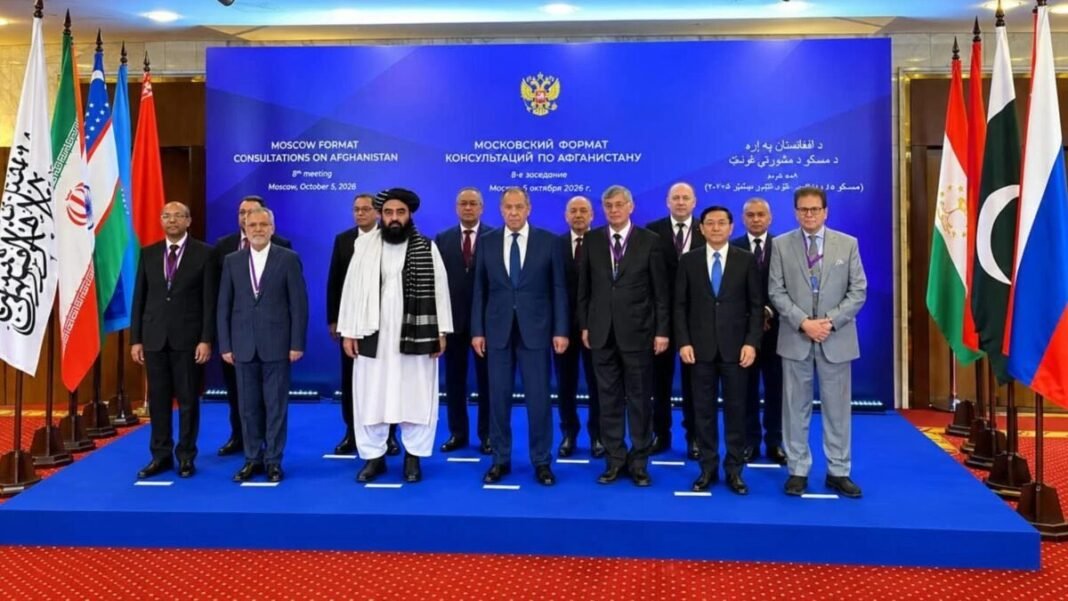
The high-level regional meeting opened in Moscow on October 5 against the backdrop of a sharp deterioration in Pakistan-Afghanistan relations, including cross-border military strikes, accusations of militant sanctuaries and growing concern over the security consequences for the wider region.
Pakistan’s delegation was led by Ambassador Mohammad Sadiq, Special Assistant to the Prime Minister and Special Representative for Afghanistan, and included Pakistan’s ambassadors to Russia and Afghanistan and other senior officials. Afghanistan was represented by Foreign Minister Amir Khan Muttaqi. Russia, China, Iran, India and Central Asian states also participated. Belarus and Egypt were invited as guests.
The meeting’s agenda includes regional security, counterterrorism, counter-narcotics, economic cooperation, connectivity and continued engagement with Kabul.
But the immediate focus is difficult to avoid: Pakistan and Afghanistan are now facing their most serious security crisis in years.
Pakistan’s message: dialogue requires action against terrorism
In its statement at the Moscow Format, Pakistan stressed that Islamabad wants peace and stability in Afghanistan and has repeatedly pursued political and diplomatic engagement.
The Pakistani position, however, is that years of engagement have not produced the security outcome Islamabad expected.
Pakistan says it expected the Taliban authorities to take “concrete and verifiable actions” against terrorist groups operating from Afghan territory.
According to Islamabad’s assessment, the failure to do so has contributed to an increase in terrorist attacks inside Pakistan.
Pakistan’s statement said that more than 4,700 Pakistanis have been killed by terrorism emanating from Afghanistan over the past three years, a figure Islamabad has also presented previously at the UN Security Council. Pakistan’s Permanent Representative to the UN, Ambassador Asim Iftikhar Ahmad, cited the same figure in September while warning that militant groups were operating from Afghan territory.
Pakistan’s argument is therefore broader than a bilateral border dispute.
Islamabad says the problem involves the presence and activities of multiple militant organisations, including the Tehrik-e-Taliban Pakistan (TTP), Balochistan Liberation Army and its Majeed Brigade, Islamic State-Khorasan and the East Turkestan Islamic Movement, as well as affiliated groups.
Pakistan has repeatedly called on Kabul to prevent its territory from being used for attacks against neighbouring countries.
The Pakistani statement also argued that the large quantities of weapons left in Afghanistan following the withdrawal of international forces remain a security concern, including advanced equipment and drones that can potentially find their way into militant hands.
This issue was also raised by Pakistan at the UN Security Council in September.
Islamabad says its military actions are defensive
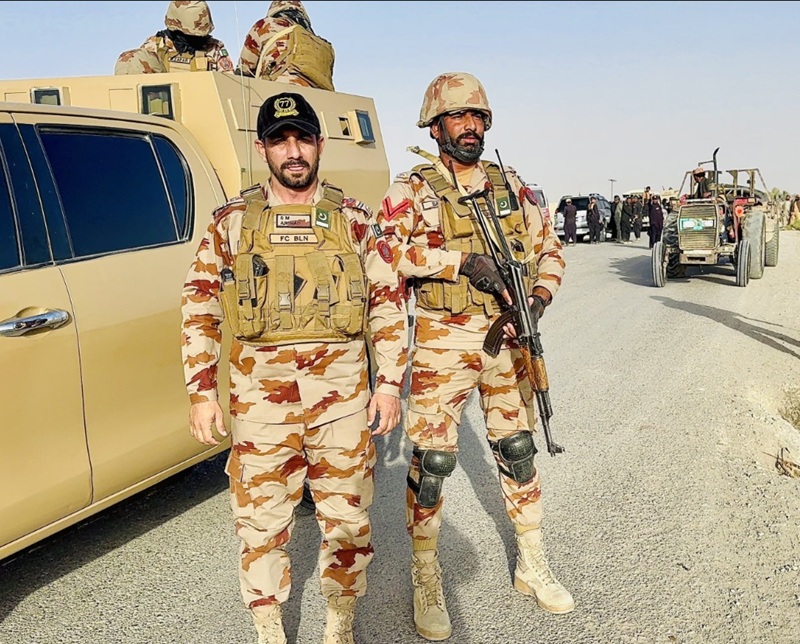
The Pakistani statement presented Islamabad’s recent military actions inside Afghanistan as a response to what it describes as attacks planned and launched from Afghan territory.
Pakistan says its counterterrorism operations are “precise, intelligence-based and defensive in nature”, and maintains that it is exercising its right to self-defence under international law.
That argument has become particularly important following the recent escalation.
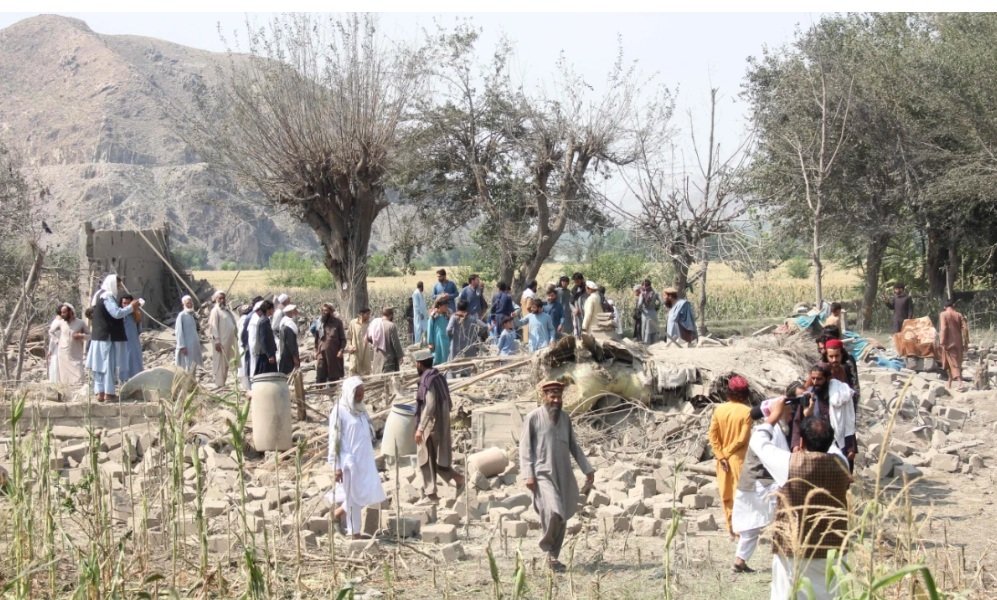
On October 1, Pakistan carried out airstrikes in Afghanistan’s Kunar and Helmand provinces.
The Taliban authorities said the strikes killed civilians, including women and children, while Islamabad said its operations targeted terrorist hideouts and killed militants. Reuters reported that UNAMA confirmed at least 10 civilian deaths, while Pakistan gave a different account of the casualties and targets.
The competing accounts illustrate the fundamental disagreement between Kabul and Islamabad.
Pakistan says the threat originates from militant sanctuaries inside Afghanistan. Kabul says Pakistan is violating Afghan sovereignty.
That disagreement is now at the centre of the Moscow Format.
Afghanistan’s response: problems with Pakistan can be solved through diplomacy
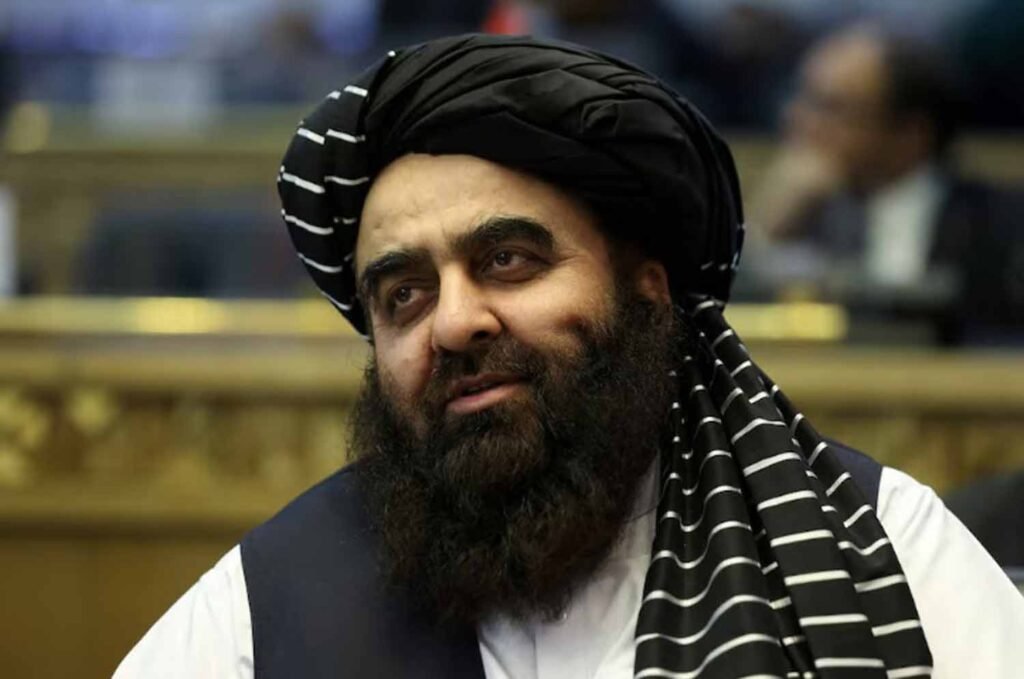
Afghan Foreign Minister Amir Khan Muttaqi adopted a markedly different tone in Moscow.
Addressing the meeting, Muttaqi said Afghanistan’s problems with Pakistan — including security, political and economic disputes — could be resolved through dialogue and diplomacy.
Afghan Taliban Foreign Minister Amir Khan Muttaqi said tensions with Pakistan can be resolved through dialogue and diplomacy.
He accused Pakistan’s military of relying on force rather than political understanding, while saying Afghanistan has a legitimate right to defend itself against aggression.
Source: Reuters
— Clash Report (@clashreport) October 5, 2026
He criticised what he described as Pakistan’s use of military language and accused Islamabad of violating Afghan sovereignty through military actions.
Muttaqi also said Afghanistan considers self-defence against aggression an inherent right.
At the same time, he said Kabul did not want relations with Pakistan to descend into a cycle of accusations and propaganda.
That creates an opening for diplomacy, although the two sides remain far apart on the central security question.
Pakistan wants Kabul to take action against militants.
The Taliban authorities continue to reject Islamabad’s allegations that they allow anti-Pakistan militants to use Afghan territory.
The result is a familiar regional problem: both sides say they want peace, but disagree fundamentally over the cause of insecurity.
Russia offers to mediate
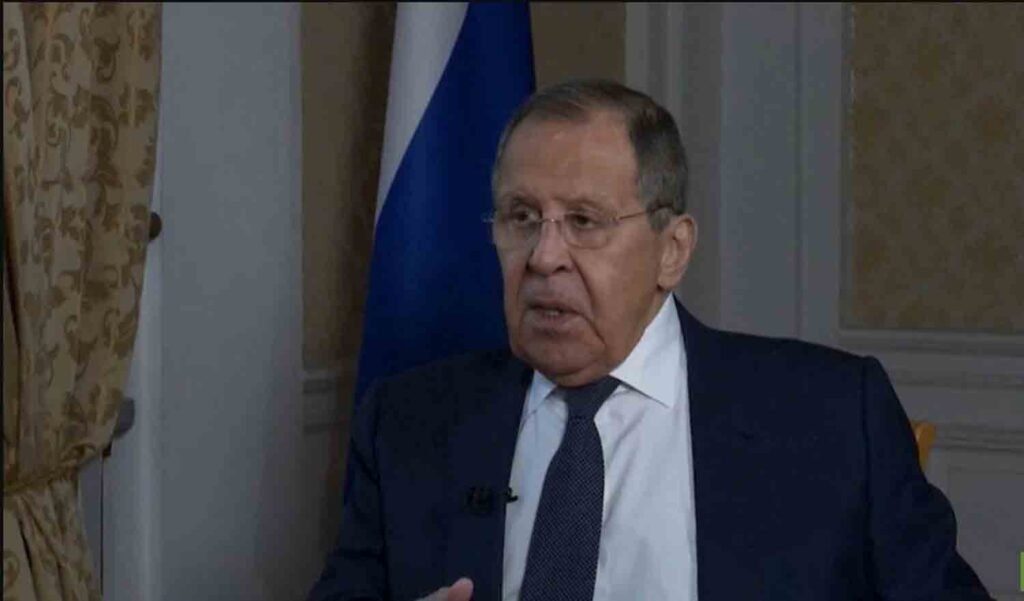
Russia is now attempting to use its position as host of the Moscow Format to help bridge that gap.
Russia’s Special Presidential Representative for Afghanistan Zamir Kabulov said before the meeting that the Pakistan-Afghanistan dispute would be discussed.
Moscow said it was prepared to use the Moscow Format to encourage the two sides to reach a reasonable compromise.
Following the opening of the meeting, Kabulov went further, saying Russia was ready to help end the conflict using available means, either independently or together with other partners, if both sides request such assistance.
That offer is significant because Moscow has maintained working relations with both Kabul and Islamabad.
Russia also has an established regional security interest in preventing instability from Afghanistan from spilling into Central Asia.
For Moscow, therefore, the Pakistan-Afghanistan crisis is not simply a bilateral dispute.
It is a potential regional security problem.
Russia’s Afghanistan policy is changing
Russia’s position at the Moscow Format reflects a broader transformation in its Afghanistan policy.
Moscow formally recognised the Taliban government in July 2025, becoming the first country to do so after removing the Taliban from its list of banned organisations.
Russia has since expanded political and military-technical engagement with Kabul.
At the October 5 meeting, Russian Foreign Minister Sergey Lavrov welcomed Muttaqi to Moscow and praised what he described as Taliban achievements in combating extremism and narcotics.
Lavrov also emphasised continuing Russian humanitarian assistance and military-technical cooperation with Afghanistan.
Moscow’s position does not mean Russia accepts every Taliban policy.
A Russian statement at the UN earlier this year acknowledged continuing concerns about terrorism, particularly ISIL-Khorasan, as well as synthetic drugs and the presence of foreign terrorist fighters in Afghanistan.
Russia has also called for greater regional cooperation against terrorism and narcotics.
This is an important distinction.
Russia wants engagement with Kabul, but it also wants Afghanistan to remain sufficiently secure that instability does not spread northward into Central Asia.
Moscow rejects NATO military infrastructure around Afghanistan

One of the clearest Russian positions concerns the possibility of renewed Western military infrastructure in or around Afghanistan.
Lavrov said at the Moscow meeting that Russia considers the deployment of NATO military infrastructure in Afghanistan or neighbouring countries categorically unacceptable.
Moscow argues that historical experience demonstrates that such a military presence risks increasing instability and conflict.
This position is consistent with Russia’s longstanding opposition to the re-establishment of Western military bases in Afghanistan.
For Pakistan, this aspect of Moscow’s policy is also relevant.
Islamabad has repeatedly emphasised that Afghanistan’s security should be addressed through regional mechanisms rather than by creating another external military footprint.
The Moscow Format therefore offers Pakistan a diplomatic platform where its security concerns can be raised without turning the discussion into a wider confrontation between global powers.
Terrorism is becoming the central issue of the Moscow Format
The security debate is not new.
The Moscow Format’s previous meetings repeatedly highlighted terrorism, narcotics and regional security.
At the 2024 meeting, participating countries expressed concern that terrorist and separatist groups based in Afghanistan continued to pose a threat to regional and international security.
The participants called on the Afghan authorities to take visible and verifiable steps against terrorist groups and prevent Afghan territory from being used against neighbouring countries.
That language is particularly relevant to Pakistan’s position today.
Islamabad is effectively arguing that the problem identified by the regional forum two years ago has not been resolved.
Pakistan’s current message is that general assurances are no longer enough.
It wants verifiable action.
Taliban says Afghanistan wants regional economic integration
Muttaqi’s Moscow statement also went beyond security.
The Afghan foreign minister said Afghanistan wants to use its geographic position to become a regional connectivity hub linking Central Asia, South Asia, China, Russia and the Middle East.
He highlighted projects including:
- TAPI
- TAP
- CASA-1000
- Trans-Afghan railway connectivity
- Regional trade corridors
- Transit and investment projects
Muttaqi said Afghanistan does not want to depend on a single country or route and instead wants balanced economic relations with regional states.
This economic agenda is important for Pakistan.
For decades, Islamabad has argued that Afghanistan’s geography creates opportunities for connecting Central Asian markets with Pakistani seaports.
But security remains the essential prerequisite.
Without a stable Afghanistan and reliable border security, large-scale transit projects remain vulnerable to disruption.
Pakistan’s connectivity interests are also at stake
Pakistan’s approach to Afghanistan has historically combined security concerns with economic engagement.
Islamabad has repeatedly supported Afghanistan’s integration into regional trade and transit networks.
Pakistan’s Foreign Ministry said ahead of the Moscow meeting that the consultations would cover regional peace and security, counterterrorism, economic cooperation, connectivity and continued engagement with Afghanistan.
That combination is important.
Pakistan is not arguing that Afghanistan should be isolated.
Instead, Islamabad’s position is that economic connectivity cannot substitute for counterterrorism cooperation.
The message from Pakistan is effectively:
regional trade and connectivity require regional security.
Afghanistan’s humanitarian crisis remains a parallel concern
The security debate is taking place alongside a serious humanitarian and socioeconomic crisis inside Afghanistan.
The UN has warned that Afghanistan continues to face severe food insecurity, humanitarian needs, restrictions on women and girls, weak economic recovery and the return of millions of Afghans from neighbouring countries.
At the September UN Security Council briefing, UN officials said Afghanistan had experienced some macroeconomic stability and relative security, but that recovery remained constrained by restrictions on women and girls, exclusionary governance, the continued presence of terrorist groups and major humanitarian needs.
Pakistan’s Moscow statement also highlighted Afghanistan’s worsening humanitarian conditions, including food insecurity, water shortages, climate shocks and natural disasters.
Islamabad therefore presented its security argument alongside a reminder of its previous humanitarian and economic support for Afghanistan.
Pakistan says it has provided humanitarian assistance, facilitated visas, supported trade and transit and participated in regional initiatives despite its growing security concerns.
Russia wants the regional mechanism to remain central
The Moscow Format itself is increasingly important because regional states have sought to develop an Afghanistan policy that does not depend exclusively on Western-led mechanisms.
Russia, China, Iran, Pakistan, India and Central Asian countries all have direct interests in Afghanistan.
Those interests are not identical.
China is concerned about security and connectivity.
Iran is concerned about border security, refugees, water and trade.
Central Asian states are concerned about terrorism, drugs and cross-border instability.
India has its own security and strategic interests.
Pakistan is primarily concerned about terrorism and border security.
Russia is concerned about the spillover of instability into Central Asia and the possibility of renewed Western military infrastructure.
The Moscow Format therefore provides a rare table where these competing interests can be discussed simultaneously.
Pakistan-Iran contact adds another dimension
The Moscow meeting also provided an opportunity for regional diplomacy beyond the Pakistan-Afghanistan dispute.
Pakistan’s Special Representative Mohammad Sadiq met Iran’s Director-General for South Asia Mohammad Reza Bahrami on the sidelines of the consultations to discuss regional developments.
The meeting is significant because Iran shares a long border with Afghanistan and has its own security concerns regarding militant groups, refugees, drugs and instability.
At the same time, Tehran maintains relations with Kabul.
Pakistan’s engagement with Iran on the sidelines of a Russia-hosted Afghanistan meeting therefore reinforces Islamabad’s effort to address the Afghan issue through a broader regional framework.
Why the Moscow meeting matters for Pakistan
The immediate question is whether the Moscow Format can convert diplomatic statements into practical security measures.
Pakistan wants three things from the regional process.
First, it wants recognition that terrorism originating from Afghan territory is a regional security problem rather than solely a bilateral Pakistan-Afghanistan dispute.
Second, it wants the Taliban authorities to take measurable action against militant groups, particularly those accused of attacking Pakistan.
Third, Islamabad wants to preserve regional economic engagement and connectivity with Afghanistan without allowing security concerns to be ignored.
The Taliban, meanwhile, wants recognition, economic engagement, sanctions relief, investment and greater diplomatic acceptance while resisting outside pressure over its internal policies.
Russia is attempting to occupy the middle ground by promoting engagement rather than isolation and by offering itself as a mediator between Kabul and Islamabad.
The immediate challenge is credibility
The Moscow Format has produced repeated calls for counterterrorism cooperation.
The problem is implementation.
Pakistan says the Taliban have failed to deliver the concrete and verifiable action Islamabad expected.
The Taliban say they do not permit Afghan territory to be used against other countries and accuse Pakistan of military violations of Afghan sovereignty.
Neither position by itself resolves the underlying security problem.
A durable arrangement would require mechanisms through which claims about militant activity, border incidents and counterterrorism measures could be independently discussed and verified.
That is where the Moscow Format could potentially play a useful role.
A dangerous moment for Pakistan and Afghanistan
The timing of the eighth Moscow Format meeting could hardly be more difficult.
Pakistan and Afghanistan have moved from diplomatic disagreement to military confrontation.
Pakistan says terrorist groups operating from Afghanistan have become an intolerable security threat.
Kabul says Pakistan has violated Afghan sovereignty and insists that differences should be resolved through dialogue.
Russia says it is prepared to mediate.
Meanwhile, China, Iran and the Central Asian states have strong reasons to prevent the dispute from escalating further.
The regional concern is not simply another Pakistan-Afghanistan border crisis.
A prolonged confrontation could disrupt trade, increase refugee movements, strengthen militant networks and undermine major connectivity projects linking Central and South Asia.
It could also create opportunities for external actors to exploit divisions between the two neighbours.

The road ahead
The eighth Moscow Format meeting has therefore become more than another regional consultation on Afghanistan.
It is an early test of whether regional diplomacy can contain a rapidly worsening Pakistan-Afghanistan security crisis.
Pakistan has made its position clear: Islamabad supports peace, dialogue and regional cooperation, but it expects the Taliban authorities to address the militant threat with concrete and verifiable action.
Afghanistan has offered a different formula: dialogue, diplomacy, regional cooperation and respect for sovereignty.
Russia is offering itself as a possible bridge between the two positions.
The key issue now is whether those positions can be converted into an arrangement that addresses the security threat rather than merely managing its political consequences.
For Pakistan, the stakes are immediate.
A peaceful and stable Afghanistan remains in Islamabad’s strategic interest.
But Pakistan is also signalling that regional engagement cannot be separated from its national security concerns.
The Moscow Format now has an opportunity to test whether that principle can be turned into practical regional diplomacy.