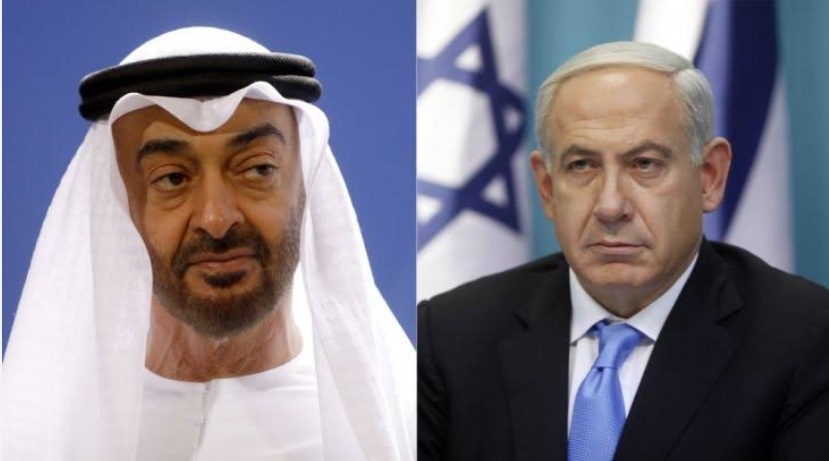
Israeli Prime Minister Benjamin Netanyahu’s unannounced meeting with UAE President Sheikh Mohamed bin Zayed Al Nahyan has generated a wave of speculation across regional media and open-source intelligence circles, with aircraft movements involving Qatar, Morocco and Libya adding fuel to theories of a wider diplomatic gathering in Abu Dhabi.
The Netanyahu–MBZ meeting itself is no longer merely an OSINT claim. Israeli media reported the visit, and a diplomatic source confirmed to The Jerusalem Post that Netanyahu travelled to the UAE and met MBZ. Netanyahu’s office has not publicly disclosed the substance of the discussions.
What remains uncertain is why the meeting took place and whether other regional movements were connected to it.
That distinction matters.
There are good reasons why the rumors have become unusually broad: Israel, the UAE, Qatar, Morocco and Libya’s eastern leadership all have overlapping relationships with the major strategic files currently reshaping the Middle East — Iran, Gaza, Gulf security, the Abraham Accords, US policy and post-war regional arrangements.
The available evidence does not establish that all of those actors were involved in a single meeting.
But the connections between them are real.
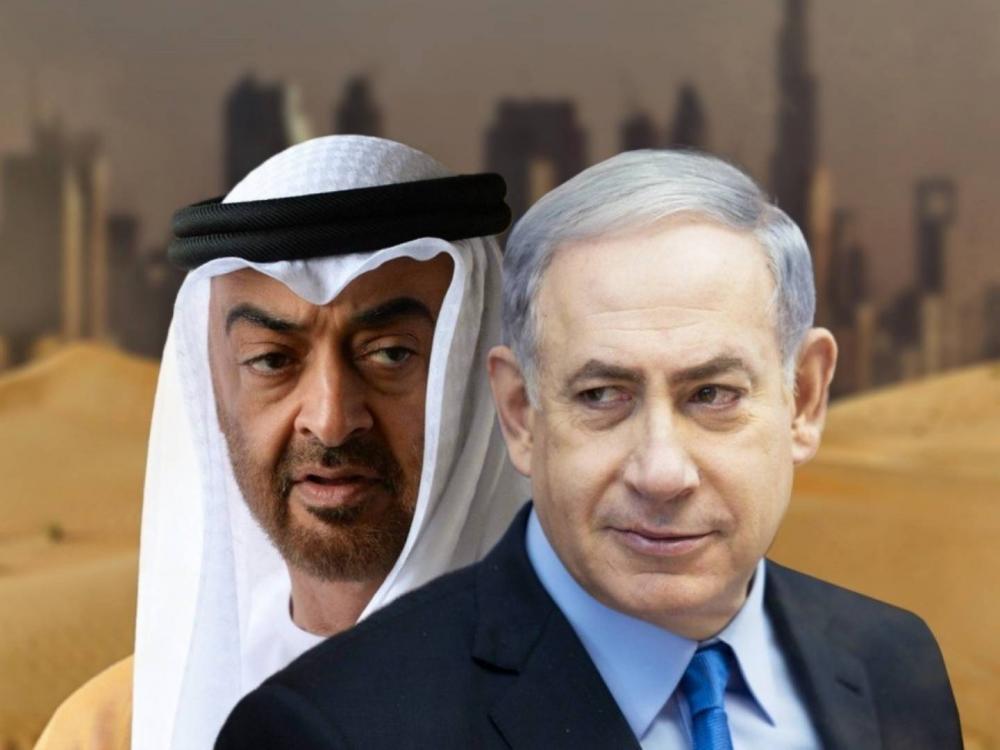
Why Netanyahu Went to Abu Dhabi
The timing of Netanyahu’s visit is significant.
The Middle East is currently experiencing simultaneous diplomatic and military pressure surrounding Iran, the Strait of Hormuz, Gaza and the future regional security architecture.
Reuters reported last week that Iran had indicated it could reopen the Strait of Hormuz if Washington reduced military pressure and lifted its blockade, while Gulf states were exploring ways to create a broader regional security framework involving Tehran. Qatar has been particularly active in pushing a framework that would combine Gulf security guarantees with greater economic interdependence with Iran.
The UAE is approaching the Iranian question from a particularly complicated position.
Abu Dhabi has deepened security cooperation with Israel and the United States, but it is simultaneously maintaining channels with Tehran.
Earlier this month, Iranian President Masoud Pezeshkian met Abu Dhabi Crown Prince Sheikh Khaled bin Mohamed bin Zayed on the sidelines of the BRICS summit in New Delhi. Reuters described it as the highest-level Iran-UAE engagement since the conflict began. Both countries subsequently supported a BRICS statement calling for restraint and protection of trade and maritime security.
That makes the UAE an unusual diplomatic crossroads.
It has relationships with Israel, Washington and Iran at the same time.
That alone helps explain why a private Netanyahu-MBZ meeting attracts so much attention.
Israel-UAE Security Cooperation Has Become Much Deeper
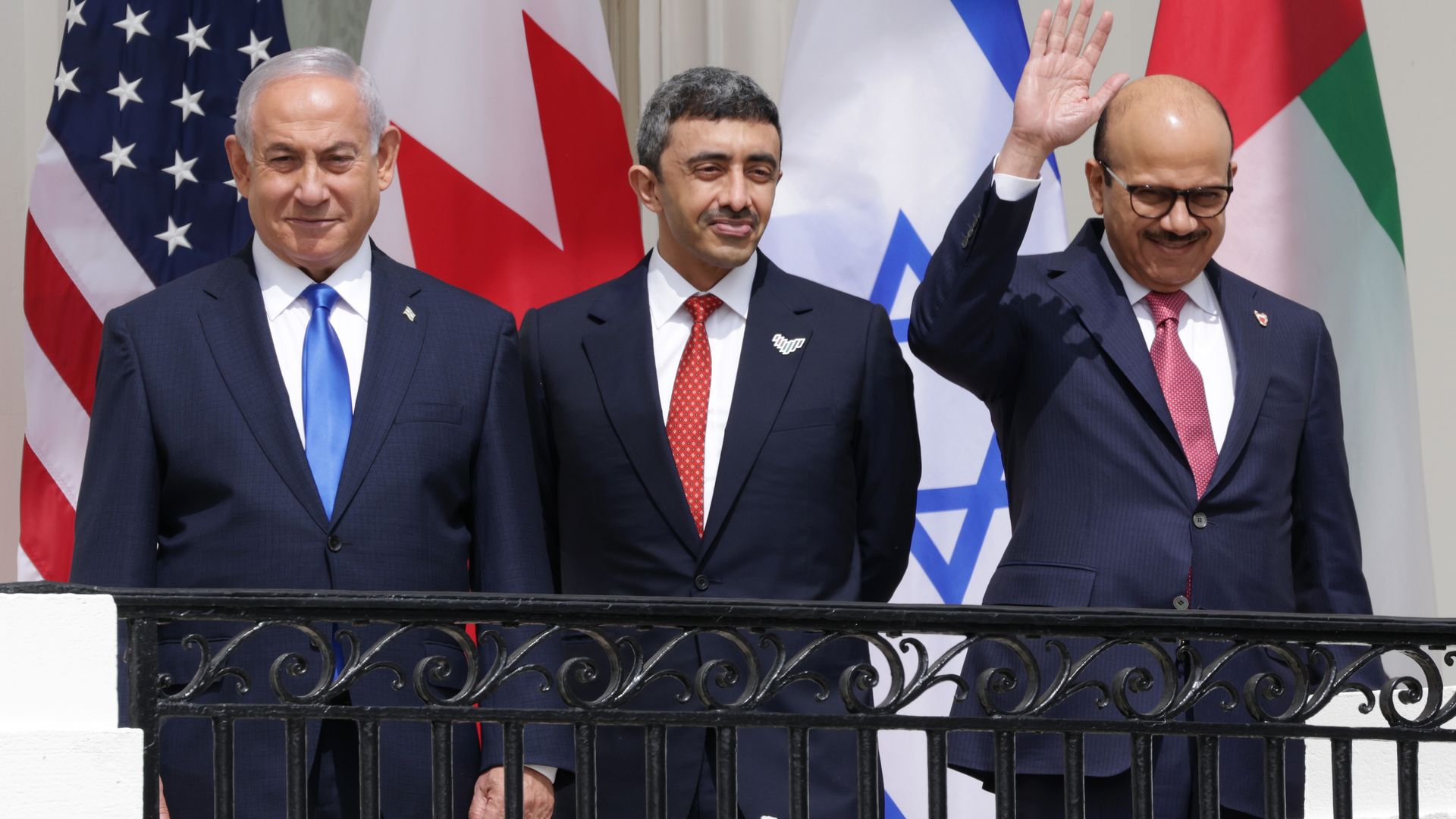
The speculation also cannot be separated from the evolution of the Israel-UAE relationship since the 2020 Abraham Accords.
The relationship was initially presented largely around diplomatic normalization, trade and investment. Security cooperation subsequently became increasingly important.
During the 2026 Iran conflict, Israel reportedly deployed an Iron Dome air-defence system and personnel to the UAE. Axios reported that the deployment represented an unprecedented level of Israeli-UAE military cooperation, while noting that the UAE had come under extensive Iranian missile and drone attack.
Academic research published in Armed Forces & Society has likewise documented the development of a deeper UAE-Israel security relationship following the Abraham Accords.
This is important when interpreting the Netanyahu visit.
A meeting between Netanyahu and MBZ does not automatically mean a new military agreement was signed.
But there is already an established security channel between the two countries, meaning Iranian threats, missile defence, intelligence cooperation, maritime security and regional military developments are all logical subjects for discussion.
The UAE Is Also Talking to Iran
This is perhaps the most important part of the story.
The UAE does not have to choose between talking to Israel and talking to Iran.
Abu Dhabi has demonstrated that it can do both.
After the Iranian attacks and the disruption of Gulf shipping, UAE officials have repeatedly emphasized the need for stronger national security capabilities while also leaving room for future diplomatic engagement with Tehran.
UAE presidential adviser Anwar Gargash recently said that the UAE was developing alternative energy and trade routes to reduce its vulnerability to the Strait of Hormuz. He also argued that Gulf countries could not depend entirely on foreign military powers for their security.
This creates a fascinating strategic triangle:
Israel wants to contain Iran.
Iran wants to prevent the consolidation of an anti-Iran regional security structure.
The UAE wants security against Iran while avoiding permanent confrontation with Tehran.
Netanyahu’s meeting with MBZ therefore has significance even without a secret agreement.
Why Qatar Appears in the Rumors
The Qatar angle is particularly interesting because Doha and Abu Dhabi have different relationships with Israel and Iran.
Qatar has maintained channels to Iran and has played a major mediation role in regional diplomacy. Reuters reported that Doha was promoting a regional security framework involving Iran and the Gulf states, with Qatar arguing that lasting security could not be built through repeated cycles of escalation.
At the same time, Qatar remains deeply involved in negotiations surrounding regional conflicts.
This means that if a Qatari government aircraft happened to be in Abu Dhabi around the same time as Netanyahu’s aircraft, the coincidence naturally generates speculation.
But an aircraft’s presence does not tell us who was aboard or whether its occupants participated in Netanyahu’s meeting.
The analytical point is different:
Qatar and the UAE are both deeply involved in the same regional diplomatic ecosystem, even though their approaches are not identical.
That makes Qatar relevant to the story without proving that it was part of the Netanyahu meeting.
Why Morocco Is Being Pulled Into the Speculation
Morocco’s appearance in the OSINT discussion is also understandable because Rabat is part of the Abraham Accords network.
Morocco restored diplomatic relations with Israel in 2020 and has maintained security and political contacts with Israel while also positioning itself on the Palestinian issue.
More importantly, in July, Morocco signed an agreement to participate in the International Stabilization Force for Gaza. The arrangement envisaged Moroccan military officers, gendarmerie and police personnel, along with a military field hospital.
That gives Morocco a direct connection to one of the most important questions surrounding the region:
What happens in Gaza after the war?
So when a Moroccan military aircraft is reported in Abu Dhabi at the same time as a secret Netanyahu visit, observers naturally connect the dots.
But again, the dots should remain separate unless corroborating evidence emerges.
The known connection is:
Morocco → Israel → Abraham Accords → Gaza stabilization → UAE
That is a real strategic network.
It is not proof that Moroccan officials were meeting Netanyahu.
Then There Is Libya’s Haftar Network
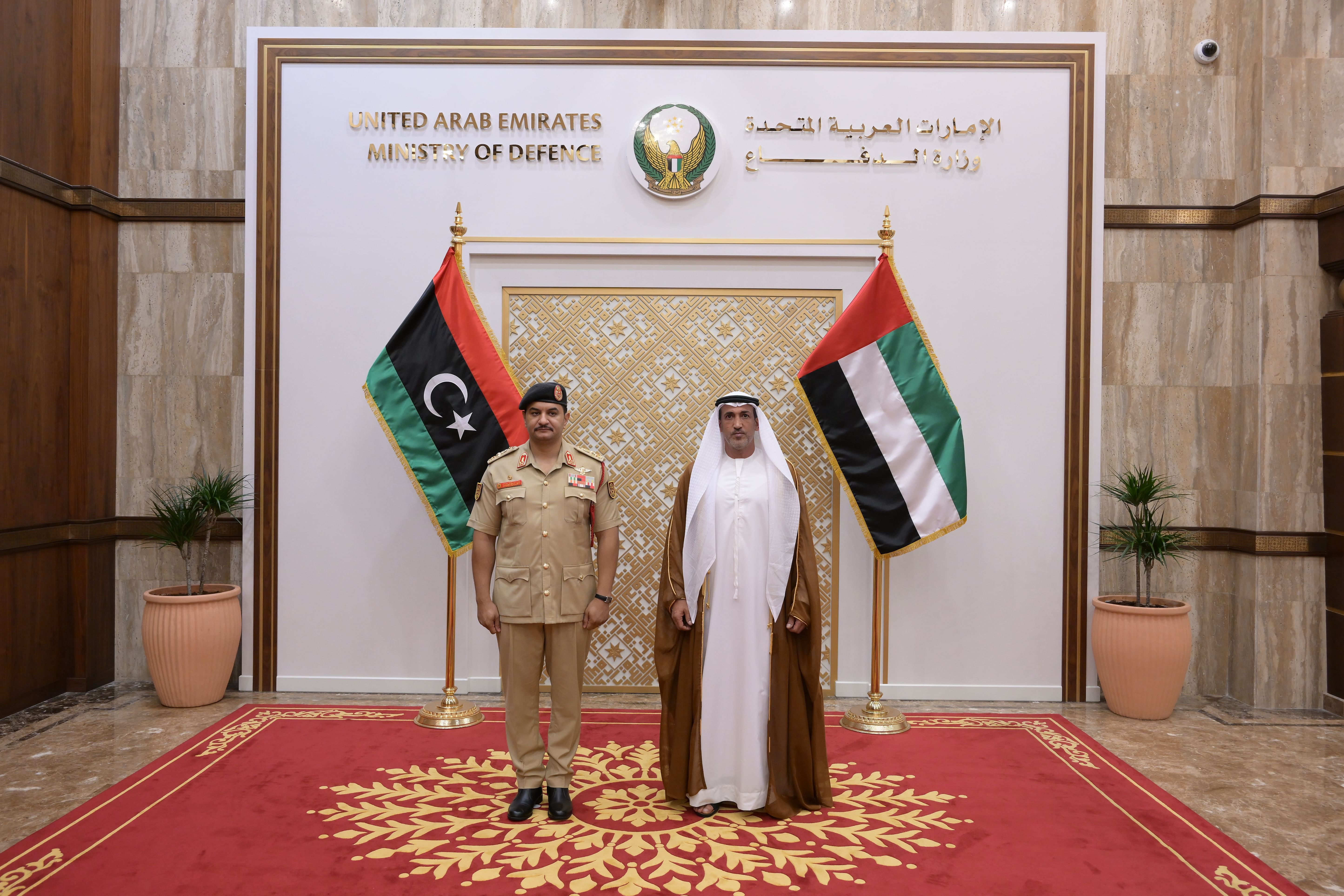
The Libya angle looks even more intriguing because of something that is independently confirmed.
On September 25, just days before Netanyahu’s Abu Dhabi visit, UAE Defence Minister of State Mohamed bin Mubarak Al Mazrouei met Lieutenant General Saddam Khalifa Haftar, deputy commander of the Libyan Arab Armed Forces, in Abu Dhabi.
The meeting included the UAE armed forces chief of staff and focused on continued coordination and enhanced defence cooperation.
That means the UAE was already hosting senior figures linked to eastern Libya immediately before Netanyahu arrived.
This does not prove that the Haftar camp had anything to do with Netanyahu.
But it explains why an alleged Haftar-linked aircraft appearing in Abu Dhabi generated interest among OSINT researchers.
The UAE has long maintained significant relationships with eastern Libya’s political and military networks, while Libya itself intersects with broader Mediterranean, North African and Middle Eastern security calculations.
So the Libyan connection is not imaginary.
The specific operational connection to Netanyahu’s meeting remains unproven.
Why the Rumors Became So Wild
There is a recognizable pattern behind the explosion of speculation.
1. Netanyahu’s trip was not announced beforehand
When a senior leader travels publicly, there is usually an official schedule, delegation list or government readout.
Here, there was none.
That information vacuum creates space for OSINT accounts to reconstruct events through aircraft tracking, satellite imagery, airport movements and social-media posts.
2. Several strategically important countries were moving through the same diplomatic ecosystem
The UAE had recently hosted Libyan officials.
Israel was conducting high-level diplomacy with Abu Dhabi.
Qatar was pushing a regional security framework involving Iran.
Morocco was involved in Gaza stabilization efforts.
Iran and the UAE had just demonstrated their own diplomatic channel at BRICS.
Those are real connections, not inventions.
3. The Iranian question connects almost everything
Iran sits at the centre of much of the speculation.
Israel views Iran as its principal strategic threat.
The UAE has been directly exposed to Iranian military pressure but also wants to preserve diplomatic channels.
Qatar is involved in mediation.
Saudi Arabia is dealing with Iran-related security pressures and the Yemen front.
Morocco is part of the Abraham Accords network.
Libya’s eastern leadership has longstanding links with Abu Dhabi.
That creates an unusually dense regional network.
4. The Gaza question overlaps with the same network
Gaza is no longer simply an Israeli-Palestinian issue.
The debate now includes:
- post-war administration;
- international stabilization forces;
- reconstruction;
- Hamas disarmament;
- Palestinian governance;
- Arab participation;
- Israeli security arrangements;
- humanitarian access;
- regional normalization.
Morocco’s participation in the proposed stabilization force makes it particularly relevant to this emerging architecture.
There Is Another Reason the Netanyahu-MBZ Meeting Is Being Watched Closely
The timing also coincides with renewed controversy surrounding an alleged warning from MBZ to Netanyahu before the October 7, 2023 Hamas attack.
Haaretz recently reported that MBZ allegedly contacted Netanyahu before October 7 and warned him about preparations for a major Hamas operation. Netanyahu has rejected the allegation as false.
The issue has subsequently received significant Israeli media attention.
That does not establish that Sunday’s meeting was connected to the 2023 episode.
But it adds another layer of political sensitivity to a Netanyahu-MBZ encounter occurring at this particular moment.
The Aircraft Puzzle: What Can Actually Be Said?
The OSINT flight movements are useful as indicators for further investigation, not as conclusions.
The most responsible way to categorize them is:
| Observation | What it may indicate | What it does not prove |
|---|---|---|
| Netanyahu aircraft in Abu Dhabi | Netanyahu’s UAE visit | Who else he met |
| Qatari government aircraft | Qatari official movement | Qatar-Netanyahu meeting |
| Moroccan military aircraft | Moroccan military movement | Moroccan participation in talks |
| Haftar-linked aircraft claim | Possible Libya-UAE movement | Haftar-Netanyahu coordination |
| UAE aircraft from Riyadh | UAE regional movement | Identity of passengers |
| Multiple movements close together | Increased regional activity | A single secret summit |
That distinction actually makes the investigation more credible, not less interesting.
What Could the Meeting Have Been About?
Based on the documented regional relationships, several subjects are strategically plausible.
Iran and regional security are perhaps the most obvious because the UAE has recently faced Iranian attacks while Israel remains focused on Tehran’s military capabilities.
Gaza’s future is another logical subject because the UAE is deeply involved in regional diplomacy and Morocco has committed to the proposed international stabilization force.
US policy toward Iran and the Gulf could also matter because Washington is simultaneously pushing pressure on Tehran while Gulf governments are exploring their own regional security arrangements.
Israel-UAE security cooperation is another obvious possibility given the reported deployment of Israeli air-defence capabilities to the UAE during the Iran conflict.
And there is a broader possibility: regional realignment after the Iran war.
That is probably the most important context.
The Bigger Picture: A New Middle East Network Is Emerging
The most revealing way to look at the Abu Dhabi episode may not be as an alleged secret summit at all.
The region is developing a complicated network in which countries cooperate on one issue while disagreeing on another.
The UAE can cooperate with Israel on air defence while talking to Iran.
Qatar can maintain relations with Iran while working with Washington.
Morocco can normalize with Israel while participating in Gaza stabilization efforts.
Saudi Arabia can rely on the United States for security while exploring its own arrangements with Tehran.
Libya’s eastern leadership can maintain close relations with Abu Dhabi while remaining part of a separate North African conflict.
This is why the rumors are spreading so quickly: there are genuinely enough overlapping relationships for almost any new movement in Abu Dhabi to appear connected to several strategic files simultaneously.
The evidence currently supports a Netanyahu-MBZ meeting and an unusually active regional diplomatic environment.
It does not yet support the much larger claim that Israel, UAE, Qatar, Morocco and the Haftar camp held a coordinated secret meeting.
But the convergence of their interests — Iran, Gaza, regional security, normalization, maritime routes and the post-war Middle East — explains why the speculation has become so intense.
And that, rather than the aircraft movements alone, is the more consequential story.