


US military expands pressure on Tehran beyond the naval blockade, targeting weapons transfers, dual-use technology and illicit revenue networks across Iran’s land borders and the Caspian Sea.
The United States is expanding its pressure campaign against Iran beyond maritime operations, with US Central Command (CENTCOM) establishing a new task force to disrupt Tehran’s ability to transport advanced weapons, military-related materials and sanctioned goods through land routes.
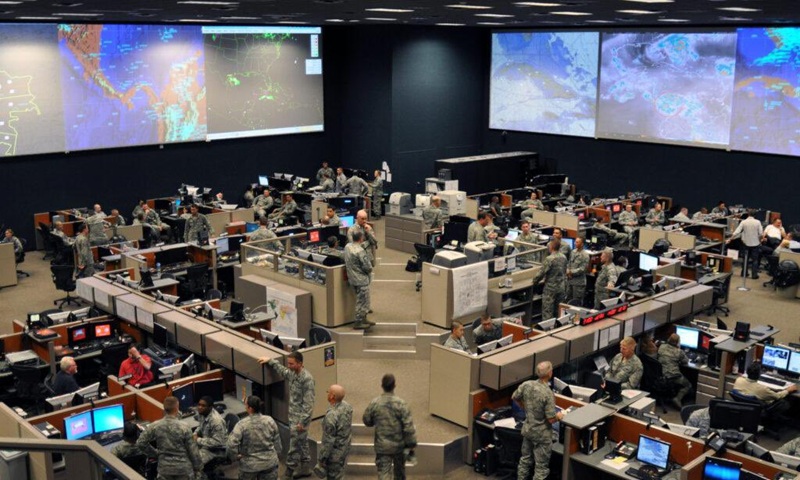
In a November 7 announcement, CENTCOM said Commander Admiral Brad Cooper had directed the formation of Task Force Iron Gate, a team of approximately 20 civilian and military personnel based in Tampa, Florida.
The initiative will coordinate with other US government agencies to prevent the movement of advanced weapons systems, dual-use technologies, sanctioned materials and illegal revenue streams across Iran’s land borders and the Caspian Sea.
The announcement represents a significant expansion of Washington’s enforcement strategy against Iran, connecting maritime restrictions with efforts to disrupt the country’s land-based supply networks and financial channels.
CENTCOM says the initiative will reinforce its existing naval blockade, which it claims has prevented Iran from exporting more than $25 billion worth of crude oil in recent months.
The development comes as the US-Iran confrontation continues to involve military operations, economic pressure and diplomatic efforts to reach a settlement.
Task Force Iron Gate: What CENTCOM Has Announced
According to the official CENTCOM release, Task Force Iron Gate will function as an internal coordination team rather than a new operational combat formation.
Its principal responsibilities will include:
- Coordinating with US government agencies to restrict Iranian weapons transfers.
- Identifying and disrupting the movement of advanced military technologies.
- Targeting the transportation of dual-use materials that could support military production.
- Supporting enforcement against sanctioned goods and materials.
- Addressing illicit revenue streams associated with Iran.
- Extending pressure beyond maritime routes to land borders and the Caspian Sea.
The approximately 20-person team will be based at CENTCOM headquarters in Tampa, Florida.
The task force’s interagency structure suggests that Washington intends to combine military intelligence, financial enforcement, sanctions implementation and government coordination rather than rely exclusively on naval operations.
CENTCOM Commander Admiral Brad Cooper described the initiative as an extension of the US maritime blockade.
“The establishment of Task Force Iron Gate reinforces the success of our ironclad blockade against Iran at sea,” Cooper said.
He added that stronger cooperation with US government agencies would further constrain Iran’s ability to finance terrorism, rebuild weapons factories and replenish its military.
Why the US Is Targeting Iran’s Land Routes
Iran’s military supply networks are not exclusively dependent on maritime transportation.
The country maintains extensive land connections with neighbouring states, while the Caspian Sea provides another strategic transportation environment linking Iran with Russia and other regional countries.
These routes can potentially support the movement of:
- Military equipment and components
- Electronics and advanced industrial technologies
- Machine tools and manufacturing equipment
- Chemicals and other dual-use materials
- Financial resources and sanctioned commodities
Dual-use technology is particularly significant because many commercial products have both civilian and military applications.
Electronics, industrial machinery, navigation equipment and manufacturing technologies can support civilian industries while also contributing to military production.
For Washington, restricting these networks could complicate Iran’s efforts to maintain defence-industrial capacity and replenish military equipment.
However, CENTCOM has not publicly identified specific land corridors, companies, vessels or shipments targeted by Task Force Iron Gate.
The announcement therefore establishes the task force’s mandate, but not the precise operational methods or enforcement mechanisms it will employ.

$25 Billion in Oil Revenue: CENTCOM’s Economic Pressure Campaign
The task force is being established against the backdrop of a US naval blockade that CENTCOM says has significantly restricted Iran’s maritime trade.
According to the command, American forces have prevented Iran from exporting more than $25 billion worth of crude oil in recent months.
The figure represents CENTCOM’s assessment of oil exports prevented by the blockade. It should not automatically be interpreted as a verified measure of Iran’s total economic losses.
The US strategy is intended to reduce Tehran’s access to oil revenue, which remains a critical source of government income and foreign currency.
The campaign also seeks to constrain Iran’s ability to finance military operations, support regional armed groups and rebuild damaged defence infrastructure.
In October, Cooper said CENTCOM and the US Treasury Department had also supported efforts to freeze approximately $350 million in Iranian cryptocurrency assets.
The combination of maritime restrictions, financial enforcement and the new land-focused task force suggests that Washington is pursuing a broader strategy aimed at reducing Iran’s economic and military flexibility.
US Naval Blockade Against Iran: How the Campaign Expanded
The US maritime blockade against Iran has evolved through several phases.
CENTCOM announced on April 12, 2026, that American forces would begin blocking maritime traffic entering and leaving Iranian ports from April 13.
The initial operation targeted commercial vessels entering or departing Iranian ports and coastal areas, including Iranian ports on the Arabian Gulf and Gulf of Oman.
CENTCOM stated that the blockade would apply to vessels of all nationalities entering or leaving Iranian ports, while ships travelling through the Strait of Hormuz to and from non-Iranian ports would not be impeded by the announced restrictions.
The blockade was subsequently resumed on July 14 following a pause in enforcement.
In its October 5 update, CENTCOM said American forces had redirected 130 commercial vessels during the renewed enforcement period.
The command also reported disabling three ships that refused to comply and said it had destroyed 13 commercial vessels during the preceding 12 weeks that it identified as blockade violators or part of the Islamic Revolutionary Guard Corps’ commercial network.
These figures are US military claims and have not been independently verified in full.
The creation of Task Force Iron Gate now indicates that Washington wants to extend the pressure campaign into transportation and supply networks beyond Iranian ports.

Caspian Sea Emerges as a New Strategic Focus
One of the most significant elements of the announcement is the explicit inclusion of the Caspian Sea.
The Caspian is a strategically important body of water connecting Iran with Russia, Azerbaijan, Kazakhstan and Turkmenistan.
It also provides Iran with an alternative transportation environment outside the Persian Gulf and the Strait of Hormuz.
The region has long-standing commercial, energy and logistical connections, making it relevant to the movement of industrial goods and potentially military-related materials.
The Caspian dimension also raises broader questions about US efforts to restrict Iranian access to strategic supply networks.
Iran and Russia have developed extensive political, economic and military cooperation, particularly amid Western sanctions against both countries.
The new CENTCOM task force could therefore become relevant to the wider competition over military supply chains and strategic connectivity between Iran and Russia.
However, the announcement does not specifically identify Russia as a target of the task force.
Nor does it establish that CENTCOM intends to conduct military operations against commercial transportation networks in the Caspian Sea.
Its stated objective is coordination with other US government agencies to prevent the movement of weapons, dual-use technology, sanctioned materials and illicit revenue.
The distinction is important because the Caspian is also a major commercial and energy region involving several sovereign states.

Iran’s Defence Industry Under Growing Pressure
Task Force Iron Gate’s stated objective of preventing Iran from rebuilding weapons factories is particularly significant.
Modern defence production depends on access to specialised components, industrial machinery, electronics, precision manufacturing equipment and technical expertise.
Sanctions and restrictions on military-related supply chains can complicate these processes, particularly when manufacturers depend on imported components.
Iran has developed domestic capabilities in several defence sectors, including missiles, unmanned aerial vehicles and military electronics.
Nevertheless, domestic production does not eliminate the potential importance of foreign components, specialised equipment and industrial technologies.
Washington’s strategy appears designed to make it more difficult for Tehran to replenish military inventories or restore production capacity following damage to defence infrastructure.
The task force could potentially contribute to intelligence-sharing and coordination efforts aimed at identifying supply-chain vulnerabilities.
The CENTCOM announcement, however, does not specify which Iranian weapons programmes or production facilities will receive priority attention.
Latest Iran Developments: Military Pressure and Diplomatic Negotiations Continue
The creation of Task Force Iron Gate comes amid renewed military activity and continuing diplomatic efforts.
On November 6, US forces carried out limited strikes against an Iranian air-defence system near Qeshm Island, according to Associated Press reporting.
The strikes followed earlier US military action and occurred as Washington and Tehran continued to consider diplomatic proposals.
Qeshm Island is strategically located near the Strait of Hormuz, one of the world’s most important maritime energy corridors.
The renewed military activity highlights the continuing risks surrounding the US-Iran confrontation, particularly for commercial shipping and regional security.
At the same time, Qatar has continued its mediation efforts.
On November 7, Qatar’s Prime Minister Sheikh Mohammed bin Abdulrahman Al-Thani said diplomatic efforts between Washington and Tehran were continuing to prevent further regional escalation.
Reuters reported that Qatar remained hopeful of reaching an agreement, although major differences between the two sides persisted.
The diplomatic discussions reportedly involve sanctions, the US blockade, Iran’s nuclear programme and the Strait of Hormuz.
The simultaneous expansion of military pressure and diplomatic engagement suggests that Washington is attempting to strengthen its negotiating position while keeping the possibility of an agreement open.
Could Task Force Iron Gate Affect Regional Trade?
The expansion of US enforcement from maritime routes to land transportation could have implications for regional commercial activity.
Iran’s land connections are important for trade with neighbouring countries, while the Caspian Sea supports transportation links involving multiple regional economies.
If the task force identifies additional routes, companies or materials for enforcement, businesses involved in Iran-related trade could face increased scrutiny.
Potential consequences may include:
- Greater compliance requirements for regional trading companies.
- Increased scrutiny of dual-use industrial exports.
- Additional risks for transportation and logistics operators.
- Complications for companies involved in Iranian energy and manufacturing networks.
- Greater uncertainty surrounding regional supply chains.
However, the exact impact will depend on how the task force implements its mandate and whether new restrictions or enforcement measures are introduced.
CENTCOM has not announced a comprehensive list of affected commercial routes or industries.
What Task Force Iron Gate Means for Pakistan
For Pakistan, the development deserves attention because Iran shares a border with Pakistan and maintains important economic and transportation connections across the region.
The expansion of US enforcement efforts could create additional diplomatic and commercial considerations for countries maintaining trade relations with Tehran.
Pakistan has historically sought to balance its relations with Iran, the United States and other regional partners.
The task force’s focus on sanctioned materials, dual-use technology and land transportation could become relevant to regional trade compliance and border management.
Islamabad will need to assess any new US restrictions or enforcement measures carefully, particularly where legitimate commercial activity and humanitarian requirements are involved.
At the same time, the announcement does not indicate that Pakistan is being targeted by Task Force Iron Gate.
There is also no public evidence in the CENTCOM release that the task force has been assigned a specific mission along the Pakistan-Iran border.
For Pakistan, the immediate issue is therefore the potential regional impact of expanding US sanctions enforcement rather than any confirmed military threat from the task force itself.
A New Phase in Washington’s Pressure Strategy Against Iran
Task Force Iron Gate marks an important development in the US campaign against Iran.
The initiative extends CENTCOM’s stated objectives beyond maritime restrictions and places greater emphasis on land transportation, industrial supply chains and financial networks.
The strategy reflects Washington’s assessment that limiting Iran’s military capabilities requires pressure on the networks supporting defence production and military replenishment.
Yet the effectiveness of the initiative will depend on several factors, including intelligence cooperation, enforcement capabilities, regional compliance and the resilience of Iran’s domestic industries.
It will also depend on whether Washington can sustain the pressure without further destabilising regional trade and security.
With military operations continuing and diplomatic negotiations still underway, Task Force Iron Gate adds another layer to an already complex US-Iran confrontation.
The central question is whether the expanded pressure campaign will force Tehran toward a negotiated settlement—or deepen the confrontation across the Gulf, the Caspian Sea and the wider Middle East.


