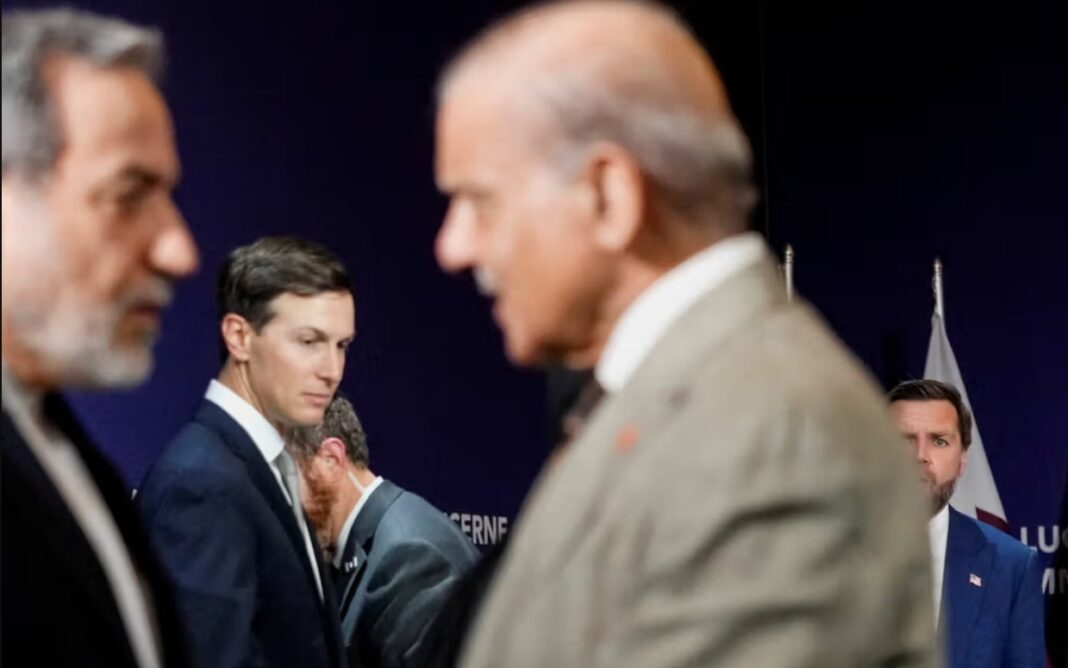
Negotiations between the United States and Iran concluded on a surprisingly positive note in Switzerland after overnight talks produced what mediators described as “constructive” progress, despite growing concerns that recent remarks by President Donald Trump could derail diplomacy.
The latest round of discussions resulted in several practical mechanisms aimed at stabilizing tensions, including a new communication channel for the Strait of Hormuz, a high-level political oversight committee, and a de-confliction mechanism focused on Lebanon.
The developments suggest that while significant disagreements remain, neither Washington nor Tehran appears ready to abandon diplomacy.
Unexpected Progress After Days of Uncertainty
Iranian Foreign Ministry spokesperson Esmaeil Baghaei said “good progress was made” during the negotiations, a notable statement given the uncertainty surrounding talks in recent days.
Iranian Foreign Minister Abbas Araghchi announced that sanctions affecting Iranian oil exports had been waived and that some frozen Iranian assets had been released.
Araghchi also revealed that a major reconstruction and economic development initiative for Iran had been launched, indicating that discussions are already moving beyond immediate crisis management toward broader economic issues.
Meanwhile, mediators Pakistan and Qatar announced that Washington and Tehran had agreed to establish a High-Level Committee that will provide political oversight for the mediation process.
Under the new framework, specialized negotiating teams will continue technical discussions on nuclear issues, sanctions implementation, maritime security, and other components of the broader agreement.
Trump’s Remarks Nearly Derailed Negotiations
The positive outcome was far from guaranteed.
Only hours before the talks concluded, reports indicated negotiations had stalled following remarks made by President Donald Trump during an interview with Fox News.
Trump warned that the United States could resume military strikes against Iran if negotiations collapsed and suggested Washington could assume control over the Strait of Hormuz.
“If they don’t make a deal, we’ll collect tolls,” Trump said.
According to Iranian officials, the comments triggered a strong reaction inside Tehran.
Baghaei later acknowledged that Iran initially considered suspending participation in the talks following the remarks, while market uncertainty contributed to a temporary rise in oil prices.
The episode highlights the fragility of the negotiating process and demonstrates how quickly diplomatic momentum can be disrupted by political rhetoric.
New Strait of Hormuz Communication Line Established
Perhaps the most significant practical outcome of the talks was the creation of a direct communication mechanism focused on the Strait of Hormuz.
According to the joint statement issued by Pakistan and Qatar, Washington and Tehran agreed to establish a dedicated “line of communication” designed to prevent incidents and miscalculations involving commercial shipping.
The mechanism will operate during the initial 60-day implementation period established under the broader US-Iran agreement.
Its primary objective is straightforward: ensuring safe passage for commercial vessels through one of the world’s most important maritime chokepoints.
The Strait of Hormuz remains critical to global energy security, carrying a substantial portion of internationally traded oil.
Any disruption to shipping traffic can have immediate consequences for global energy markets, insurance rates, and broader economic stability.
The creation of a direct communication channel therefore represents one of the most tangible confidence-building measures achieved so far.
Lebanon Remains the Biggest Obstacle
Despite progress on maritime issues, Lebanon continues to represent the most serious challenge facing negotiators.
The United States and Iran agreed to establish a separate “de-confliction cell,” facilitated by Pakistan and Qatar, aimed at reducing tensions linked to ongoing military activity in Lebanon.
This mechanism is designed to support efforts to end military operations and prevent escalation involving Israel and Hezbollah.
For months, Tehran has insisted that any broader settlement must address Israeli military operations in Lebanon.
Israel, however, is not a direct participant in the negotiations.
That reality creates a significant complication.
Even if Washington and Tehran reach understandings on sanctions, maritime security, and nuclear issues, developments in Lebanon could still undermine progress.
Araghchi described the Lebanon file as the “first real test” of whether the broader diplomatic process can succeed.
Why Both Sides Still Want a Deal
Despite recurring crises, both Washington and Tehran appear to recognize that diplomacy remains preferable to escalation.
For the United States, a negotiated arrangement offers the best chance of reopening the Strait of Hormuz, stabilizing energy markets, and addressing concerns surrounding Iran’s enriched uranium stockpile without another military confrontation.
For Iran, sanctions relief and access to frozen assets provide urgently needed economic breathing room after a costly period of conflict and economic disruption.
These overlapping interests explain why negotiations continue despite repeated setbacks.
Neither side appears fully satisfied with the current framework.
Yet neither side appears willing to abandon it either.
The Nuclear Issue Remains Unresolved
One of the most important realities emerging from the Switzerland talks is that the most difficult questions remain unanswered.
Iran may ultimately be willing to offer limited concessions regarding its nuclear activities in exchange for meaningful sanctions relief and economic normalization.
However, expectations in Washington should remain realistic.
Iran’s regional influence network, support for allied groups, and broader strategic posture are deeply embedded within the ideological and security framework of the Islamic Republic.
These issues are viewed in Tehran not as bargaining chips but as core national security interests.
As a result, any expectation that economic pressure alone will produce sweeping Iranian concessions across all strategic fronts is likely to face serious limitations.
What Happens Next?
The negotiations now enter a critical technical phase.
Specialized working groups will continue discussions on nuclear issues, sanctions implementation, maritime security arrangements, and mechanisms designed to prevent future military escalation.
The newly established High-Level Committee will oversee the broader process while Qatar and Pakistan continue their mediation role.
The immediate challenge is implementation.
The longer-term challenge is trust.
The latest round of talks demonstrated that diplomacy remains possible despite significant tensions.
But it also highlighted how fragile progress remains.
The coming weeks will reveal whether the new mechanisms created in Switzerland can transform temporary crisis management into a sustainable political settlement—or whether unresolved disputes over Lebanon, sanctions, and Iran’s nuclear program will once again push the region toward confrontation.