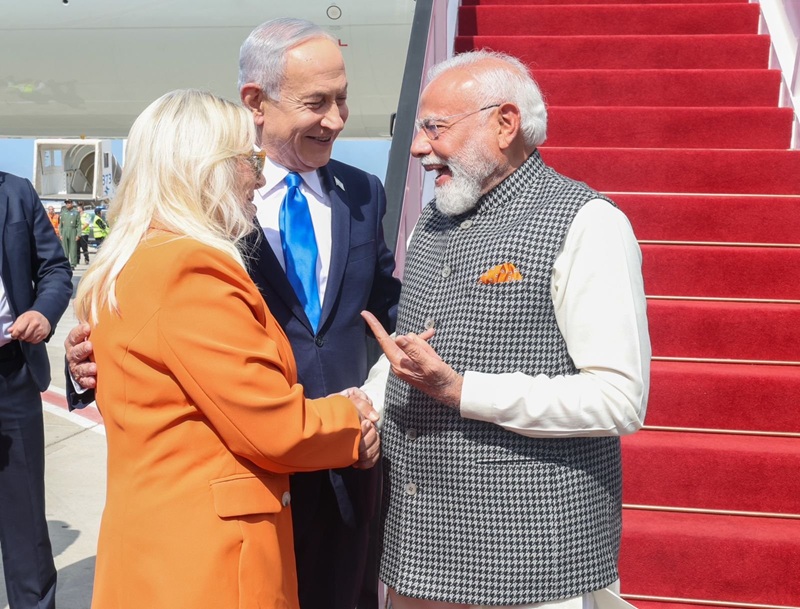
Indian Prime Minister Narendra Modi’s visit to Israel is being widely seen as far more than a diplomatic engagement. According to Indian media and defence analysts, the visit is anchored in potential arms deals estimated at up to $10 billion, with a sharp focus on air defence, missile interception, and counter-drone technologies.
The urgency behind these negotiations, officials suggest, is rooted in India’s recent military experience with Pakistan, which exposed critical gaps in New Delhi’s ability to counter drones, missiles, and precision-guided munitions in a fast-escalating conflict scenario.
Why air defence tops India’s wishlist
Indian defence planners are increasingly prioritising layered air defence systems capable of addressing modern threats such as:
-
Armed and reconnaissance drones
-
Cruise and ballistic missiles
-
Rocket and artillery attacks
-
Swarm-drone tactics seen in recent regional conflicts
Israel’s combat-tested systems are regarded as among the most effective in this domain, making it a natural partner as India accelerates military modernisation.
Key Israeli systems under discussion
While no official list has been released, defence reporting indicates India’s interest centres on several Israeli platforms:
-
Iron Dome – Short-range interception system effective against rockets and UAVs
-
David’s Sling – Designed to counter medium-range missiles and cruise threats
-
Arrow Missile Defense System – Long-range ballistic missile interception
-
Iron Beam – Laser-based solution offering low-cost drone and rocket interception
Indian officials are particularly interested in technology transfer and local manufacturing, allowing these systems to be adapted for India’s unique geography and threat environment.
The Pakistan factor: a strategic wake-up call
Indian media frequently reference a brief but intense military confrontation with Pakistan in 2025, often described as a “mini-war,” as a turning point. During this episode:
-
Drone incursions and missile threats highlighted weaknesses in India’s air defence coverage
-
Rapid escalation underscored the need for quick-reaction, multi-layered interception systems
-
Israeli air defence performance in real-world conflicts drew attention in Indian strategic circles
As one Indian defence analyst put it, “India woke up to the reality that future wars will be fought in the air and with unmanned systems first.”
Beyond purchases: joint production and technology transfer
A central theme of Modi’s Israel visit is long-term defence cooperation, not just arms sales. Expected discussion points include:
-
Joint ventures between Indian and Israeli defence firms
-
Local manufacturing aligned with India’s Atmanirbhar Bharat (self-reliance) policy
-
Shared research on counter-drone warfare, sensors, and battlefield AI
Such cooperation would help India reduce dependence on traditional suppliers while boosting domestic defence capacity.
Geopolitical implications
These prospective deals signal broader shifts:
-
India continues to diversify defence partners beyond Russia and the West
-
Israel strengthens its footprint in South Asian security architecture
-
Both countries align more closely on emerging threats like drones, missile proliferation, and hybrid warfare
For regional observers, the scale of the proposed agreements underscores how South Asia’s security calculus is rapidly evolving.
Conclusion
The multibillion-dollar arms discussions surrounding Prime Minister Narendra Modi’s Israel visit reflect a strategic recalibration in India’s defence posture. Driven by lessons from recent conflict and the growing threat of drones and missiles, New Delhi is looking to Israel for proven, scalable air defence solutions—and for a partnership that goes beyond procurement to shared innovation and production.
If finalised, these deals could reshape India’s air defence architecture for decades and mark one of the most significant defence cooperation milestones in India–Israel relations.