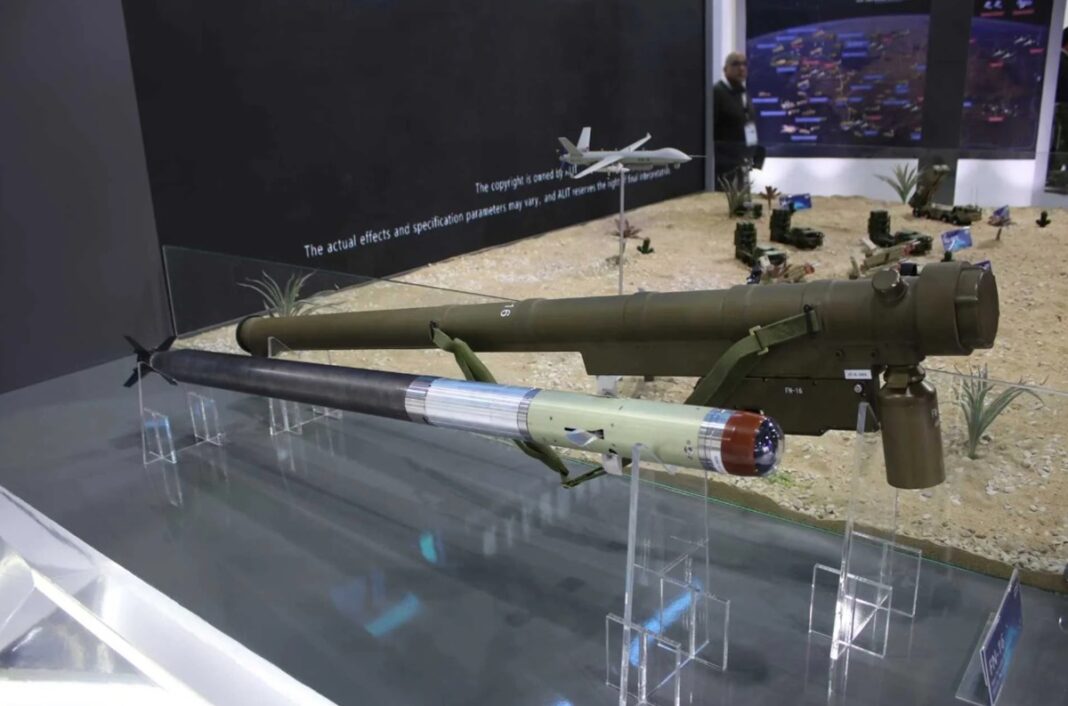
Iran is reportedly preparing to strengthen its short-range air defense network with the acquisition of hundreds of Chinese-made QW-12 and FN-16 man-portable air defense systems (MANPADS), a move that could complicate future U.S. and Israeli air operations.
According to a Reuters report citing sources familiar with the agreement, Tehran is expected to purchase between 300 and 400 QW-12 and FN-16 missiles in a deal reportedly worth $60–70 million.
If confirmed, the purchase would represent one of the most significant upgrades to Iran’s lower-tier air defense network following recent U.S. and Israeli strikes that exposed weaknesses in the country’s layered air defense architecture.
While the QW-12 is unlikely to deny air superiority to advanced stealth aircraft, military analysts believe it could substantially increase risks for helicopters, drones, and low-flying support aircraft operating over Iranian territory.
Why the QW-12 Matters

Modern air campaigns are rarely decided during the opening hours of combat.
The initial wave of strikes typically relies on stealth aircraft, long-range precision weapons, electronic warfare, and suppression of enemy air defenses (SEAD) to neutralize radar stations, command centers, missile batteries, and strategic infrastructure.
Aircraft such as:
- Israeli F-35I Adir
- Israeli F-15I Ra’am
- U.S. F-35A Lightning II
- U.S. B-2 Spirit
can launch precision-guided munitions from altitudes and distances well beyond the engagement envelope of shoulder-fired missiles.
Consequently, the QW-12 would have little influence during the opening phase of a major air campaign.
The Real Threat Comes After the First Wave
The operational value of the QW-12 emerges after strategic air defenses have already been weakened.
Once long-range systems such as the S-300PMU2, Bavar-373, and other radar-guided missile batteries are degraded, air operations shift toward sustained pressure on remaining military targets.
At this stage, air forces increasingly rely on:
- Intelligence, Surveillance and Reconnaissance (ISR)
- Battle Damage Assessment (BDA)
- Target confirmation
- Special operations support
- Combat Search and Rescue (CSAR)
- Tactical logistics
These missions often require aircraft to fly at relatively low altitudes—precisely where MANPADS become most dangerous.
Instead of threatening stealth bombers, systems like the QW-12 are designed to target the aircraft supporting prolonged military operations.
What Is China’s QW-12?
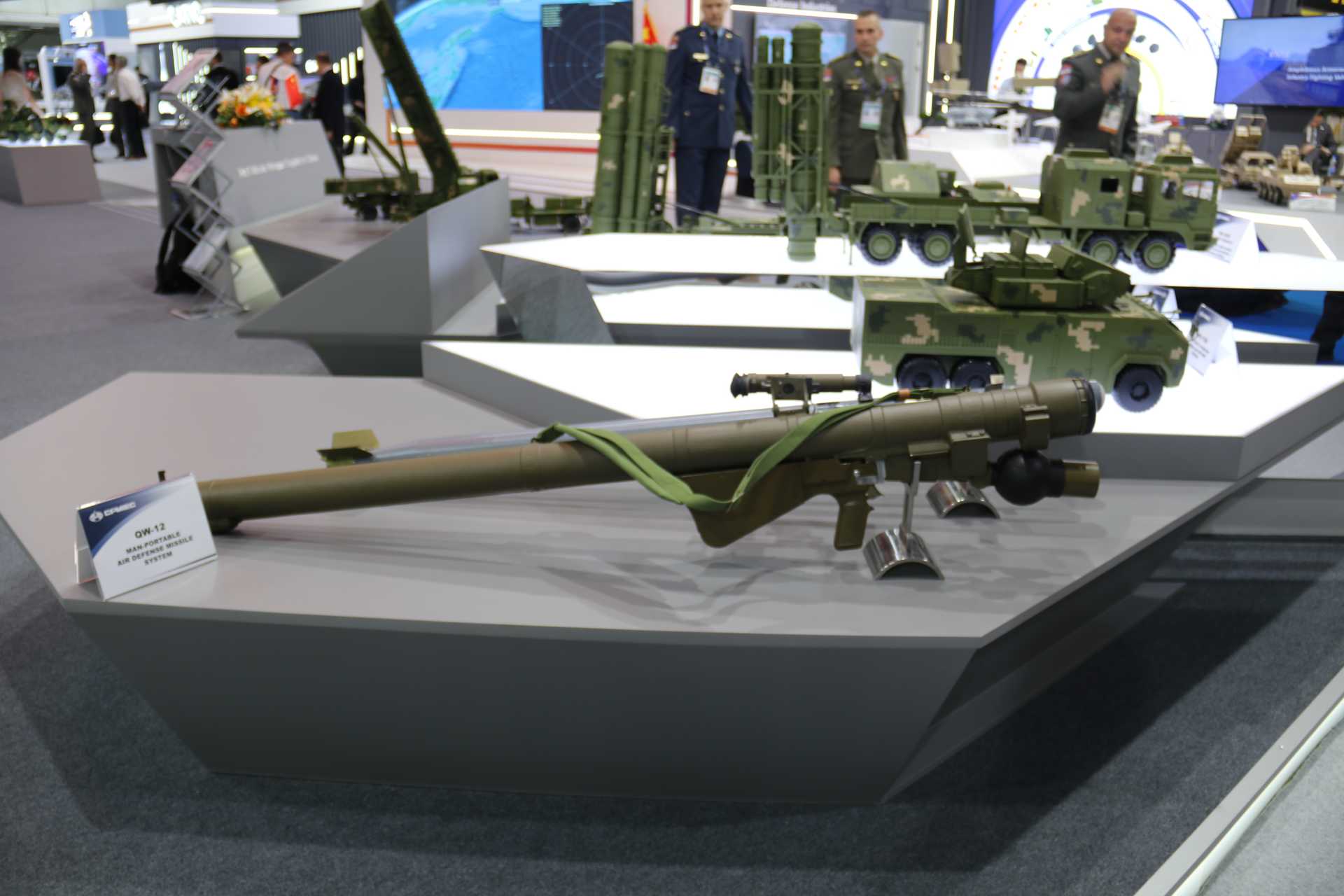
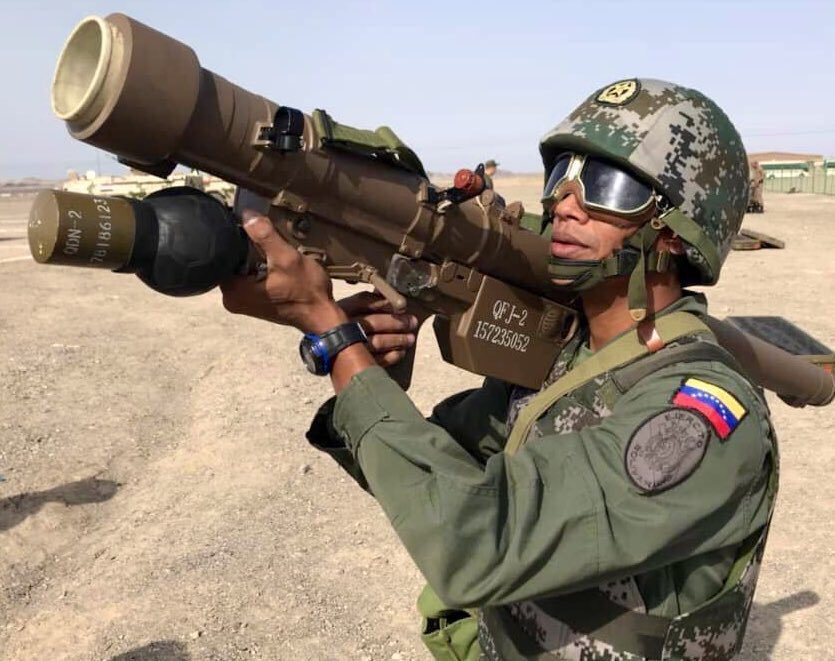
Developed by the China Aerospace Science and Industry Corporation (CASIC), the QW-12 represents one of China’s most advanced exportable shoulder-fired air defense missiles.
Open-source assessments indicate the missile offers:
- Effective range of approximately 6–7 kilometers
- Maximum engagement altitude of roughly 4,000 meters
- Imaging infrared seeker
- Improved resistance to infrared countermeasures
- Capability against helicopters
- Low-flying combat aircraft
- Cruise missiles
- Medium-sized unmanned aerial vehicles (UAVs)
Unlike older infrared-guided missiles, the QW-12’s imaging infrared seeker improves target discrimination and increases resistance against conventional flare countermeasures.
Helicopters Would Face the Greatest Risk
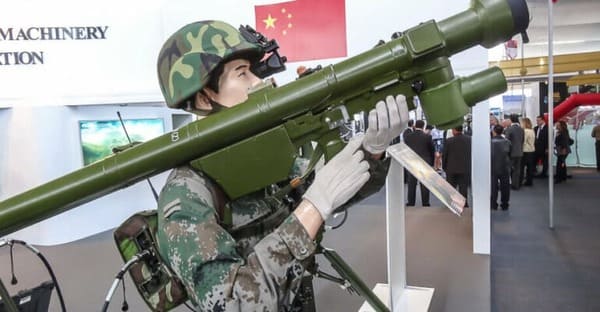
Military helicopters remain among the most vulnerable platforms during sustained air campaigns.
Aircraft involved in:
- Troop insertion
- Personnel recovery
- Medical evacuation
- Special operations
- Tactical transport
must routinely fly below the missile’s engagement ceiling.
Israeli rotary-wing platforms such as the CH-53 Yas’ur and UH-60 Yanshuf, as well as U.S. Army and U.S. Air Force helicopters supporting regional operations, could face increased risks when operating near heavily defended military facilities.
Takeoffs, landings, hovering, and low-speed maneuvering create predictable flight profiles that are particularly vulnerable to shoulder-fired missiles.
Drones Could Also Face Greater Challenges
The QW-12 could also complicate operations involving unmanned aerial systems.
Israel and the United States rely heavily on drones for:
- Reconnaissance
- Target identification
- Strike coordination
- Battle damage assessment
- Persistent surveillance
High-altitude platforms generally remain outside the missile’s engagement envelope.
However, smaller tactical drones, loitering munitions, and UAVs descending to verify strike results could become vulnerable once operating below approximately 4,000 meters.
Rather than eliminating drone operations entirely, the QW-12 could force operators to adopt more cautious flight profiles or rely on higher-altitude sensors with reduced resolution.
Passive Operation Makes MANPADS Difficult to Destroy
Perhaps the QW-12’s greatest military advantage is not its range but its survivability.
Unlike radar-guided surface-to-air missile systems, MANPADS do not emit detectable radar signals before launch.
This creates several operational advantages:
- No dedicated radar required
- Minimal electronic signature
- Easy concealment
- Rapid relocation after firing
- Difficult to detect during SEAD operations
Radar-guided missile batteries become immediate targets during suppression campaigns because their emissions reveal their locations.
MANPADS, by contrast, can remain hidden until the moment of engagement.
This makes them significantly harder to eliminate even after larger air defense systems have been destroyed.
Strengthening Iran’s Layered Air Defense Network
If integrated into Iran’s broader command-and-control network, dispersed QW-12 teams could receive warning information from:
- Long-range surveillance radars
- Electro-optical sensors
- Passive detection systems
- Command centers
Without activating any radar of their own, missile teams could establish concealed engagement zones around:
- Nuclear facilities
- Ballistic missile bases
- Airfields
- Command centers
- Logistics hubs
- Military infrastructure
Such an approach would reinforce the lowest layer of Iran’s integrated air defense architecture while preserving operational secrecy.
The Goal Is Not Air Superiority
Military analysts emphasize that the reported acquisition should not be interpreted as an attempt to challenge American or Israeli control of the air.
Even several hundred MANPADS cannot prevent stealth aircraft employing stand-off precision weapons from attacking strategic targets.
Instead, their primary value lies in increasing the operational cost of sustaining long-term air campaigns.
By threatening helicopters, drones, and low-flying support aircraft, the QW-12 could force planners to devote additional resources to locating and neutralizing dispersed missile teams before follow-on operations can proceed safely.
Strategic Assessment
If the reported deal proceeds, the introduction of hundreds of Chinese-made QW-12 missiles would strengthen Iran’s ability to defend critical facilities after the initial phase of any future conflict.
While the system is unlikely to alter the overall regional balance of air power, it could complicate sustained U.S. and Israeli operations by increasing risks for aircraft conducting intelligence, surveillance, special operations, logistics, and post-strike assessment missions.
Modern air campaigns depend not only on achieving air superiority but also on maintaining it over time. In that context, the QW-12 would function less as a strategic game changer and more as a force multiplier that increases operational complexity and raises the cost of prolonged military operations.