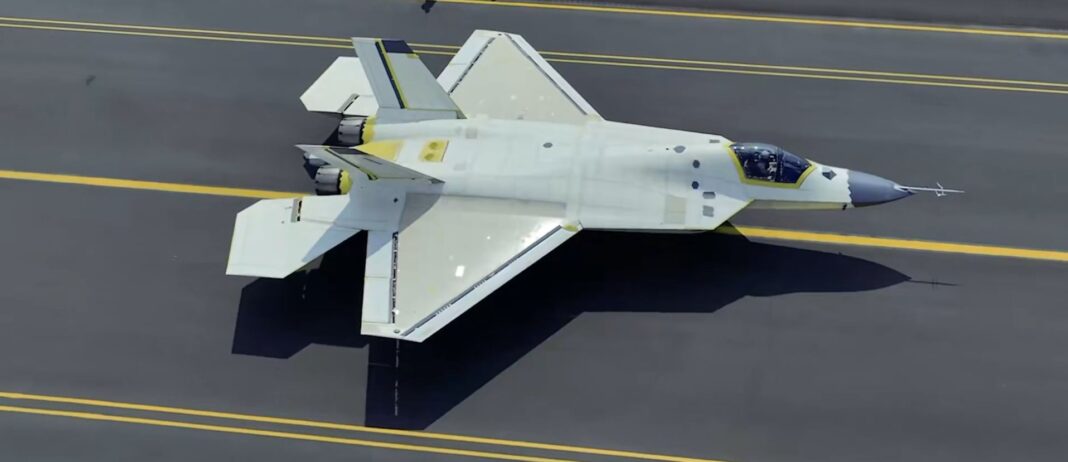
Türkiye has reached another major milestone in its indigenous fifth-generation fighter program after Turkish Aerospace (TUSAŞ) released official footage showing the KAAN P1 prototype conducting taxi trials under its own power.
The demonstration represents more than a routine ground test. It signals the program’s transition from proving basic flight capability toward validating the advanced sensors, mission systems, and aerodynamic refinements required for an operational fifth-generation combat aircraft.
WATCH: Turkish Aerospace released new footage showing the KAAN P1 fighter jet prototype successfully conducting powered taxi tests, confirming it has moved into ground testing ahead of its first flight.
TUSAŞ aims for P1’s first flight within a couple of months and for both P1… pic.twitter.com/LwyVBXuD2u
— Clash Report (@clashreport) July 31, 2026
Unlike the original P0 prototype, the newly revealed P1 aircraft features several visible design changes that indicate deeper systems integration and continued maturation of Türkiye’s most ambitious aerospace project.
A More Mature KAAN Prototype
The KAAN P1 is not simply a duplicate of the original prototype.
Instead, it incorporates engineering lessons learned from the P0 aircraft, ground testing, structural analysis, manufacturing improvements, and subsystem development carried out over the past two years.
Official footage released on 31 July 2026 shows the aircraft moving under its own power during taxi trials at Turkish Aerospace’s facilities in Ankara.
Although taxi testing is conducted on the ground, it allows engineers to evaluate multiple aircraft systems simultaneously, including:
- Engine performance
- Braking systems
- Nose-wheel steering
- Hydraulic systems
- Electrical power generation
- Cockpit displays
- Structural vibration
- Thermal management
Successfully integrating these systems is an important step before expanding the flight-test campaign.
Building on the Success of KAAN P0
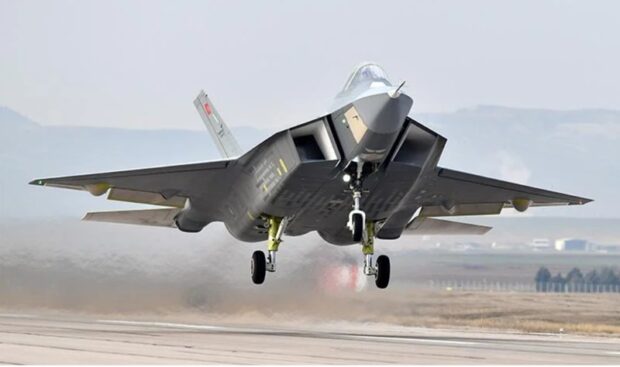
The original KAAN P0 prototype proved Türkiye could design, manufacture, and fly a twin-engine fighter developed largely under national control.
Its first publicly announced flight in February 2024 lasted approximately 13 minutes, while a second flight in May 2024 further expanded the flight envelope.
The P1 prototype now shifts the focus from basic flightworthiness toward validating a configuration much closer to the aircraft intended for operational service.
Rather than simply repeating previous tests, engineers are now evaluating how advanced mission systems, aerodynamic refinements, and structural improvements function together within a more representative combat aircraft.
Visible Design Changes Highlight Program Evolution
One of the most noticeable differences between P0 and P1 is the redesigned forward fuselage.
The latest prototype introduces:
- Revised engine air intakes
- Modified nose section
- Broader center fuselage
- Refined landing gear arrangement
- Cleaner stabilator geometry
The intake redesign appears intended to improve airflow management while supporting low-observable shaping and providing additional internal space for avionics, cooling systems, fuel, and weapons integration.
Although Turkish Aerospace has not disclosed every engineering detail, the changes indicate substantial refinement rather than cosmetic redesign.
Advanced Sensors Begin Appearing on the Airframe
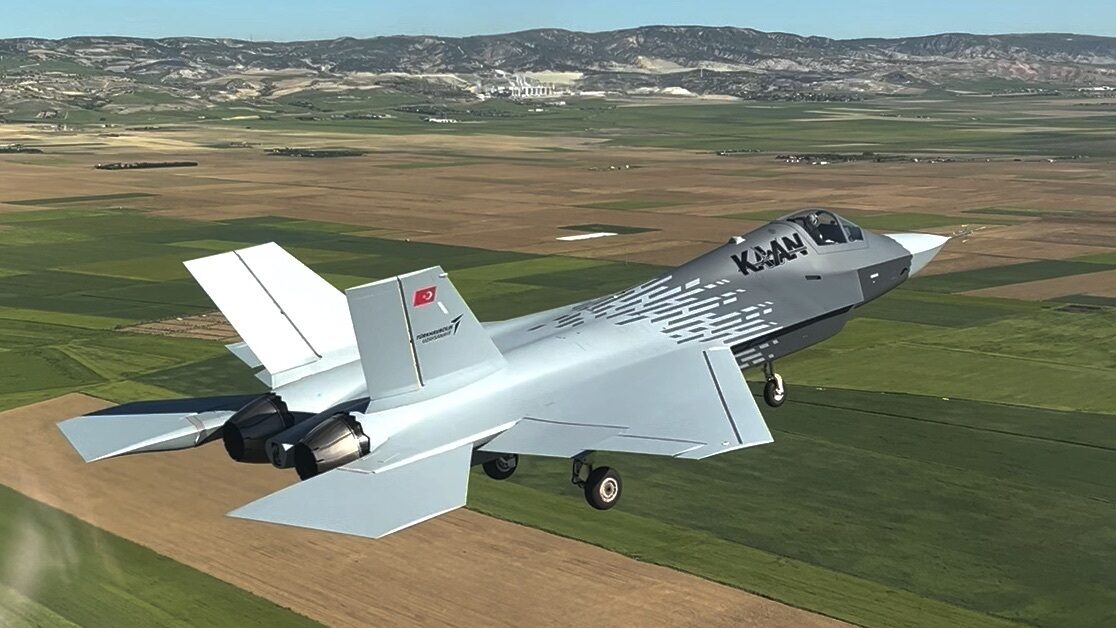
Perhaps the most significant development visible on the P1 prototype is the apparent preparation for indigenous sensor integration.
The aircraft displays external features consistent with planned installation of several Turkish-developed systems, including:
- ASELSAN KARAT Infrared Search and Track (IRST)
- TOYGUN electro-optical targeting system
- Integrated electronic warfare architecture
If fully integrated, these systems would allow KAAN to detect, identify, and engage airborne or surface targets while minimizing reliance on externally mounted sensor pods.
The visible installations should not yet be interpreted as confirmation that every sensor is fully operational.
However, they demonstrate that engineers are already incorporating provisions for electrical power, cooling, structural attachment, and sensor placement within the aircraft’s low-observable design.
Electronic Warfare Architecture Takes Shape
The vertical stabilizers also reveal several contrasting panels believed to be associated with conformal radio-frequency and electronic warfare systems.
Although Turkish Aerospace has not officially identified every aperture, analysts assess that the design reflects preparation for integrated:
- Radar warning receivers
- Electronic support measures
- Communications systems
- Electronic countermeasures
Unlike traditional external antennas, conformal integration preserves aerodynamic performance while reducing radar reflections.
Such an approach mirrors trends already seen in other advanced fifth-generation aircraft, where electronic warfare becomes an integral part of the airframe rather than an externally mounted system.
Landing Gear Also Shows Major Improvements
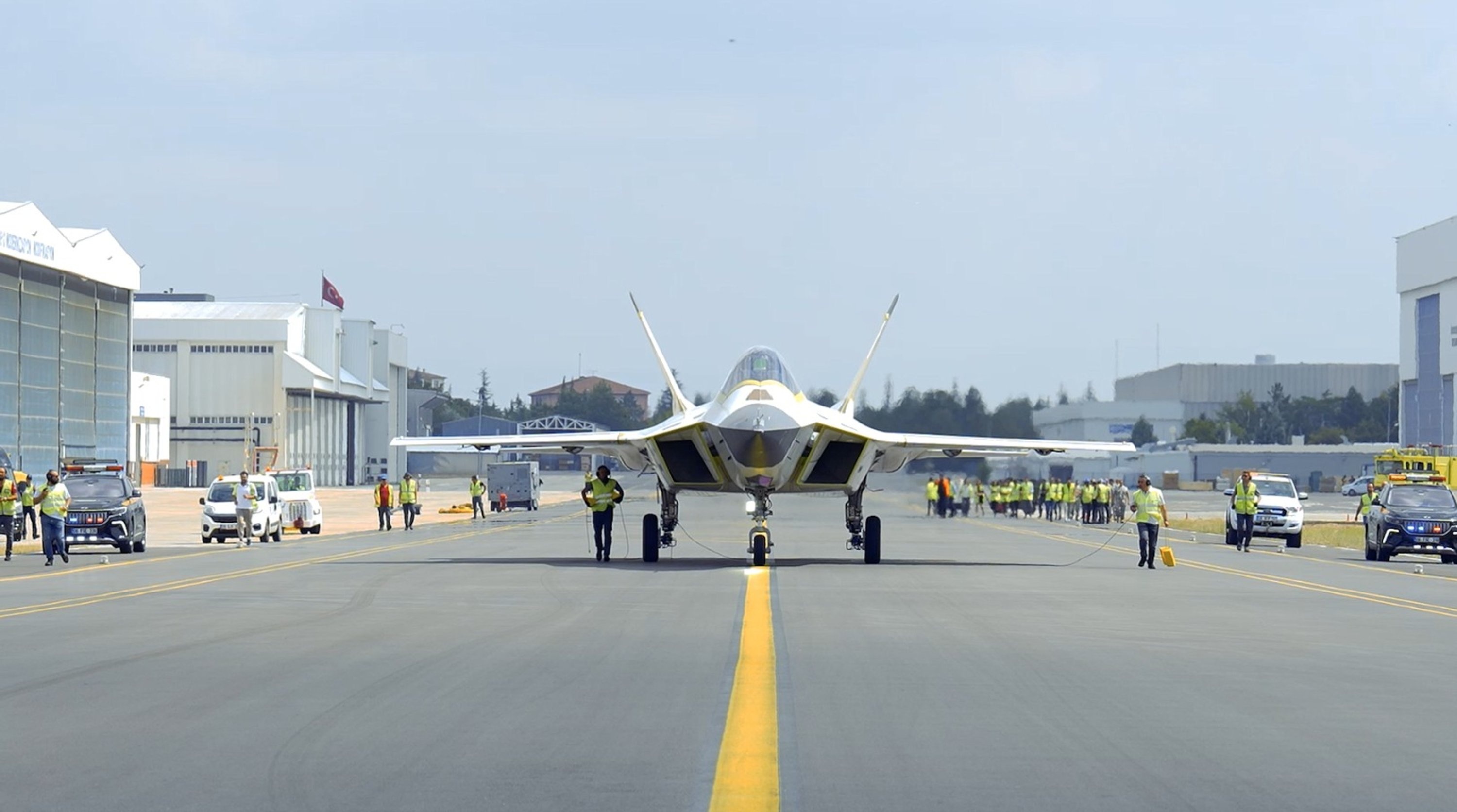
Another noticeable change involves the landing gear.
Compared with P0, the P1 prototype appears to feature:
- Shorter landing gear struts
- Wider wheel track
- More representative operational configuration
The updated system is expected to support evaluation of:
- Gear extension and retraction
- Gear door operation
- Emergency deployment
- Aircraft handling during takeoff and landing
These capabilities are essential before progressing toward more advanced flight testing.
A Growing National Aerospace Ecosystem
Beyond the aircraft itself, KAAN represents the expansion of Türkiye’s indigenous aerospace industry.
The program brings together a broad national industrial base involving:
- Turkish Aerospace (TUSAŞ)
- Presidency of Defence Industries (SSB)
- ASELSAN
- TAAC
- Domestic avionics suppliers
- Flight-control developers
- Software companies
- Composite manufacturers
Each successive prototype strengthens Türkiye’s ability not only to manufacture advanced aircraft but also to manage their complete life cycle, including upgrades, electronic warfare software, weapons integration, maintenance, and future modernization under national control.
Implications for NATO
The KAAN program also carries broader strategic significance for NATO.
If successfully developed and fielded, the aircraft could expand the Alliance’s industrial capacity by creating another center for advanced combat aircraft production on NATO’s southeastern flank.
Potential long-term benefits include:
- Greater defence-industrial resilience
- Expanded production capacity
- Improved supply-chain security
- Increased interoperability opportunities
- Stronger regional airpower
However, analysts note that true fifth-generation capability depends not only on airframe design but also on secure communications, mission data, sensor fusion, cryptographic systems, and interoperability with allied forces.
KAAN and the F-35 Need Not Be Competitors
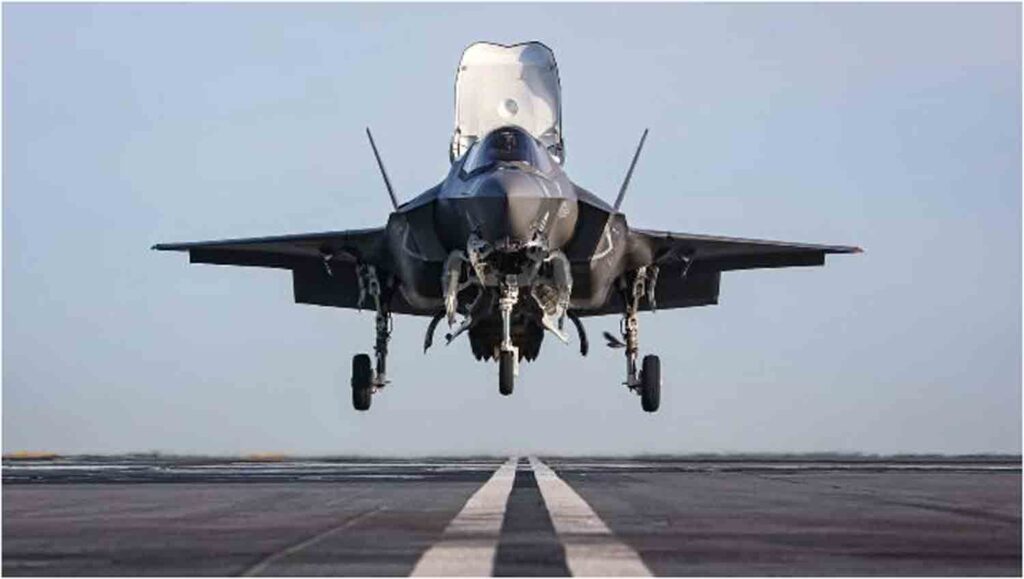
The continued progress of KAAN has also renewed debate over Türkiye’s future fighter fleet.
Rather than viewing KAAN and the F-35 Lightning II as competing programs, some analysts argue they could ultimately serve complementary roles.
Should Türkiye regain access to the F-35 program, the aircraft would provide a mature multinational stealth platform with proven sensor fusion and interoperability.
KAAN, meanwhile, would offer strategic advantages through:
- Indigenous mission systems
- National electronic warfare software
- Domestic weapons integration
- Sovereign upgrade pathways
- Greater operational independence
A mixed fleet combining both platforms could provide operational flexibility while strengthening Türkiye’s long-term defence-industrial autonomy.
Strategic Outlook
The KAAN P1 prototype represents an important step beyond simply flying an indigenous fighter. It demonstrates Türkiye’s growing capability to integrate advanced sensors, refine aerodynamic performance, and develop increasingly sophisticated mission systems under national control.
While the prototype remains under development and many systems have yet to be fully validated, the program’s steady progress indicates that Türkiye is gradually building the engineering expertise, industrial infrastructure, and technological foundation required to field a modern fifth-generation combat aircraft.
If testing continues successfully, KAAN could emerge as a key element of Türkiye’s future airpower while reinforcing both national defence capabilities and NATO’s broader industrial resilience.