The apparent stabilization around the Strait of Hormuz risks creating a misleading impression of progress in the US-Iran confrontation. Washington has tightened economic pressure, reduced Tehran’s room for manoeuvre at sea and avoided launching a much larger military campaign. But the central issues that brought the two countries to confrontation remain unresolved: Iran’s nuclear programme, its military capabilities and the future of the Islamic Republic itself.
Amid the daily stream of threats, diplomatic messages, sanctions and competing claims about the Strait of Hormuz, it is easy to lose sight of the central question: where does the US-Iran confrontation actually stand?
At first glance, the Trump administration appears to have gained the upper hand.
Iran is under severe economic pressure. Maritime traffic through and around the Gulf remains constrained, but some oil is moving. Washington has avoided committing itself to an open-ended major ground or air campaign, while Tehran has so far failed to restore the pre-crisis status quo around Hormuz.
Yet that does not necessarily amount to strategic victory.
The more closely the situation is examined, the clearer the distinction becomes between operational gains and strategic objectives.
Washington may currently be better positioned to manage the crisis than Tehran. But the fundamental problems that triggered the confrontation remain unresolved.
Washington Has Chosen Pressure Over Another Major War
The Trump administration appeared, at the beginning of August, to be moving toward a much broader military campaign against Iran.
Instead, Washington changed course.
Rather than immediately expanding the military confrontation, Trump opted to intensify economic and maritime pressure, apparently calculating that Iran’s deteriorating economic position could eventually force Tehran back to negotiations on American terms.
The logic is straightforward.
If sanctions, maritime restrictions and economic isolation are steadily weakening Iran, Washington has little incentive to offer major concessions while Tehran remains under pressure.
From the administration’s perspective, time is currently an American asset.
That calculation also explains Washington’s reluctance to return to the earlier memorandum of understanding, which was criticized in the United States for offering what some viewed as excessive concessions to Tehran.
The danger is that Tehran may reach the opposite conclusion.
Hormuz Is Moving, But Not Back to Normal
The Strait of Hormuz has become the most visible measure of the confrontation.
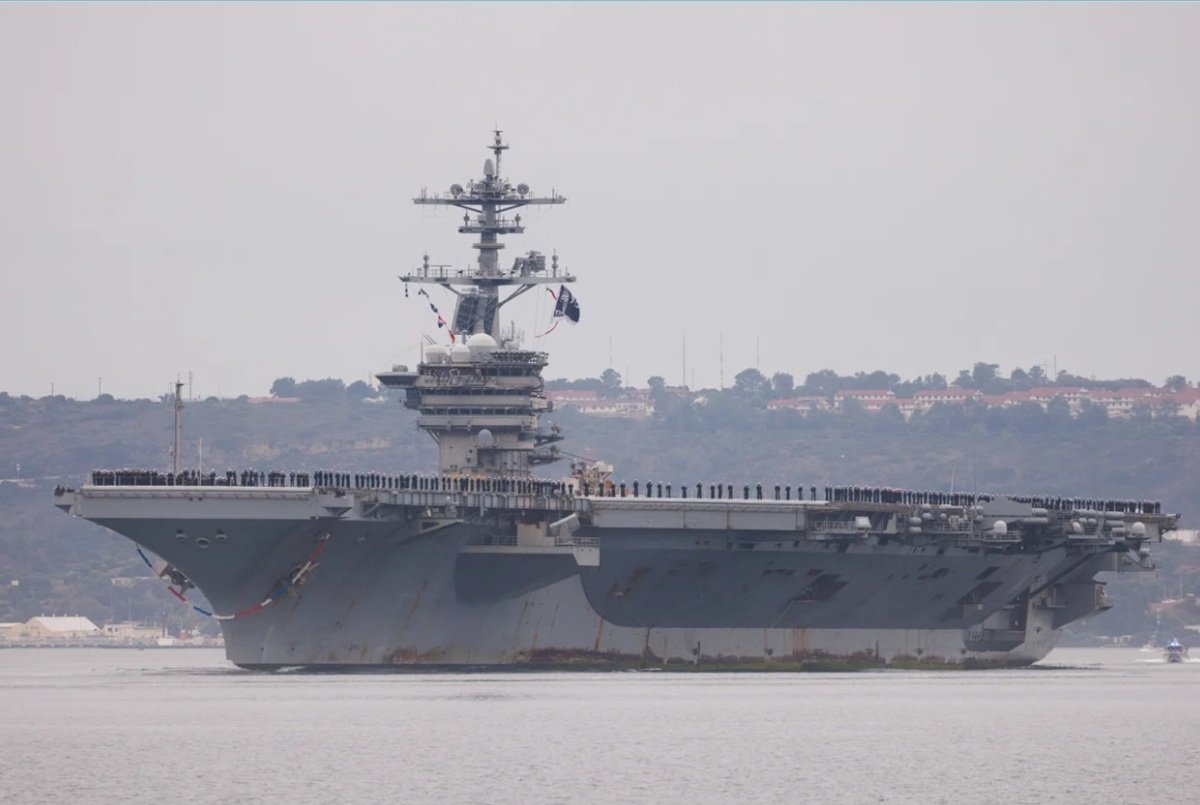
Washington has established an operational framework around the Gulf, supported by the US Fifth Fleet, that has allowed at least some energy shipments to continue.
Reports of nighttime tanker movements, vessels switching off tracking systems and oil being transferred to larger ships in the Gulf of Oman point to an increasingly improvised maritime system designed to keep some energy flowing despite the confrontation.
That represents a real operational achievement.
But it is important not to confuse partial movement with restoration of normal trade.
Tanker traffic remains dramatically below prewar levels, while questions remain about how long the current arrangement can be maintained.
The administration’s claims about the volume of oil moving through or around Hormuz have also been questioned.
In other words, Washington may have demonstrated that Iran cannot completely dictate what happens in the strait.
It has not demonstrated that the strait has returned to normal.
The LNG Problem Is Harder to Solve
Oil is only part of the Hormuz problem.
Liquefied natural gas presents a different challenge.
There is no simple military workaround for the disruption of LNG exports if shipping through the Gulf remains seriously constrained.
That means the economic consequences of the crisis can continue even if Washington succeeds in keeping a limited amount of oil moving.
For global energy markets, the distinction is crucial.
The United States may be able to protect selected tanker movements, but it cannot easily recreate the enormous volume of commercial shipping that existed before the confrontation.
Hormuz Was Never the Main Strategic Objective
This is perhaps the most important point in assessing the current situation.
The Strait of Hormuz has become the visible battlefield, but Hormuz was not the fundamental reason for the confrontation.
Washington’s larger concerns involve:
- Iran’s nuclear programme;
- Tehran’s ability to rebuild military capabilities;
- Iran’s regional influence;
- and, for some policymakers, the long-term survival of the Iranian regime itself.
None of these questions has been definitively settled.
Iran remains under intense pressure, but its government remains in power.
Its nuclear challenge has not simply disappeared.
And there is no guarantee that Iran cannot eventually rebuild military capabilities damaged during the confrontation.
That means the apparent improvement around Hormuz can create a false sense of strategic progress.
Washington may have become better at controlling the consequences of the conflict without resolving the causes that produced it.
This Is the Difference Between Tactical and Strategic Success
A useful way to understand the current situation is to separate two levels.
Operationally, Washington has achieved important gains.
The United States has increased pressure on Iran, complicated Tehran’s ability to dominate maritime traffic and established mechanisms that allow some energy shipments to continue.
Strategically, the picture is much less conclusive.
Iran’s political system remains intact. Its nuclear programme remains an unresolved issue. Its ability to regenerate military capabilities remains uncertain.
That distinction is critical.
A country can win a series of operational contests without achieving its political objectives.
The same applies in reverse.
Iran does not need to defeat the US Navy to frustrate Washington’s strategy. It only needs to ensure that the economic and political cost of maintaining the current arrangement continues to rise.
Iran Is Under Pressure—but Has Avoided the Worst-Case Scenario
For Tehran, the current situation is hardly favourable.
The Iranian economy was already struggling before the latest confrontation.
Additional maritime pressure and restrictions on energy exports have made the situation more difficult.
But Iran has achieved one important objective: it has so far avoided the kind of full-scale US military campaign that could have threatened the survival of the regime directly.
That gives Tehran some room to manoeuvre.
Iran can attempt to absorb economic pressure while using its remaining military and geopolitical leverage to force Washington back toward negotiations.
The problem is that this strategy becomes increasingly dangerous if the economic pressure continues to intensify.
Tehran and Washington Want Completely Different Deals
The diplomatic problem is therefore not simply a disagreement over wording.
The two sides have fundamentally different assessments of the situation.
Washington believes pressure is working and therefore sees little reason to compromise.
Iran appears more interested in returning to the previous diplomatic framework, but Tehran is also seeking additional guarantees and concessions.
Qatar and Pakistan have been involved in efforts to bridge those differences and encourage Tehran to moderate its additional demands.
But mediation can only go so far when the two sides disagree over who is actually under greater pressure.
Washington believes Iran needs a deal more urgently.
Iran cannot afford to appear to accept an agreement simply because American pressure has forced it into submission.
That makes compromise politically difficult for both sides.
The Midterm Elections Are Part of the Calculation
Trump’s domestic political timetable also matters.
If Washington believes it can maintain pressure without entering another major war, the administration has an incentive to avoid a dramatic military escalation before the US midterm elections.
That may encourage Tehran to wait.
But it could also encourage Iran to do precisely the opposite.
If Iranian leaders conclude that Trump is politically constrained and reluctant to launch another major military campaign, they may calculate that limited escalation could extract concessions from Washington.
That creates a dangerous strategic miscalculation.
The same political constraint that may discourage Trump from escalating could encourage Tehran to test his limits.
Iran Has Another Weapon: Economic Disruption
Iran does not need to close Hormuz completely to cause damage.
Even the threat of disruption can affect:
- shipping insurance;
- tanker availability;
- energy prices;
- LNG markets;
- regional investment;
- and global economic expectations.
Iranian officials have again warned that if Iran cannot export its oil, other countries should not expect uninterrupted exports either.
Such statements are designed to establish a deterrent:
If Washington makes Iran’s economic survival impossible, Tehran can make the international economic consequences much larger.
That does not mean Iran necessarily has the capability or intention to completely shut Hormuz.
It means the threat itself remains a bargaining instrument.
The Houthis Could Turn One Chokepoint Into Two
The situation becomes even more complicated if Houthi activity around the Bab el-Mandeb Strait intensifies.
Hormuz is critical to energy exports from the Gulf.
Bab el-Mandeb is a major gateway between the Red Sea and the Indian Ocean.
Pressure on both simultaneously could create a much larger disruption to global commerce.
This would give Iran and its partners an asymmetric form of leverage.
They would not need to defeat American forces directly.
They would need only to increase the economic cost of keeping international trade moving.
That is a much more difficult problem for Washington to solve militarily.
Iran Could Decide That Escalation Is Safer Than Waiting
This may be the most dangerous possibility.
Suppose Tehran concludes that economic pressure will continue regardless of whether Iran remains restrained.
Its leadership could then face an unpleasant choice:
continue absorbing pressure and become progressively weaker, or escalate and attempt to raise the cost for Washington.
Escalation would carry enormous risks.
But passivity could also become strategically dangerous if Iran believes its military and economic position will continue deteriorating.
That is why the current calm should not necessarily be interpreted as a durable settlement.
Washington’s Current Strategy Has a Built-In Contradiction
The Trump administration wants to achieve maximum pressure without becoming trapped in another major war.
That is understandable.
But pressure works only if the target eventually changes its behaviour.
If Iran does not capitulate, Washington faces a difficult decision.
It can:
increase the pressure further,
return to negotiations,
or
escalate militarily.
Each option carries significant costs.
Increasing pressure could eventually push Iran toward escalation.
Returning to negotiations could be portrayed as surrendering the leverage that sanctions created.
Military escalation risks precisely the wider war that Washington has so far tried to avoid.
Tehran Faces an Equally Difficult Choice
Iran’s options are no easier.
Accepting an American agreement from a position of weakness could undermine the government’s domestic credibility.
Continuing negotiations without concessions risks allowing Washington’s economic pressure to intensify.
Escalating around Hormuz could generate international support for even tougher action against Iran.
And attempting to disrupt global energy markets could ultimately hurt Iran itself.
This is why both governments remain trapped.
Neither side has an attractive path forward.
The Real Question Is Whether Pressure Produces Political Change
The Trump administration’s strategy ultimately rests on an assumption:
economic pressure will eventually produce political concessions.
But economic pain does not automatically translate into political capitulation.
Governments under pressure can also become more nationalist, more defensive and more willing to accept economic hardship in order to preserve strategic objectives.
Iran’s leadership has already demonstrated a willingness to absorb considerable pressure.
The question is how much more it can absorb—and how much additional pressure Washington is prepared to impose.
A Calm Strait Does Not Mean a Resolved Crisis
This is where the current narrative around Hormuz can become misleading.
If tankers are moving, markets may conclude that the crisis is easing.
If US forces are able to protect selected shipping routes, Washington may claim that Iran’s ability to control the strait has been weakened.
Both observations can be true.
But neither answers the central strategic questions.
Has Iran’s nuclear trajectory fundamentally changed?
Has Tehran’s ability to regenerate military power been permanently constrained?
Has the underlying strategic threat that concerned Washington been eliminated?
For now, there is no clear evidence that the answer to those questions is yes.
What Happens Next?
The coming weeks are likely to revolve around three interconnected questions.
Will Iran return to negotiations?
Mediators are attempting to create a path back toward an earlier framework, but Tehran and Washington remain far apart.
Will Iran escalate around Hormuz?
If economic pressure becomes intolerable, Tehran could decide that disruption is its strongest remaining bargaining tool.
Will Washington maintain restraint?
Trump’s willingness to avoid another major military campaign may be the most important factor preventing the confrontation from becoming a wider war.
But restraint can also be interpreted by an adversary as an opportunity.
That is the central danger.
Bottom Line: Washington Is Managing the Crisis, Not Solving It
The United States currently has several advantages.
Iran is under severe economic pressure.
Washington has improved its operational position around Hormuz.
Some energy traffic continues.
And Trump has so far avoided committing the United States to an open-ended major military campaign.
But these achievements should not be confused with strategic victory.
The confrontation began because of much larger questions surrounding Iran’s nuclear programme, military capabilities and long-term strategic posture.
Those issues remain unresolved.
Iran’s regime remains in power.
Its economy is under pressure, but pressure alone has not forced capitulation.
And Tehran retains enough military and geopolitical leverage to make the continuation of the current status quo expensive.
That leaves the United States in an uncomfortable position.
Washington may currently be winning the struggle over the consequences of the confrontation without yet winning the struggle over the reasons it entered it.
The Strait of Hormuz therefore should not be treated as the scoreboard for the entire conflict.
A more limited flow of oil, greater US control over maritime operations and reduced Iranian freedom of action are meaningful developments.
But they are not the final measure of success.
The real test will be whether the pressure produces a durable change in Iran’s nuclear and military trajectory—or whether Tehran simply adapts, waits and eventually finds a new way to raise the cost for Washington.
For now, the crisis has been stabilized.
It has not been resolved.
And the longer that distinction is ignored, the greater the risk that the next escalation will come not because either side wants a wider war, but because both sides conclude that waiting is becoming more dangerous than acting.