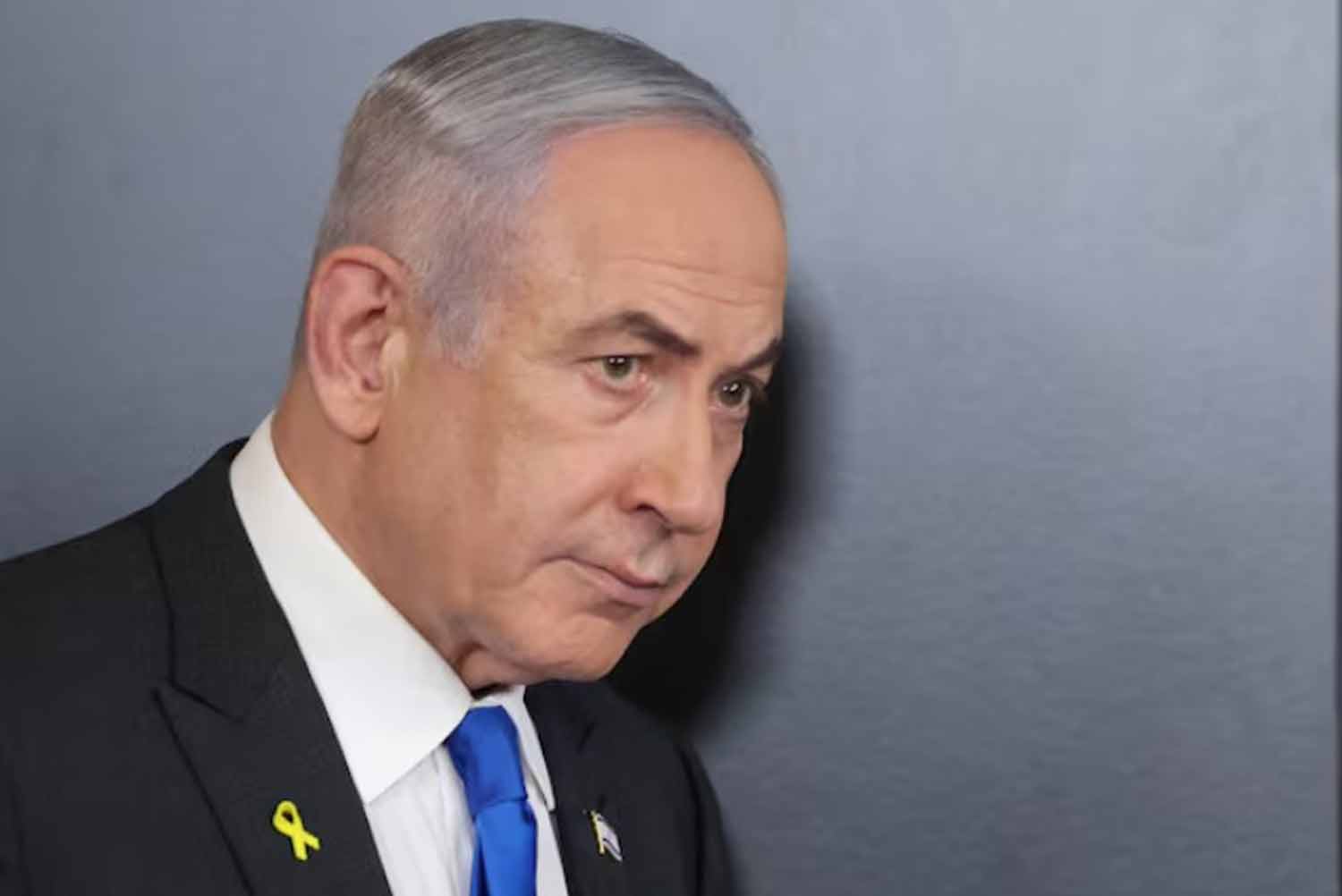
With Gadi Eisenkot leading Netanyahu’s Likud in the latest Maariv poll, political sources cited by Al-Monitor suggest renewed conflict with Iran after Israel’s October 27 election could reshape coalition negotiations. The scenario remains unconfirmed, but the latest polling shows neither bloc assured of a parliamentary majority.

Israeli Prime Minister Benjamin Netanyahu faces a difficult political calculation as the country approaches its October 27 parliamentary election: whether to pursue a renewed military confrontation with Iran after voting, even as the possibility of an inconclusive result raises the prospect of prolonged coalition negotiations.
An analysis by Ben Caspit published in Al-Monitor on October 23 argues that an Israeli strike against Iran before election day now appears unlikely, but that renewed hostilities afterwards could create pressure for a national unity government involving Netanyahu and his political rivals, including former military chief Gadi Eisenkot.
The assessment, attributed to political sources familiar with the discussions, comes as Netanyahu’s Likud trails Eisenkot’s Yashar party in the latest Maariv/Lazar Research poll. More significantly, neither the prime minister’s governing bloc nor the principal opposition bloc is projected to secure the 61 seats required for a majority in Israel’s 120-member Knesset.
The political uncertainty has revived questions about the relationship between Israel’s security policy and its domestic electoral contest. A new military confrontation with Iran could alter the political agenda, place pressure on opposition leaders to join a wartime government and complicate efforts to form a coalition.
However, there is no publicly established evidence that Netanyahu has decided to attack Iran after the election for the purpose of forcing a unity government. The scenario remains an analysis based on sources cited by Al-Monitor, not a confirmed military decision.
Latest Israel Election Poll: Eisenkot Leads Likud as Netanyahu’s Bloc Falls to 48 Seats
The final Maariv/Lazar Research poll published on October 23 provides a snapshot of the electoral challenge facing Netanyahu just days before voting.
The survey projects the following results:
| Party or grouping | Projected seats |
|---|---|
| Gadi Eisenkot’s Yashar | 21 |
| Benjamin Netanyahu’s Likud | 19 |
| Naftali Bennett’s B’Yachad | 15 |
| The Democrats | 10 |
| Joint List | 9 |
| Shas | 8 |
| Yisrael Beytenu | 8 |
| United Torah Judaism | 7 |
| Otzma Yehudit | 7 |
| Religious Zionism–Zehut | 7 |
| Ra’am | 5 |
| Reservists–New Economic Party | 4 |
Source: Maariv/Lazar Research, as reported by The Jerusalem Post on October 23. Figures are projections, not election results.
The survey puts Netanyahu’s governing bloc at 48 seats and the principal Zionist opposition bloc at 54. Arab parties account for a further 14 seats, although their combined representation does not mean they would necessarily support the same candidate or government.
The results are sensitive to the electoral threshold. The Reservists–New Economic Party is projected to receive four seats, just above the threshold, while Ofer Winter’s People of Israel party falls below it. If the Reservists list fails to enter the Knesset, the distribution of seats could shift significantly.
The poll also found that Eisenkot leads Netanyahu in a direct contest for prime minister by 49% to 41%. These figures measure respondents’ stated preferences in a hypothetical matchup, not the probability that either candidate will become prime minister.
The survey was conducted between October 19 and 22, using an initial sample of 1,000 participants and a final sample of 1,048. The reported maximum margin of sampling error was three percentage points.
Channel 12 Poll Also Shows Eisenkot Ahead

The Maariv survey is not the only poll to place Eisenkot’s party ahead of Likud.
A Channel 12/Midgam poll published on October 21 projected 23 seats for Yashar and 19 for Likud. Naftali Bennett’s B’Yachad party was projected to receive 15 seats.
That survey gave the principal Zionist opposition parties 55 seats, compared with 47 for Netanyahu’s existing coalition partners. A further four-seat projection for the Reservists–New Economic Party could raise the opposition grouping’s total to 59, depending on how parties are classified and whether the list crosses the threshold.
The results illustrate the difference between leading in a party poll and having a viable route to government. Even if Eisenkot’s party finishes first, he would still need to negotiate with other parties to secure the confidence of a Knesset majority.
Other polls have produced different results. Channel 14’s October 22 survey projected a substantially stronger position for Netanyahu’s bloc, demonstrating that Israeli pollsters disagree over the likely distribution of seats.
The polls should therefore be treated as alternative scenarios rather than precise forecasts of the final result.
Why a Hung Knesset Could Put Pressure on Netanyahu and Eisenkot
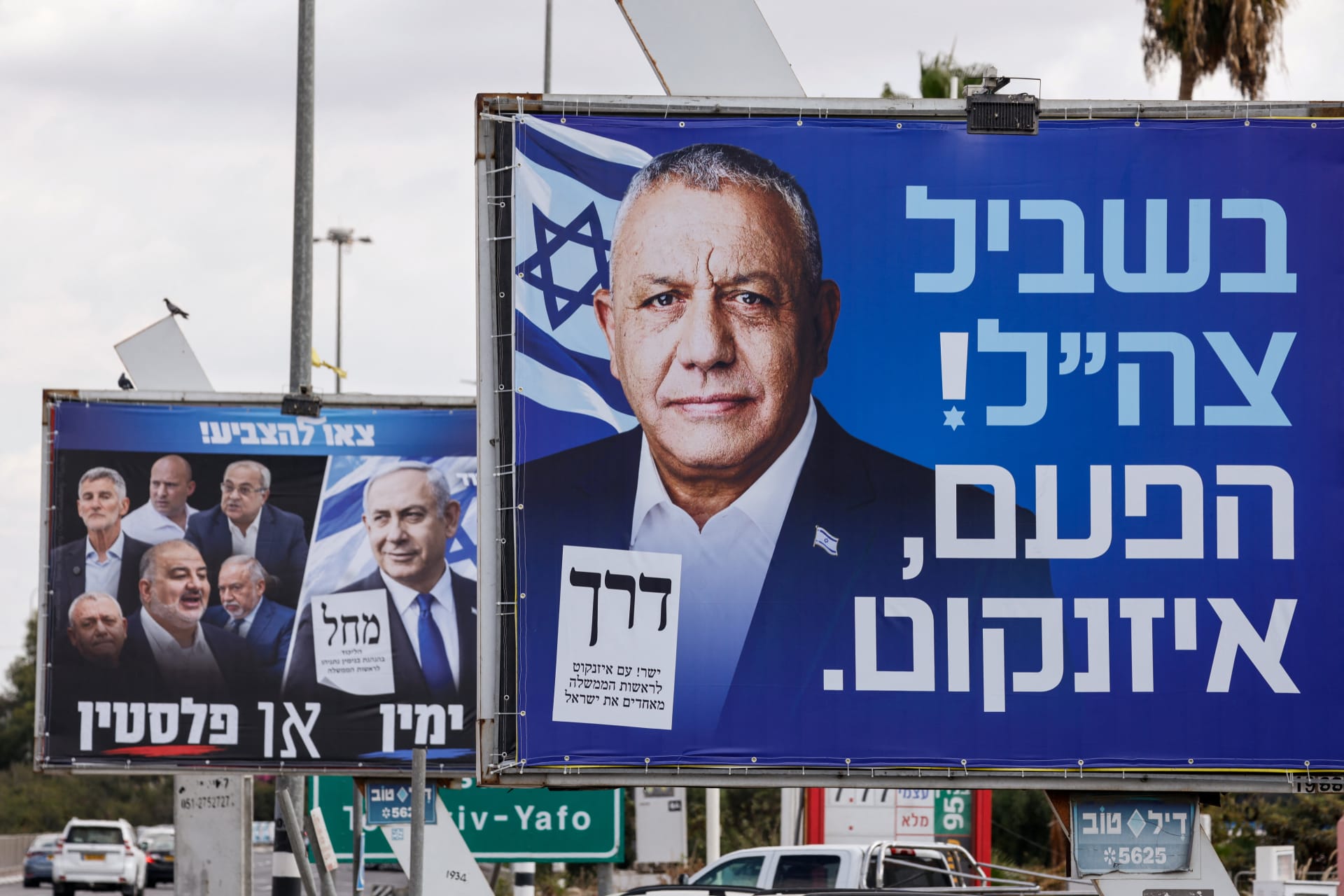
Israel’s electoral system makes coalition negotiations central to government formation. Voters elect 120 members of the Knesset through proportional representation, and a government needs parliamentary support sufficient to command a majority of 61 seats.
A party can win the largest number of seats without being able to form a government. The president consults political parties after the election before assigning a candidate the task of forming a coalition.
If neither Netanyahu’s bloc nor the opposition can assemble a majority, the negotiations could become prolonged. The parties would need to determine whether they could cooperate with smaller factions, seek outside support or establish a broader government.
The latest Maariv poll offers evidence that a unity government has public support. Sixty per cent of respondents said they would prefer a unity government if the election produces no clear outcome. Thirty-three per cent preferred such a government to be led by a candidate from the change bloc, while 19% wanted Netanyahu to lead it. Another 8% expressed no preference over its leadership. Only 23% said they would prefer another election.
These figures indicate that unity government negotiations could have public backing, although they do not establish that the parties themselves would agree to such an arrangement.
For Netanyahu, a unity government could provide a route to continued political influence if his existing coalition loses its majority. For Eisenkot, the central question would be whether to seek a government led by the opposition or enter an arrangement that could preserve Netanyahu’s role.
Neither option would be straightforward. Their parties have competing political objectives, and a government formed during renewed hostilities with Iran would face difficult decisions over military strategy, relations with Washington and the future of Israel’s other regional conflicts.
Could Netanyahu Use Renewed Fighting With Iran to Push for National Unity?
This is the central argument advanced by Ben Caspit in Al-Monitor.
According to political sources cited in the analysis, a military confrontation after the election could change the political calculations of opposition leaders. A renewed conflict might strengthen demands for national unity and give Netanyahu an argument that Israel requires a broad government during a security emergency.
The precedent is the unity government formed after the Hamas-led attacks of October 7, 2023. Eisenkot, then a member of the National Unity alliance alongside Benny Gantz, joined Netanyahu’s emergency government later that month amid intense public pressure for political cooperation.
Eisenkot and Gantz subsequently left the government in June 2024, citing disagreements with Netanyahu over the direction of the Gaza war and the absence of an agreed strategy for ending the conflict and securing the release of hostages.
The experience demonstrates that an emergency government can bring political rivals together without resolving their underlying differences. It also shows that such cooperation can break down when disagreements over war aims and political responsibility become too significant.
A renewed confrontation with Iran could similarly create pressure for unity, but it would not guarantee that Eisenkot or other opposition leaders would join Netanyahu’s government.
The political calculation would depend on the nature of the Iranian threat, the scale of any Israeli operation, the position of the United States and the terms offered in coalition negotiations.
Crucially, the claim that Netanyahu would deliberately launch a military operation to compel his rivals to join a government remains an attributed interpretation. It should not be presented as an established motive.
Trump, Netanyahu and the Disputed Report of a Planned Iran Strike
The possibility of renewed Israeli strikes must also be viewed in the context of Netanyahu’s relationship with US President Donald Trump.
The Financial Times reported on October 21, citing three people familiar with the matter, that Israel had prepared a major offensive against Iran for the weekend of October 10. The reported targets included nuclear facilities, regime-related sites and civilian infrastructure such as energy plants.
According to the newspaper’s sources, Trump opposed restarting the conflict before the November 3 US midterm elections. The report said it was unclear whether Washington would have participated directly in the proposed operation.
Netanyahu subsequently rejected the report, telling Channel 7 on October 22 that it was incorrect. He declined to detail what had been discussed with Trump about Iran.
Reuters separately reported that US Defense Secretary Pete Hegseth made an unannounced visit to Israel on October 19 and met Netanyahu. Israeli officials said the discussions included regional threats and US-Israeli cooperation in offensive and defensive operations.
These reports establish that Iran-related security issues were discussed at senior levels, but they do not independently establish that Trump ordered Netanyahu to cancel a planned attack or that an operation has been scheduled for after Israel’s election.
The distinction matters because a renewed Israeli strike could have consequences extending far beyond the election campaign. It could trigger Iranian retaliation, draw American forces more directly into the confrontation and increase risks for Gulf states and regional infrastructure.
Israeli Military Leadership and the Risks of Renewed Conflict
The Al-Monitor analysis also describes concern within Israel’s military leadership about the consequences of launching another operation against Iran at a politically sensitive moment.
It reports that Chief of Staff Lieutenant General Eyal Zamir discussed the potential implications of renewed fighting with American counterparts earlier in October.
The military considerations extend beyond the immediate question of whether Israeli forces can strike Iranian targets. A new campaign would require decisions about the scale and duration of operations, the risk of missile retaliation against Israeli territory, the protection of military infrastructure and the possibility of a wider regional conflict.
Israeli officials would also have to consider the availability of American support, including intelligence, defensive systems and diplomatic backing.
A prolonged confrontation could impose costs on the Israeli economy and military while placing additional pressure on the country’s political leadership. These considerations help explain why military planners may be cautious about the timing and consequences of a renewed campaign.
However, the available reporting does not establish a formal military veto on an Israeli strike after the election. Nor does it prove that the military leadership’s concerns are driven primarily by domestic electoral considerations.

Three Possible Political Scenarios After October 27
The latest polls point to several possible routes for government formation. These are scenarios based on the reported seat projections, not predictions of what the election will produce.
Scenario 1: Netanyahu’s bloc secures a viable majority.
If Likud and its existing partners obtain sufficient seats or secure reliable support from additional parties, Netanyahu could attempt to form another government. In that situation, he might face less immediate pressure to negotiate a unity arrangement, although military decisions concerning Iran would remain dependent on strategic, operational and diplomatic considerations.
Scenario 2: Eisenkot’s opposition bloc gains the advantage but falls short of 61 seats.
This outcome would leave Eisenkot needing support from smaller parties or a more complicated parliamentary arrangement. The latest Maariv poll projects 54 seats for the main Zionist opposition bloc, which is short of a majority.
An opposition-led government could require support from Arab parties or other factions, but the political terms and reliability of that support would be central to any negotiations. A plurality for Eisenkot would not automatically give him the premiership.
Scenario 3: Neither side can assemble a stable government.
A deadlock could lead to negotiations over a unity government, a minority government or another election if government formation fails. Renewed conflict with Iran could change the political atmosphere during this period, but whether it would encourage unity or deepen divisions would depend on the circumstances.
The final Maariv poll found that a majority of respondents preferred a unity government to another election. That public preference may influence political pressure, but party leaders would still have to agree on leadership, cabinet positions and policy priorities.
What the Election Means for Israel’s Iran Policy
The relationship between the election and Israel’s Iran policy is important because the two countries remain adversaries and the nuclear issue continues to be a major source of tension.
Israel has repeatedly argued that Iran’s nuclear and missile capabilities pose a strategic threat. Tehran maintains that its nuclear programme is peaceful and has warned that further attacks would provoke retaliation.
A renewed Israeli operation could target nuclear facilities, military infrastructure or other strategic sites. Its consequences would depend on the objectives, scale and duration of the campaign, as well as Iran’s response.
The election adds a domestic political dimension to these calculations. A government facing uncertain coalition negotiations may confront competing demands for military action, restraint and national unity.
But political timing alone cannot establish why a government might decide to use force. Any assessment must distinguish documented military preparations, official statements, reported diplomatic disagreements and interpretations of electoral motives.
For now, the available evidence supports the conclusion that renewed conflict remains a possibility discussed by political sources and analysts. It does not establish that Netanyahu has made a final decision to strike Iran after October 27.
Conclusion: Israel’s Election Could Leave Iran Policy Entangled in Coalition Politics
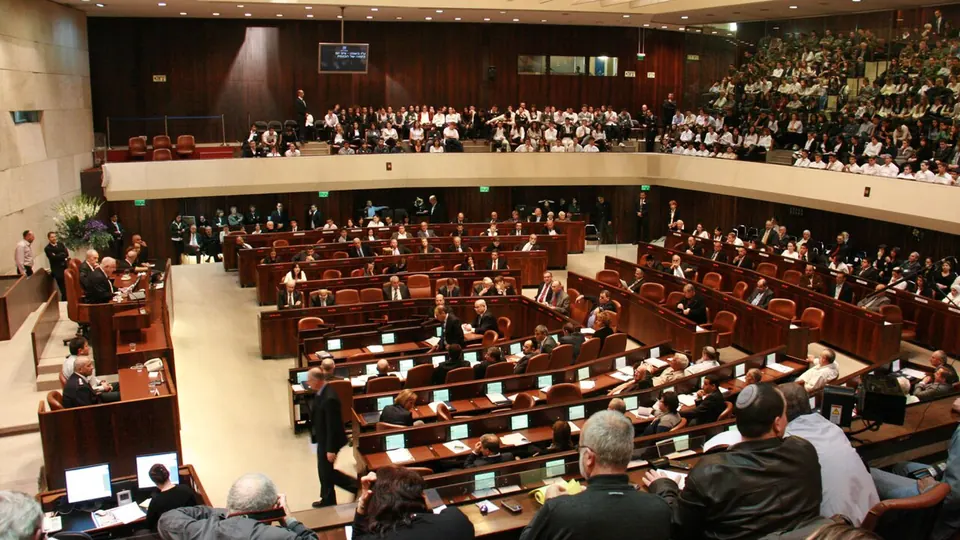
Israel’s October 27 election is shaping up as a contest in which winning the largest number of seats may not be enough to determine who governs.
The latest Maariv poll puts Gadi Eisenkot’s Yashar party ahead of Likud and projects the principal opposition bloc to have an advantage over Netanyahu’s existing coalition. Yet neither bloc is projected to reach the 61-seat majority needed to govern independently.
Against this backdrop, Ben Caspit’s Al-Monitor analysis raises the possibility that renewed hostilities with Iran after the election could increase pressure for a national unity government. The argument draws on the precedent of the emergency government formed after October 7, 2023, but remains a scenario based on political sources rather than a confirmed Netanyahu plan.
The most important developments to watch are the final election result, the distribution of seats among smaller parties, the willingness of opposition leaders to negotiate with Netanyahu and any new official statements concerning Iran.
A post-election strike could transform Israel’s political debate, but it would also carry substantial military and regional risks. Until an operation is officially announced or independently confirmed, the possibility should be treated as a reported scenario, not an established decision.