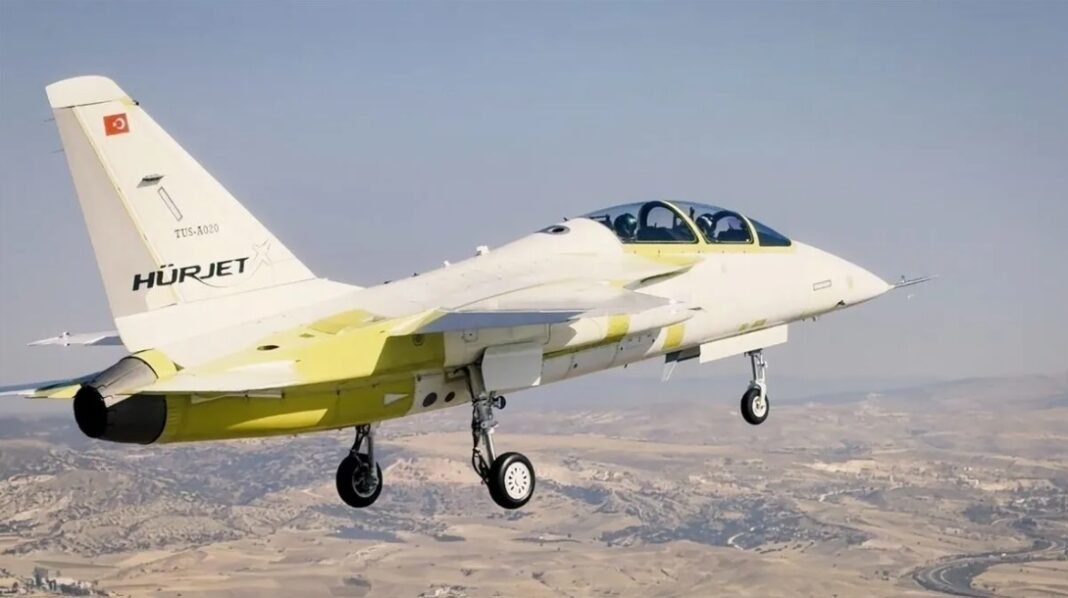
Türkiye’s HÜRJET has entered a new phase after the first production-standard aircraft destined for the Turkish Air Force completed its maiden flight on August 30. The milestone moves the programme beyond prototype testing toward customer aircraft and comes as Türkiye prepares to deliver the supersonic trainer domestically while expanding its first major HÜRJET export programme with NATO member Spain.
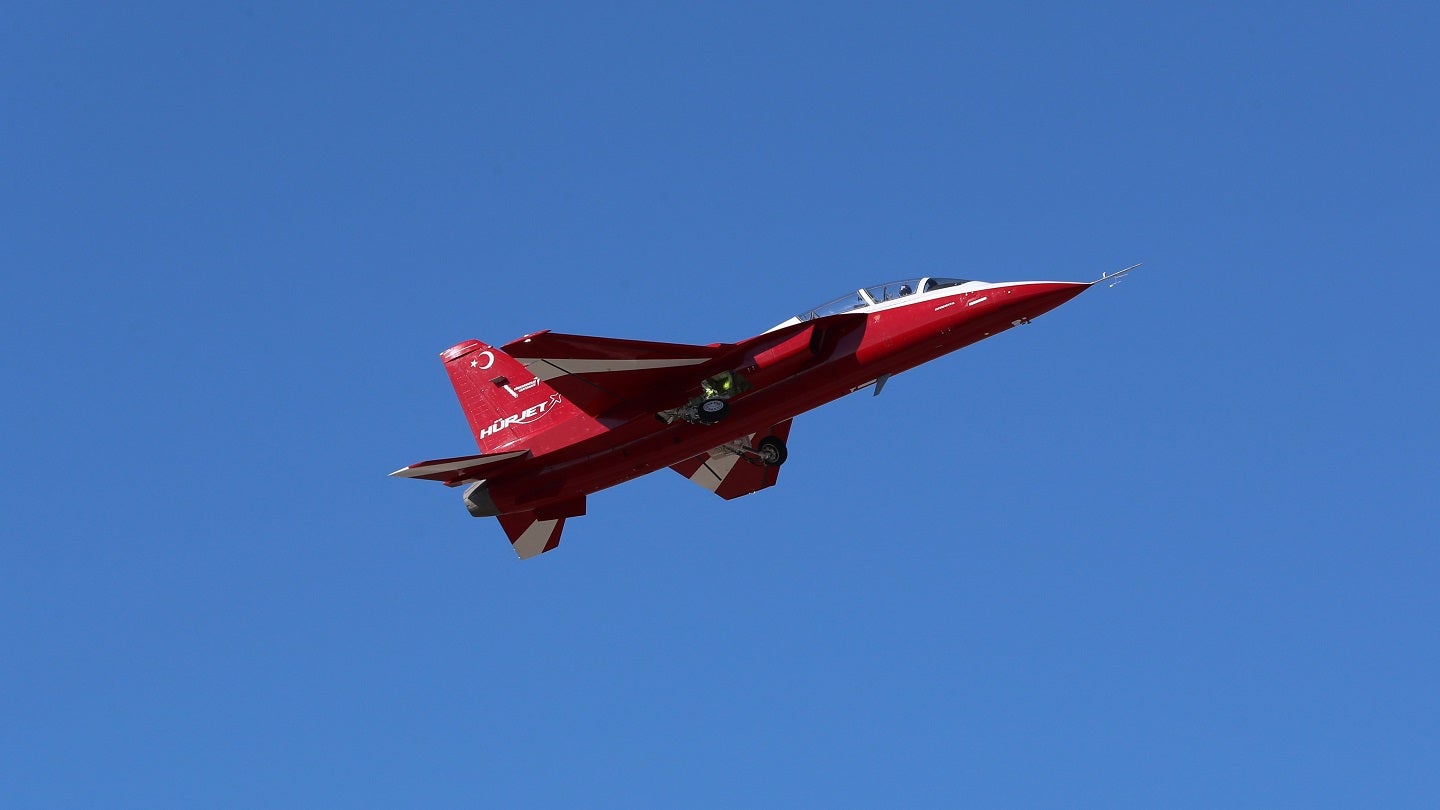
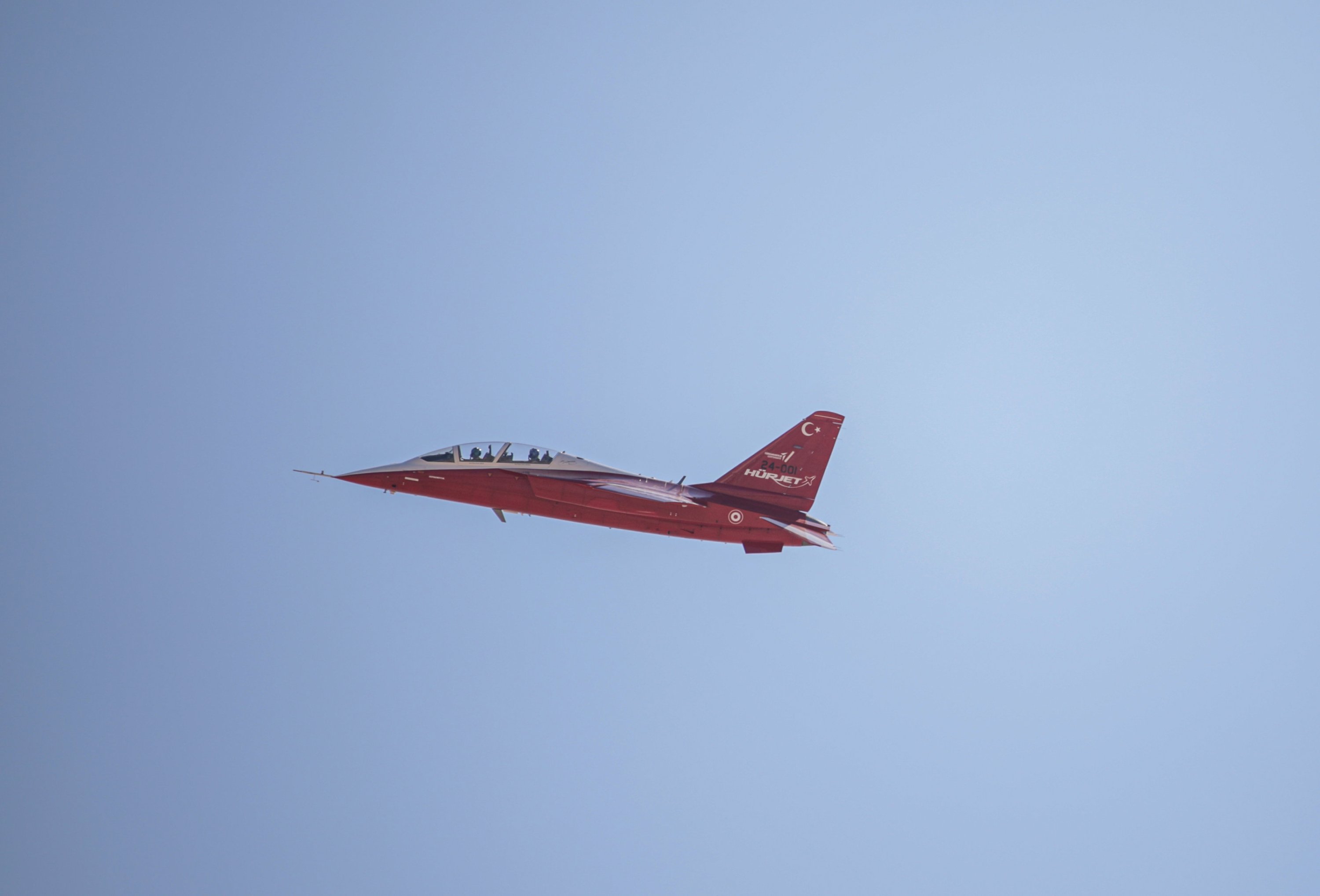
Türkiye’s HÜRJET programme reached an important milestone on Sunday when the first aircraft built for delivery to the Turkish Air Force took to the air for the first time.
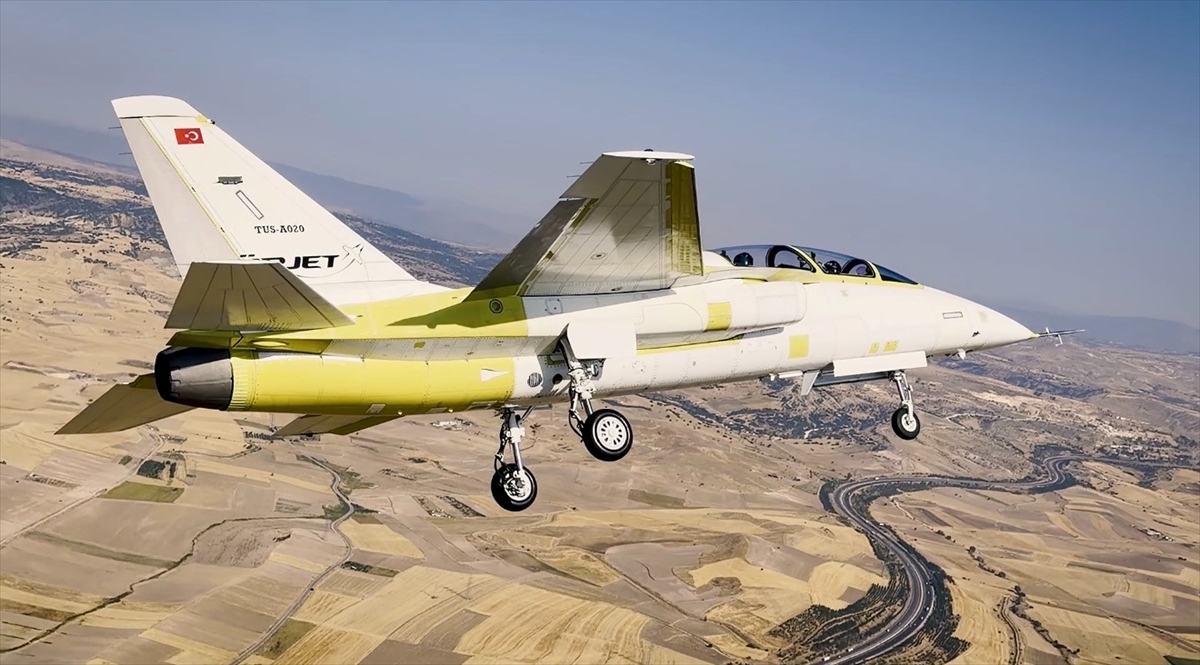
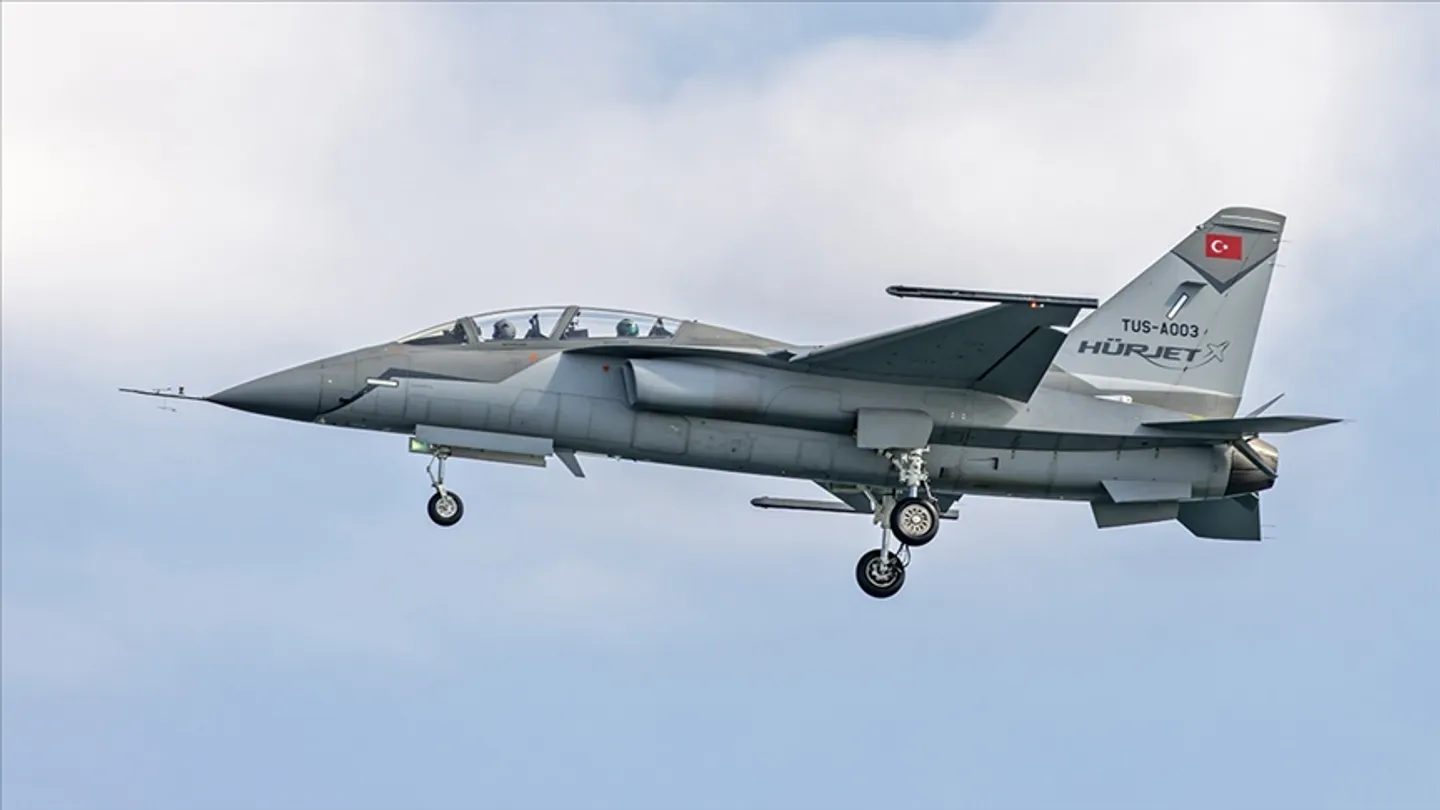
The aircraft completed an 18-minute maiden flight after undergoing final assembly, ground testing and taxi trials. The first HÜRJET prototype accompanied the production aircraft during the flight.
The significance goes beyond another successful test flight.
The aircraft that flew on August 30 is not one of the original development prototypes. It is the first HÜRJET in the configuration intended for the Turkish Air Force, meaning the programme is moving from proving the design toward testing and accepting aircraft that will actually enter service.
That transition is one of the most difficult stages in any military aircraft programme.
Why the First Production HÜRJET Matters
HÜRJET was launched in 2017 by Turkish Aerospace Industries (TUSAŞ) as a supersonic advanced jet trainer.
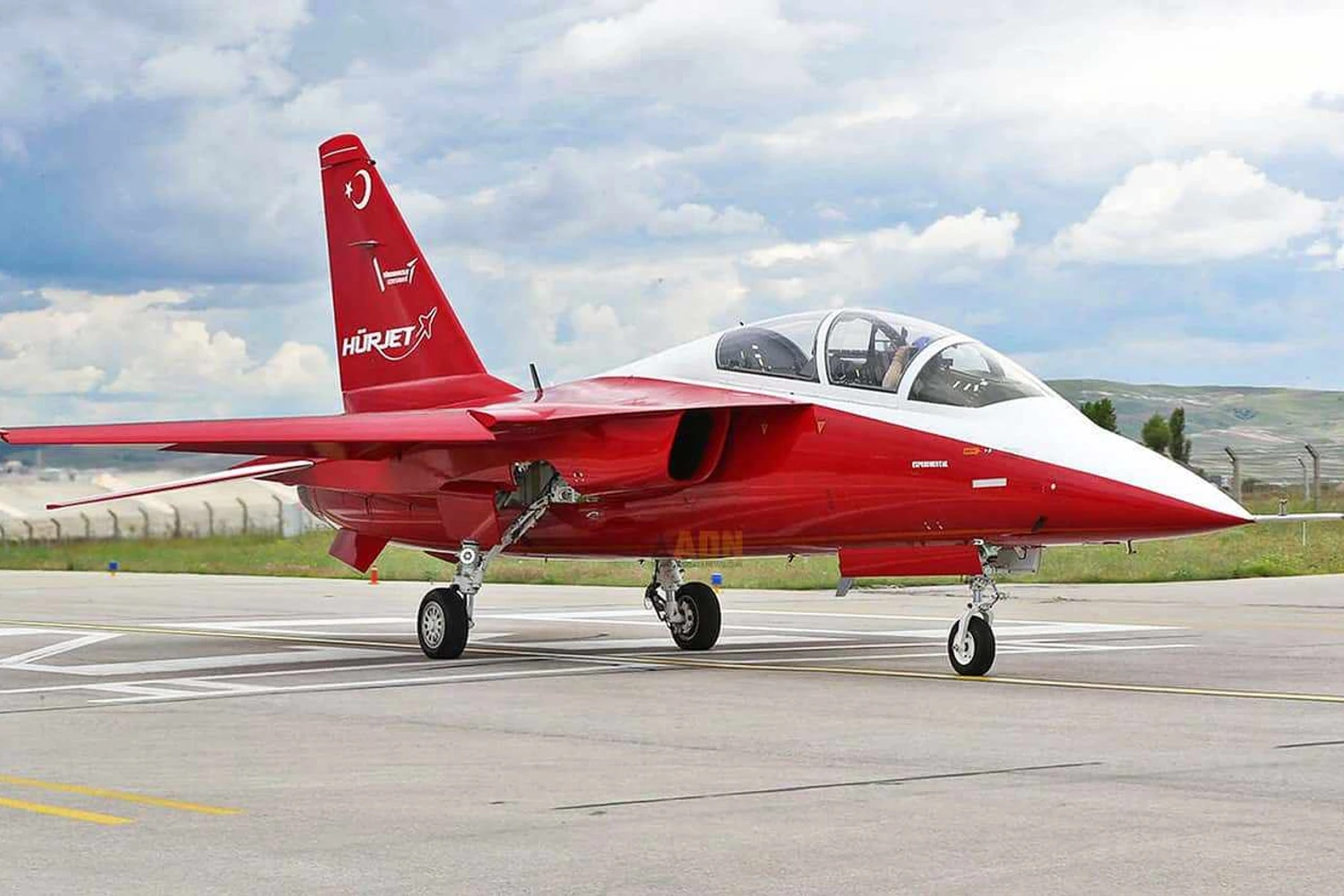
Its primary Turkish requirement is to replace ageing T-38 aircraft used for advanced pilot training, while also replacing the F-5 aircraft used by the Turkish Stars aerobatic team.
The aircraft is designed as a single-engine, tandem-seat jet with modern avionics and a performance envelope intended to prepare pilots for frontline combat aircraft.
TUSAŞ lists a maximum speed of Mach 1.4, a service ceiling of 45,000 feet, a range of approximately 1,060 nautical miles and a maximum payload capacity of 7,500 pounds. The aircraft is powered by the GE F404 engine.
Those specifications place HÜRJET in the increasingly competitive market for advanced jet trainers that can bridge the gap between basic flight training and modern fighter aircraft.
From First Flight in 2023 to Production Aircraft
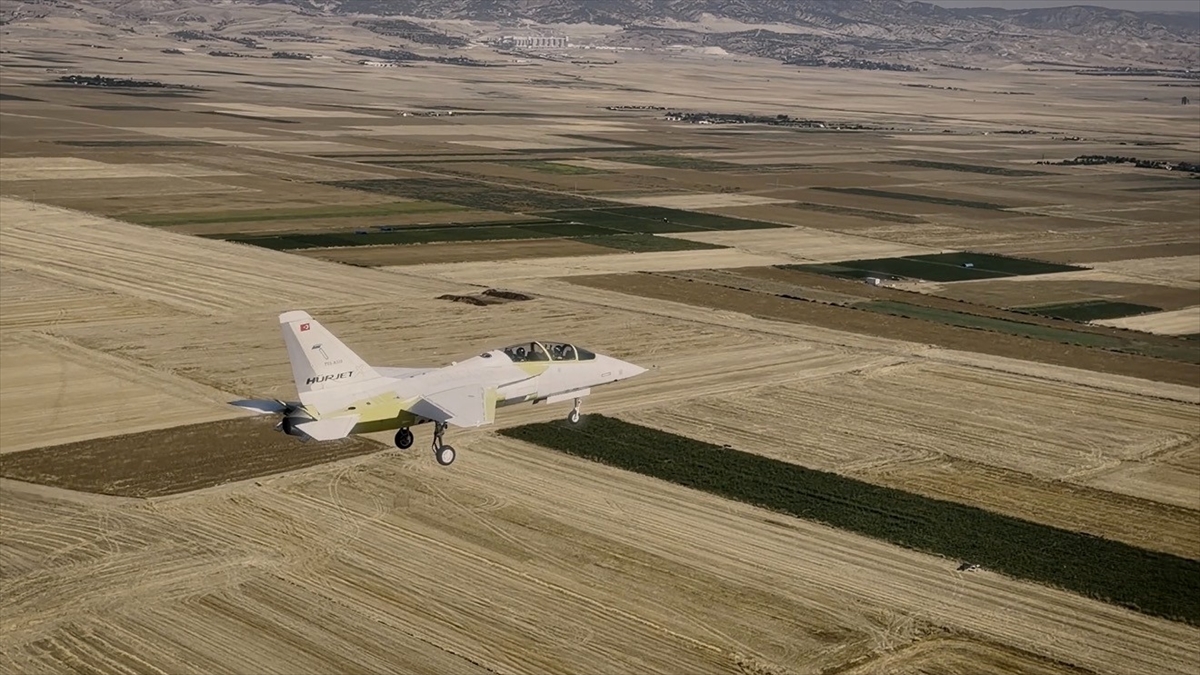
The original HÜRJET prototype made its maiden flight on April 25, 2023.
A second prototype followed in November 2024, allowing TUSAŞ to expand flight testing and accelerate development.
The prototypes have been used to explore the aircraft’s flight envelope, including high-altitude and supersonic flight.
According to TUSAŞ, the two development aircraft have now completed more than 500 test flights.
That accumulated testing is important because the aircraft now has to transition from a developmental configuration to a repeatable production standard.
The first customer aircraft’s maiden flight therefore represents a different milestone from HÜRJET’s original flight in 2023.
The question is no longer simply:
Can HÜRJET fly?
It is:
Can Türkiye produce the aircraft consistently, qualify the production configuration and deliver it to an operational customer?
Türkiye’s Air Force Is the First Customer
The Turkish Air Force is expected to become HÜRJET’s launch operator.
The initial Turkish programme includes a first batch of aircraft, with the new production aircraft now entering flight testing ahead of acceptance and delivery. Specialist reporting indicates that an initial batch of six HÜRJETs is planned.
The aircraft will eventually become part of Türkiye’s pilot-training pipeline, giving the Air Force a domestically developed supersonic trainer rather than continuing to rely on older imported platforms.
That has an obvious strategic benefit.
A trainer is not merely a training aircraft.
It is part of the infrastructure that determines how quickly an air force can produce pilots qualified to operate increasingly sophisticated fighters.
HÜRJET and Türkiye’s Larger Fighter Ambition
The timing of the HÜRJET milestone is also important because it sits between two much larger Turkish aviation programmes.
At one end is the HÜRKUŞ, which handles earlier stages of pilot training.
At the other is KAAN, Türkiye’s ambitious indigenous fighter programme intended to address the Turkish Air Force’s future combat-aircraft requirements.
HÜRJET can occupy the critical middle ground.
A pilot could progress through a training structure broadly moving from basic aircraft to advanced jet training before transitioning to frontline fighters.
That creates a more coherent domestic aviation ecosystem.
It also reduces dependence on foreign training aircraft and potentially gives Türkiye greater control over pilot-training doctrine and infrastructure.
Spain Is the Real Export Breakthrough
The domestic programme is important, but the international story could ultimately be even more consequential.
Spain has agreed to acquire 30 HÜRJET aircraft, making it the first NATO country outside Türkiye to select the aircraft.
The Spanish programme is intended to replace ageing F-5 trainers and represents Türkiye’s first major jet-trainer export to a NATO ally.
That is a major validation for the Turkish defence industry.
Selling a military aircraft to a NATO member is considerably more significant than selling it to a customer with limited interoperability requirements.
Spain’s selection means HÜRJET will have to meet the expectations of a sophisticated European military environment.
It also provides Türkiye with a potential reference customer for future export campaigns.

Airbus Makes the Spanish Deal More Important
The Spanish programme is not simply a conventional Turkish export.
TUSAŞ has established cooperation with Airbus to support HÜRJET’s entry into the Spanish market.
The two companies signed an agreement at the 2026 IDEF defence exhibition clarifying their respective roles and seeking to accelerate the aircraft’s integration into the Spanish Air Force inventory.
That creates an interesting industrial combination:
Turkish aircraft design and manufacturing + European industrial cooperation + NATO customer.
If successfully executed, the arrangement could make HÜRJET more attractive to other European and NATO operators.
Spain Could Become a Gateway to a Larger Market
The Spanish deal gives HÜRJET something every new defence product needs:
a credible international reference operator.
Once an aircraft is operational with a NATO air force, potential customers can evaluate it through the experience of an established European military.
That could help Türkiye compete for future trainer requirements in countries seeking to replace ageing aircraft.
The market is attractive because many air forces are facing the same problem.
Their older trainers are becoming expensive to maintain, while modern fighter aircraft are becoming more sophisticated and more expensive to use for basic training.
An advanced trainer such as HÜRJET can reduce the number of expensive fighter flight hours required for pilot development.
The Engine Question Remains Important
There is, however, an important limitation to Türkiye’s aviation independence story.
HÜRJET is powered by the General Electric F404, an American engine. TUSAŞ lists the F404-104 as the aircraft’s powerplant.
That does not diminish the significance of the airframe programme.
But it does demonstrate the difference between developing a largely indigenous aircraft and achieving complete independence across the entire aerospace supply chain.
Engines remain one of the hardest technologies for countries to develop domestically.
Türkiye’s longer-term aviation strategy therefore involves not only designing aircraft but also expanding domestic capability in engines, avionics, weapons and other critical subsystems.

HÜRJET Is More Than a Trainer
Another reason the programme deserves attention is its potential evolution beyond pilot training.
Türkiye has been developing concepts for light-attack and armed versions of HÜRJET.
A weaponized configuration could potentially provide a lower-cost platform for missions that do not require a full-size multirole fighter.
That could include:
- light attack;
- armed reconnaissance;
- close air support;
- training with operational weapons;
- and certain low-intensity combat missions.
The attraction is straightforward.
Using an advanced trainer for selected combat missions could cost considerably less than deploying a frontline fighter for every task.
The Naval HÜRJET Concept Could Be Even More Ambitious
Türkiye has also explored a naval version of HÜRJET.
The concept has been associated with potential operations from TCG Anadolu, Türkiye’s large amphibious assault ship and drone carrier.
A navalized HÜRJET would be considerably more challenging than the basic trainer.
Carrier operations require substantial changes to the aircraft and its operating concept, including considerations involving landing loads, deck operations and naval aviation infrastructure.
For that reason, the naval version should be viewed as a development ambition rather than an established operational capability.
But the fact that Türkiye is considering the concept demonstrates how Ankara views HÜRJET as a potential family of aircraft rather than simply a replacement trainer.
The Regional Dimension
HÜRJET also has significance beyond Türkiye.
The Middle East and surrounding regions have large fleets of ageing fighter trainers and light combat aircraft.
Countries seeking to modernize their air forces increasingly face a choice between buying expensive Western aircraft or finding lower-cost platforms that can handle advanced training and selected combat missions.
Türkiye is positioning HÜRJET for precisely that market.
Its export success with Spain gives Ankara an opportunity to demonstrate that its aircraft can meet the requirements of a NATO-standard operator.
If that reputation develops, HÜRJET could become one of Türkiye’s most commercially important aerospace products.
HÜRJET Could Strengthen Türkiye’s Defence Export Model
Türkiye’s defence industry has already established a strong export position in drones, helicopters, armoured vehicles and other systems.
Military aviation has traditionally been a harder market to enter.
Aircraft require much greater technological depth, long-term maintenance arrangements and extensive customer support.
HÜRJET gives Türkiye an opportunity to move further up that ladder.
The Spanish purchase is particularly important because it shows that Turkish aerospace products can compete for a sophisticated European requirement.
That could have a knock-on effect on future negotiations with other customers.
Production Rate Will Be the Next Test
The next major challenge is not the aircraft’s basic performance.
It is production.
TUSAŞ needs to demonstrate that HÜRJET can move from a small number of development and initial production aircraft to a stable manufacturing process.
A defence programme can successfully complete flight testing and still experience delays when production scales up.
For HÜRJET, production capacity will matter for two reasons:
Türkiye needs aircraft for its own Air Force.
Spain will expect aircraft on its agreed delivery schedule.
The ability to satisfy both customers will be an important test of Turkish aerospace manufacturing.
Why the Victory Day Flight Matters
The first production HÜRJET’s maiden flight on August 30, Türkiye’s Victory Day, naturally carries symbolic significance.
But the technical significance is more important.
The aircraft has completed the transition from final assembly through ground testing and taxi trials to its first production-aircraft flight.
That begins another round of flight testing and acceptance work before the aircraft can be delivered.
In other words, the milestone does not mean HÜRJET is suddenly operational.
It means the programme has reached the stage where the production aircraft itself becomes part of the qualification process.
That is a crucial difference.
What Happens Next?
The immediate focus will be on completing flight testing of the first Turkish Air Force aircraft and preparing subsequent aircraft for production.
At the same time, TUSAŞ must maintain development work on the broader HÜRJET programme while preparing for the Spanish requirement.
The Turkish Air Force will ultimately need enough aircraft to replace the training capability currently provided by ageing platforms.
Spain will become the first major test of HÜRJET’s international support and delivery system.
And Türkiye will continue exploring whether the same basic design can generate additional variants.
The Bigger Picture
HÜRJET is important because it demonstrates a stage of Turkish aerospace development that is easy to overlook.
Türkiye is no longer only attempting to build individual indigenous aircraft.
It is attempting to build a complete aviation industrial ecosystem covering trainers, helicopters, unmanned aircraft, combat aircraft and potentially naval aviation.
HÜRJET occupies an important place in that strategy.
It gives Türkiye a domestic advanced jet trainer.
It provides a stepping stone toward frontline aircraft.
It creates an export product.
And, through Spain, it has gained an opportunity to prove itself inside the NATO market.
The first production aircraft’s maiden flight therefore represents more than another milestone for a trainer programme.
It is a test of whether Türkiye can turn an indigenous aircraft design into a repeatable, exportable and sustainable aerospace product.
That is ultimately what will determine HÜRJET’s significance.
Bottom Line
The first production-standard HÜRJET destined for the Turkish Air Force completing its maiden flight is a major step forward for Türkiye’s military aviation industry.
The aircraft has moved beyond the original prototype stage, after years of development and hundreds of test flights, and has entered the customer-aircraft phase.
The timing is especially significant because Türkiye is simultaneously preparing for its first major HÜRJET export programme.
Spain’s purchase of 30 aircraft gives HÜRJET an important NATO reference customer, while Airbus cooperation adds a European industrial dimension to the programme.
The next challenge will be execution.
Türkiye must now demonstrate that it can produce the aircraft at scale, complete qualification, deliver to its own Air Force and meet Spain’s requirements.
If it succeeds, HÜRJET could become much more than a replacement for Turkey’s ageing T-38s and F-5s.
It could become one of the products that establishes Türkiye as a serious exporter of advanced military aircraft—not only drones and armoured systems, but manned aviation as well.