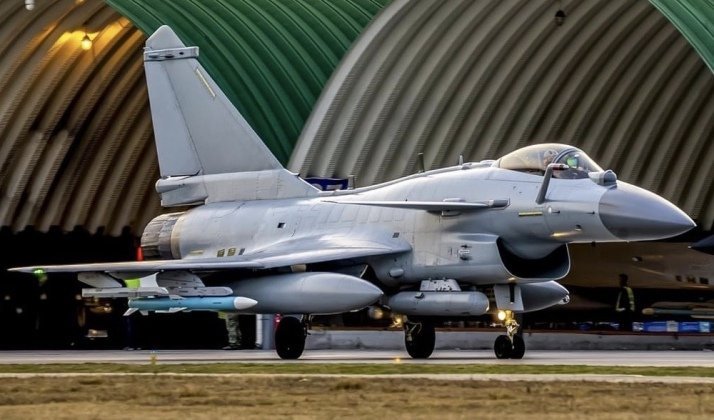
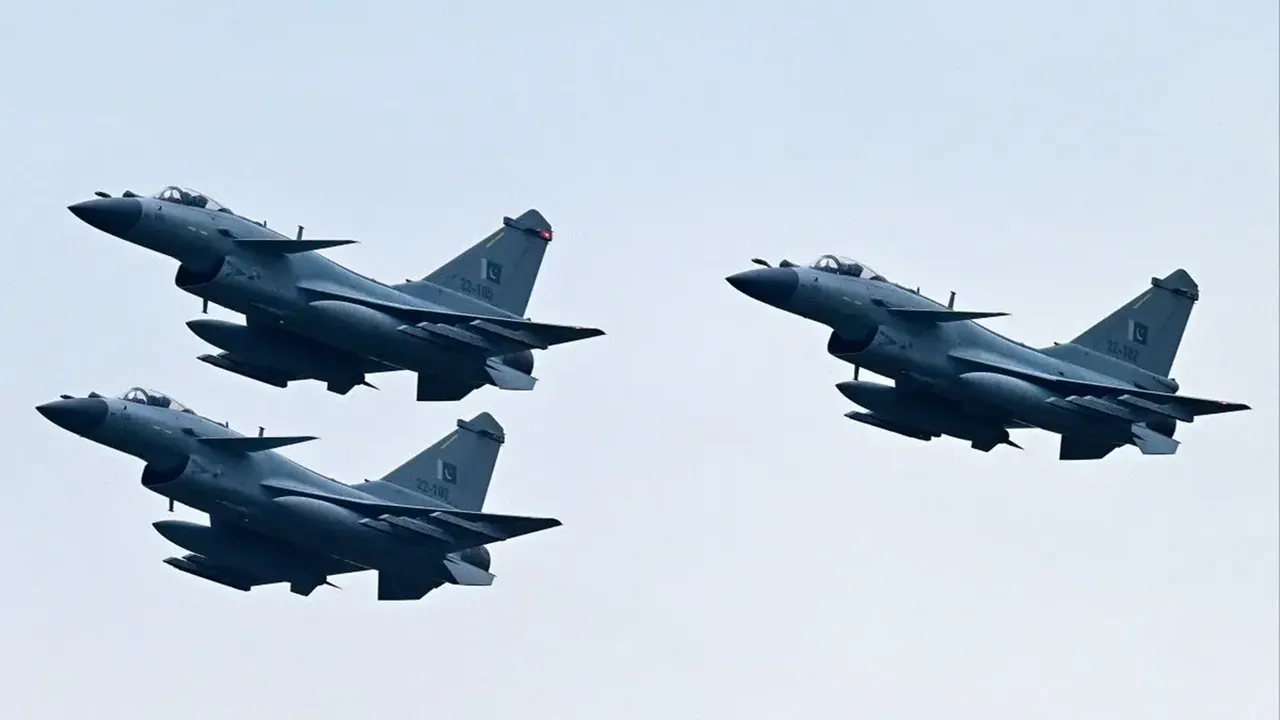
Uzbekistan has publicly revealed Chinese-made J-10CE fighter jets for the first time, confirming months of reports that Tashkent had turned to China for a major combat-aircraft acquisition. The appearance of the aircraft during the country’s 35th independence anniversary celebrations marks a significant moment for Uzbekistan’s air force—and a wider expansion of Chinese military aviation influence in Central Asia.

Uzbekistan has finally provided visual confirmation that Chinese J-10CE fighter jets have entered its air force, ending more than a year of uncertainty surrounding one of Central Asia’s most closely watched military aviation procurements.
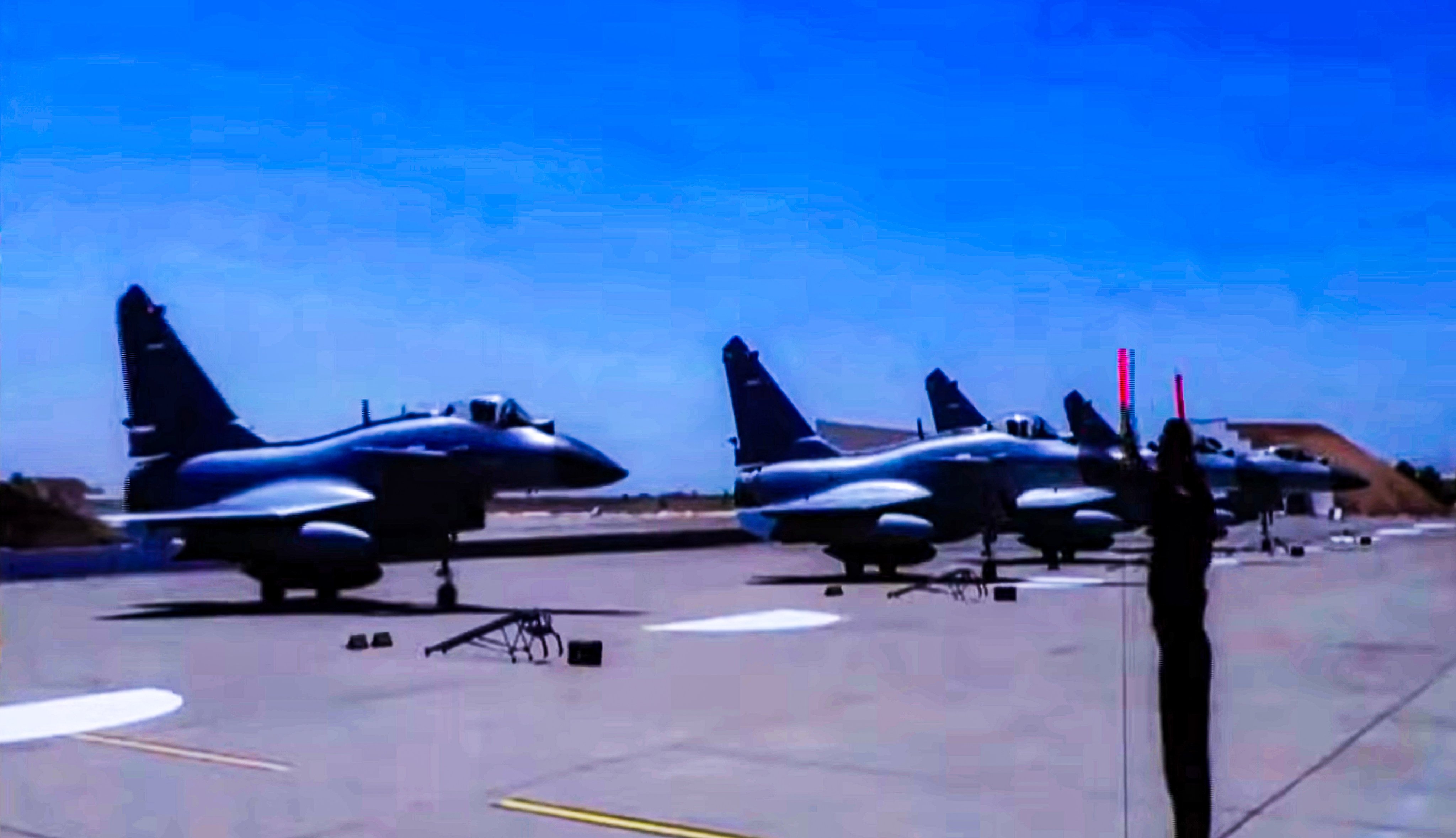
Footage broadcast by Uzbekistan’s state television showed J-10CE aircraft operating from a runway during coverage of the country’s 35th independence anniversary celebrations. Separate reporting has identified six aircraft in the first visible batch, although Uzbek authorities have not publicly released a complete breakdown of the purchase, delivery schedule or contract value.
The development is strategically significant because Uzbekistan has historically operated Soviet-designed combat aircraft, including MiG-29s and Su-27s. The arrival of the J-10CE therefore represents more than the replacement of ageing fighters.
It marks a new Chinese foothold in Central Asian combat aviation.
Uzbekistan’s J-10CE Deal Was Kept Quiet
The J-10CE acquisition had been reported for more than a year, but Tashkent had avoided publicly confirming it.
Earlier reporting suggested that Uzbekistan was considering or negotiating for as many as 24 J-10CE fighters, potentially in a package worth around $1 billion.
Those figures should still be treated cautiously.
There is no publicly released Uzbek contract confirming the final number, price or delivery timetable. The latest evidence establishes that J-10CE aircraft are physically in Uzbekistan, but it does not by itself confirm that the country has received all 24 aircraft reportedly discussed.
That distinction matters.
The clearest new information is the aircraft themselves.
State television footage has transformed what was previously a procurement story based largely on unofficial reports and imagery into a confirmed delivery story.
Why Uzbekistan Chose the J-10CE
The decision represents a major departure from Uzbekistan’s Soviet-era combat aviation inheritance.
For decades, Uzbekistan’s fighter fleet has been based primarily around aircraft designed during the Soviet period.
Tashkent had previously explored Russian options for modernization, including the Su-30SM, but those plans did not develop into the large-scale fleet replacement that had once been anticipated.
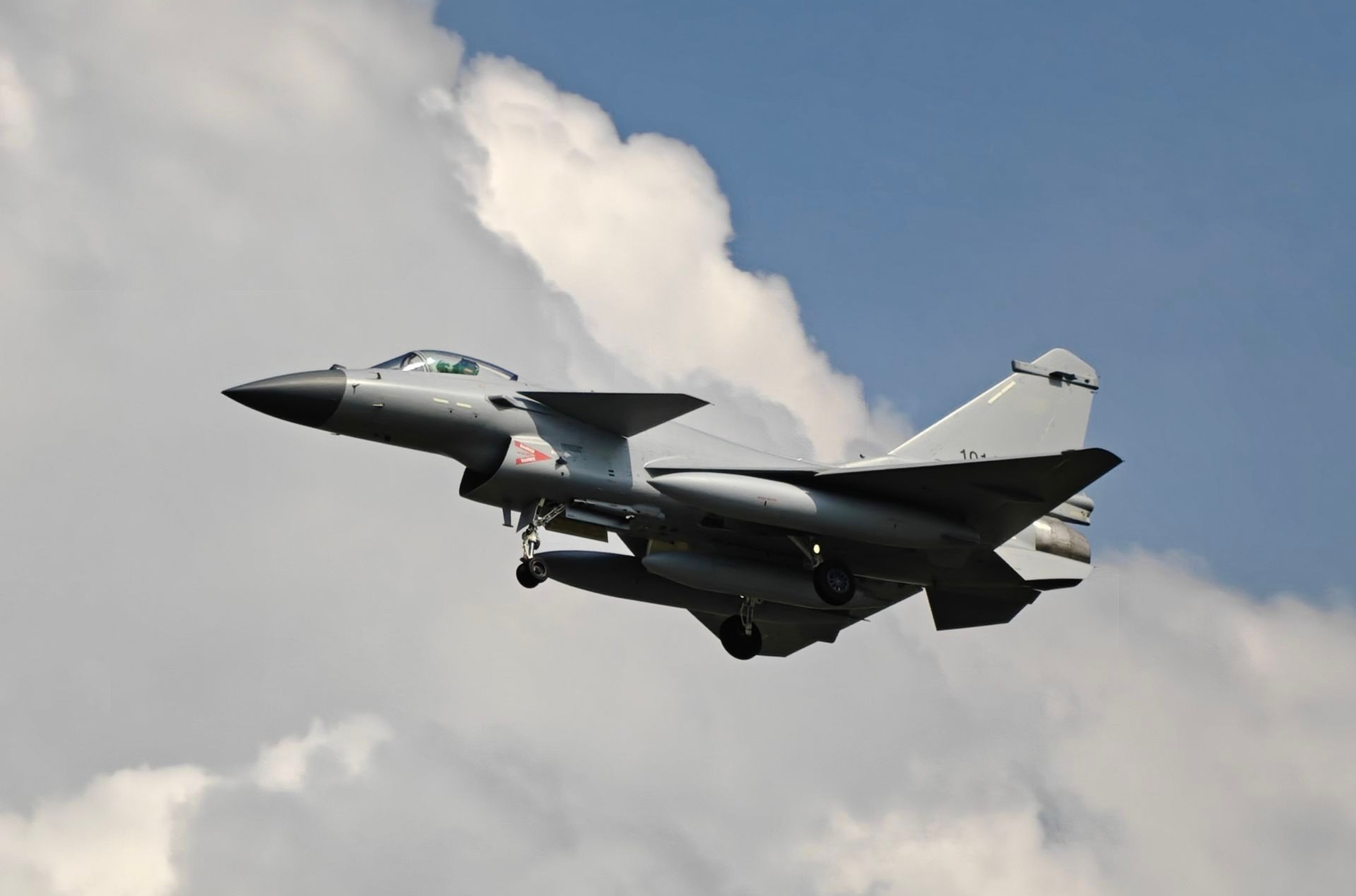
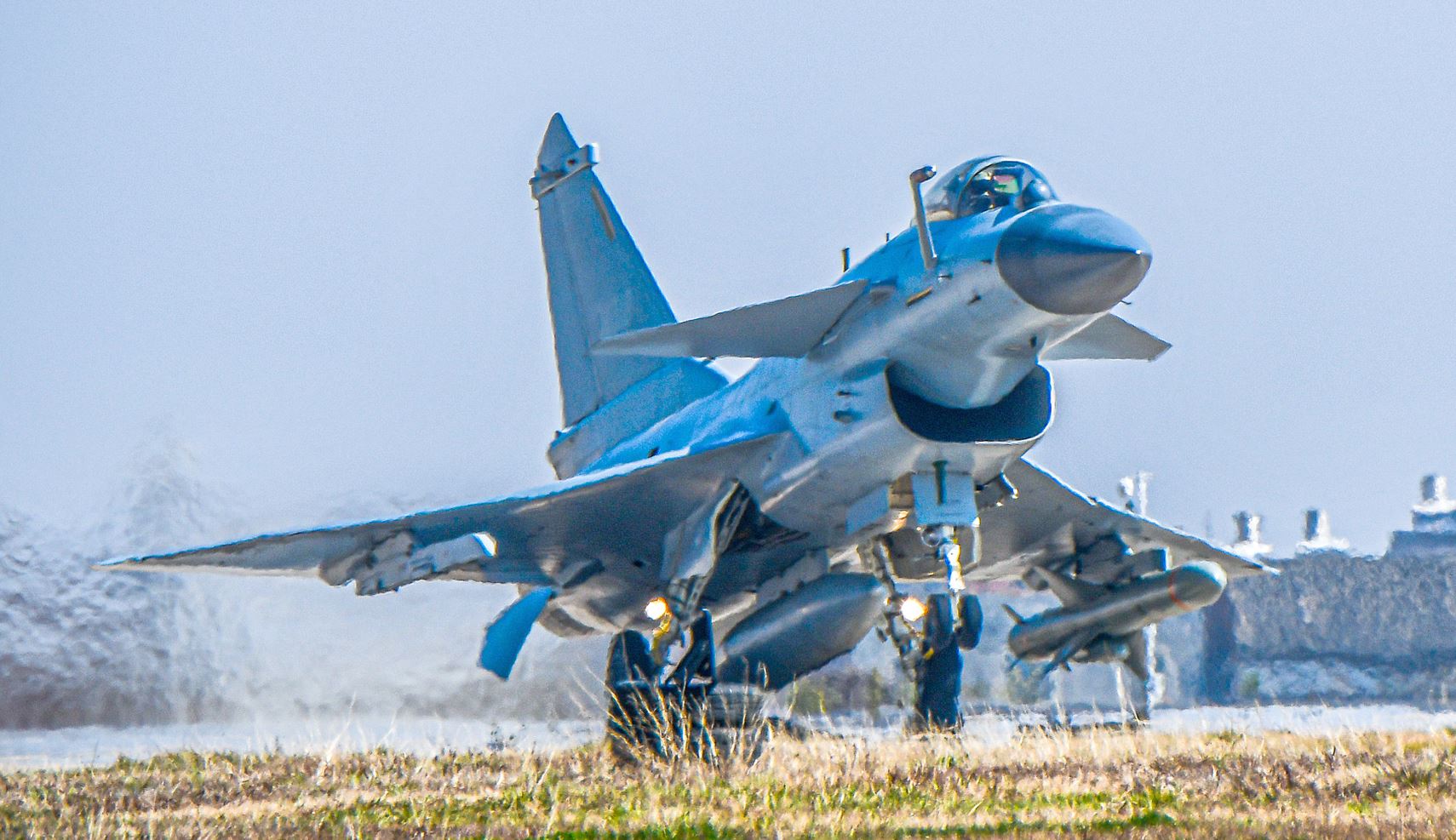
The J-10CE gives Uzbekistan something very different: a modern multirole fighter designed around an electronically scanned radar, modern avionics, digital flight controls and long-range air-to-air weapons.
That makes the acquisition a technological leap rather than simply a one-for-one replacement of old aircraft.
What Makes the J-10CE Significant?
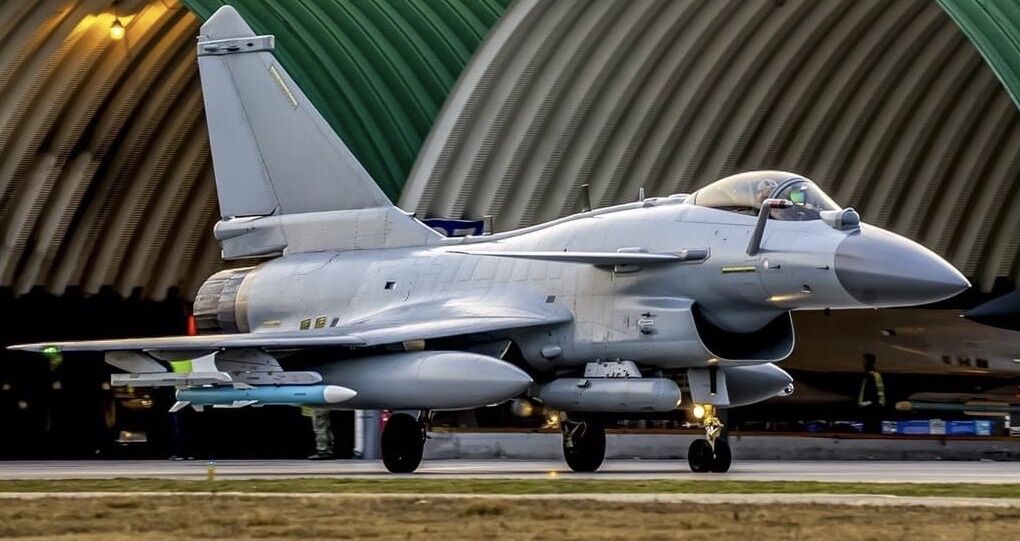
The J-10CE is China’s export version of the J-10C, a single-engine multirole fighter developed by Chengdu Aircraft Industry Group.
It is generally classified as a 4.5-generation fighter and incorporates technologies intended to allow it to operate in a modern networked air-combat environment.
Its most important features include:
- active electronically scanned array (AESA) radar;
- modern electronic warfare systems;
- fly-by-wire flight controls;
- advanced data-link capabilities;
- PL-10 short-range air-to-air missiles;
- and compatibility with the export PL-15E long-range air-to-air missile.
The PL-15E is particularly important because it gives the aircraft a beyond-visual-range engagement capability that is far beyond what Uzbekistan’s older Soviet-era fighters were designed around.
That changes the air-combat equation.
A modern fighter equipped with AESA radar and long-range missiles does not have to rely on the traditional visual-range dogfight as its primary method of engagement.
The PL-15E Changes Uzbekistan’s Air-Defence Equation
The J-10CE’s significance is not simply the aircraft itself.
It is the combination of:
radar + electronic warfare + data links + long-range missiles + modern command systems.
That combination can give an air force much greater ability to detect and engage aircraft before visual contact.
The export PL-15E is publicly associated with a range of roughly 145 kilometres, although actual combat effectiveness depends on launch conditions, target behaviour, electronic warfare and the quality of supporting sensors.
This means the aircraft’s arrival potentially gives Uzbekistan a much more credible long-range air-defence capability.
However, aircraft specifications alone do not create combat power.
The real test will be whether Uzbekistan develops the pilot training, airborne early-warning support, ground-based sensors, data networks and weapons stocks necessary to exploit the J-10CE’s capabilities.
From Soviet Aircraft to Chinese Fighters
The transition is particularly important because Uzbekistan is not simply adding another foreign platform to a diverse fleet.
It is potentially beginning to replace a Soviet-derived aviation ecosystem with a Chinese one.
That means new:
- maintenance procedures;
- pilot training;
- spare-parts chains;
- weapons;
- ground-support equipment;
- software;
- mission systems;
- and technical expertise.
In the long term, this could create a significant Chinese defence-industrial presence inside Uzbekistan.
For Beijing, that is strategically valuable.
China’s Growing Defence Role in Central Asia
China has already become an important economic power across Central Asia.
Military aviation gives Beijing another avenue of influence.
Uzbekistan occupies a particularly important position because of its population, geography and role in regional politics.
The J-10CE acquisition therefore represents more than a fighter sale.
It provides China with an opportunity to demonstrate that its combat aircraft can operate successfully in a country that historically depended on Russian military technology.
That is an important message for other Central Asian states.
Russia’s Former Market Is Changing
For Moscow, the development is uncomfortable.
Russia has historically been the dominant supplier of military aircraft across much of the former Soviet space.
Common Soviet equipment created a powerful form of dependence.
Pilots trained on Russian-designed systems.
Technicians maintained Russian-designed aircraft.
Weapons were compatible with Russian platforms.
Spare parts came through Russian-linked supply chains.
That ecosystem made switching suppliers difficult.
China is now beginning to demonstrate that it can offer an alternative.
Uzbekistan’s choice does not mean the country has abandoned Russia.
That would be too simplistic.
Tashkent has strong historical, economic and security links with Moscow.
But it does show that Uzbekistan is willing to diversify its military suppliers at the highest technological level.
That is strategically important.
The J-10CE’s Combat Reputation Has Also Changed
There is another reason the Uzbekistani acquisition has attracted attention.
The J-10C became internationally prominent following the May 2025 India-Pakistan conflict, when Pakistan employed J-10C fighters equipped with PL-15 missiles.
Pakistan claimed that the aircraft played a major role in engagements with Indian fighters.
India has disputed aspects of Pakistan’s account and has not publicly accepted all of the Pakistani claims regarding aircraft losses.
But the fighting nevertheless generated enormous international interest in the J-10C and its weapons.
The aircraft had moved from being largely an export-market proposition to a platform with combat experience associated with a modern interstate air conflict.
For potential buyers, that matters.
Combat performance—however contested—is one of the most powerful forms of marketing in the defence industry.
Uzbekistan Becomes the Second Foreign J-10CE Operator
The Uzbekistani delivery also expands the international footprint of the J-10CE.
Pakistan remains the first and most established foreign operator.
Uzbekistan is now the second confirmed foreign operator.
That could become increasingly important for China’s export ambitions.
Every additional operator creates opportunities to demonstrate:
- reliability;
- maintenance;
- weapons integration;
- pilot training;
- operational availability;
- and lifecycle support.
If Uzbekistan operates the aircraft successfully over the coming years, China can point to another customer outside South Asia.

But Six Fighters Do Not Transform an Air Force
The first visible batch should not be exaggerated.
Six aircraft are significant as evidence of delivery, but they do not by themselves transform Uzbekistan into a major regional air power.
A modern fighter fleet requires far more than airframes.
Uzbekistan will need:
trained pilots, simulators, technicians, spare engines, missiles, maintenance facilities, secure communications, radar coverage and sufficient sortie-generation capacity.
The country will also have to build experience in operating a modern beyond-visual-range fighter.
That process can take years.
Therefore, the most important question is not how many J-10CEs appeared in the independence-day footage.
It is how quickly Uzbekistan can turn those aircraft into a sustainable operational capability.
Karshi-Khanabad Adds Another Layer
Reports have associated the first Uzbek J-10CE batch with Karshi-Khanabad Air Base, commonly known as K2, in southern Uzbekistan.
The specific basing arrangement has not been formally detailed by the Uzbek government.
If the reported location is correct, however, it would be an important indication of how Tashkent intends to integrate the aircraft into its existing air-defence structure.
K2 has considerable strategic significance because of its location and history.
But aircraft basing also creates vulnerabilities.
Modern fighters require protected maintenance infrastructure, hardened shelters, fuel, weapons storage and reliable runway access.
An advanced aircraft can be extremely capable in the air while remaining vulnerable on the ground.
This Is Also About Uzbekistan’s Strategic Autonomy
The J-10CE purchase should not automatically be interpreted as Uzbekistan choosing China over Russia.
Tashkent has traditionally pursued a careful foreign-policy balance.
The more useful interpretation is strategic diversification.
By acquiring fighters from China, Uzbekistan gains another major supplier and potentially greater bargaining power with Russia and other defence partners.
That gives Tashkent more options.
It also reduces the risk of becoming completely dependent on one country’s defence-industrial ecosystem.
For a Central Asian state surrounded by major powers, that kind of flexibility has obvious value.
What It Means for China’s Defence Exports
The J-10CE is becoming one of China’s most visible export fighter programmes.
The aircraft is cheaper and less politically restrictive than many Western alternatives, while offering capabilities that are attractive to countries seeking modern air combat systems without buying American or European fighters.
The Uzbekistan deal strengthens that proposition.
China can now point to two foreign operators in different strategic environments:
Pakistan in South Asia and Uzbekistan in Central Asia.
If Bangladesh proceeds with its reported interest in the J-10CE, China’s export footprint could expand further. Reuters reported this week that Dhaka is moving toward formal negotiations with Beijing over J-10CE fighters, although the number and price have not been finalized.
That would turn the J-10CE from a niche export into a potentially important Asian fighter programme.
Central Asia’s Airpower Is Becoming More Competitive
The Uzbek acquisition also fits into a broader transformation of Central Asian defence procurement.
Countries in the region are no longer automatically looking to Russia for every major military requirement.
They are exploring Turkish, Chinese, European and other suppliers.
The reasons vary:
- ageing Soviet equipment;
- changing Russian industrial priorities;
- concerns over long-term maintenance;
- the desire for technological modernization;
- and the pursuit of greater strategic autonomy.
China is particularly well placed to benefit because it can offer complete packages rather than individual weapons.
That can include aircraft, missiles, radars, training, maintenance and financing.
What We Still Don’t Know
Despite the significance of the announcement, several important details remain unclear.
Uzbekistan has not publicly disclosed:
- the final number of J-10CEs ordered;
- the final contract value;
- the complete delivery schedule;
- the exact weapons package;
- the number of trained pilots;
- or the aircraft’s operational status.
The reported figure of 24 aircraft for approximately $1 billion should therefore continue to be described as a reported procurement figure rather than an officially confirmed contract.
Likewise, the reported basing of six aircraft at K2 should be treated cautiously until Tashkent provides confirmation.
The state television footage establishes the aircraft’s presence.
It does not establish the entire programme.
The Next Indicators to Watch
The next stage will be more revealing than the independence-day broadcast.
Watch for:
additional J-10CE deliveries.
Uzbek pilots appearing in Chinese training programmes.
PL-15E and PL-10 weapons integration.
live-fire exercises.
joint Chinese-Uzbek air exercises.
new shelters and maintenance infrastructure.
integration with Uzbekistan’s ground-based air-defence network.
These developments will show whether the J-10CE is simply being introduced or whether Uzbekistan is building a genuinely new combat-aircraft capability around it.
The Bigger Strategic Picture
The arrival of the J-10CE in Uzbekistan is significant because it brings together three trends that are increasingly visible across Eurasia.
First, Russia’s traditional dominance of Central Asian defence markets is no longer guaranteed.
Second, China is moving from being primarily an economic power in Central Asia to becoming a more important military-technology supplier.
Third, regional states are seeking strategic autonomy by diversifying defence relationships rather than relying exclusively on one major power.
Uzbekistan’s J-10CE acquisition fits all three.
The aircraft itself is important.
But the strategic decision behind the aircraft may be even more important.
Bottom Line
Uzbekistan’s first public display of Chinese J-10CE fighters confirms a defence relationship that Tashkent had kept deliberately opaque for more than a year.
The appearance of at least six aircraft provides the clearest evidence yet that the J-10CE has entered the Uzbek Air Force, although the full size and value of the reported procurement remain officially undisclosed.
For Uzbekistan, the aircraft offers a major technological upgrade from its ageing Soviet-era fighter fleet.
For China, it represents another important export breakthrough and expands the J-10CE’s presence into Central Asia.
For Russia, it is a reminder that the former Soviet military market is gradually becoming more competitive.
And for the wider region, the arrival of AESA-equipped fighters with modern beyond-visual-range missiles means that Central Asian air forces are entering a new technological era.
The real story, however, will not be decided by the number of J-10CEs shown on television.
It will be decided by what Uzbekistan builds around them.
If Tashkent develops the training, weapons stocks, maintenance infrastructure, command networks and air-defence integration required to operate the aircraft effectively, the J-10CE could become the foundation of a genuinely new Uzbek combat-aircraft capability.
For China, that would be an even bigger achievement than the sale itself.